
Edgew.
Description
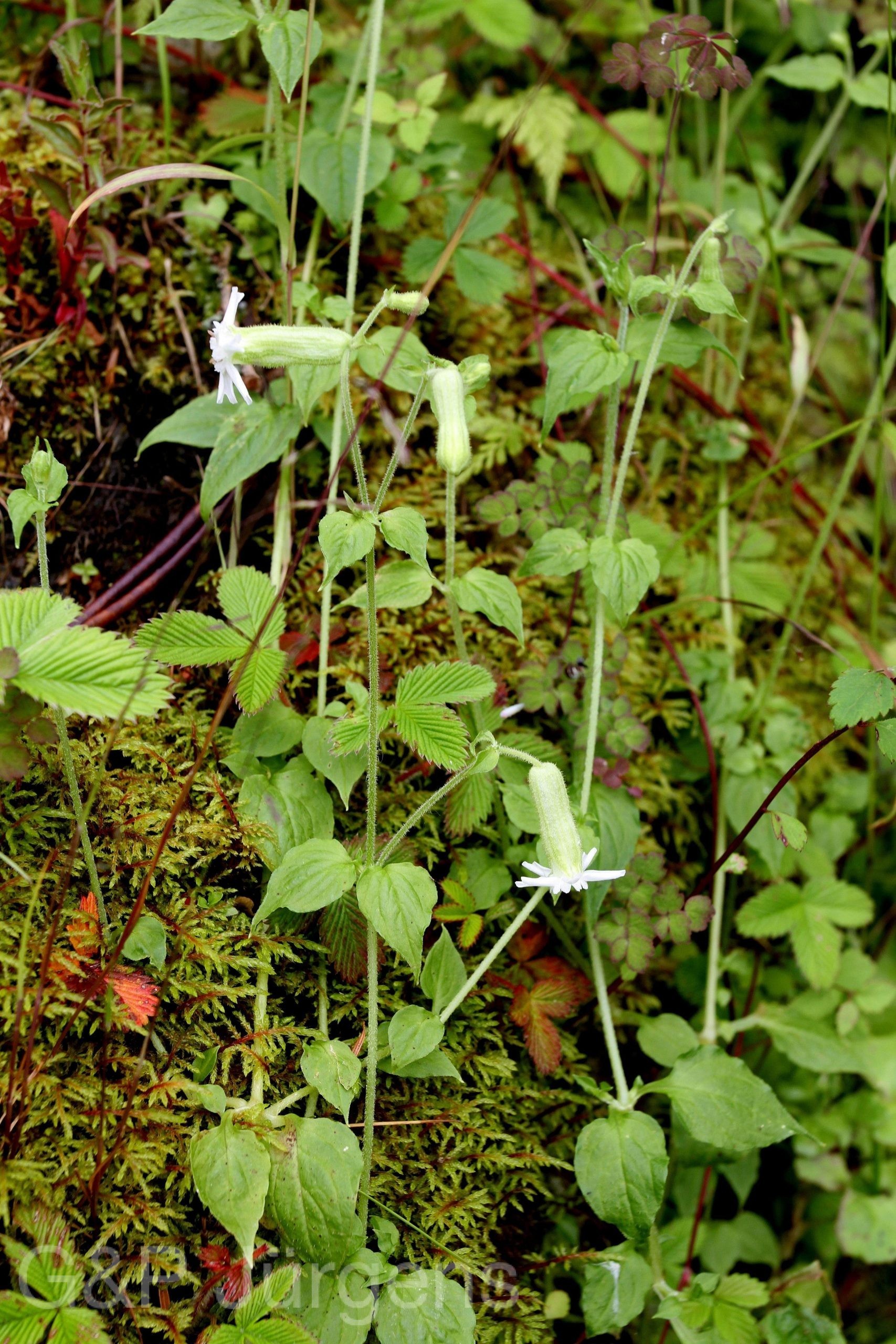
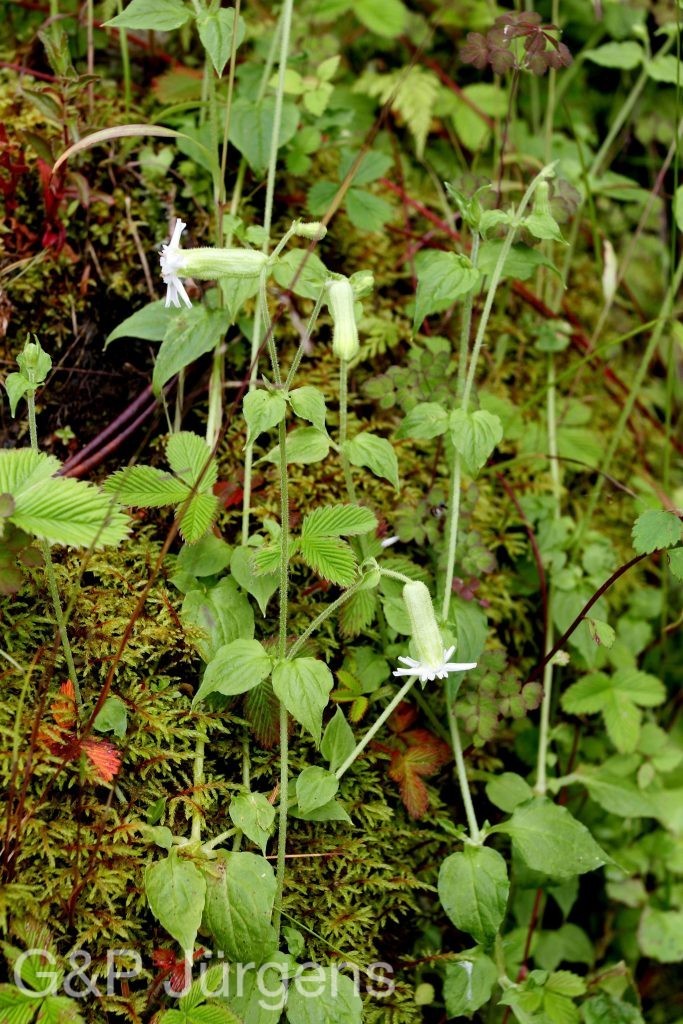
Silene stracheyi is a Himalayan campion restricted to the high mountains of India, Bhutan and Nepal, known from only about 17 GBIF records and thus among the more poorly documented members of the genus in the region. It grows in open subalpine and alpine habitats, including rocky slopes, grassy pastures, scrub margins and stony banks, generally between about 3000 and 4000 m. The plant photographed at Chele-La in western Bhutan at 3400 m in July, flowering at the height of the monsoon summer, typifies its association with cool, well-drained high-mountain grassland and rock.
It is a perennial herb arising from a stout rootstock, with erect to ascending stems that are often glandular-pubescent in the upper parts. The leaves are opposite, narrowly lanceolate to oblong, sessile or shortly stalked and entire. The flowers are borne in a lax cyme; each has the inflated, tubular to campanulate, conspicuously veined calyx characteristic of Silene, within which sit five clawed petals, usually pink to purplish, the limbs notched or bifid and often bearing a small corona at the throat. The stamens and styles are typical of the genus, and the fruit is a capsule dehiscing by apical teeth to scatter the numerous reniform seeds.
Silene is one of the largest genera of Caryophyllaceae, with many narrowly endemic high-alpine species in the Sino-Himalayan region, of which S. stracheyi is one. The tubular calyx and clawed petals reflect adaptation to long-tongued and nocturnal pollinators. Given its small known range and few documented populations, the species warrants conservation attention, as such restricted Himalayan campions are vulnerable to grazing intensification and the upslope shifts driven by a warming climate.
Author: Edgew. · Sources: POWO (Kew), GBIF, Flora of Bhutan, Annotated Checklist of the Flowering Plants of Nepal, Flora of China (Caryophyllaceae), Bocquet monographic studies of Silene