Orobanchaceae

Prain

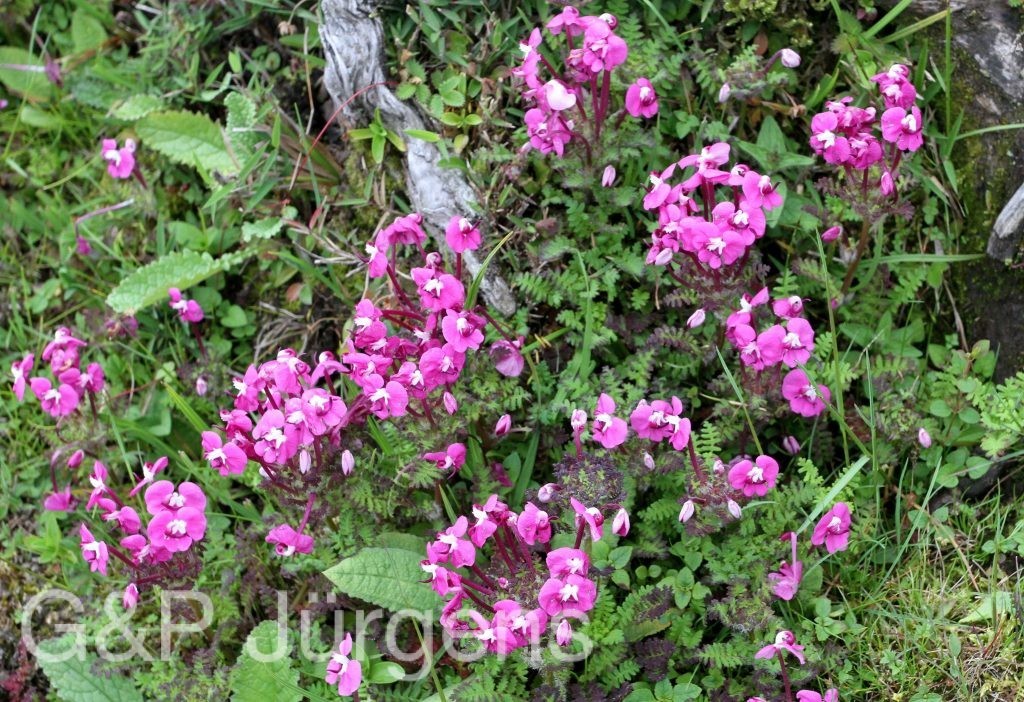
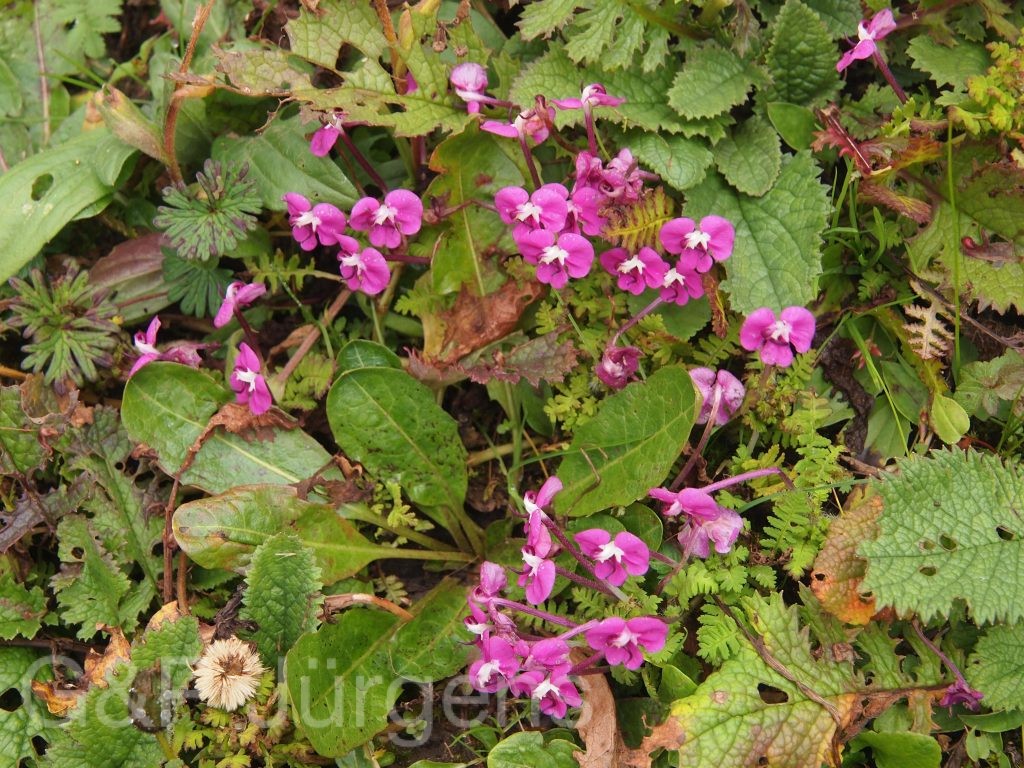
BhutanPG2011 532
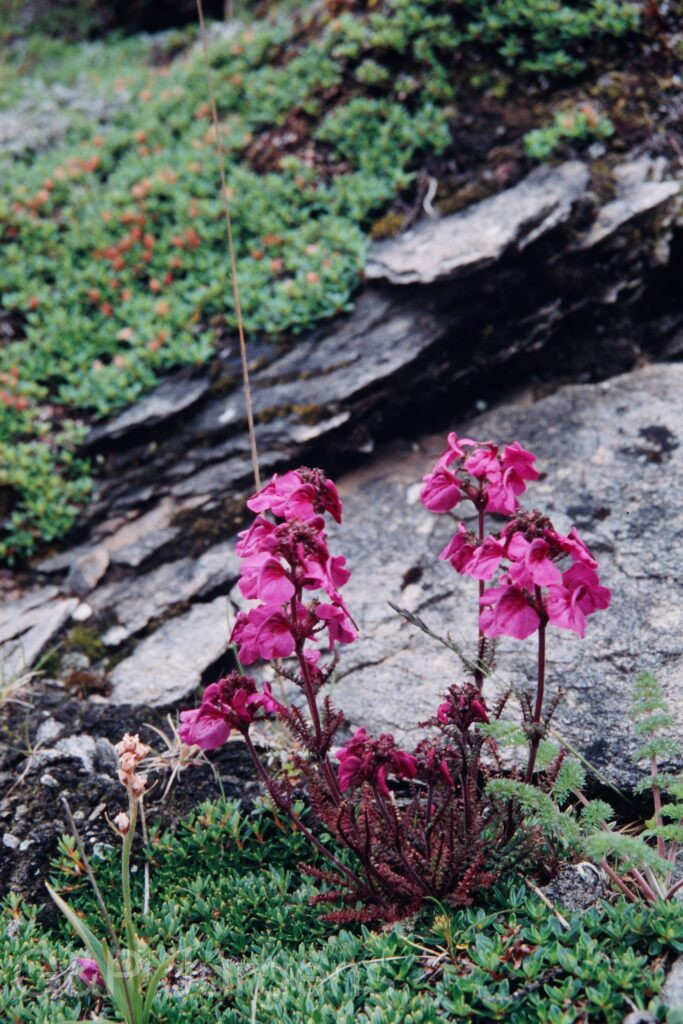
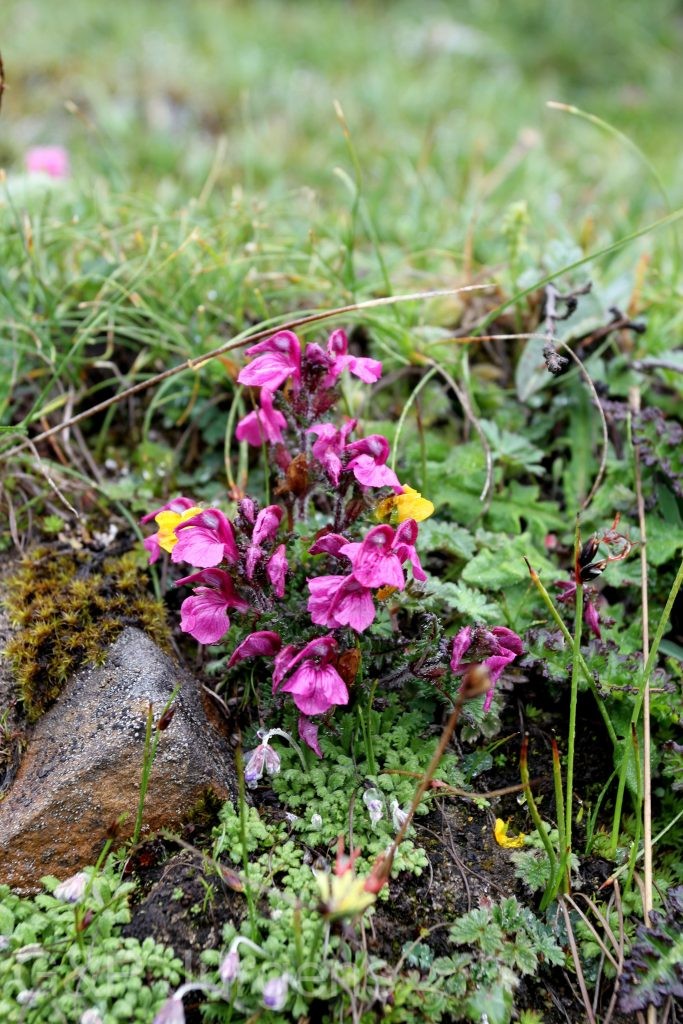
Bhutan Ludlow-Sherriff-Trail Dem-Tso, 4650m June

Description

Pedicularis schizorrhyncha Prain is a high-alpine lousewort restricted to the eastern Himalaya, recorded from Nepal, Bhutan and India, with only some 41 GBIF occurrences underscoring its narrow distribution and elevated habitat. It occupies moist alpine meadows, turf, seepage margins and the edges of glacial tarns, typically between about 4000 and 4800 m. The illustrated plant from the Ludlow-Sherriff Trail at Dem-Tso in Bhutan, at roughly 4650 m in June, is representative of its strict confinement to the cool, short-summer subnival belt near the upper limit of vascular plant growth.

The species is a low perennial hemiparasitic herb arising from a slender rootstock, with few erect or ascending stems bearing pinnately divided to pinnatisect leaves whose lobes are toothed and crisped. The flowers are borne in a short terminal spike, each subtended by a leaf-like bract; the calyx is tubular and toothed, and the strongly zygomorphic corolla has an upper lip or galea prolonged into a slender, downcurved, conspicuously bifid or cleft beak, the feature recalled by the epithet schizorrhyncha. The fruit is an oblique, laterally compressed capsule.

Pedicularis (Orobanchaceae) is an enormous Sino-Himalayan radiation, and the long-beaked species form a coherent group adapted to specialised long-tongued bumblebee pollination. As a root hemiparasite, P. schizorrhyncha draws supplementary nutrients from neighbouring alpine plants. Its restricted range and sensitivity to alpine habitat change make it a species warranting monitoring, though it remains formally unassessed.

Author: Prain · Sources: POWO (Kew), GBIF, Flora of Bhutan, Flora of China, Flora of Nepal, Prain and Tsoong monographic treatments of Pedicularis
Prain ex Maxim.

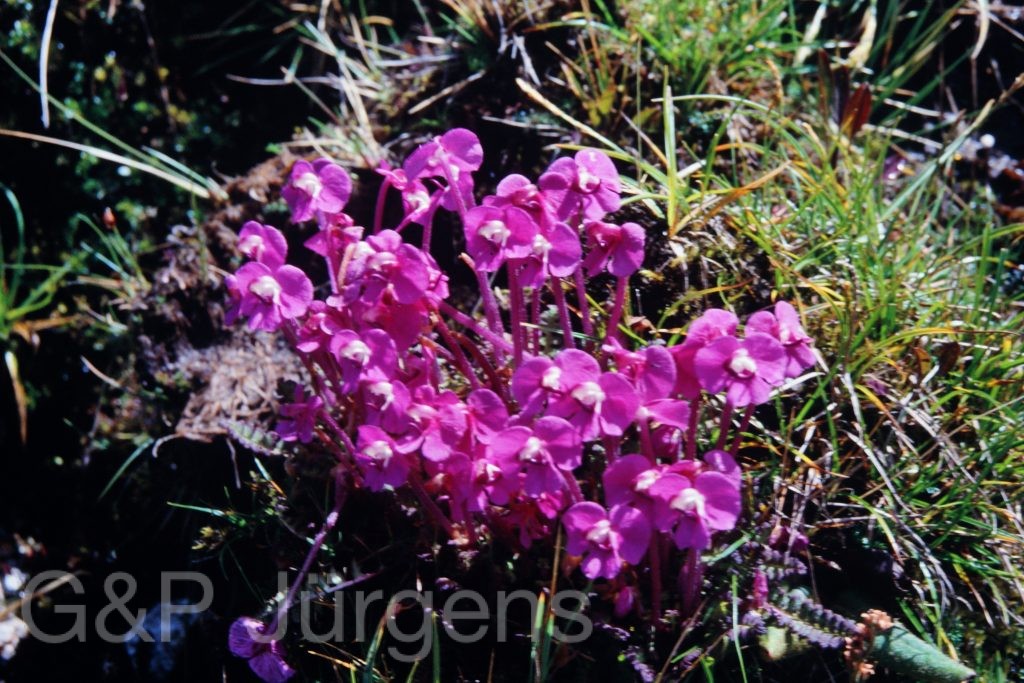
Nepal 99 332 ergebnis
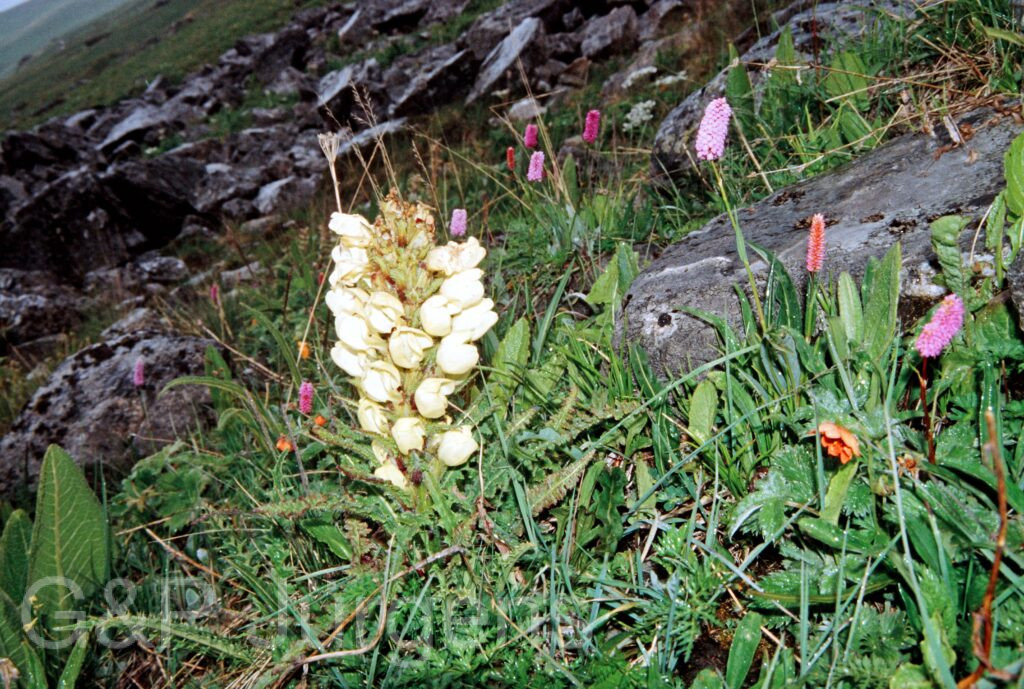
West-Nepal Kalmura 4000m, June

Description

Pedicularis scullyana is an alpine hemiparasitic herb endemic to the Himalaya and adjacent Tibetan margins, recorded from Nepal, India, Bhutan and China across some 217 GBIF occurrences. The illustrated plant was photographed at Kalmura in West Nepal at about 4000 m in June. It inhabits open alpine meadows, moist grassy slopes and the margins of scrub between roughly 3500 and 4500 m, growing in the short turf where, like all lousewort, it draws water and nutrients from the roots of neighbouring grasses and herbs through haustorial connections.

The plant is a perennial herb with a fascicled rootstock and erect or ascending stems. The leaves are alternate or sub-opposite, pinnatisect into closely toothed segments, giving the fern-like foliage typical of the genus. The flowers are borne in a terminal spike or raceme; each has a tubular calyx and a strongly two-lipped corolla, the upper lip (galea) hooded and often beaked to enclose the anthers, the lower lip three-lobed and spreading. Pollination is by long-tongued bumblebees, and the fruit is a flattened capsule releasing several seeds.

Pedicularis is one of the largest genera of the Himalayan alpine flora and a notable example of an explosive radiation, with the diversity of galea and beak forms reflecting specialisation for bumblebee pollination. As facultative root hemiparasites, the species influence community composition by suppressing dominant graminoids. P. scullyana is a regional endemic of restricted range; while not formally assessed as threatened, such narrowly distributed alpines are sensitive to grazing intensity and climate-driven shifts in the alpine zone.

Author: Prain ex Maxim. · Sources: POWO (Kew), GBIF, Flora of Nepal, Flora of China, Flora of Bhutan, Yamazaki – Taxonomic Revision of Pedicularis (Himalaya)

D.Don

Sikkim2011 202
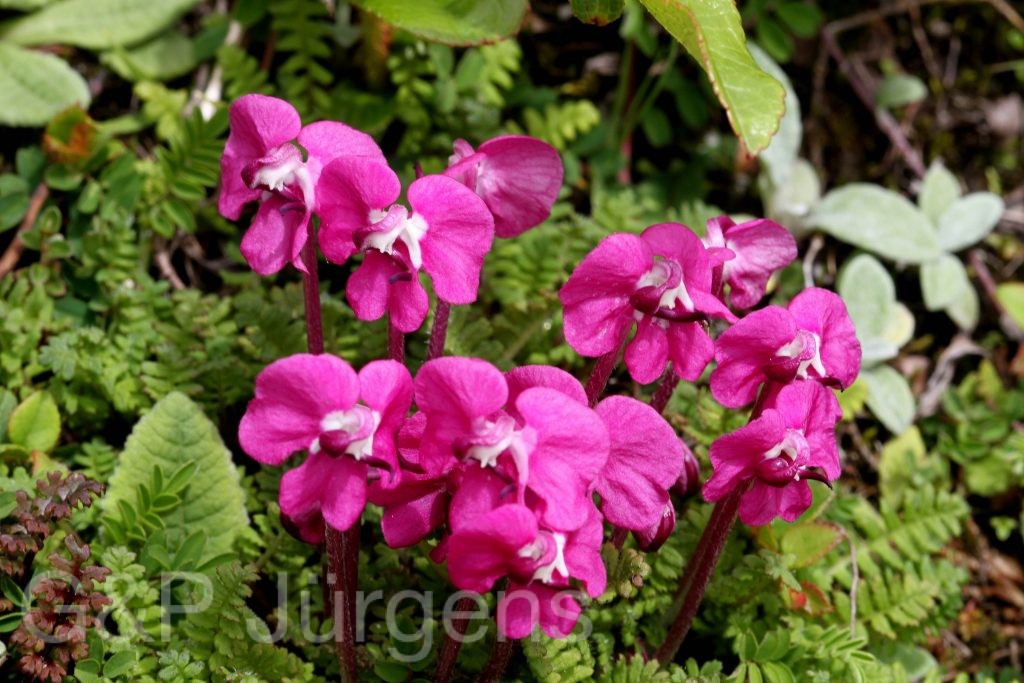
Sikkim Lachung 3000m, June
BhutanPG2011 735 01 01
Bhutan Haa-Valley, 2750m June
Bhutan2012 77
Bhutan Shele-La, 4000m September
Sikkim2003 115 P155
Sikkim below Dzongri 4000m August

Description

Pedicularis siphonantha is a Himalayan lousewort distributed through southern China, Nepal, northern India, Sikkim, Bhutan, Myanmar and Pakistan, well represented in GBIF with 810 occurrences. It is a plant of moist alpine and subalpine meadows, open hillsides, Rhododendron scrub and streamside turf, mostly between 2700 and 4500 m. The accompanying records span its range and season: Lachung in Sikkim at 3000 m and the Haa Valley in Bhutan at 2750 m in June, and the higher Shele-La (4000 m) and slopes below Dzongri (4000 m) flowering on into August and September, reflecting a long summer-to-autumn anthesis across an altitudinal gradient.

It is a perennial herb with erect or ascending stems arising from a stout rootstock, bearing leaves that are pinnatisect into oblong, doubly toothed segments. The rose-pink to purplish-red flowers are crowded in terminal racemes; the corolla is strongly two-lipped, its most distinctive feature a long, slender, often curved or twisted tubular galea drawn out into a beak (the siphon-like form giving the epithet), with a spreading three-lobed lower lip. The four stamens lie under the galea, and the fruit is an obliquely ovoid capsule containing several seeds.

Like all Pedicularis, it is a hemiparasite, drawing water and nutrients from the roots of neighbouring meadow plants through haustoria while retaining green photosynthetic foliage. The elongate corolla tube indicates pollination by long-tongued bumblebees. Pedicularis is exceptionally species-rich and difficult in the Sino-Himalaya, with corolla architecture central to species delimitation. Widespread and locally abundant, P. siphonantha is not regarded as threatened, though louseworts as a group are sensitive to changes in their host-rich alpine grassland communities.

Author: D.Don · Sources: POWO (Kew), GBIF, Flora of China, Flora of Bhutan, Yamazaki: Pedicularis monograph

Hook. f.

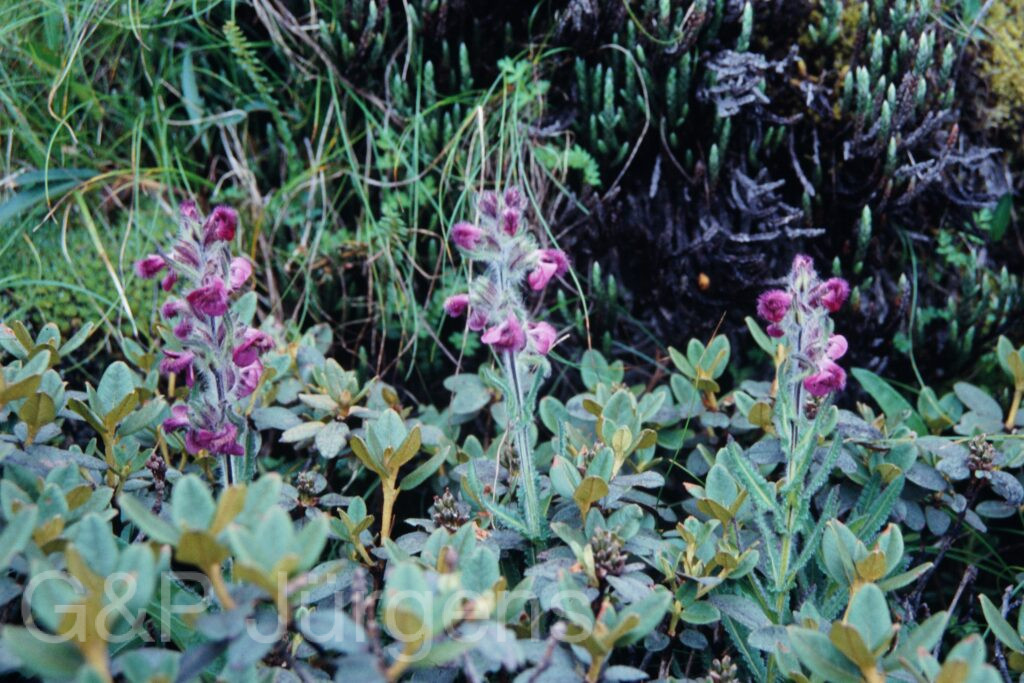
Sikkim2003 317 P451
Sikkim Saniti-Lake 4300m August

Description

Pedicularis trichoglossa is a striking alpine lousewort of the Himalaya and Sino-Himalayan mountains, with 547 georeferenced records from China (CN), Nepal (NP), Bhutan (BT), India (IN) and Myanmar (MM). It is a plant of high alpine meadows, moist grassy slopes, streamsides and the margins of glacial lakes, typically between about 3500 and 4800 m. The population recorded at Saniti Lake in Sikkim at 4300 m in August is characteristic of its occurrence in damp, late-season alpine turf, where it flowers in the post-monsoon weeks alongside other high-elevation herbs. Its broad east-Himalayan distribution makes it a conspicuous element of the upper alpine flora.

It is an erect perennial herb with one to several simple or sparingly branched stems arising from a short rootstock. The leaves are alternate to subopposite, pinnatisect into many small, toothed segments, in the typical fern-like fashion of the genus. The flowers are crowded into a dense, elongate terminal spike, deep reddish-purple to wine-red, conspicuous against the foliage. Each strongly two-lipped corolla has a hooded, beaked galea formed by the upper lip, the beak conspicuously fringed with long purple hairs, a feature reflected in the epithet trichoglossa (hairy-tongued). The fruit is an oblique, beaked capsule containing several seeds.

Pedicularis (Orobanchaceae) is one of the largest and most diverse genera of the Himalayan alpine zone, where it has undergone remarkable radiation in floral form linked to bumblebee pollination; the hairy, beaked galea of P. trichoglossa is one such specialised adaptation. Like all members of the genus it is a hemiparasite, drawing water and nutrients from the roots of neighbouring plants via haustoria while retaining green, photosynthetic foliage. The species is widespread and frequent, of no conservation concern, but it is a valuable indicator of intact high-alpine meadow communities.

Author: Hook. f. · Sources: POWO (Kew), GBIF, Flora of China, Flora of Bhutan, Annotated Checklist of the Flowering Plants of Nepal, Prain and Tsoong monographic studies of Asian Pedicularis

?

Nepal 99 597 ergebnis
West-Nepal Churta-Khola 3800m, June

Description

Pedicularis X denotes a Himalayan lousewort of uncertain or hybrid identity (the GBIF return resolves only to Plantae, with the global occurrence figure of over 634 million reflecting that kingdom-level match rather than the taxon itself, so distributional data here are uninformative). On evidence of the genus and the locality, it is a montane to alpine plant of moist meadows, scrub margins and tall-herb communities in the Western Himalaya. The image record from Churta-Khola in West Nepal at 3800 m, in June, places it in the early-summer subalpine-to-alpine zone where Pedicularis is most diverse and conspicuous.

Louseworts are perennial (sometimes annual) herbs with leaves that are typically alternate to whorled and pinnately divided into toothed segments, often fern-like in aspect. The flowers are borne in terminal spikes or racemes and are strongly zygomorphic: the calyx is tubular and toothed, and the bilabiate corolla has an upper lip (galea) frequently produced into a beak or rostrum enclosing the anthers, while the three-lobed lower lip forms a landing platform. Corolla colour ranges from pink and purple to yellow and white. The fruit is a flattened, often asymmetric capsule containing several seeds. Such floral architecture is adapted to pollination by long-tongued bumblebees.

Pedicularis (Orobanchaceae, formerly Scrophulariaceae) is a hemiparasitic genus of extraordinary richness in the Sino-Himalaya, where rapid radiation and frequent hybridisation produce taxonomically difficult complexes, consistent with the provisional designation here. As root hemiparasites the plants form haustorial connections to host roots, influencing meadow community composition. Firm identification requires examining galea form, leaf division and corolla details against regional monographs.

Author: ? · Sources: POWO (Kew), GBIF, Flora of Bhutan, Annotated checklist of the flowering plants of Nepal, Yamazaki revision of Asian Pedicularis

(Bureau & Franch.) Pinto-Carr., E.Rico & M.M.Mart.Ort.

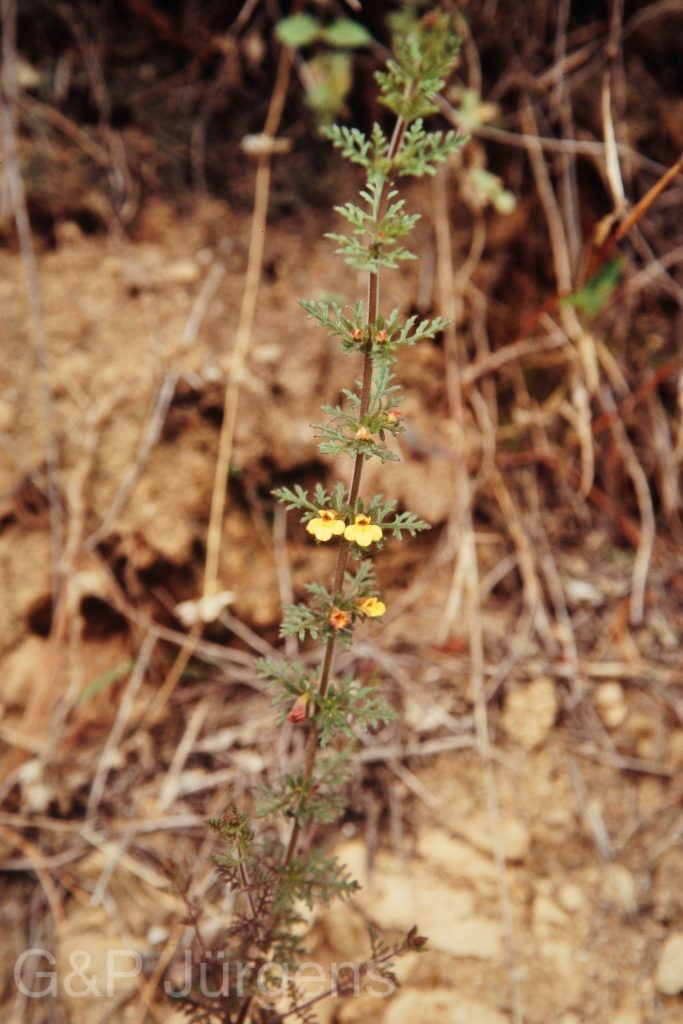
Bh09 414 P652
Bhutan Paro, 2500m June

Description

Pterygiella tenuisecta (Bureau & Franch.) Pinto-Carr., E.Rico & M.M.Mart.Ort. is a hemiparasitic annual herb of the Sino-Himalayan region, distributed through Bhutan, northern India and south-western China (notably Yunnan and Sichuan), with the GBIF dataset of roughly 883 occurrences also carrying determinations referable to material in Japan. Often treated under the name Phtheirospermum tenuisectum, it occupies open grassy slopes, forest margins, scrub and disturbed banks at montane elevations, where like other root-hemiparasites it attaches to the roots of neighbouring grasses and herbs while retaining functional green foliage. The illustrated plant was photographed at Paro in western Bhutan at around 2500 m in June, an elevation and season typical of its flowering in the temperate montane belt.

It is a slender, erect to ascending annual with branched, glandular-pubescent stems. The leaves are opposite below and may become alternate above, the blades pinnatisect to bipinnatisect with narrow, almost filiform ultimate segments, giving the foliage a finely divided, feathery appearance reflected in the epithet tenuisecta. The flowers are solitary in the upper leaf axils, shortly pedicellate, with a tubular, ribbed, glandular calyx of fused sepals. The corolla is yellow, two-lipped, the upper lip hooded and the lower three-lobed and spreading, enclosing four didynamous stamens. The fruit is a loculicidal, ovoid to oblong capsule containing numerous small seeds.

The species has been shuttled between several genera of the broomrape family, having been described in Gerardia and later placed in Phtheirospermum before molecular and morphological work supported its transfer to Pterygiella; the synonymy underlies the differing names on the source page. As a facultative hemiparasite it plays a part in regulating grassland community structure, drawing water and nutrients from hosts while contributing its own photosynthesis. No conservation concern is recorded, the plant being a widespread component of seasonally moist montane grasslands across its Sino-Himalayan range.

Author: (Bureau & Franch.) Pinto-Carr., E.Rico & M.M.Mart.Ort. · Sources: POWO (Kew), GBIF, Flora of China, Flora of Bhutan, Orobanchaceae phylogenetic studies (Pinto-Carrasco et al.)

Buch.-Ham. ex D. Don

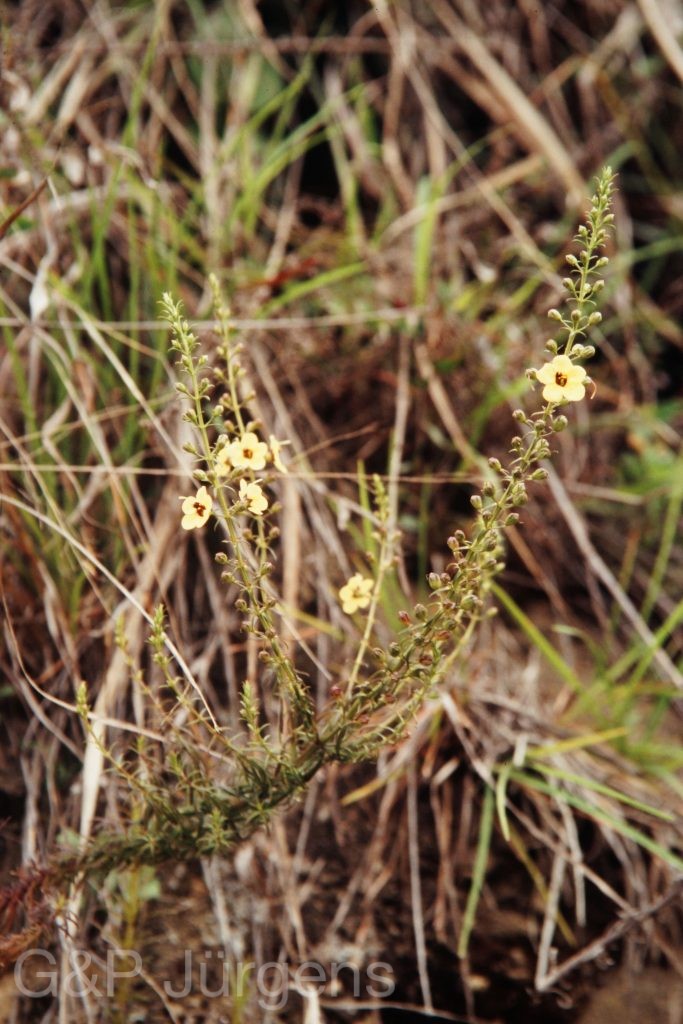
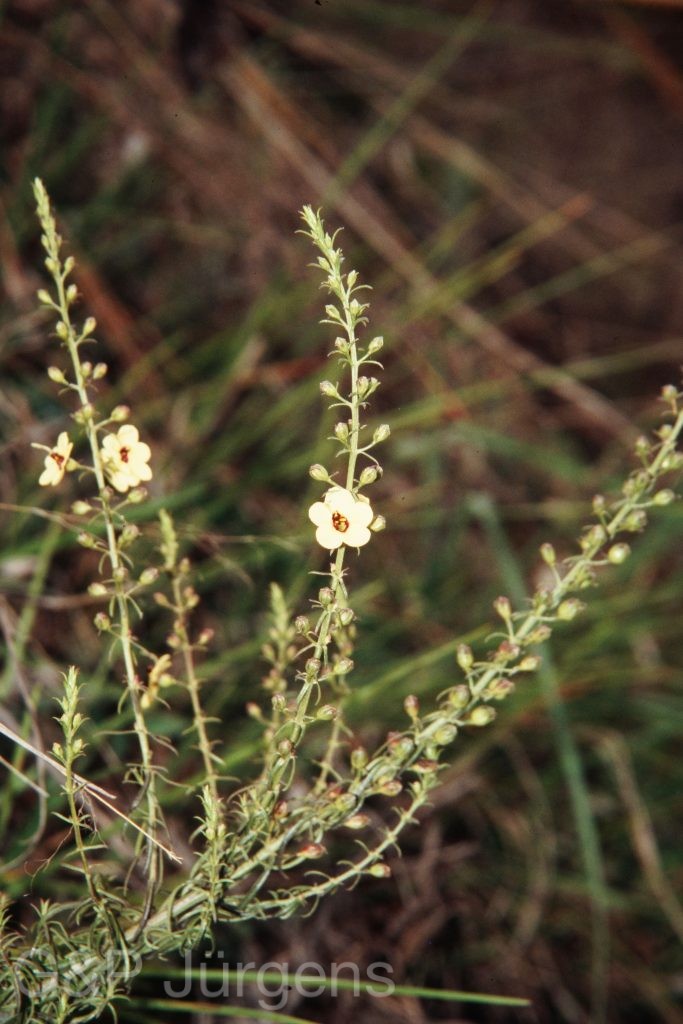
Bh09 353 P569
Bhutan Wangdi, 2400m June
Bh09 354 G570
Bhutan Wangdi, 2600m June

Description

Sopubia trifida Buch.-Ham. ex D.Don is a slender hemiparasitic herb of broad palaeotropical distribution, recorded across South and Southeast Asia and tropical Africa, including China, India, Nepal, Bhutan, Myanmar, Thailand, Indonesia, the Philippines, Sri Lanka, Madagascar, Papua New Guinea and several African nations; GBIF lists around 840 occurrences. It favours open grassy slopes, savanna, terraced field margins, scrub and disturbed sunny ground, mostly from the lowlands up to about 2700 m. The photographed plants were collected near Wangdi in Bhutan at 2400 and 2600 m in June, in the open warm-temperate grassland where this erect parasite grows attached to the roots of grasses.

The plant is an erect annual or perennial herb with stiff, wiry, often branched and minutely scabrous stems. The leaves are opposite below and alternate above, narrowly linear, sessile and frequently divided into a few filiform segments, the epithet trifida referring to this three-parted condition. The flowers are borne in lax terminal spike-like racemes; the corolla is rotate, typically pink to rose-purple, with a short tube and five subequal spreading lobes, while the calyx is campanulate and ribbed. The fruit is a small ovoid, loculicidal capsule containing numerous minute, angular seeds.

Now placed in the broadly recircumscribed Orobanchaceae following the transfer of hemiparasitic genera from the former Scrophulariaceae, Sopubia is a facultative root parasite drawing water and nutrients from neighbouring grasses through haustoria while retaining photosynthetic capacity. Its wide tropical range and tolerance of disturbed grassland account for its abundance. The species is common and not of conservation concern, and is sometimes regarded as a weedy associate of pastures and fallow land.

Author: Buch.-Ham. ex D. Don · Sources: POWO (Kew), GBIF, Flora of China, Flora of Bhutan, Flora of Ceylon, Fischer revision of Sopubia and allied Orobanchaceae