
L.
Description
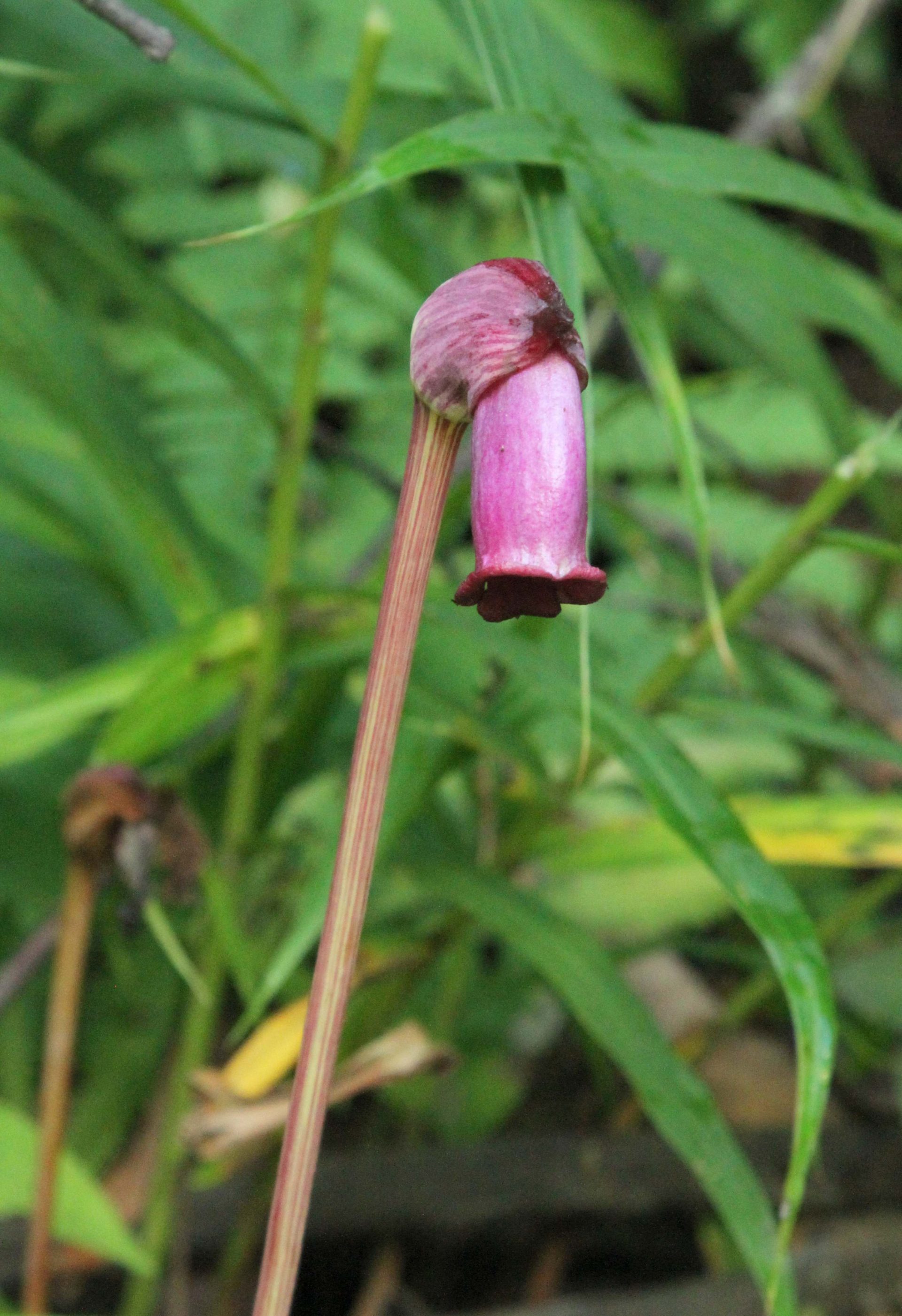
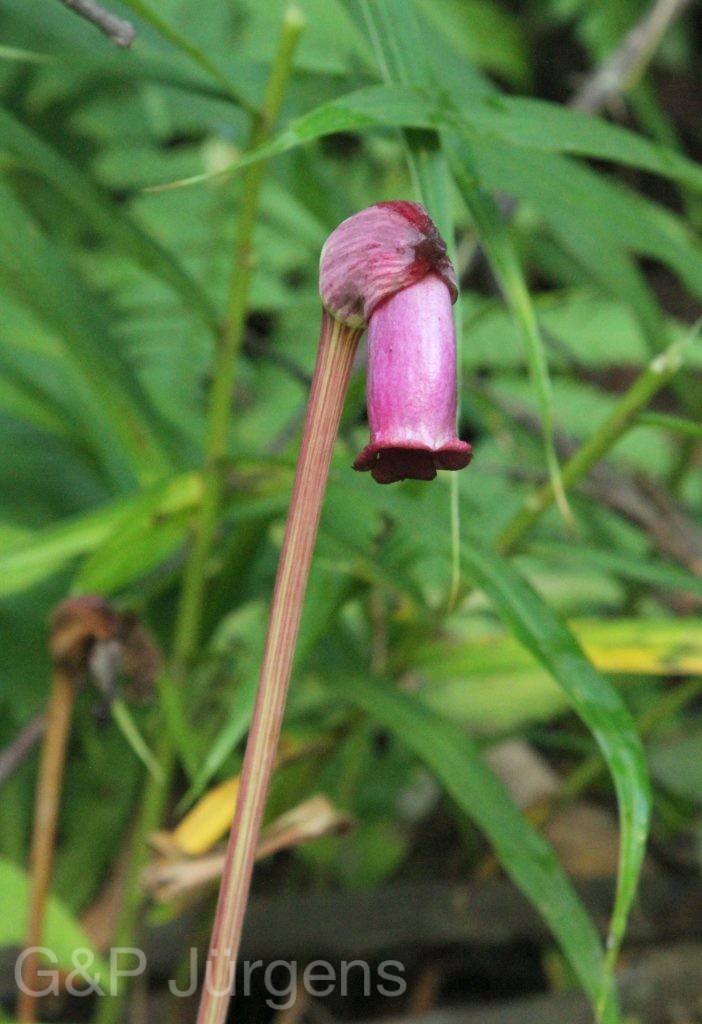
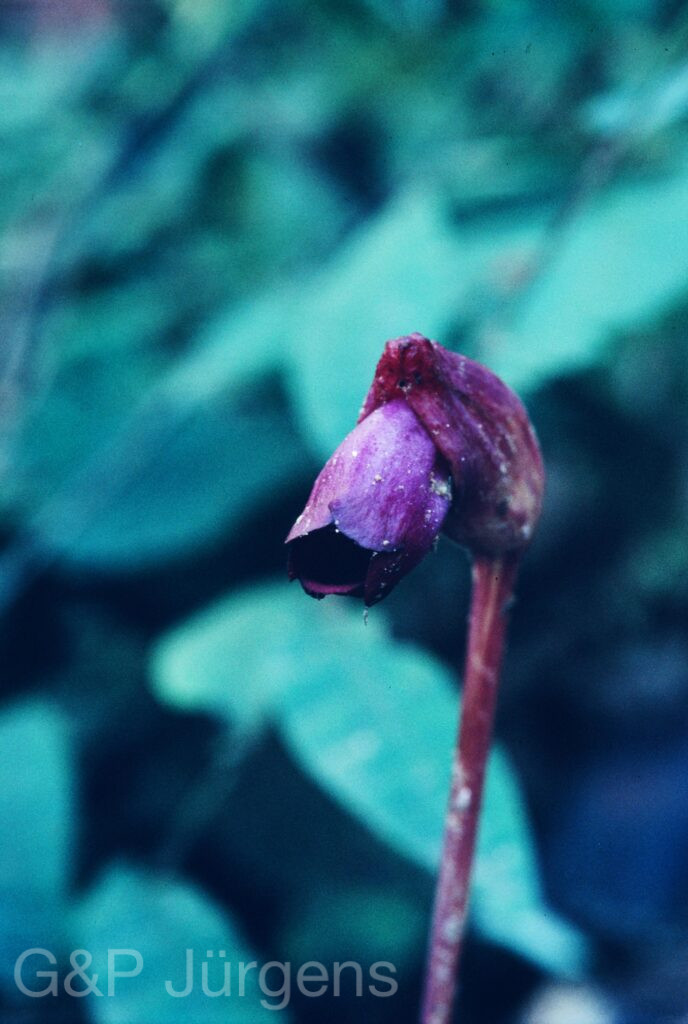
Aeginetia indica is a widespread holoparasitic herb of tropical and subtropical Asia, recorded from Japan, China, Taiwan, Korea and across South and Southeast Asia including India, Nepal, Bhutan, Sri Lanka, Myanmar, Thailand, the Malesian region and beyond; with about 3514 GBIF records it is by far the most frequently collected species in this group. It is a root parasite of grasses and other monocots, occurring in moist forest, grassland, scrub, plantations and field margins from the lowlands up into the lower hills, generally below about 2500 m. The plants illustrated, from Wangdi in Bhutan at around 2500 m in September and below Barphak in Nepal at about 1400 m in October, span this elevational range.
Lacking chlorophyll, the plant is reduced to fleshy, scale-like leaves on a very short underground stem attached to the host roots. The conspicuous part is the flower, borne singly atop a long, stout, purplish or yellowish scape; it is a large, tubular, somewhat curved corolla coloured deep purple to magenta with a paler throat, the five lobes short and the mouth oblique, subtended by a boat-shaped spathe-like calyx. There are four stamens and a superior ovary that ripens into a many-seeded capsule shedding the dust-like seeds characteristic of parasitic plants.
Now placed in the broadened Orobanchaceae following the merger of the old Scrophulariaceae-derived parasites, Aeginetia is an Asian genus of obligate root parasites, and A. indica is notable as a parasite of sugarcane and other grasses, where it can be a minor agricultural pest. Its enormous seed output and broad host and geographic range make it ecologically successful and of no conservation concern. The species is also used in traditional medicine across parts of its range.
Author: L. · Sources: POWO (Kew), GBIF, Flora of China, Flora of Bhutan, Annotated Checklist of the Flowering Plants of Nepal, Nickrent Parasitic Plant Genera of the World