
(Prain) T.Yamaz.
Description
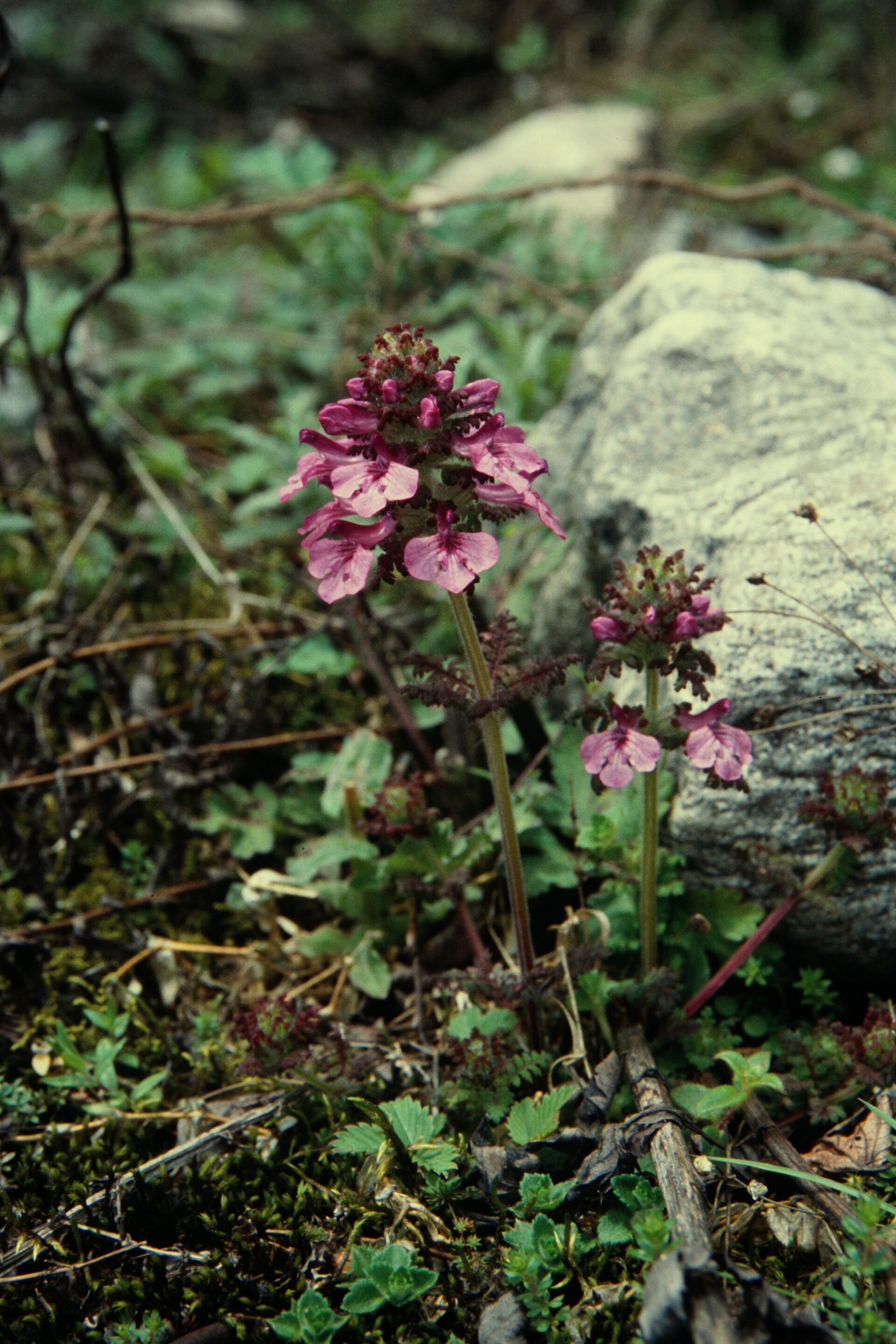
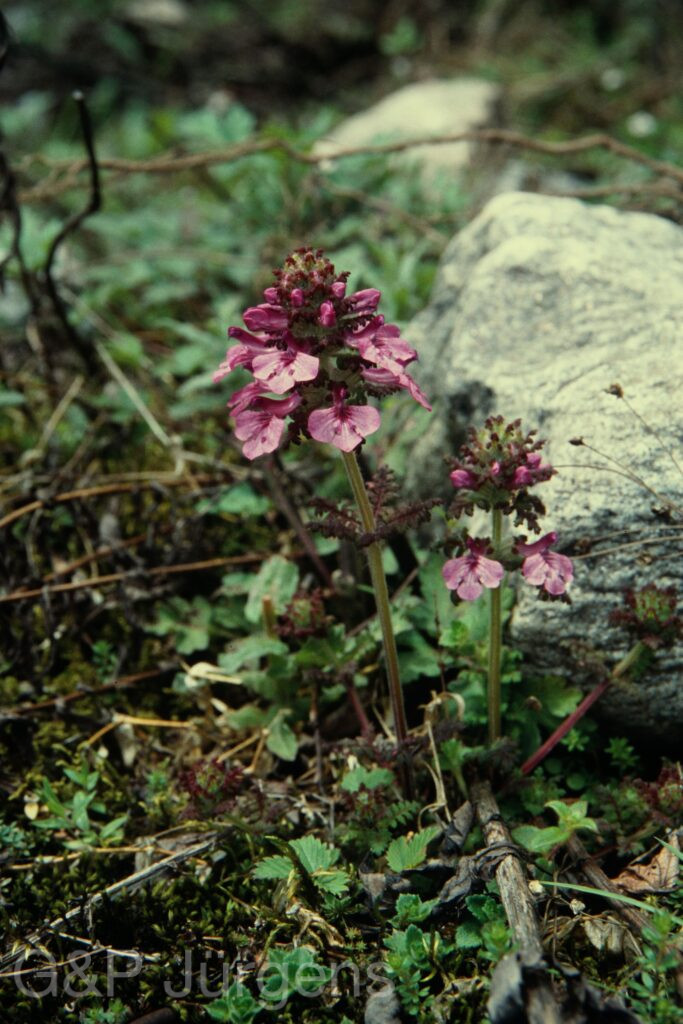
Pedicularis roylei var. speciosa is a hemiparasitic perennial of the eastern Himalaya, distributed across the high-montane and subalpine belt of southern China (Xizang and adjacent Yunnan) and Nepal, with populations extending into Sikkim and the Chumbi region. The variety is documented from a modest number of records (GBIF lists around 12 occurrences from CN and NP), reflecting both its restricted range and the limited collecting in its remote habitats. It occupies open alpine meadows, moist grassy slopes, the margins of Rhododendron and Abies forest, and streamside flushes between roughly 3000 and 4300 m. The photographed plant from the Yumthang valley in northern Sikkim at about 3500 m, flowering in May, is typical of these subalpine pastures where snowmelt sustains a brief but vigorous flush of growth. As a root-hemiparasite, it draws water and minerals from neighbouring grasses and forbs via haustoria while retaining functional green foliage.
The plant forms a low, clumped herb arising from a stout caudex, with erect or ascending stems often clothed in soft hairs. The leaves are mostly basal and pinnatisect, with oblong-lanceolate segments that are themselves toothed or crenate, giving the foliage a fern-like texture. The inflorescence is a dense spike or capitate cluster of conspicuous flowers; var. speciosa is distinguished by its notably large, showy corollas. The bilabiate corolla is rose-pink to purplish, the galea (upper lip) prolonged into a slender, often beak-like apex that twists or curves, while the broad three-lobed lower lip forms a landing platform. The calyx is tubular and toothed, and the four didynamous stamens lie concealed within the galea. The fruit is an obliquely ovoid capsule containing several seeds.
Within the large and taxonomically complex genus Pedicularis, which reaches its global diversity peak in the Sino-Himalayan region, this taxon belongs to a group whose beaked galeas reflect specialised pollination by long-tongued bumblebees. The variety, based on the basionym described by Prain and later treated by T. Yamazaki, is sometimes folded into a broadly circumscribed P. roylei; GBIF accepts it at varietal rank. Its elaborate floral architecture exemplifies the radiation of corolla forms that has accompanied the genus's hemiparasitic lifestyle. Though not currently regarded as threatened, alpine Pedicularis are sensitive to grazing pressure and climate-driven shifts in the snowmelt regime, making long-term monitoring of Himalayan populations desirable.
Author: (Prain) T.Yamaz. · Sources: POWO (Kew), GBIF, Flora of China Vol. 18, Flora of Bhutan Vol. 2 Part 3, Flora of Nepal, A Revision of the Genus Pedicularis (Pennell; Yamazaki, Pedicularis of Eastern Asia)