
Klotzsch
Description
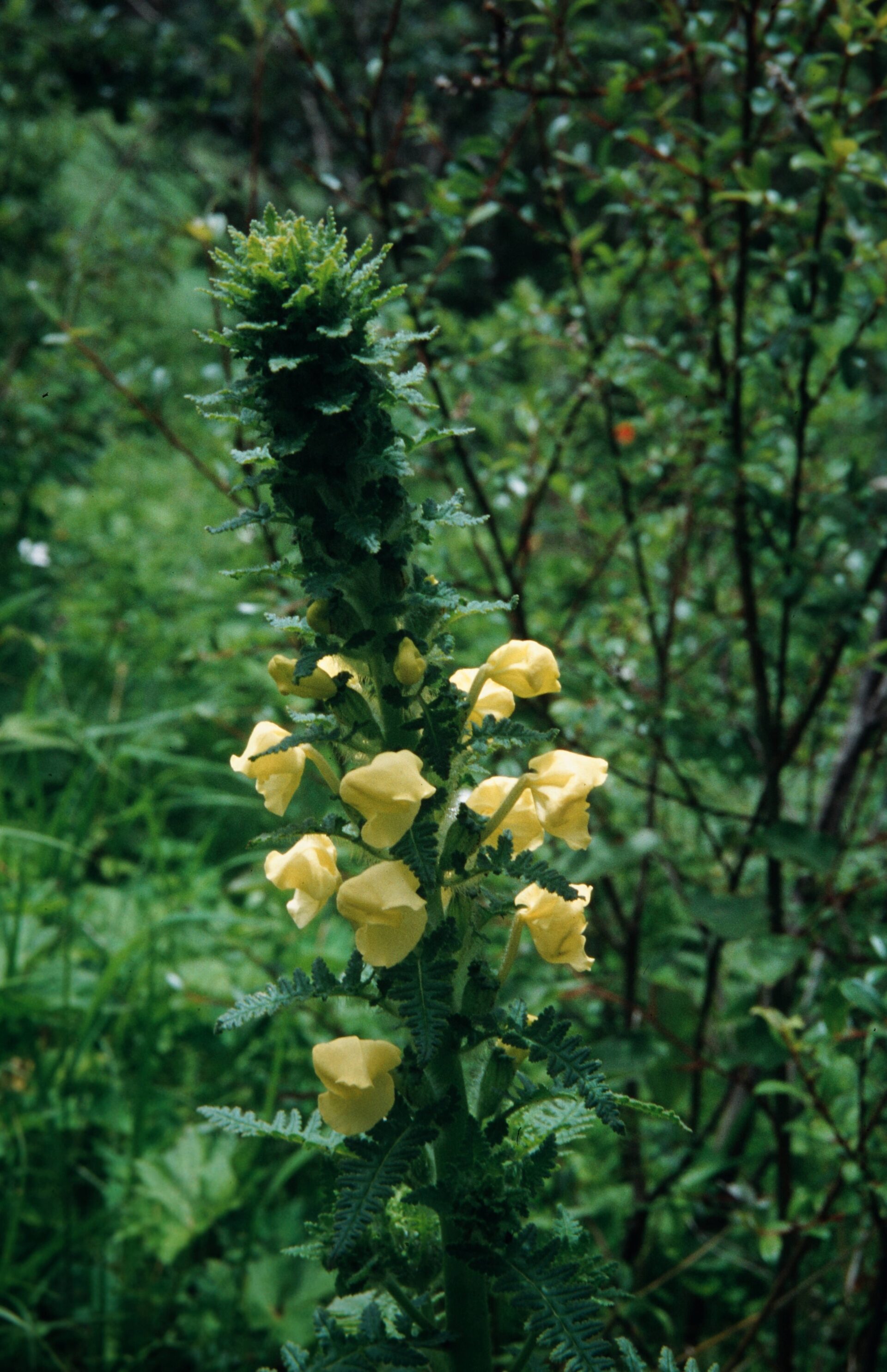
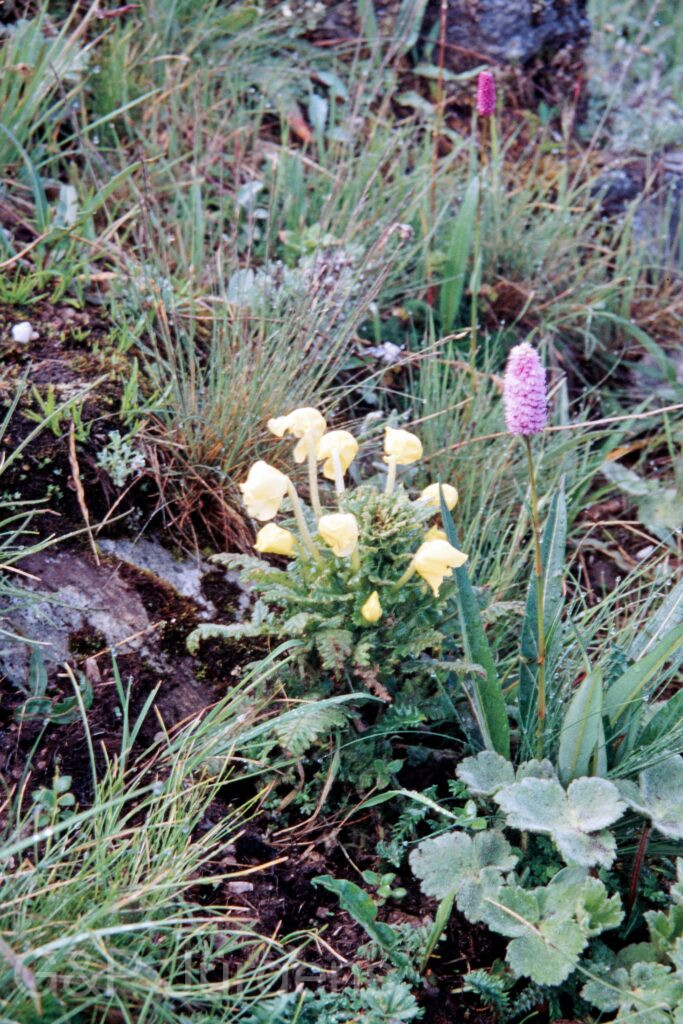
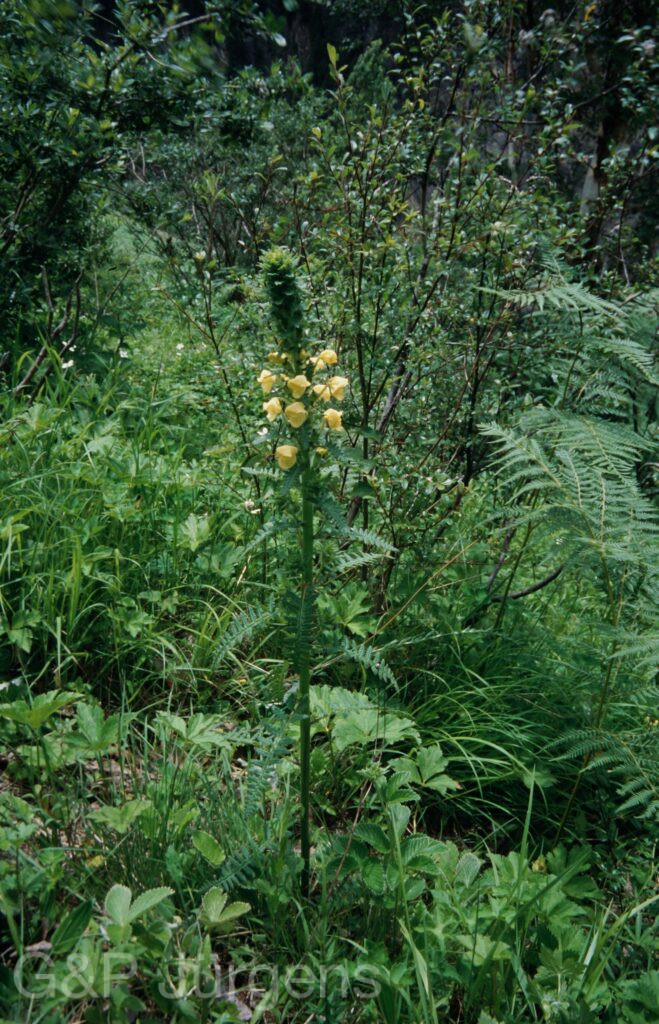
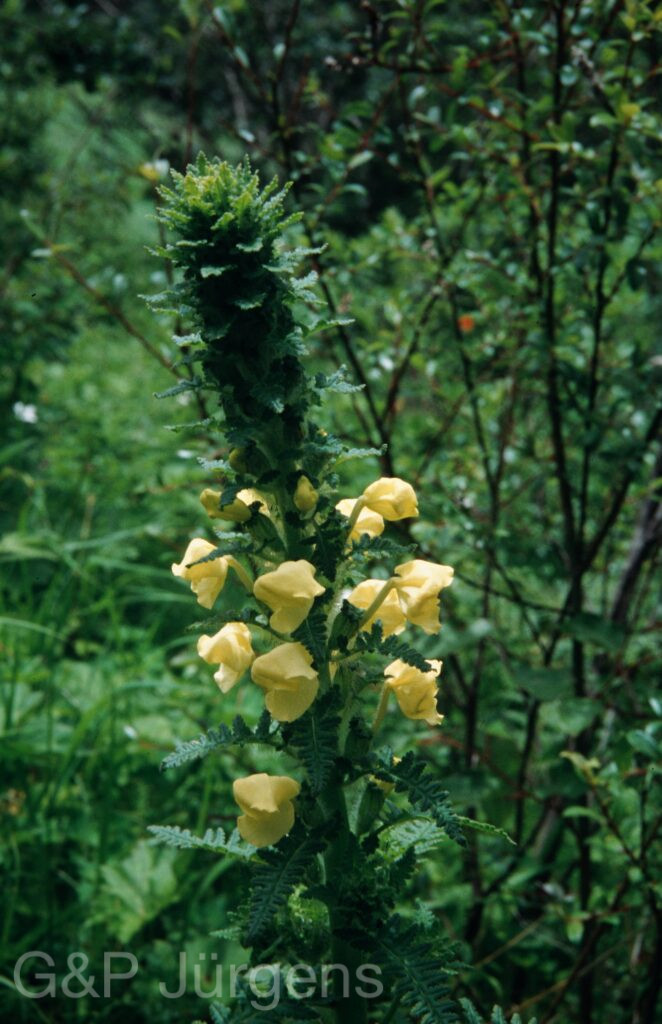
Pedicularis hoffmeisteri Klotzsch is a hemiparasitic herb distributed across the Sino-Himalayan region, with GBIF documenting some 266 occurrences spanning Nepal (NP), India (IN) and China (CN). It is characteristic of moist alpine and subalpine meadows, open grassy slopes, streamsides and forest margins, where it taps the roots of neighbouring grasses and herbs. The species was photographed in West Nepal at Kalmura at 3900 m in June and at the lower Suli-Khola at 2900 m in July, illustrating its broad altitudinal range from upper temperate forest into the alpine zone.
The plant is a perennial herb arising from a short rootstock, with erect or ascending stems that are often glabrescent below and pubescent in the inflorescence. The leaves are alternate or subverticillate, oblong to lanceolate in outline and pinnatisect, with closely toothed lobes typical of the genus. Flowers are borne in a terminal spike or interrupted raceme, each subtended by a leafy bract; the calyx is tubular and cleft, while the strongly zygomorphic corolla is two-lipped, the upper lip forming a galea that is often beaked and the lower lip three-lobed. The fruit is an obliquely ovoid, laterally compressed loculicidal capsule containing few seeds.
Like other members of Pedicularis, the largest genus in Orobanchaceae, P. hoffmeisteri is a facultative root hemiparasite that retains green photosynthetic tissue while drawing water and nutrients from host roots. Its bumblebee-pollinated galeate flowers reflect the pollinator specialisation that has driven explosive diversification of the genus in the Himalaya and Hengduan Shan. Though not formally assessed, its wide distribution and tolerance of disturbed pasture suggest no immediate conservation concern, though high-elevation populations are sensitive to grazing pressure and climate-driven shifts in the alpine treeline.
Author: Klotzsch · Sources: POWO (Kew), GBIF, Flora of Nepal, Flora of China, Pedicularis monograph (Prain; Tsoong revision of Asian Pedicularis)