
(Prain) P.C.Tsoong
Description
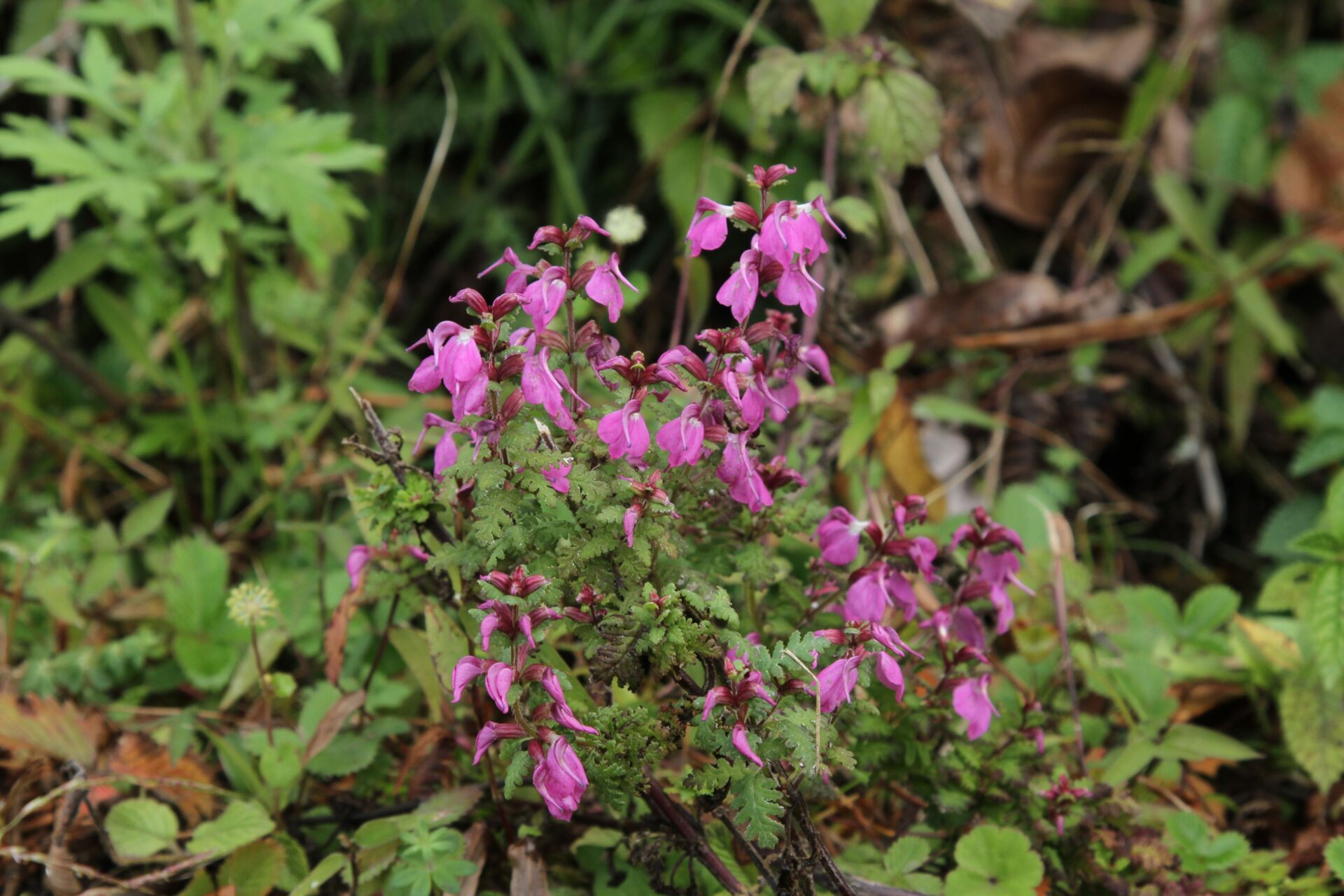
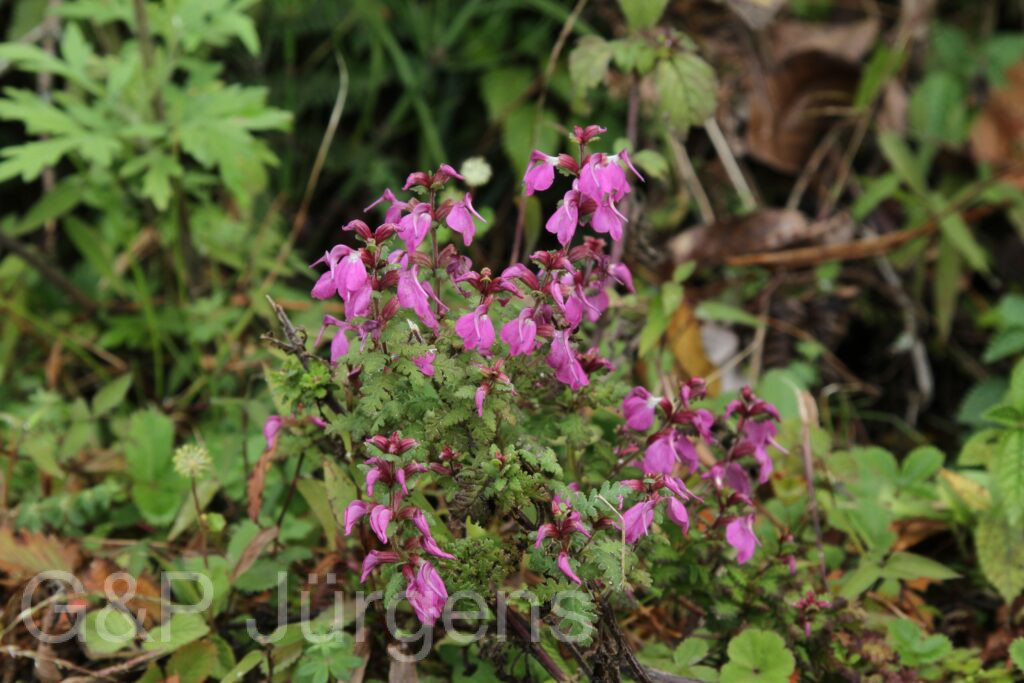
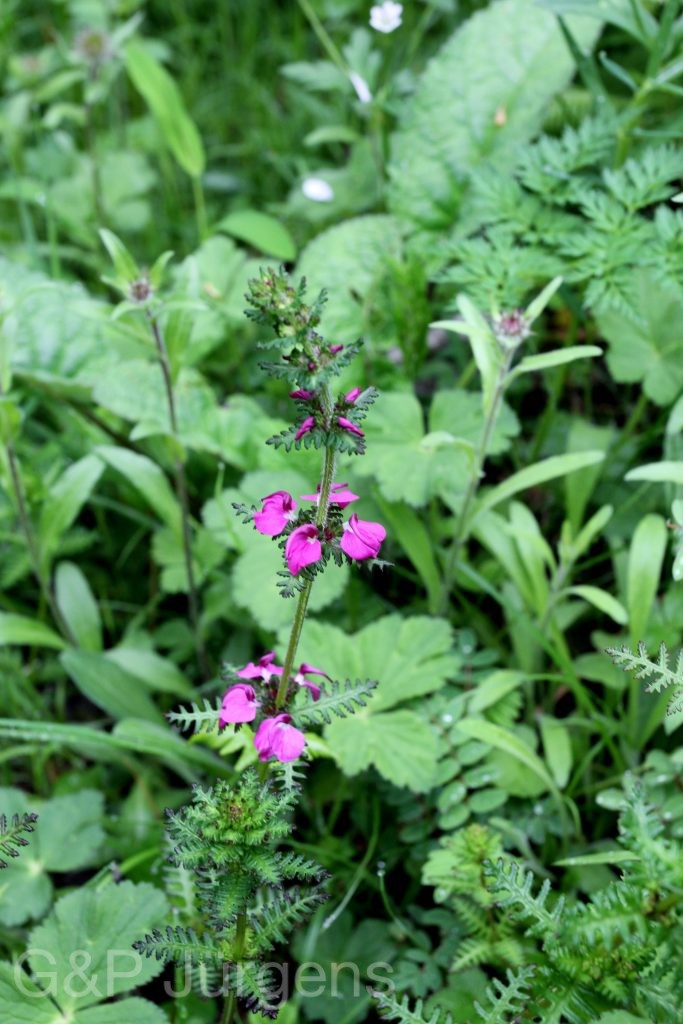
Pedicularis gracilis subsp. macrocarpa is a Sino-Himalayan lousewort distributed across southern China, northern India, Nepal and Bhutan, with about 33 documented GBIF occurrences. It occupies open forest, grassy slopes, scrub and meadow margins through a broad temperate to subalpine elevation span. The Bhutanese records illustrate this amplitude well: a population at Trashigang at 1900 m flowering in October and another at the Dur Tsa-Chu at 3380 m flowering in June, indicating tolerance of both warm-temperate forest and high subalpine grassland, on moist, humus-rich and seasonally damp ground.
It is a slender erect perennial herb, the stem often branched and the foliage finely dissected: the leaves are alternate or subopposite, pinnately divided into narrow, serrate segments. The flowers are borne in lax, leafy-bracteate terminal racemes; each has a tubular, toothed calyx and a strongly two-lipped pink to purplish corolla typical of the genus, the galeate upper lip (galea) often beaked or hooded and the spreading three-lobed lower lip forming a landing platform. The four didynamous stamens are concealed within the galea. As the subspecific epithet macrocarpa indicates, the fruit is a comparatively large, laterally compressed, beaked loculicidal capsule containing several seeds.
GBIF treats this name as a synonym while retaining Pedicularis gracilis subsp. macrocarpa as accepted, distinguished from the typical subspecies by its larger fruit. Like all louseworts it is a hemiparasite, drawing water and nutrients from neighbouring roots via haustoria while retaining green foliage. The galeate flowers are pollinated by bumblebees. The taxon is locally distributed but not of conservation concern.
Author: (Prain) P.C.Tsoong · Sources: POWO (Kew), GBIF, Flora of China Vol. 18, Flora of Bhutan Vol. 2, Flora of Nepal, A Monograph of the Genus Pedicularis