
(Prain ex Maxim.) Pennell
Description
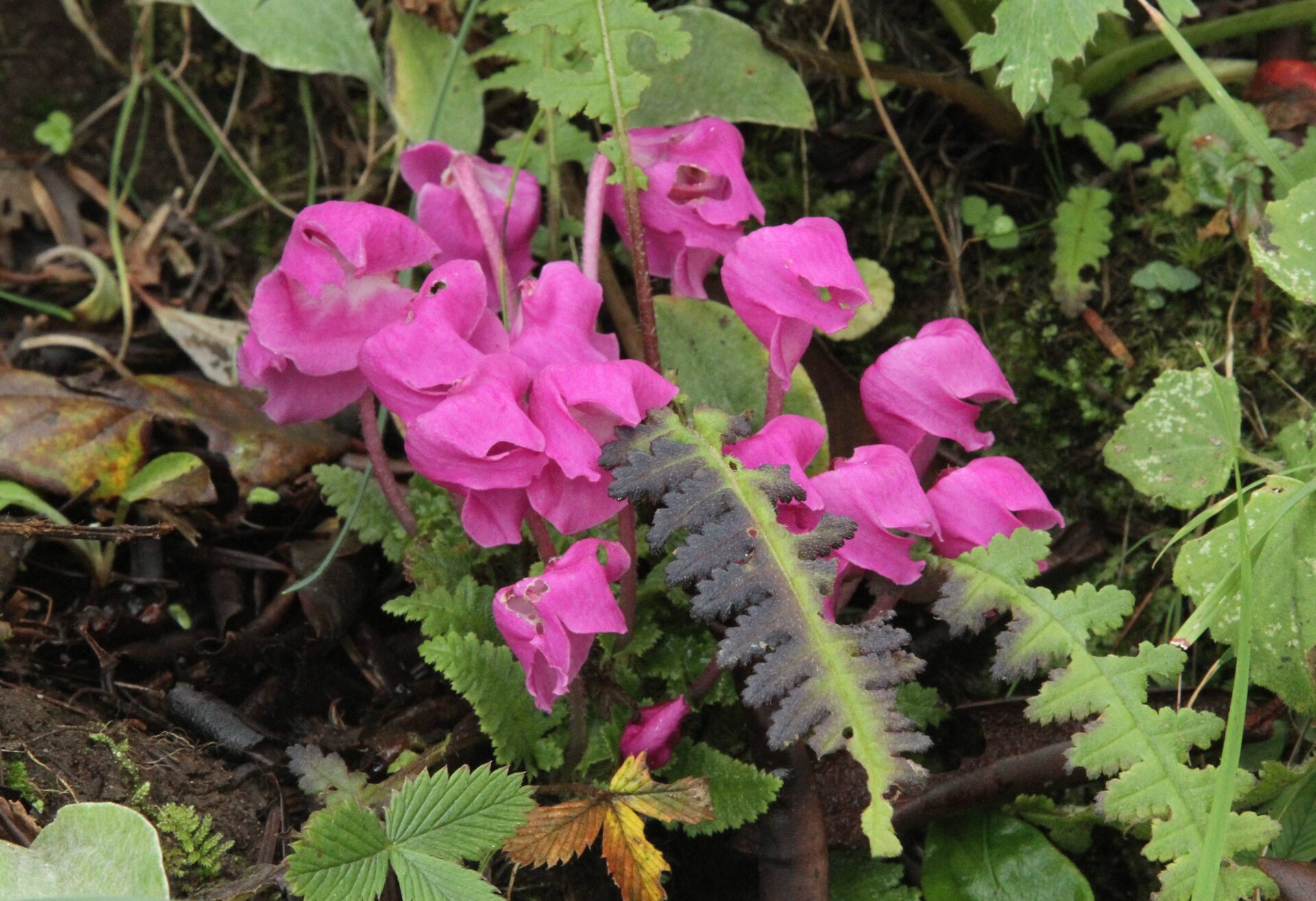
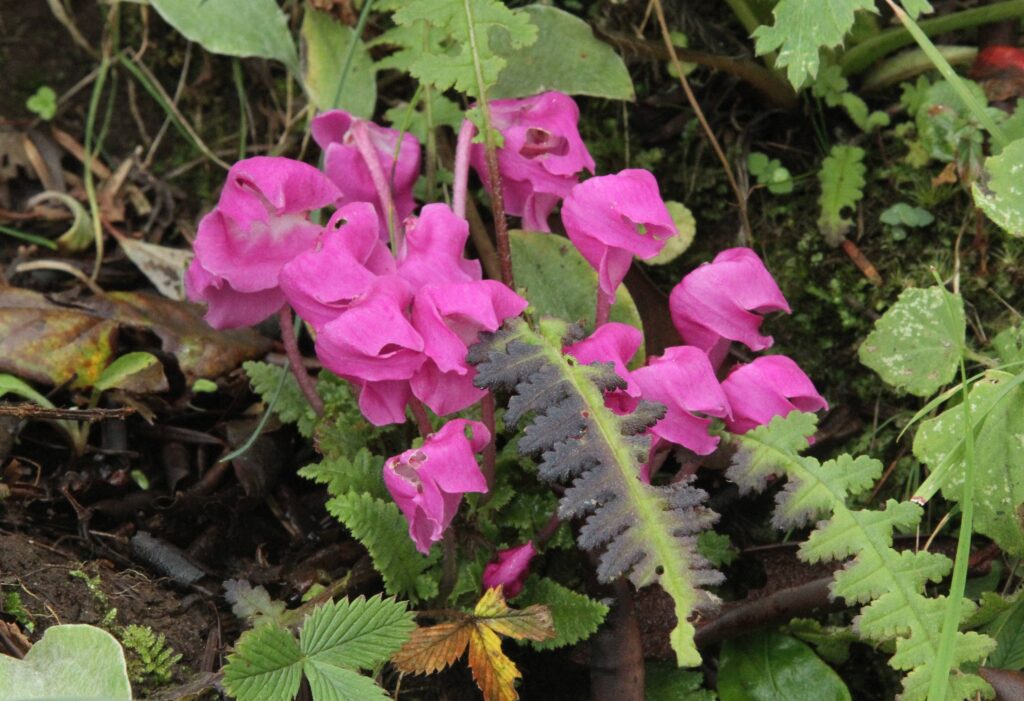
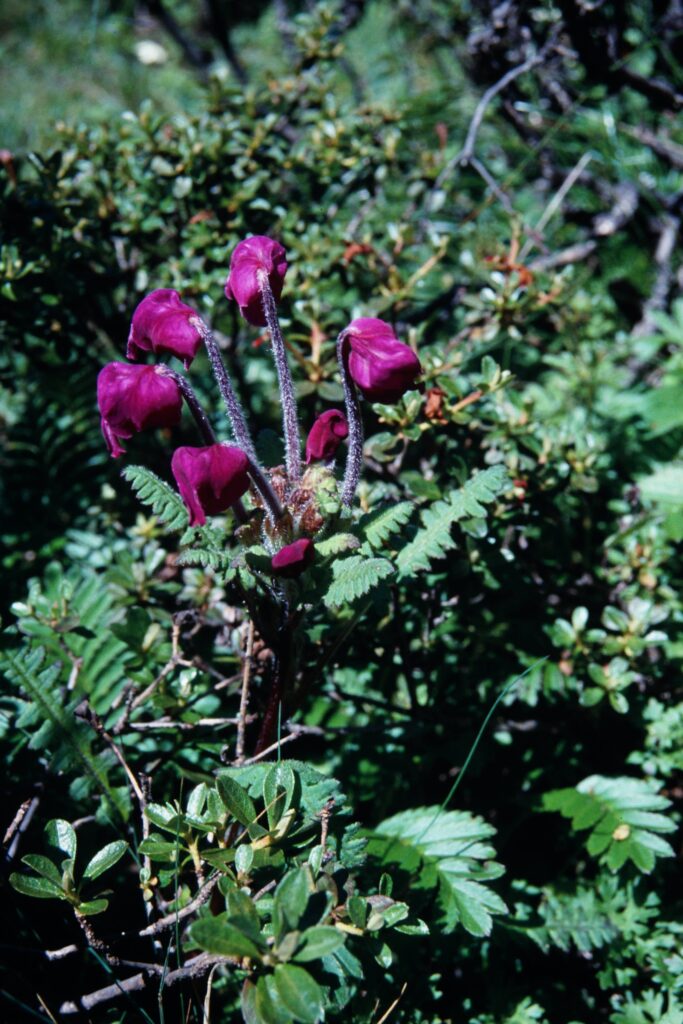
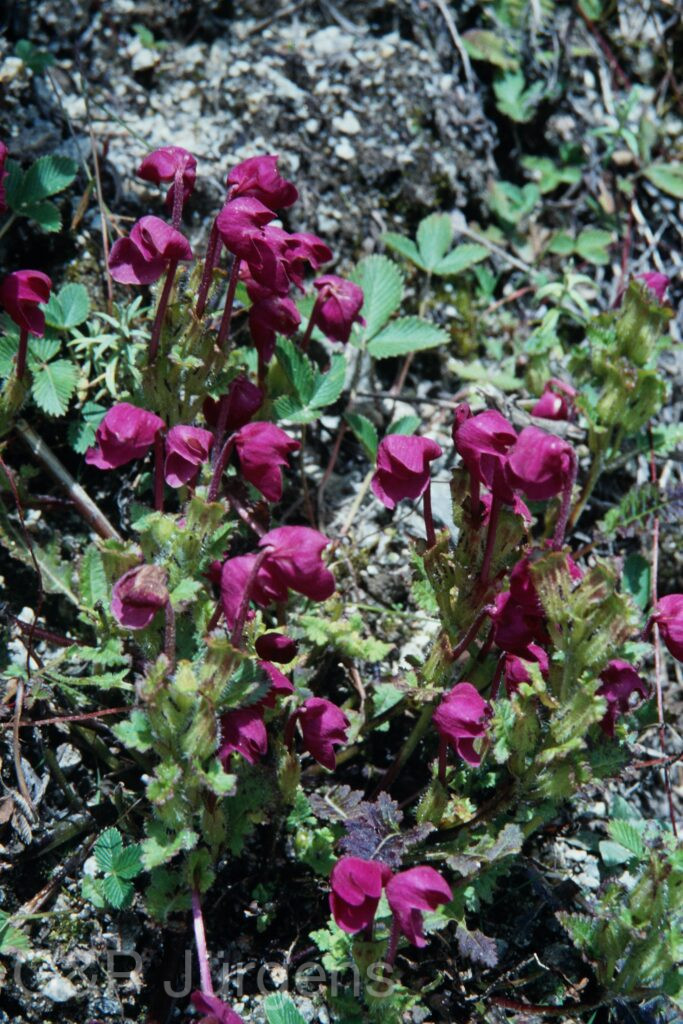
Pedicularis pauciflora is a hemiparasitic herb of the eastern Himalaya, distributed across Nepal, NE India (Sikkim, West Bengal) and Bhutan, with GBIF documenting some 43 georeferenced records concentrated in this narrow arc. It is a plant of the alpine and subalpine zone, occupying moist meadows, open turf and rocky slopes between roughly 3,500 and 4,200 m. The photographed populations at Tsotchentchen in Bhutan (3,980 m, flowering in June) and at Dzongri in Sikkim (3,900 m, August) typify its habitat in cool, well-drained alpine grassland kept moist by monsoon precipitation and snowmelt.
It is a perennial forming a slender, often few-stemmed tuft from a fibrous rootstock. The leaves are pinnatisect, the lobes oblong and crenate-dentate, glabrous to sparsely hairy and arranged in a basal rosette with a few reduced cauline leaves. As the epithet pauciflora indicates, the inflorescence is few-flowered, the flowers borne in the upper leaf axils. The zygomorphic corolla is bilabiate with a galeate upper lip prolonged into a slender beak and a spreading three-lobed lower lip, in shades of pink to purple-rose. The fruit is an obliquely ovoid capsule enclosing several seeds.
Like all Pedicularis, the genus exemplifies facultative root hemiparasitism, drawing water and nutrients from host roots via haustoria while retaining functional photosynthesis. The galeate, beaked corolla is an adaptation to pollination by long-tongued bumblebees prevalent at high elevation. Pedicularis is a notoriously large and taxonomically complex genus in the Himalaya, and P. pauciflora is best distinguished from allied species by its reduced flower number and beak morphology. Its restricted alpine range makes it potentially sensitive to grazing pressure and climatic shifts in the high Himalaya.
Author: (Prain ex Maxim.) Pennell · Sources: POWO (Kew), Flora of Bhutan Vol. 2, GBIF, Flora of China Vol. 18, Yamazaki: Revision of the Asiatic Pedicularis (Scrophulariaceae)