
T.Yamaz.
Description
Pedicularis trichodonta is a perennial hemiparasitic herb native to the eastern Himalayas, recorded from Nepal, northeast India (Sikkim), and Bhutan. The species inhabits alpine meadows, moist turf, and Rhododendron scrub margins at elevations of 3,800–4,800 m, attaching to the roots of neighbouring grasses and other herbaceous hosts for supplementary water and nutrient uptake. It has been documented from the Thitha-Tso area in Bhutan at 4,360 m, flowering in July during the monsoon, when alpine meadows in the eastern Himalayas reach their peak floral diversity.
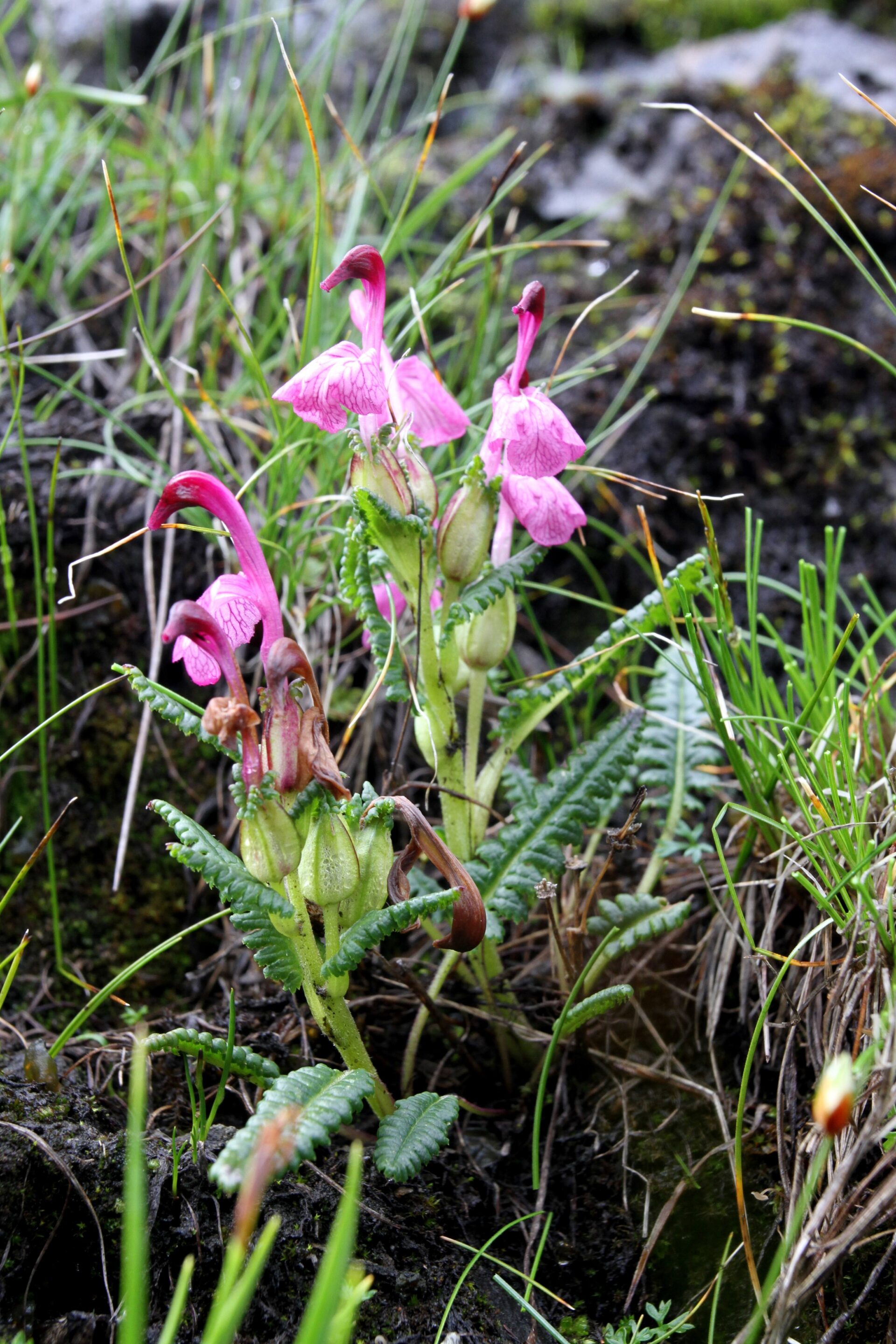
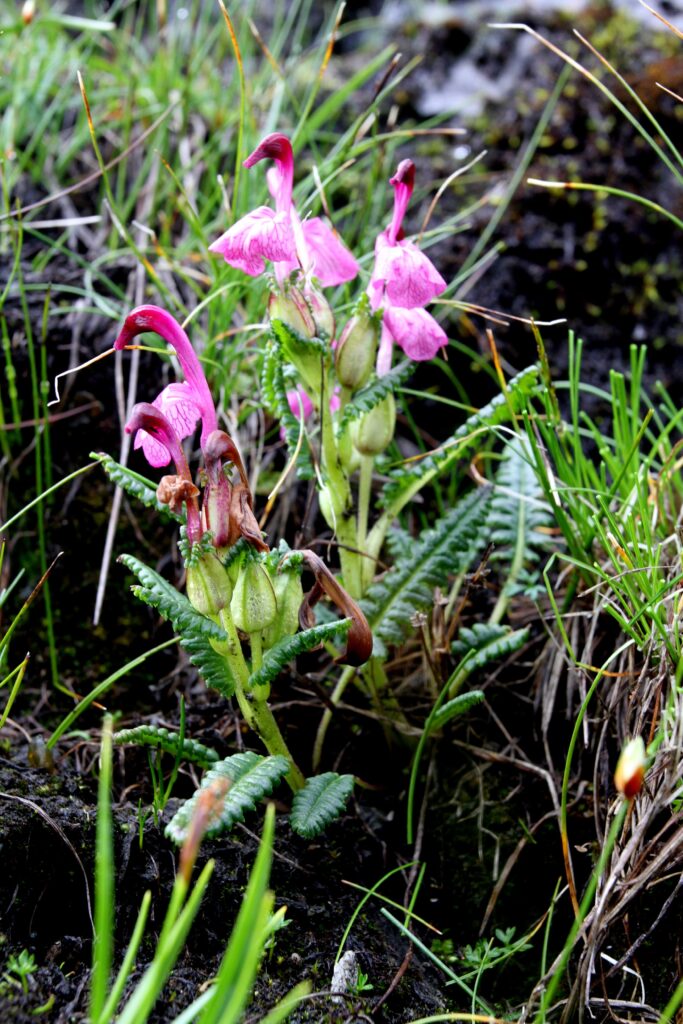
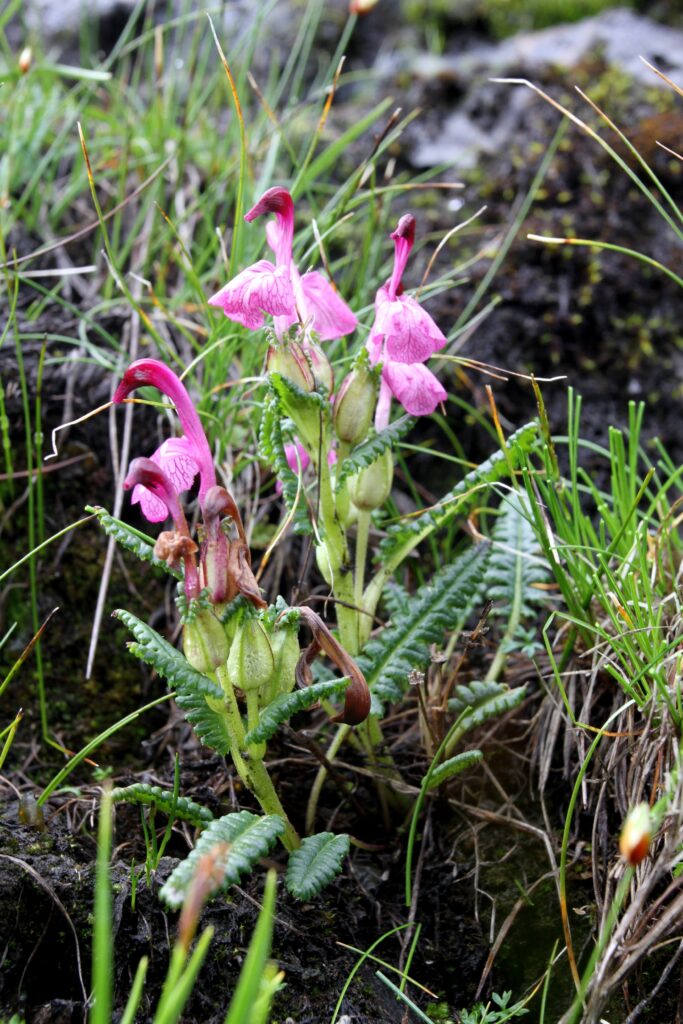
The plant produces erect to ascending stems 10–25 cm tall from a fascicle of fleshy, fusiform roots. The leaves are mostly basal and sub-opposite on the stem, oblong-lanceolate in outline, 3–7 cm long, deeply pinnatisect with numerous linear to oblong segments that are themselves dentate, the teeth bearing fine, hair-like extensions — the character from which the specific epithet trichodonta ("hair-toothed") is derived. The inflorescence is a dense, terminal, capitate to shortly spicate raceme. The calyx is tubular, membranous, with five unequal, denticulate lobes. The corolla is bilabiate, typically pink to purplish-red, 15–20 mm long; the upper lip (galea) is falcate-incurved, beakless or very shortly beaked, while the lower lip is three-lobed and spreading. The capsule is obliquely ovoid, compressed, slightly exserted from the calyx.
Pedicularis trichodonta was described by Tetsuo Yamazaki and belongs to one of the most species-rich genera of flowering plants, with over 600 species worldwide, the majority concentrated in the Sino-Himalayan region. With only about 33 occurrence records in GBIF, the species is among the less frequently collected members of the genus in the eastern Himalayas. Its hemiparasitic ecology makes it dependent on intact alpine plant communities, and disruption of host populations through overgrazing or climate-driven vegetation change could indirectly threaten its persistence. Further collections are needed to clarify its full range and population status.
Author: T.Yamaz. · Sources: POWO (Kew), GBIF, Flora of Bhutan Vol. 2, Flora of China Vol. 18, Yamazaki: Pedicularis of Nepal (1988)