
Prain
Description
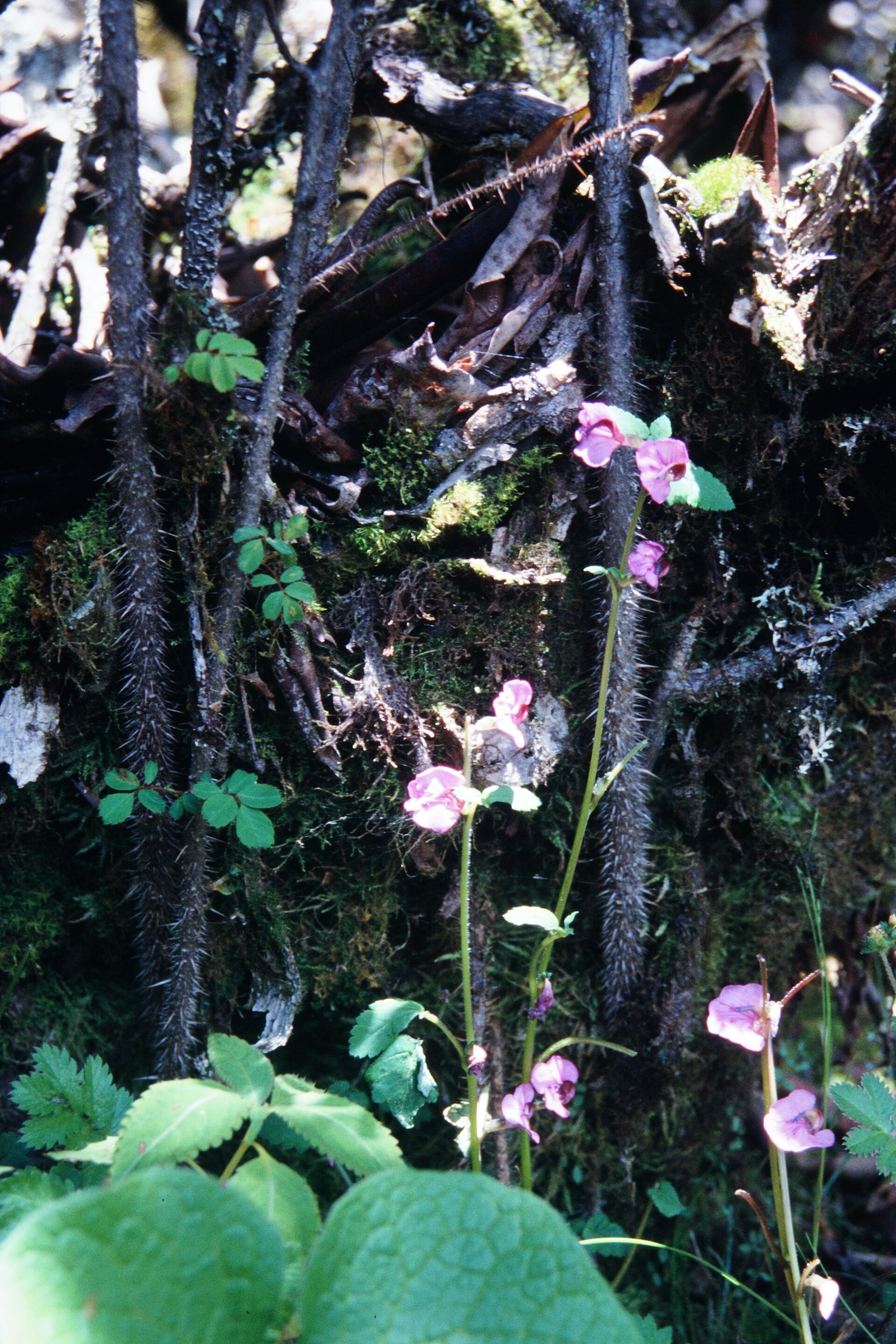
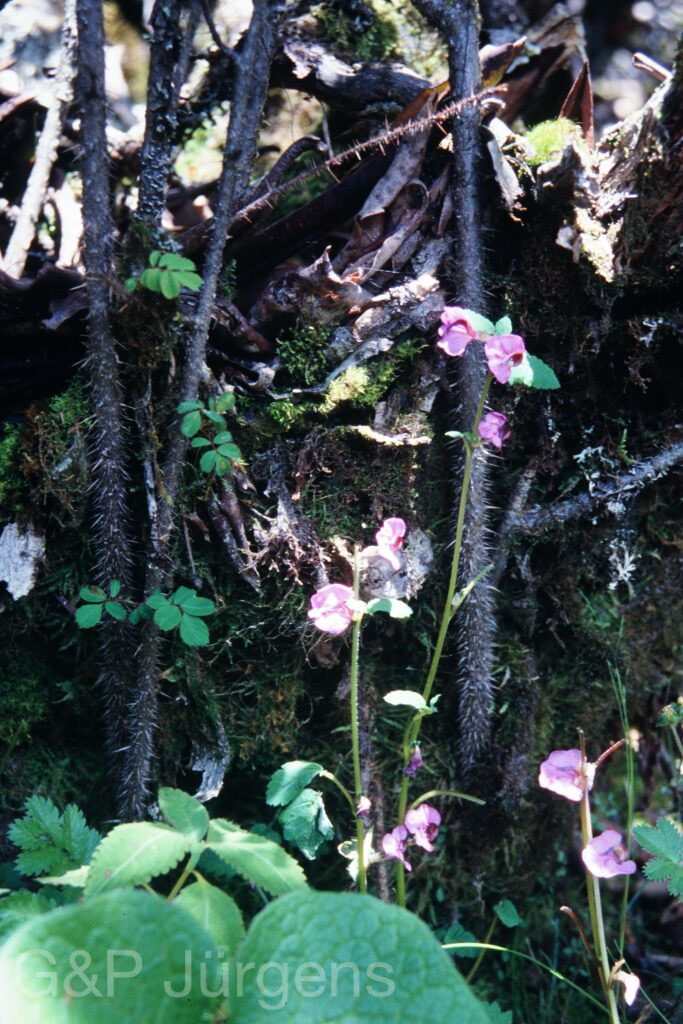
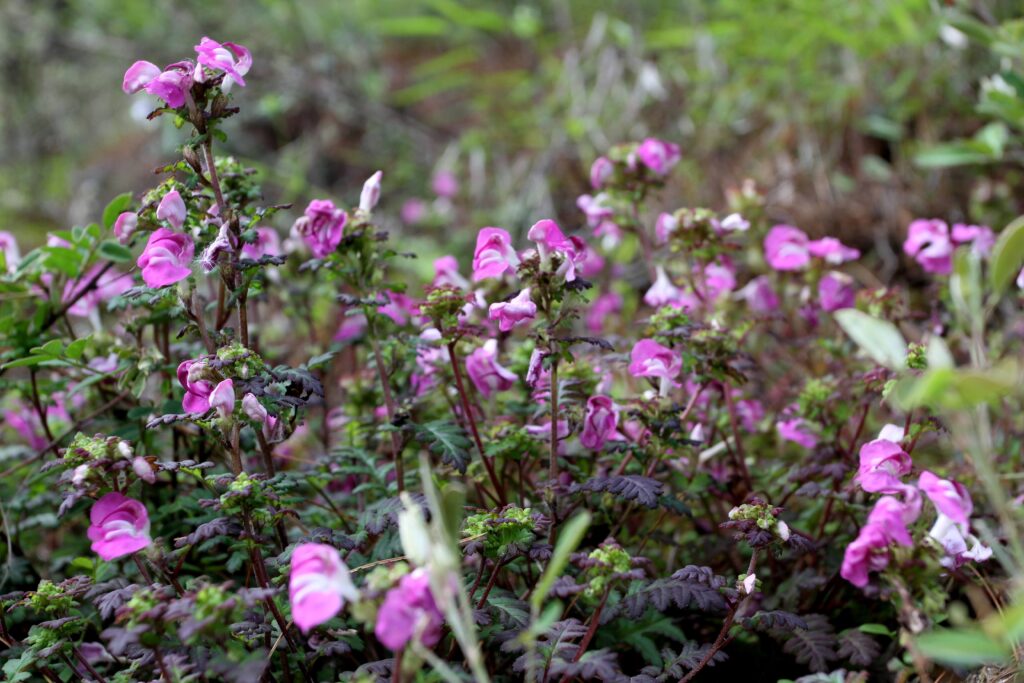
Pedicularis pantlingii is an alpine hemiparasitic herb of the eastern Himalaya, distributed across India (notably Sikkim), China, Bhutan, Myanmar and Nepal, with the Austrian (AT) record almost certainly representing cultivated or herbarium-derived material rather than a natural occurrence. The roughly 114 georeferenced collections concentrate along the high mountain arc from Sikkim and Bhutan into adjacent south-eastern Tibet. It favours moist alpine meadows, open grassy slopes, streamsides and the margins of rhododendron and dwarf-shrub thickets. As the photographed material from Sikkim's Dzongri at 3900 m in August and from Bhutan near Thimphu at 2490 m in July shows, the species ranges from upper temperate to alpine elevations, flowering through the summer monsoon when these pastures are at their most lush.
Like most members of the genus, it is a semi-parasitic perennial drawing water and nutrients from neighbouring roots via haustoria. The stems arise from a short rootstock and bear leaves that are oblong to lanceolate in outline and pinnatisect, the segments toothed and often crisped at the margin. The flowers are borne in a terminal spike or raceme, each subtended by a leafy bract, with a tubular, toothed calyx. The corolla is strongly two-lipped and characteristically galeate: the hooded upper lip (galea) is frequently prolonged into a slender beak enclosing the four didynamous stamens, while the spreading three-lobed lower lip forms a landing platform for bumblebee pollinators. The fruit is an obliquely ovoid, laterally compressed capsule containing several seeds.
The genus Pedicularis (lousewort) is exceptionally diverse in the Sino-Himalayan region, which forms its global centre of speciation, and the elaborate corolla beaks reflect tight coevolution with long-tongued bumblebees. Commemorating the collector Robert Pantling of the Sikkim botanical surveys, P. pantlingii is a regional endemic of restricted range. Although not formally assessed as threatened, its dependence on intact alpine pasture makes it sensitive to overgrazing and climate-driven upslope shifts of montane vegetation.
Author: Prain · Sources: POWO (Kew), GBIF, Flora of China Vol. 18, Flora of Bhutan Vol. 2, Flora of Nepal, Tsoong's Monograph of the Genus Pedicularis