
Prain ex Maxim.
Description
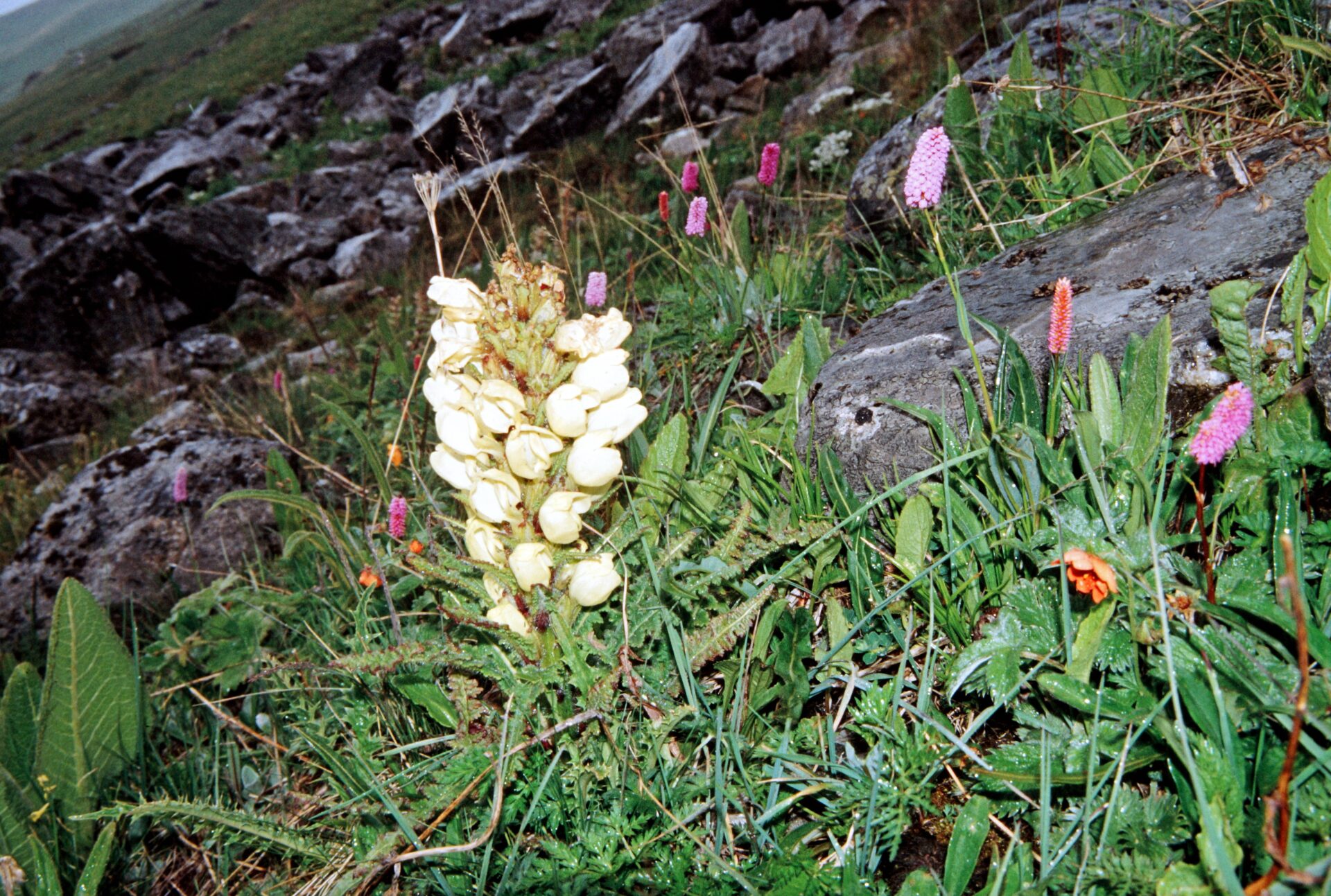
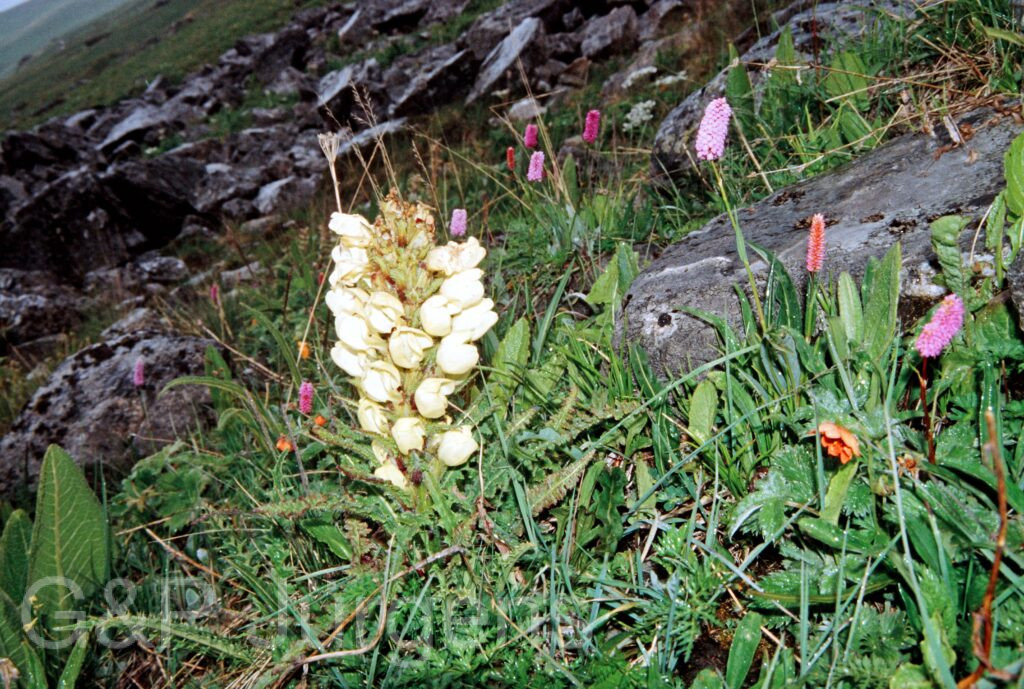
Pedicularis scullyana is an alpine hemiparasitic herb endemic to the Himalaya and adjacent Tibetan margins, recorded from Nepal, India, Bhutan and China across some 217 GBIF occurrences. The illustrated plant was photographed at Kalmura in West Nepal at about 4000 m in June. It inhabits open alpine meadows, moist grassy slopes and the margins of scrub between roughly 3500 and 4500 m, growing in the short turf where, like all lousewort, it draws water and nutrients from the roots of neighbouring grasses and herbs through haustorial connections.
The plant is a perennial herb with a fascicled rootstock and erect or ascending stems. The leaves are alternate or sub-opposite, pinnatisect into closely toothed segments, giving the fern-like foliage typical of the genus. The flowers are borne in a terminal spike or raceme; each has a tubular calyx and a strongly two-lipped corolla, the upper lip (galea) hooded and often beaked to enclose the anthers, the lower lip three-lobed and spreading. Pollination is by long-tongued bumblebees, and the fruit is a flattened capsule releasing several seeds.
Pedicularis is one of the largest genera of the Himalayan alpine flora and a notable example of an explosive radiation, with the diversity of galea and beak forms reflecting specialisation for bumblebee pollination. As facultative root hemiparasites, the species influence community composition by suppressing dominant graminoids. P. scullyana is a regional endemic of restricted range; while not formally assessed as threatened, such narrowly distributed alpines are sensitive to grazing intensity and climate-driven shifts in the alpine zone.
Author: Prain ex Maxim. · Sources: POWO (Kew), GBIF, Flora of Nepal, Flora of China, Flora of Bhutan, Yamazaki – Taxonomic Revision of Pedicularis (Himalaya)