Tag:

Bhutan

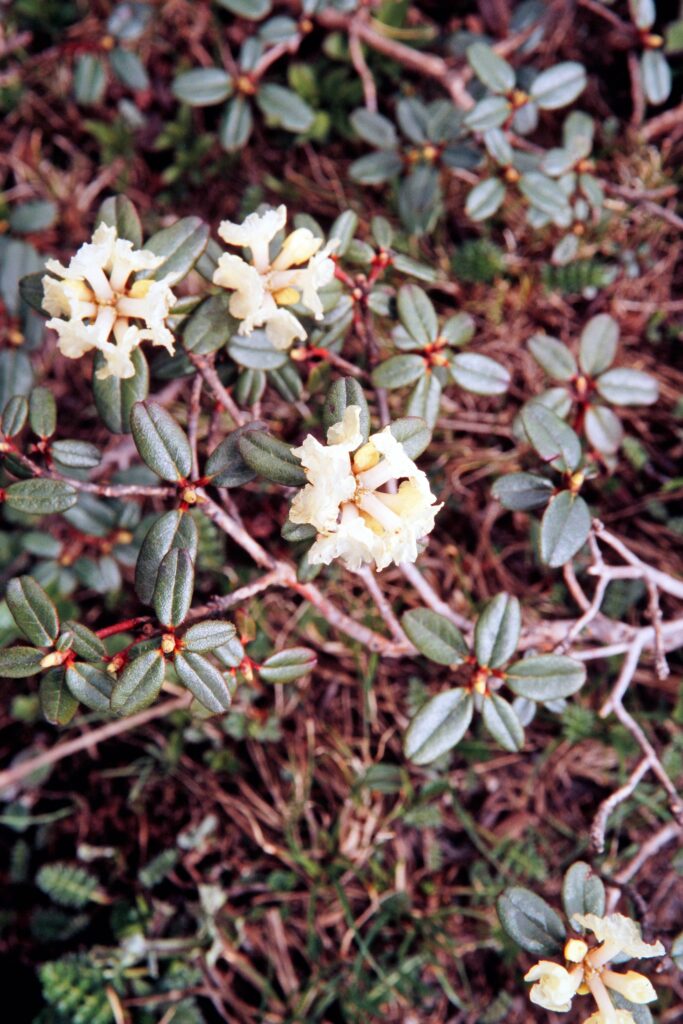
Flowers of Bhutan — 1326 plant species documented across the Bhutanese Himalaya, from dense broadleaf and conifer forests to alpine scrub and meadows. Bhutan’s largely intact wilderness shelters an exceptional diversity of orchids, rhododendrons, primulas and Himalayan poppies, many of them regional endemics. Each species page includes a botanical description, distribution, habitat and flowering time, with the original photograph and its recorded altitude and locality.

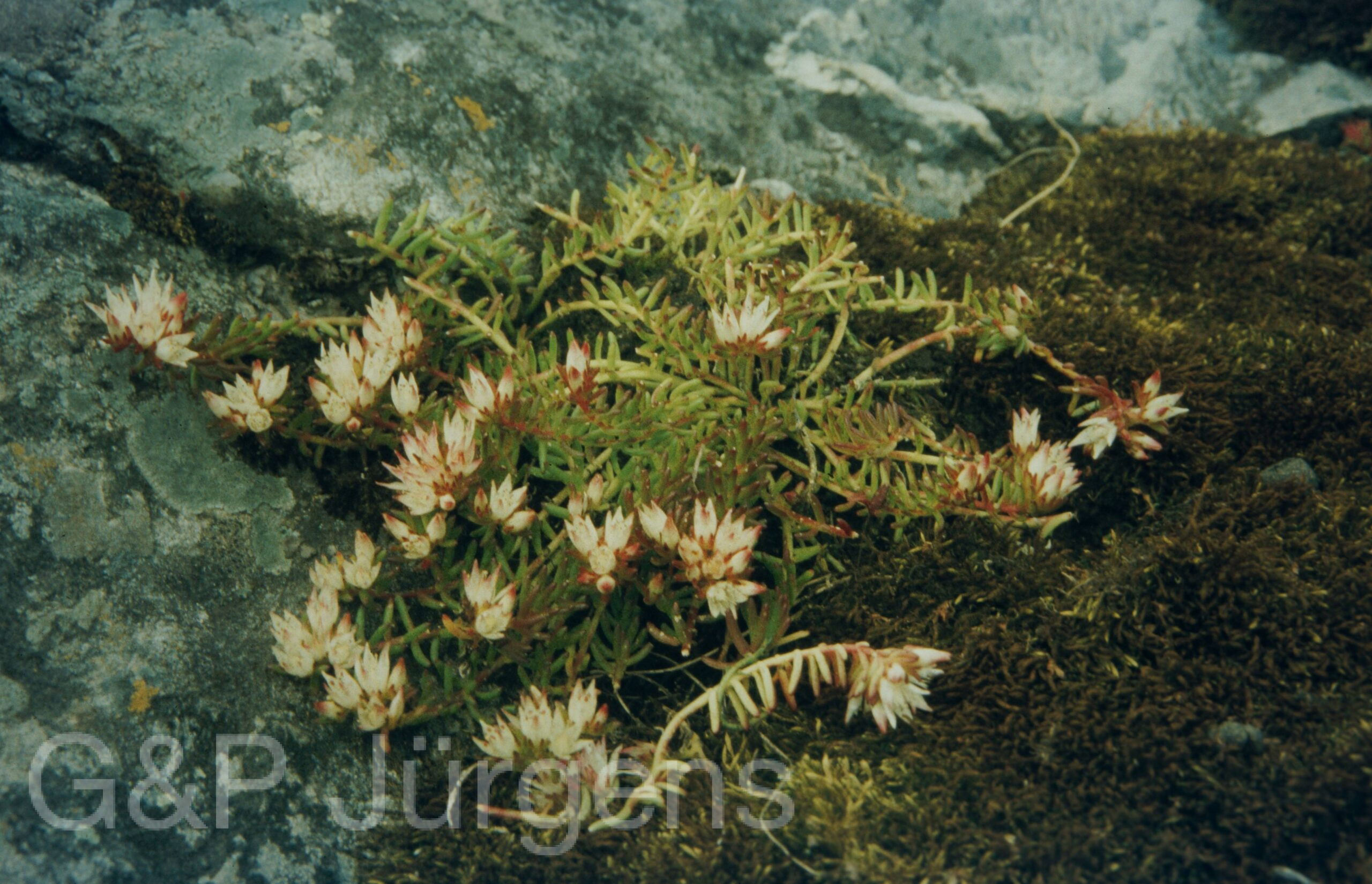
(Prain ex Raym.-Hamet) S.H.Fu
Bhutan2012 88
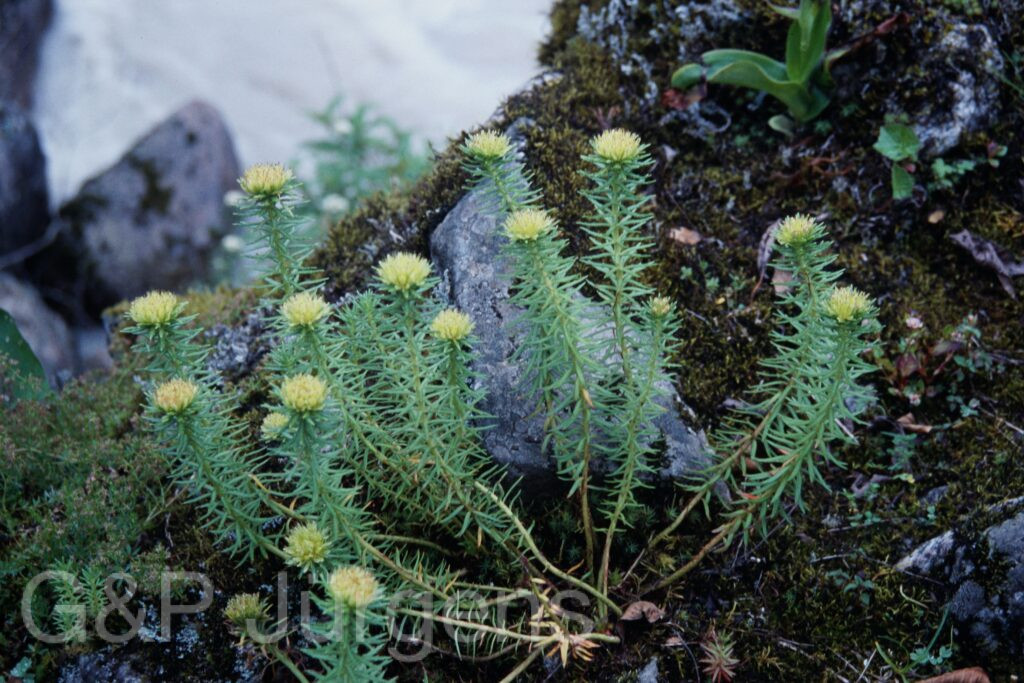
Bhutan Chele La 4150m, September

Description

Rhodiola hobsonii is an alpine succulent perennial of the eastern Himalaya and adjacent southwestern China, recorded from Bhutan, northern India (Sikkim, Arunachal), Nepal and the Chinese provinces of Xizang and Yunnan; GBIF holds about 101 records. It inhabits open stony slopes, gravelly screes, rock crevices and short alpine turf, generally between about 3800 and 5000 m, enduring intense insolation and a brief growing season. The photographed plant was collected at the Chele La pass in western Bhutan at around 4150 m in September, on the well-drained, frost-disturbed substrates it occupies near the upper limit of vascular plant growth.

The plant arises from a stout, woody, persistent caudex crowned by the scaly remains of old leaf bases, from which several short, fleshy, erect or ascending flowering stems develop. The leaves are alternate, sessile, succulent, oblong to obovate, entire or sparingly toothed toward the apex, and rather densely set. The inflorescence is a compact terminal cyme; the species is dioecious, the flowers four- or five-merous and dull purplish-red, the petals narrow. The fruit comprises several erect follicles that split to release minute seeds.

Rhodiola (Crassulaceae) is a large genus of cold alpine and arctic regions, segregated from Sedum by its perennial woody caudex and predominantly dioecious flowers. R. hobsonii belongs to the diverse Sino-Himalayan assemblage of the genus, many members of which are rich in rosavins and salidroside and used in regional traditional medicine. Restricted to high elevations, it is naturally localised but not currently assessed as threatened, though such cushion-zone specialists are vulnerable to warming.

Author: (Prain ex Raym.-Hamet) S.H.Fu · Sources: POWO (Kew), GBIF, Flora of China Vol. 8, Flora of Bhutan Vol. 1, Flora of Nepal, Flora of Pakistan, Ohba monograph of Himalayan Sedoideae and Rhodiola
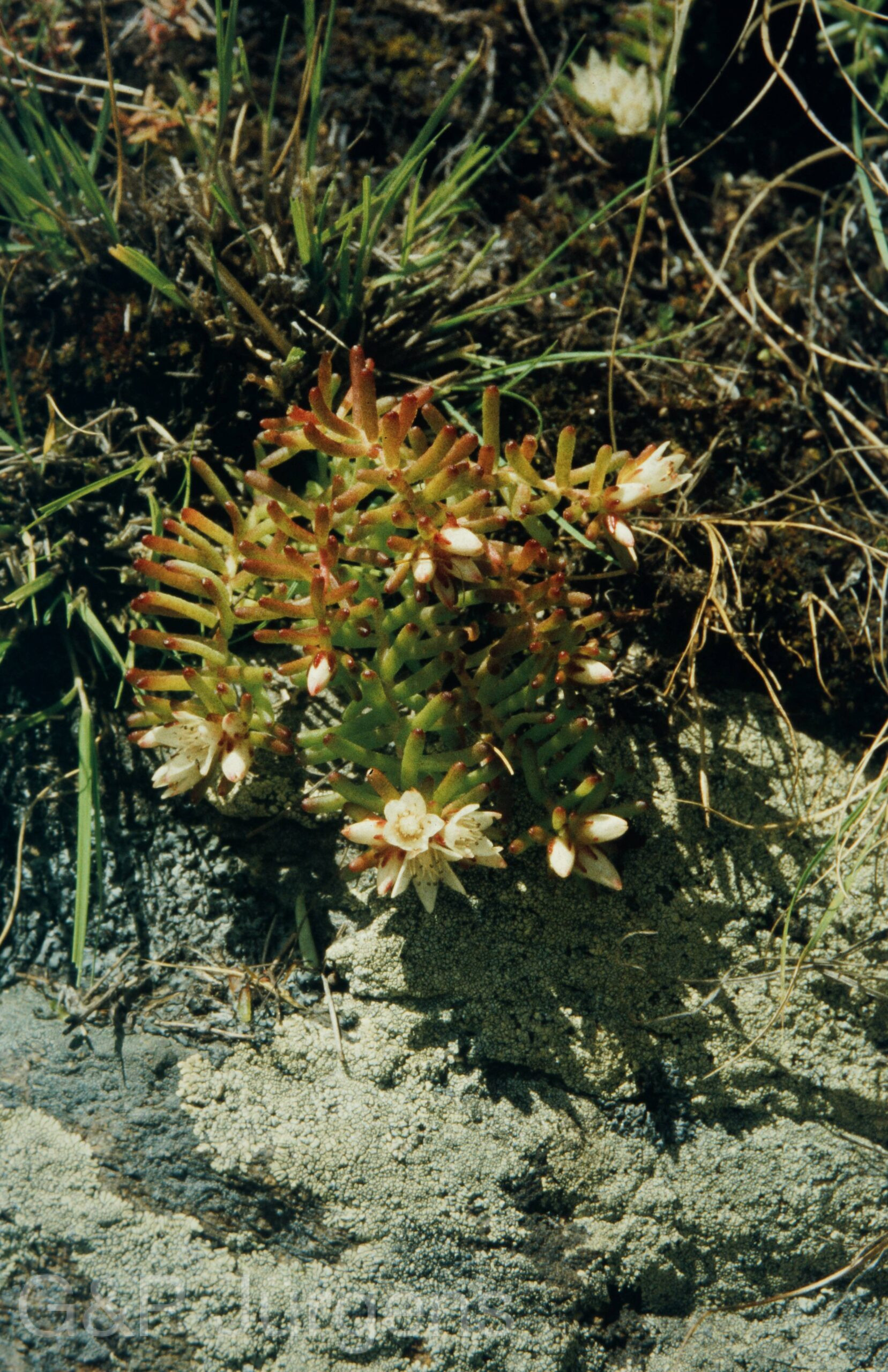
(Hook. f. & Thomson) Fu

Bhutan2012 88
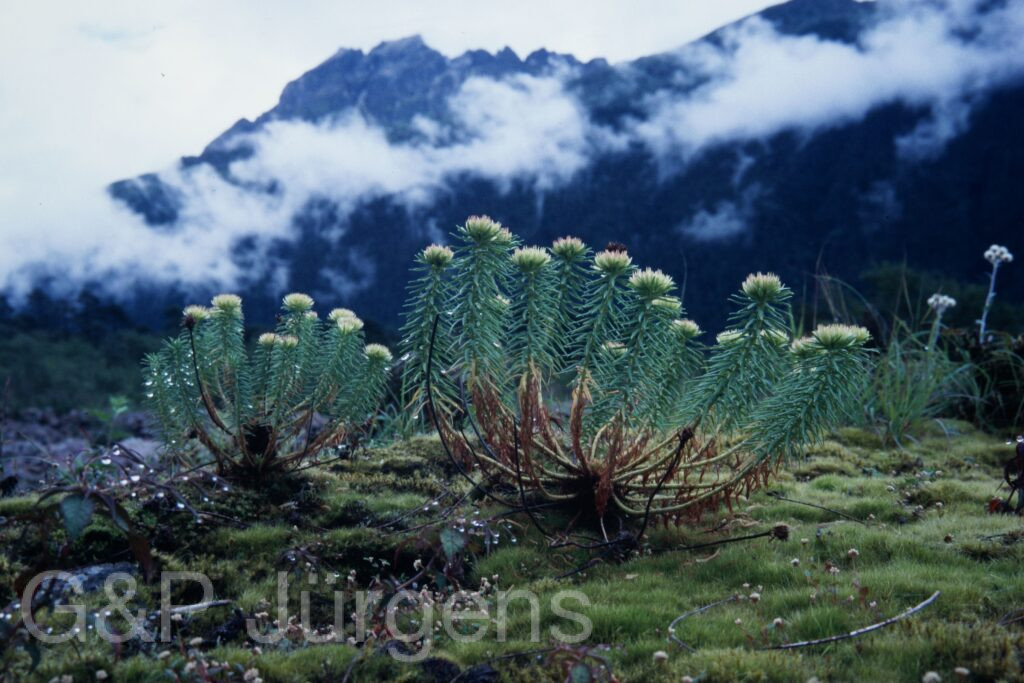
Bhutan Shele-La, 4100m September

Description

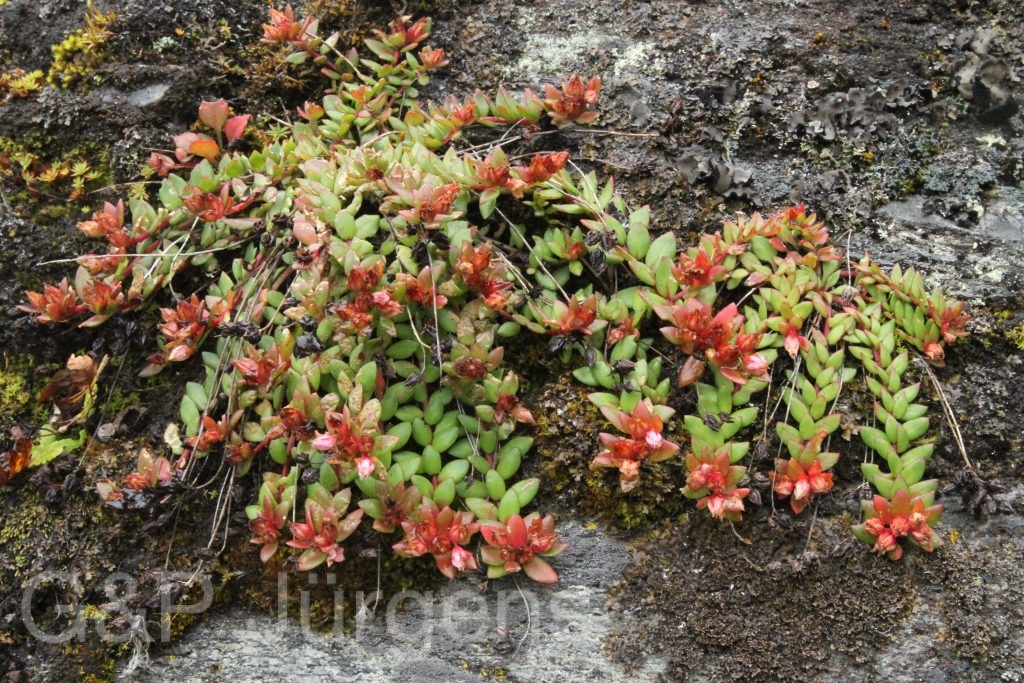
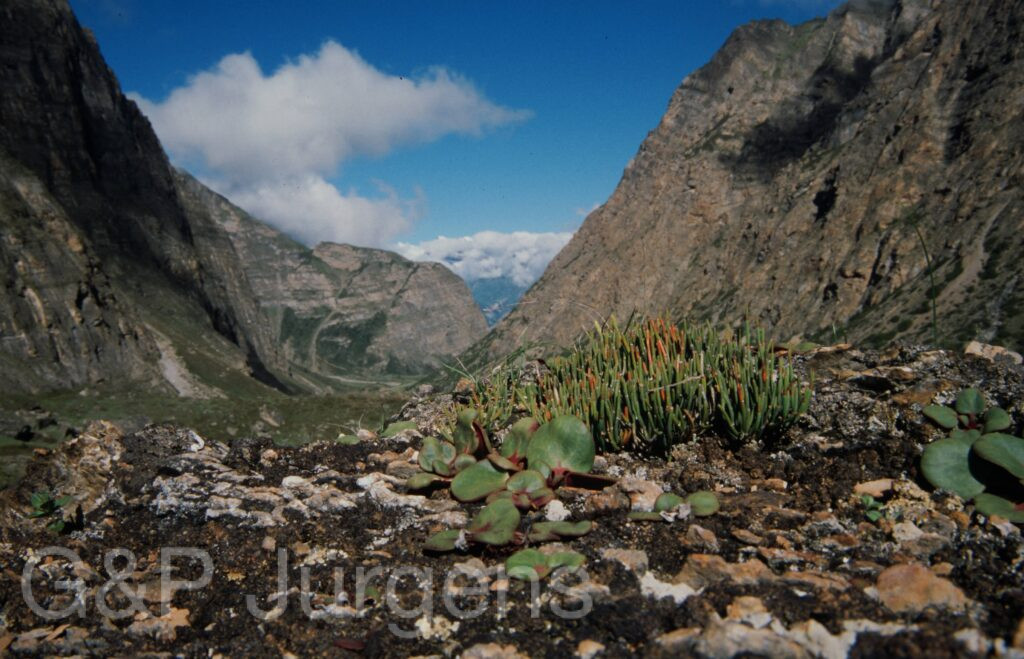
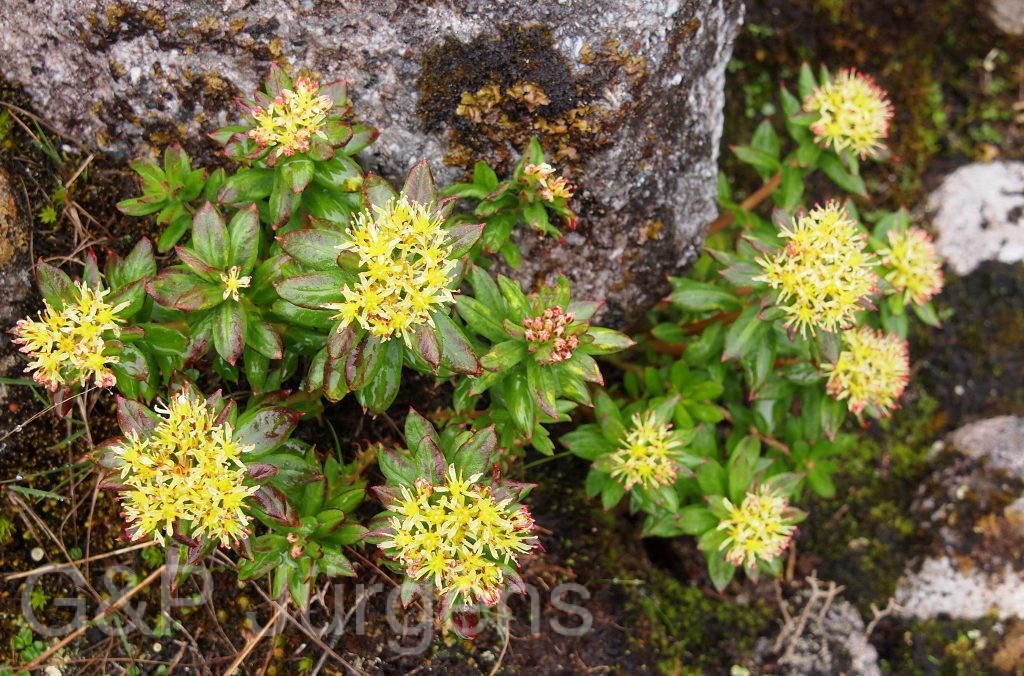
Rhodiola humilis is a dwarf high-alpine stonecrop of the Himalaya and adjacent China, recorded from south-central China (Xizang), the Indian Himalaya, Nepal and Bhutan, with around one hundred GBIF occurrences (a few extra-Himalayan records being cultivated or misattributed). It inhabits the highest open habitats, including alpine screes, rock crevices, gravelly slopes and the stony margins of the upper alpine zone, generally well above 4000 m. The photographed plant from the Shele-La in Bhutan at 4100 m, flowering in September, exemplifies its preference for exposed, frost-prone, mineral-rich substrates near the upper limit of vascular plant life.

The species is a small, glabrous, cushion- or mat-forming perennial succulent arising from a stout, branched, persistent caudex clothed in old leaf bases. The numerous short flowering stems bear crowded, small, fleshy, linear to oblong leaves with entire margins. The inflorescence is a compact terminal cyme of few flowers; as is typical of Rhodiola the plants are usually dioecious, with four- to five-merous flowers, the petals reddish, purplish or greenish, and the carpels erect, becoming spreading, beaked follicles at maturity that release minute seeds.

The GBIF backbone treats this name as doubtful, but it is here treated under the accepted name Rhodiola humilis within Rhodiola (Crassulaceae, subfamily Sempervivoideae), a genus segregated from Sedum and centred on the high mountains of Asia. Its succulent caudex, dwarf cushion form and crassulacean physiology are adaptations to drought, cold and intense radiation at extreme altitude. Like many Rhodiola, it may be gathered for traditional medicinal use; though not formally assessed, its slow growth and harvesting pressure suggest caution.

Author: (Hook. f. & Thomson) Fu · Sources: POWO (Kew), GBIF, Flora of China, Flora of Bhutan, Ohba monograph of Himalayan Sedoideae/Rhodiola (Crassulaceae)

(Raym.-Hamet) H. Ohba

Nepal 99 836 ergebnis
West-Nepal Baga-La-Phedi 4200m, July

Description

Rhodiola prainii is a high-alpine succulent of the Himalaya and Tibetan borderlands, recorded by GBIF (98 occurrences) from Nepal, China, India and Bhutan (NP, CN, IN, BT). It grows on open, well-drained alpine substrates — rocky slopes, screes, cliff ledges, moraine and turf — in the upper subalpine to alpine zone, typically between about 3800 and 4800 m. The collection illustrated from Baga-La-Phedi in West Nepal at around 4200 m in July, the peak of the short monsoon-summer growing season, is representative of its habitat: cold, intensely insolated, seasonally moist ground above the treeline.

Like other members of the genus it is a perennial herb with a stout, fleshy, branched caudex or rhizome crowned by persistent old leaf-bases and giving rise to several short, erect, glabrous flowering stems. The leaves are alternate, sessile, succulent, oblong to obovate or spathulate, entire or sparsely toothed toward the apex, and rather crowded. The inflorescence is a dense terminal corymb or cyme; the flowers are small, usually 4-5-merous and functionally unisexual (the species dioecious), with narrow petals in shades of greenish-yellow to reddish. The fruit is a cluster of erect, beaked follicles releasing minute seeds.

Rhodiola prainii sits within the predominantly Sino-Himalayan genus Rhodiola (Crassulaceae, subfamily Sempervivoideae), segregated from Sedum on its thick perennating rootstock, scale-leaved lower stem and frequently dioecious flowers. The genus is renowned for tissues rich in salidroside and rosavin, and several species are harvested as adaptogenic 'golden root'. Such collection pressure, combined with the slow growth and narrow alpine niche characteristic of the group, makes high-elevation Rhodiola populations vulnerable to over-exploitation and climate-driven habitat contraction.

Author: (Raym.-Hamet) H. Ohba · Sources: POWO (Kew), GBIF, Flora of China, Annotated Checklist of the Flowering Plants of Nepal, Ohba Monograph of the Genus Rhodiola, Crassulaceae of the Himalaya

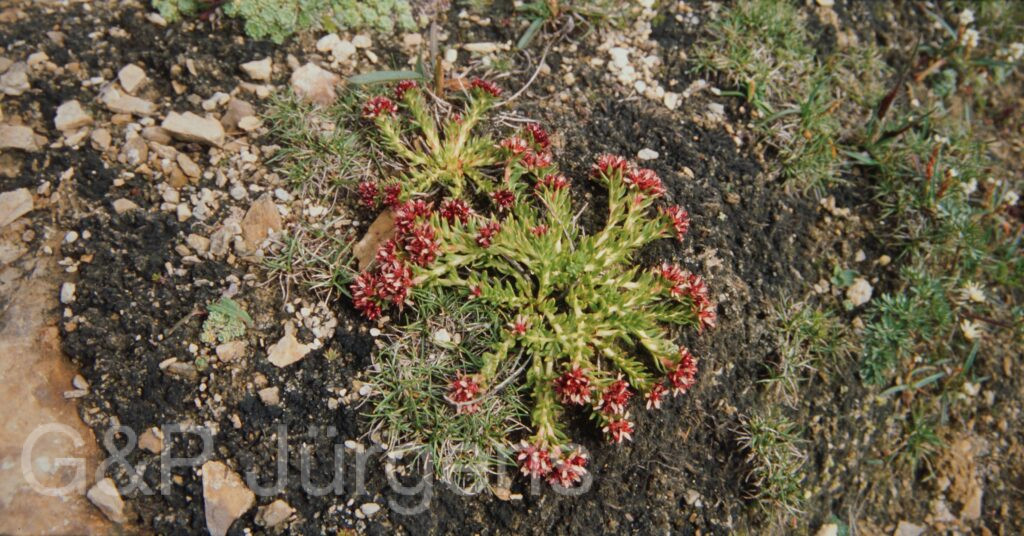
H. Ohba

BhutanPG2011 518
Bhutan Dem-Tso, 4500m June

Description

Rhodiola sherriffii is a rare, narrowly distributed alpine succulent of the Eastern Himalaya, recorded from Bhutan, the adjacent Indian states (Sikkim, Arunachal Pradesh), Nepal and southern Tibet (China); GBIF documents only about 20 occurrences, underscoring its restricted range and the relative inaccessibility of its habitat. It is a plant of the high alpine zone, typically growing above 4000 m, as illustrated near Dem-Tso in Bhutan at 4500 m, where it occupies open stony slopes, glacial moraine, rock crevices and gravelly fellfield. Like other members of the genus it tolerates intense insolation, frost and a short growing season, flowering in early summer (June) as snow recedes.

It is a small, glabrous, glaucous perennial herb arising from a thick, woody, scaly caudex and rootstock. Several short, erect or ascending flowering stems bear numerous fleshy, succulent leaves that are entire to obscurely toothed, sessile, oblong to obovate and crowded along the stem. The inflorescence is a dense, terminal, corymbose to capitate cyme. The flowers are usually unisexual (the genus being dioecious), 4-5-merous, with petals and sepals that are commonly dark red to purplish; the carpels are erect, maturing into small, erect follicles containing numerous minute seeds.

Named for the plant collector George Sherriff, who with Frank Ludlow explored Bhutan and southeastern Tibet, the species belongs to a Himalayan complex of red-flowered Rhodiola allied to R. bupleuroides and R. coccinea. The genus Rhodiola was segregated from Sedum on the basis of its perennial scaly caudex and predominantly dioecious flowers. Many Rhodiola species accumulate medicinally valued secondary metabolites and are harvested as adaptogens, exposing the genus to collection pressure. Given its small population number and high-elevation habitat, R. sherriffii is potentially vulnerable to climate-driven habitat contraction, though it has not been formally assessed.

Author: H. Ohba · Sources: POWO (Kew), GBIF, Flora of Bhutan, Flora of China, Ohba's monograph of Himalayan Crassulaceae (Rhodiola)

(Royle ex Edgew.) Fu

Description

Rhodiola sinuata (Royle ex Edgew.) Fu is a high-altitude succulent perennial of the Himalaya, recorded from India, Nepal, Bhutan, Pakistan and adjacent China, with comparatively few collections (GBIF lists about 349 occurrences, the European and Central Asian points representing herbarium or database artefacts rather than native range). It grows on rock ledges, cliff crevices, stony slopes and moist alpine turf, generally between 3,000 and 4,500 m. The illustrated plant was gathered in the Indian Garhwal Himalaya near Tali at 3,100 m in September, when the inflorescences are maturing and the foliage takes on autumnal reddish tints.

The plant arises from a stout, woody, perennating rhizome (caudex) crowned with scarious scale-leaves, from which spring several erect to ascending leafy flowering stems. The cauline leaves are alternate, sessile, fleshy, oblong to obovate, with a characteristically sinuate-dentate to coarsely toothed margin. The flowers are small and clustered in a dense terminal corymbose cyme; the species is typically dioecious, with 4- or 5-merous flowers bearing narrow yellowish to greenish-yellow petals, the staminate flowers with exserted stamens. The fruit is a cluster of erect follicles releasing minute seeds.

Rhodiola (Crassulaceae) comprises the Asian-alpine "roseroots" formerly placed in Sedum, distinguished by their thick perennial rhizome and frequently unisexual flowers. Like its congeners, R. sinuata accumulates phenylpropanoid glycosides in the rootstock and is gathered in Himalayan folk medicine, a pressure that, with grazing, warrants monitoring although the species is not formally assessed. Its restricted Sino-Himalayan distribution reflects adaptation to cold, exposed, high-elevation rock habitats.

Author: (Royle ex Edgew.) Fu · Sources: POWO (Kew), GBIF, Flora of China, Flora of Pakistan, Annotated Checklist of the Flowering Plants of Nepal, Ohba monograph of Himalayan Sedoideae, Hooker Flora of British India

(Raym.-Hamet) S.H. Fu

Nepal 99 668 ergebnis
West-Nepal Kagmara-La 5500m, July

Description

Rhodiola smithii is a cushion-forming succulent of the highest Himalayan and Tibetan altitudes, recorded by GBIF (145 occurrences) from China, Nepal and Bhutan (CN, NP, BT). It is a true alpine to subnival plant of rock crevices, screes, moraines and stony turf, enduring intense radiation, wind, frost and a very short growing season. The illustrated population from the Kagmara-La in West Nepal at about 5500 m in July is exceptional in elevation, lying near the upper limit of vascular plant life and exemplifying the extreme high-alpine niche this species occupies, generally between roughly 4500 and 5600 m.

It is a low, tufted perennial herb growing from a thick, woody, branched caudex clothed in persistent scarious old leaf-bases, the whole forming compact mats or cushions that minimise exposure. The flowering stems are short and crowded, bearing small, sessile, fleshy, oblong to linear-oblong leaves that are entire or minutely toothed. The flowers are aggregated in a dense terminal head or compact corymb; they are small, mostly 4-5-merous and unisexual on dioecious plants, with narrow petals ranging from yellowish to deep red or purplish. The fruit comprises a cluster of small erect follicles producing minute seeds.

Within the Sino-Himalayan genus Rhodiola, R. smithii belongs to the dwarf, densely caespitose species adapted to the coldest, most exposed alpine and subnival habitats. Its cushion habit, perennating woody rootstock and dioecy are convergent strategies of high-mountain succulents. Like its congeners it accumulates the bioactive compounds that drive medicinal harvesting of 'golden root', and its restriction to a narrow, climatically marginal high-elevation band makes it especially exposed to warming-driven habitat loss.

Author: (Raym.-Hamet) S.H. Fu · Sources: POWO (Kew), GBIF, Flora of China, Annotated Checklist of the Flowering Plants of Nepal, Ohba Monograph of the Genus Rhodiola, Crassulaceae of the Himalaya

(Hook.) Fu

Nepal 99 261 ergebnis
Nepal Kalomura 4000m, July
Sikkim2003 395 G556
Sikkim Zemu Valley 3400m August
Sikkim2003 480 P666
Sikkim Zemu Valley 3400m August

Description

Rhodiola wallichiana is a high-elevation succulent perennial of the Himalaya and Tibetan margins, native from Nepal and the Indian Himalaya through Sikkim and Bhutan into southern China, Pakistan and Afghanistan; the many European and North American GBIF records reflect cultivated and herbarium material rather than wild occurrence. It grows in the alpine and upper subalpine zone, on rocky slopes, cliff ledges, moraines and among boulders. The cited collections from Kalomura in Nepal at about 4000 m in July and the Zemu valley in Sikkim at 3400 m in August place it firmly in the summer-flowering high-mountain flora.

The plant arises from a stout, branched, woody caudex (rootstock) bearing several erect or ascending leafy flowering stems. The leaves are alternate, sessile, fleshy, linear-lanceolate to oblong, flat, with entire or finely toothed margins, densely clothing the stems. The inflorescence is a terminal corymbose cyme of numerous small flowers. The species is functionally dioecious; the flowers are typically four- to five-merous, with greenish-yellow to reddish petals, the staminate flowers bearing stamens twice the number of petals, and the pistillate flowers developing several erect follicles that ripen reddish and split to shed minute seeds.

Rhodiola, segregated from Sedum, comprises the rosette- and caudex-forming stonecrops of cold northern and montane regions. Like its relatives the genus accumulates protective metabolites, and several species are harvested as adaptogenic medicinals, placing wild Himalayan populations under collection pressure. Adapted to short alpine summers, intense radiation and cold, R. wallichiana is locally frequent within its range and not currently assessed as globally threatened.

Author: (Hook.) Fu · Sources: POWO (Kew), GBIF, Flora of China, Flora of Bhutan, Ohba's monographic studies of Himalayan Crassulaceae (Rhodiola)

Hook.f.

Sikkim2011 125
Sikkim Chopta-valley 4100m, June
Sikkim2011 349
Sikkim Lada-La 4000m, June
Sikkim2011 362
Sikkim Lada-La 4000m, June
Sikkim2003 422 P587 2
Sikkim Chopta Valley 3400m August

Description

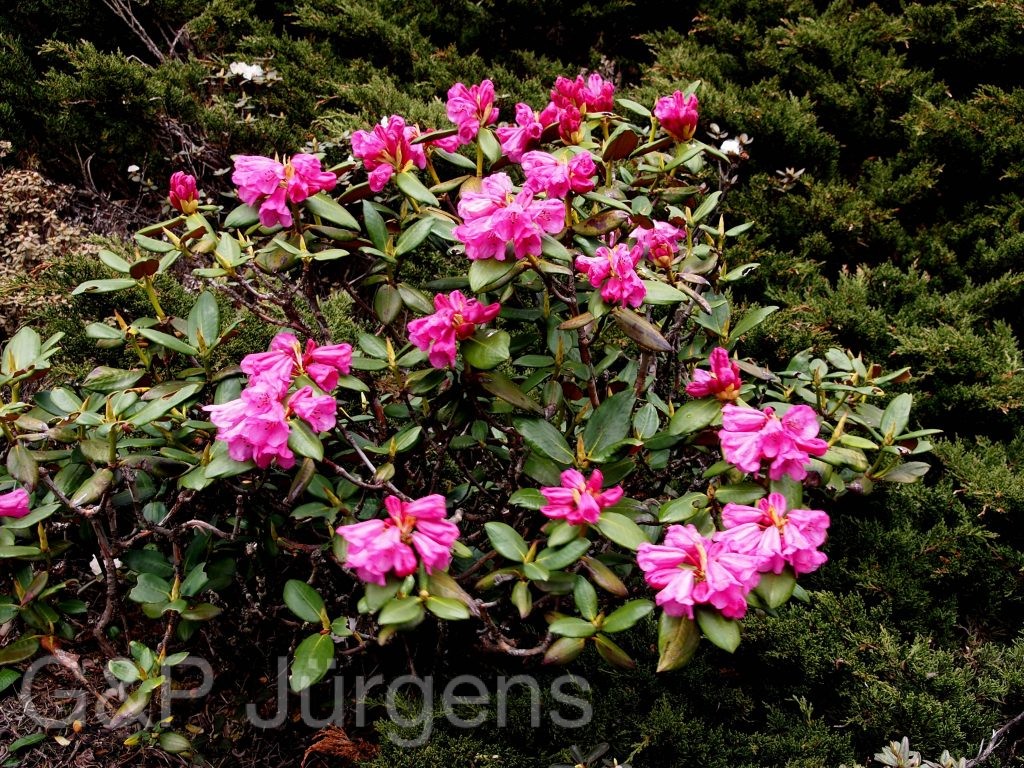
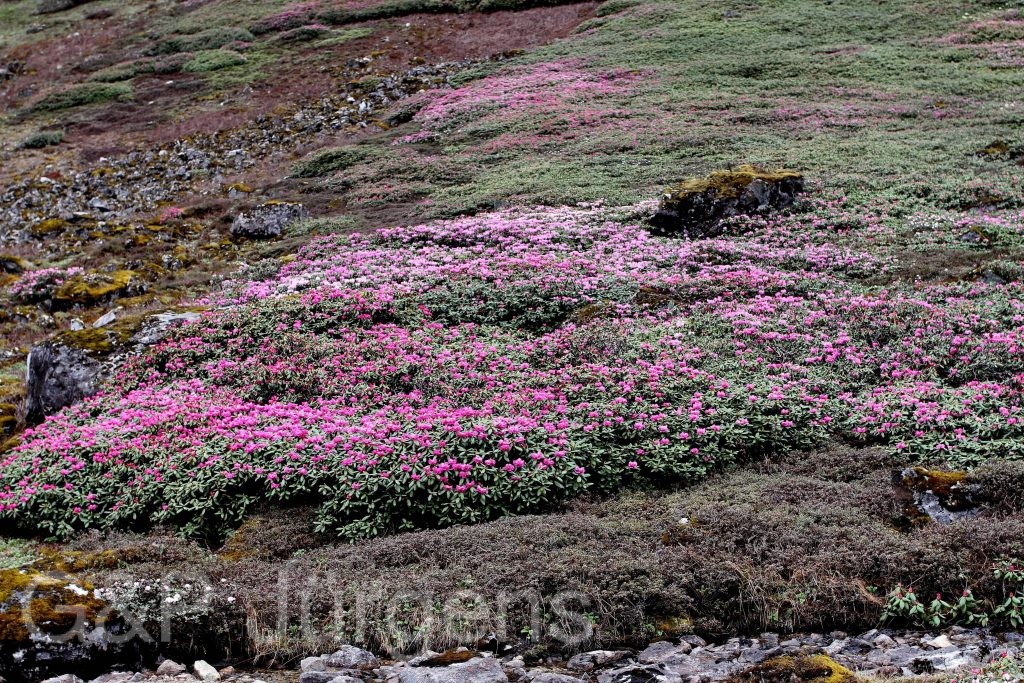
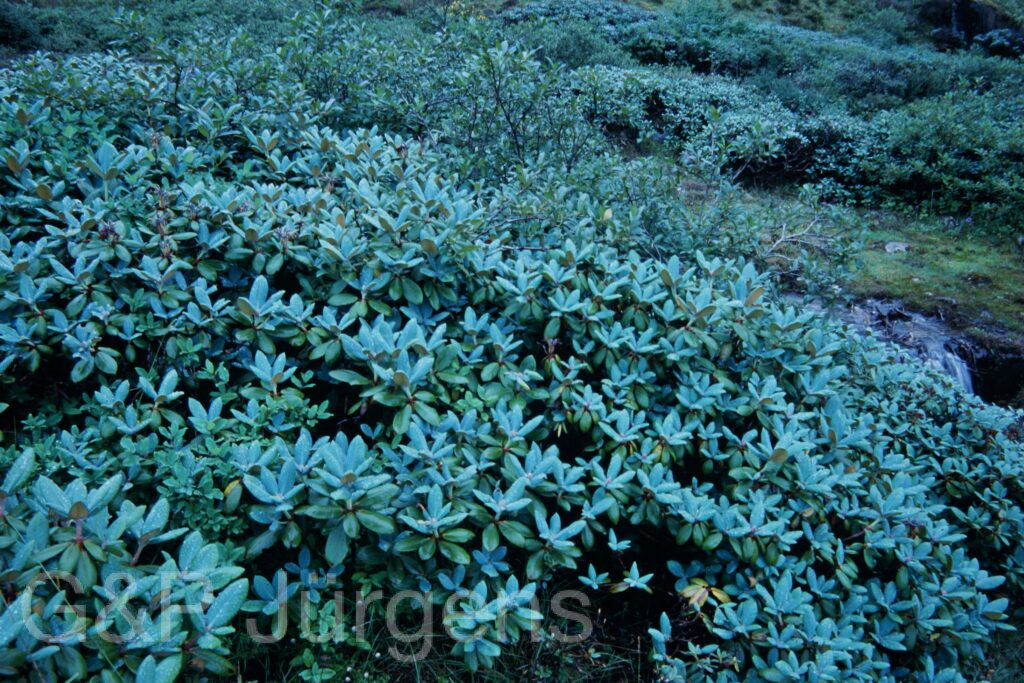
Rhododendron aeruginosum is an evergreen shrub of the eastern Himalaya, native to Sikkim and the rest of India, Bhutan, Nepal and adjacent China. Its roughly 106 georeferenced records describe a narrowly distributed high-montane taxon. It grows in the upper subalpine to lower alpine belt, forming dense thickets on open slopes, ridges and rocky pasture above the treeline at roughly 3300-4400 m. The Sikkim collections noted above, from the Chopta valley at 3400-4100 m and Lada-La at 4000 m in June and August, are characteristic of its windswept, high-elevation habitat at and above the krummholz zone.

It is a compact shrub whose striking young leaves are covered with a thick, glaucous blue-green to verdigris waxy bloom, the epithet aeruginosum meaning "rust- or copper-coloured." The mature leaves are elliptic to oblong, leathery and coated beneath with a dense fawn to rufous indumentum. The flowers are borne in compact terminal trusses and are broadly campanulate, pale rose to white often flushed pink and spotted within, with ten stamens and a glabrous ovary. The fruit is a curved, woody, septicidal capsule releasing many small seeds.

Rhododendron aeruginosum is closely allied to R. campanulatum, under which name it has often been treated as a high-altitude variant or subspecies and to which the original web placement refers, the two distinguished chiefly by the glaucous juvenile foliage and dwarfer, more exposed habit of aeruginosum. It belongs to the large elepidote subgenus Hymenanthes and subsection Campanulata. Pollination is by bumblebees and other alpine insects. Its restricted high-altitude range makes it locally vulnerable to grazing, fire and the upslope compression of alpine shrubland under a warming climate.

Author: Hook.f. · Sources: POWO (Kew), GBIF, Flora of China, Flora of Bhutan, The Genus Rhododendron (Royal Botanic Garden Edinburgh) monograph

D. Don

Sikkim2011 95
Sikkim Chopra-valley 4200m, June
Sikkim2011 96
Sikkim Chopra-valley 4200m, June

Description

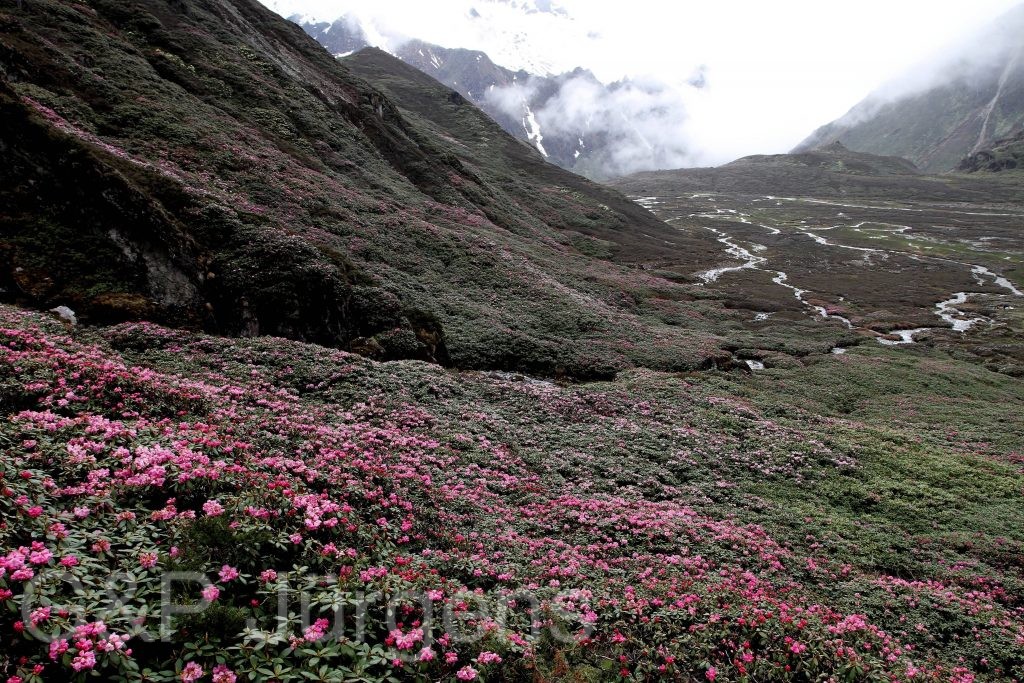
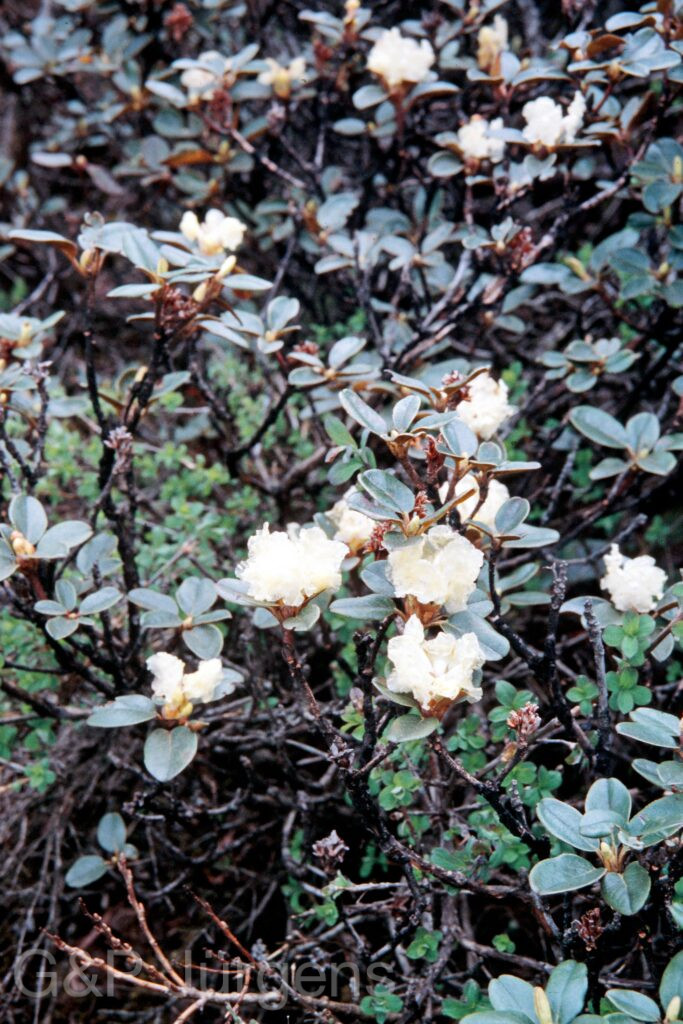
Rhododendron anthopogon is a dwarf, aromatic alpine shrub of the Himalaya, recorded in GBIF (around 1052 occurrences) from Nepal, India, China, Bhutan and Pakistan. It dominates open alpine slopes, moorland, rocky ridges and the upper limit of shrub vegetation, generally between 3000 and 5000 m, often forming extensive low thickets above the tree line together with junipers and other dwarf rhododendrons. The photographed population in the Chopra valley of Sikkim at 4200 m in June represents this typical high-alpine, exposed habitat, where it flowers as snow recedes in early summer.

It is a low, much-branched, evergreen shrub usually under 1 m tall, with young shoots bearing peltate scales. The small, alternate, leathery leaves are elliptic to ovate, aromatic when crushed, densely brown-scaly (lepidote) beneath and with a slightly recurved margin. The flowers are borne in compact terminal clusters; each has a narrowly tubular corolla, white to pale pink or cream, with a short spreading limb of five lobes and a hairy throat, and characteristically only five to ten included stamens. The fruit is a small, scaly, dehiscent capsule releasing minute seeds.

Rhododendron anthopogon is the type of subsection Pogonanthum within section Rhododendron (the lepidote rhododendrons), a group of aromatic, scaly, tubular-flowered dwarf alpines centred on the Himalaya and western China. Its foliage is rich in essential oils and is harvested as the incense and herbal medicine sunpati. Widespread and often locally abundant across the high Himalaya, it is assessed as Least Concern, functioning as a key soil-stabilising and structural component of alpine heath ecosystems.

Author: D. Don · Sources: POWO (Kew), GBIF, Flora of Bhutan, The Rhododendrons of Sikkim-Himalaya, Annotated Checklist of the Flowering Plants of Nepal, Cullen revision of lepidote Rhododendron

(Balf. f.) Cullen

Nepal 99 146 ergebnis
West-Nepal South of Rara-Lake 3700m, June

Description

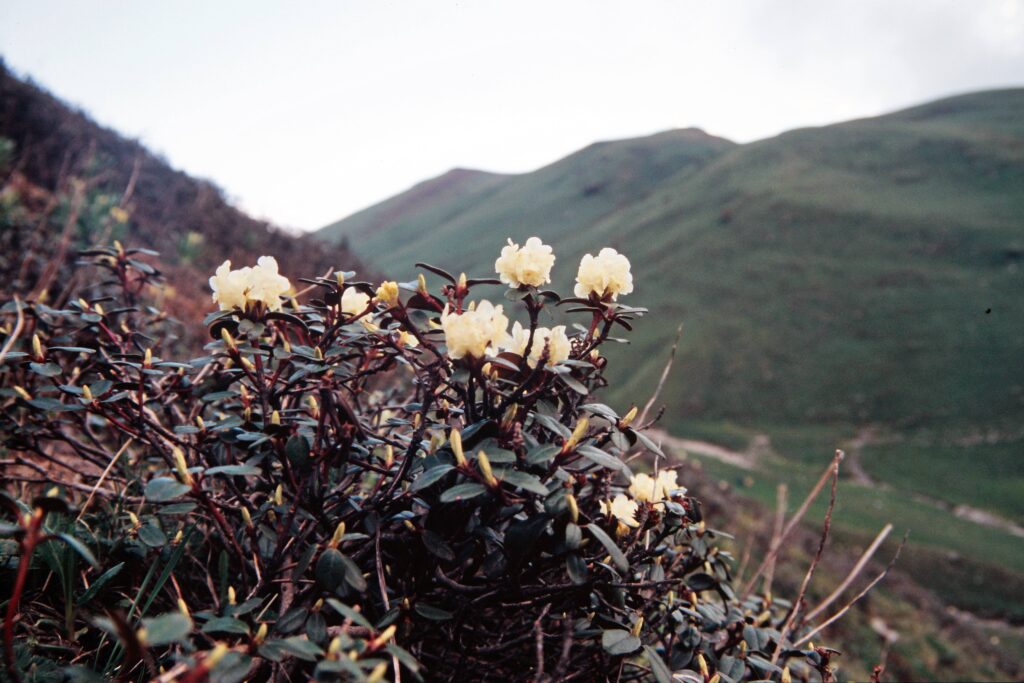
Rhododendron anthopogon subsp. hypenanthum is a dwarf alpine shrub of the high Himalaya and adjacent Tibetan ranges, recorded from China, India, Pakistan, Nepal and Bhutan. It is a characteristic component of the dwarf-rhododendron heath that clothes open slopes, rocky moorland and the margins of alpine meadows above the treeline, frequently forming dense aromatic mats over granite and schist. The taxon ascends from roughly 3300 to over 4500 m; the photographed populations occur south of Rara Lake in West Nepal at about 3700 m and at Khiar Kutti in Indian Garhwal near 4000 m, both flowering in June as the snow retreats. With around 169 records it is a well-documented element of the subnival zone.

It forms a low, much-branched, intricate evergreen shrublet, the twigs densely scaly and the bark flaking. The small leaves are aromatic, elliptic to oblong, leathery, dark green and glabrous above, the lower surface densely covered by overlapping rusty-brown peltate scales, the margins often recurved. The flowers are borne in compact terminal capitate heads; the corolla is narrowly tubular with a short spreading limb of five lobes and is here a clear pale yellow, distinguishing this subspecies from the usually pink to cream typical race. Stamens are included within the tube. The fruit is a small scaly capsule splitting septicidally to release minute seeds.

Within section Pogonanthum, subsp. hypenanthum is separated from the more eastern subsp. anthopogon chiefly by its yellow corolla and western Himalayan distribution. The fragrant foliage is harvested locally for incense and traditional medicine. As a widespread, abundant alpine taxon it is of least conservation concern, though high-altitude grazing and a warming climate may shift the lower limits of its heathland communities.

Author: (Balf. f.) Cullen · Sources: POWO (Kew), GBIF, Flora of China, Flora of Bhutan, The Plant-Book (Cullen, Revision of Rhododendron section Pogonanthum)