Tag:

Bhutan

Flowers of Bhutan — 1326 plant species documented across the Bhutanese Himalaya, from dense broadleaf and conifer forests to alpine scrub and meadows. Bhutan’s largely intact wilderness shelters an exceptional diversity of orchids, rhododendrons, primulas and Himalayan poppies, many of them regional endemics. Each species page includes a botanical description, distribution, habitat and flowering time, with the original photograph and its recorded altitude and locality.

(Dennst.) Mabb.

Bhutan2014 261
Bhutan Trithangebe 700m, May
Nepal 97 564 P1097
Nepal Sabha-Khola 550m May

Description

Wrightia arborea is a small deciduous tree of the Indian subcontinent and Southeast Asia, distributed across India, Thailand, China, Sri Lanka, Myanmar, Nepal, Bhutan and much of the surrounding region, with about 709 georeferenced occurrences in GBIF. It grows in dry to moist deciduous forest, woodland and scrub, mainly in the warm subtropical lowlands and foothills. The trees illustrated were photographed at Trithangebe in Bhutan (700 m) and along the Sabha-Khola in Nepal (550 m) in May; across its range it typically occurs below about 1200 m on a variety of well-drained soils.

The species is a small tree exuding milky latex, with opposite, simple, elliptic to ovate leaves that are softly hairy, acuminate and pinnately veined. The flowers are borne in terminal cymes and are showy and fragrant, with a salverform white to creamy or pale yellow corolla ageing to pink or dull orange; a conspicuous fringed corona of scales surrounds the throat, a diagnostic feature of the genus. The fruit consists of two slender, elongate follicles that are united or cohering at the tip and split to release numerous flattened seeds, each bearing an apical tuft of silky hairs (coma) for wind dispersal.

Wrightia (Apocynaceae, subfamily Apocynoideae) is a genus of latex-bearing trees and shrubs notable for the ornate coronal scales of its flowers. W. arborea yields a fine, close-grained pale wood traditionally prized for carving and turnery, and various parts have been used in folk medicine and as a source of dye. Adaptable and widely distributed, the species is common across its range and is not considered to be of conservation concern, though local populations depend on the persistence of deciduous forest and woodland habitat.

Author: (Dennst.) Mabb. · Sources: POWO (Kew), GBIF, Flora of China, Flora of British India, Flora of Bhutan, Ngan Revision of the Genus Wrightia
(Hook.f.) Babc. & Stebbins

Bhutan2015 494
Bhutan Phobjika 2620m, October
Bhutan2012 173
Bhutan Haar-Valley, 3200m September

Description

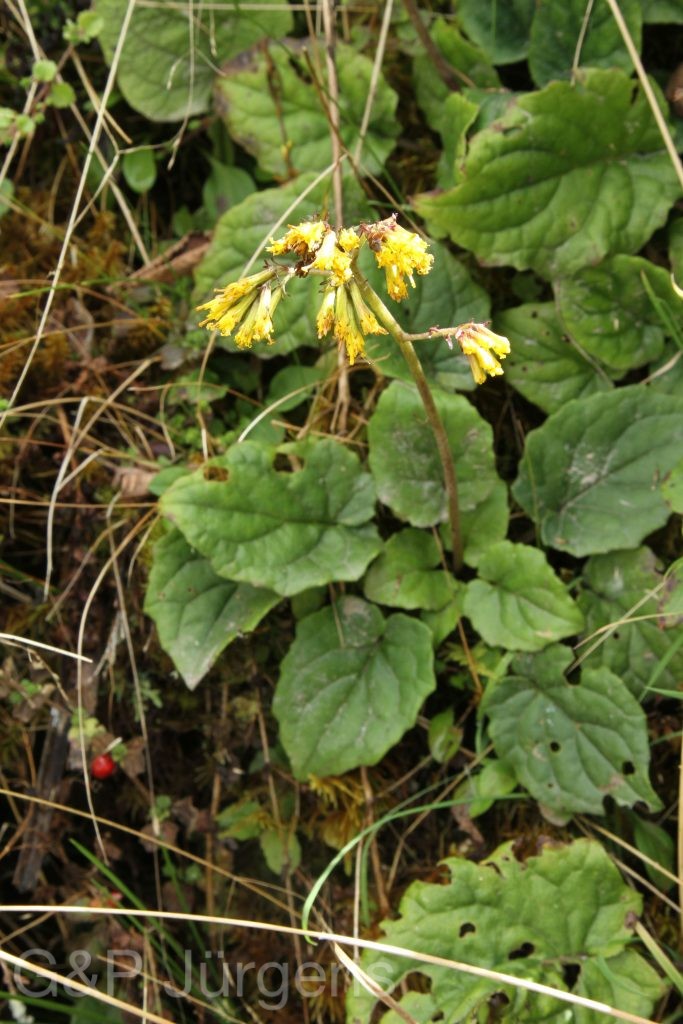
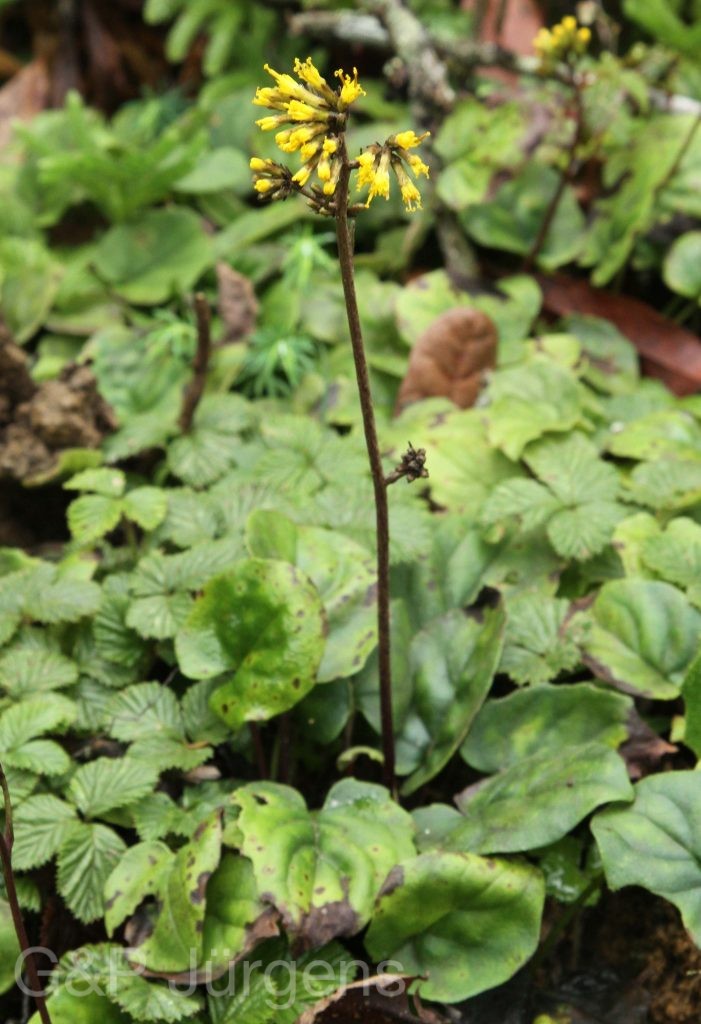
Youngia racemifera is a Sino-Himalayan species recorded from China, Nepal, Bhutan, India and Myanmar, GBIF holding around 209 occurrences across this eastern montane range. It is a plant of open temperate to subalpine habitats, growing on grassy and shrubby slopes, forest clearings, banks and disturbed ground where light is abundant and soils are moist but well drained. The cited localities, Phobjika in central Bhutan at 2620 m in October and the Haar Valley in the west at 3200 m in September, place it in the upper temperate to subalpine belt, flowering and fruiting through the late summer and autumn as the monsoon wanes and the high valleys cool.

It is an erect perennial or biennial herb with a leafy, branching, glabrous to sparsely hairy stem exuding milky latex when broken, as is typical of the tribe. The lower leaves are oblanceolate and runcinate-pinnatifid to lyrate, narrowed to a winged base, the upper leaves smaller and less divided, sometimes amplexicaul. The numerous small capitula are arranged in an elongate, racemose to paniculate synflorescence, reflected in the epithet. Each head is homogamous and ligulate, containing several yellow ray florets only; the involucre is cylindric with a single main row of phyllaries and small outer bracts. The cypselae are narrowly fusiform and ribbed, surmounted by a pappus of soft white barbellate bristles.

Youngia (tribe Cichorieae) is a genus of around thirty species centred on East Asia and the Himalaya, distinguished from related lettuce-like genera by its small few-flowered capitula and beakless ribbed cypselae. Based on a Hooker name and transferred by Babcock and Stebbins in their classic study of the group, Y. racemifera is treated as accepted. Its bright yellow ligulate heads attract small bees and flies. As a tolerant plant of open and disturbed montane habitats, it is widespread and of no conservation concern.

Author: (Hook.f.) Babc. & Stebbins · Sources: POWO (Kew), GBIF, Flora of Bhutan, Flora of China, Annotated Checklist of the Flowering Plants of Nepal, Babcock & Stebbins' monograph of Crepidinae (Youngia)

Edgew.

Sikkim2003 369 P518
Sikkim Lachen Tista Tal 3500m August

Description

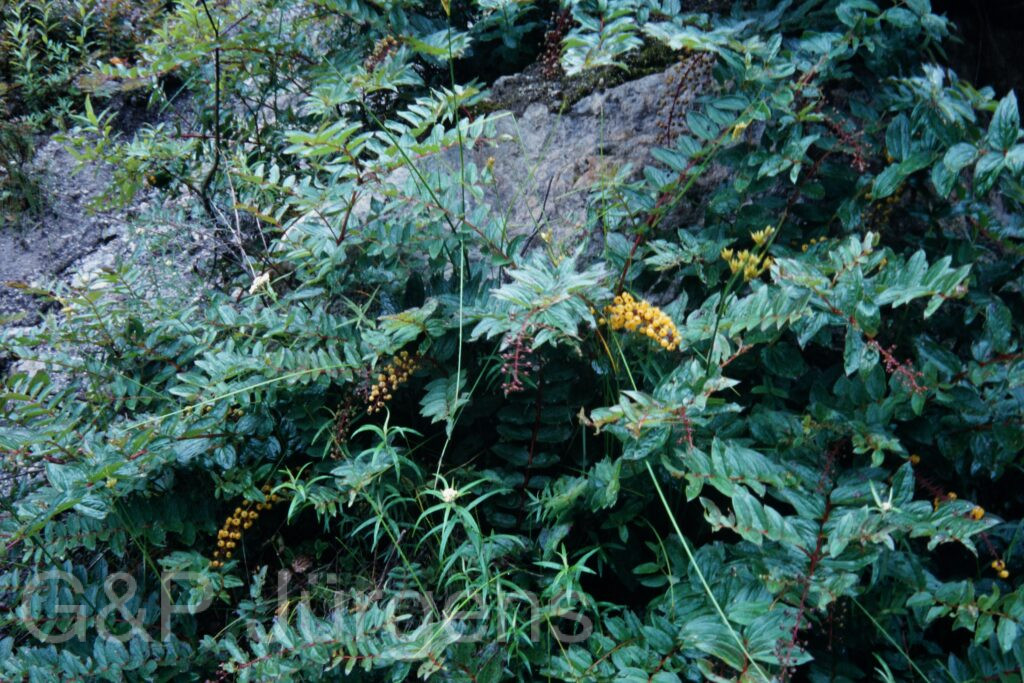
Zanthoxylum oxyphyllum Edgew. is an aromatic shrub or small tree of the Rutaceae, distributed along the Himalaya from northern India and Nepal through Bhutan to southwestern China and Myanmar (GBIF: c. 372 occurrences). It grows in temperate to subalpine forests, on open slopes, forest margins and in shrubberies, typically between about 1,800 and 3,500 m. The photographed plant from Lachen in the upper Tista Valley of Sikkim, at around 3,500 m and recorded in August, represents the upper elevational range of the species in the eastern Himalaya, where it occurs in cool, moist montane scrub.

The plant is a deciduous, prickly shrub or small tree bearing recurved spines on the stems and often on the rachis and midrib of the leaves, as is typical of the genus. The leaves are alternate, imparipinnate, with several pairs of opposite, lanceolate to ovate-lanceolate leaflets that are crenate and gland-dotted, releasing a pungent citrus aroma when crushed owing to abundant translucent oil cavities. The plant is functionally dioecious, with small greenish or yellowish unisexual flowers borne in axillary or terminal cymose panicles. The fruit is a small reddish follicle that splits to expose a single shiny black seed, and the carpels, like the foliage, are richly pellucid-punctate.

Zanthoxylum oxyphyllum belongs to the pantropical genus Zanthoxylum, whose species are noted for their pungent, numbing fruits (the Sichuan-pepper group) and their alkaloid- and essential-oil chemistry. The fruits and bark are used locally as a spice and in traditional medicine. The species is widespread and not regarded as threatened.

Author: Edgew. · Sources: POWO (Kew), Flora of China Vol. 11, Flora of Bhutan Vol. 2, Flora of Nepal, GBIF, Hartley: A revision of the Malesian species of Zanthoxylum

(Lindl.) Herb.

Bhutan2012 1104
Bhutan Khoma 950m, October

Description

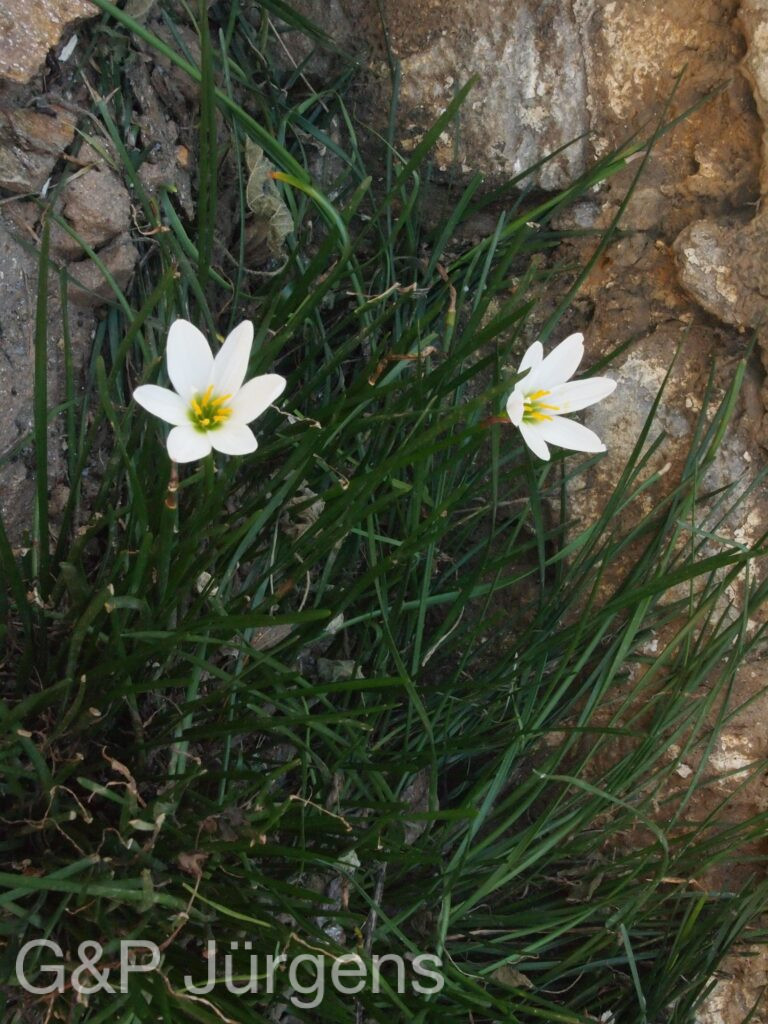
Zephyranthes candida is native to the marshlands and riverbanks of the Río de la Plata region in Argentina and Uruguay, but has become one of the most widely naturalised bulbous plants in tropical and subtropical Asia, Africa, and Oceania. GBIF documents over 2,810 occurrences spanning more than 20 countries, with substantial records from the United States, Japan, India, China, and Australia. In the eastern Himalayas, it occurs as a naturalised garden escape in warm valleys and lowland settlements at elevations below 1,500 m. At Khoma in eastern Bhutan at 950 m, it grows along roadsides, field margins, and around homesteads, flowering abundantly in October during the late monsoon and post-monsoon period.
Zephyranthes candida is a bulbous perennial herb. The bulb is ovoid, 2–3 cm in diameter, with a dark brown tunic. Leaves are basal, linear, rushlike, 15–30 cm long and 2–4 mm wide, dark green, semi-erect, and persistent through much of the year. The scape is slender, hollow, 15–25 cm tall, bearing a single erect flower subtended by a tubular spathe. The flower is actinomorphic, crocus-like, 3–5 cm across, with six white tepals that are broadly elliptic and slightly tinged green at the base externally. Stamens are six, subequal, with yellow anthers. The ovary is inferior, trilocular; the fruit is a depressed-globose capsule containing flattened black seeds.
Despite its alien origin, Zephyranthes candida has become thoroughly established across warm regions of the Himalayan foothills and is now a familiar element of the naturalised flora of Bhutan, Nepal, and northeast India. Its rapid vegetative spread via daughter bulbs, tolerance of a wide range of soil moisture conditions, and prolific seed production contribute to its success as a coloniser of disturbed habitats. The species is taxonomically placed in Zephyranthes sensu lato; some recent molecular treatments have subsumed it within an expanded Habranthus, though most regional Floras retain the traditional placement.

Author: (Lindl.) Herb. · Sources: POWO (Kew), GBIF, Flora of China Vol. 24, Flora of Bhutan Vol. 3, Meerow & Snijman: Amaryllidaceae in Kubitzki: Families and Genera of Vascular Plants Vol. 3 (1998)

Lindl.

Bhutan2012 1024
Bhutan Trithangebe 900m, October
Bhutan2012 1025
Bhutan Trithangebe 900m, October

Description

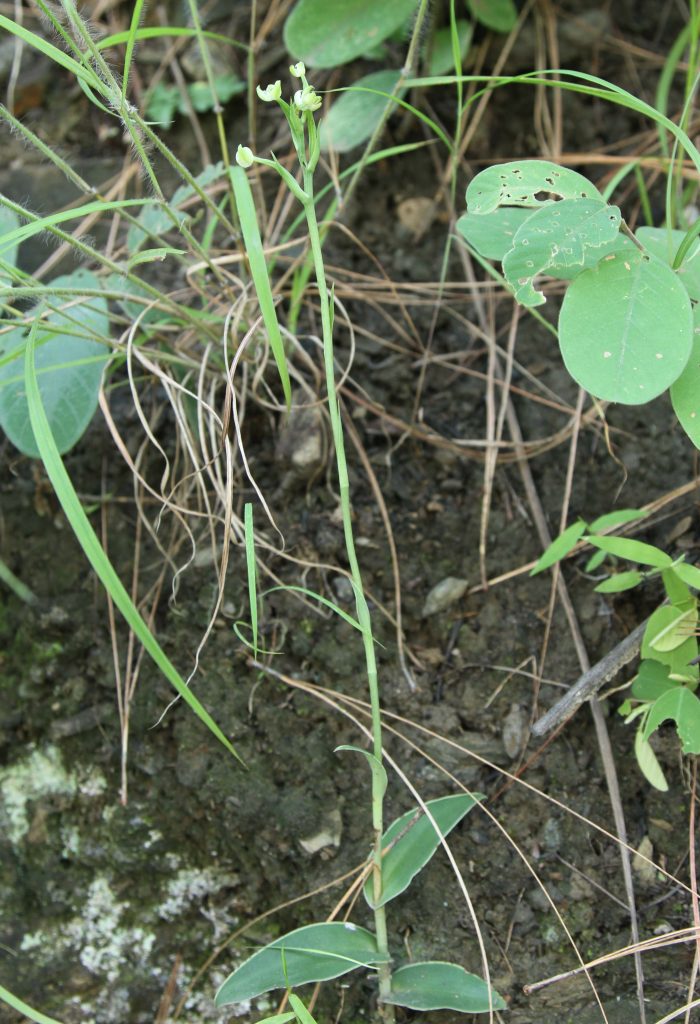
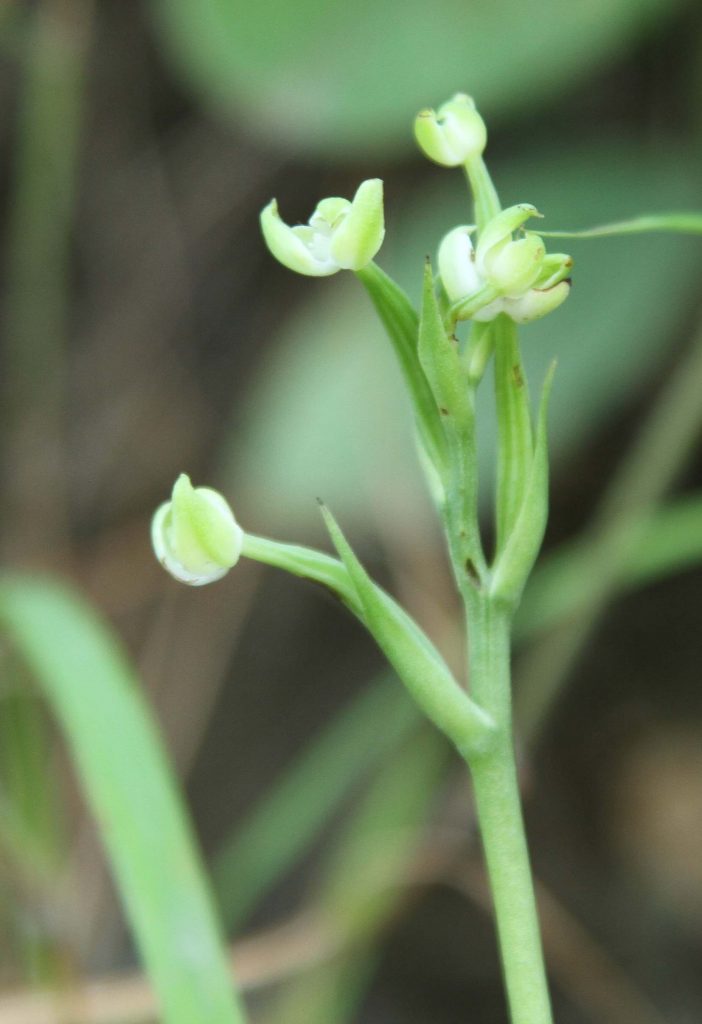
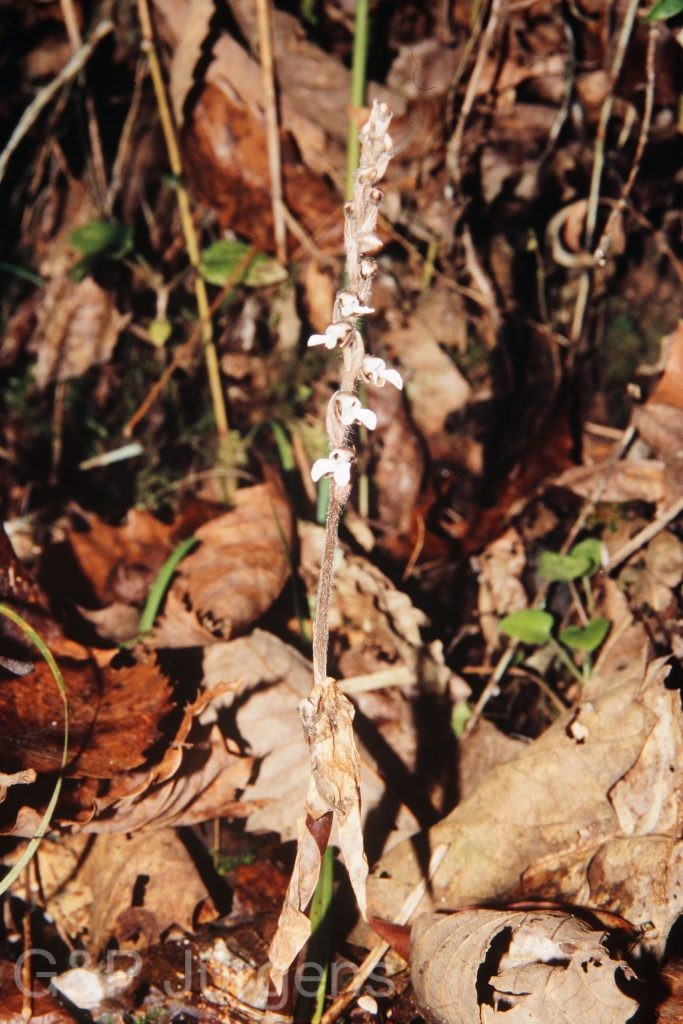
Zeuxine goodyeroides is a terrestrial orchid of shaded forest floors in the eastern Himalaya and adjoining mountains of China (including Yunnan and Tibet), India, Nepal, Bhutan, Myanmar and Sri Lanka, with around 56 documented occurrences indicating a scattered but wide distribution. It grows in leaf litter and humus-rich soils of subtropical to lower-temperate broad-leaved and mixed forest, generally between about 800 and 2000 m. The photographed plant was recorded at Trithangebe in Bhutan at 900 m, flowering in October, when the post-monsoon humidity favours the development of these inconspicuous ground orchids.

The species is a small herb arising from a creeping, fleshy rhizome that roots at the nodes, the erect stem bearing several spirally arranged leaves toward the base. The leaves are ovate-lanceolate, somewhat fleshy, often with a pale midrib, recalling the genus Goodyera to which the epithet alludes. The inflorescence is a slender, pubescent terminal raceme of numerous small, non-resupinate-appearing white to greenish flowers; the sepals are pubescent dorsally, the petals adhere to the dorsal sepal forming a hood, and the diagnostic labellum is saccate at the base with two basal glands and bears a transversely dilated, bilobed epichile. The fruit is a small dehiscent capsule with dust-like seeds.

Zeuxine belongs to subtribe Goodyerinae of the Orchidaceae (here spelled Orchideaceae as supplied), the jewel-orchid alliance, distinguished by the spurless, basally pouched labellum bearing internal glands. Easily overlooked owing to its small stature, it depends like most terrestrial Goodyerinae on mycorrhizal associations in undisturbed forest humus. It is not formally assessed but is sensitive to forest-floor disturbance.

Author: Lindl. · Sources: POWO (Kew), GBIF, Flora of Bhutan, Flora of China, The Genera Orchidacearum (Pridgeon et al.)

King & Pantl.

Bh2008 542 G820
Bhutan Punaka 1500m April

Description

Zeuxine reflexa is a small terrestrial orchid of the eastern Himalaya and adjacent regions, recorded from northern India, Nepal, Bhutan and Taiwan, the modest tally of 22 GBIF occurrences reflecting both its inconspicuous habit and its localised distribution. It grows in shaded, humus-rich situations on the floor of broad-leaved and subtropical forest, on mossy banks and in leaf litter, principally at lower to middle elevations around 1000-2000 m. The photographed plant was found near Punakha in Bhutan at 1500 m in April, the spring flowering period for this warm-temperate to subtropical forest-floor species.

It is a small herb with a fleshy, creeping, ascending rhizome rooting at the lower nodes and a short erect leafy stem. The few leaves are clustered toward the stem base, ovate to lanceolate, somewhat asymmetric and shortly petiolate with sheathing bases. The inflorescence is a slender, pubescent, few- to several-flowered terminal raceme of small flowers. The flowers are dull greenish to brownish with a contrasting white or pale lip; the dorsal sepal and petals are connivent into a hood, the lateral sepals often spreading or reflexed, and the saccate lip bears a pair of basal calli and a bilobed, frequently transversely broadened apical limb diagnostic of the genus.

Zeuxine is a genus of inconspicuous jewel-orchid relatives within subtribe Goodyerinae, distinguished from Goodyera and Anoectochilus chiefly by lip structure. Its dull, partly closed flowers suggest pollination by small insects or a degree of self-pollination, an effective strategy in the dim forest understorey. Owing to its small size and scattered records its true status is poorly documented, but it is not currently regarded as threatened; like all orchids it falls under CITES Appendix II, and its dependence on intact forest litter makes it sensitive to habitat clearance.

Author: King & Pantl. · Sources: POWO (Kew), GBIF, Flora of Bhutan, Pearce & Cribb: The Orchids of Bhutan, Pridgeon et al.: Genera Orchidacearum