
(Hook.) Fu
Description
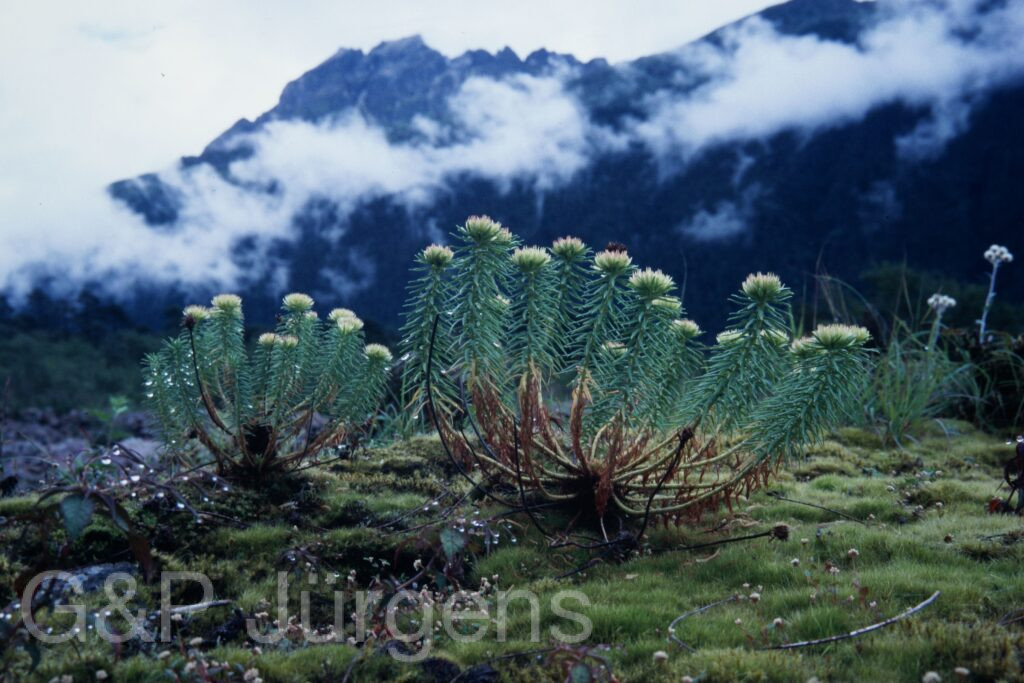
Rhodiola wallichiana is a high-elevation succulent perennial of the Himalaya and Tibetan margins, native from Nepal and the Indian Himalaya through Sikkim and Bhutan into southern China, Pakistan and Afghanistan; the many European and North American GBIF records reflect cultivated and herbarium material rather than wild occurrence. It grows in the alpine and upper subalpine zone, on rocky slopes, cliff ledges, moraines and among boulders. The cited collections from Kalomura in Nepal at about 4000 m in July and the Zemu valley in Sikkim at 3400 m in August place it firmly in the summer-flowering high-mountain flora.
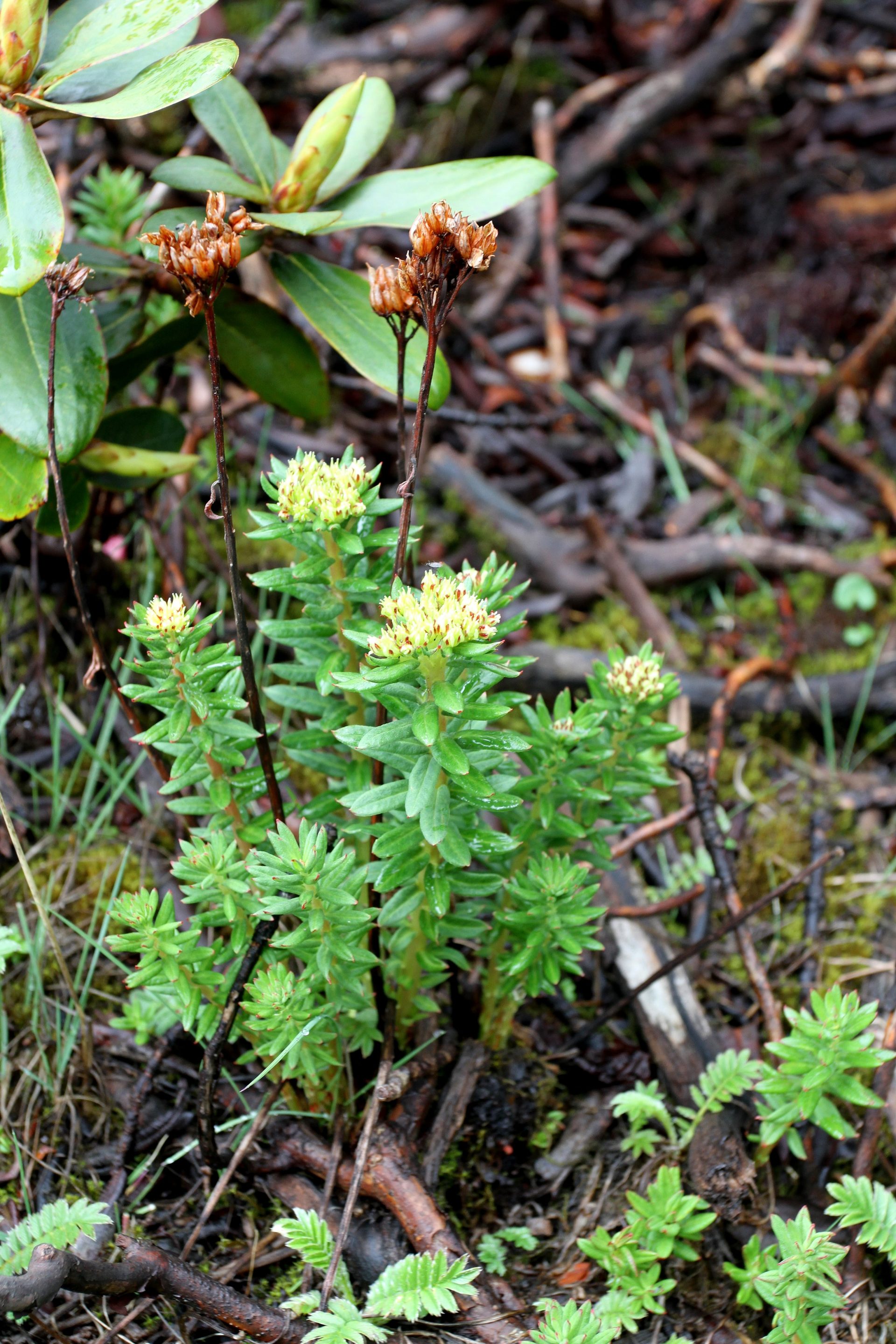
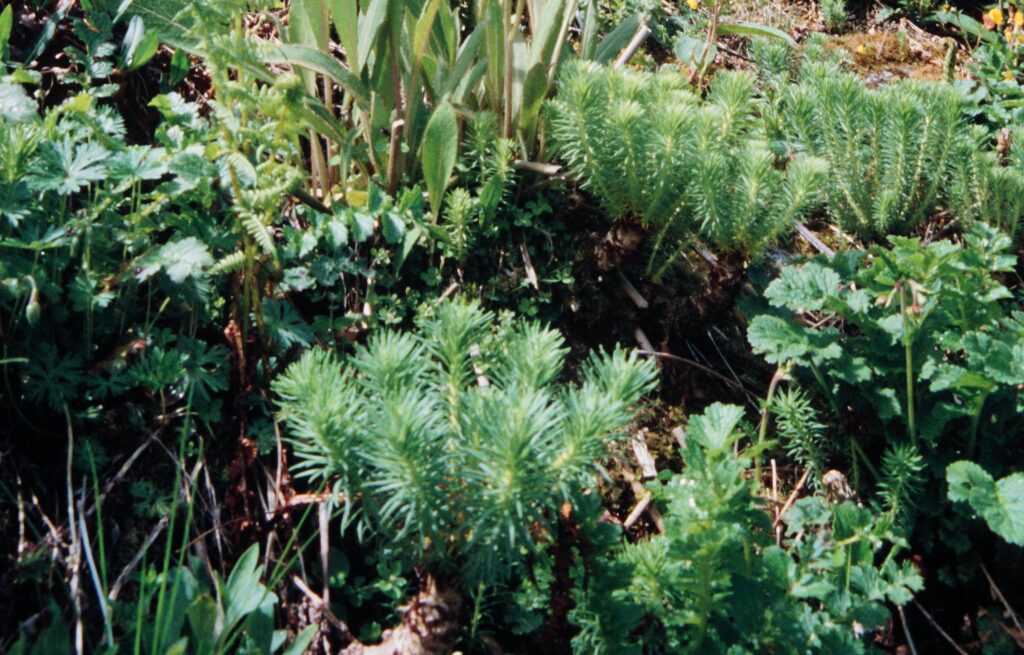
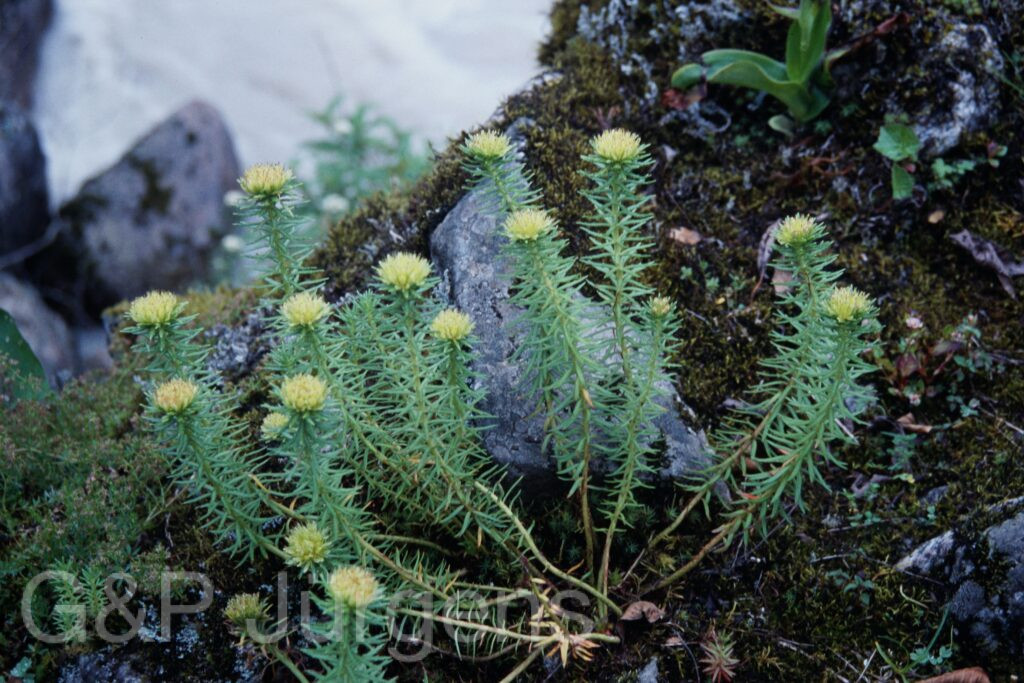
The plant arises from a stout, branched, woody caudex (rootstock) bearing several erect or ascending leafy flowering stems. The leaves are alternate, sessile, fleshy, linear-lanceolate to oblong, flat, with entire or finely toothed margins, densely clothing the stems. The inflorescence is a terminal corymbose cyme of numerous small flowers. The species is functionally dioecious; the flowers are typically four- to five-merous, with greenish-yellow to reddish petals, the staminate flowers bearing stamens twice the number of petals, and the pistillate flowers developing several erect follicles that ripen reddish and split to shed minute seeds.
Rhodiola, segregated from Sedum, comprises the rosette- and caudex-forming stonecrops of cold northern and montane regions. Like its relatives the genus accumulates protective metabolites, and several species are harvested as adaptogenic medicinals, placing wild Himalayan populations under collection pressure. Adapted to short alpine summers, intense radiation and cold, R. wallichiana is locally frequent within its range and not currently assessed as globally threatened.
Author: (Hook.) Fu · Sources: POWO (Kew), GBIF, Flora of China, Flora of Bhutan, Ohba's monographic studies of Himalayan Crassulaceae (Rhodiola)