
Hemsl. ex F.B. Forbes & Hemsl.
Description
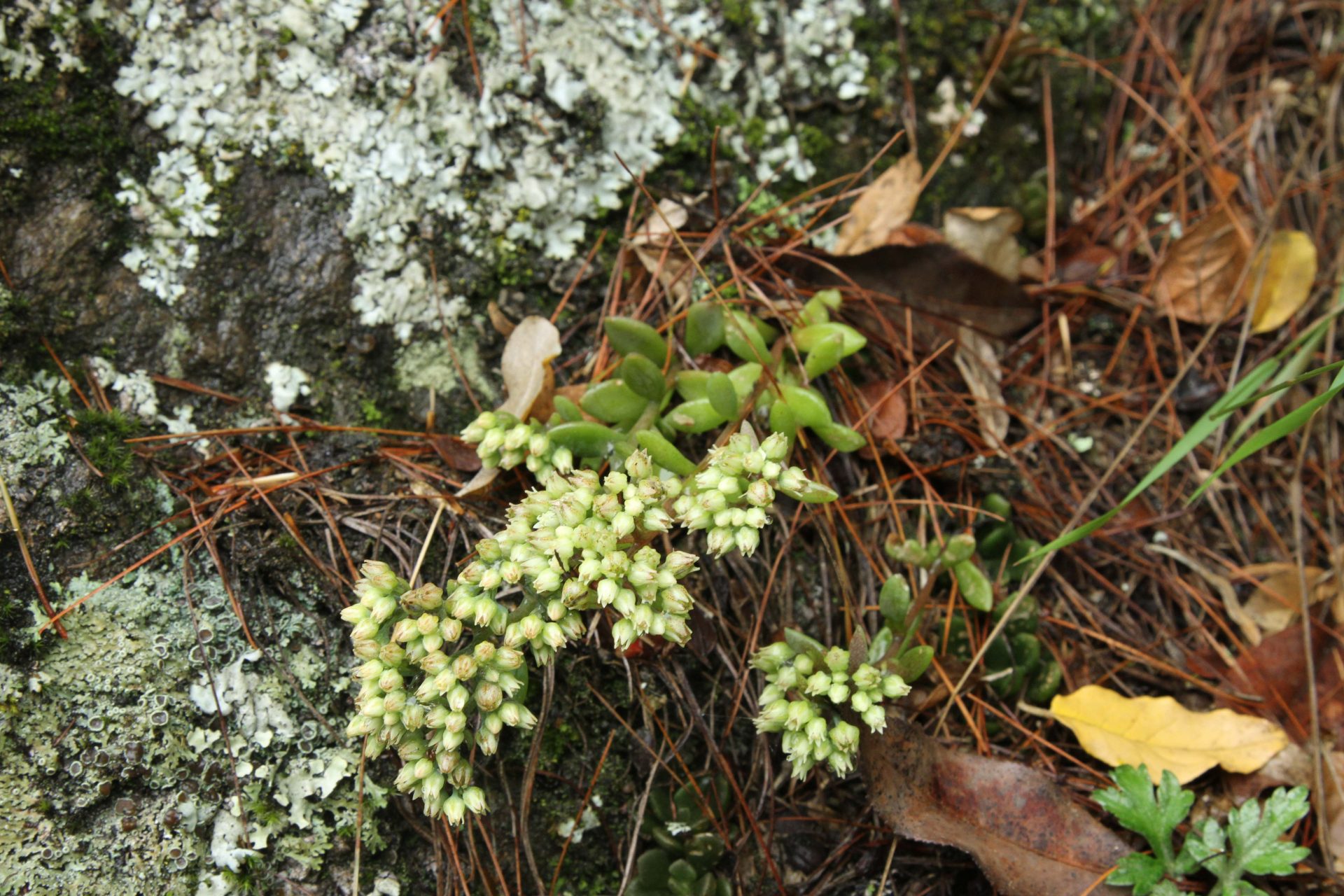
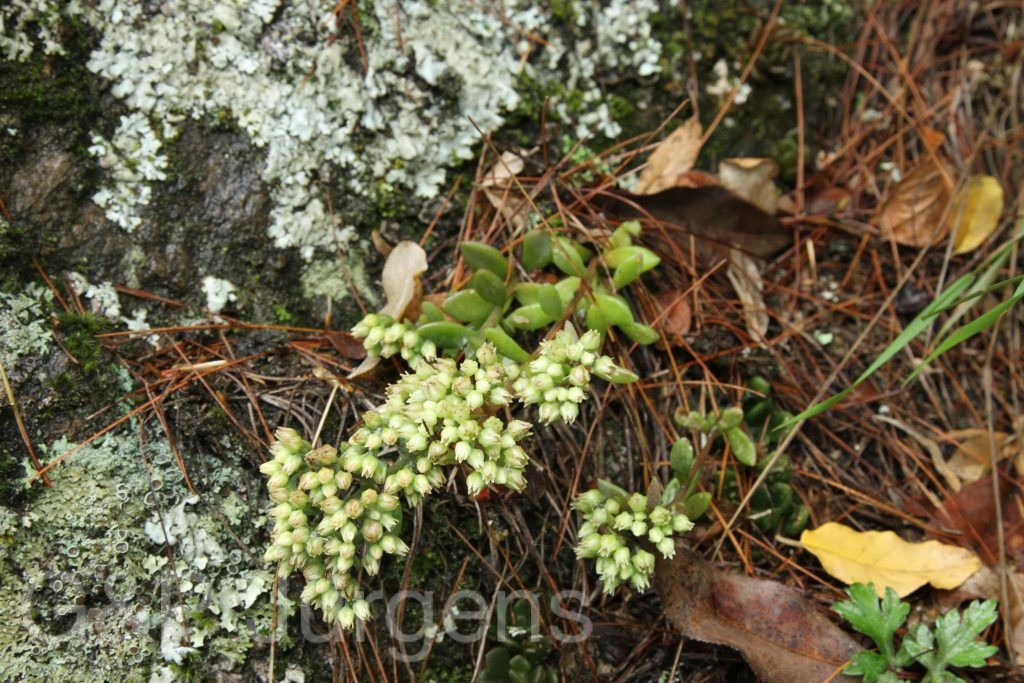
Sedum filipes Hemsl. ex F.B.Forbes & Hemsl. is a slender, succulent herb of the Sino-Himalayan mountains, recorded by GBIF from China, Nepal, India, Bhutan and Myanmar. It is a plant of moist, shaded rock ledges, mossy boulders, stream banks and forest margins in the subalpine and lower alpine belts, occurring from around 2,500 to 4,000 m. The October collection from the Haa valley in western Bhutan at 3,500 m reflects its preference for cool, humid microhabitats, where it often grows in thin soil pockets over rock alongside ferns, bryophytes and other small montane herbs at the close of the monsoon season.
The species is a delicate, glabrous annual or short-lived perennial with thread-like, often reddish, ascending or decumbent stems, as the epithet filipes (slender-stalked) implies. The fleshy leaves are alternate, flat to slightly terete, spathulate to obovate, narrowed to the base and entire. The inflorescence is a lax, few-flowered cyme bearing small, yellow, star-shaped flowers; each flower is typically five-merous, with lanceolate sepals, narrowly lanceolate petals, ten stamens and free or basally united carpels that ripen into erect, beaked follicles releasing minute seeds.
Within Crassulaceae the genus Sedum in its broad traditional sense is highly polymorphic, and slender Himalayan taxa such as S. filipes have at times been segregated into genera such as Sinocrassula or treated within narrowly defined sections. Its succulent CAM-related physiology allows survival on exposed, drought-prone rock surfaces, making it a characteristic colonist of rocky subalpine habitats and a useful indicator of undisturbed montane rock communities.
Author: Hemsl. ex F.B. Forbes & Hemsl. · Sources: POWO (Kew), GBIF, Flora of China Vol. 8, Flora of Bhutan Vol. 1, 't Hart & Eggli: Evolution and Systematics of the Crassulaceae