Tag:

Subalpine (2500-3500 m)

Nutt.

Bhutan2014 529
Bhutan Pele-La 2900m, May
Bhutan2014 643
Bhutan Pele-La 2900m, May
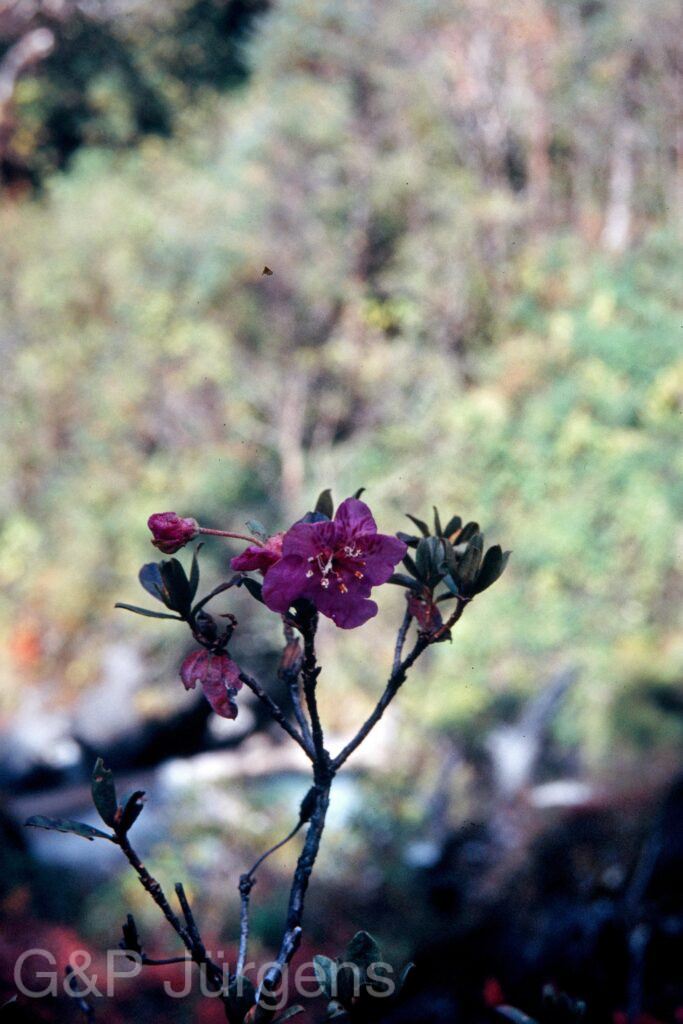
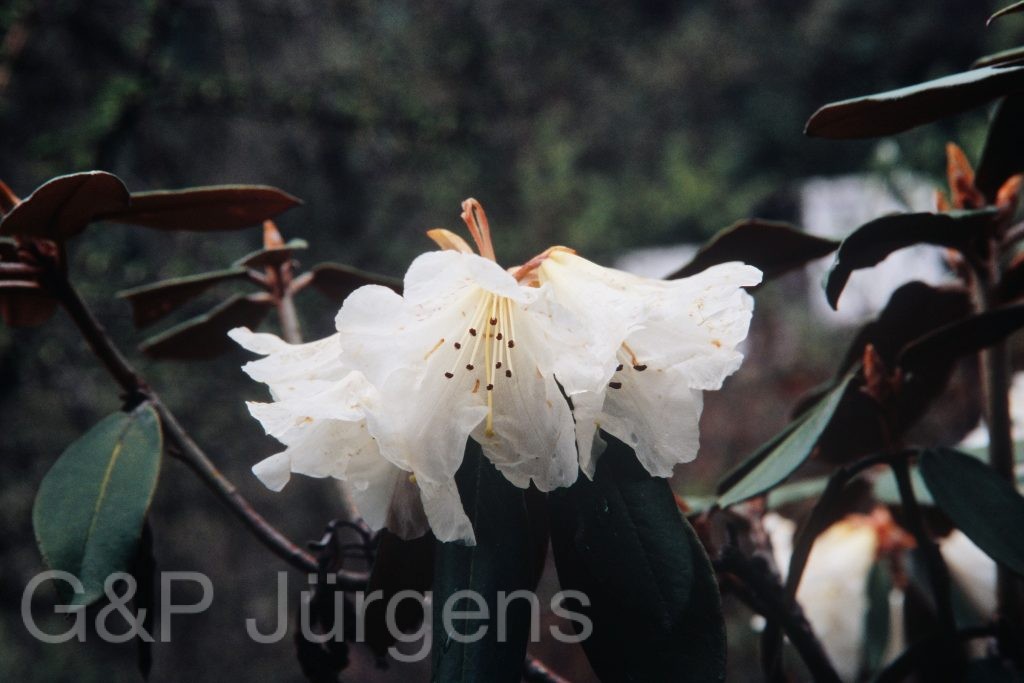
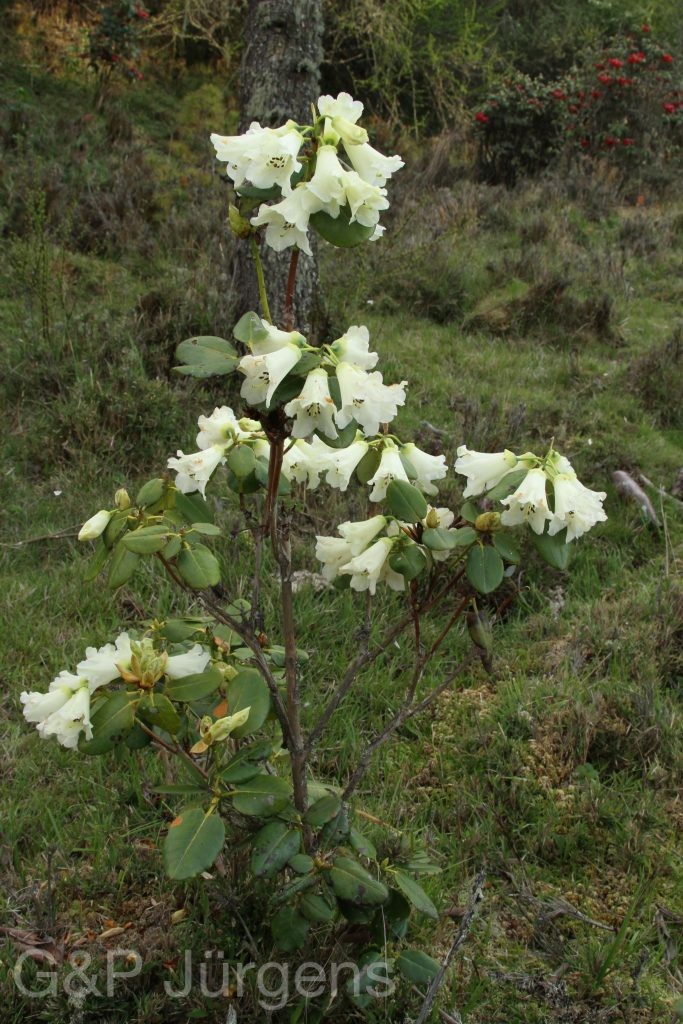
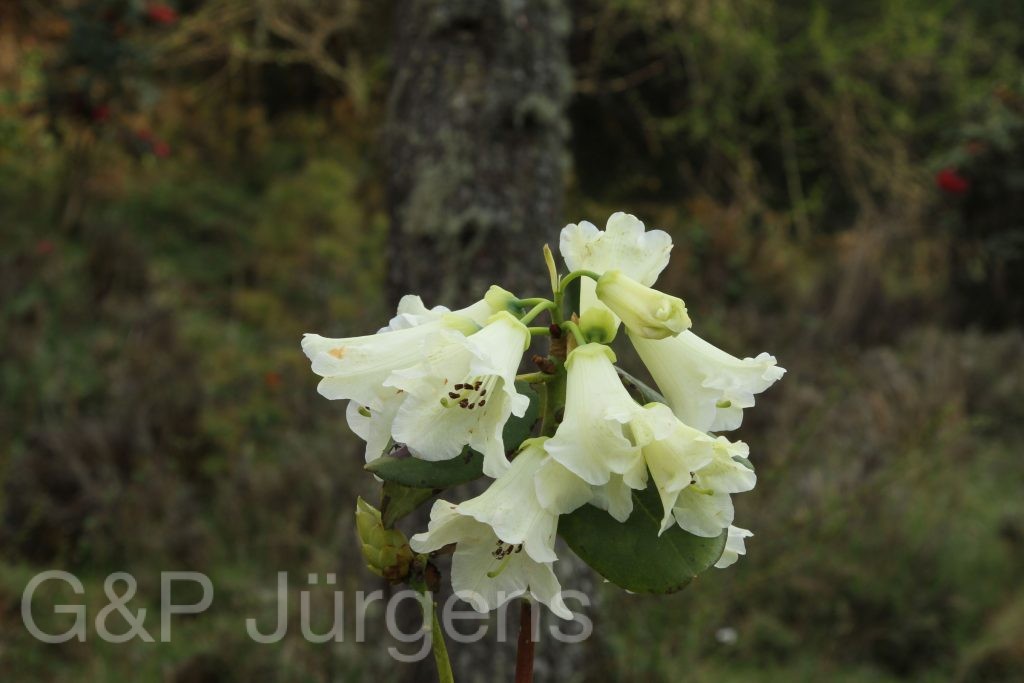
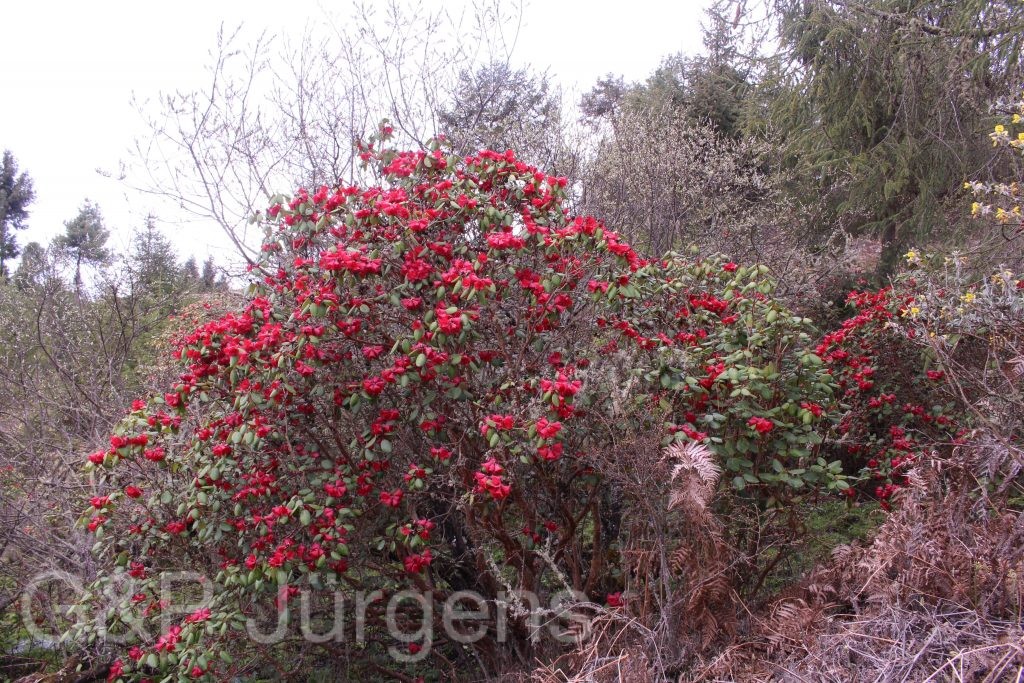
BhutanPG2011 262011 Bhutan Rhod. keysii scaled
Bhutan Pele-La, 2800m June

Description

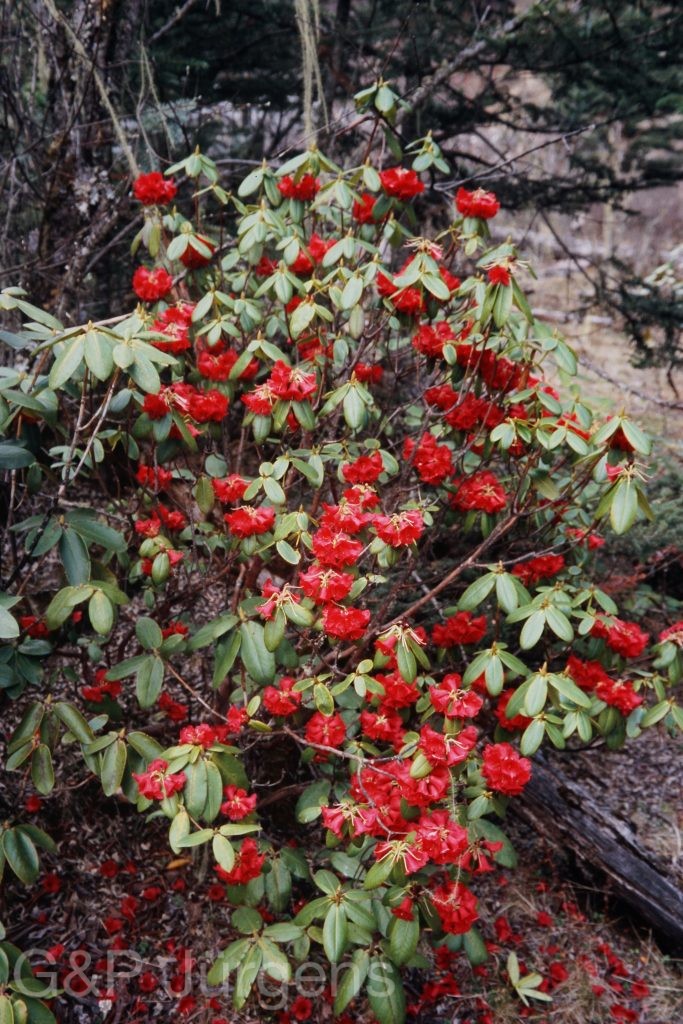
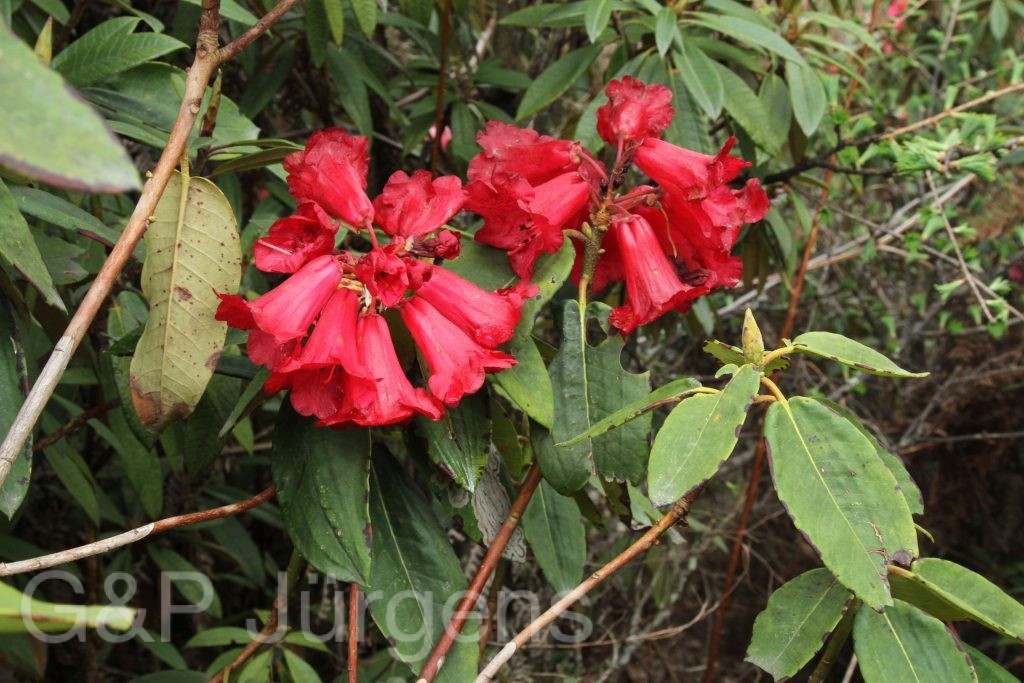
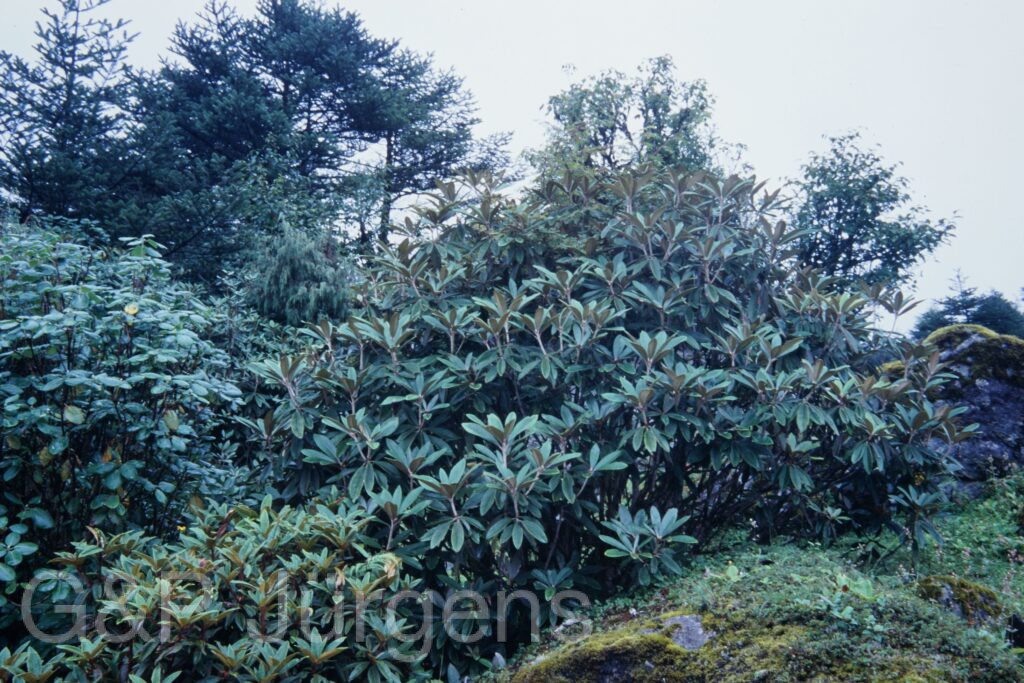
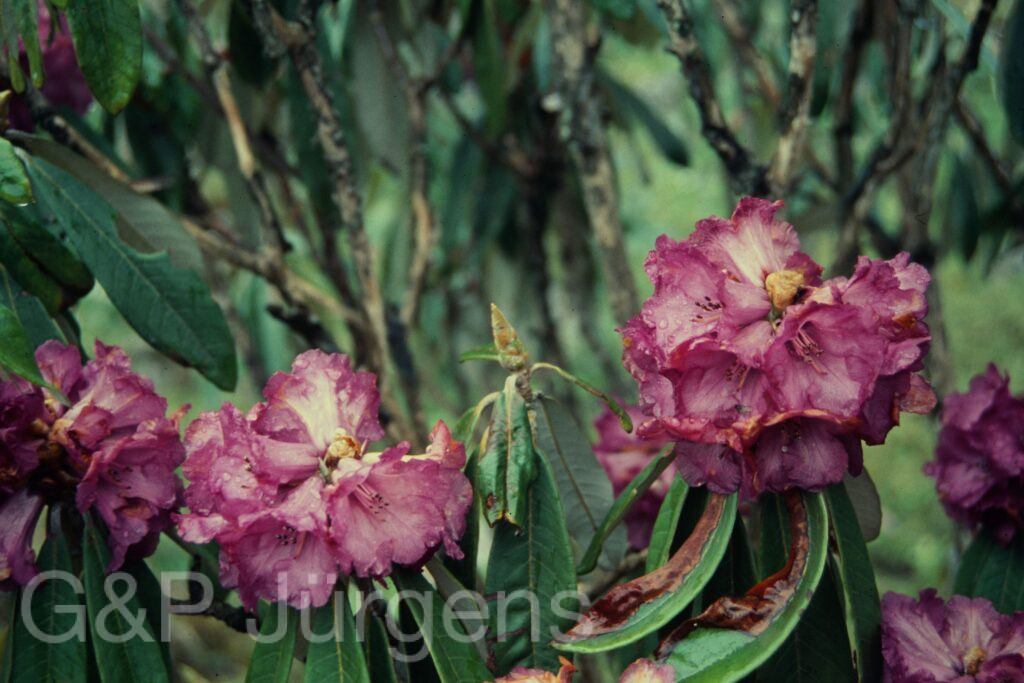
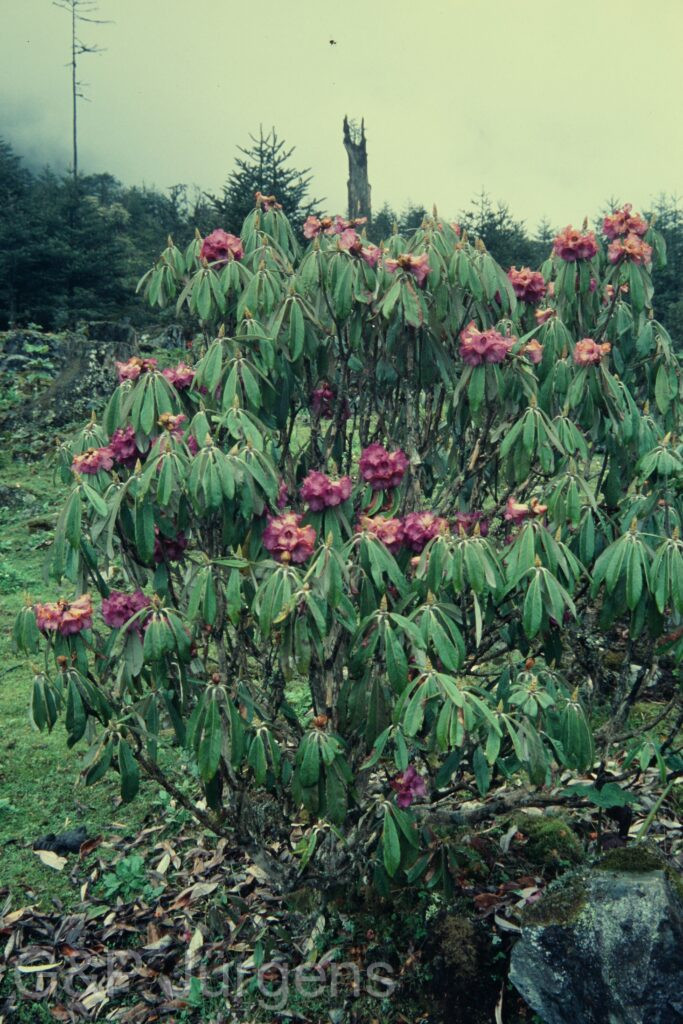
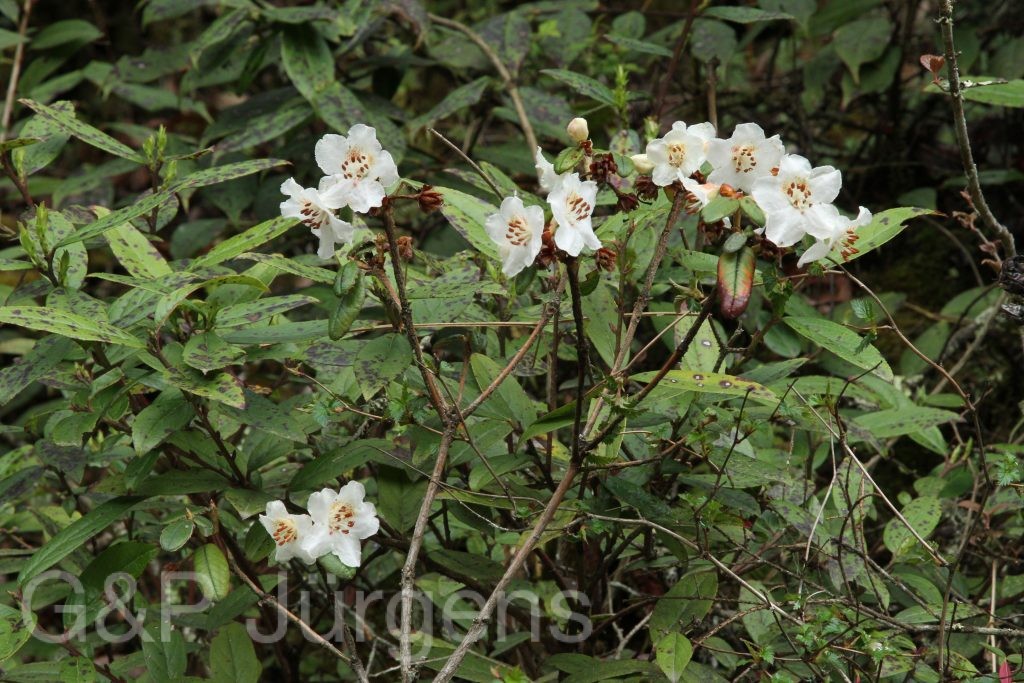
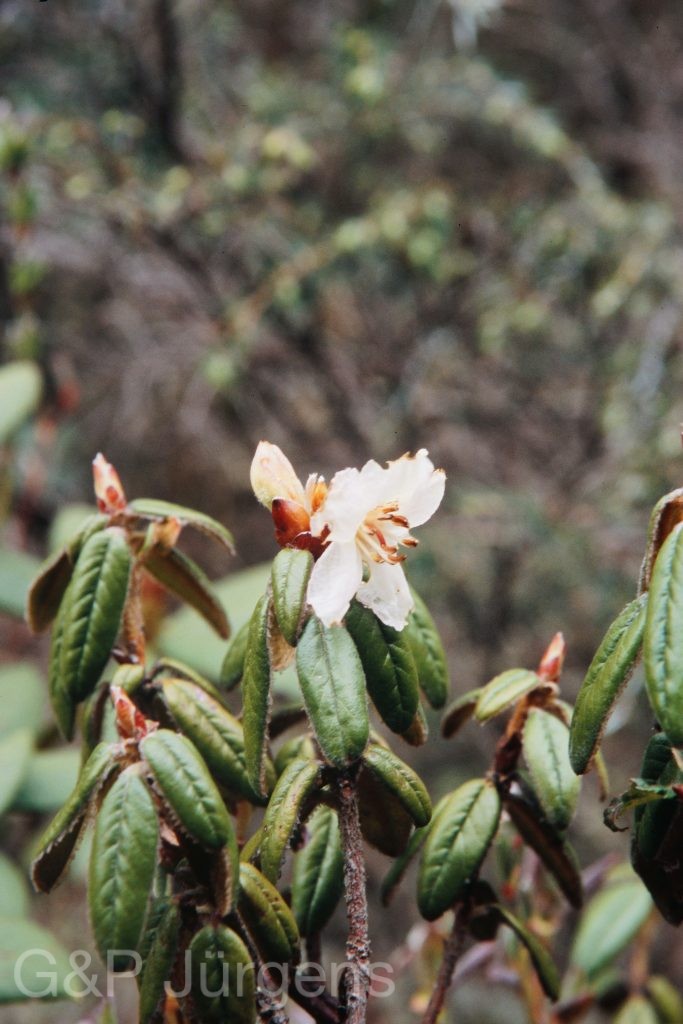
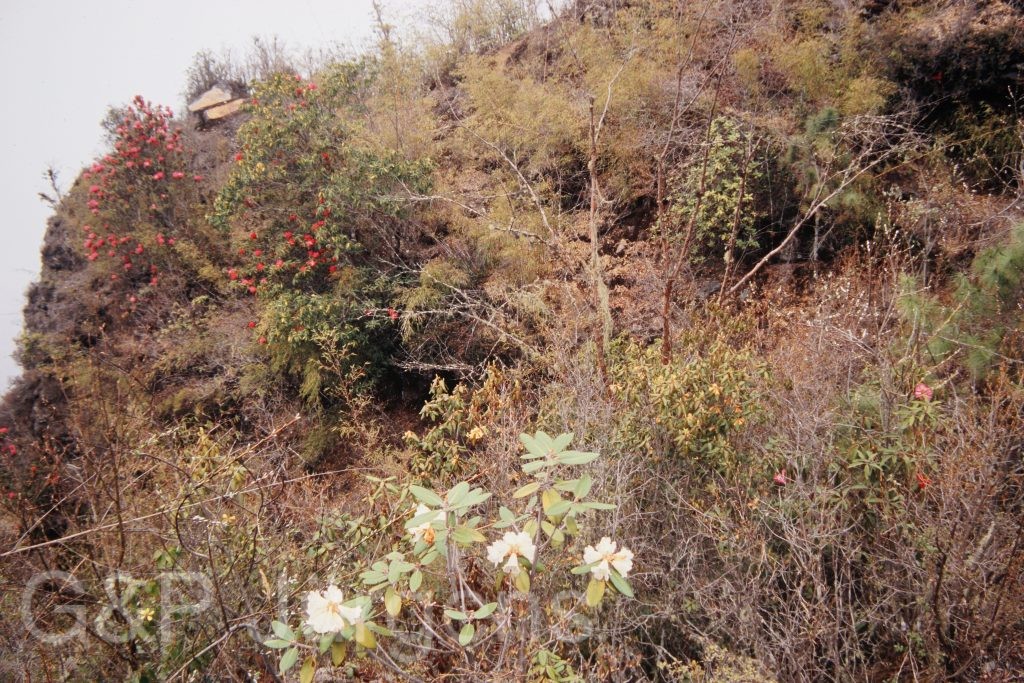
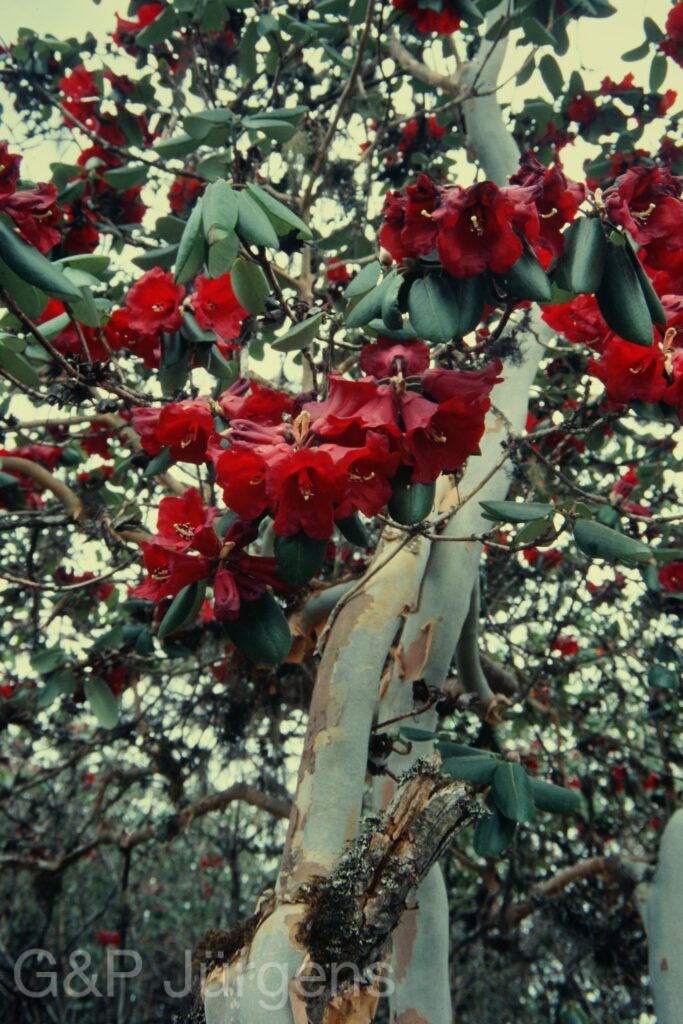
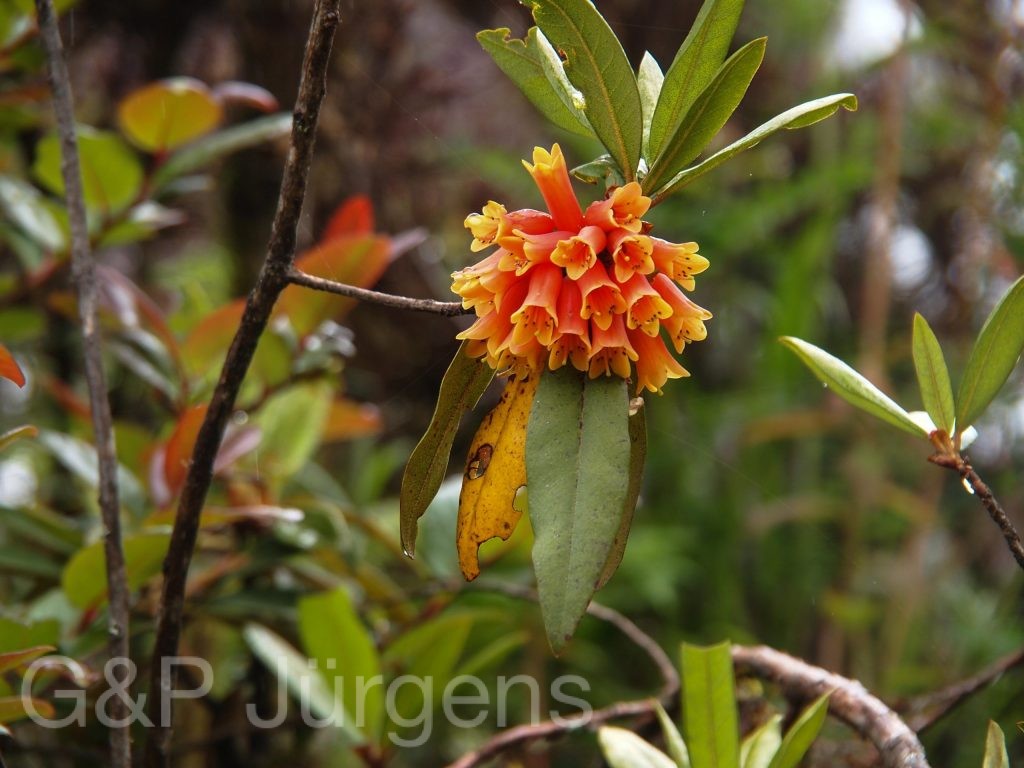
Rhododendron keysii is an eastern Himalayan shrub native to Bhutan, India (Arunachal Pradesh, Sikkim) and southern Tibet (China), with 202 georeferenced occurrences; further records from Canada, Great Britain and New Zealand reflect its cultivation as a curiosity in temperate gardens rather than a natural range. It grows in cool, humid montane and temperate forest, in scrub, forest margins and as an epiphyte or terrestrial shrub among conifers and broad-leaved trees, generally between about 2400 and 3300 m. It was photographed at the Pele-La pass in Bhutan at 2800 to 2900 m in May and June, within the moist mid-montane belt where mist and high rainfall favour its growth.

It is an erect, sparsely branched evergreen shrub 1 to 3 m tall, with scaly young shoots and rather thin, elliptic-lanceolate leaves that are lepidote beneath. The flowers are highly distinctive among rhododendrons: borne in small axillary clusters along the upper stems, they are narrowly tubular to cylindrical, only slightly flared at the mouth, and bicoloured, with an orange-red to brick-red tube and contrasting yellow-green lobes. The corolla shape recalls a Correa or a small Cestrum rather than a typical rhododendron. The fruit is a slender scaly capsule.

The species belongs to Rhododendron subgenus Rhododendron, section Rhododendron (subsection Cinnabarina, the keysii alliance), and its tubular axillary flowers make it instantly recognisable. The narrow tube and exserted style point to pollination by sunbirds. Ecologically it is a component of mossy montane forest undergrowth. It is not regarded as threatened, though uncommon and locally distributed, and is valued horticulturally for its unusual floral form.

Author: Nutt. · Sources: POWO (Kew), GBIF, Flora of Bhutan, Flora of China, The Genus Rhododendron (Cullen & Chamberlain monograph)
Hook. f.

Bhutan2014 374
Bhutan Tumcheng-La 3900m, May
Bhutan2014 375
Bhutan Tumcheng-La 3900m, May
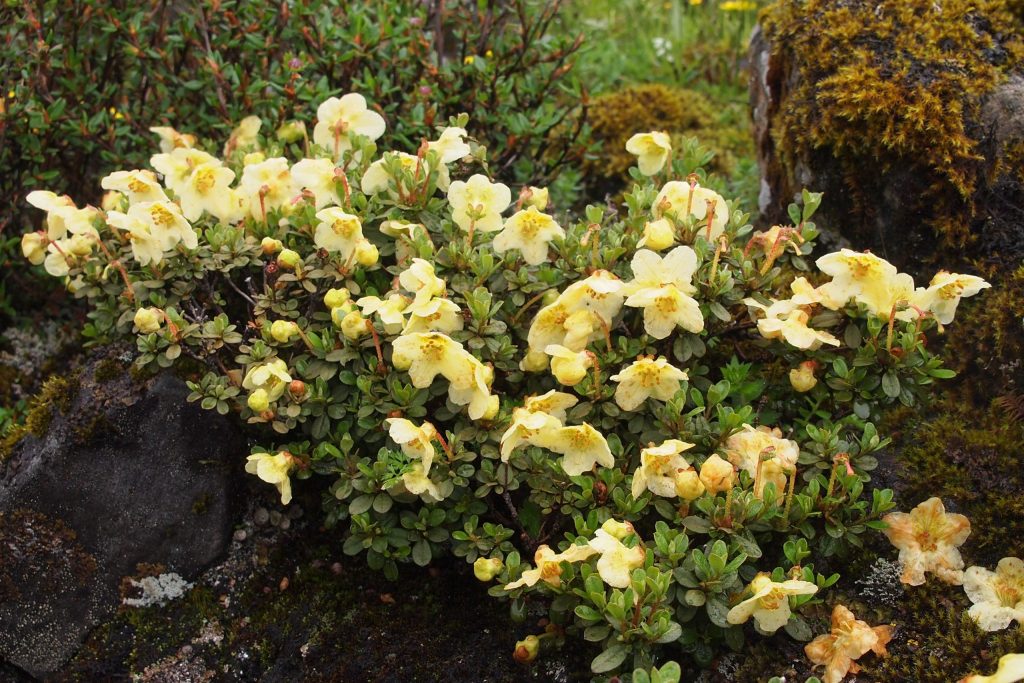
Bh2008 252 P398
Bhutan Tumching-La, 3400m April
Bh2008 270 P424 scaled
Bhutan Tumching-La, 3700m April
Bh2008 271 P425 1
Bhutan Tumching-La, 3700m April

Description

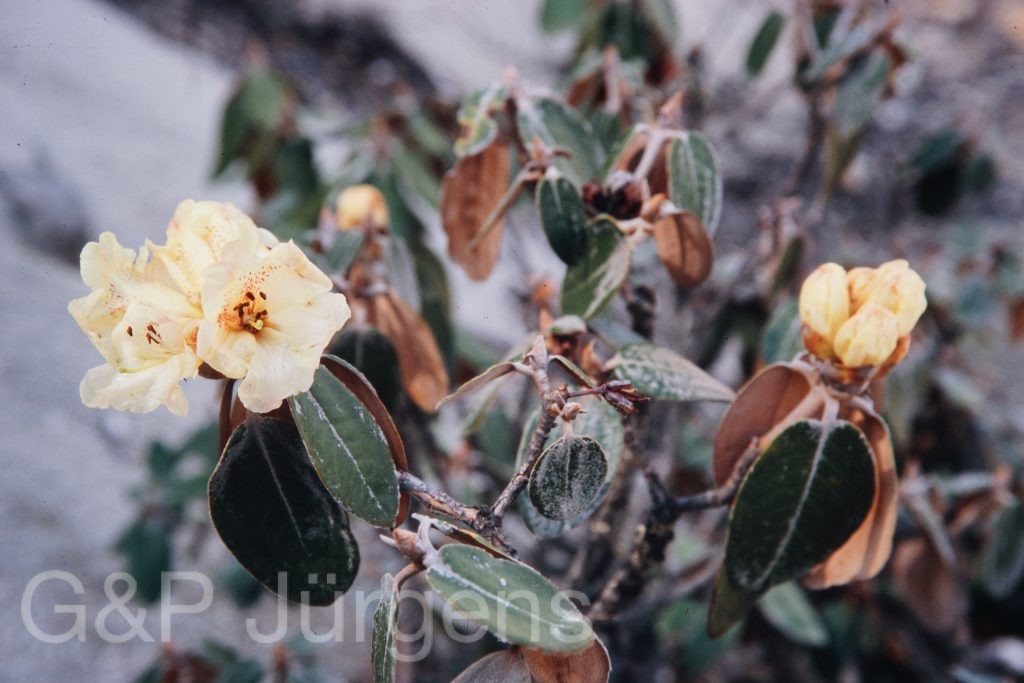
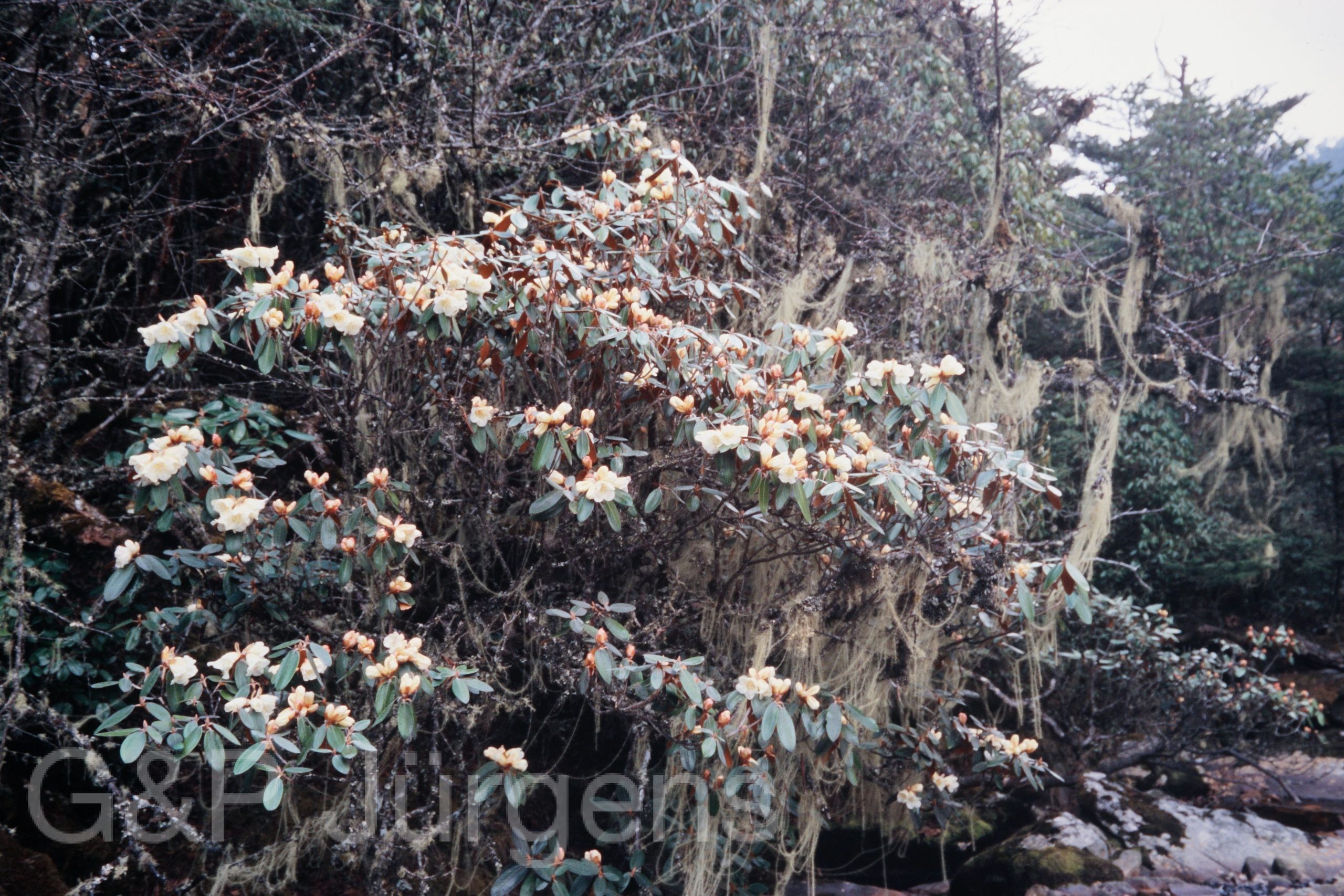
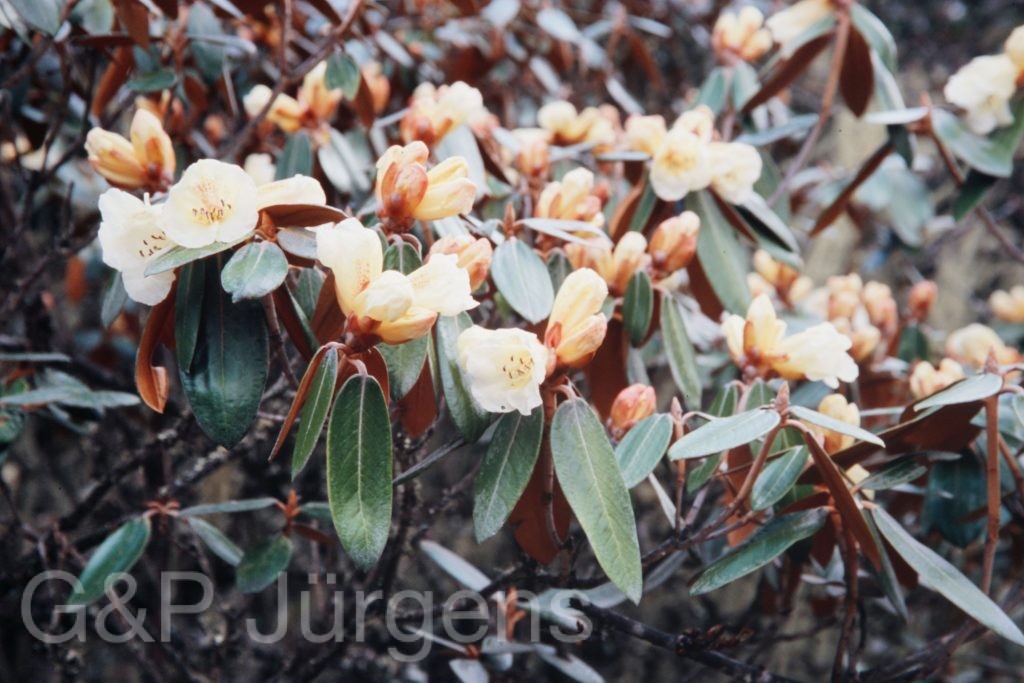
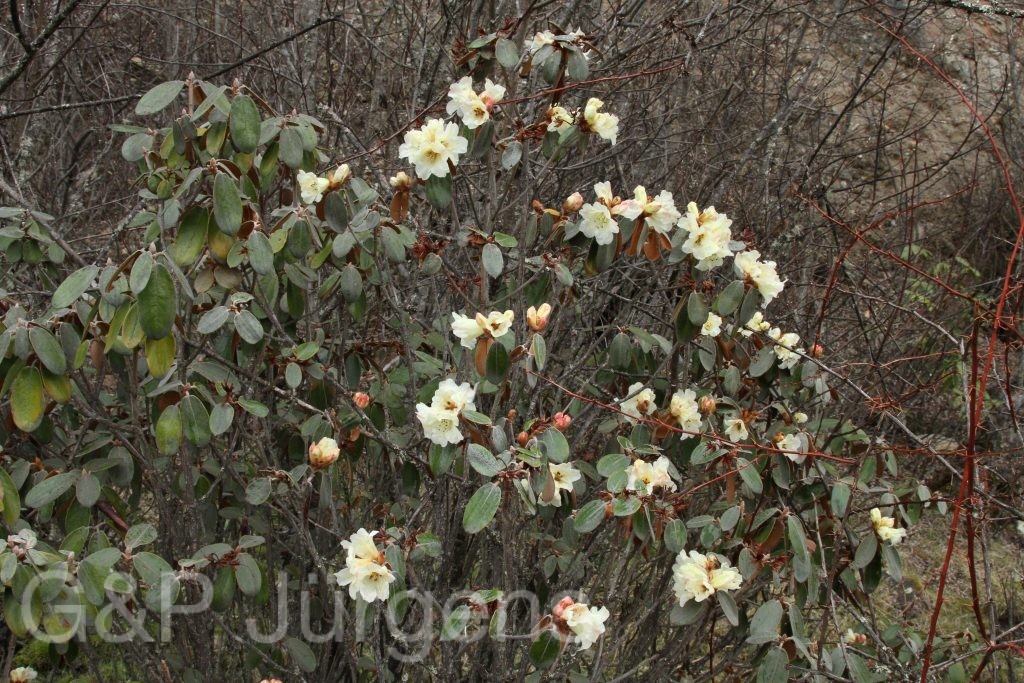
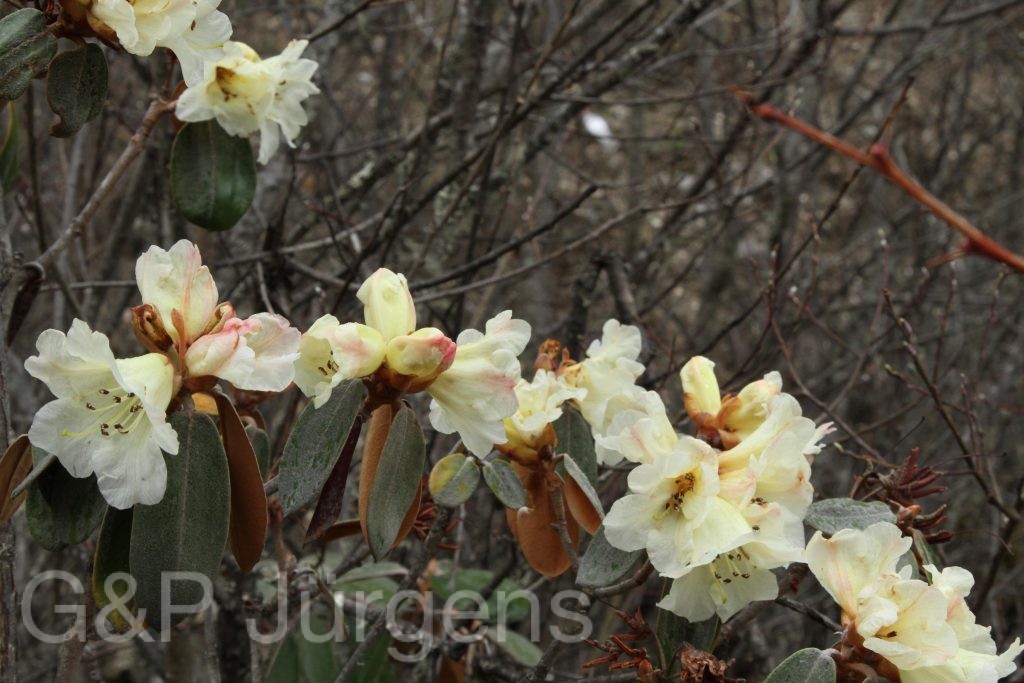
Rhododendron lanatum is an East Himalayan species restricted to the eastern Himalaya, ranging from Sikkim and adjacent northern India through Bhutan to south-eastern Xizang and Yunnan in China, with peripheral records in Nepal; its roughly 180 georeferenced occurrences (IN, BT, CN, NP) reflect a comparatively narrow distribution, supplemented by garden records in Britain and Sweden. It is a component of the subalpine Rhododendron-Abies forest and shrubberies, growing on humus-rich, acidic slopes and rocky moraine between about 3000 and 4300 m. The plants documented on the Bhutanese passes of Tumching-La and Tumcheng-La between 3400 and 3900 m, flowering from April into May, occupy exactly this cool, cloud-soaked subalpine zone.

It is an evergreen shrub or small tree to 3-4 m, conspicuous for the dense rusty to fawn woolly (lanate) indumentum that clothes the young shoots, leaf undersides and bud scales. The leaves are coriaceous, oblong-elliptic, glabrous and dark green above but covered beneath with a thick, two-layered tomentum of branched hairs. The bell-shaped (campanulate) flowers, pale to sulphur-yellow and often flecked with crimson at the base, are 3-4 cm long and grouped in dense terminal trusses of up to a dozen; the corolla bears five lobes, ten stamens and a glabrous ovary. The fruit is a curved, woody, septicidal capsule releasing numerous minute winged seeds.

Rhododendron lanatum belongs to subsection Lanata of subgenus Hymenanthes, a small group defined by their woolly indumentum and yellow campanulate flowers, allied to R. wightii. Its narrow eastern Himalayan range and dependence on intact subalpine forest make it locally vulnerable to grazing, fire and woodland degradation, though it remains frequent within Bhutan's protected highlands.

Author: Hook. f. · Sources: POWO (Kew), GBIF, Flora of Bhutan, Flora of China, Cox's The Larger Rhododendron Species, The Genus Rhododendron (Royal Botanic Garden Edinburgh)

Hook.f.

Nepal 95 386 P685 ergebnis
Nepal Bahanjyang 3800m October
Nepal 95 424 P738 ergebnis
Nepal Bahanjyang 3800m October
BhutanPG2011 629 01
Bhutan Ludlow-Sherriff-Trail Ken-La, 4300m July
BhutanPG2011 620 scaled
Bhutan Ludlow-Sherriff-Trail Ken-La, 4300m July
Nepal 99 548 ergebnis
West-Nepal Churta-Khola, 3800m June
Sikkim2011 183
Sikkim Lachung 2650m, June

T. Moore

Bhutan2014 311
Bhutan Jakar 2400m, May
Bhutan2014 448
Bhutan Jakar 2400m, May
Sikkim2004 56 G98
Sikkim West-Bengal, Bersay 2810m April
Nepal 1994 257 ergebnis
Ost-Nepal Milka-Danda 2850m April 
Nepal 1994 263 ergebnis
Ost-Nepal Milka-Danda 2850m May 

Description

Rhododendron lindleyi is an epiphytic to terrestrial rhododendron of the eastern Himalaya, recorded in GBIF from India, Nepal, Bhutan, China and Myanmar across 154 occurrences. It is characteristic of cool, humid mid-montane broad-leaved and conifer forest, growing as an epiphyte on mossy trunks or on cliffs and steep banks between roughly 2200 and 3000 m. Collections cited from the image span Jakar in Bhutan at 2400 m in May, Bersay in the Sikkim-West Bengal borderlands at 2810 m in April, and Milka-Danda in east Nepal at 2850 m in April-May, indicating a spring-flowering species of the perhumid forest belt.

It is a straggling, sparsely branched shrub 1-3 m tall with smooth, peeling reddish-brown bark and rather thin, scaly branchlets. The leaves are elliptic-oblong, leathery, glaucous and densely lepidote (scaly) beneath. The inflorescence is a loose terminal truss of 3-6 large, fragrant flowers; the corolla is broadly funnel-campanulate, 7-10 cm long, white often flushed with pink and marked with a yellow basal blotch, the tube exterior bearing scattered scales. There are usually ten stamens, an elongate scaly style, and the fruit is a slender, scaly, septicidal capsule releasing numerous minute winged seeds adapted to epiphytic establishment.

The species belongs to Rhododendron subgenus Rhododendron section Maddenia, the lepidote, often epiphytic, large-flowered rhododendrons. Named for the botanist John Lindley, it is prized in horticulture for its scented bloom. Pollination is by long-tongued insects, with dust-seed dispersal favouring colonisation of bark and rock. Though locally frequent, its dependence on undisturbed humid forest leaves it sensitive to habitat clearance.

Author: T. Moore · Sources: POWO (Kew), GBIF, Flora of Bhutan, Flora of China, The Genus Rhododendron (Edinburgh Revision)

Hook. f.

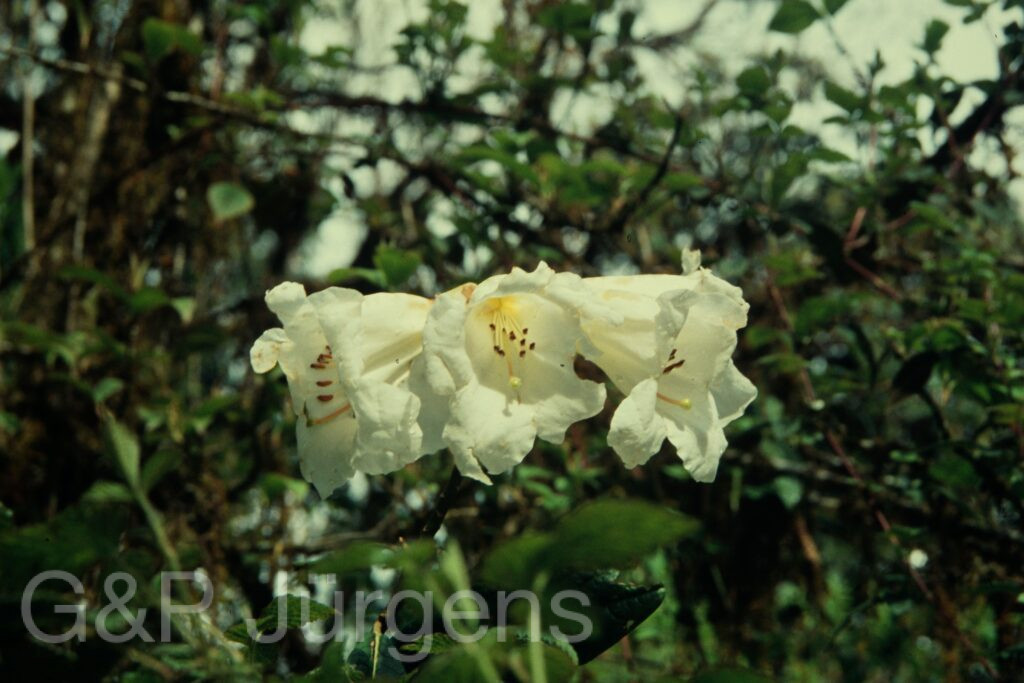
Sikkim2011 171
Sikkim Lachen 2760m, June
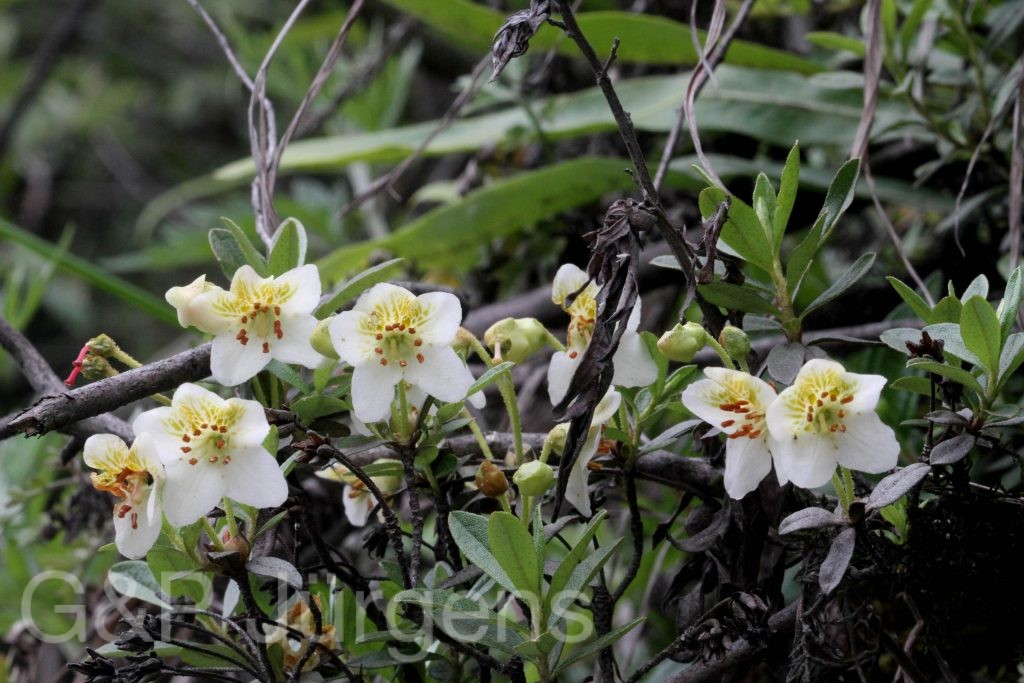
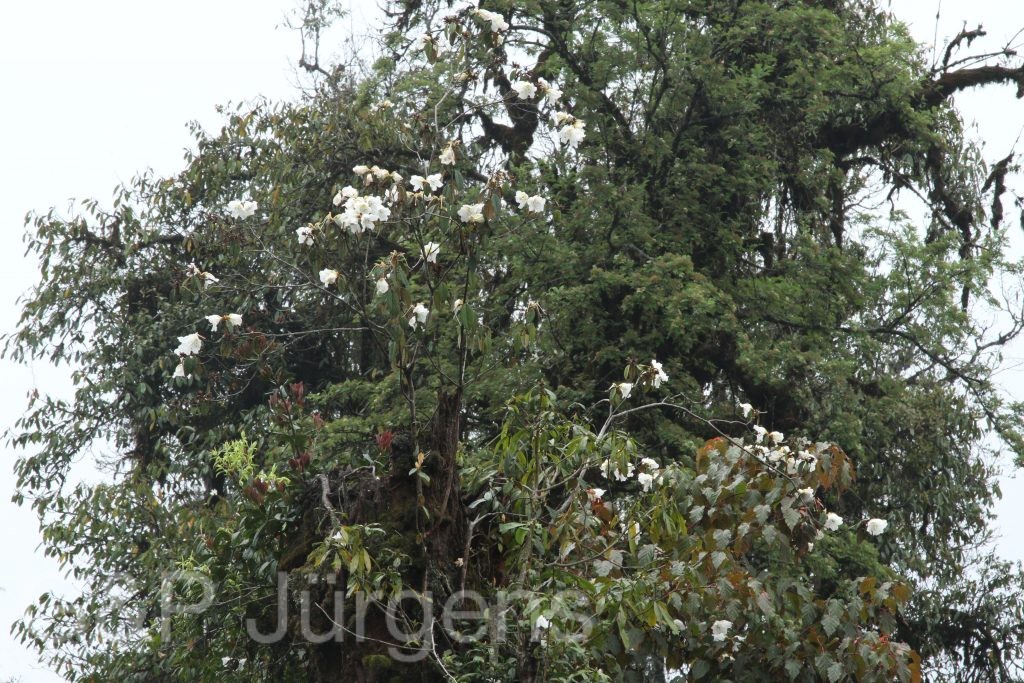
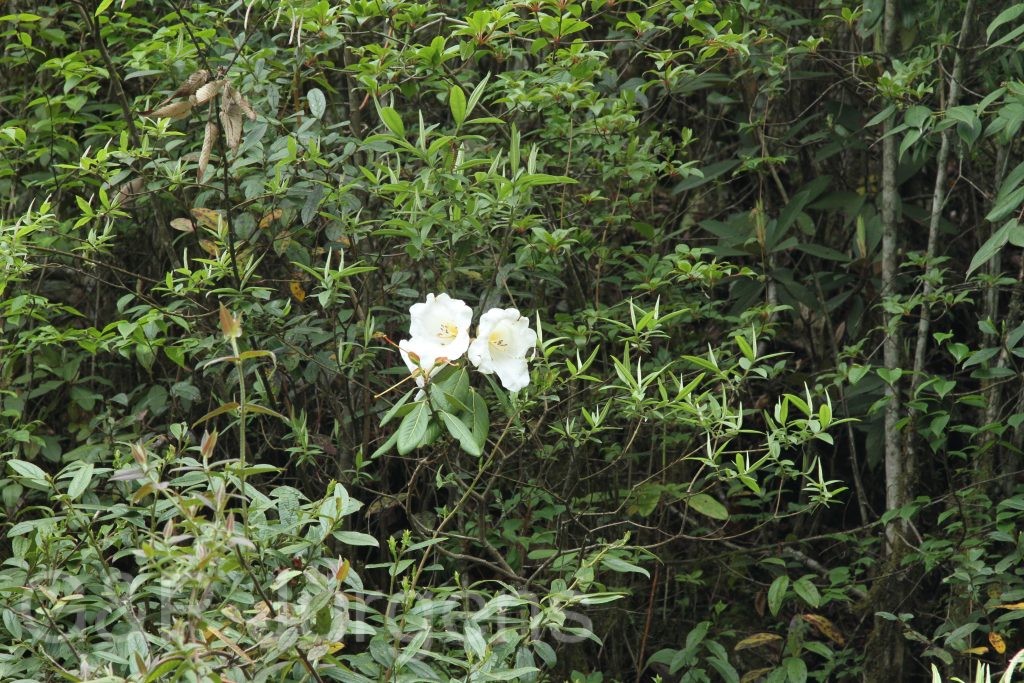
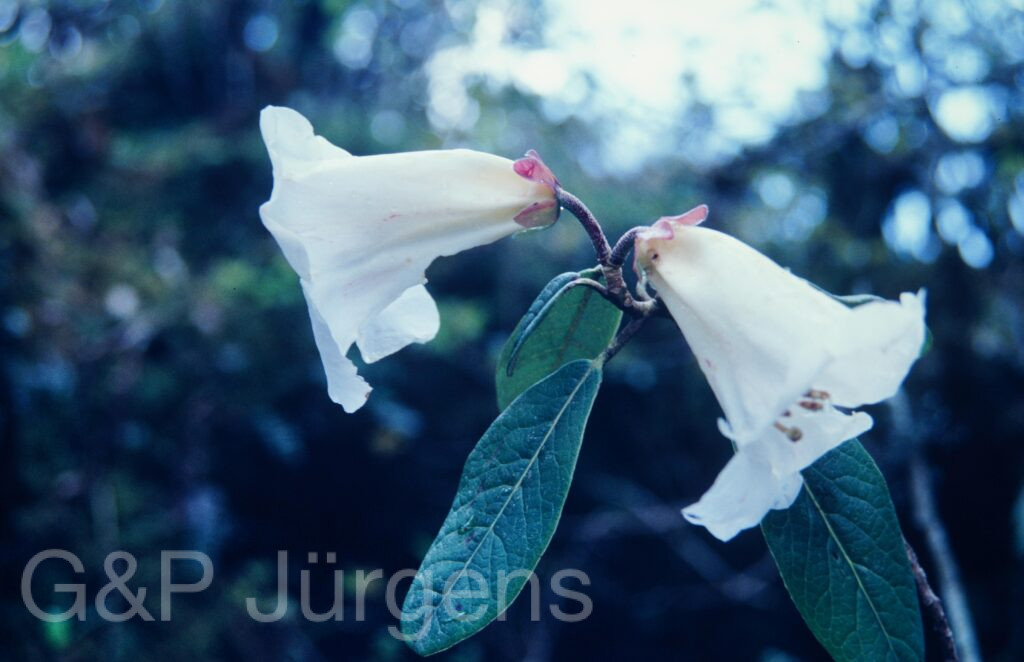
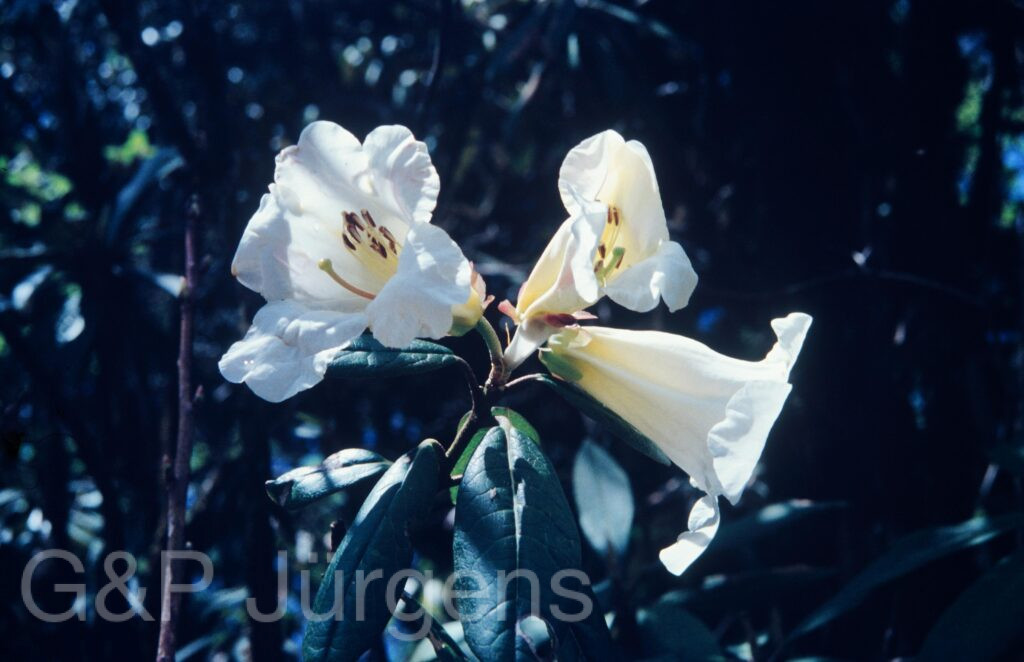
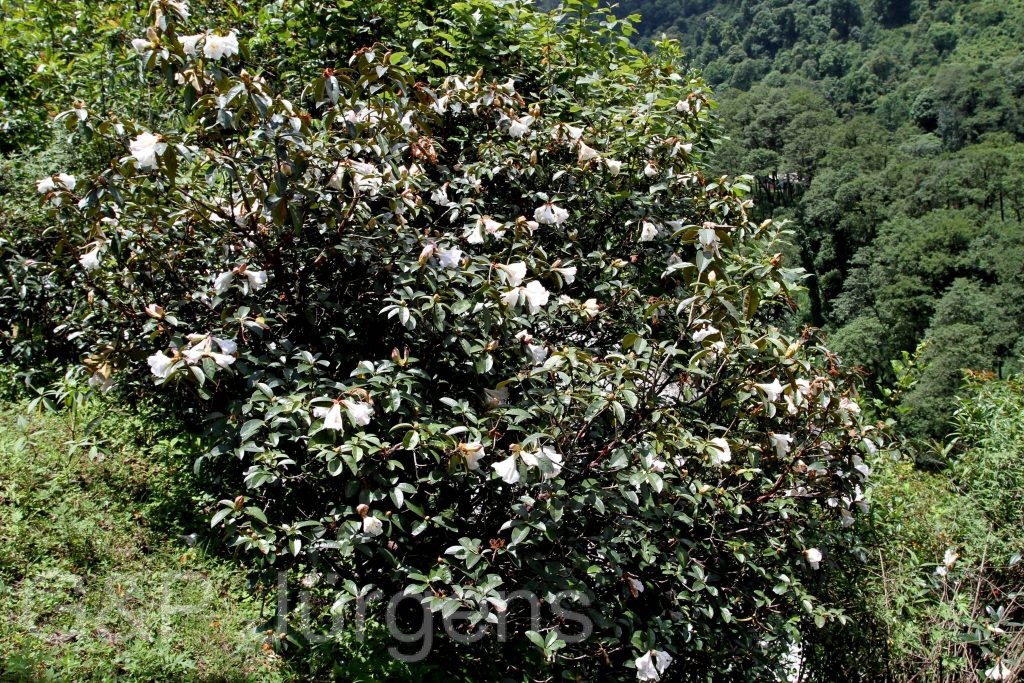
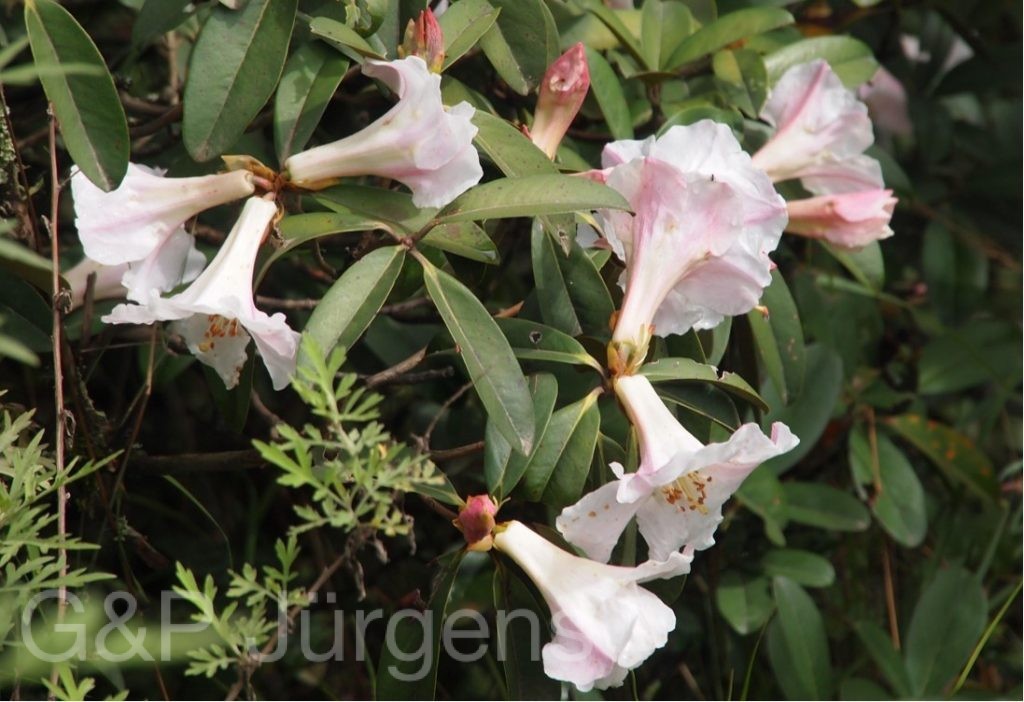
61F33B91D6814425A5DC452DD80DA368
Bhutan Paro, 2400m June

Description

Rhododendron maddenii is a temperate Himalayan and Indo-Burmese species native from India and Bhutan through China to Myanmar and Vietnam; GBIF's 432 records also reflect its wide cultivation, with occurrences logged from New Zealand, Australia, Britain, Japan, Korea, Malaysia and the United States. In the wild it grows on steep, often rocky and humus-rich slopes, cliff ledges and the margins of temperate broadleaf and conifer forest, frequently as an epiphyte or lithophyte. The figured plants from Lachen in Sikkim at 2760 m and Paro in western Bhutan at 2400 m, both flowering in June, place it firmly within the cool temperate forest belt where summer monsoon moisture and high atmospheric humidity prevail.

It is an evergreen shrub or small tree, the bark smooth and peeling in papery flakes. The leaves are leathery, elliptic to oblong-lanceolate, dark green and glabrous above, the undersurface densely covered with brown lepidote scales characteristic of the subgenus. The flowers, borne in terminal trusses of few blooms, are large, funnel-form to tubular-campanular and strongly fragrant, white often flushed with pink and scaly on the outside of the corolla tube. There are typically numerous stamens and a long style, the ovary lepidote. The fruit is an elongate, scaly, dehiscent capsule releasing many small seeds adapted to wind and epiphytic establishment.

Within Rhododendron subgenus Rhododendron, R. maddenii belongs to the large, taxonomically complex subsection Maddenia, distinguished by lepidote foliage and showy scented corollas, and it shows considerable variation in size and indumentum across its range. The fragrant, pale flowers attract long-tongued moths and other nocturnal pollinators. Long prized in horticulture, it is the source of many hybrids; in the wild it remains generally secure, though habitat loss and over-collection threaten some local populations.

Author: Hook. f. · Sources: POWO (Kew), GBIF, Flora of Bhutan, Flora of China, The Genus Rhododendron (Royal Horticultural Society), Cullen's revision of lepidote Rhododendron

(Tagg & Forrest) W.K. Hu

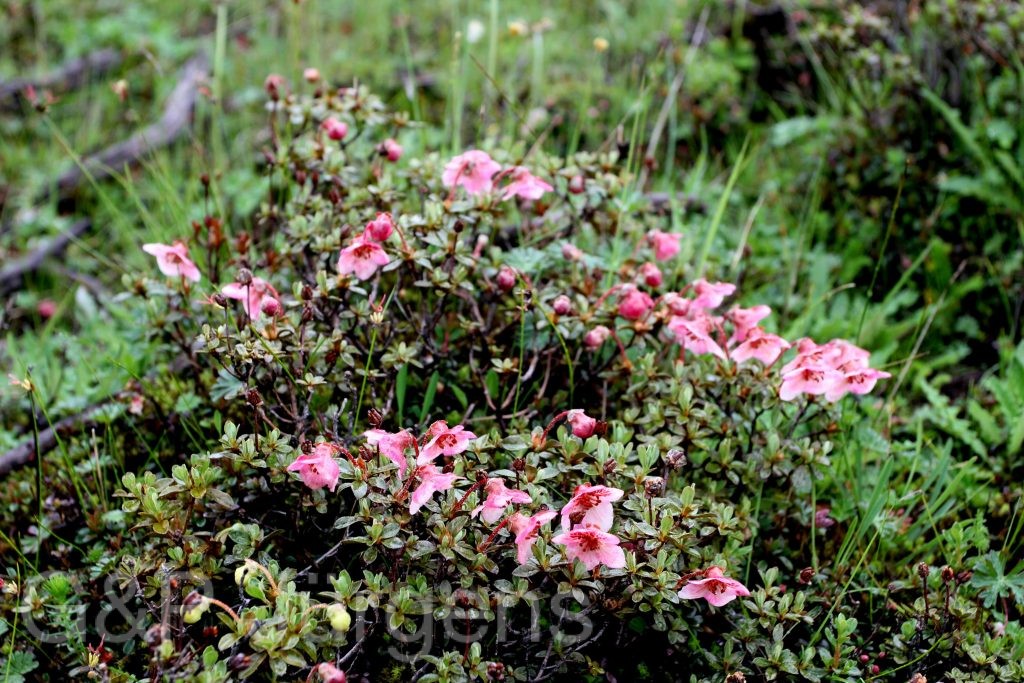
Bh2008 268 P421
Bhutan Ura 3400m, April
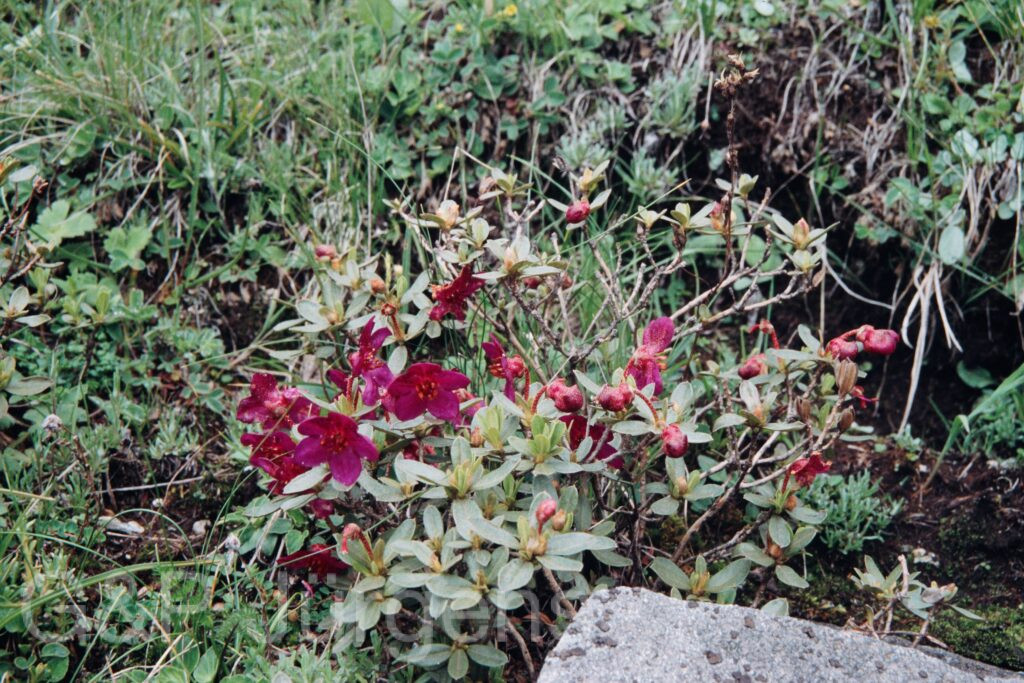
Bhutan2014 540
Bhutan Pele-La 3000m, May

Description

Rhododendron neriiflorum var. appropinquans is an evergreen shrub of the eastern Himalaya, known from a small number of records: GBIF documents only about 9 occurrences, confined to China (Yunnan/Tibet) and Bhutan. It grows in the temperate and subalpine forest belt, on rhododendron-clad slopes, forest margins and rocky banks broadly between 3000 and 3600 m. The photographed plants are from Bhutan at Ura (3400 m, April) and the Pele-La (3000 m, May), flowering in spring as the snow recedes, when the bright corollas appear against cool, humid, peaty mountain soils.

The plant is a much-branched shrub with leathery, evergreen leaves that are elliptic to oblong, dark green and glabrous above and glaucous to whitish-papillose beneath, recalling the foliage of an oleander as the specific epithet neriiflorum implies. The flowers are borne in a compact terminal truss of several blooms; the corolla is tubular-campanulate, fleshy in texture and a vivid crimson to scarlet, with conspicuous dark nectar pouches at the base. Stamens and the long style are exserted, and the calyx is fleshy and often coloured. The fruit is a curved, cylindrical capsule that dehisces septicidally to release numerous minute seeds.

Rhododendron neriiflorum belongs to subgenus Hymenanthes, subsection Neriiflora, a Sino-Himalayan complex of red-flowered species in which infraspecific variants such as var. appropinquans are distinguished by leaf indumentum and floral detail. GBIF treats the name as accepted. Its very restricted documented range and narrow ecological niche make it of biogeographic interest and potentially of conservation concern amid habitat change in eastern Himalayan rhododendron forests.

Author: (Tagg & Forrest) W.K. Hu · Sources: POWO (Kew), GBIF, Flora of Bhutan, Flora of China, Royal Horticultural Society revision of Rhododendron

Hook. f.

Sikkim2003 473 P655
Sikkim Lachung Valley 3100m August
Sikkim2004 409 P699
Sikkim Lachung Valley 3500m May
Sikkim2004 407 P697
Sikkim Lachung Valley 350

Description

Rhododendron niveum is a narrowly distributed eastern Himalayan species native to the Sikkim region of India, with extensions into adjacent China and Bhutan; its 92 georeferenced records, supplemented by occurrences in cultivation in Britain, Sweden, North America and Canada, reflect both a restricted wild range and its prominence in horticulture. It is a shrub or small tree of subalpine forest, rhododendron thickets and open hillsides near the treeline. The populations documented in the Lachung Valley of northern Sikkim between about 3100 and 3500 m, flowering in May and persisting in August, exemplify its high-montane habitat on cool, moist, acidic slopes.

The plant forms a compact tree or large shrub with stout branches. The leaves are obovate-elliptic, leathery and dark green above, their lower surface coated with a dense, persistent, silvery-white to fawn indumentum, the snowy tomentum that gives the species its epithet niveum. The flowers are grouped in dense, rounded terminal trusses; the campanulate corolla is a distinctive smoky lilac to deep purplish-mauve, a colour unusual among Himalayan rhododendrons, with ten stamens and a smooth, elongate ovary. The fruit is a woody, septicidal capsule releasing numerous minute seeds.

Within the vast genus Rhododendron, R. niveum belongs to subsection Arborea and is prized horticulturally for its striking flower colour and felted foliage, having been introduced by J. D. Hooker. Its restricted distribution and dependence on a narrow subalpine belt render it locally vulnerable to habitat loss, grazing and climatic shifts at the treeline, and it is of conservation interest as an eastern Himalayan near-endemic.

Author: Hook. f. · Sources: POWO (Kew), GBIF, Flora of Bhutan, Flora of China, The Rhododendron Handbook (RHS), Cox & Cox's The Encyclopedia of Rhododendron Species

Hook. f.

Bhutan2014 338
Bhutan Tumching-La 3000m, May
Bh2008 236 P373
Bhutan Tumching-La, 3500m April

Description

Rhododendron pendulum is an epiphytic or epilithic dwarf shrub of the humid Eastern Himalaya, with verified occurrences in China, India, Bhutan and Nepal (further GBIF records from Britain and the United States represent cultivated stock). It is most characteristic of cool, mist-laden temperate forest, where it perches on mossy trunks, branches and rock faces, generally between about 2700 and 3700 m. The Bhutanese material illustrated, from the Tumching-La between roughly 3000 and 3500 m in April and May, captures the species in flower at the close of the cold season in its typical cloud-forest setting.

It is a small, straggling shrub with thin, often pendulous branches densely clothed, like the young growth and leaf undersides, in a soft rusty-brown woolly indumentum. The small, elliptic to oblong leaves are leathery, with revolute margins, dark green and somewhat rugose above and thickly tawny-tomentose beneath. The flowers are borne few together at the branch tips; the corolla is broadly campanulate to rotate, white sometimes flushed pink, and comparatively large for so diminutive a plant. The fruit is a small ovoid capsule that splits septicidally to shed numerous minute seeds adapted to dispersal in the canopy.

Rhododendron pendulum belongs to subgenus Rhododendron, section Pogonanthum and its allies, distinguished by its woolly indumentum and epiphytic habit, and was described by J.D. Hooker from his Sikkim explorations. Its dependence on permanently humid, moss-rich forest makes it a sensitive indicator of intact cloud-forest conditions, and although not presently regarded as threatened, it is vulnerable to forest degradation and to disruption of the orographic mist regime on which its epiphytic lifestyle depends.

Author: Hook. f. · Sources: POWO (Kew), GBIF, Flora of Bhutan, The Genus Rhododendron (Royal Botanic Garden Edinburgh), Flora of China

Davidian

Bh2008 230 G365
Bhutan Tumching-La, 3400m April
Bh2008 231 P366
Bhutan Tumching-La, 3800m April

Description

Rhododendron poluninii Davidian is a narrowly distributed eastern Himalayan shrub known principally from Bhutan and the adjacent ranges of the Indo-Tibetan border. It is documented from Tumching-La in Bhutan between 3400 and 3800 m, flowering in April, within the cool temperate to subalpine forest belt. The species grows on humus-rich, acidic slopes among mixed conifer and broadleaved woodland, in rhododendron thickets and along forest margins where ample atmospheric moisture from the monsoon and frequent cloud cover prevail. With a single GBIF record and no aggregated country list, it is among the rarer and most poorly documented members of the genus, reflecting both its localised range and limited botanical collecting in the region.

It is a small to medium evergreen shrub with stiff branchlets clothed, like the undersides of the leaves, in a dense indumentum of scales or hairs typical of its alliance. The leaves are coriaceous, elliptic to oblong, dark green and lustrous above and paler or rusty beneath. The flowers are borne in compact terminal trusses, each with a campanulate to funnel-shaped corolla in shades of rose-pink to pale magenta, five-lobed, subtended by deciduous bud scales; the stamens are ten and the ovary surmounted by a slender style. The fruit is a woody, septicidal capsule releasing numerous minute seeds.

Described by the Rhododendron specialist H. H. Davidian, R. poluninii commemorates the collector Oleg Polunin and belongs to the vast genus Rhododendron, the dominant element of Himalayan subalpine vegetation. Its extreme rarity in collections and apparently restricted range suggest it may warrant priority survey and assessment, as such narrow endemics are especially exposed to habitat disturbance, forest clearance and climatic warming of the subalpine zone.

Author: Davidian · Sources: POWO (Kew), GBIF, Flora of Bhutan, The Rhododendron Species (Davidian), Edinburgh Rhododendron monograph (Cullen & Chamberlain)

Hook. f.

Bhutan2014 631
Bhutan Phobjika 2800m, May
Bhutan2014 632
Bhutan Phobjika 2800m, May
Bhutan2014 382
Bhutan Tongsa 2000m, May
Sikkim2004 307 P542
Sikkim/India May

Description

Rhododendron thomsonii is an Eastern Himalayan endemic centred on Sikkim, Bhutan, adjacent northeastern India, southern Tibet (China) and easternmost Nepal, with the nearly 479 records also reflecting widespread cultivation in Britain, North America and continental Europe. In its native range it occupies the cool, humid temperate forest zone, the images documenting plants at Phobjika around 2800 m and Tongsa near 2000 m in Bhutan, flowering in May, together with material from Sikkim. It grows in fir and mixed broadleaved forest, on forest margins, in rhododendron thickets and on open rocky slopes between roughly 3000 and 4000 m, often where the monsoon brings high atmospheric humidity.

It is an evergreen shrub or small tree reaching several metres, with smooth, flaking reddish-brown to plum bark. The leaves are broadly obovate to orbicular, glabrous, glaucous beneath, rounded or emarginate at the apex and cordate at the base, borne on short petioles. The inflorescence is a loose terminal truss of few flowers; the corolla is fleshy, broadly campanulate and a deep blood-red to crimson, subtended by a large, cup-shaped, persistent and conspicuously coloured calyx that is diagnostic for the species. Stamens are ten; the ovary and curved style are glabrous, maturing into a woody capsule.

The species was described by J.D. Hooker from his Sikkim Himalayan expeditions and is the type of subsection Thomsonia within Rhododendron subgenus Hymenanthes. Its large fleshy calyx, glaucous foliage and waxy red bells distinguish it from related taxa and have made it a foundation species in horticultural breeding. Though restricted in distribution, it is locally common within suitable montane forest and is buffered by extensive cultivation, so it is not regarded as globally threatened, although habitat pressures affect parts of its native range.

Author: Hook. f. · Sources: POWO (Kew), GBIF, Flora of Bhutan, Flora of China, The Genus Rhododendron (Royal Botanic Garden Edinburgh)