
T. Moore
Description
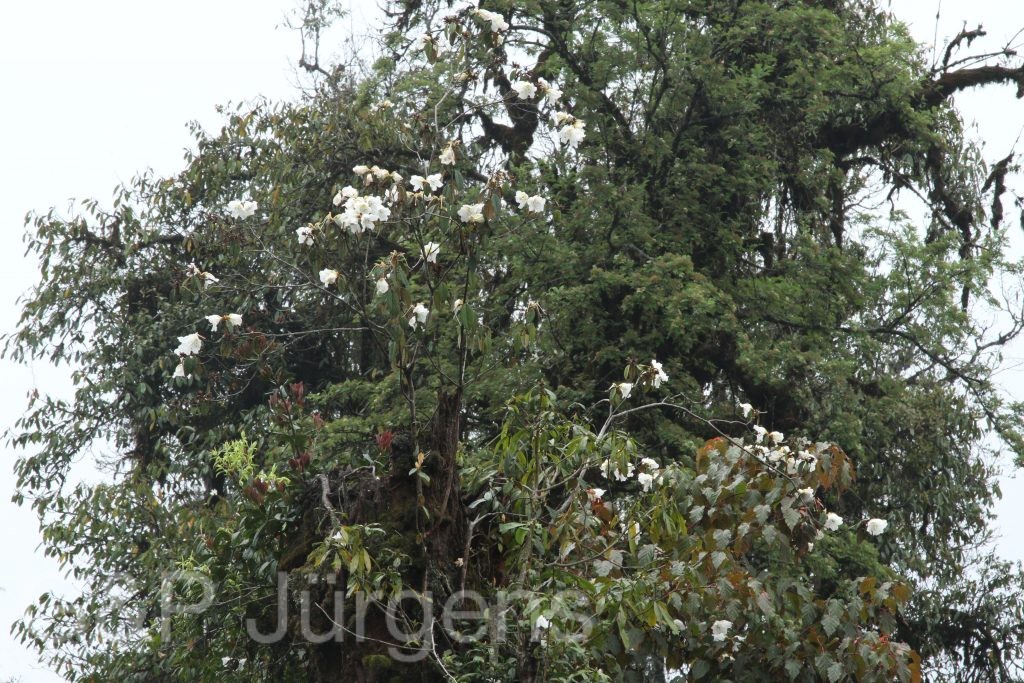
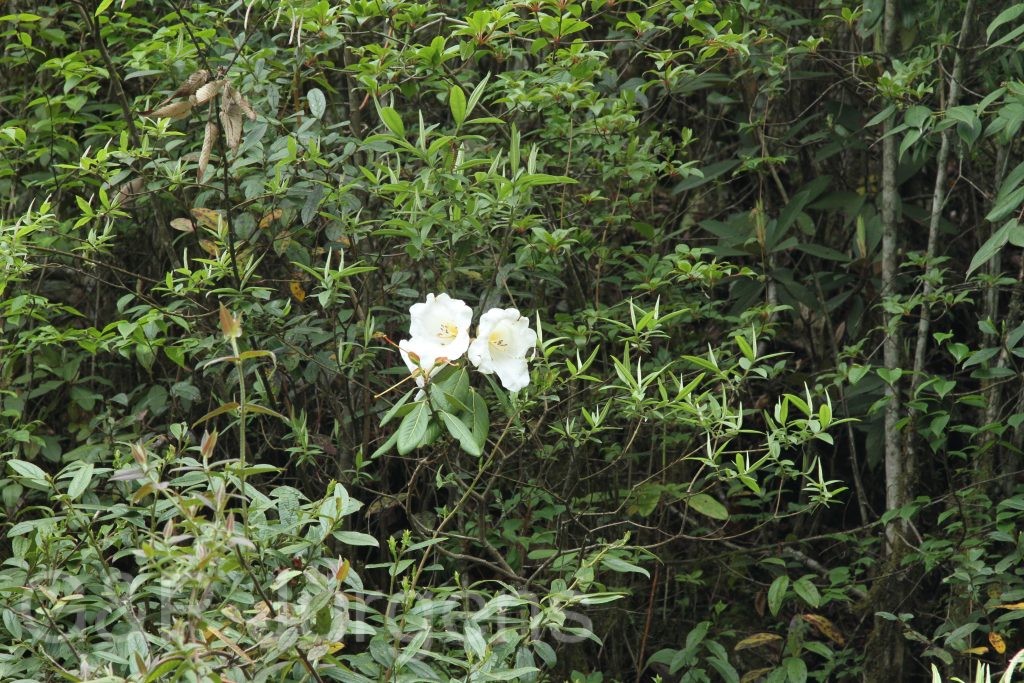
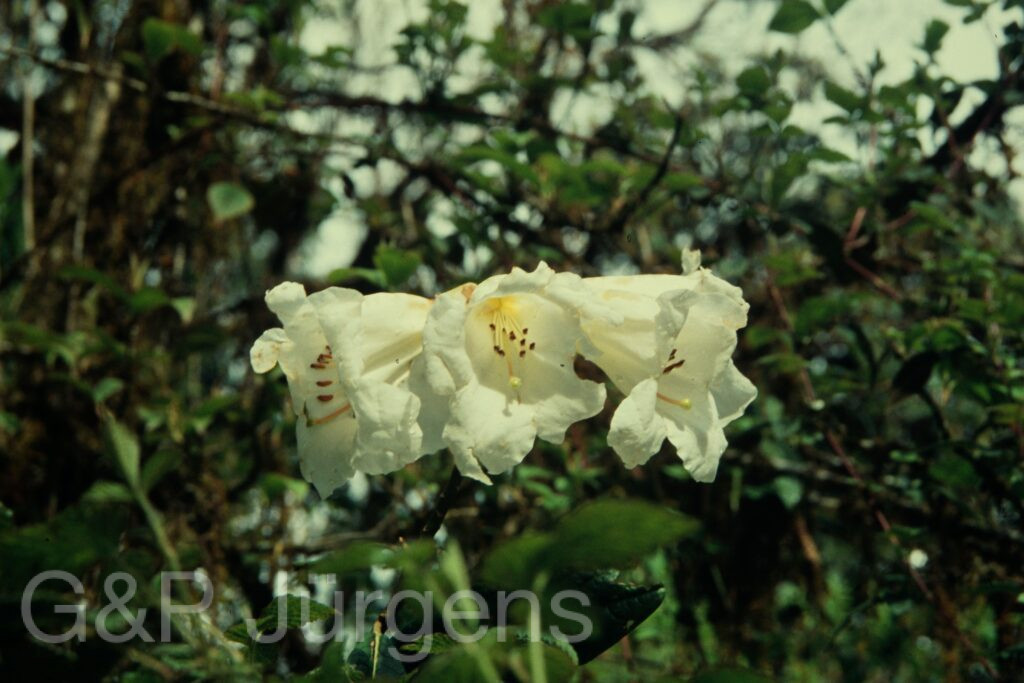
Rhododendron lindleyi is an epiphytic to terrestrial rhododendron of the eastern Himalaya, recorded in GBIF from India, Nepal, Bhutan, China and Myanmar across 154 occurrences. It is characteristic of cool, humid mid-montane broad-leaved and conifer forest, growing as an epiphyte on mossy trunks or on cliffs and steep banks between roughly 2200 and 3000 m. Collections cited from the image span Jakar in Bhutan at 2400 m in May, Bersay in the Sikkim-West Bengal borderlands at 2810 m in April, and Milka-Danda in east Nepal at 2850 m in April-May, indicating a spring-flowering species of the perhumid forest belt.
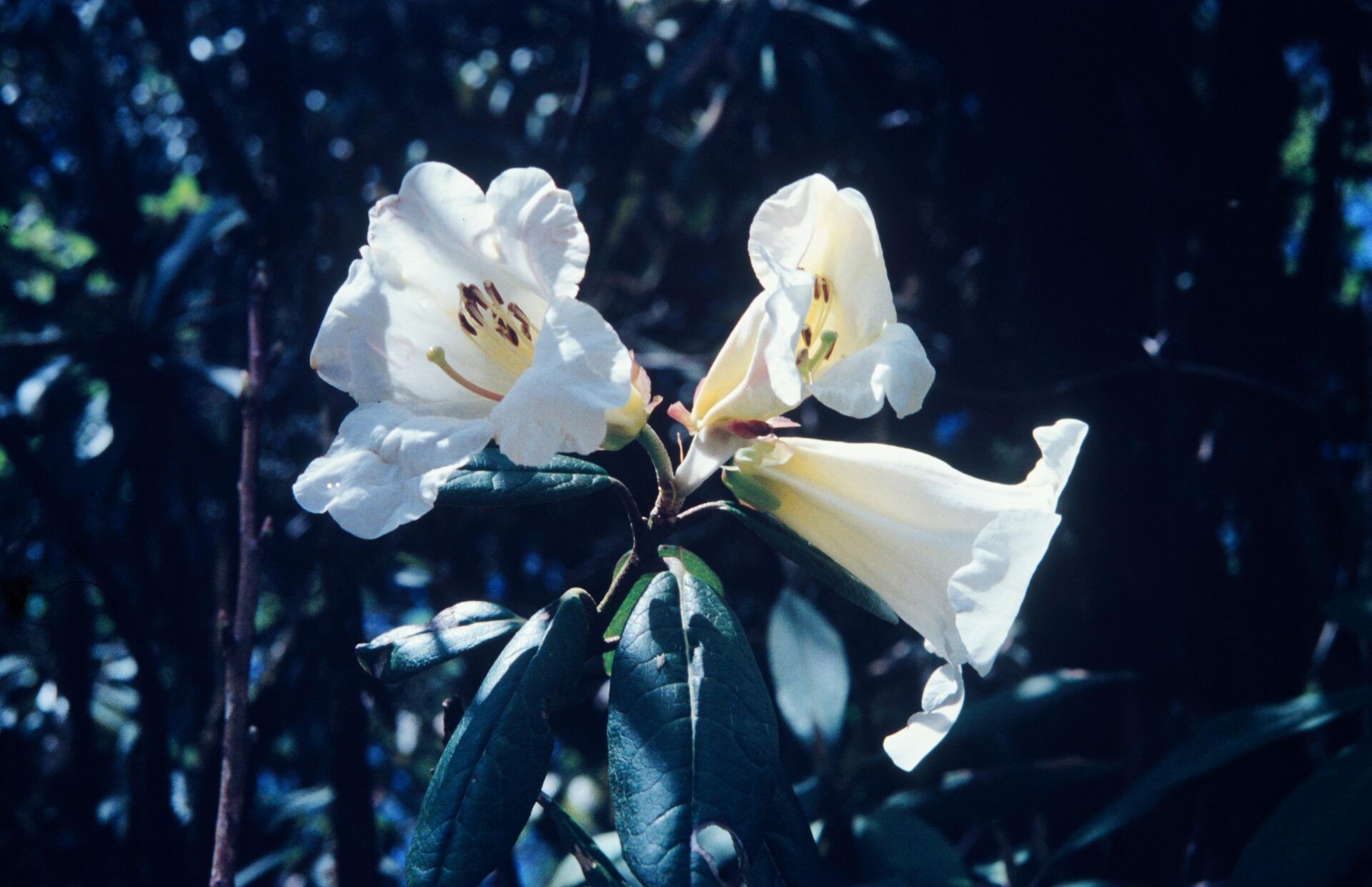
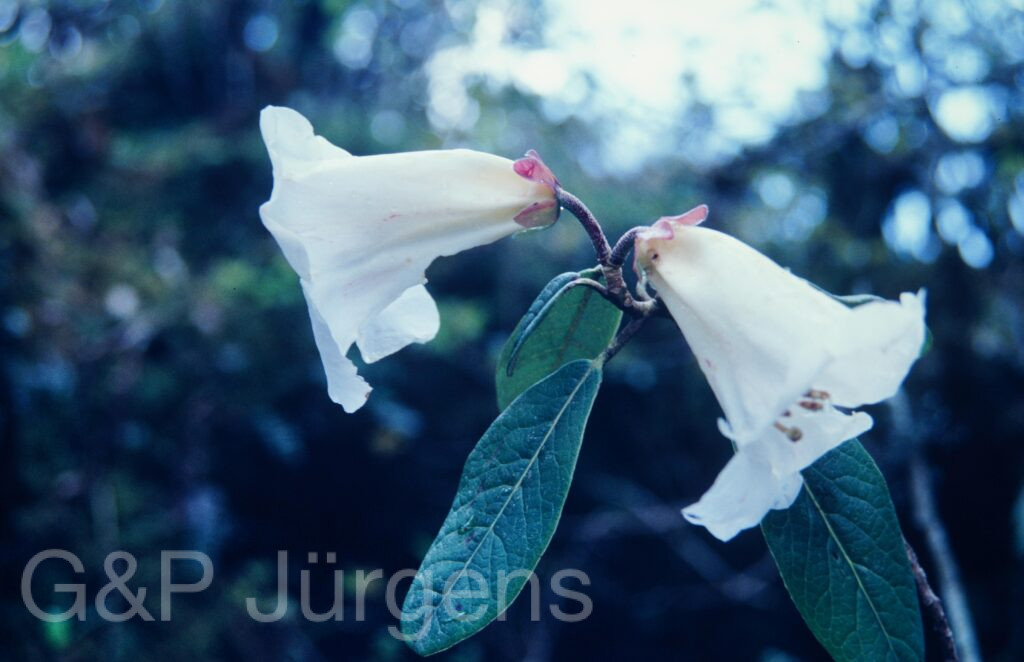
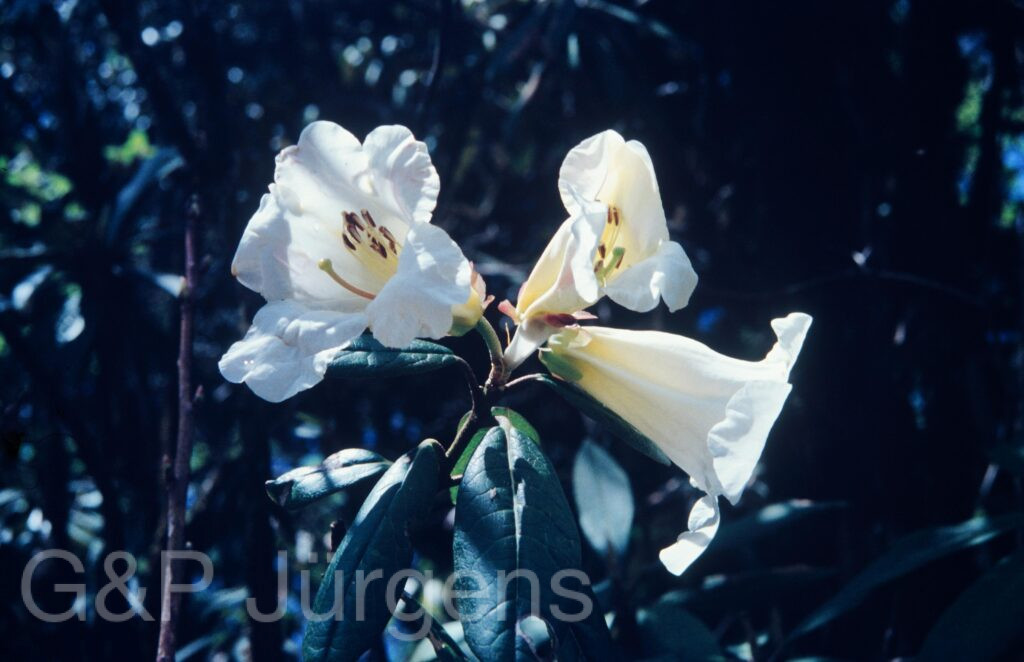
It is a straggling, sparsely branched shrub 1-3 m tall with smooth, peeling reddish-brown bark and rather thin, scaly branchlets. The leaves are elliptic-oblong, leathery, glaucous and densely lepidote (scaly) beneath. The inflorescence is a loose terminal truss of 3-6 large, fragrant flowers; the corolla is broadly funnel-campanulate, 7-10 cm long, white often flushed with pink and marked with a yellow basal blotch, the tube exterior bearing scattered scales. There are usually ten stamens, an elongate scaly style, and the fruit is a slender, scaly, septicidal capsule releasing numerous minute winged seeds adapted to epiphytic establishment.
The species belongs to Rhododendron subgenus Rhododendron section Maddenia, the lepidote, often epiphytic, large-flowered rhododendrons. Named for the botanist John Lindley, it is prized in horticulture for its scented bloom. Pollination is by long-tongued insects, with dust-seed dispersal favouring colonisation of bark and rock. Though locally frequent, its dependence on undisturbed humid forest leaves it sensitive to habitat clearance.
Author: T. Moore · Sources: POWO (Kew), GBIF, Flora of Bhutan, Flora of China, The Genus Rhododendron (Edinburgh Revision)