
Davidian
Description
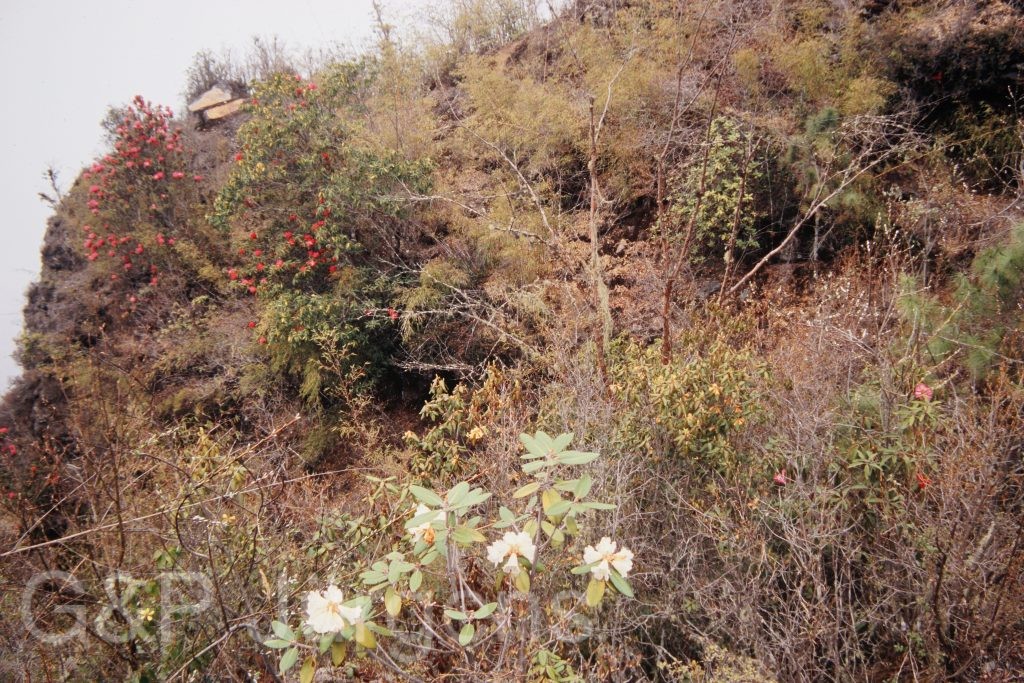
Rhododendron poluninii Davidian is a narrowly distributed eastern Himalayan shrub known principally from Bhutan and the adjacent ranges of the Indo-Tibetan border. It is documented from Tumching-La in Bhutan between 3400 and 3800 m, flowering in April, within the cool temperate to subalpine forest belt. The species grows on humus-rich, acidic slopes among mixed conifer and broadleaved woodland, in rhododendron thickets and along forest margins where ample atmospheric moisture from the monsoon and frequent cloud cover prevail. With a single GBIF record and no aggregated country list, it is among the rarer and most poorly documented members of the genus, reflecting both its localised range and limited botanical collecting in the region.
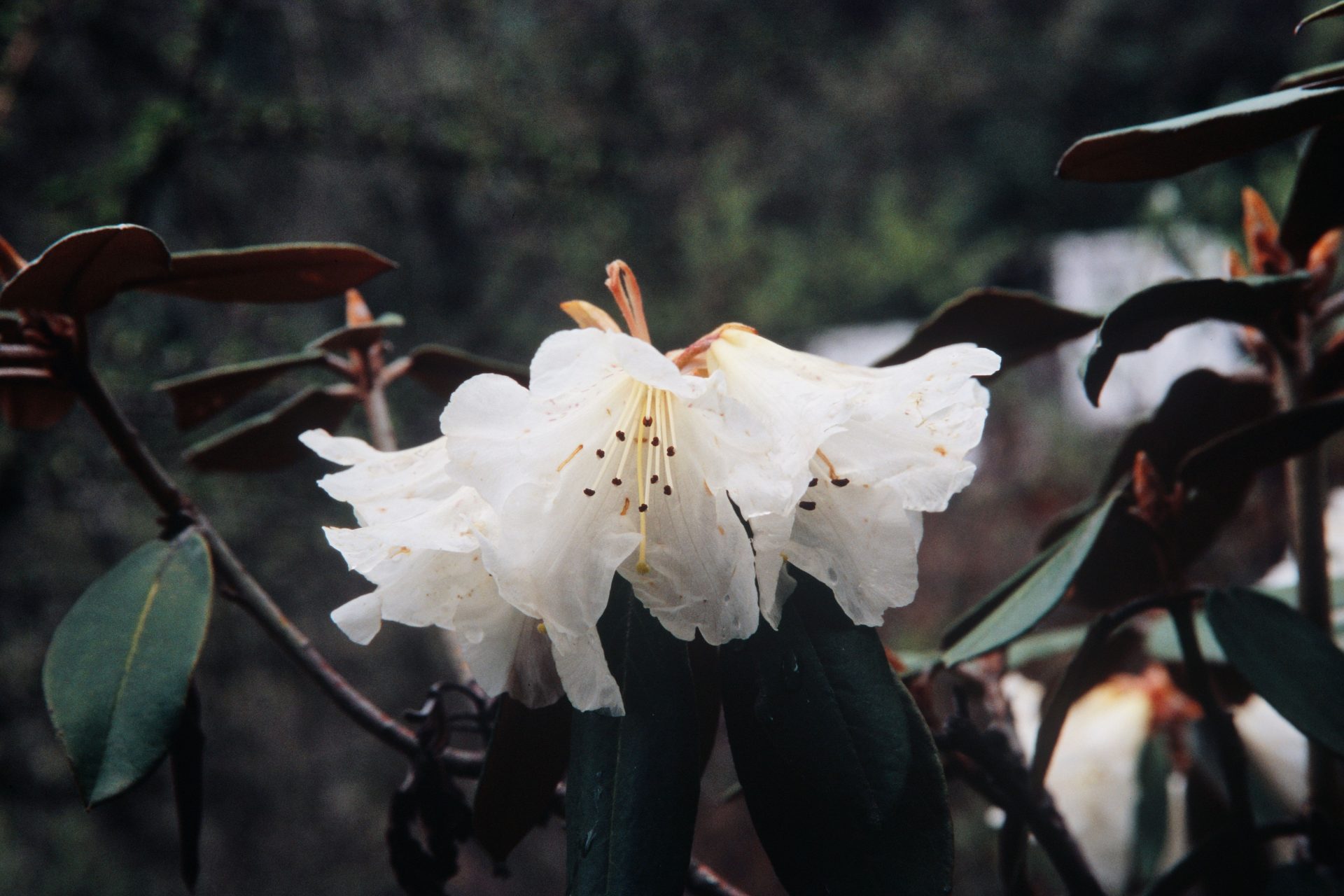
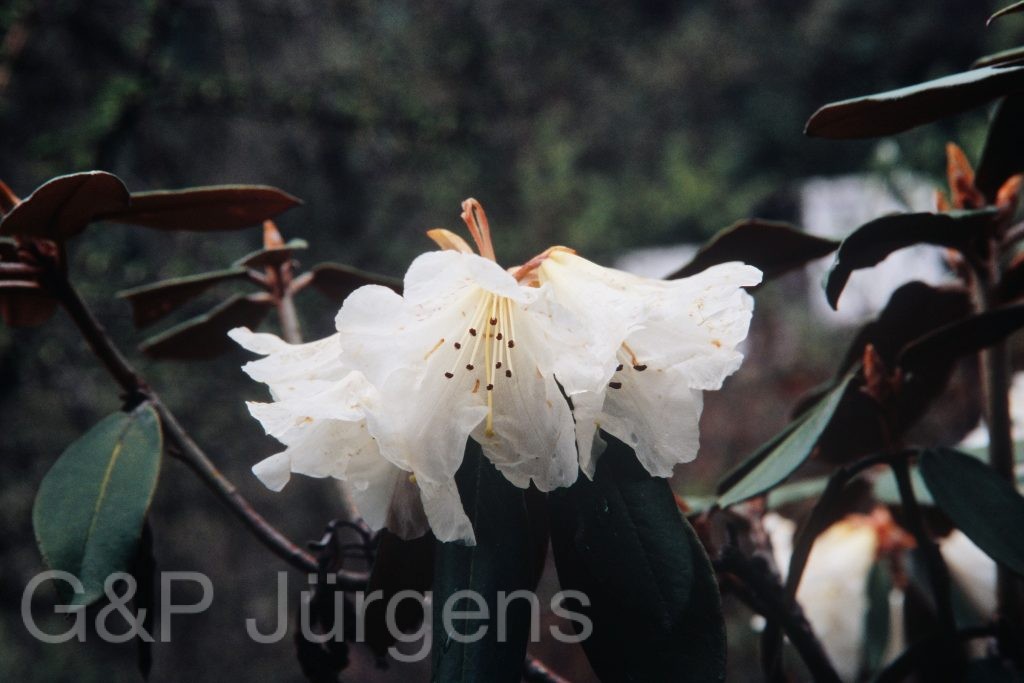
It is a small to medium evergreen shrub with stiff branchlets clothed, like the undersides of the leaves, in a dense indumentum of scales or hairs typical of its alliance. The leaves are coriaceous, elliptic to oblong, dark green and lustrous above and paler or rusty beneath. The flowers are borne in compact terminal trusses, each with a campanulate to funnel-shaped corolla in shades of rose-pink to pale magenta, five-lobed, subtended by deciduous bud scales; the stamens are ten and the ovary surmounted by a slender style. The fruit is a woody, septicidal capsule releasing numerous minute seeds.
Described by the Rhododendron specialist H. H. Davidian, R. poluninii commemorates the collector Oleg Polunin and belongs to the vast genus Rhododendron, the dominant element of Himalayan subalpine vegetation. Its extreme rarity in collections and apparently restricted range suggest it may warrant priority survey and assessment, as such narrow endemics are especially exposed to habitat disturbance, forest clearance and climatic warming of the subalpine zone.
Author: Davidian · Sources: POWO (Kew), GBIF, Flora of Bhutan, The Rhododendron Species (Davidian), Edinburgh Rhododendron monograph (Cullen & Chamberlain)