
Hook. f.
Description
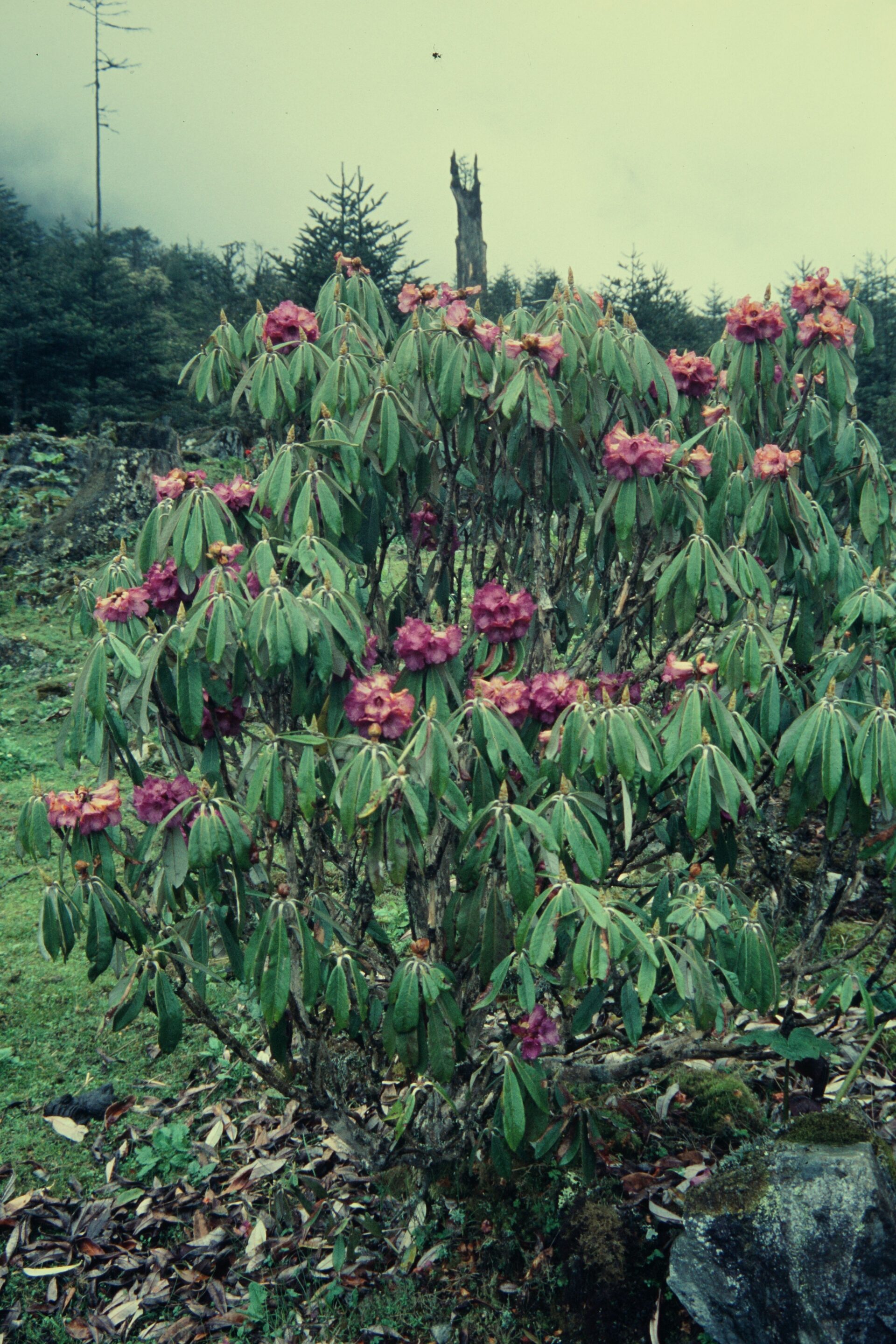
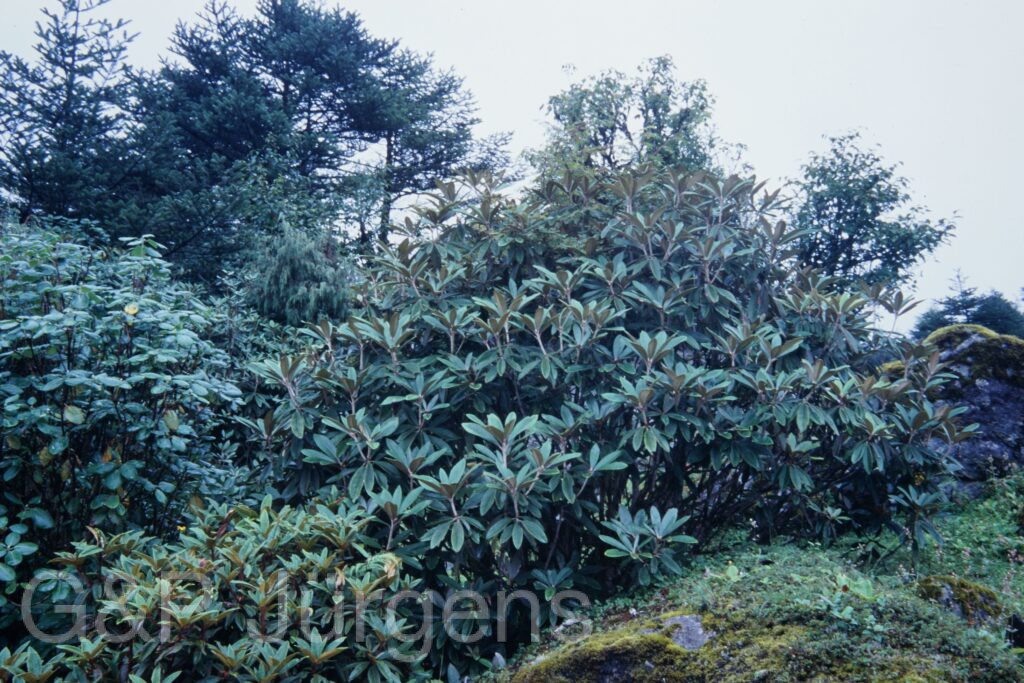
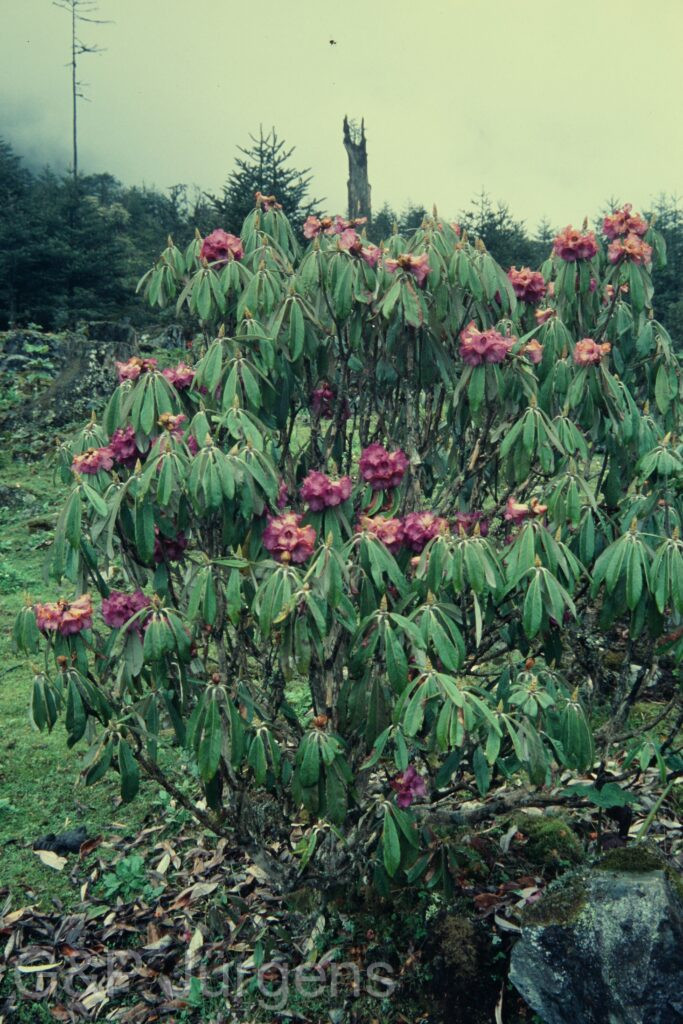
Rhododendron niveum is a narrowly distributed eastern Himalayan species native to the Sikkim region of India, with extensions into adjacent China and Bhutan; its 92 georeferenced records, supplemented by occurrences in cultivation in Britain, Sweden, North America and Canada, reflect both a restricted wild range and its prominence in horticulture. It is a shrub or small tree of subalpine forest, rhododendron thickets and open hillsides near the treeline. The populations documented in the Lachung Valley of northern Sikkim between about 3100 and 3500 m, flowering in May and persisting in August, exemplify its high-montane habitat on cool, moist, acidic slopes.
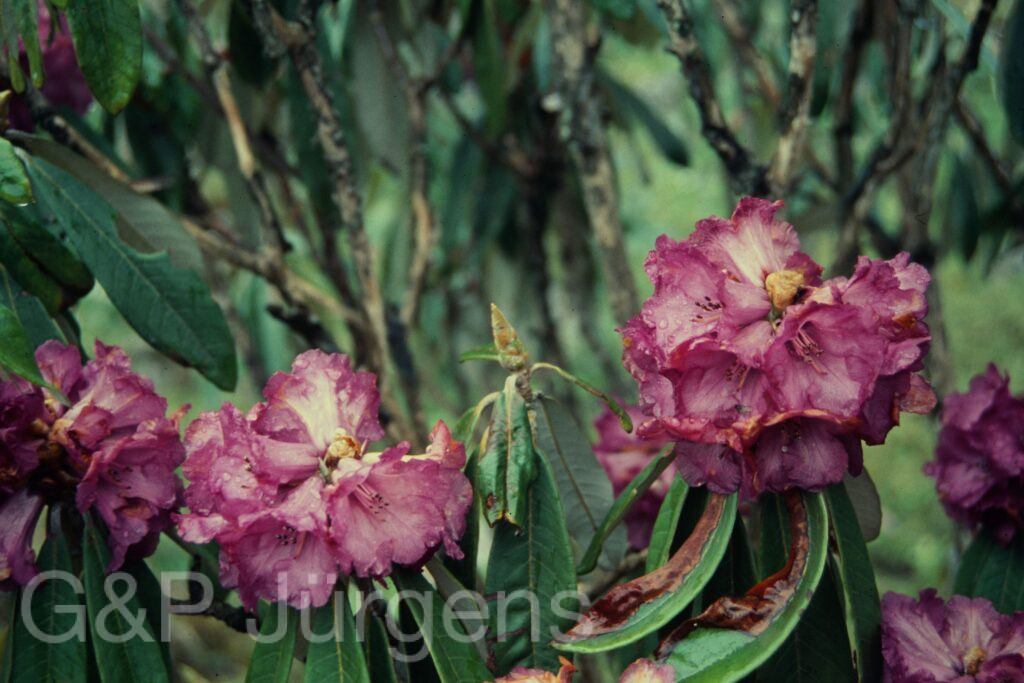
The plant forms a compact tree or large shrub with stout branches. The leaves are obovate-elliptic, leathery and dark green above, their lower surface coated with a dense, persistent, silvery-white to fawn indumentum, the snowy tomentum that gives the species its epithet niveum. The flowers are grouped in dense, rounded terminal trusses; the campanulate corolla is a distinctive smoky lilac to deep purplish-mauve, a colour unusual among Himalayan rhododendrons, with ten stamens and a smooth, elongate ovary. The fruit is a woody, septicidal capsule releasing numerous minute seeds.
Within the vast genus Rhododendron, R. niveum belongs to subsection Arborea and is prized horticulturally for its striking flower colour and felted foliage, having been introduced by J. D. Hooker. Its restricted distribution and dependence on a narrow subalpine belt render it locally vulnerable to habitat loss, grazing and climatic shifts at the treeline, and it is of conservation interest as an eastern Himalayan near-endemic.
Author: Hook. f. · Sources: POWO (Kew), GBIF, Flora of Bhutan, Flora of China, The Rhododendron Handbook (RHS), Cox & Cox's The Encyclopedia of Rhododendron Species