Author

GP Jürgens

Sm.

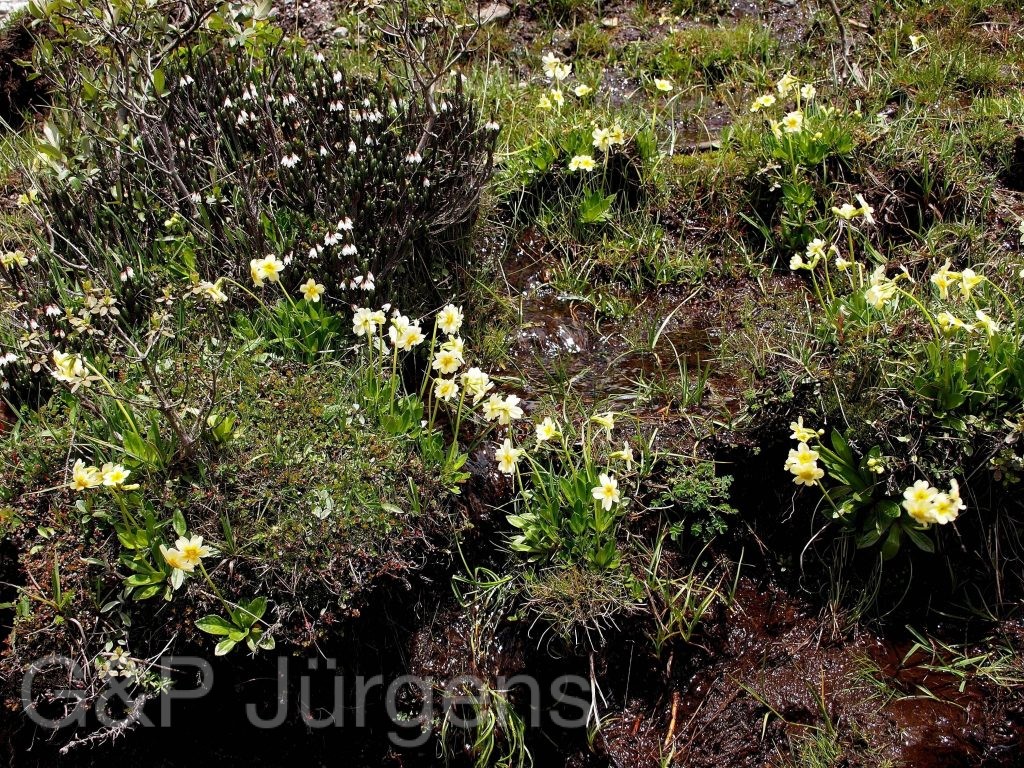
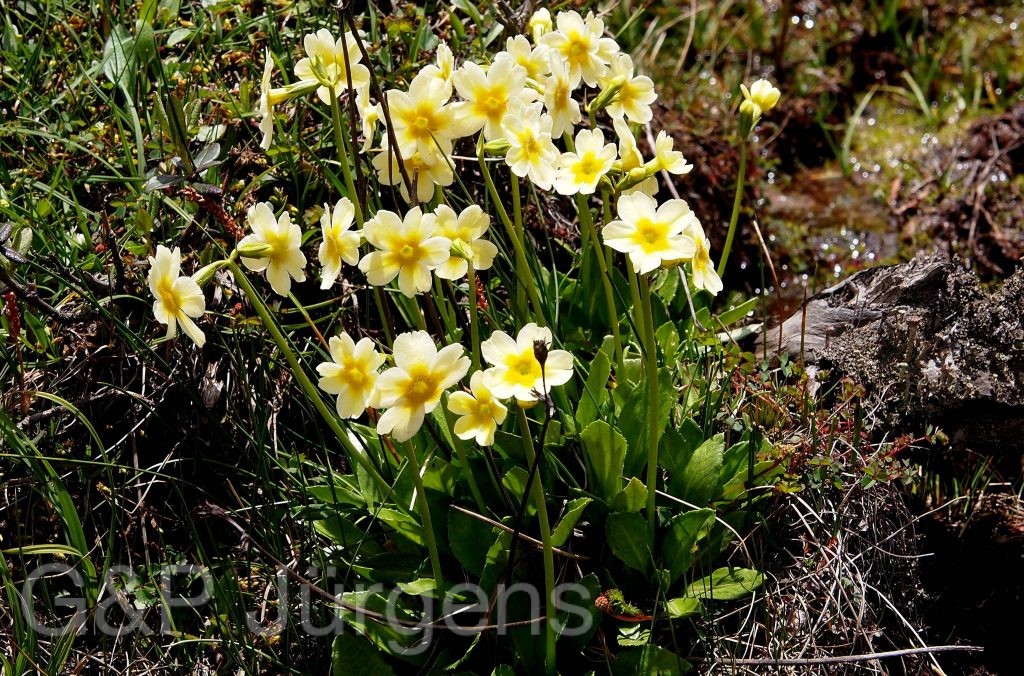
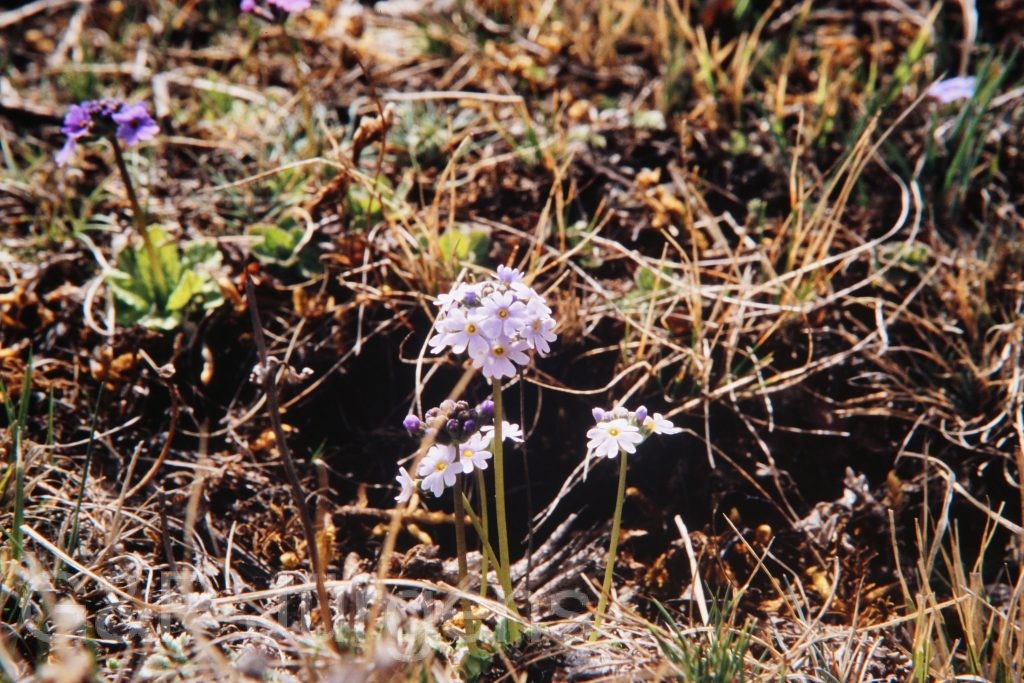
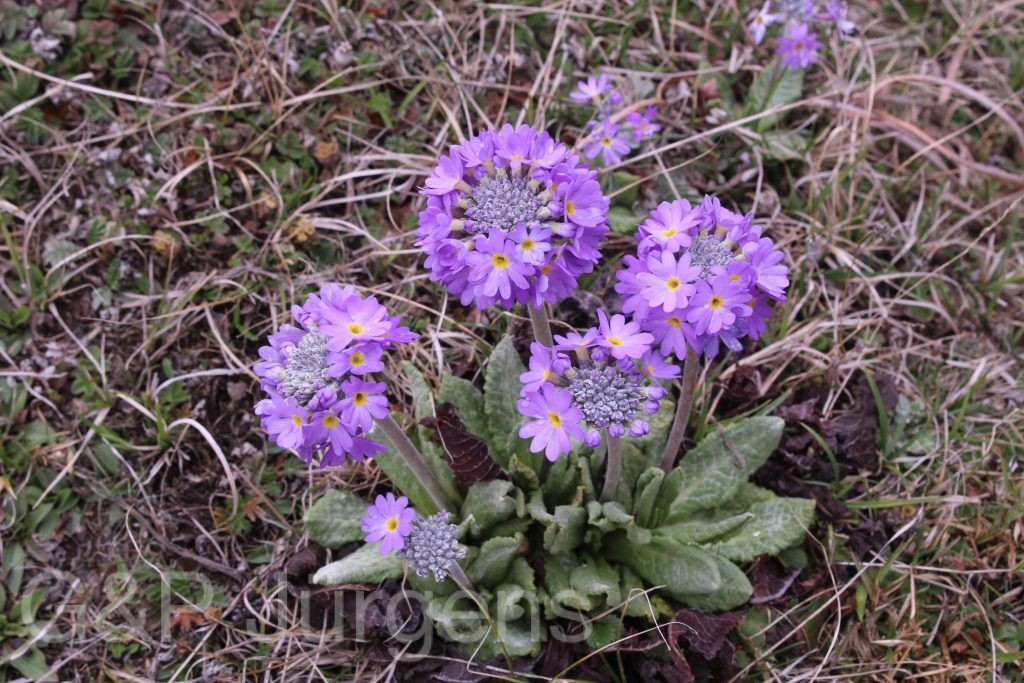
Bhutan2014 914
Bhutan Chele La 4000m, May
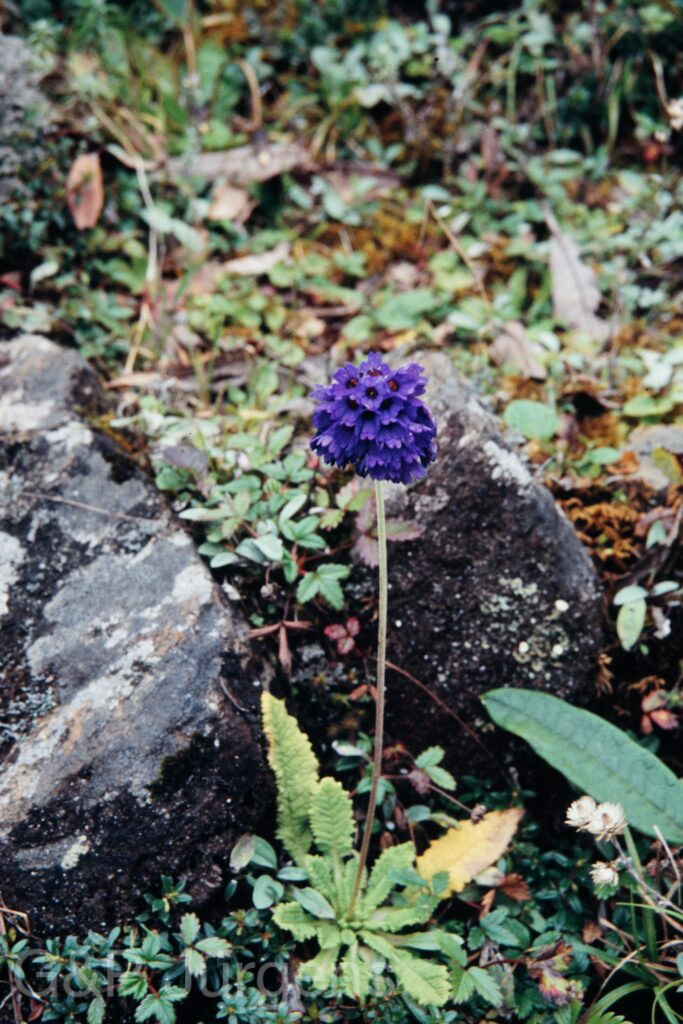
Bhutan2014 378
Bhutan Chele La 4000m, May
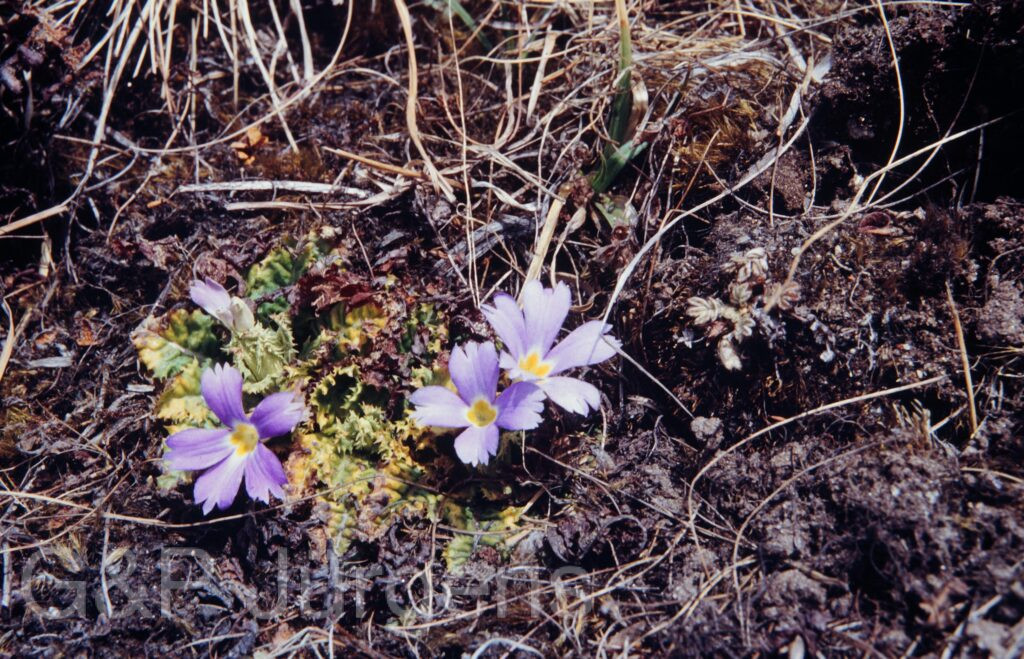
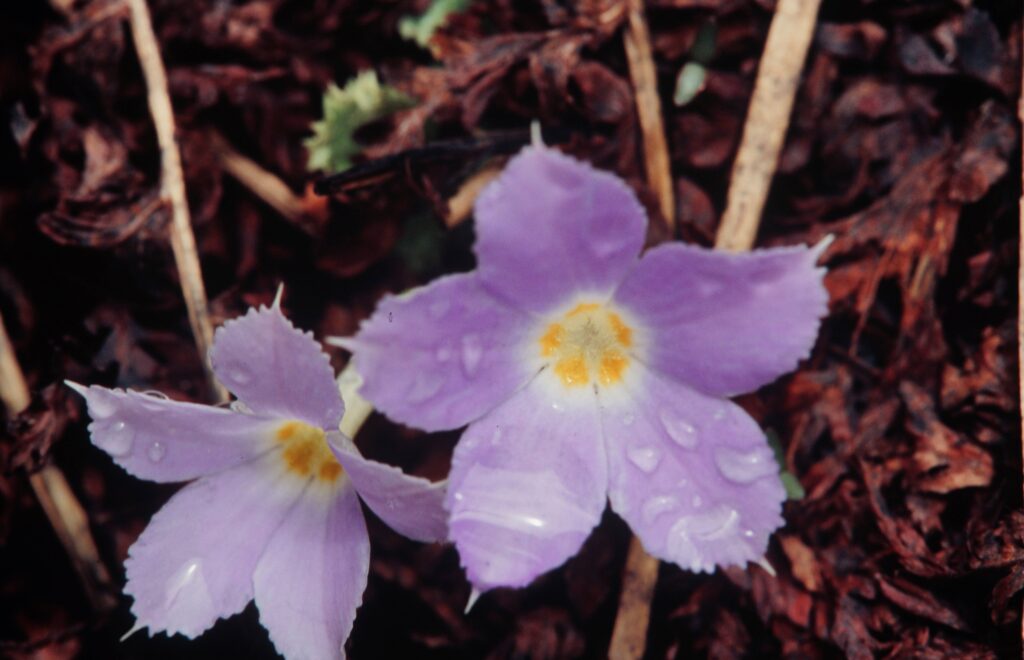
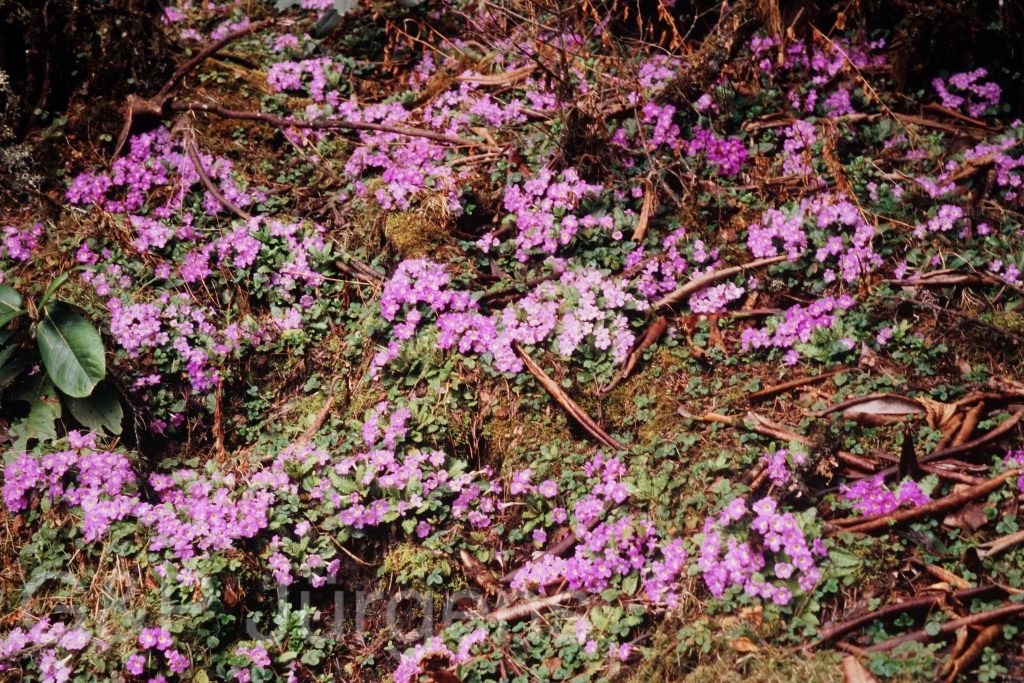
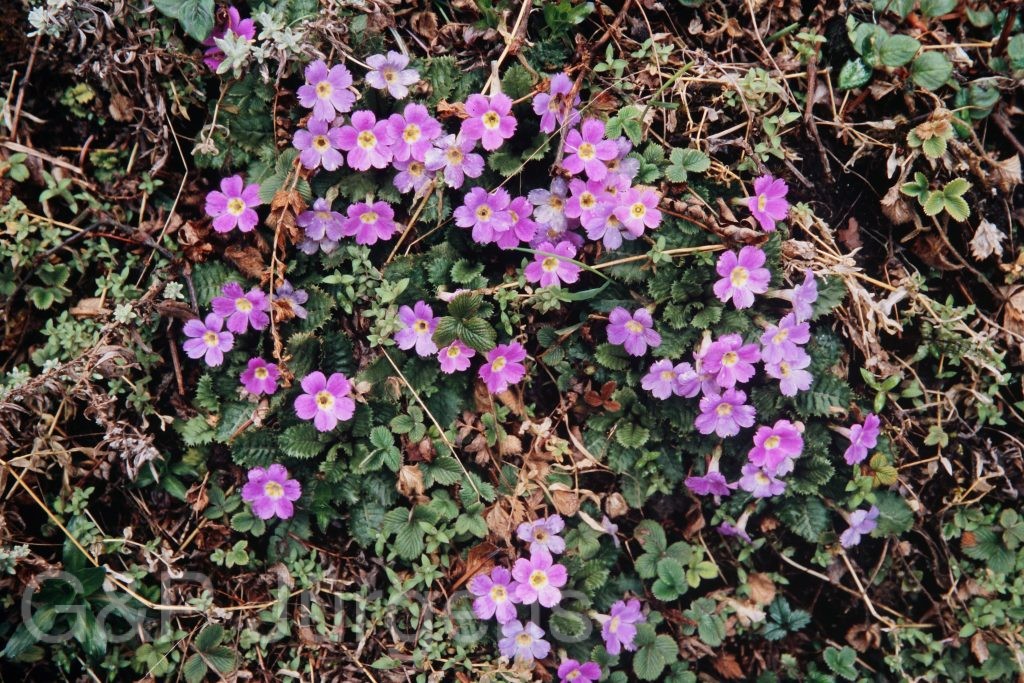
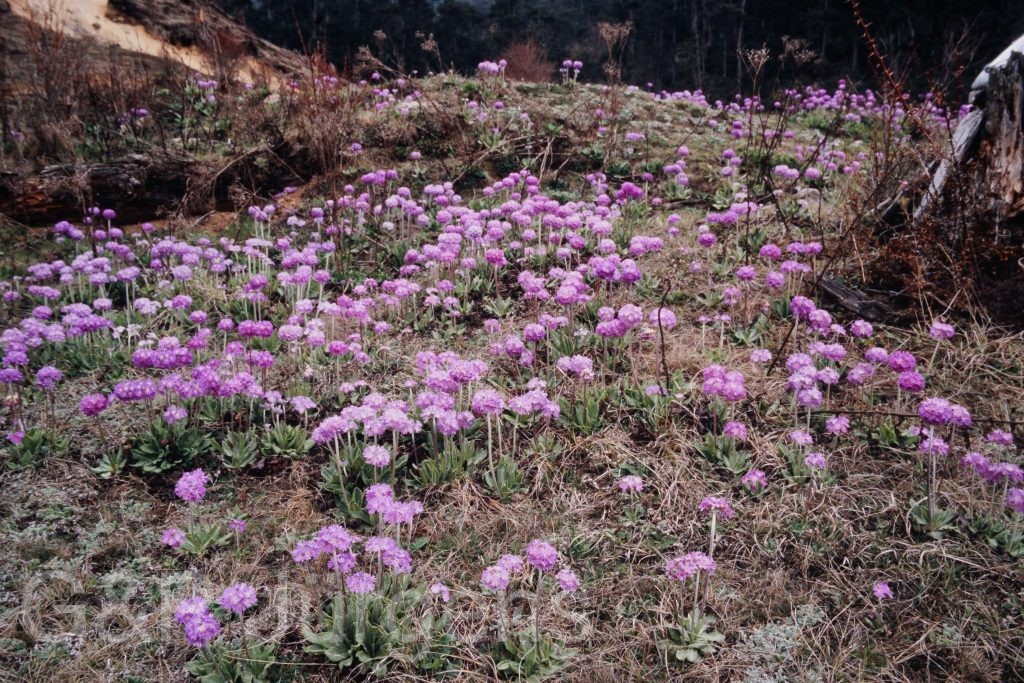
Bh2008 247 P391
Bhutan Tumching-La, 3800m April

Description

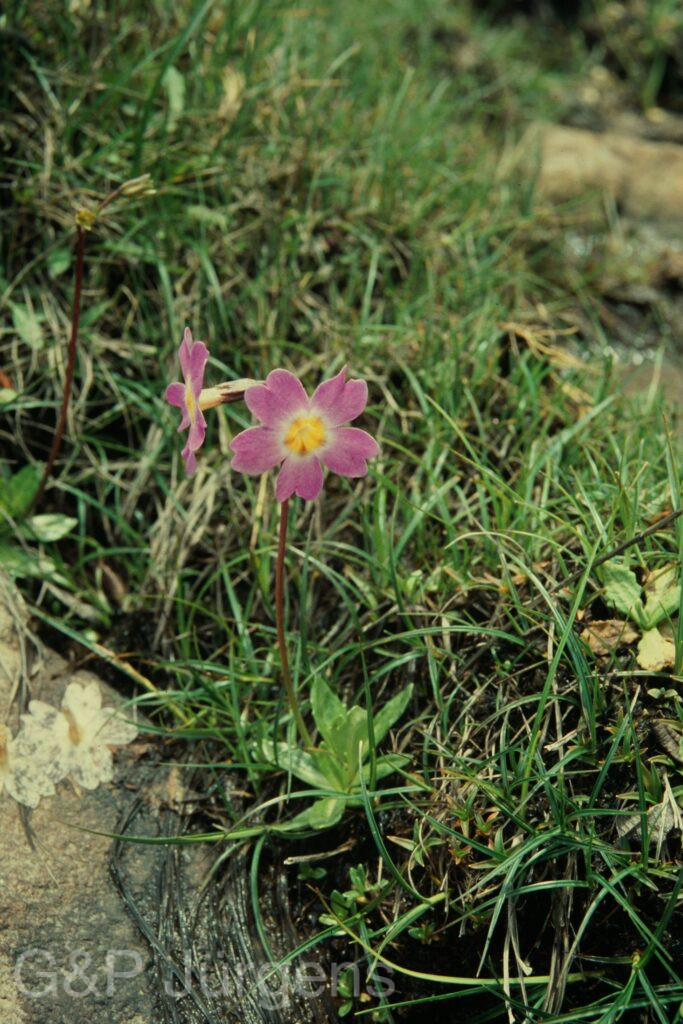
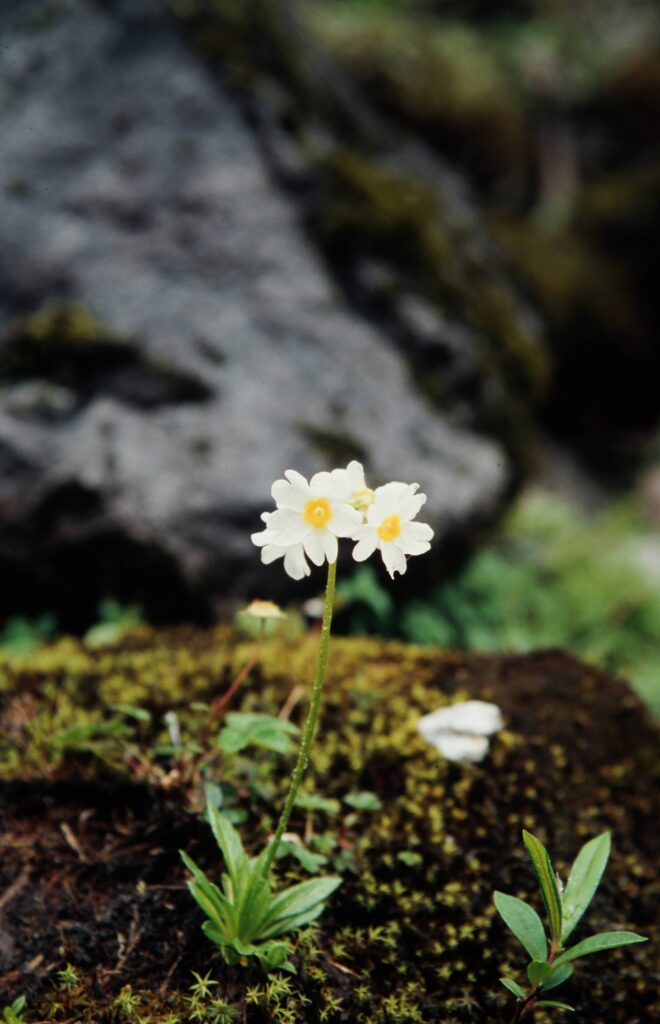
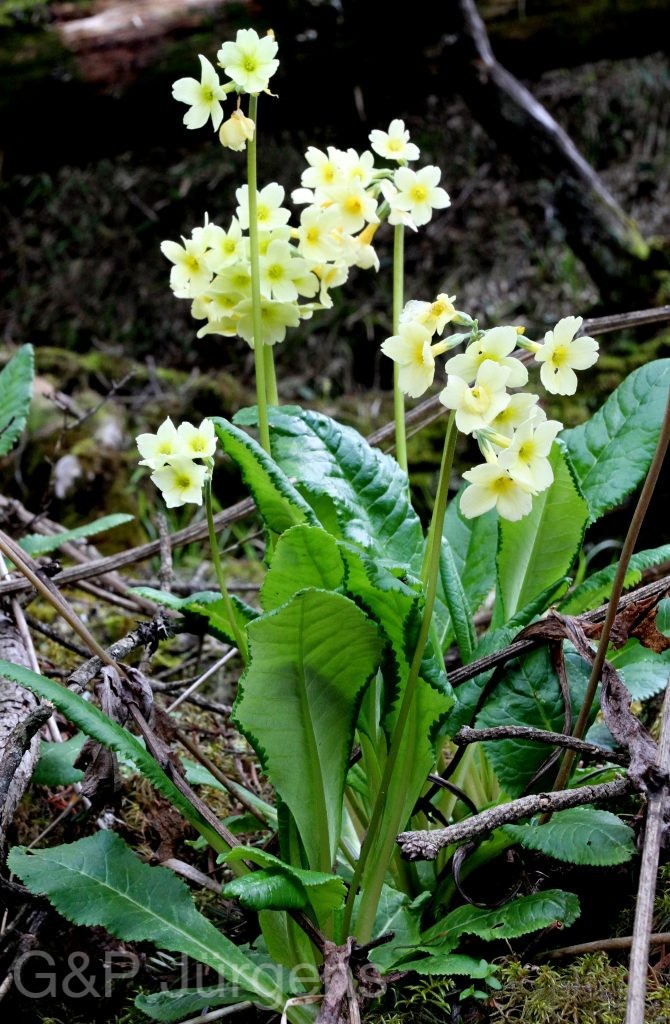
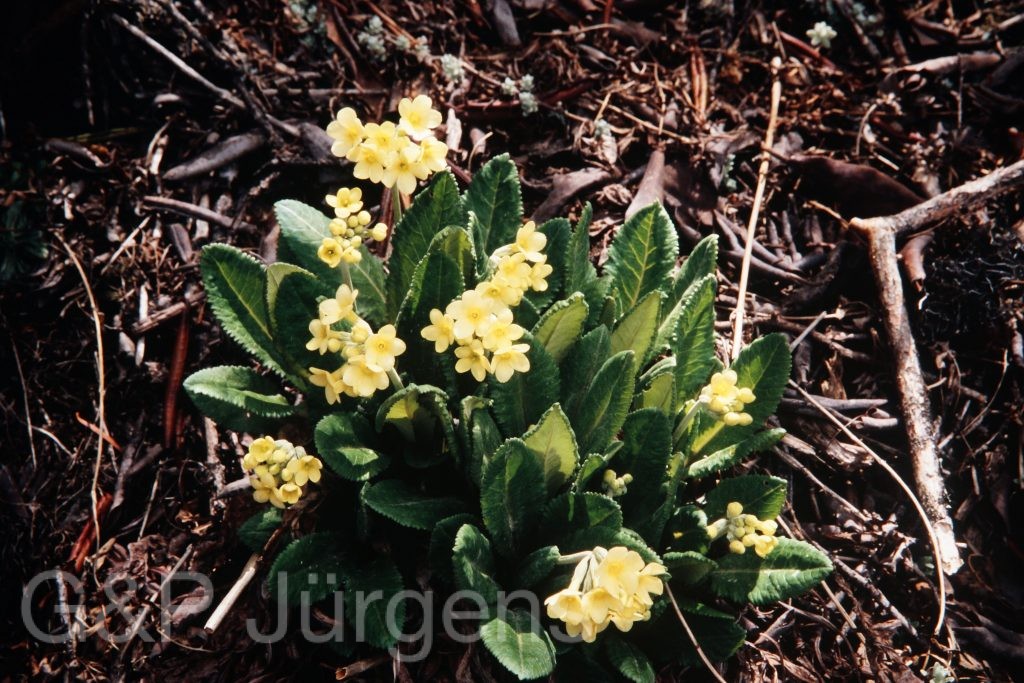
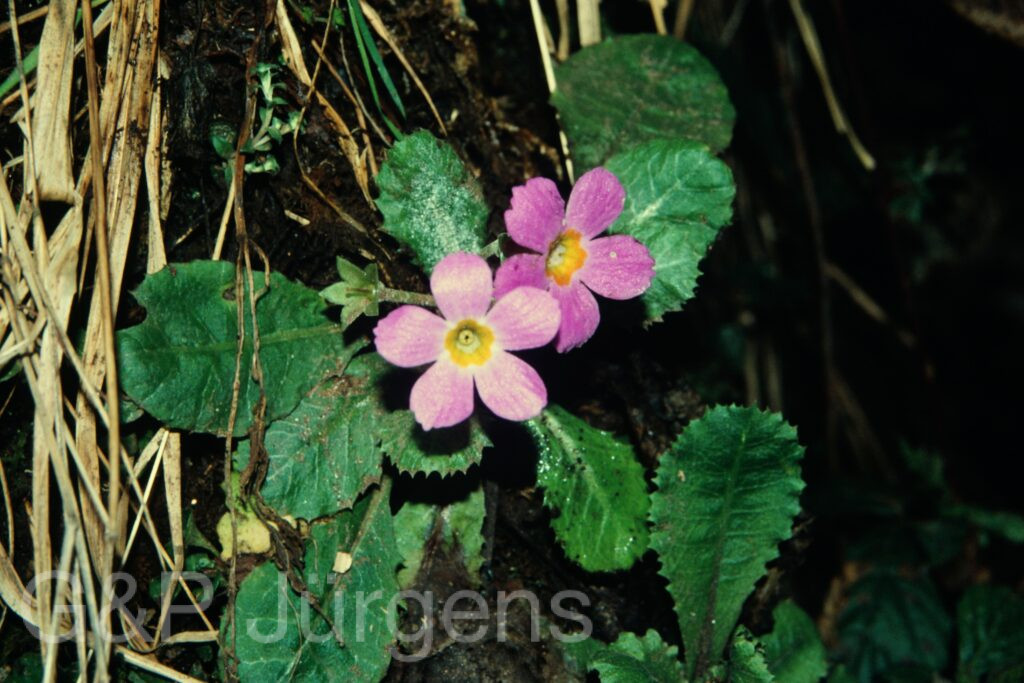
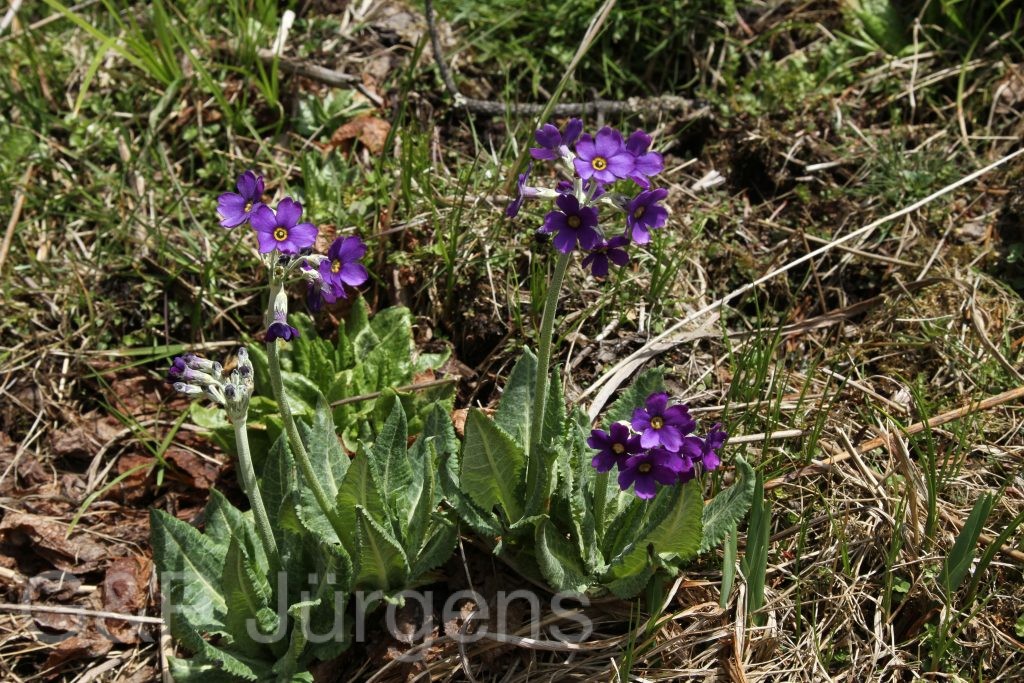
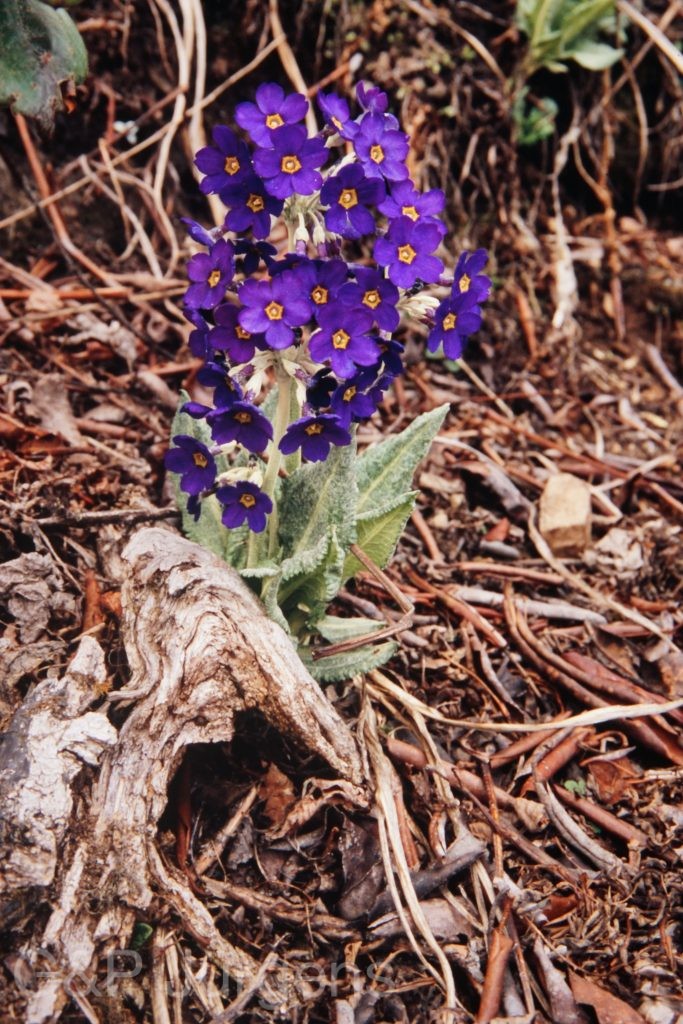
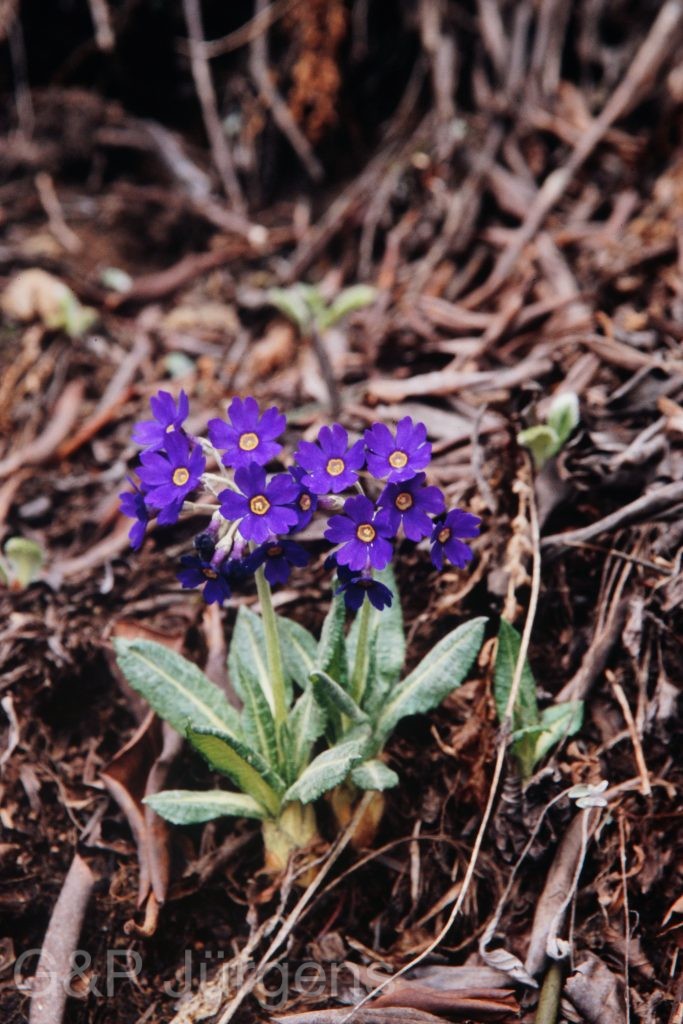
Primula denticulata, the drumstick primrose, is a widespread Himalayan and Sino-Himalayan species ranging from Afghanistan and Pakistan through Nepal, India, Bhutan and Myanmar into China; long valued in horticulture, it is widely cultivated and naturalised, accounting for GBIF records from Great Britain, Germany, Austria, Scandinavia and North America among nearly 1800 occurrences. It is a plant of moist alpine and subalpine meadows, streamsides, damp grassy slopes and open scrub, often forming colonies in snow-melt flushes. The images document it in Bhutan at Chele La around 4000 m in May and at Tumching-La near 3800 m in April, when its globular heads emerge as the snow recedes.

It is a robust perennial herb forming a rosette from a short stout rhizome. The leaves are oblong-spathulate, denticulate at the margin (giving the epithet), often farinose beneath, and elongate markedly after flowering. The scape is stout and at first short, elongating to 15-30 cm, terminating in a dense globose umbel of many flowers. Each flower is salverform, lilac, purple, violet or occasionally white, with a yellow eye, borne on short pedicels; the species is heterostylous, with pin and thrum morphs. The fruit is a small globose capsule enclosed in the persistent calyx, shedding numerous seeds.

Primula denticulata is placed in section Denticulata of the genus and forms a distinctive group within the vast Himalayan radiation of Primula. Its heterostyly enforces outcrossing by early-season pollinators, and farina production is typical of many high-elevation primulas. Common across its range and easily grown, it is of least conservation concern and remains one of the most familiar Himalayan primroses in gardens worldwide.

Author: Sm. · Sources: POWO (Kew), GBIF, Flora of China, Flora of Bhutan, Flora of Nepal, Smith & Fletcher Monograph of the Genus Primula
Craib

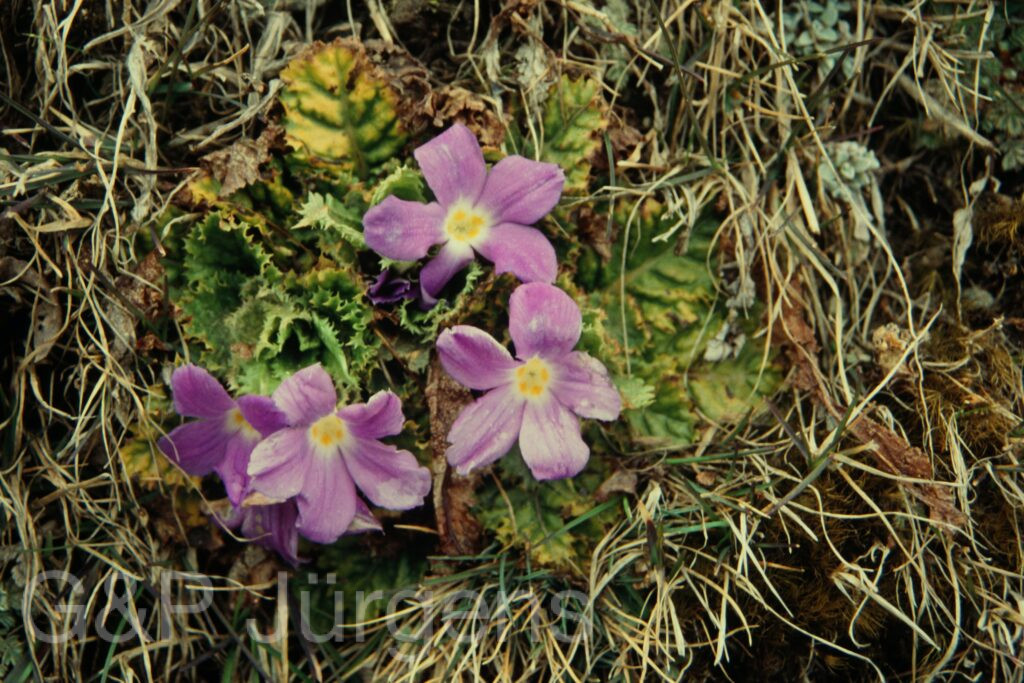
Sikkim2004 167 G283
Sikkim/India Singalila 3900m May
Sikkim2004 156 P270
Sikkim/India Singalila 3900m May
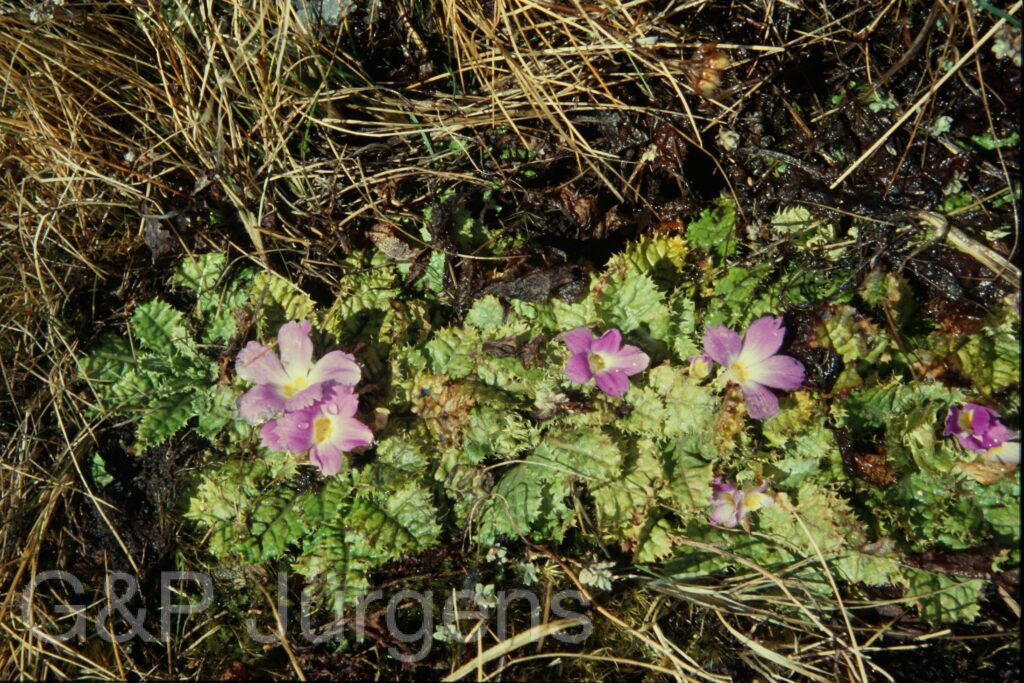
Nepal1992 127 P181 ergebnis
Nepal Ghunsa 3600m March 
Sikkim 2006 386 ergebnis
India West-Bengal, Kishong 3500m, May

Description

Primula deuteronana is an eastern Himalayan primrose restricted to Nepal, India and Bhutan, and is comparatively poorly collected, with only about 61 GBIF records. It is a plant of the subalpine and alpine zone, growing on moist, shaded slopes, rocky banks, mossy ledges and the margins of rhododendron scrub, often flowering very early in the season as the snow melts. The cited collections illustrate this well: Singalila on the Sikkim-India ridge at around 3900 m in May, Ghunsa in eastern Nepal at about 3600 m as early as March, and Kishong in West Bengal at some 3500 m in May, indicating a preference for cool, humid, well-drained mountain habitats.

The plant is a small, low perennial herb with a basal rosette of leaves that are obovate to spathulate, often narrowed to a winged petiole, with crenate to dentate margins and frequently a farinose (mealy) coating, particularly when young. The flowers are borne singly or few together on short scapes barely exceeding the foliage, each with a tubular, lobed calyx and a salverform corolla in shades of rose-pink to purple with a contrasting paler or yellowish eye, the five lobes spreading and notched. The fruit is a small capsule containing numerous tiny seeds.

Described by Craib, P. deuteronana belongs to the species-rich Himalayan assemblage of farinose primulas. Its very early, near-snowmelt flowering is an adaptation to the short high-mountain growing season. As a narrow-range eastern Himalayan endemic with relatively few documented populations, it is potentially sensitive to grazing, trampling and climatic warming affecting its restricted alpine habitat, and merits monitoring.

Author: Craib · Sources: POWO (Kew), GBIF, Flora of Bhutan, Annotated Checklist of the Flowering Plants of Nepal, Richards' monograph Primula

G.Watt

Sikkim2011 40
Sikkim Vista-valley 3700m, June
Sikkim2011 41
Sikkim Vista-valley 3700m, June
Sikkim2004 388 P666
Sikkim Lachung 3100m, May
Sikkim 2006 357 ergebnis
India West-Bengal Tamrong 2750m, May

Description

Primula dickieana is an eastern Himalayan primrose ranging through China, Nepal, India, Myanmar and Bhutan, with about 202 GBIF records concentrated in the Sikkim–Bhutan sector. It is a plant of moist alpine meadows, damp turf and seepage slopes, typically between roughly 2700 and 4500 m. The cited collections span this gradient, from Sikkim's Vista valley at 3700 m and Lachung at 3100 m to Tamrong in West Bengal at 2750 m, flowering in May and June as snowmelt saturates the high pastures. It thrives where cool, humus-rich soils remain reliably wet through the early growing season.

The species is a small, tufted, perennial herb forming a basal rosette of leaves that are oblanceolate to spathulate, narrowed to a winged petiole, with crenate to entire margins and an efarinose (mealless) surface. A single slender scape bears a solitary terminal flower, or occasionally a few, the corolla rotate and showy in proportion to the plant. Flower colour is notably variable, ranging from yellow through cream, pink and purple to nearly white, with a tubular calyx and a corolla limb of broad, often emarginate lobes. The fruit is a small capsule enclosed within the persistent calyx, dehiscing to release numerous minute seeds.

Within Primula, the species is placed in section Yunnanensis (formerly allied to section Dickieana), a group of single-flowered alpine primulas, and its remarkable colour polymorphism has long interested monographers. Pollination is effected by alpine insects visiting the open corolla. The species is locally common within its narrow alpine band but, like many Sino-Himalayan primulas, is potentially vulnerable to upslope habitat compression under a warming climate and to trampling and grazing in accessible high pastures.

Author: G.Watt · Sources: POWO (Kew), GBIF, Flora of Bhutan, Flora of China (Primulaceae), Richards Primula (monograph)

G.Watt

Sikkim2011 254
Sikkim Lada-La 3800m, June
Bh2008 580 P870
Bhutan Chele-La 3900m April
Bh2008 581 G871
Bhutan Chele-La 3900m April

Description

Primula elongata is a high-alpine primrose of the eastern Himalaya, recorded from Bhutan, India (Sikkim), Nepal and southern China, with GBIF holding around 107 occurrences across this range. It inhabits damp alpine turf, open hillsides, streamsides and the margins of rhododendron scrub in the subalpine to alpine zones, typically between about 3500 and 4300 m. The collections illustrated here, from Lada-La in Sikkim at 3800 m in June and from the Chele-La in western Bhutan at 3900 m in April, are characteristic of its preference for cool, moist, snow-fed slopes that flush green soon after snowmelt.

It is a small, herbaceous perennial forming basal rosettes of oblong to spathulate leaves that are gradually narrowed into a winged petiole, with the lamina often finely toothed and bearing a thin covering of farina (mealy powder) on the undersurface. From the rosette arises a slender, erect scape carrying a terminal umbel of several flowers. The corolla is funnel- to salver-shaped, in shades of violet, pink-purple or lilac with a contrasting yellow or whitish eye, and the species is heterostylous (pin and thrum forms). The fruit is a small capsule shorter than or equalling the persistent calyx, releasing numerous angular seeds.

Primula elongata belongs to a complex group of small farinose Himalayan primulas, and its segregation from allied taxa rests on leaf shape, farina distribution and capsule proportions. Restricted to high-elevation pastures, the species is potentially sensitive to changes in snow regime and to heavy grazing pressure, although across its broad eastern-Himalayan range it is not presently considered threatened.

Author: G.Watt · Sources: POWO (Kew), GBIF, Flora of Bhutan, Flora of China, Primula (J. Richards monograph)

W.W.Sm.

BhutanPG2011 607 01
Bhutan Ludlow-Sherriff-Trail Kim-La, 4480m July

Description

Primula flagellaris is a diminutive alpine primrose endemic to the Eastern Himalaya, known from Bhutan and adjacent India (Sikkim and Arunachal Pradesh), with only a small number of recorded occurrences reflecting its localised, high-altitude range. It inhabits the alpine zone, growing among damp turf, mossy rocks, seepage slopes and the margins of snow-melt flushes well above the treeline. The plant photographed on the historic Ludlow–Sherriff trail near Kim-La in Bhutan at 4480 m in July illustrates its characteristic occurrence in cool, moist alpine meadows during the brief summer flowering season following snow-melt.

The species is a small stoloniferous perennial whose specific epithet alludes to its slender, whip-like runners by which it spreads vegetatively to form loose mats or colonies. The leaves are gathered in small rosettes, obovate to spathulate, narrowed to a short petiole, with crenate to dentate margins and frequently a thin farinose coating. The flowering scapes are short, sometimes barely exceeding the leaves, bearing solitary flowers or few-flowered umbels. Each flower is heterostylous, with a tubular calyx and a salver-shaped corolla of rose-pink to lilac-purple lobes, notched at the apex, surrounding a contrasting eye. The fruit is a small capsule dehiscing to release numerous minute seeds.

Primula flagellaris belongs to the speciose Himalayan radiation of Primula, where it has at times been treated within the affinity of P. tenella, as reflected in the synonymy P. tenella var. flagellaris. Its stoloniferous habit is unusual within the genus and of considerable taxonomic interest. As a narrow Eastern Himalayan endemic confined to fragile alpine habitats potentially sensitive to climatic warming and grazing pressure, it warrants monitoring and is best considered of conservation interest pending formal assessment.

Author: W.W.Sm. · Sources: POWO (Kew), GBIF, Flora of Bhutan, Smith & Fletcher Genus Primula, Richards Primula (monograph), Flowers of the Himalaya

G.Watt

BhutanPG2011 268
Bhutan Jule-Tso, 4000m June

Description

Primula gambeliana G.Watt is an eastern Himalayan alpine primula recorded from India (Sikkim, Arunachal Pradesh), Nepal, Bhutan and south-western China, with about 66 georeferenced occurrences in GBIF. It grows on cool, humus-rich and mossy ground, on shaded rock ledges, beneath dwarf rhododendron and along the upper forest edge into the lower alpine zone, generally between roughly 3000 and 4300 m. The collection from Jule-Tso at 4000 m in June reflects its preference for damp, sheltered high-altitude sites flushed by snowmelt early in the growing season.

It is a tufted perennial herb forming a rosette from a short rhizome. The leaves are obovate to spatulate, abruptly contracted into a broadly winged petiole, with an irregularly toothed margin and an efarinose, somewhat fleshy texture. The slender scape rises above the foliage bearing an umbel of several nodding, funnel-shaped flowers; the corolla is rose-purple to violet with a paler or yellowish throat, the lobes spreading and emarginate, and the calyx is campanulate and divided to about the middle. The flowers are heterostylous, and the fruit is a capsule about equalling the calyx that releases numerous small seeds.

P. gambeliana belongs to section Petiolares, a large and taxonomically complex eastern-Himalayan group of woodland and alpine primulas distinguished by their winged petioles and early flowering. Within this section it is recognised by its leaf form and flower colour. As a localised petiolarid of cool, moist high-elevation habitat it depends on intact moss and humus layers; it carries no formal threat status but is potentially sensitive to habitat disturbance.

Author: G.Watt · Sources: POWO (Kew), GBIF, Flora of Bhutan, Flora of China, Smith & Fletcher monograph of Primula

Primula glabra

by GP Jürgens

Klatt

Bhutan2014 920
Bhutan Chele-La 4000m, May
Bhutan2014 1014
Bhutan Chele-La 4000m, May
Bh2008 570 P857
Bhutan Chele-La, 3950m June

Description

Primula glabra is a dwarf alpine primrose of the eastern Himalaya, distributed through China (south-eastern Tibet), Nepal, India, Bhutan and Myanmar, with GBIF logging 196 occurrences across this Sino-Himalayan zone. It is a plant of high alpine turf, moist meadows, rocky slopes, snowmelt flushes and damp gravelly ground above the treeline, broadly between 3800 and 4500 m. The photographed plants from the Chele-La pass in western Bhutan, at 3950-4000 m flowering in May and June, exemplify its preference for cold, open, snow-influenced alpine sites where it blooms among rocks and short turf as the snow melts in early summer.

The species is a small, glabrous (hence the epithet), tufted perennial herb, lacking the farinose (mealy) coating found in many alpine primulas. The leaves form a basal rosette and are oblanceolate to spathulate, entire to finely toothed, narrowing into an indistinct petiole. Flowers are borne in a compact terminal umbel atop a short scape, or sometimes nearly sessile among the leaves. Each flower has a tubular calyx and a salverform corolla, typically pink to purplish or violet with a contrasting paler or yellowish eye, the limb spreading into five notched lobes. The species is heterostylous, producing pin and thrum flowers. The fruit is a small capsule dehiscing to release numerous minute seeds.

Described by Klatt, the species belongs to the vast genus Primula, within the alpine sections (allied to section Minutissimae or related dwarf cushion groups) that radiated extensively across the high Sino-Himalaya. Its heterostylous breeding system promotes outcrossing by long-tongued alpine insects. As a specialist of high, snow-fed alpine habitats it is potentially vulnerable to climatic warming and upslope habitat compression, though its broad regional range currently buffers it; it remains formally unassessed.

Author: Klatt · Sources: POWO (Kew), GBIF, Flora of China, Flora of Bhutan, The Genus Primula in Cultivation and the Wild (Richards)
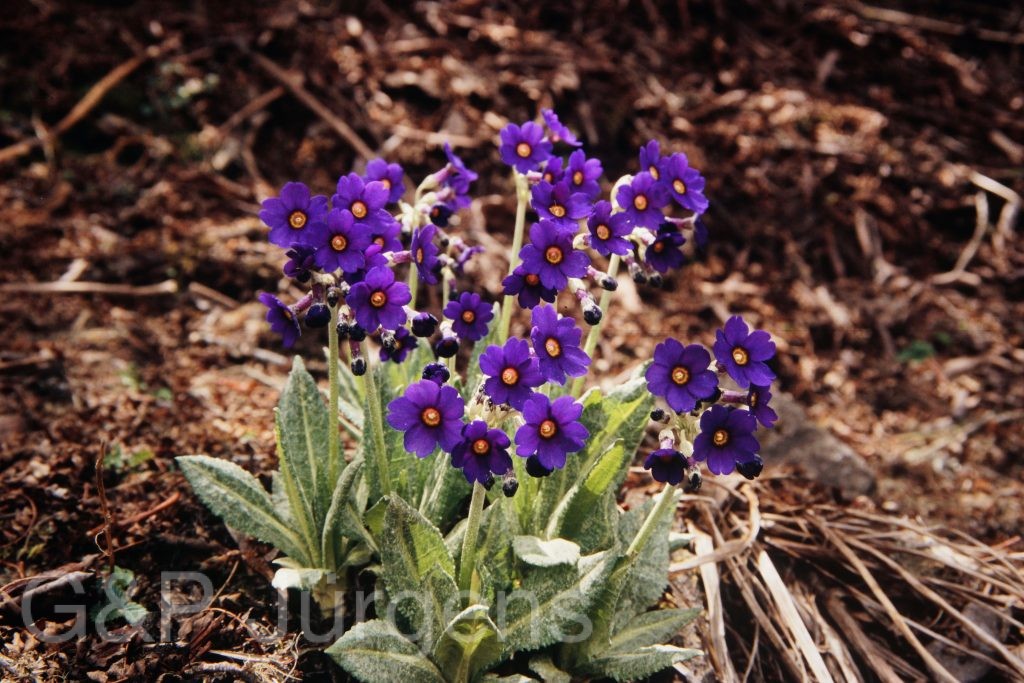
Pax

Nepal 95 113 P200 ergebnis
Nepal Rupina-La 3100m, September

Description

Primula glomerata Pax is an alpine primrose of the central and eastern Himalaya, recorded from Nepal, India, Bhutan and southern China, with roughly 207 GBIF occurrences; isolated points in Canada and Japan reflect botanic-garden or cultivated material. It inhabits open grassy slopes, moist alpine meadows and the margins of streams and seepages, broadly between about 3000 and 4500 m. The photographed plant from the Rupina-La in central Nepal at approximately 3100 m, in September, illustrates its late-season flowering on cool, humid montane turf where it forms scattered colonies among short alpine herbage.

The species is a perennial herb with a short rootstock bearing a rosette of leaves that are oblong to spathulate, crenate to denticulate at the margin, and frequently mealy or efarinose beneath. From the rosette rises a slender scape terminating in a dense, capitate or glomerate inflorescence, whence the epithet, of small bluish-purple to violet flowers; each has a tubular calyx and a salverform corolla with an annulate throat and notched lobes. The fruit is a small capsule dehiscing to release numerous minute seeds.

Primula glomerata is classified within Primula section Capitatae (subgenus Aleuritia), a group of farinose, head-flowered Sino-Himalayan primulas. Its capitate inflorescence and farina distinguish it from related taxa such as P. capitata. Locally frequent across its alpine range and not currently of conservation concern, it remains sensitive to grazing pressure and habitat disturbance at high elevations.

Author: Pax · Sources: POWO (Kew), GBIF, Flora of Bhutan, Flora of China, Flora of Nepal, Richards monograph Primula (Royal Botanic Garden Edinburgh)

Craib

Bh2008 240 G378
Bhutan Tumching-La, 3600m April
Bh2008 241 P379
Bhutan Tumching-La, 3600m April
Sikkim2004 132 G230
Sikkim/India Singalila 3200m April

Description

Primula gracilipes is a spring-flowering primrose of the eastern Himalaya, distributed through Nepal, Sikkim and the rest of India, Bhutan and adjacent China, with additional material in European collections such as Austria and Japan. Its roughly 198 georeferenced records trace a band along the moist eastern Himalayan ranges. It grows on damp, mossy banks, in open subalpine forest, on rock ledges and along stream margins at roughly 2700-4000 m, flowering very early as the snow recedes. The collections cited above, from Tumching-La in Bhutan at 3600 m and from Singalila on the Sikkim-India border at 3200 m, both in April, are typical of its early-season alpine display.

It is a small rosette-forming perennial with leaves that are at first short and enlarge after flowering, the blades obovate to oblong, crenate to dentate and somewhat farinose or efarinose. The flowers appear almost stemless among the developing leaves on slender pedicels (gracilipes meaning "slender-stalked"), arising from a much-shortened scape so that the inflorescence is nearly sessile. Each flower has a tubular calyx and a flat, rose-pink to mauve-purple corolla with a yellow or greenish eye and notched lobes; the species is heterostylous, with pin and thrum flowers. The fruit is a small capsule shorter than or about equalling the calyx.

Primula gracilipes belongs to section Petiolares, a large and taxonomically difficult eastern Himalayan group characterised by early flowering on a short scape and rosettes that expand after anthesis. Heterostyly promotes outcrossing by long-tongued spring insects active at the snowline. It is prized in alpine horticulture but can be challenging in cultivation. While not formally assessed, its early-flowering habit and dependence on cool, humid subalpine sites make it sensitive to changes in snow cover and montane climate.

Author: Craib · Sources: POWO (Kew), GBIF, Flora of Bhutan, Annotated Checklist of the Flowering Plants of Nepal, The Genus Primula (Richards) monograph
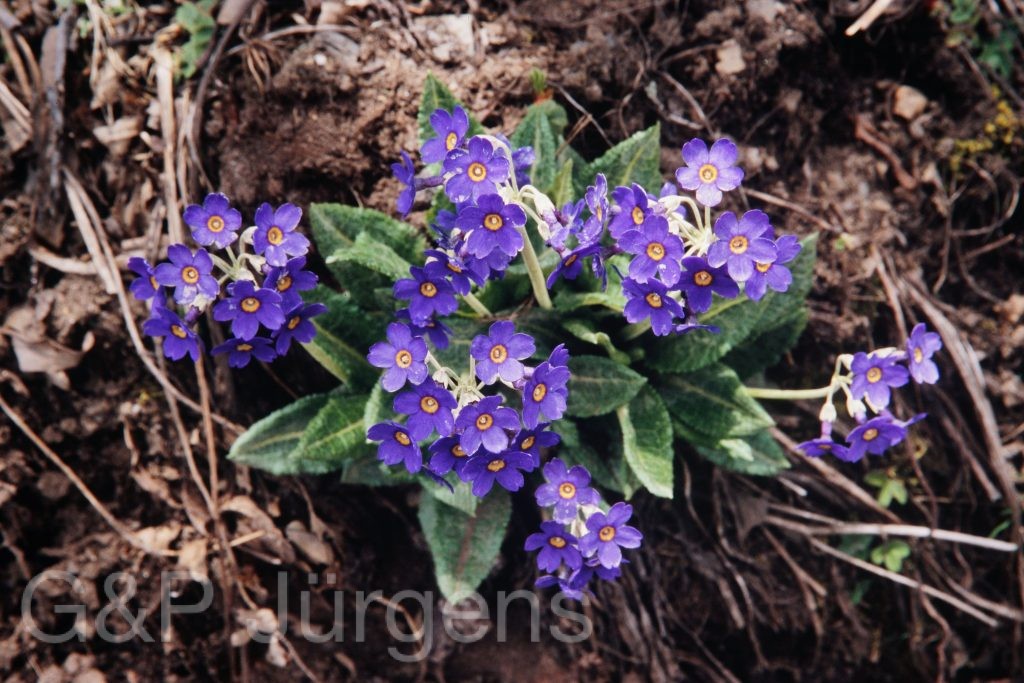
Pax

Bhutan2014 904
Bhutan Chele-La 3900m April
Bh2008 585 G875
Bhutan Chele-La 3900m April
Bh2008 586 P876
Bhutan Chele-La 3900m April

Description

Primula griffithii is an eastern Himalayan primrose centred on Bhutan and adjacent northern India, the 48 GBIF occurrences indicating a narrow distribution, with additional records reflecting cultivated material in Japan. It is a plant of cool, moist subalpine and alpine habitats: damp meadows, mossy banks, open Rhododendron scrub and forest margins, generally between 3300 and 4200 m. The illustrated plant was photographed at Chele-La in Bhutan at 3900 m in April, when the species flowers early in the season as the snow recedes from the high passes of the western Bhutanese ranges.

It is a perennial herb forming rosettes of oblong to obovate leaves that are crenate to denticulate, narrowed to a winged petiole, and frequently dusted, like the scape and calyx, with pale farina. The slender erect scape carries a terminal umbel of several flowers. The corolla is a rich violet to deep purple-blue with a contrasting paler or yellow eye, its limb of five obcordate, notched lobes set on a slender tube; the species is heterostylous, producing distinct pin and thrum forms that promote outcrossing. The fruit is a small capsule subequal to or slightly exceeding the persistent calyx.

The species is placed in Primula section Petiolares, the farinose, rosette-forming Sino-Himalayan primroses, within which it is allied to the petiolarid group typified by P. petiolaris. Its early flowering and high-rainfall subalpine habitat make it dependent on reliable snow-melt and humid mountain air, while its distyly necessitates insect pollination. Being a narrowly distributed eastern Himalayan near-endemic with a restricted altitudinal band, it is intrinsically vulnerable to habitat disturbance and warming; although not formally Red-Listed, it is of conservation note and esteemed by alpine-plant growers.

Author: Pax · Sources: POWO (Kew), GBIF, Flora of Bhutan, Richards: Primula, Flora of China