
W.W.Sm.
Description
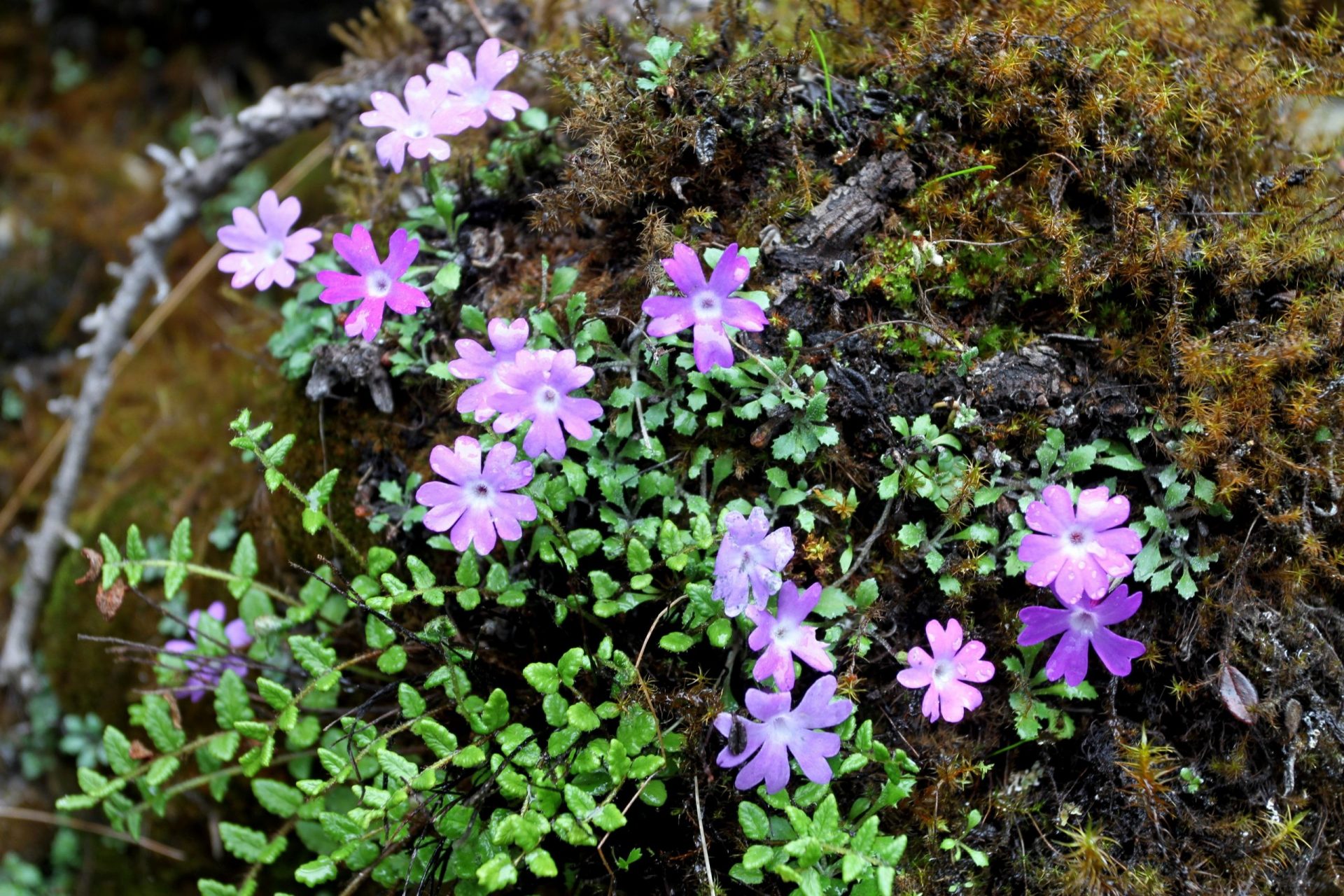
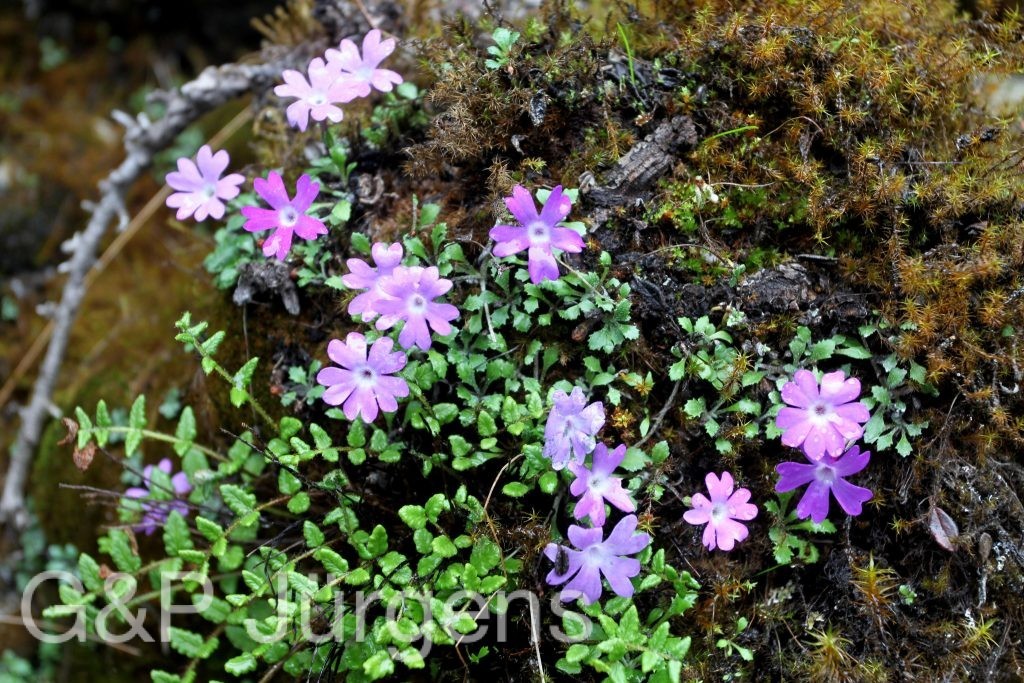
Primula flagellaris is a diminutive alpine primrose endemic to the Eastern Himalaya, known from Bhutan and adjacent India (Sikkim and Arunachal Pradesh), with only a small number of recorded occurrences reflecting its localised, high-altitude range. It inhabits the alpine zone, growing among damp turf, mossy rocks, seepage slopes and the margins of snow-melt flushes well above the treeline. The plant photographed on the historic Ludlow–Sherriff trail near Kim-La in Bhutan at 4480 m in July illustrates its characteristic occurrence in cool, moist alpine meadows during the brief summer flowering season following snow-melt.
The species is a small stoloniferous perennial whose specific epithet alludes to its slender, whip-like runners by which it spreads vegetatively to form loose mats or colonies. The leaves are gathered in small rosettes, obovate to spathulate, narrowed to a short petiole, with crenate to dentate margins and frequently a thin farinose coating. The flowering scapes are short, sometimes barely exceeding the leaves, bearing solitary flowers or few-flowered umbels. Each flower is heterostylous, with a tubular calyx and a salver-shaped corolla of rose-pink to lilac-purple lobes, notched at the apex, surrounding a contrasting eye. The fruit is a small capsule dehiscing to release numerous minute seeds.
Primula flagellaris belongs to the speciose Himalayan radiation of Primula, where it has at times been treated within the affinity of P. tenella, as reflected in the synonymy P. tenella var. flagellaris. Its stoloniferous habit is unusual within the genus and of considerable taxonomic interest. As a narrow Eastern Himalayan endemic confined to fragile alpine habitats potentially sensitive to climatic warming and grazing pressure, it warrants monitoring and is best considered of conservation interest pending formal assessment.
Author: W.W.Sm. · Sources: POWO (Kew), GBIF, Flora of Bhutan, Smith & Fletcher Genus Primula, Richards Primula (monograph), Flowers of the Himalaya