
Craib
Description
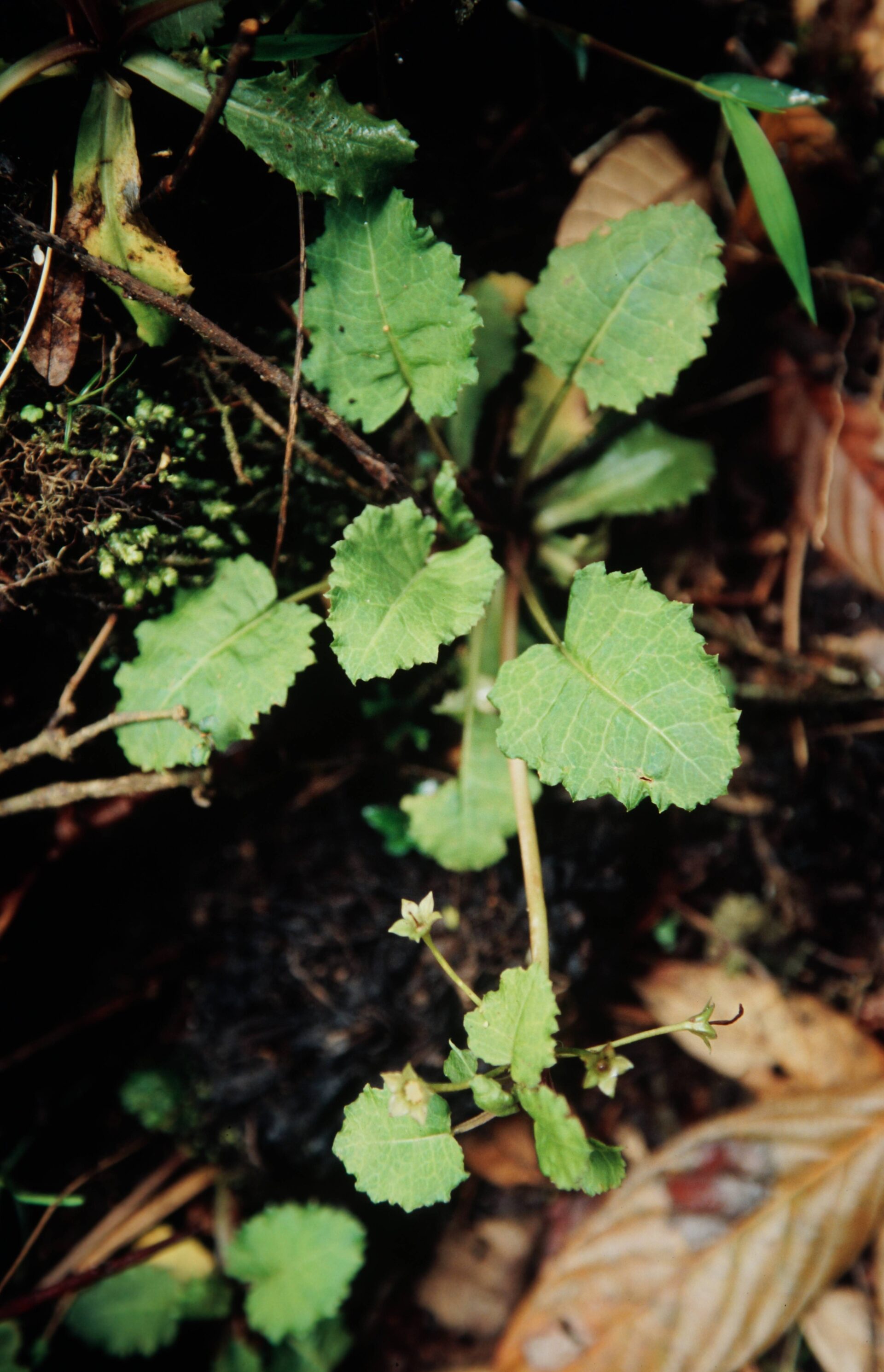
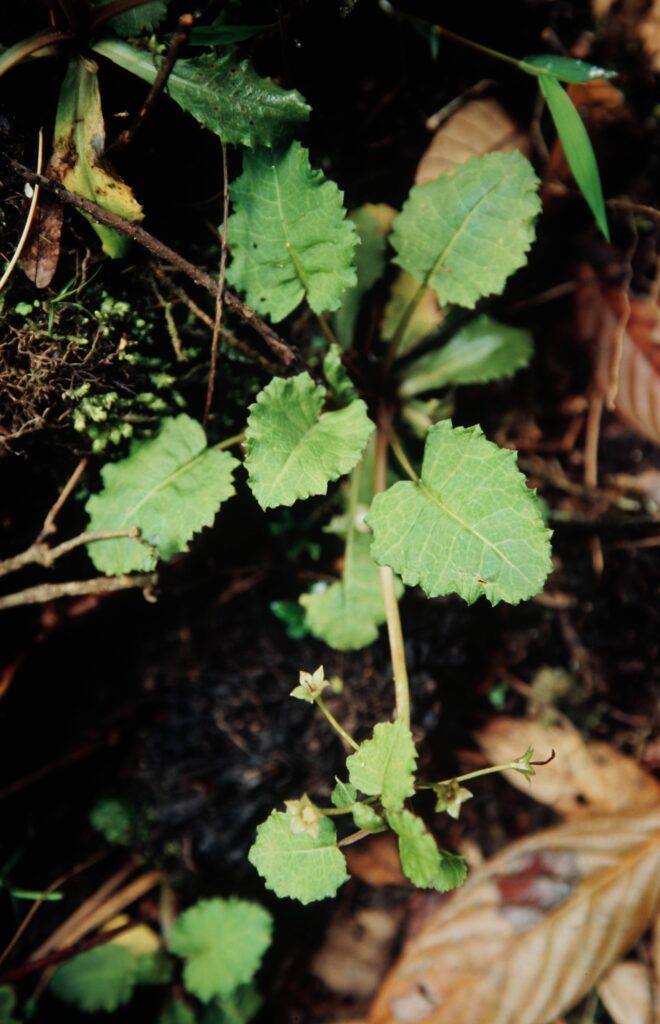
Primula bracteosa is a temperate to subalpine primrose of the eastern Himalaya, recorded from Bhutan, India and Nepal, with 51 georeferenced occurrences across this comparatively narrow range. It favours cool, shaded, moist situations such as mossy banks, damp rock ledges and the humus-rich floor of broadleaved and conifer forest. The plant photographed at Tolung in West Bengal, India, at 2500 m in May documents its spring flowering in the moist temperate forest belt, when the rosettes emerge and bloom early in the season following snowmelt and the first monsoon moisture.
The plant forms a basal rosette of obovate to spathulate leaves that are toothed to crenate along the margin, often farinose (mealy) beneath and tapering to a winged petiole. The flowers are borne in a terminal umbel atop a slender scape; as the epithet indicates, the umbel is subtended by conspicuous bracts. The individual flowers are salverform with a slender corolla tube and a spreading, notched-lobed limb, pink to rose-purple or lilac with a yellow or greenish eye. Like most Primula the species is typically heterostylous, with pin and thrum flower morphs promoting outcrossing. The fruit is a small capsule releasing numerous minute seeds.
Within the large and taxonomically complex genus Primula, P. bracteosa is placed in section Petiolares, a group of early-flowering, often farinose eastern-Himalayan primroses centred on Sikkim, Bhutan and adjacent regions. The section is prized but demanding in cultivation. Restricted to cool, humid montane forest, the species is locally frequent in suitable habitat but potentially vulnerable to forest disturbance and a warming climate.
Author: Craib · Sources: POWO (Kew), GBIF, Flora of Bhutan, Flora of China, The Genus Primula monograph (Richards), Flowers of the Himalaya (Polunin & Stainton)