
G.Watt
Description
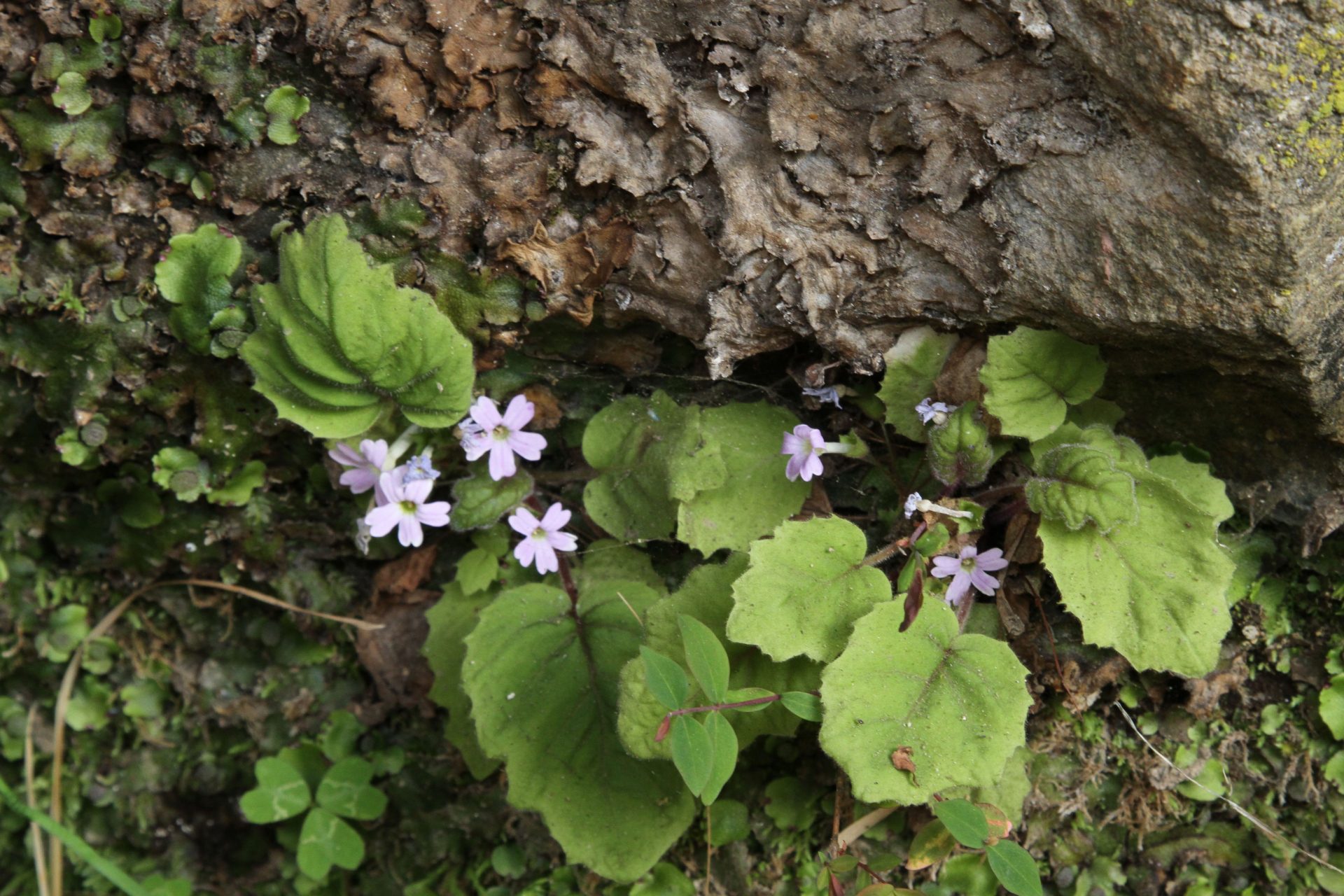
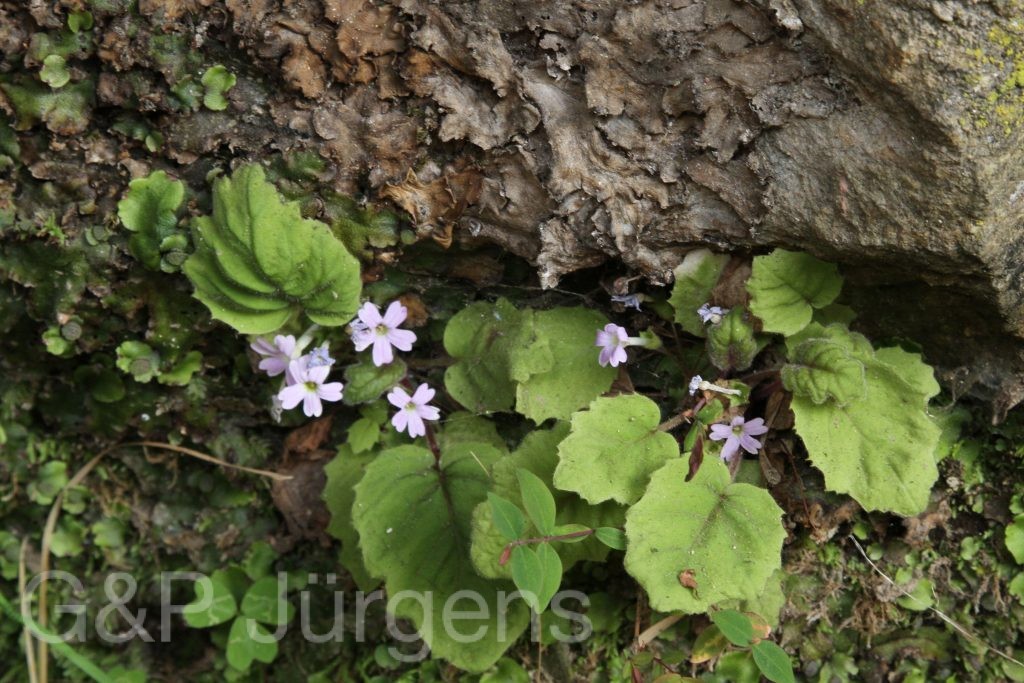
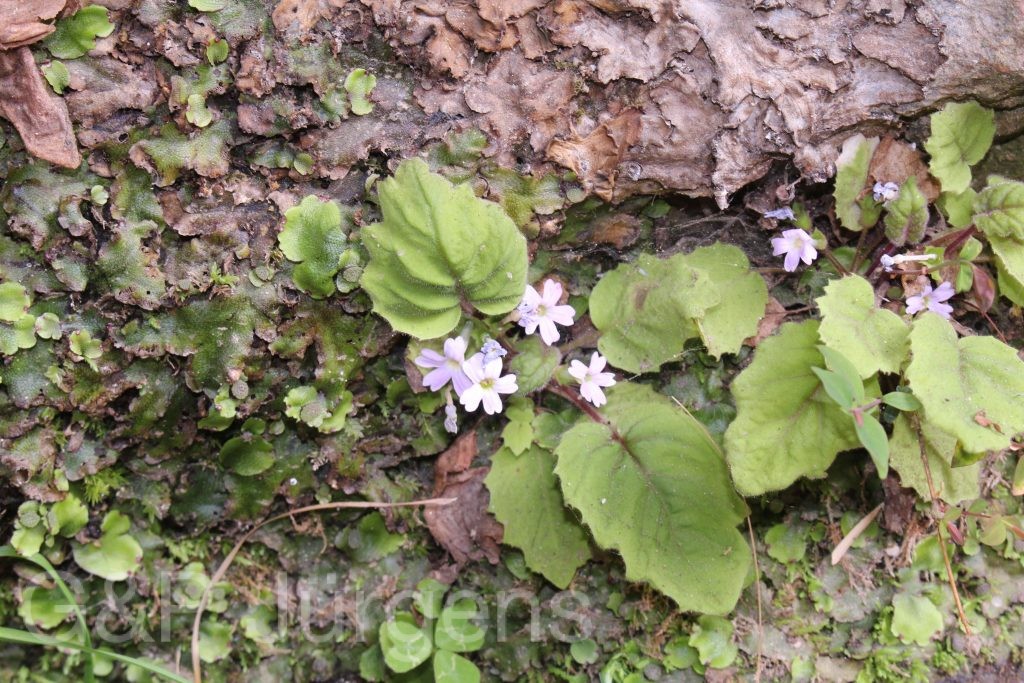
Primula filipes is a slender, delicate primrose of the eastern Himalayas, distributed across Bhutan, Sikkim and adjacent northeast India, eastern Nepal, northern Myanmar and southwest China (Xizang, Yunnan). It is a plant of cool, humid montane forest, favouring mossy banks, shaded streamsides and damp rock ledges within mixed broad-leaved and conifer woodland. The species typically occurs between roughly 2,500 and 3,600 m; the population photographed near the cliffside monastery of Taktshang (Tiger's Nest) in Bhutan at about 2,900 m in May is characteristic of its preferred shaded, moist forest understorey.
The plant is a small perennial herb forming a loose rosette of thin, ovate to oblong-elliptic leaves that are crenate-dentate at the margin and gradually narrowed into a slender, winged petiole, the lamina often farinose beneath. From the rosette arises a filiform, erect scape, frequently efarinose, terminating in a lax umbel of few flowers. The flowers are small, with a campanulate calyx and a pale to deep purple-violet corolla bearing a yellow eye and a notched, spreading limb; the capsule is globose and shorter than or subequal to the persistent calyx.
Primula filipes belongs to section Petiolares, a large and taxonomically intricate Himalayan group characterised by farinose, rosette-forming herbs of moist forest habitats. The species was described by the botanist George Watt from Himalayan material. As a narrowly montane forest endemic dependent on undisturbed humid woodland, it is sensitive to deforestation and trampling at popular pilgrimage sites, though it remains locally frequent within suitable habitat.
Author: G.Watt · Sources: POWO (Kew), Flora of Bhutan Vol. 1, Flora of China Vol. 15, GBIF, Richards: Primula (2003)