
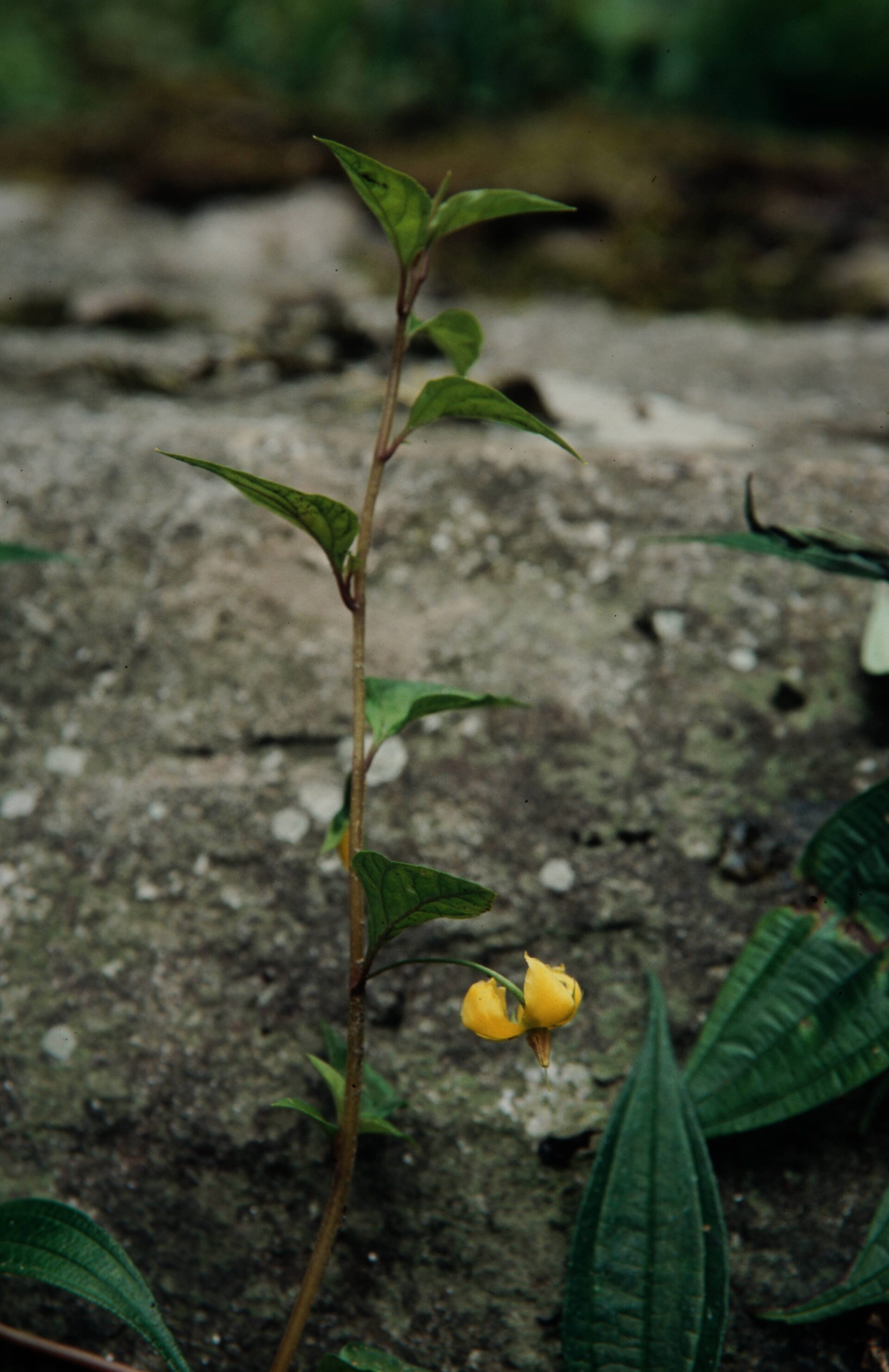
Wall.
Description
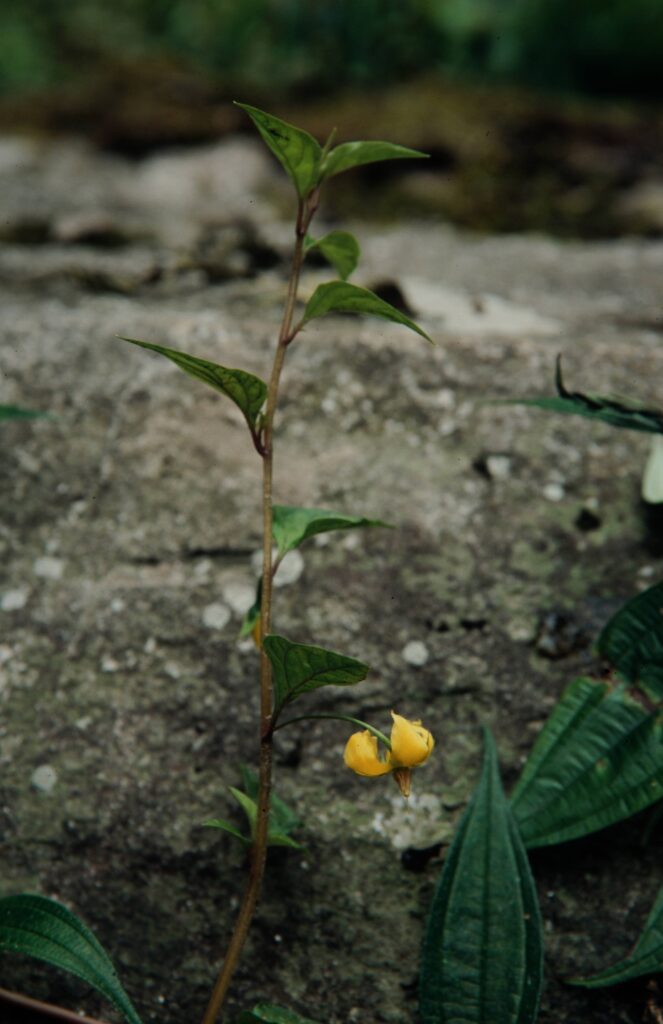
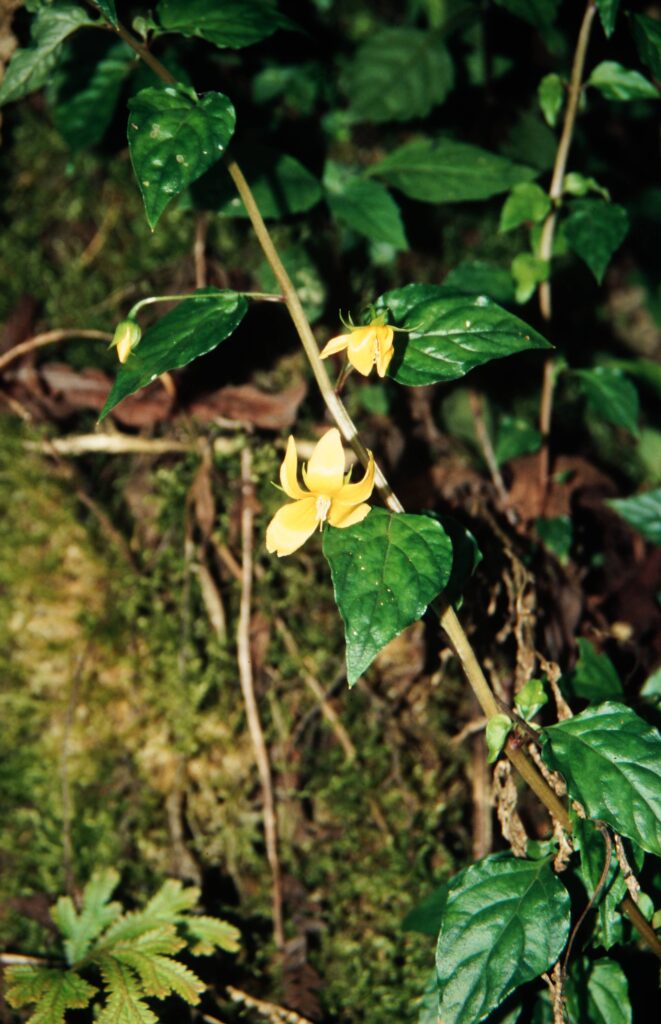
Lysimachia evalvis is a Sino-Himalayan herb distributed along the moist temperate and subtropical belt of the eastern Himalaya and adjacent Indo-Burmese ranges. GBIF records (88 occurrences) span India, Nepal, Myanmar, Bhutan, Bangladesh and China, with scattered cultivated or vouchered material noted from the United States. It favours shaded, humid forest margins, stream banks and seepage slopes within broadleaved woodland. The species was photographed at Chaana in West Bengal, India, at about 1650 m in May, in the lower montane forests where it flowers with the onset of the pre-monsoon rains.
It is a perennial, somewhat fleshy herb with slender erect to ascending stems arising from a short rhizomatous base. The leaves are alternate to subopposite, ovate to lanceolate, entire, acuminate at the apex and often gland-dotted, borne on short petioles. The flowers are solitary or few in the upper leaf axils, with a deeply five-lobed calyx and a yellow, rotate to campanulate corolla divided into five lobes; the five stamens are inserted on the corolla tube. The fruit is a small globose capsule; as the epithet evalvis suggests, dehiscence is reduced or irregular rather than by the typical valves, a diagnostic feature within the genus.
Lysimachia (Primulaceae, formerly segregated in Myrsinaceae alliance) is a large, near-cosmopolitan genus well represented in the Himalaya. L. evalvis belongs to the predominantly Asian element of the genus, its distribution reflecting the warm, perhumid forests of the eastern Himalayan front. No formal conservation assessment is widely published; like many forest-floor herbs of this region, its persistence depends on intact humid montane forest, making habitat conversion the principal threat to local populations.
Author: Wall. · Sources: POWO (Kew), GBIF, Flora of China, Flora of Bhutan, Annotated Checklist of the Flowering Plants of Nepal, Hu's monograph of Lysimachia (Primulaceae)