
Sm.

Description
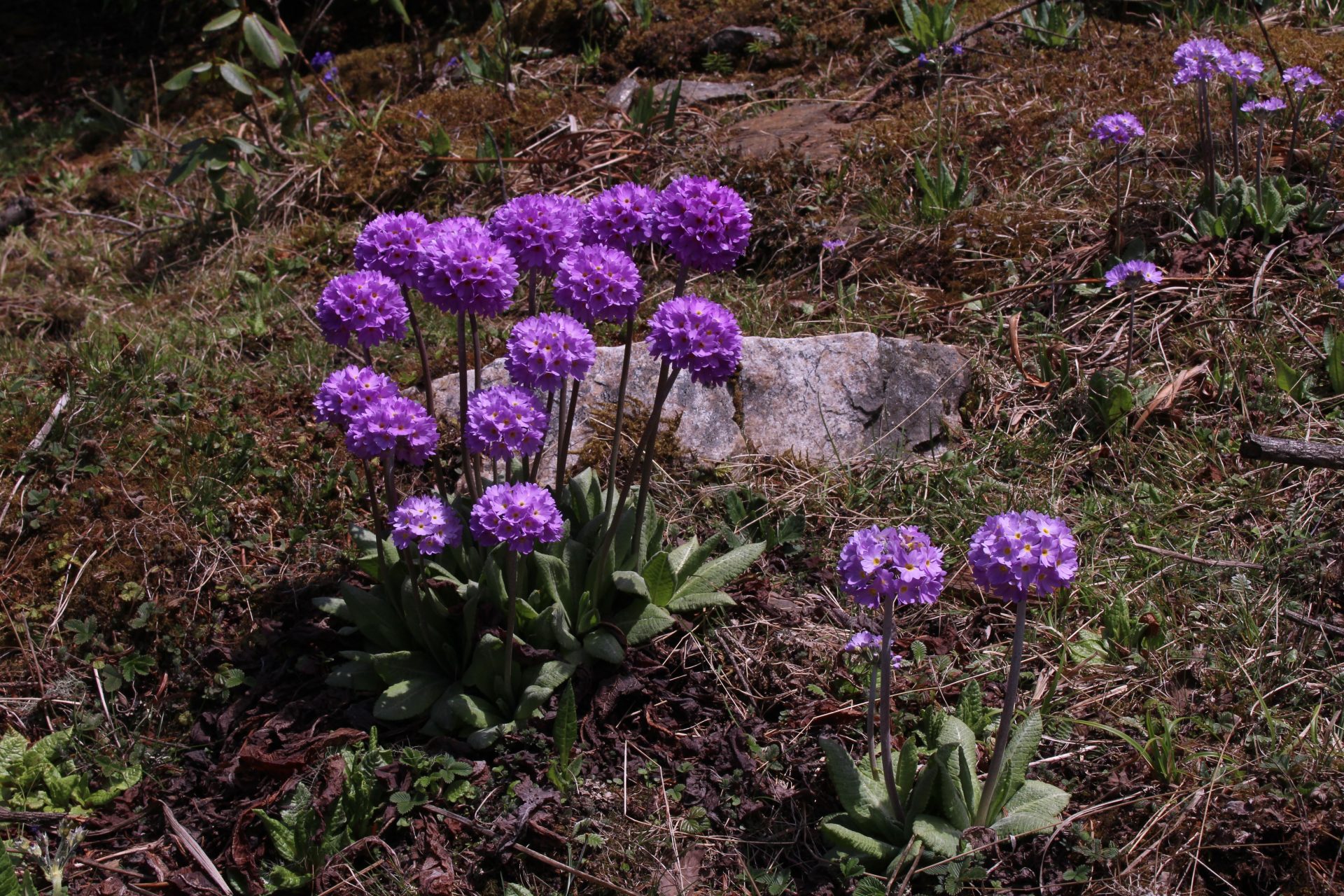
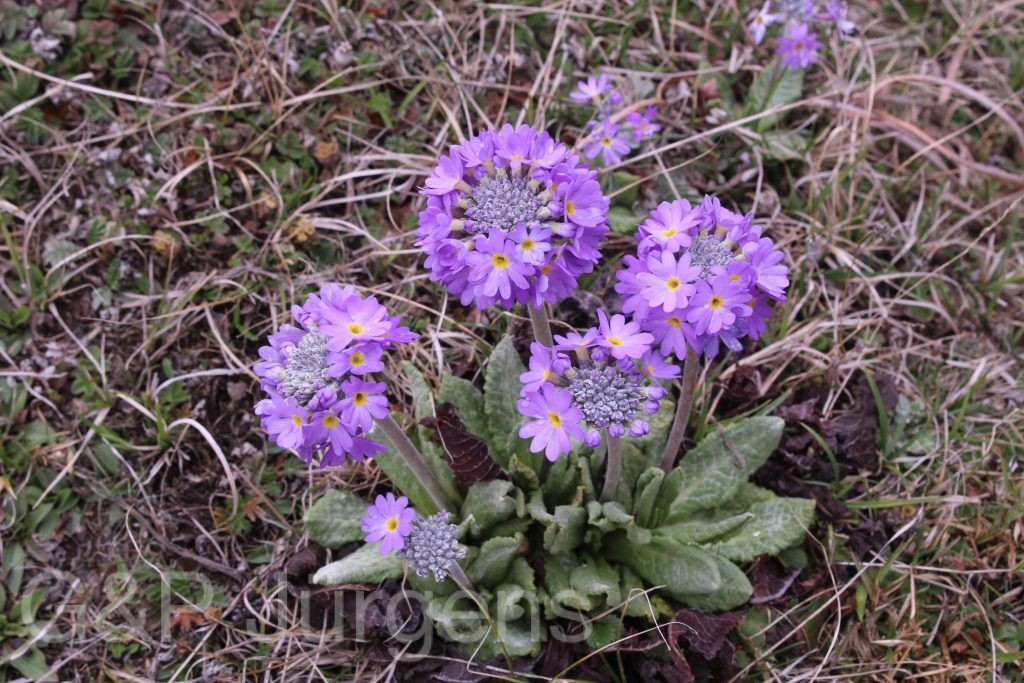
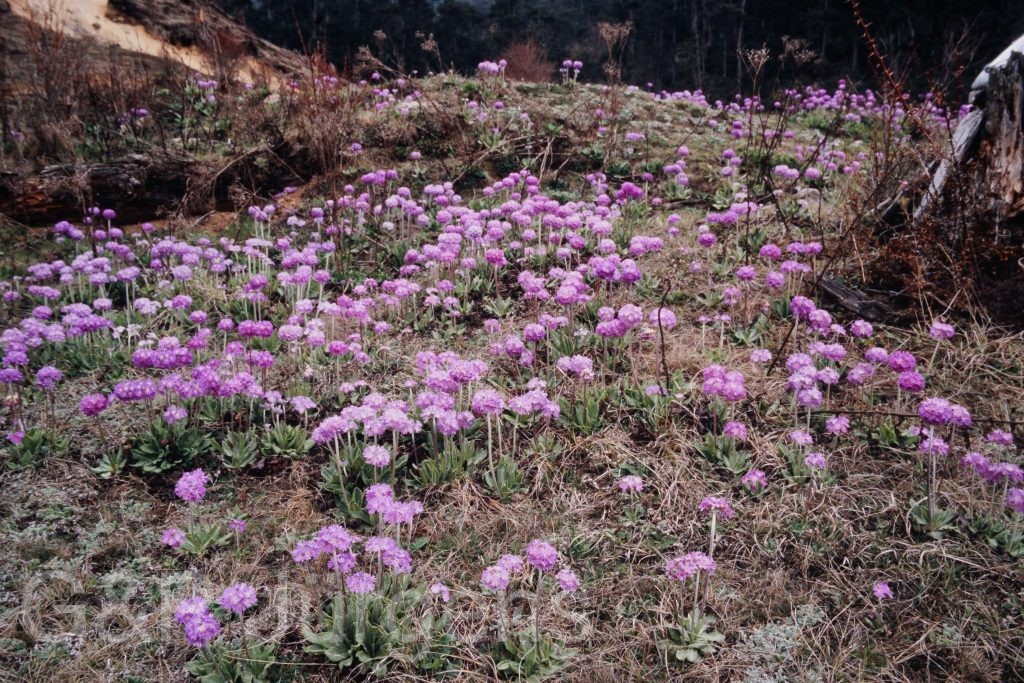
Primula denticulata, the drumstick primrose, is a widespread Himalayan and Sino-Himalayan species ranging from Afghanistan and Pakistan through Nepal, India, Bhutan and Myanmar into China; long valued in horticulture, it is widely cultivated and naturalised, accounting for GBIF records from Great Britain, Germany, Austria, Scandinavia and North America among nearly 1800 occurrences. It is a plant of moist alpine and subalpine meadows, streamsides, damp grassy slopes and open scrub, often forming colonies in snow-melt flushes. The images document it in Bhutan at Chele La around 4000 m in May and at Tumching-La near 3800 m in April, when its globular heads emerge as the snow recedes.
It is a robust perennial herb forming a rosette from a short stout rhizome. The leaves are oblong-spathulate, denticulate at the margin (giving the epithet), often farinose beneath, and elongate markedly after flowering. The scape is stout and at first short, elongating to 15-30 cm, terminating in a dense globose umbel of many flowers. Each flower is salverform, lilac, purple, violet or occasionally white, with a yellow eye, borne on short pedicels; the species is heterostylous, with pin and thrum morphs. The fruit is a small globose capsule enclosed in the persistent calyx, shedding numerous seeds.
Primula denticulata is placed in section Denticulata of the genus and forms a distinctive group within the vast Himalayan radiation of Primula. Its heterostyly enforces outcrossing by early-season pollinators, and farina production is typical of many high-elevation primulas. Common across its range and easily grown, it is of least conservation concern and remains one of the most familiar Himalayan primroses in gardens worldwide.
Author: Sm. · Sources: POWO (Kew), GBIF, Flora of China, Flora of Bhutan, Flora of Nepal, Smith & Fletcher Monograph of the Genus Primula