
G.Watt

Description
Primula gambeliana G.Watt is an eastern Himalayan alpine primula recorded from India (Sikkim, Arunachal Pradesh), Nepal, Bhutan and south-western China, with about 66 georeferenced occurrences in GBIF. It grows on cool, humus-rich and mossy ground, on shaded rock ledges, beneath dwarf rhododendron and along the upper forest edge into the lower alpine zone, generally between roughly 3000 and 4300 m. The collection from Jule-Tso at 4000 m in June reflects its preference for damp, sheltered high-altitude sites flushed by snowmelt early in the growing season.
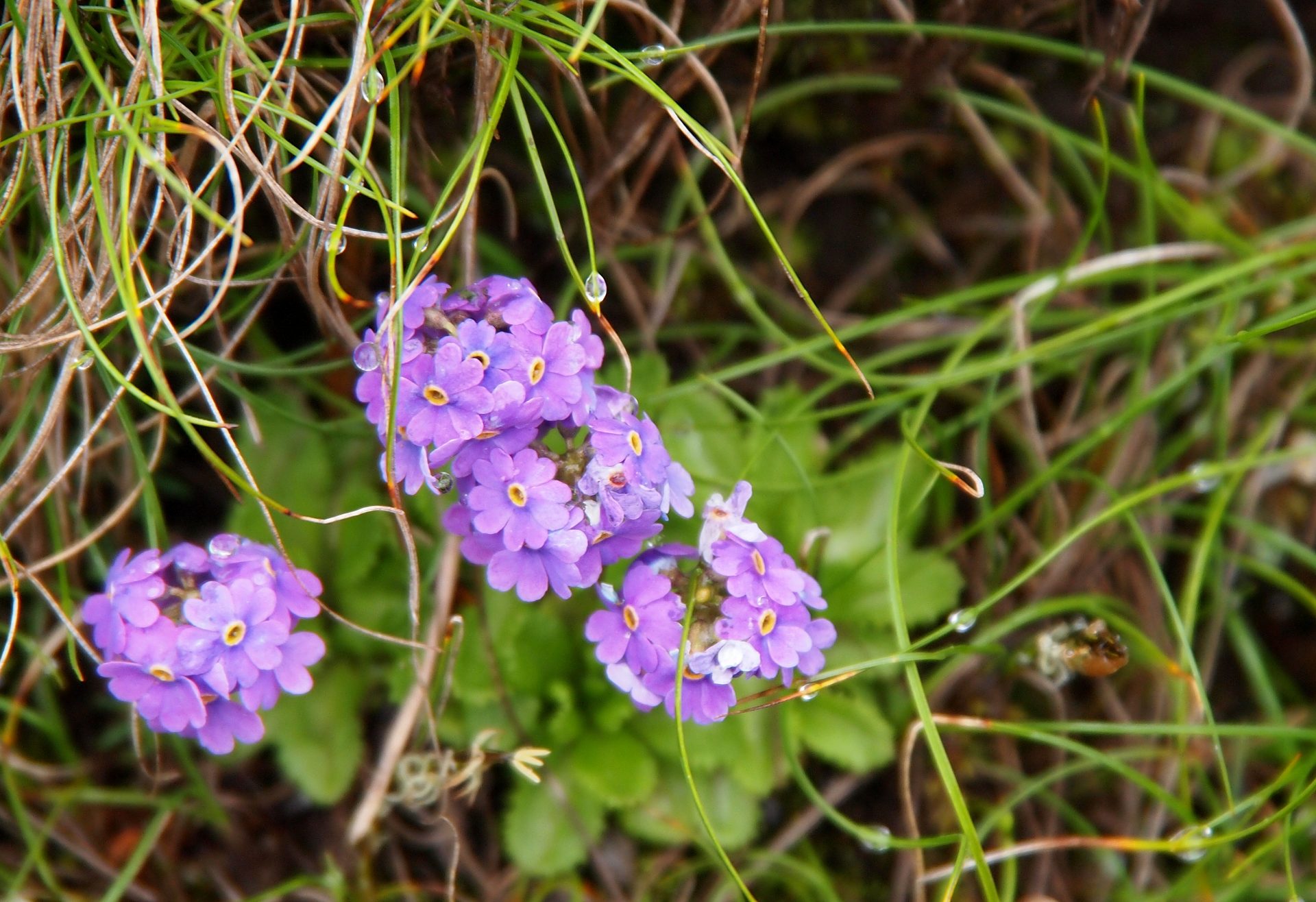
It is a tufted perennial herb forming a rosette from a short rhizome. The leaves are obovate to spatulate, abruptly contracted into a broadly winged petiole, with an irregularly toothed margin and an efarinose, somewhat fleshy texture. The slender scape rises above the foliage bearing an umbel of several nodding, funnel-shaped flowers; the corolla is rose-purple to violet with a paler or yellowish throat, the lobes spreading and emarginate, and the calyx is campanulate and divided to about the middle. The flowers are heterostylous, and the fruit is a capsule about equalling the calyx that releases numerous small seeds.
P. gambeliana belongs to section Petiolares, a large and taxonomically complex eastern-Himalayan group of woodland and alpine primulas distinguished by their winged petioles and early flowering. Within this section it is recognised by its leaf form and flower colour. As a localised petiolarid of cool, moist high-elevation habitat it depends on intact moss and humus layers; it carries no formal threat status but is potentially sensitive to habitat disturbance.
Author: G.Watt · Sources: POWO (Kew), GBIF, Flora of Bhutan, Flora of China, Smith & Fletcher monograph of Primula