
Pax
Description
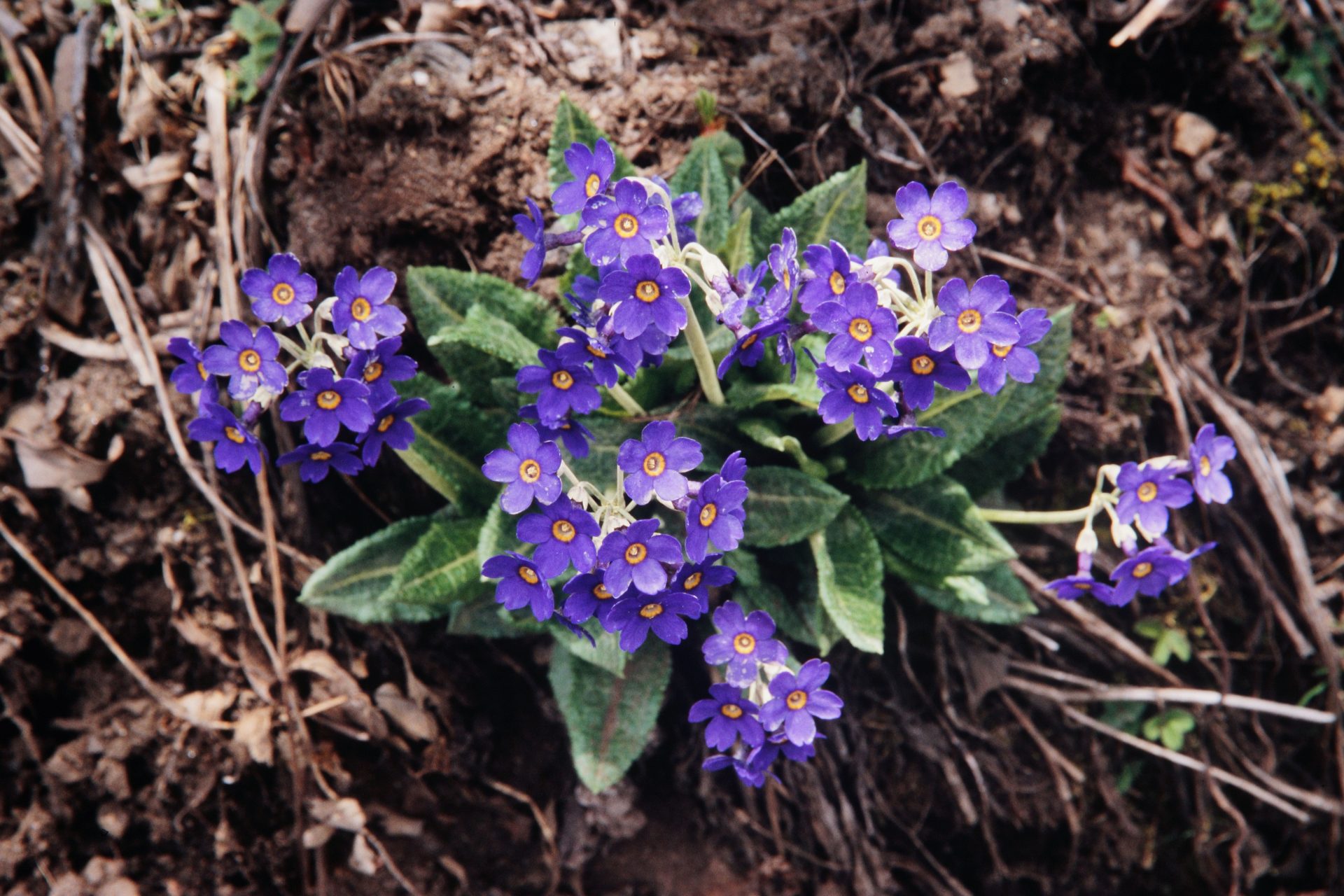
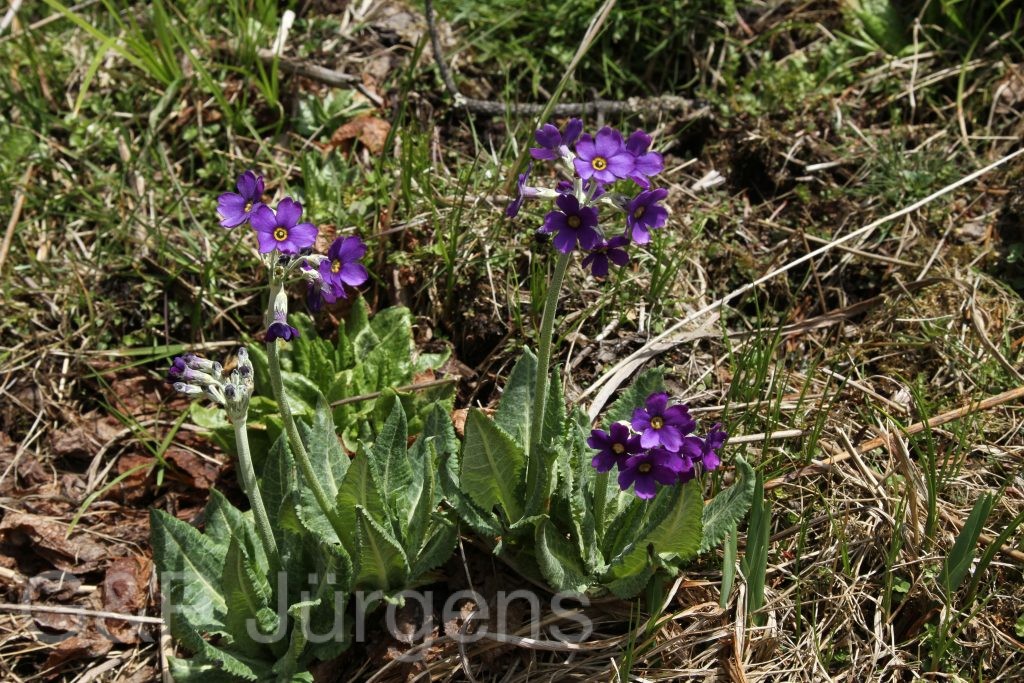
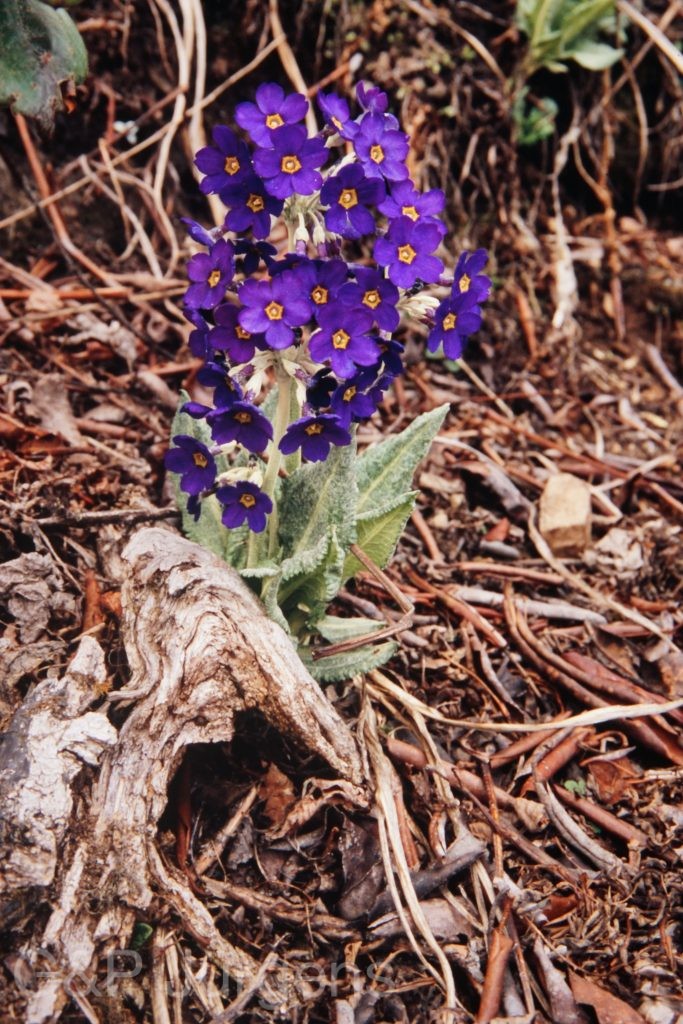
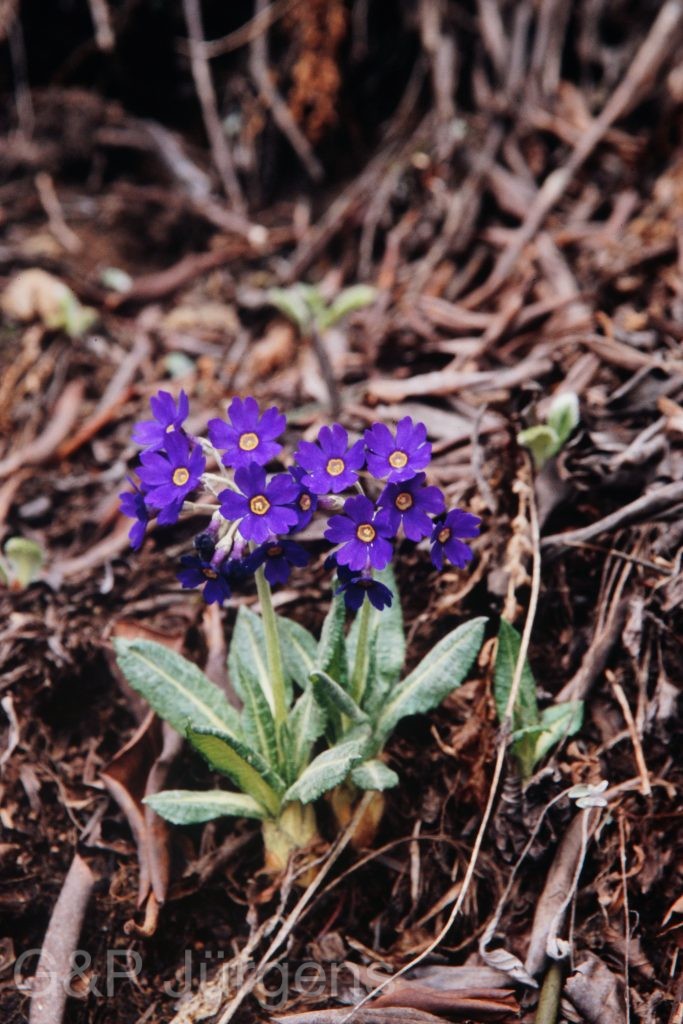
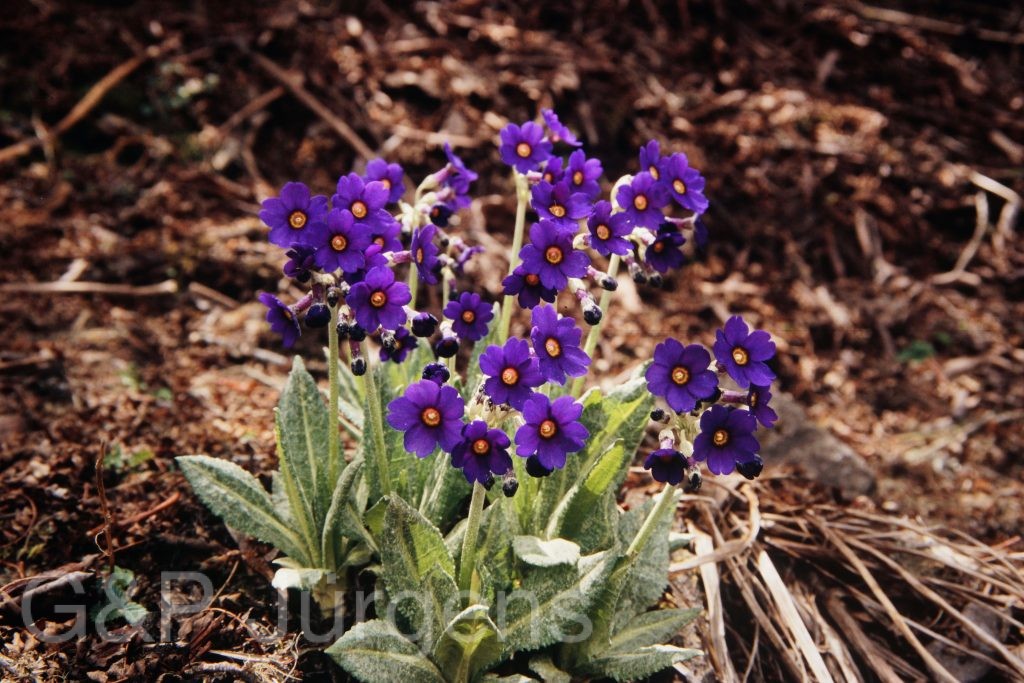
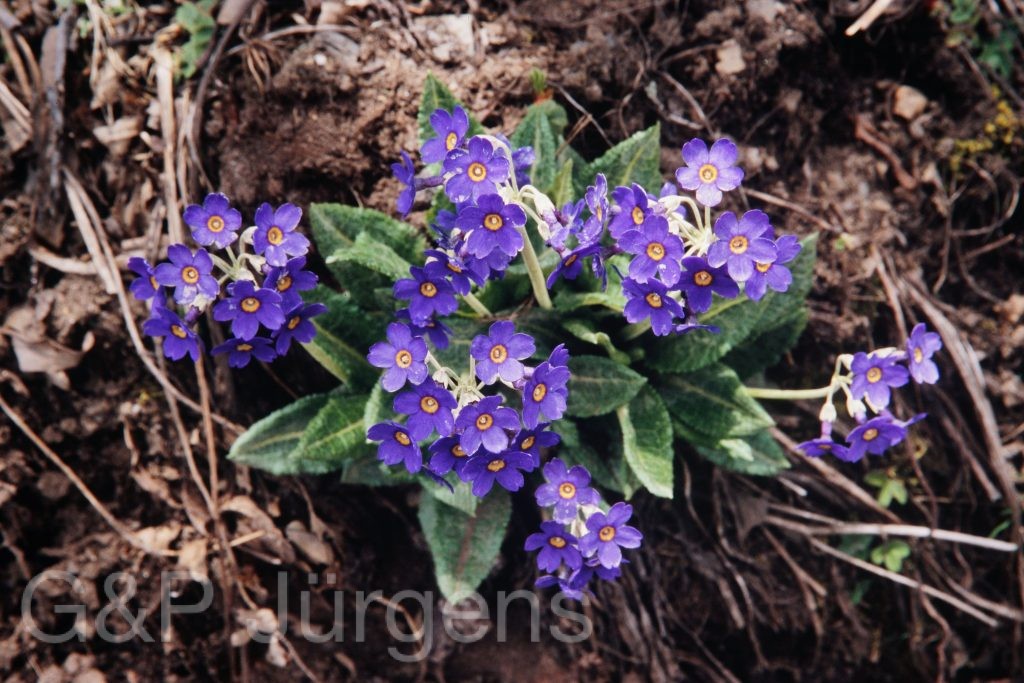
Primula griffithii is an eastern Himalayan primrose centred on Bhutan and adjacent northern India, the 48 GBIF occurrences indicating a narrow distribution, with additional records reflecting cultivated material in Japan. It is a plant of cool, moist subalpine and alpine habitats: damp meadows, mossy banks, open Rhododendron scrub and forest margins, generally between 3300 and 4200 m. The illustrated plant was photographed at Chele-La in Bhutan at 3900 m in April, when the species flowers early in the season as the snow recedes from the high passes of the western Bhutanese ranges.
It is a perennial herb forming rosettes of oblong to obovate leaves that are crenate to denticulate, narrowed to a winged petiole, and frequently dusted, like the scape and calyx, with pale farina. The slender erect scape carries a terminal umbel of several flowers. The corolla is a rich violet to deep purple-blue with a contrasting paler or yellow eye, its limb of five obcordate, notched lobes set on a slender tube; the species is heterostylous, producing distinct pin and thrum forms that promote outcrossing. The fruit is a small capsule subequal to or slightly exceeding the persistent calyx.
The species is placed in Primula section Petiolares, the farinose, rosette-forming Sino-Himalayan primroses, within which it is allied to the petiolarid group typified by P. petiolaris. Its early flowering and high-rainfall subalpine habitat make it dependent on reliable snow-melt and humid mountain air, while its distyly necessitates insect pollination. Being a narrowly distributed eastern Himalayan near-endemic with a restricted altitudinal band, it is intrinsically vulnerable to habitat disturbance and warming; although not formally Red-Listed, it is of conservation note and esteemed by alpine-plant growers.
Author: Pax · Sources: POWO (Kew), GBIF, Flora of Bhutan, Richards: Primula, Flora of China