Orchideaceae

King & Pantl.

Bhutan2012 347
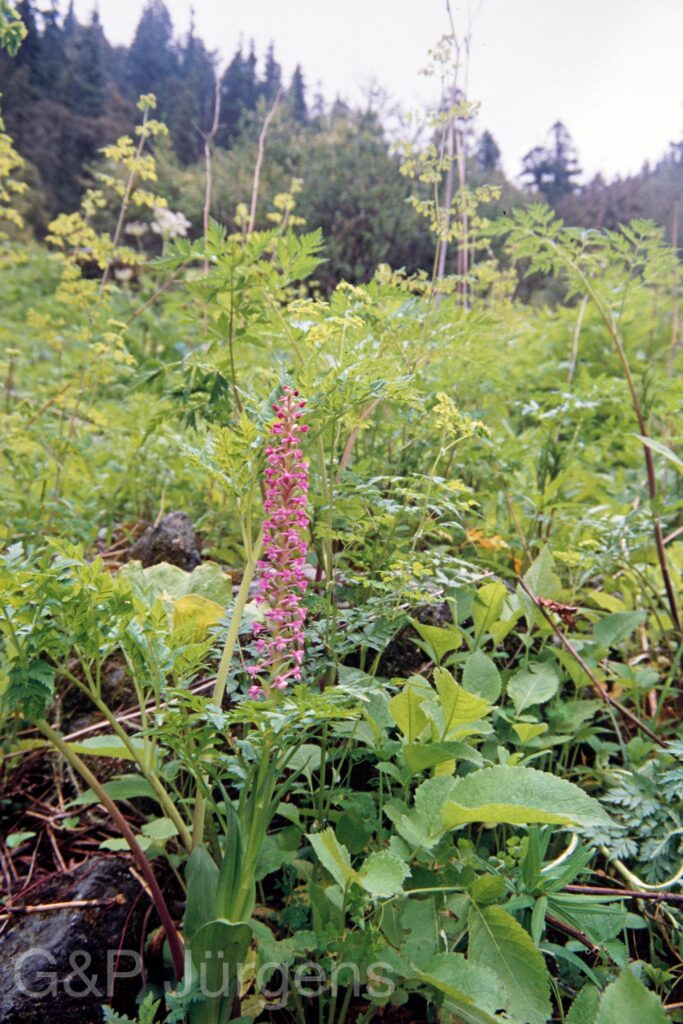
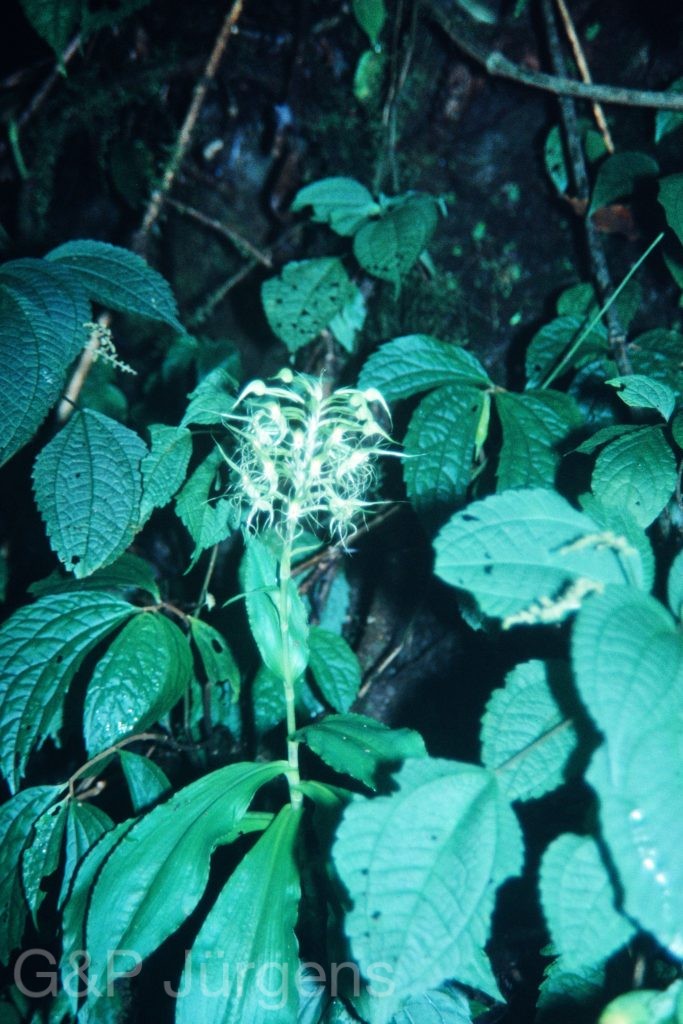
Bhutan Dochu-La 3000m, September

Description

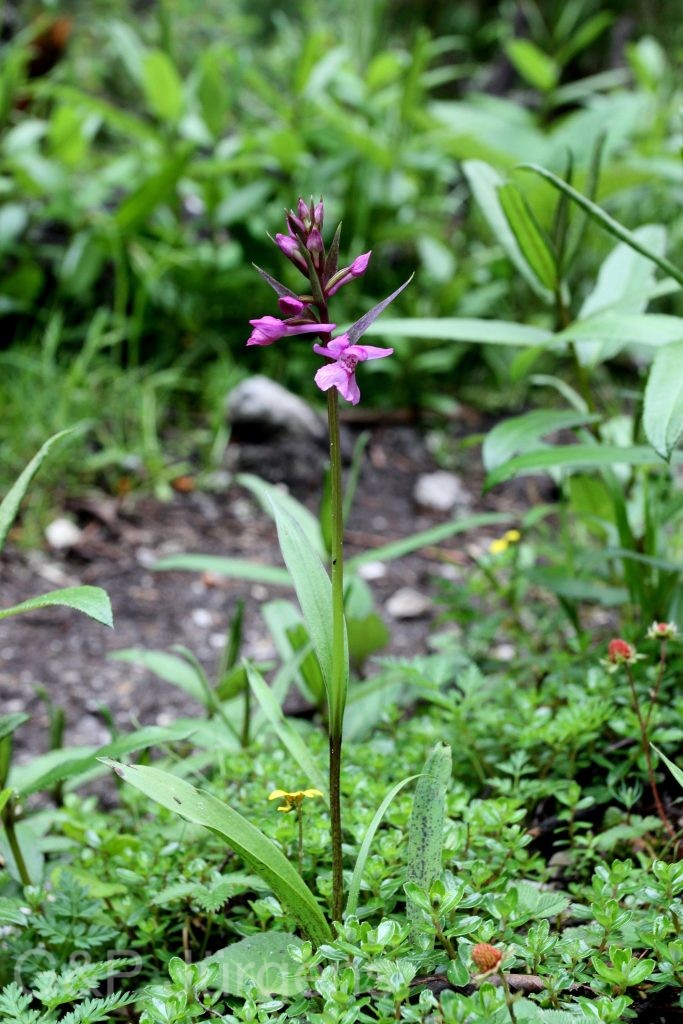
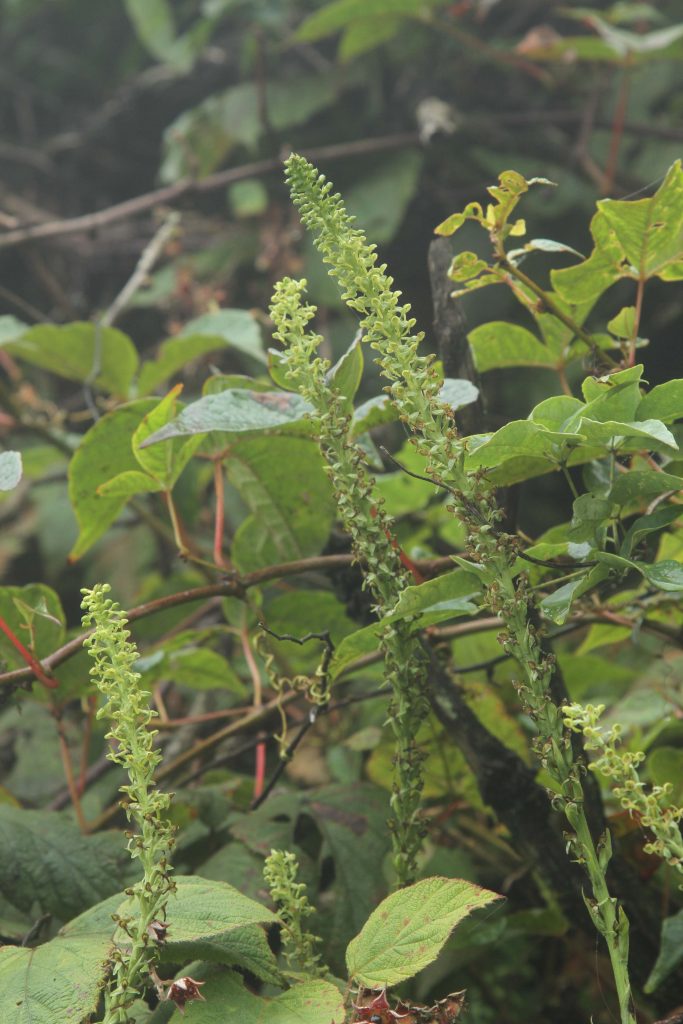
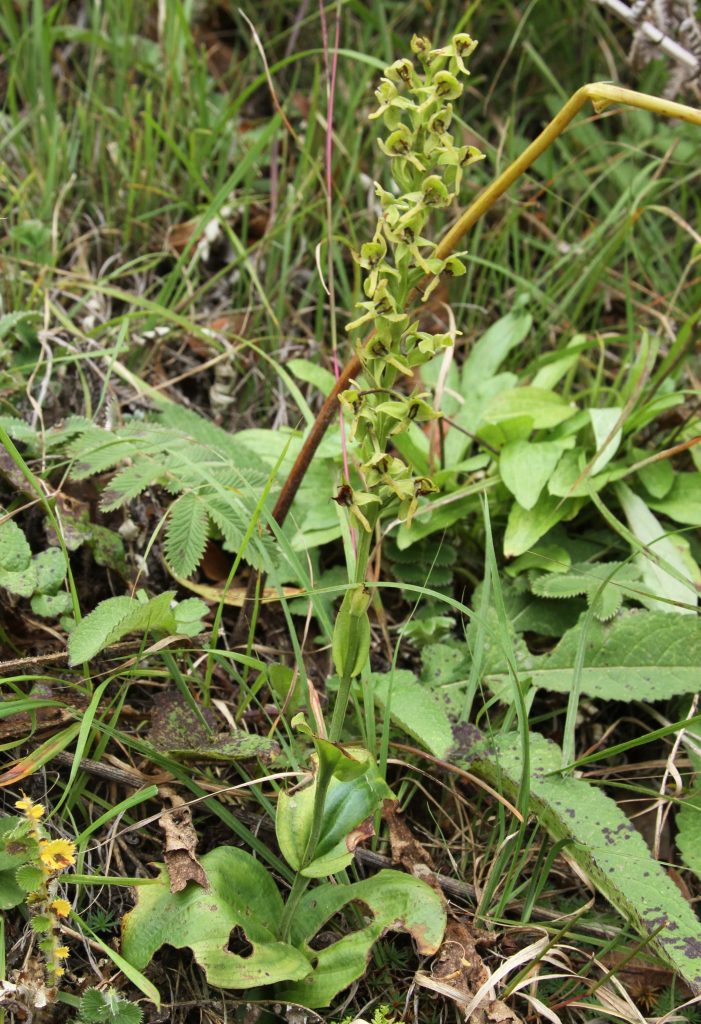
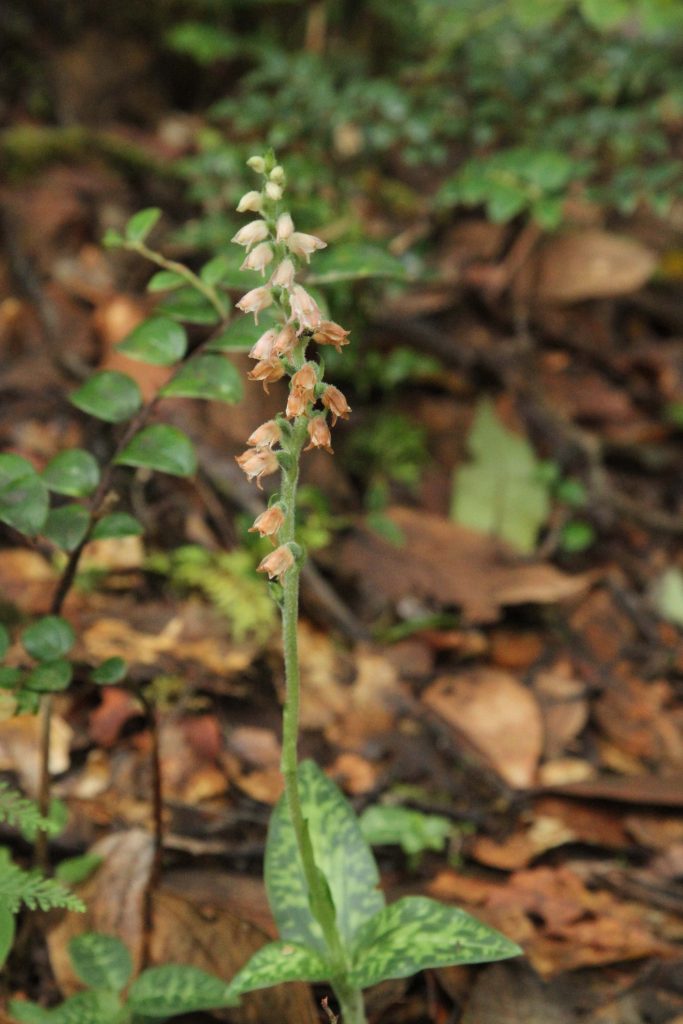
Goodyera hemsleyana is a terrestrial orchid of the cool, humid temperate forests of the eastern Himalaya and adjoining southwestern China. Documented occurrences (21 GBIF records) span India, Nepal, China, Bhutan and Myanmar, following the moist mid- to upper-montane belt of the Sino-Himalayan region. The species favours the deep, mossy humus and leaf litter of shaded broadleaved and mixed conifer forest, typically between about 2500 and 3500 m. The illustrated material was gathered at Dochu-La in western Bhutan at roughly 3000 m in September, a pass clothed in cloud forest where rhododendron and fir provide the shade and atmospheric moisture this orchid requires.

The plant is a small, creeping geophyte arising from a slender, fleshy, decumbent rhizome that roots at the lower nodes. The leaves are few, gathered toward the base, ovate to elliptic, and characteristically marked with a fine reticulate venation that distinguishes the 'jewel orchid' alliance. The erect inflorescence is a pubescent scape bearing a rather lax, secund raceme of small white to greenish-white flowers. Each flower shows the connivent dorsal sepal and petals forming a hood over the column, spreading lateral sepals, and a saccate, concave lip with an incurved, often shortly bifid apex; the ovary is glandular-hairy and twisted.

Goodyera is a large, near-cosmopolitan genus within tribe Cranichideae, subtribe Goodyerinae, and G. hemsleyana belongs to the assemblage of Himalayan species described from the King & Pantling collections. Like its congeners it is mycoheterotrophic in establishment, dependent on rhizoctonia-type fungal symbionts in the forest humus, which restricts it to undisturbed old-growth stands. Though not formally assessed as threatened, its reliance on intact mossy forest makes it sensitive to logging and grazing pressure across its range.

Author: King & Pantl. · Sources: POWO (Kew), GBIF, Flora of Bhutan, Flora of China, The Orchids of Bhutan (Pearce & Cribb)
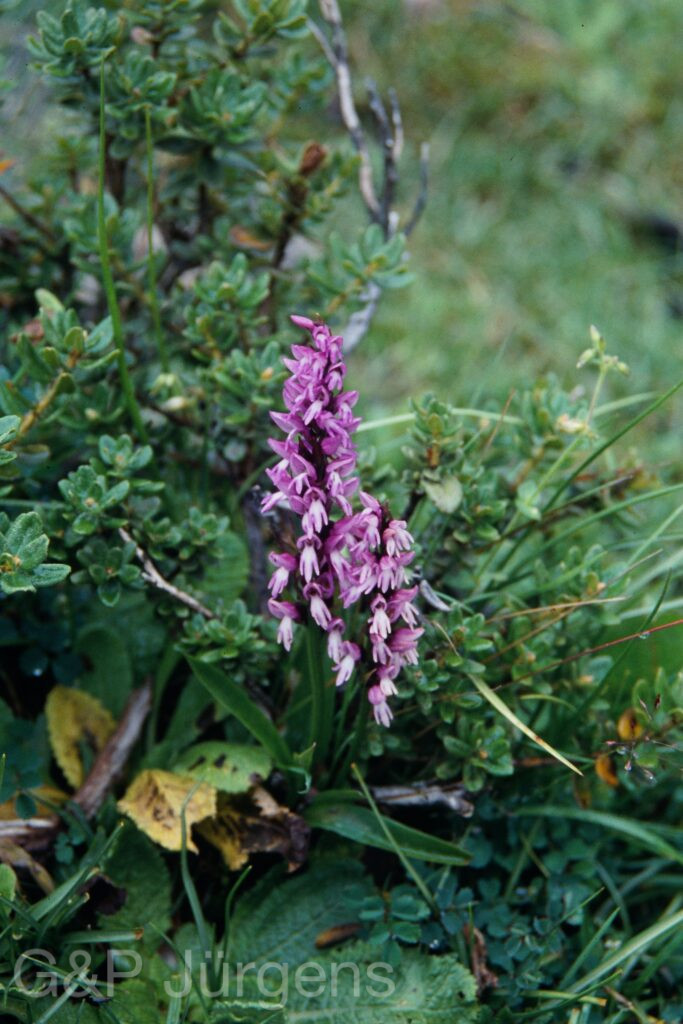
Lindl.

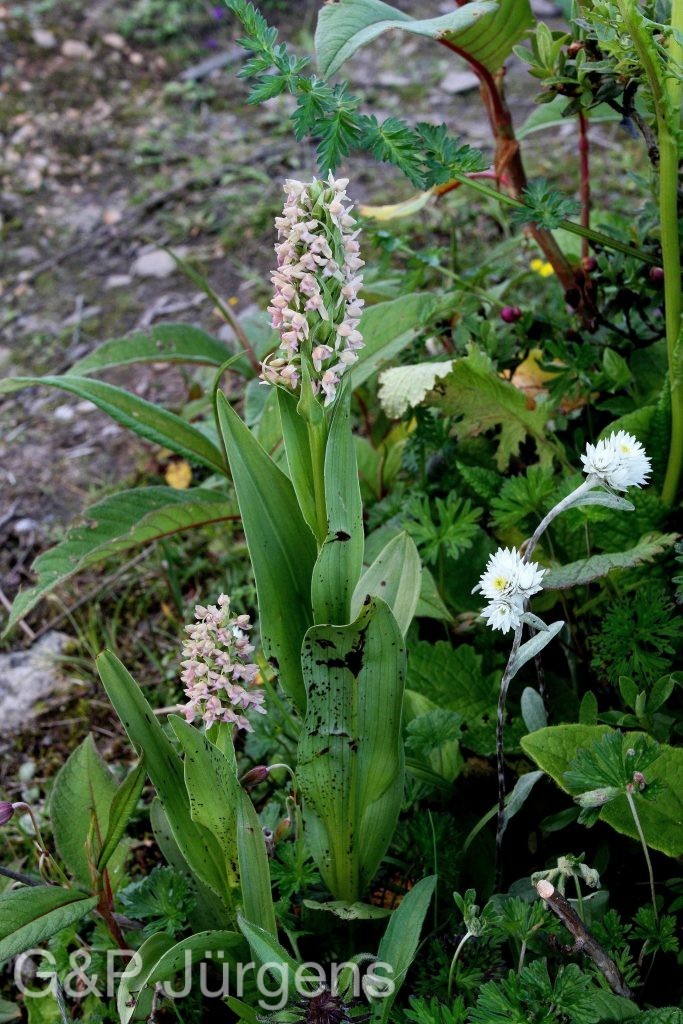
BhutanPG2011 801 01 01
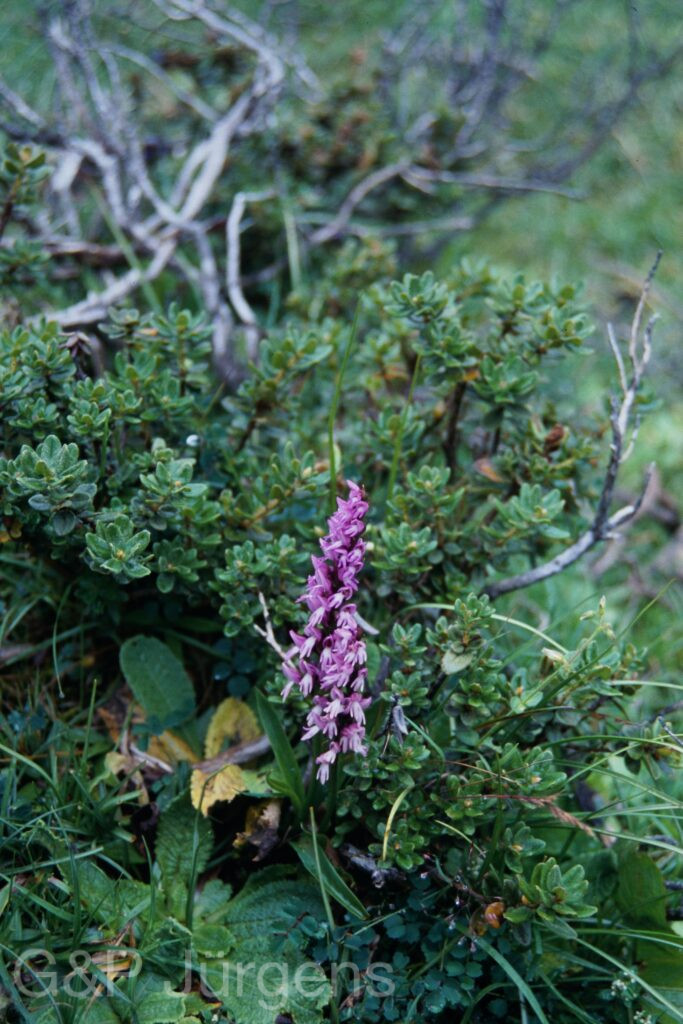
Bhutan Chele-La, 3800m July
also included: Anaphalis busua (D.Don) DC. and Anemone demissa Hook.f. & Thomson
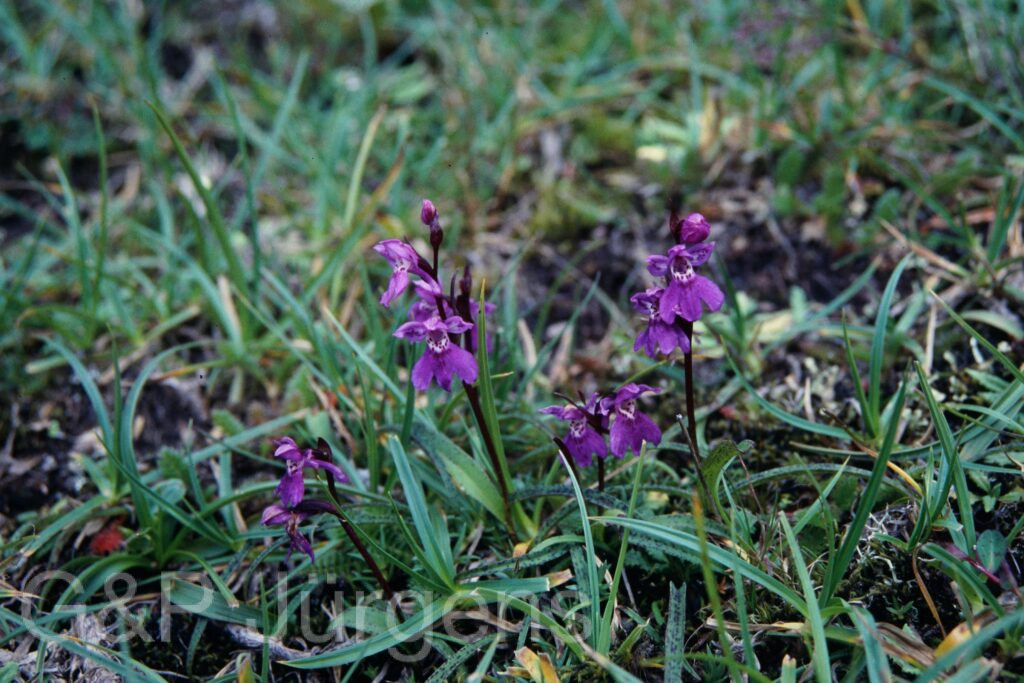
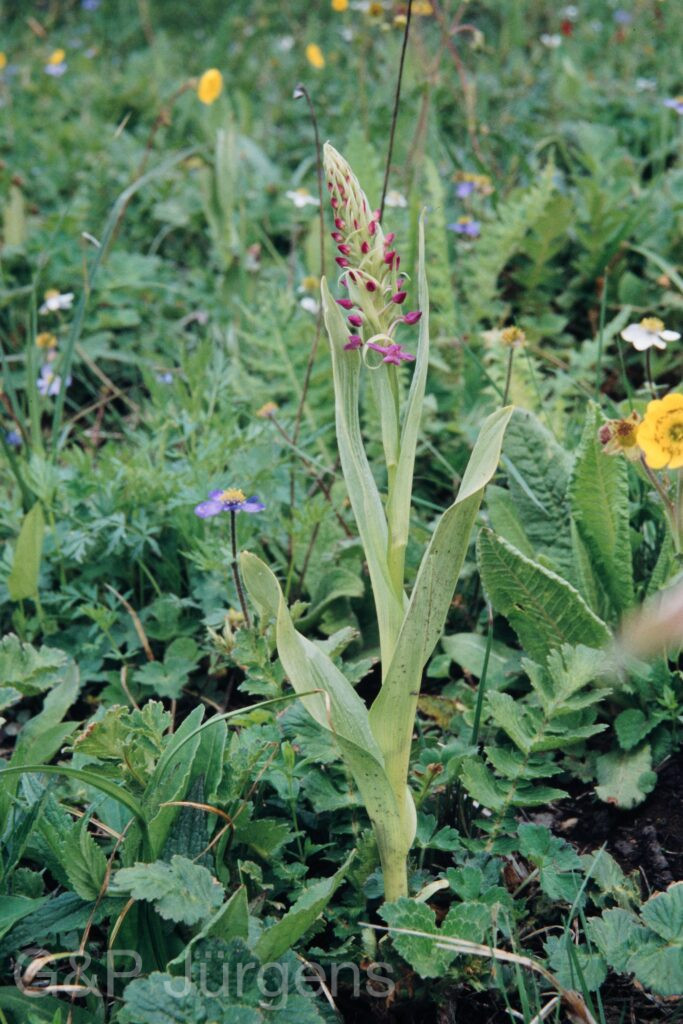
Nepal 99 371 ergebnis
West-Nepal Linji-Khola 3400m, June
Nepal 99 474 ergebnis
West-Nepal Churta-Khola 3200m, June

Description

Gymnadenia orchidis is a terrestrial orchid of the Himalaya and adjacent China, distributed through China, Nepal, India, Bhutan, Myanmar and Pakistan, with GBIF documenting some 795 occurrences. It is a plant of open alpine and subalpine meadows, grassy slopes, forest clearings and damp turf, growing in full sun to light shade on humus-rich soils. The species occupies the upper montane to alpine zone; the photographed material from the Chele-La pass in Bhutan at about 3800 m in July, sharing its habitat with Anaphalis busua and Anemone demissa, and from the Linji-Khola and Churta-Khola valleys of West Nepal at 3200-3400 m in June, illustrates its summer flowering across this high-elevation belt.

The plant arises from palmately lobed, fleshy root-tubers and bears an erect, leafy stem. The leaves are several, oblong to lanceolate, sheathing at the base and reduced upward to bracts. The inflorescence is a dense, cylindrical terminal spike of many small flowers, ranging in colour from purple and pink-magenta to occasionally white. Each flower has spreading lateral sepals, a hooded arrangement of the dorsal sepal and petals, and a trilobed labellum bearing a slender, decurved spur about equalling or shorter than the ovary, containing nectar. The pollinaria have naked, exposed viscidia characteristic of the genus. The fruit is a small, erect capsule.

The species belongs to Gymnadenia, a genus of nectar-spurred terrestrial orchids closely allied to Dactylorhiza and Platanthera; it has at times been segregated into Habenaria or treated under broader generic concepts, reflecting ongoing debate over the limits of the orchidine genera. Pollinated by long-tongued insects attracted to its spur nectar, it remains widespread and locally common in Himalayan alpine grasslands, although meadow degradation and grazing may affect individual populations.

Author: Lindl. · Sources: POWO (Kew), GBIF, Flora of China, Flora of Bhutan, The Orchids of Sikkim and Bhutan (Pearce & Cribb)

Schltr.

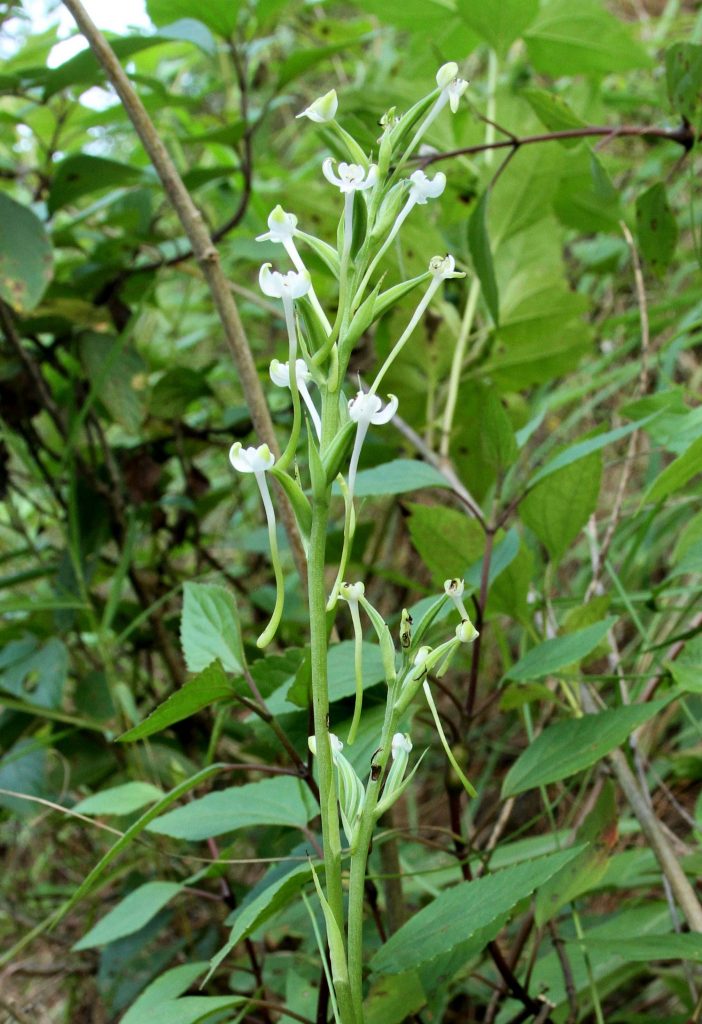
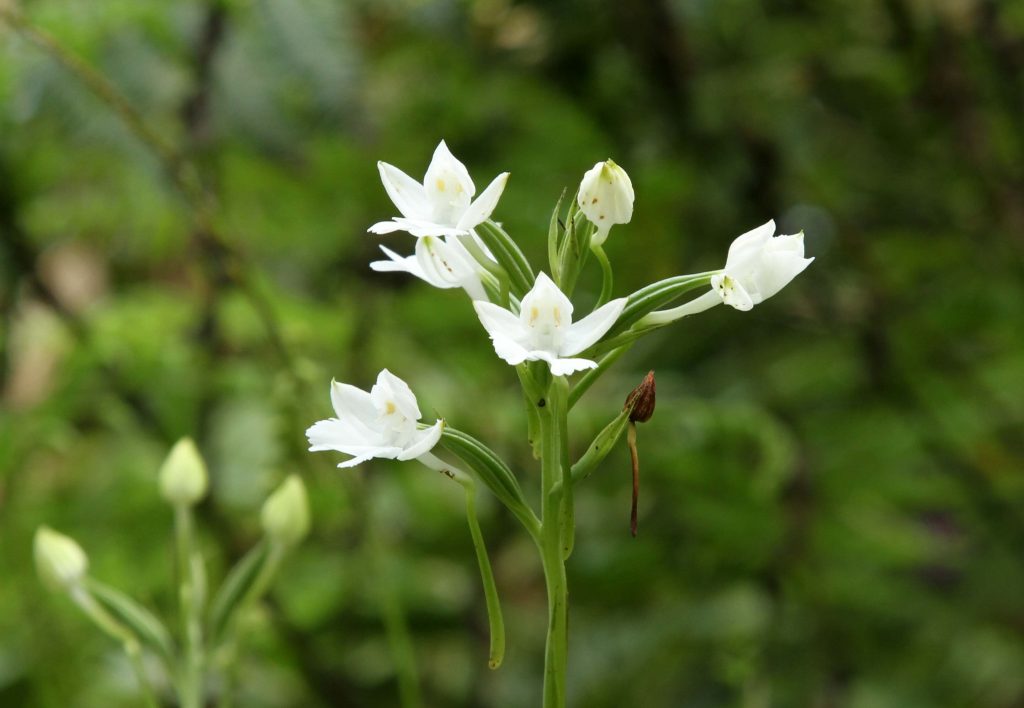
Bhutan2012 624
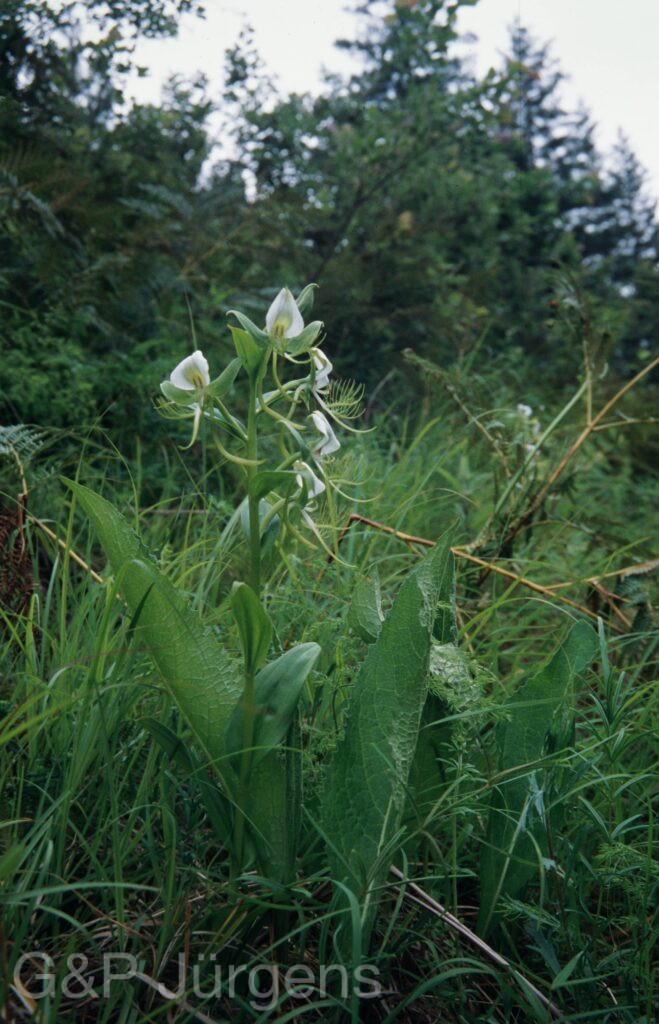
Bhutan Dochu-La 2800m, September
Bhutan2012 957
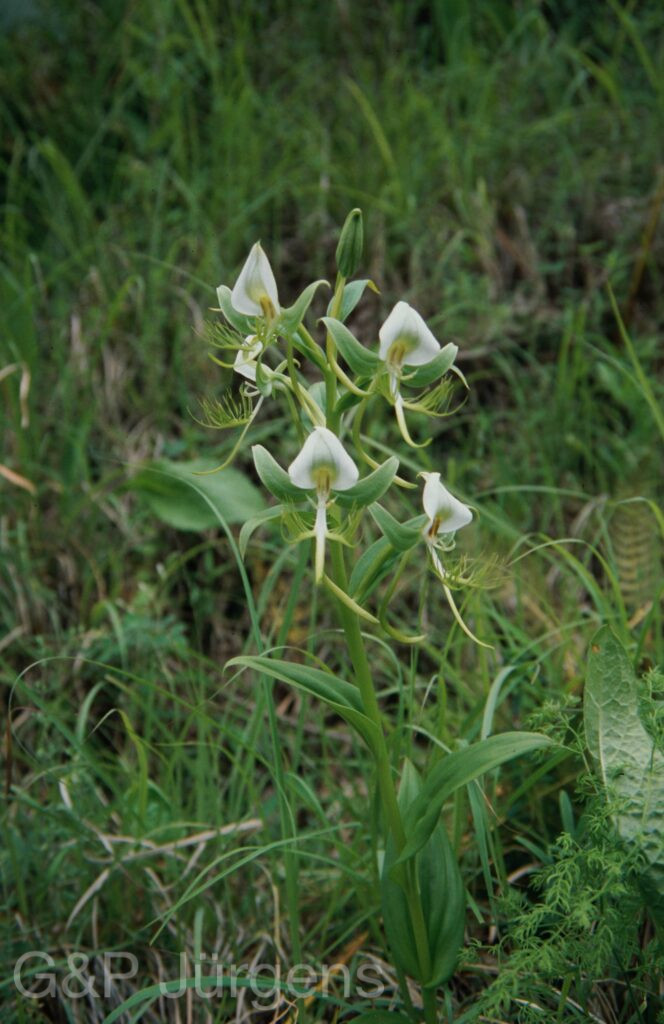
Bhutan Dochu-La 2800m, September

Description

Habenaria dentata is a wide-ranging terrestrial orchid of tropical and subtropical Asia, documented in GBIF across 933 occurrences from China, Thailand, Japan, Taiwan, India, Vietnam, Myanmar, Nepal, Bhutan and beyond. It grows in grassy slopes, open forest, scrub and forest-margin clearings from the lowlands to about 2800 m. The photographed plant was found at Dochu-La in Bhutan at about 2800 m in September, at the upper edge of its range, flowering at the close of the monsoon when soil moisture remains high in the cool mid-montane zone.

It is a tuberous terrestrial herb arising from underground ellipsoid tubers, with an erect leafy stem 30-60 cm tall bearing several oblong-lanceolate to elliptic, clasping cauline leaves. The inflorescence is a dense terminal raceme of showy white flowers; the dorsal sepal and petals converge to form a hood, while the conspicuous three-lobed labellum has the lateral lobes broadly dilated and fringed-dentate along the margins, giving the epithet dentata, and bears a long, slender, downcurved spur. The column is short with the rostellum and pollinaria typical of Habenaria, and pollination is effected by long-tongued, often nocturnal moths attracted to the white, spurred flowers.

Habenaria (Orchidaceae, subtribe Orchidinae) is a large, cosmopolitan genus of terrestrial orchids best diversified in the tropics, and like all orchids it is listed on CITES Appendix II. Seed germination depends on symbiosis with mycorrhizal fungi. Despite its broad distribution and relative frequency, populations are reduced locally by grassland conversion and collection, but the species is not globally threatened.

Author: Schltr. · Sources: POWO (Kew), GBIF, Flora of China, Flora of Bhutan, The Orchids of Bhutan, CITES Appendix II listing

Kraenzl.

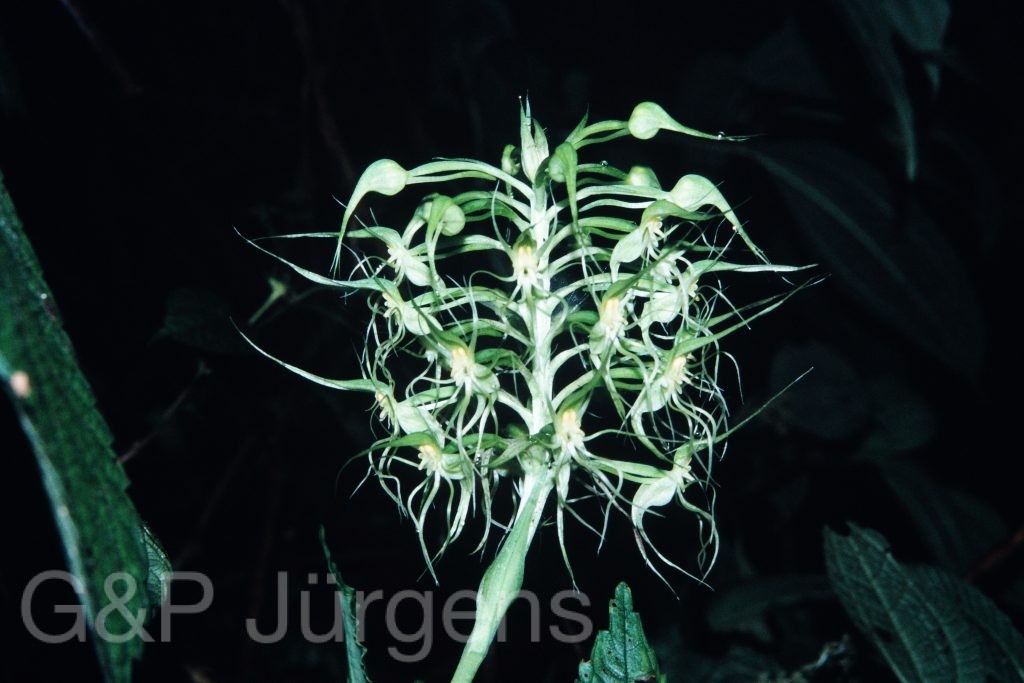
Sikkim2003 35 G48
Sikkim above Yoksam 1880m 08.2003
Sikkim2003 34 W47
Sikkim above Yoksam 1880m 08.2003

Description

Habenaria pantlingiana is a terrestrial orchid distributed across the eastern Himalaya and East Asia, with GBIF records (322 occurrences) spanning Taiwan, Japan, China, India, Nepal, Bhutan and Vietnam. It grows in moist, humus-rich soils on shaded forest floors, grassy slopes and stream banks within warm-temperate and subtropical broad-leaved forest, broadly between 1000 and 2500 m. The documented plant from above Yoksam in western Sikkim at about 1880 m, flowering in August, reflects its summer-monsoon phenology, when the tuberous geophyte emerges and blooms during the period of maximum humidity and rainfall.

The plant arises from ovoid, fleshy underground tubers and produces an erect, leafy stem. The cauline leaves are oblong-lanceolate to elliptic, sheathing at the base, grading into bract-like organs above. The inflorescence is a many-flowered terminal raceme of small greenish to greenish-white flowers, each subtended by a narrow bract. As in Habenaria, the lip (labellum) is deeply three-lobed with slender, often filiform divisions, and bears a prominent slender spur arising at its base. The dorsal sepal and petals form a loose hood over the column, the lateral sepals spreading; the rostellum and stigmatic processes are characteristically elaborate. The fruit is a ribbed, dehiscent capsule releasing dust-like seeds.

Described by Kraenzlin and commemorating the Sikkim orchidologist R. Pantling, the species sits within the large, taxonomically intricate genus Habenaria (subfamily Orchidoideae, tribe Orchideae), where spur and lip lobing are key diagnostic features. Like most terrestrial orchids it depends on mycorrhizal fungi for germination and establishment, rendering it sensitive to forest disturbance. Although its wide range buffers it against global extinction, local populations are vulnerable to habitat loss and collection, and all wild orchids are CITES-listed.

Author: Kraenzl. · Sources: POWO (Kew), GBIF, Flora of China, The Orchids of Sikkim-Himalaya (Pantling & King), Genera Orchidacearum (Pridgeon et al.)

D.Don

Nepal 99 902 ergebnis
West-Nepal Sepka 2680m, July
Nepal 99 903 ergebnis
West-Nepal Sepka 2680m, July

Description

Habenaria pectinata is a terrestrial orchid of the Himalaya and adjacent China, distributed from India and Nepal through Bhutan into south-western China, with records also from Japan. GBIF holds around 222 occurrences, concentrated in the central and eastern Himalaya and the Sino-Himalayan borderlands. It is a plant of temperate forest and forest margins, grassy slopes, clearings and humus-rich banks, typically between about 1500 and 3000 m, flowering during the summer monsoon. The population photographed in West-Nepal at Sepka (2680 m, July) is characteristic of its occurrence in cool, moist mid-elevation woodland and adjoining meadows, flowering as the rains advance.

The plant is a tuberous terrestrial herb arising from ovoid to oblong root-tubers, producing a single erect, leafy stem. The leaves are several, cauline, ovate-lanceolate to oblong, sheathing at the base and grading into bracts above. The inflorescence is a lax to fairly dense terminal raceme of green to greenish-white flowers. Each flower shows the characteristic Habenaria structure: a galeate dorsal sepal with spreading lateral sepals, narrow petals, and a deeply tripartite lip whose lateral lobes are conspicuously divided into slender comb-like (pectinate) segments, giving the epithet, with a long slender spur behind. The column bears widely separated viscidia and elongate caudicles adapted to moth pollination; the fruit is a ribbed dehiscent capsule releasing dust-like seeds.

The family name as supplied (Orchideaceae) is an orthographic variant of the correct Orchidaceae. Habenaria is a large pantropical genus, and H. pectinata, described by David Don, belongs to a Himalayan group with fringed or pectinate lip lobes whose delimitation from allied species requires care. As a fairly widespread terrestrial orchid it is not globally assessed as threatened, but like many ground orchids it is sensitive to forest disturbance, habitat loss and collection.

Author: D.Don · Sources: POWO (Kew), GBIF, Flora of China, Flora of Bhutan, Annotated Checklist of the Flowering Plants of Nepal, Orchids of Nepal, monograph of the genus Habenaria (Kraenzlin)

(W.W.Sm.) Y.Tang & H.Peng

Sikkim2003 458 P634
Sikkim Chopta Valley 4000m August
Sikkim2003 459 G636
Sikkim Chopta Valley 4000m August

Description

Hemipilia calcicola is a terrestrial orchid of the high Sino-Himalaya, recorded from southwestern China (notably Yunnan and Sichuan) and extending into Nepal, Sikkim and Bhutan, with GBIF logging 199 occurrences across CN, NP and BT. As both its epithet calcicola and its habitat preference indicate, it favours calcareous substrates, growing in alpine and subalpine meadows, on grassy limestone slopes and in open turf, typically between about 3000 and 4300 m. The photographed plant was found in the Chopta Valley of Sikkim at around 4000 m, flowering in August during the late-monsoon alpine flowering season.

The species is a slender terrestrial herb arising from an ovoid or globose underground tuberoid. It typically bears a single basal leaf, ovate to cordate and frequently marked above with purplish spots, clasping the base of the erect flowering stem. The inflorescence is a lax raceme of several resupinate flowers; each has spreading sepals and petals and a prominent, deflexed, often three-lobed labellum bearing a slender nectar-spur at its base. The column carries the pollinaria characteristic of the Orchidaceae, and the fruit is a dehiscent capsule releasing dust-like, abundant seeds requiring mycorrhizal association for germination.

The taxon was originally described as a variety under Habenaria/Neottianthe (reflected in the website slug neottianthe-cucullata-var-calcicola) and was transferred to Hemipilia by Tang and Peng on molecular grounds, consolidating Neottianthe within an expanded Hemipilia. It is one of numerous calciphilous Sino-Himalayan orchids whose specialised soil requirements and dependence on pollinators and mycorrhizae make populations vulnerable to grazing, collection and habitat disturbance.

Author: (W.W.Sm.) Y.Tang & H.Peng · Sources: POWO (Kew), GBIF, Flora of China (Orchidaceae), Genera Orchidacearum (Pridgeon et al.), Tang & Peng revision of Hemipilia

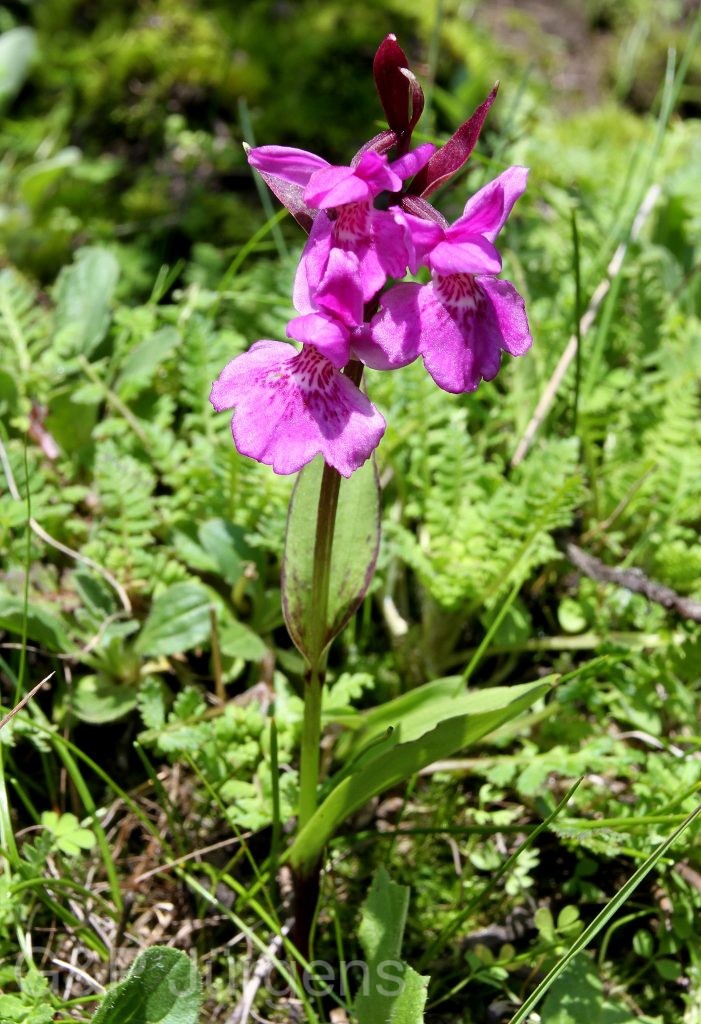
(D.Don) Y.Tang & H.Peng

Sikkim2003 150 P201
Sikkim Dzongri, 4100m August
BhutanPG2011 792
Bhutan Ludlow-Sherriff-Trail Kem-La, 4300m July

Description

Hemipilia chusua is a terrestrial orchid widely distributed across temperate and alpine Asia, recorded from China, Nepal, India, Bhutan, Myanmar, Russia, Japan and Korea, with over 1700 GBIF occurrences making it one of the best-documented orchids of the region. It grows in alpine and subalpine meadow, open turf, grassy slopes and the margins of dwarf-shrub heath, typically between about 2500 and 4500 m. The illustrated plants from Dzongri in Sikkim at 4100 m, flowering in August, and from Kem-La on the Ludlow-Sherriff Trail in Bhutan at 4300 m in July, exemplify its high-altitude grassland habitat.

It is a slender terrestrial herb arising from small ovoid to ellipsoid tubers, with an erect, glabrous stem bearing one or few leaves. The leaves are lanceolate to oblong-lanceolate, sheathing at the base and somewhat clasping the stem. The inflorescence is a lax, few-flowered terminal raceme of showy rosy-purple to magenta flowers; the lip (labellum) is broad, three-lobed and bears a slender, downward-pointing spur longer than the ovary, while the lateral sepals spread and the dorsal sepal and petals form a loose hood. The fruit is an erect, ribbed dehiscent capsule releasing dust-like seeds.

Long familiar as Orchis or Ponerorchis chusua, the species was transferred to Hemipilia by Tang and Peng following molecular reappraisal of the orchidine alliance. Though wide-ranging and locally abundant, like all wild orchids it is listed under CITES Appendix II, and its alpine populations are vulnerable to collection, grazing pressure and the upslope shift of montane vegetation under climate change.

Author: (D.Don) Y.Tang & H.Peng · Sources: POWO (Kew), GBIF, Flora of Bhutan, Flora of China, Pearce & Cribb The Orchids of Bhutan

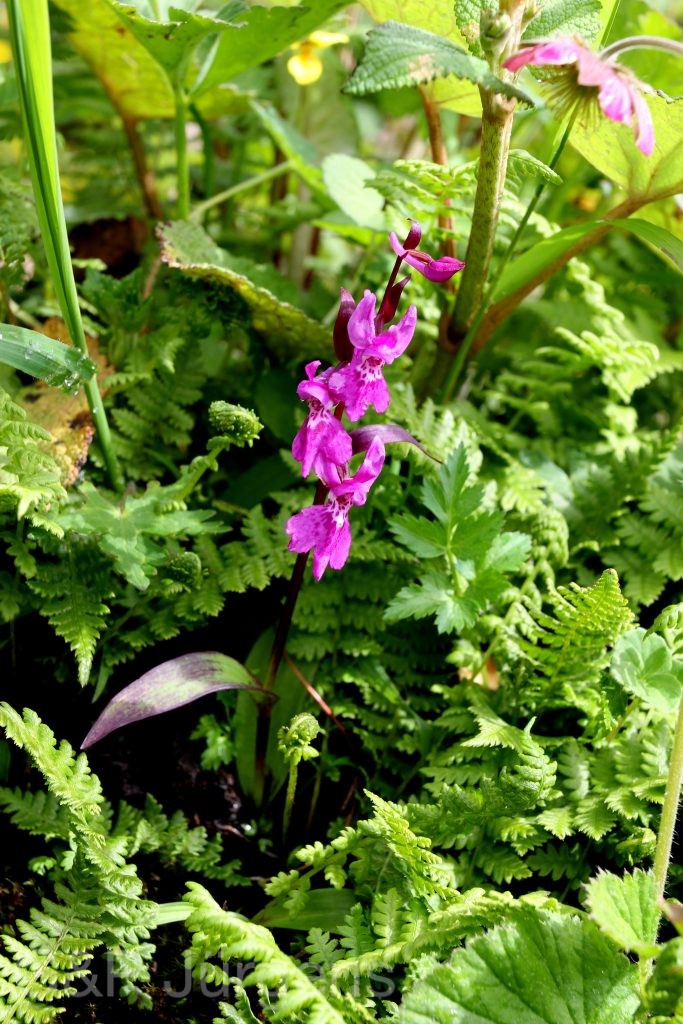
(King & Pantl.) Y.Tang & H.Peng

BhutanPG2011 66 ergebnis
Bhutan Menchuang, 2650m June

Description

Hemipilia puberula is a terrestrial orchid of the temperate Sino-Himalayan mountains, recorded from China, Bhutan, India and Myanmar, with 41 GBIF occurrences indicating a relatively restricted eastern Himalayan and southwest Chinese distribution. It grows on grassy and rocky slopes, in open forest margins and among scrub in the cool montane to subalpine zone, generally between about 2400 and 3500 m. The illustrated plant was found at Menchuang in Bhutan at around 2650 m in June, in the upper temperate belt where flushed slopes and forest edges support a scattered terrestrial orchid flora.

The plant develops from a small ovoid or ellipsoid tuber and typically bears one (sometimes two) basal leaf that is ovate to elliptic and frequently spotted or mottled with purplish blotches above. The slender erect stem carries a lax raceme of a few showy flowers. These are rosy-purple to pinkish-lilac, with spreading sepals and petals and a prominent, broad, flabellate lip that is often notched or lobed at the apex and bears a slender backward-pointing spur; the epithet puberula refers to the fine minute pubescence on the plant. The fruit is an erect ribbed capsule.

The basionym authority (King & Pantl.) Y.Tang & H.Peng reflects the modern recircumscription of Hemipilia to include species formerly placed in Chusua and segregated from Ponerorchis, supported by molecular phylogenetic study. The genus belongs to tribe Orchideae and is a Sino-Himalayan group of tuberous terrestrial orchids. With its limited range and showy flowers, H. puberula is locally uncommon and potentially vulnerable to grazing and collection, and is regulated under CITES Appendix II.

Author: (King & Pantl.) Y.Tang & H.Peng · Sources: POWO (Kew), GBIF, Flora of China, The Orchids of Bhutan (Pearce & Cribb), Tang, Xiang & Peng (Hemipilia phylogeny)

(Lindl.) X.H.Jin, Schuit., Raskoti & Lu Q.Huang

Bhutan2012 839
Bhutan Trontsa 2850m, October

Description

Herminium clavigerum is an alpine terrestrial orchid distributed across the eastern and central Himalaya and adjacent ranges, with documented occurrences in Nepal, China, India, Bhutan and Russia (GBIF logs roughly 220 records). It favours open grassy slopes, moist alpine meadows and the margins of shrubberies, typically between about 2800 and 4000 m. The photographed plant near Trongsa (Trontsa) in central Bhutan at 2850 m, flowering in October, reflects its late-season autumnal anthesis at the lower end of its altitudinal range, where it grows among damp turf in cool, humid montane conditions.

The species is a slender, glabrous geophyte arising from small ovoid or globose tubers. The erect stem bears a few cauline leaves that are narrowly oblong to lanceolate, sheathing at the base and gradually reduced upward into bracts. The inflorescence is a lax to fairly dense terminal raceme of small, greenish to yellowish-green flowers. The lateral sepals are oblong and spreading, the petals narrower; the labellum is the diagnostic organ, deeply three-lobed with elongate, often clavate (club-thickened) lateral lobes, and the spur is short and saccate. The column is short, bearing distinctive clavate caudicles, and the fruit is a small ellipsoid capsule releasing dust-fine seed.

Long placed in the genus Herminium, the species was recombined as Platanthera clavigera by Jin, Schuit., Raskoti & Lu Q.Huang following molecular studies that redefined generic limits within subtribe Orchidinae. Like many Orchidaceae it depends on mycorrhizal associations for germination and is pollinated by small insects. Though not assessed as threatened, its restriction to fragile alpine grassland renders it sensitive to grazing and habitat disturbance.

Author: (Lindl.) X.H.Jin, Schuit., Raskoti & Lu Q.Huang · Sources: POWO (Kew), GBIF, Flora of Bhutan, Flora of China (Orchidaceae), Pridgeon et al. Genera Orchidacearum

(Hook.f. ex Collett) X.H. Jin. Schuit., Raskoti & Lu Q.Huang

Bhutan2012 195
Bhutan Haar-Valley, 3300m September

Description

Herminium edgeworthii is a terrestrial Himalayan orchid distributed across Pakistan, Nepal, northern India, Bhutan and the wider western to eastern Himalayan arc, documented by around 161 GBIF records. It inhabits open alpine and subalpine meadows, grassy slopes and forest clearings in the temperate to lower alpine zone. The plant imaged in the Haa (Haar) Valley of Bhutan at 3300 m in September shows the species in characteristic high-meadow habitat, flowering toward the end of the monsoon growing season when many terrestrial Himalayan orchids reach anthesis.

It is a slender, glabrous terrestrial herb arising from one or two small subterranean tubers. The stem bears a few basal to lower-cauline leaves that are linear to narrowly oblong-lanceolate, sheathing at the base. The inflorescence is a slender, many-flowered terminal raceme of small, greenish to yellowish-green flowers. Each flower is non-resupinate or subresupinate, with a hooded arrangement of sepals and petals and a characteristically lobed, often forward-projecting lip; the column is short and the pollinia are attached to small viscidia, as is typical of the genus. The fruit is a small, erect, dehiscent capsule releasing abundant dust-like seeds.

This taxon, originally described under Herminium and long treated in segregate genera (its full citation reflecting a transfer by Jin, Schuit., Raskoti and Huang), illustrates the considerable nomenclatural revision the Herminium-Platanthera complex has undergone in light of molecular phylogenetics; the himalayaflora link to platanthera-edgeworthii records its earlier placement. Ecologically the species depends on intact montane grassland and, like all orchids, on mycorrhizal associations for establishment. It is widely distributed and locally frequent, not assessed as threatened, but is sensitive to meadow degradation and grazing pressure.

Author: (Hook.f. ex Collett) X.H. Jin. Schuit., Raskoti & Lu Q.Huang · Sources: POWO (Kew), GBIF, Flora of Bhutan, Flora of China, An Annotated Checklist of the Orchids of Nepal, Pridgeon et al. Genera Orchidacearum (monograph)