Harry Sm.
Description
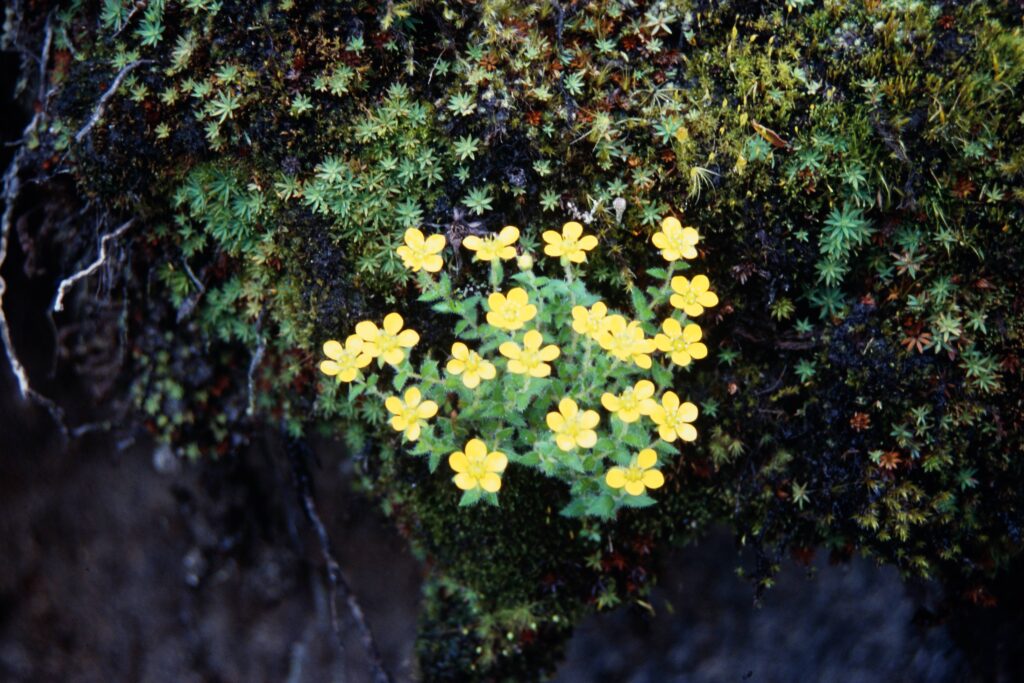
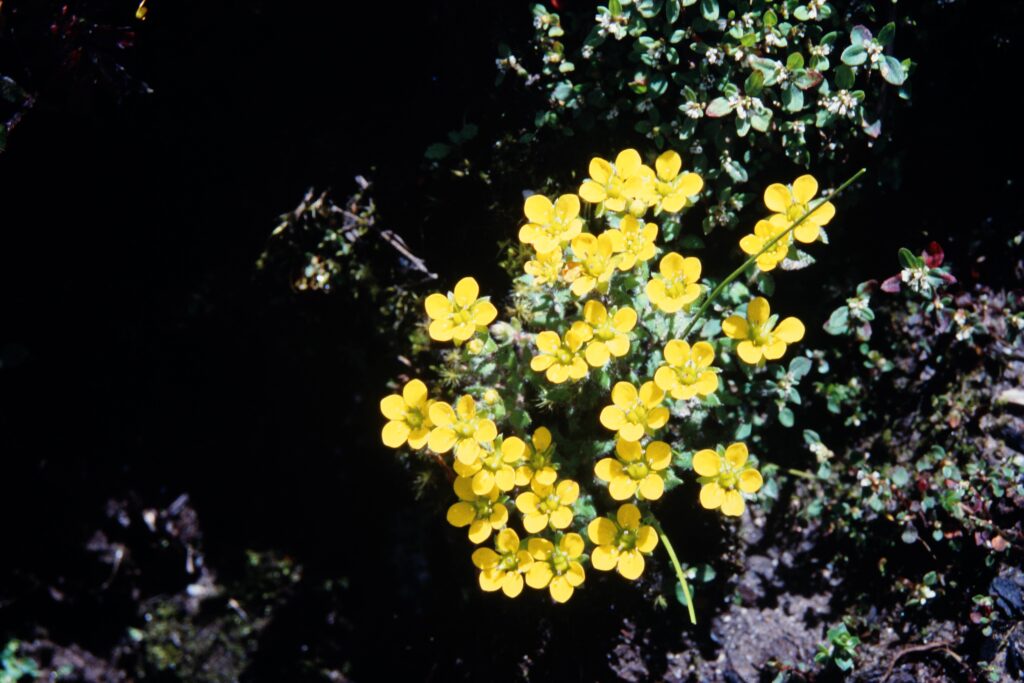
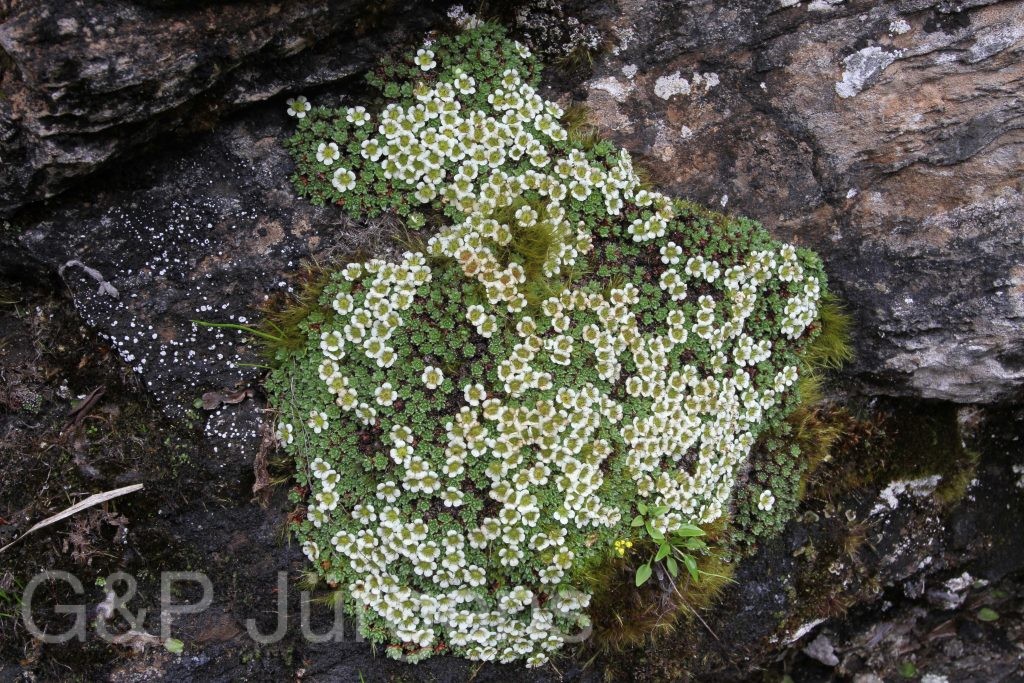
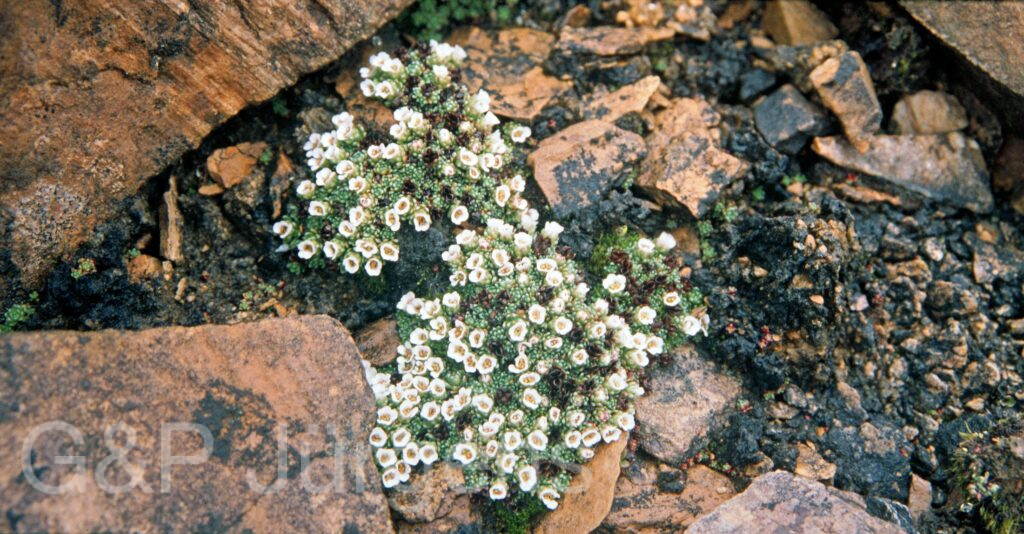
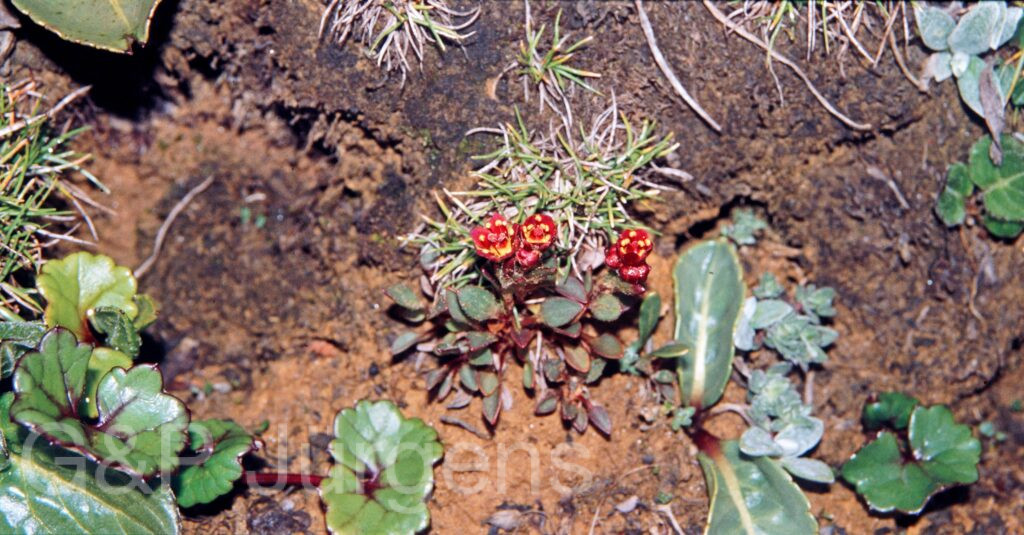
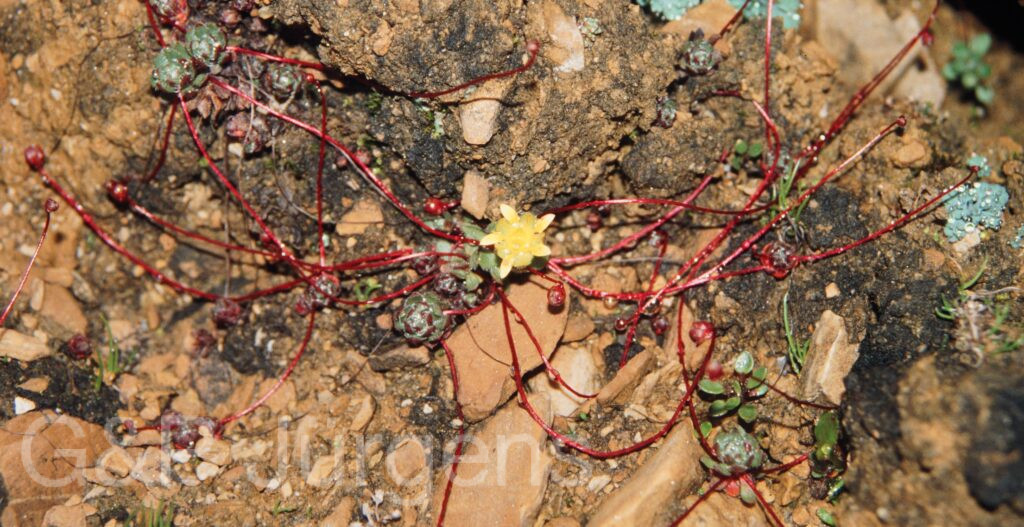
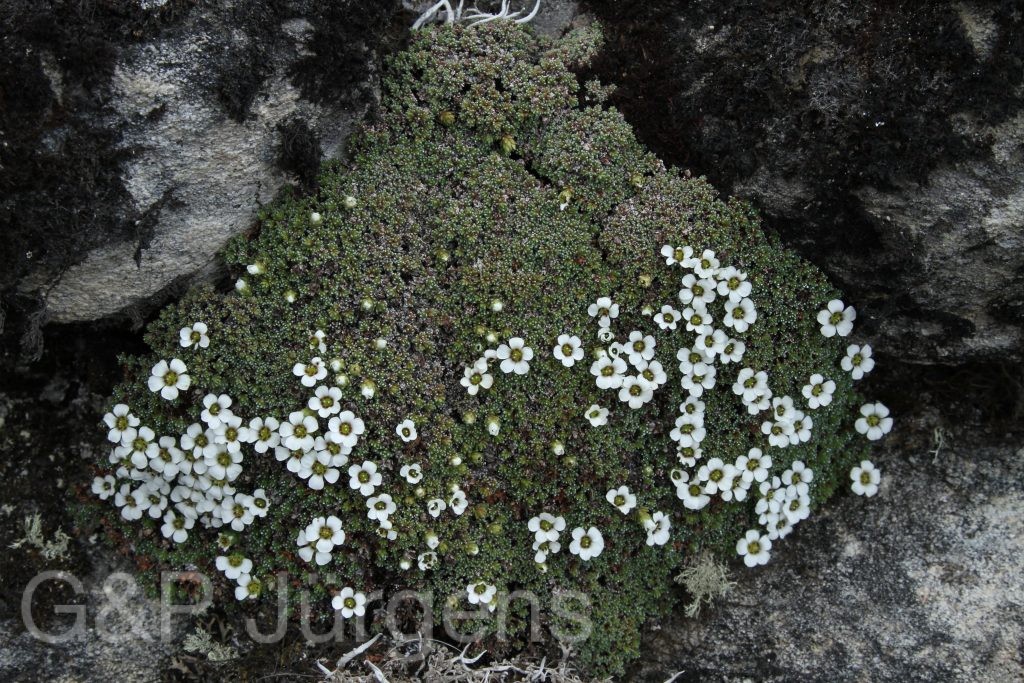
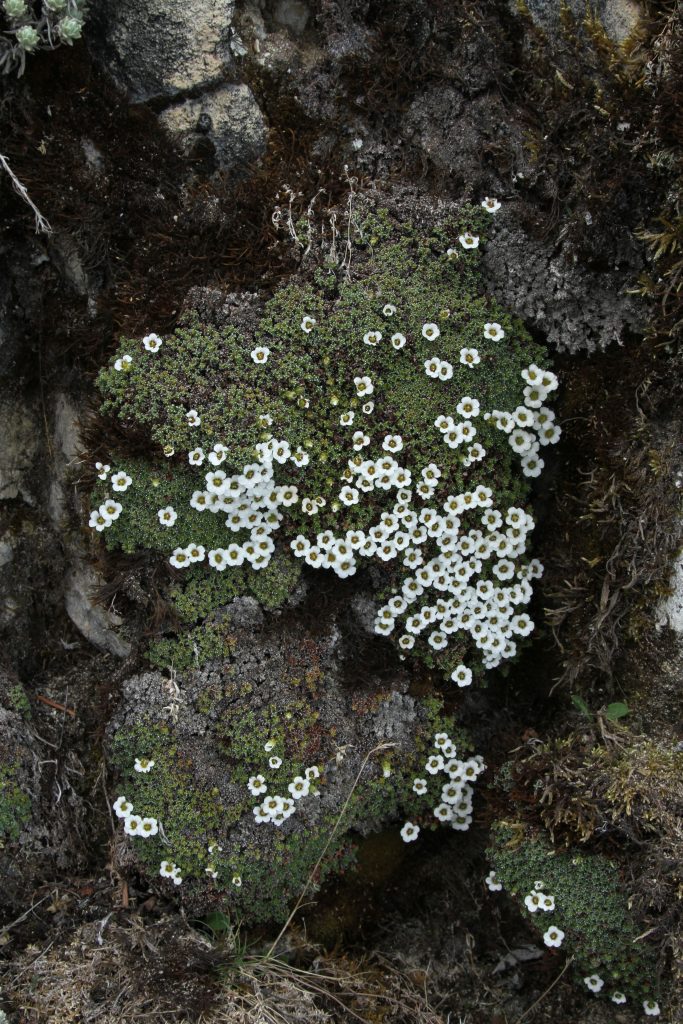
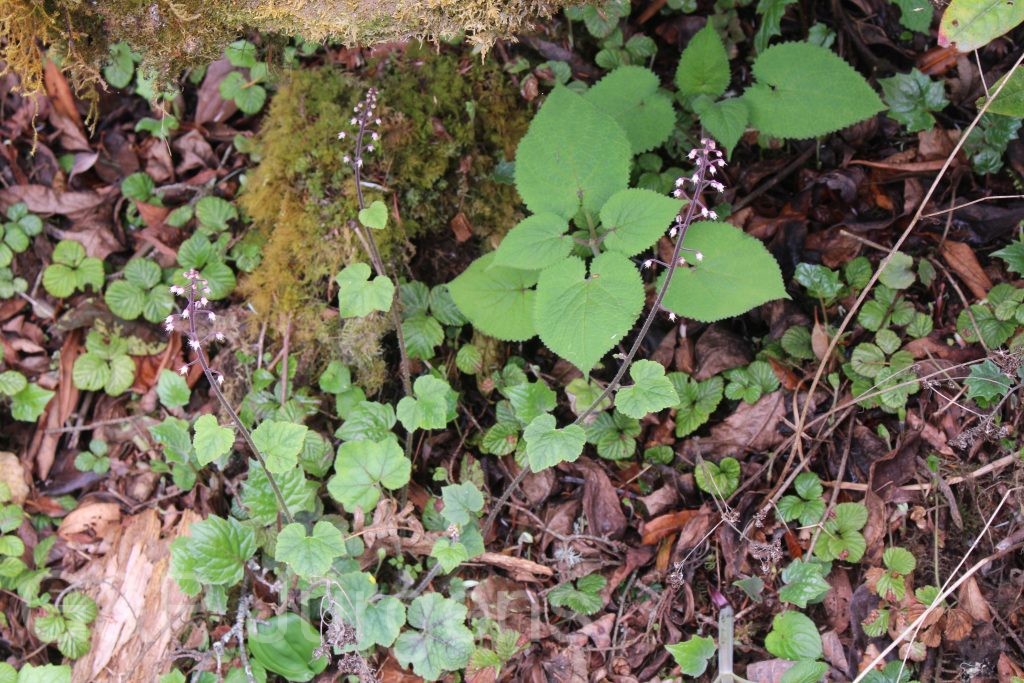
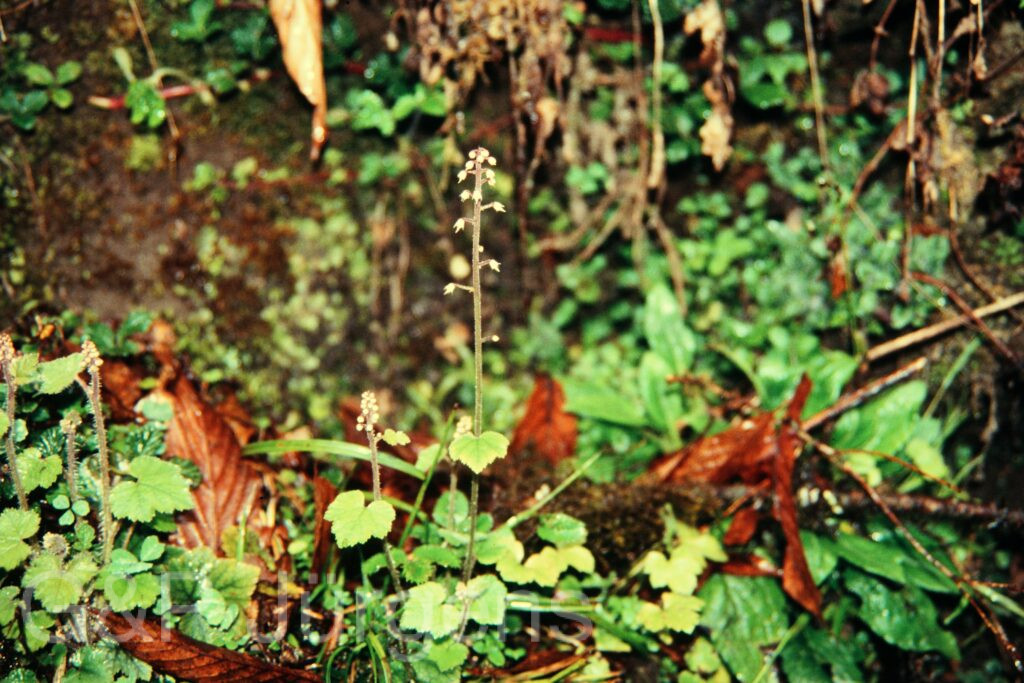
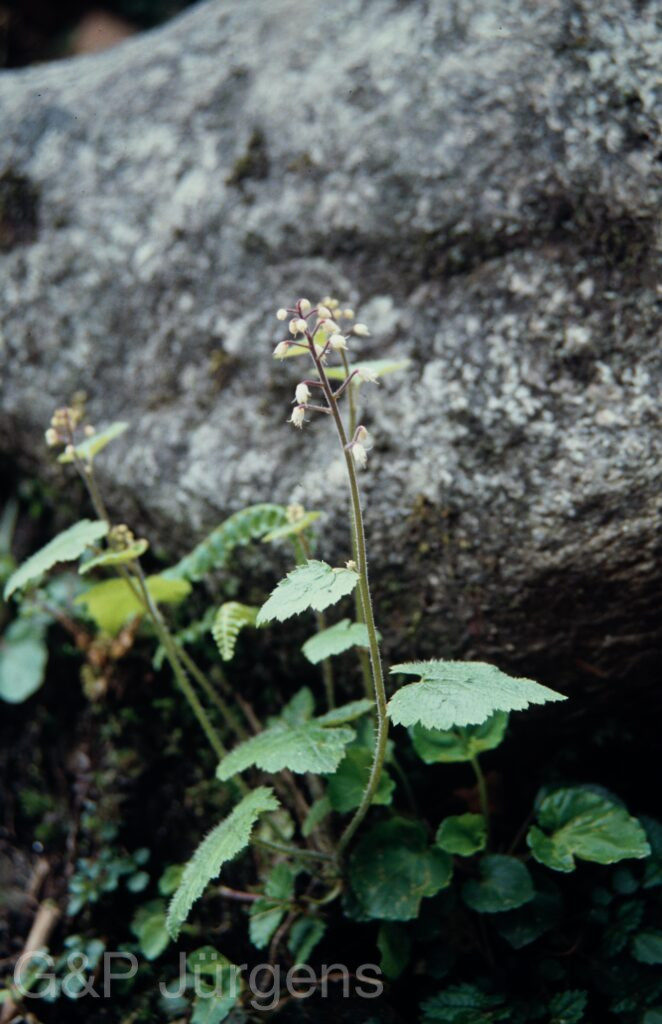
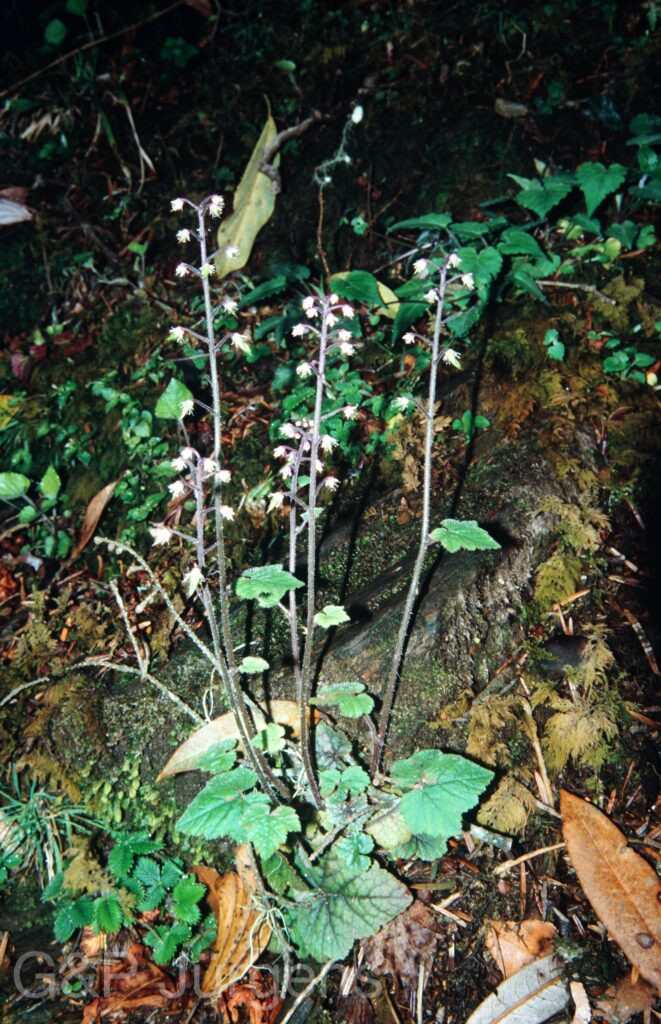
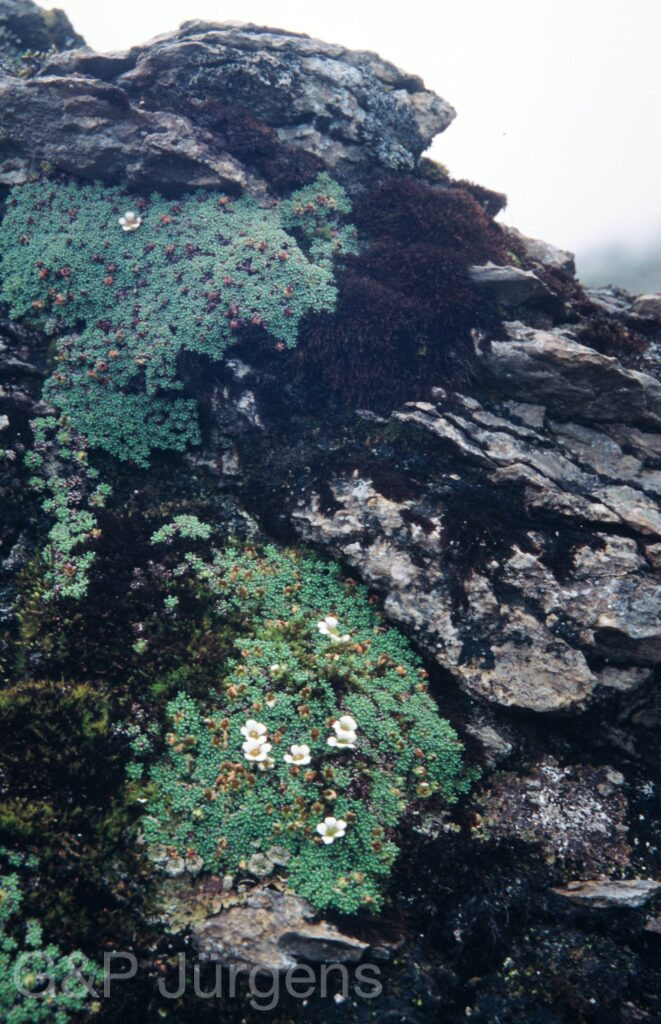
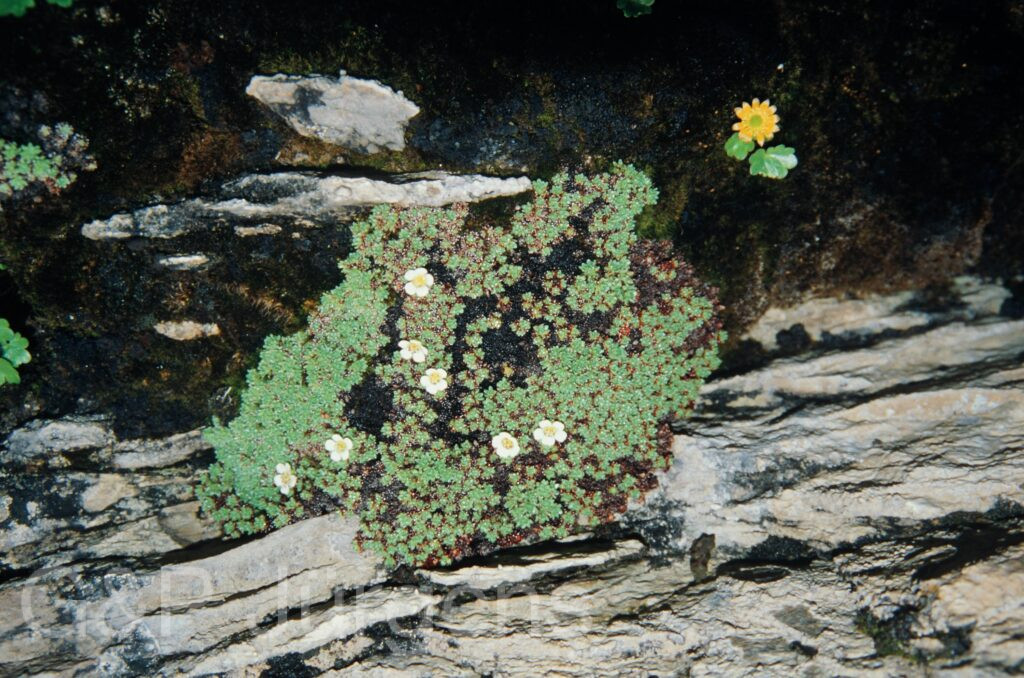
Saxifraga staintonii is a rare, narrowly endemic saxifrage known only from central Nepal. It inhabits moist rock crevices, scree slopes, and alpine turf in the upper subalpine to lower alpine zone, at elevations of approximately 3,800–4,500 m. The species has been recorded from very few localities, with only three documented occurrences in GBIF, indicating an extremely restricted distribution. The photograph from the Baga-La at 4,000 m in July represents one of the few field records of this elusive species in its typical high-altitude habitat.
The plant forms compact cushions or loose tufts. Basal leaves are rosulate, spatulate to obovate, 5–12 mm long, with entire to crenulate margins, often glandular-hairy on the upper surface and margins. Flowering stems are erect, 3–8 cm tall, bearing 1–3 flowers in a lax cyme. Flowers are pentamerous with obovate white to pale yellow petals, 4–6 mm long, often with faint orange or red spots near the base. Stamens 10, with clavate filaments. The ovary is semi-inferior, maturing into a capsule with numerous minute seeds.
Saxifraga staintonii was described by Harry Smith and named in honour of J.D.A. Stainton, the eminent British botanist who contributed extensively to the floristic exploration of Nepal. The species belongs to the highly diverse Himalayan radiation of Saxifraga and its precise sectional placement remains under investigation. Given its extremely limited known range and few documented populations, it may warrant conservation attention, though its remote alpine habitat provides a degree of natural protection from direct anthropogenic disturbance. Further survey work in central Nepal is needed to clarify its full distribution.
Author: Harry Sm. · Sources: POWO (Kew), GBIF, Flora of Nepal (ongoing), Grierson & Long: Flora of Bhutan Vol. 1