
Bunge
Description
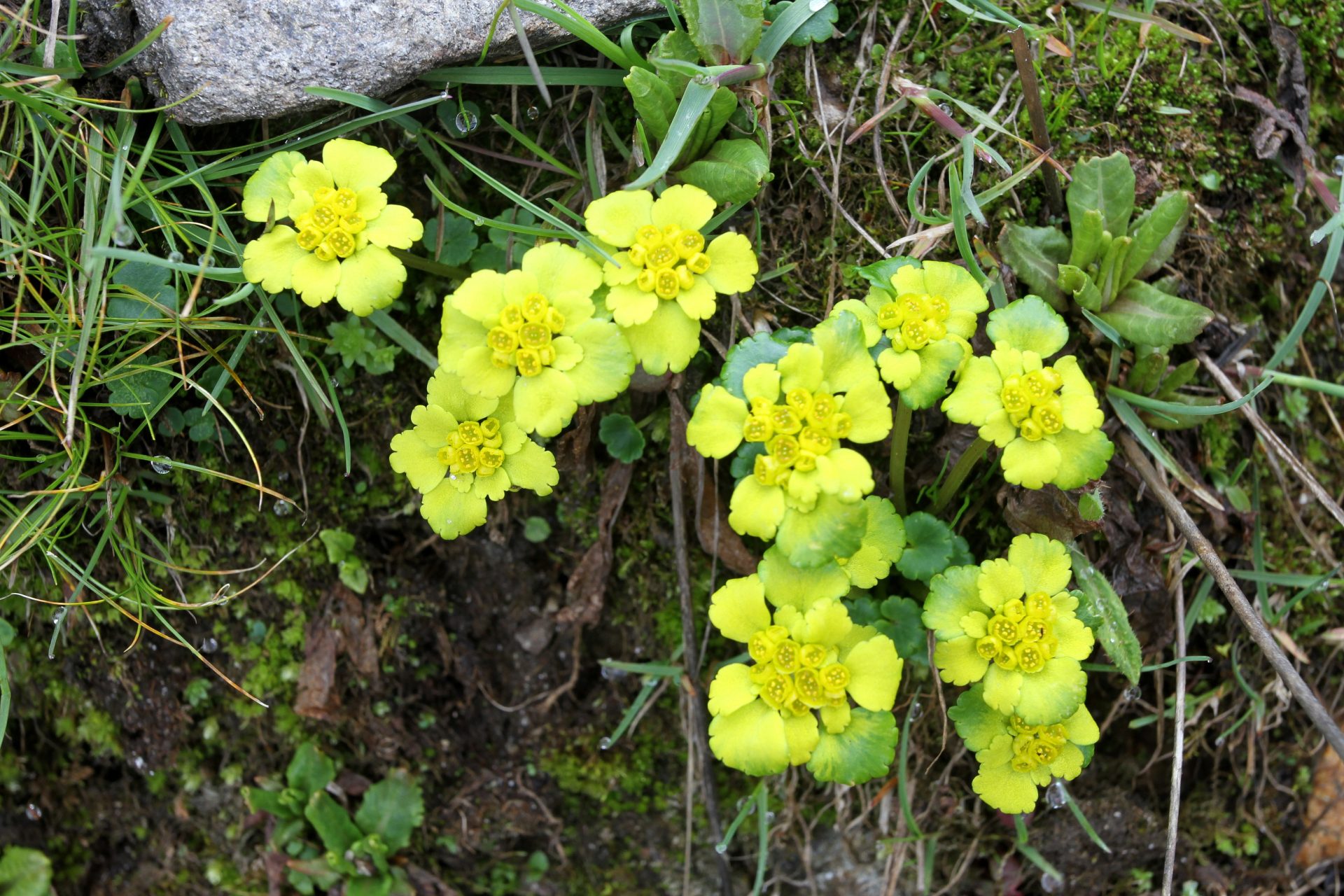
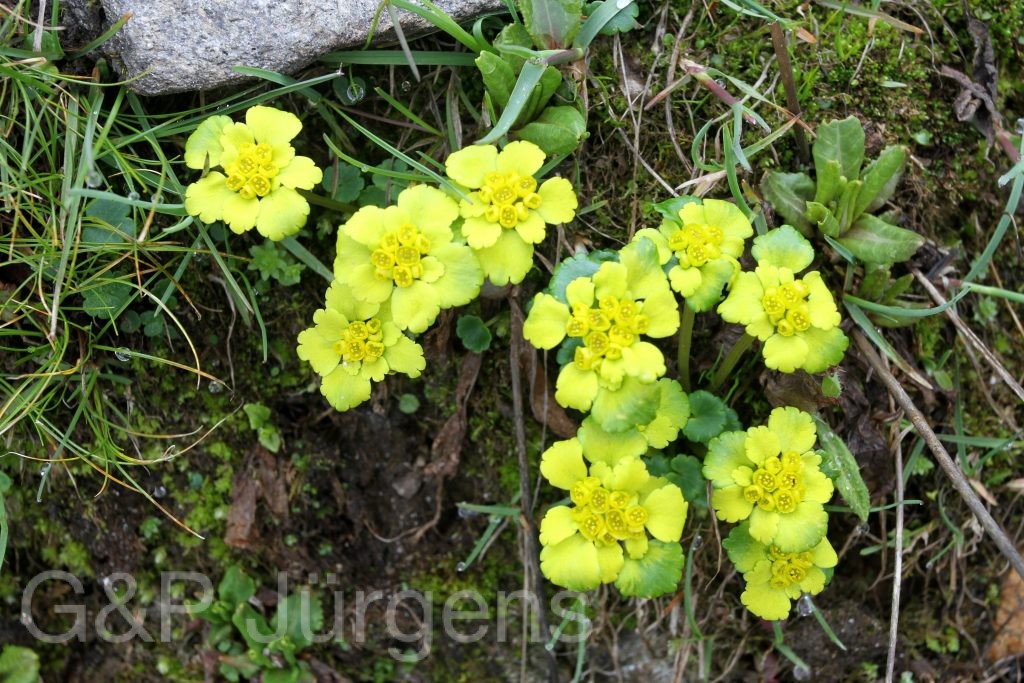
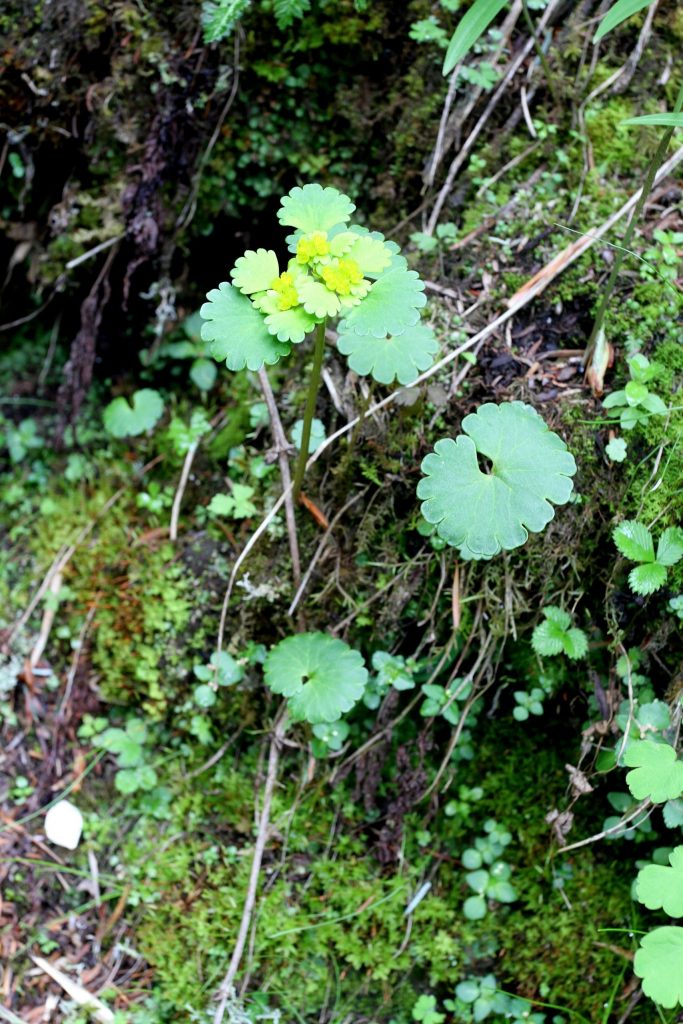
Chrysosplenium nudicaule is a small alpine herb of the high mountains of central and eastern Asia, recorded from China, the Russian Far East and Siberia, Kazakhstan, Kyrgyzstan, Nepal, Bhutan, northern India and Japan, with 323 GBIF occurrences. It is a plant of moist, cold, rocky habitats: streambanks, wet gravels, seepages, scree and the margins of snow-melt rills in the alpine and subnival zones, generally between 3500 and 5300 m. The illustrated plant was photographed at Warrthang in Bhutan at 4400 m in June, when the species flowers shortly after snow-melt in the brief high-alpine growing season.
It is a low, tufted, fleshy perennial spreading by slender stolons or rhizomes and forming small mats. The largely basal leaves are reniform to flabellate with a few broad crenate teeth, somewhat succulent, on slender petioles, while the flowering stems are nearly leafless (hence nudicaule). The inflorescence is a compact terminal cyme subtended by conspicuous yellow-green floral bracts. The flowers are apetalous, the showy parts being four erect, suborbicular yellow-green sepals; there are eight stamens and a bicarpellate ovary with two diverging styles. The fruit is a two-lobed capsule splitting to release numerous minute, finely papillose seeds.
The golden saxifrages, Chrysosplenium, are a north-temperate and arctic-alpine genus distinguished by petal-less, sepal-coloured flowers; C. nudicaule belongs to a Sino-Himalayan group of stoloniferous high-elevation species. Its small bract-framed flowers attract flies and other small insects, and stolon growth permits clonal spread across unstable wet substrates. With a very wide circum-Asian distribution it is not considered threatened, although its dependence on reliable snow-melt moisture makes it a useful indicator of alpine hydrological change.
Author: Bunge · Sources: POWO (Kew), GBIF, Flora of China, Flora of Bhutan, Hara: The Flora of Eastern Himalaya