
Engl.
Description
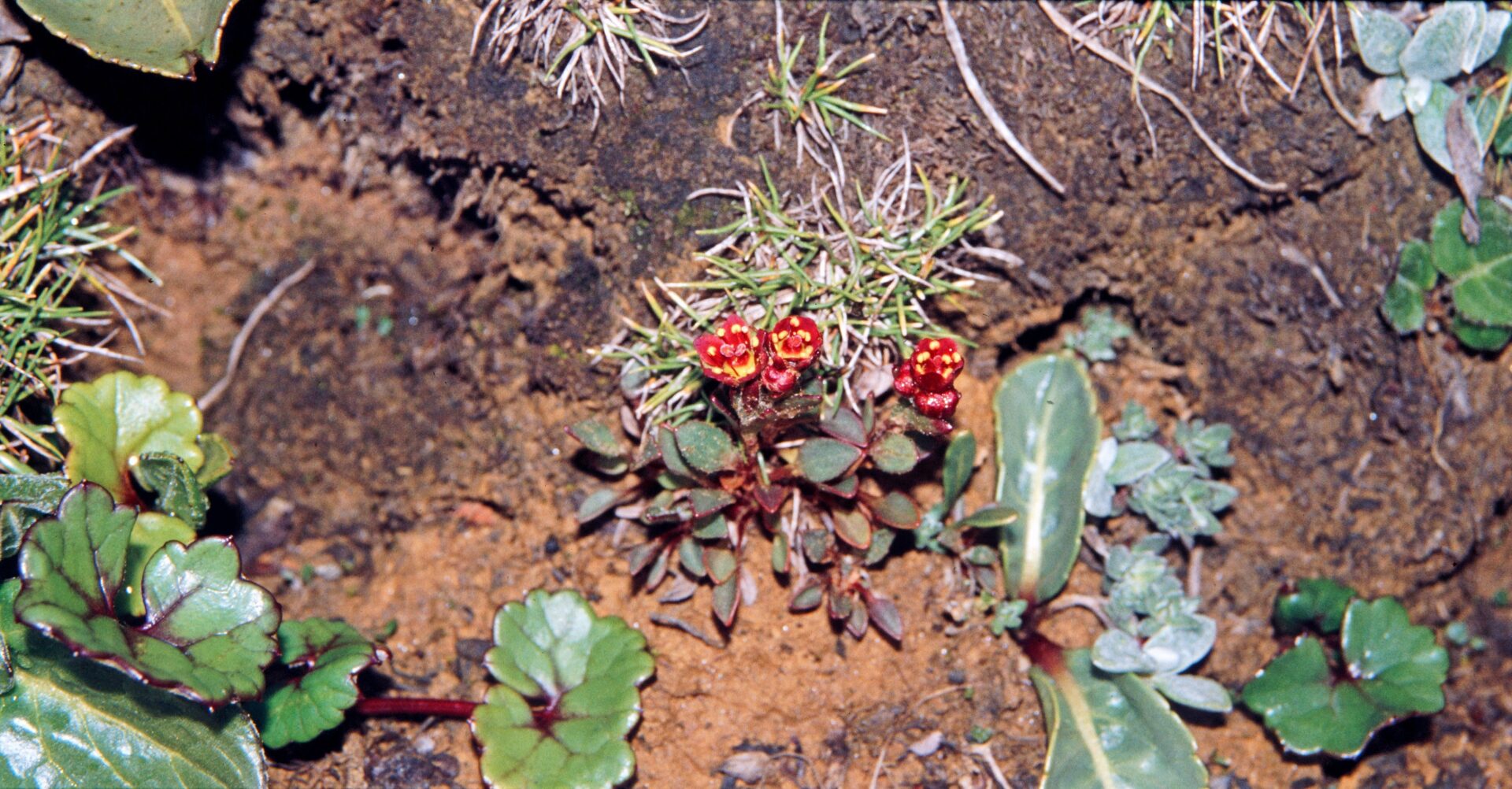
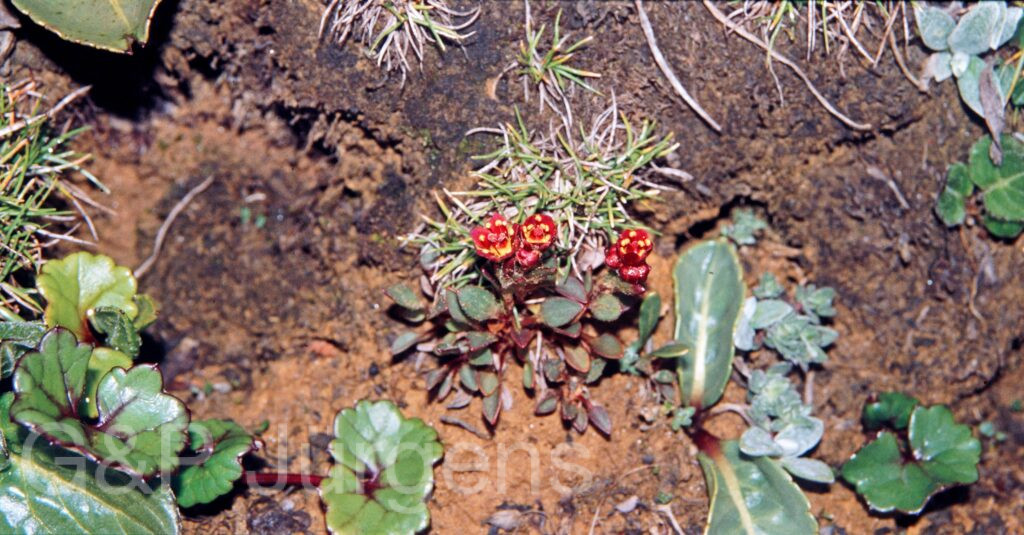
Saxifraga tangutica is a high-alpine saxifrage of the Himalaya and Tibetan plateau, distributed across China, Nepal, India and Bhutan, with GBIF documenting 734 occurrences from these four countries (CN, NP, IN, BT). It is a true alpine, growing on open grassy and stony slopes, gravelly flats, rock ledges, moraines and damp turf, typically between about 3500 and 5300 m, ranking among the highest-ascending flowering plants of the region. The photographed plant from the Kagmara-La in West Nepal at 5000 m in July shows it flowering at the height of the brief alpine summer, on a high pass in the Dolpo region where it endures intense radiation, frost and a very short growing season.
It is a small, tufted, perennial herb forming low rosettes or loose mats, the basal leaves oblong to spathulate, often somewhat fleshy and ciliate or glandular-margined. From the rosettes arise slender, glandular-hairy flowering stems bearing a few small cauline leaves and a terminal cymose cluster of several flowers. Each flower has five reflexed green sepals, five yellow petals frequently dotted with orange or reddish glandular spots, ten stamens, and a bicarpellate, partly inferior ovary. The fruit is a two-beaked capsule splitting between the persistent divergent styles to release numerous minute seeds.
The species is referable to Saxifraga section Ciliatae, a large Sino-Himalayan group of yellow-flowered alpine saxifrages centred on the Qinghai-Tibet plateau and the Hengduan ranges, the epithet tangutica alluding to the Tangut (Amdo/northeast Tibet) region. Its compact cushion to rosette habit and glandular indumentum are adaptations to the cold, dry, exposed alpine environment, and the small glandular flowers are visited by flies and other generalist high-altitude insects. Widespread on remote high terrain and not subject to significant pressure, it is of least conservation concern.
Author: Engl. · Sources: POWO (Kew), GBIF, Flora of China Vol. 8, Flora of Bhutan Vol. 1, Flora of Nepal, Saxifrages: A Definitive Guide (Webb & Gornall, and Pan's revision of section Ciliatae)