
D.Don
Description
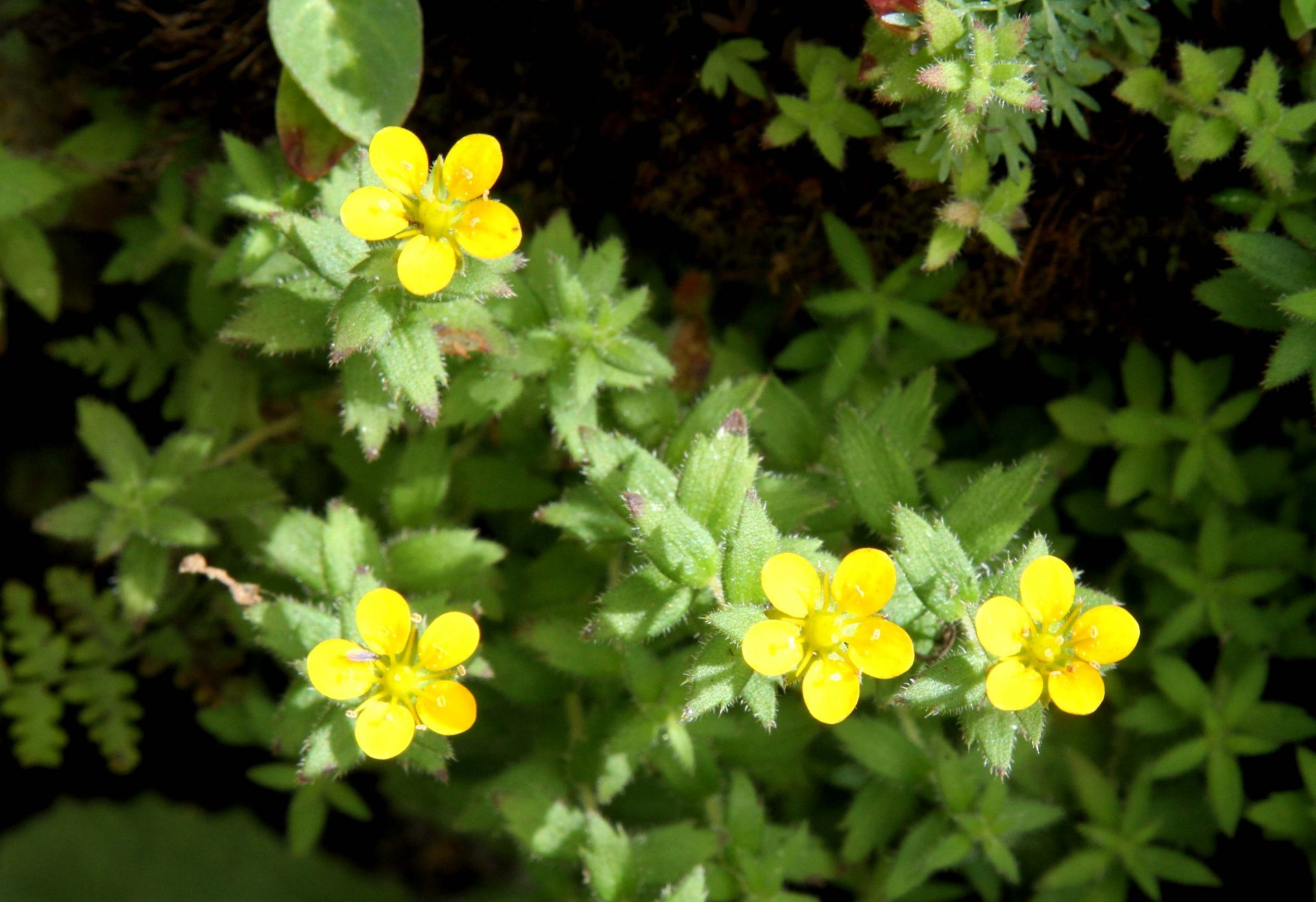
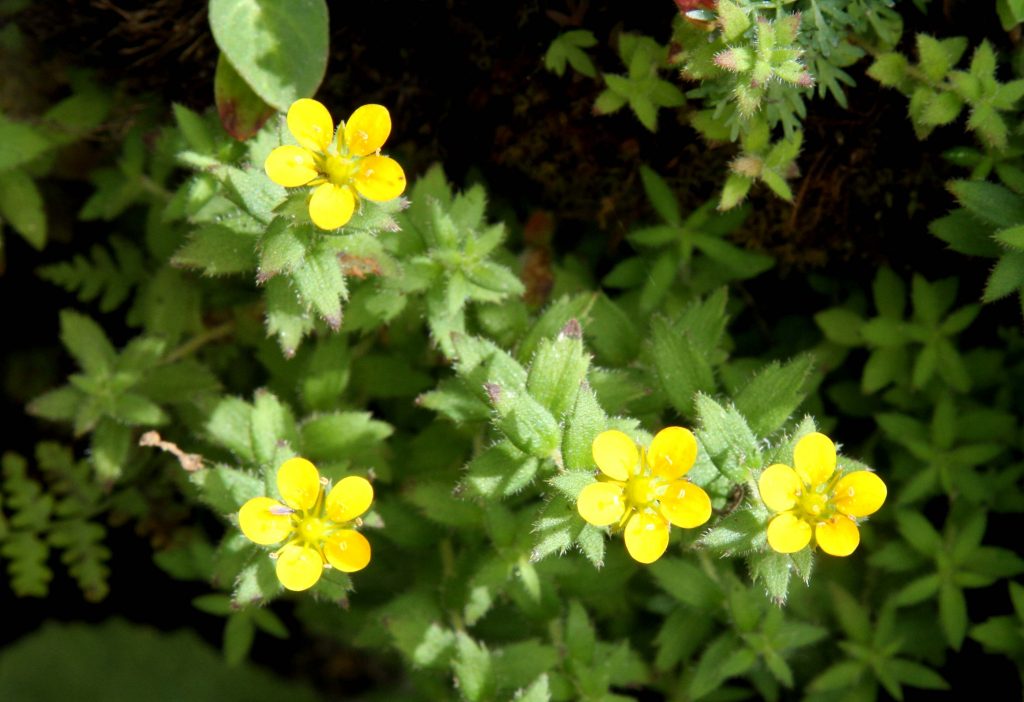
Saxifraga hispidula D.Don is a small alpine herb of the Himalaya and southern China, recorded from China, Nepal, Bhutan, India and Myanmar, with around 460 GBIF occurrences. It grows on damp rock ledges, mossy cliffs, boulder crevices, stream banks and shaded alpine turf, mostly between about 3000 and 4500 m. It was recorded in Bhutan in the Haa (Haar) Valley at 4000 m in September, a high alpine setting where it occupies moist, sheltered niches among rocks at the end of the growing season when the autumn-flowering shoots are conspicuous.
It is a delicate, trailing to ascending perennial forming loose mats, the slender stems clothed in spreading hispid or glandular hairs, as the epithet hispidula indicates, and frequently producing thread-like stolons or runners that root at the nodes. The leaves are small, orbicular to obovate, crenate to few-lobed at the apex, and likewise hairy. The flowers are solitary or few in lax cymes; the five free petals are yellow, often spotted with orange or red toward the base, alternating with the calyx lobes, surrounding ten stamens and a bicarpellate ovary. The fruit is a two-beaked capsule splitting between the persistent styles to shed numerous minute seeds.
Within the immense genus Saxifraga, S. hispidula belongs to section Irregulares (Diptera), a Sino-Himalayan group of stoloniferous, spotted-flowered species adapted to moist montane and alpine rock habitats. Its trailing runners allow vegetative spread across damp substrates, complementing seed dispersal, and the spotted petals serve as insect nectar guides. The species is widespread within its altitudinal band and not considered threatened, though it is restricted to specialised high-elevation microhabitats sensitive to alpine warming.
Author: D.Don · Sources: POWO (Kew), GBIF, Flora of China, Flora of Bhutan, Flora of Nepal, Saxifraga monograph (Webb & Gornall, Saxifrages of Europe; Pan revision of Asian Saxifraga)