
Hook.f. & Thomson
Description
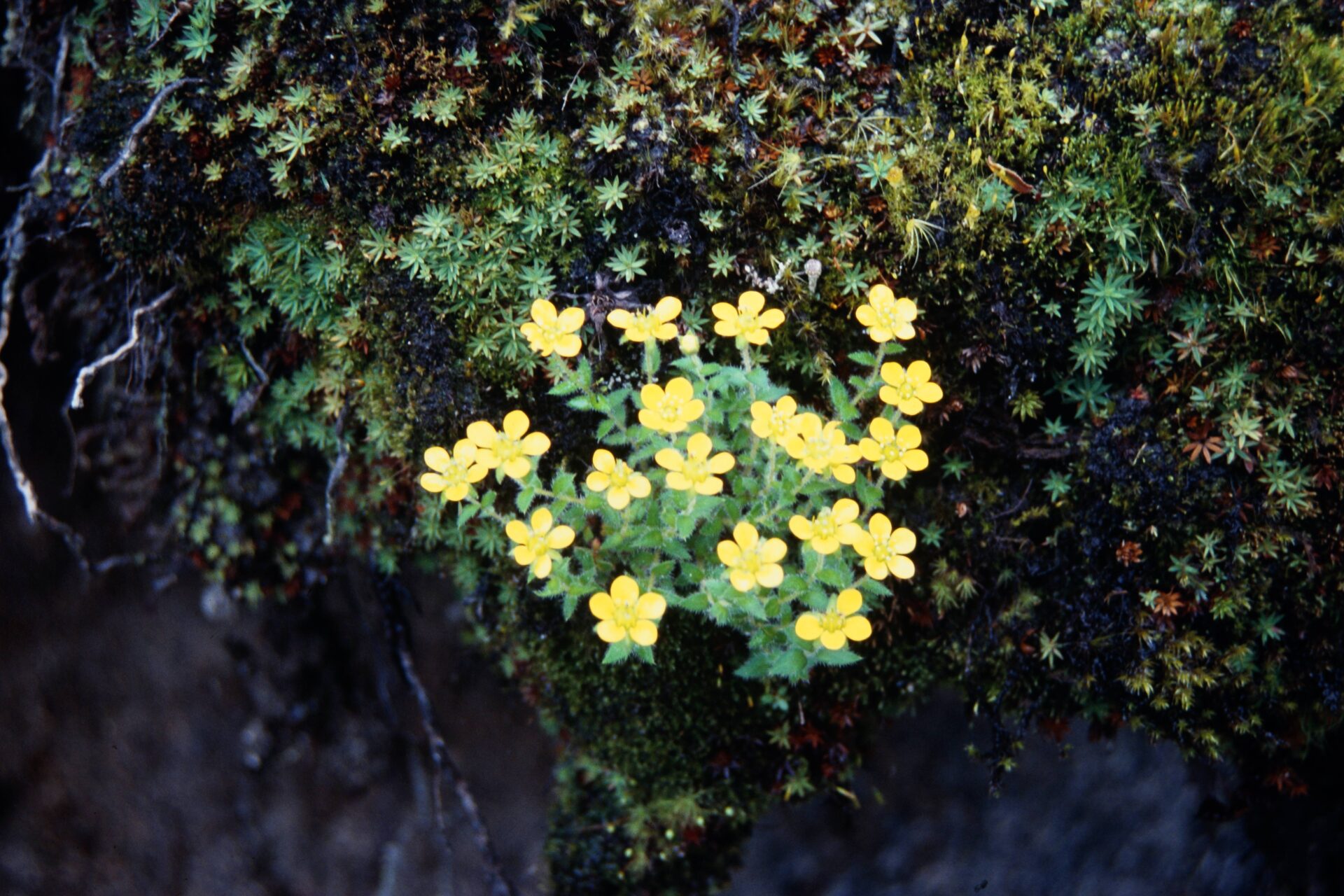
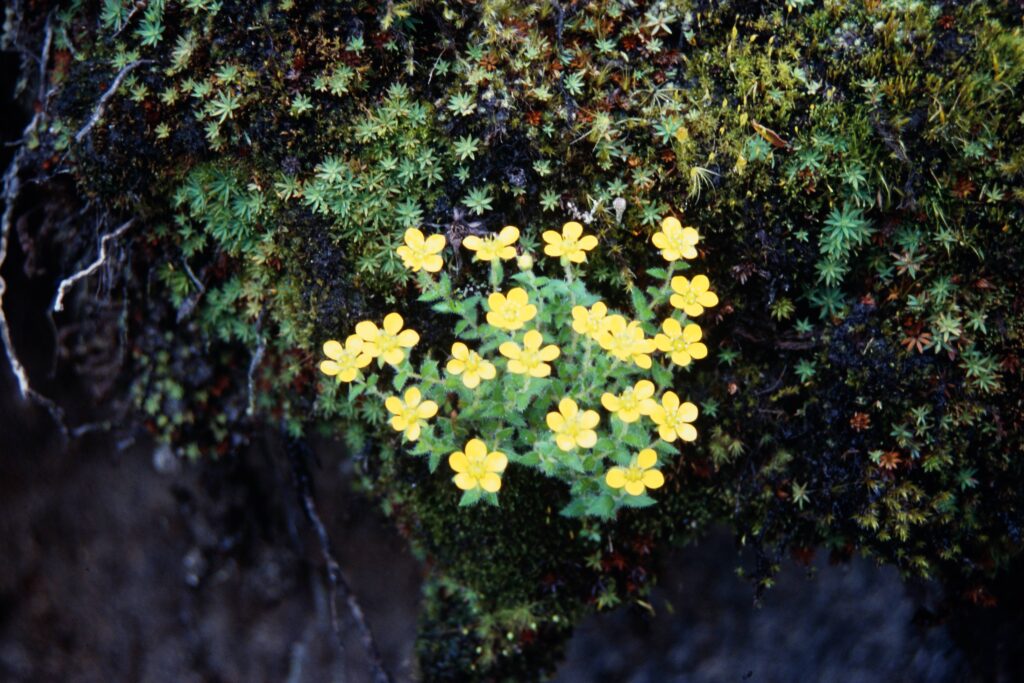
Saxifraga stella-aurea is a Sino-Himalayan alpine herb distributed through China, India, Nepal and Bhutan, with scattered ex situ records in Europe. It inhabits moist alpine meadows, seepage slopes, streamsides and rock crevices, typically between about 2700 and 4500 m. The illustrated plant from Choka in Sikkim at roughly 2900 m, flowering in August at the height of the post-monsoon season, reflects its affinity for cool, humid, well-drained sites where snowmelt and persistent moisture sustain the dense, cushion-forming growth characteristic of high-elevation saxifrages.
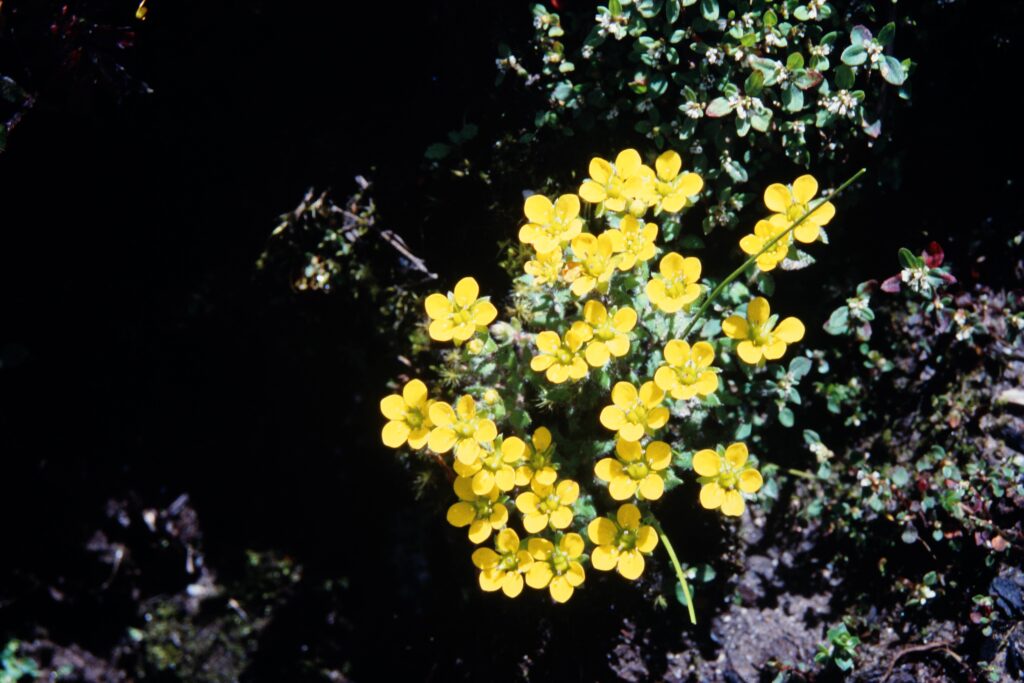
The species is a small, tufted perennial forming low rosettes or loose mats from a short rhizomatous base. The basal and cauline leaves are spathulate to oblanceolate, entire or obscurely toothed, somewhat fleshy and often ciliate at the margins. The flowering stems are slender and few-leaved, bearing solitary or few yellow flowers. The five petals are obovate to oblong and typically marked with orange or reddish dots, surrounding a hypanthium with ten stamens and a bicarpellate ovary; the fruit is a small capsule dehiscing between the two divergent styles, releasing numerous minute seeds.
The epithet stella-aurea, golden star, refers to the bright stellate yellow corolla. The taxon falls within the large and taxonomically complex section Hirculus, a predominantly Sino-Himalayan alpine group whose species are notoriously difficult to delimit and frequently confused. Like many high-montane Saxifraga, it is an indicator of intact alpine seepage habitats; while not presently threatened given its wide distribution, such communities are sensitive to grazing intensification and climate-driven shifts in snowmelt regimes.
Author: Hook.f. & Thomson · Sources: POWO (Kew), GBIF, Flora of China Vol. 8, Flora of Bhutan Vol. 1, Flora of Nepal, Saxifrages of the World (Webb & Gornall)