J. Anthony
Description
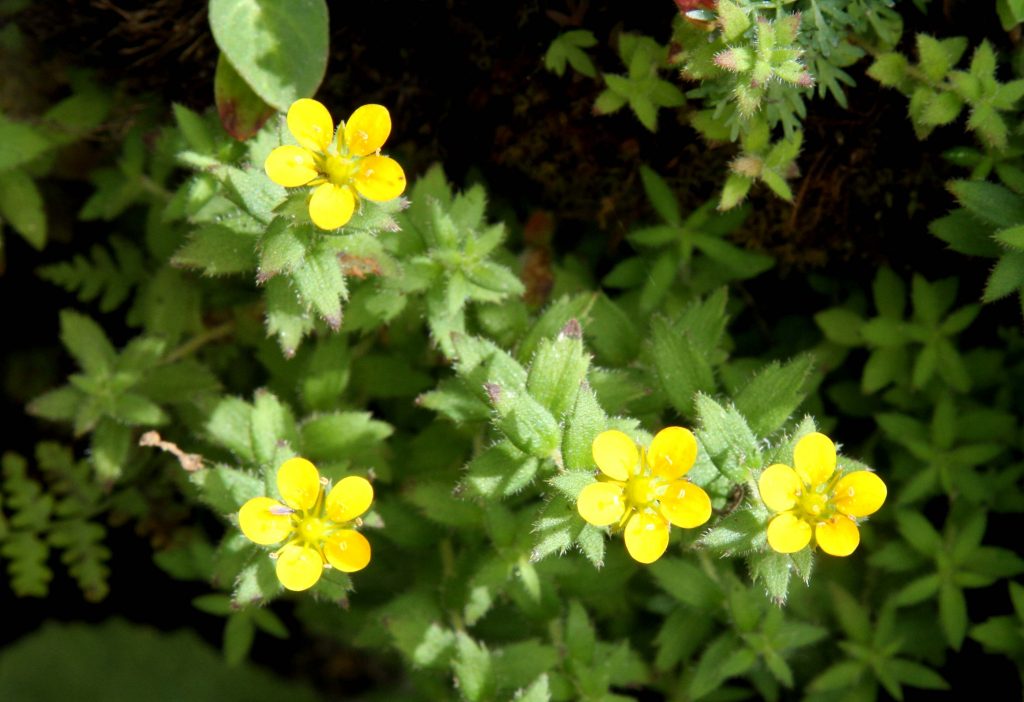
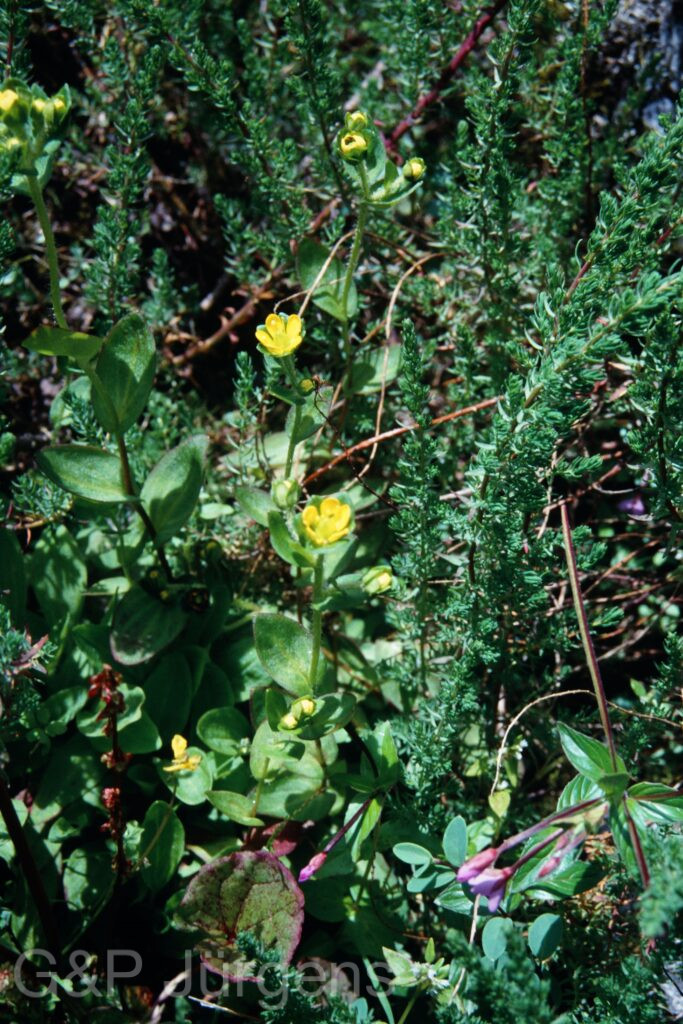
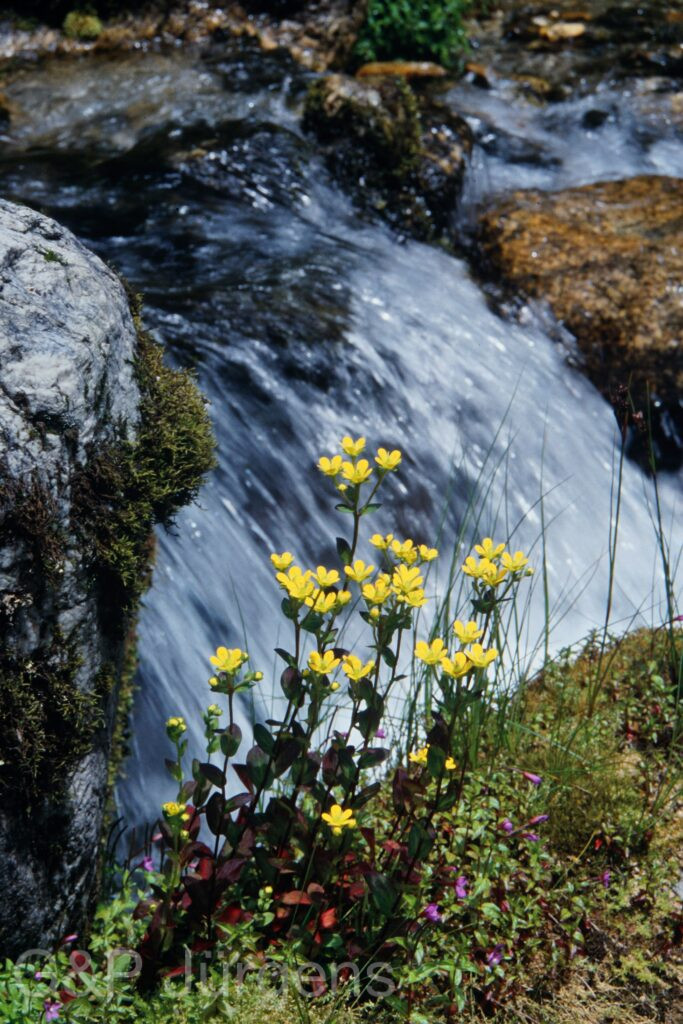
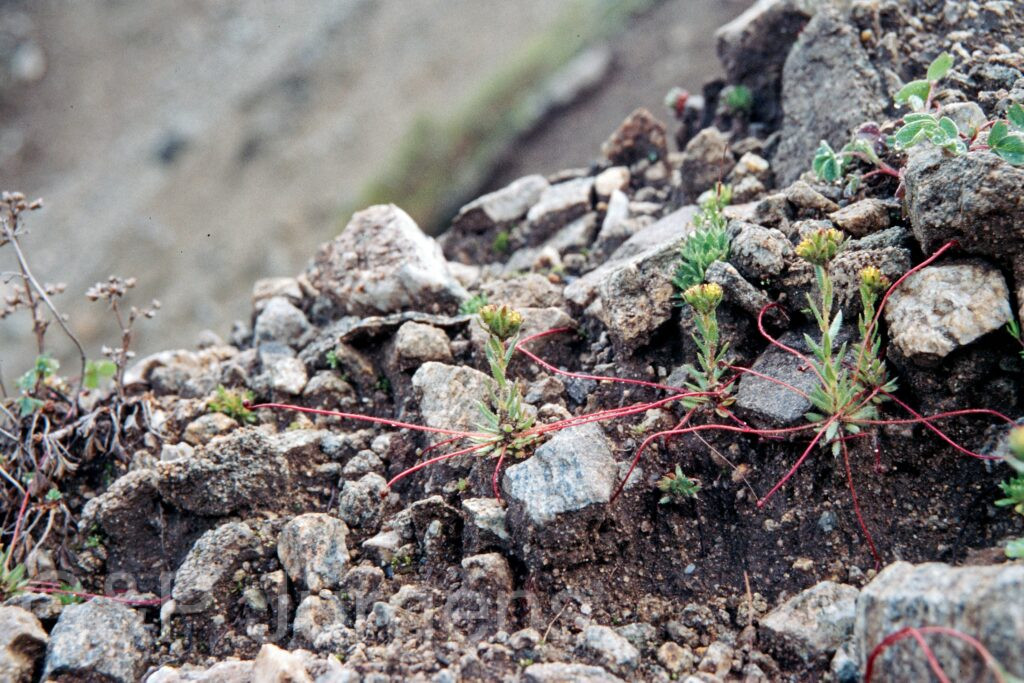
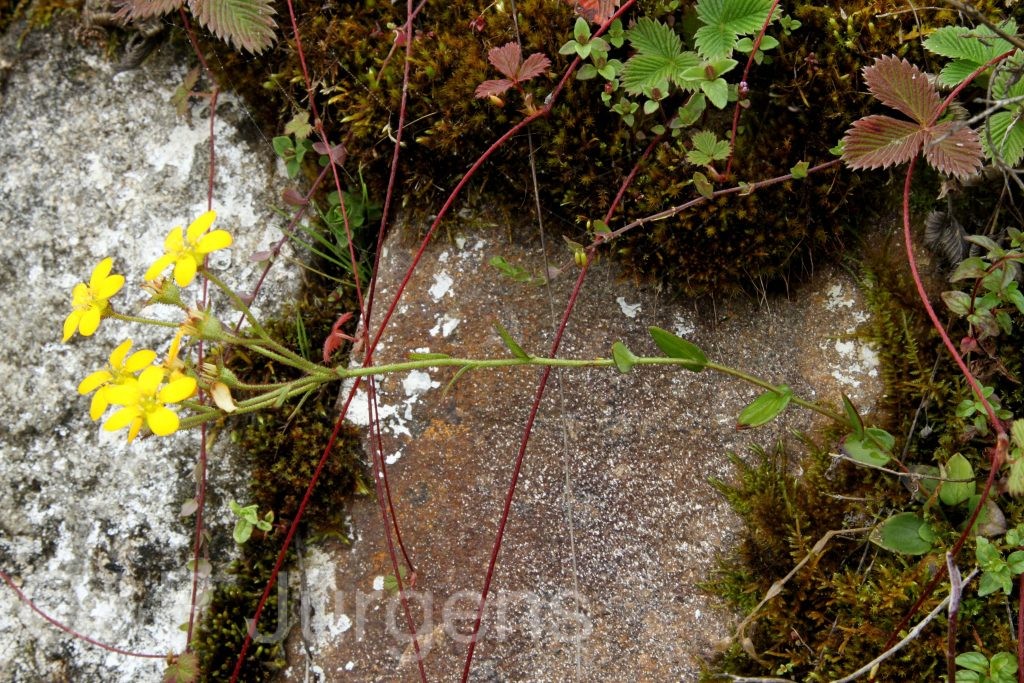
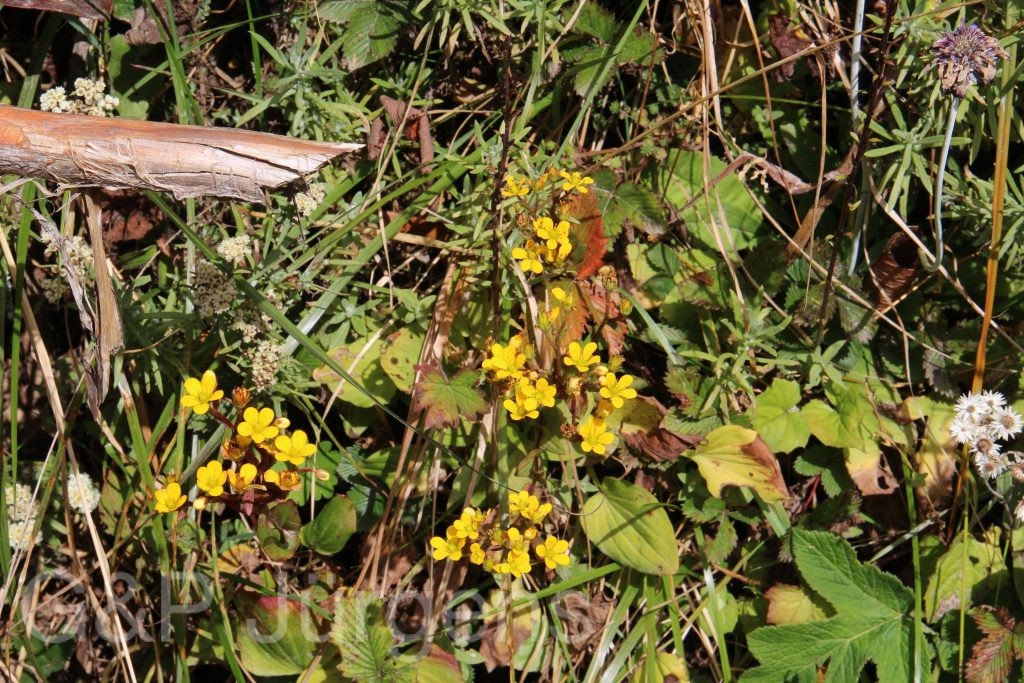
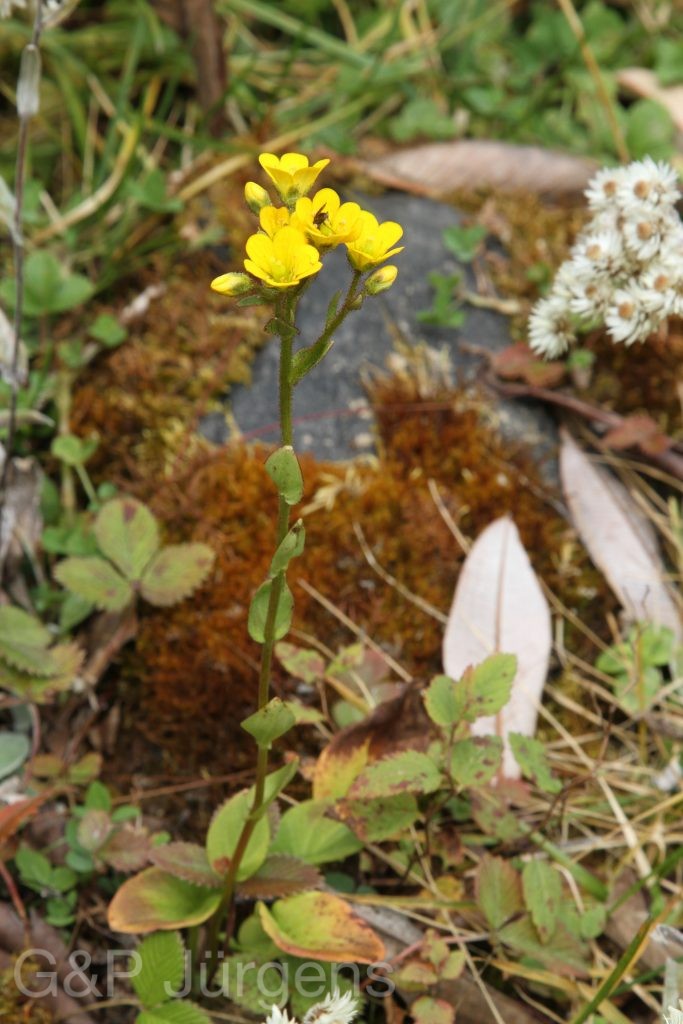
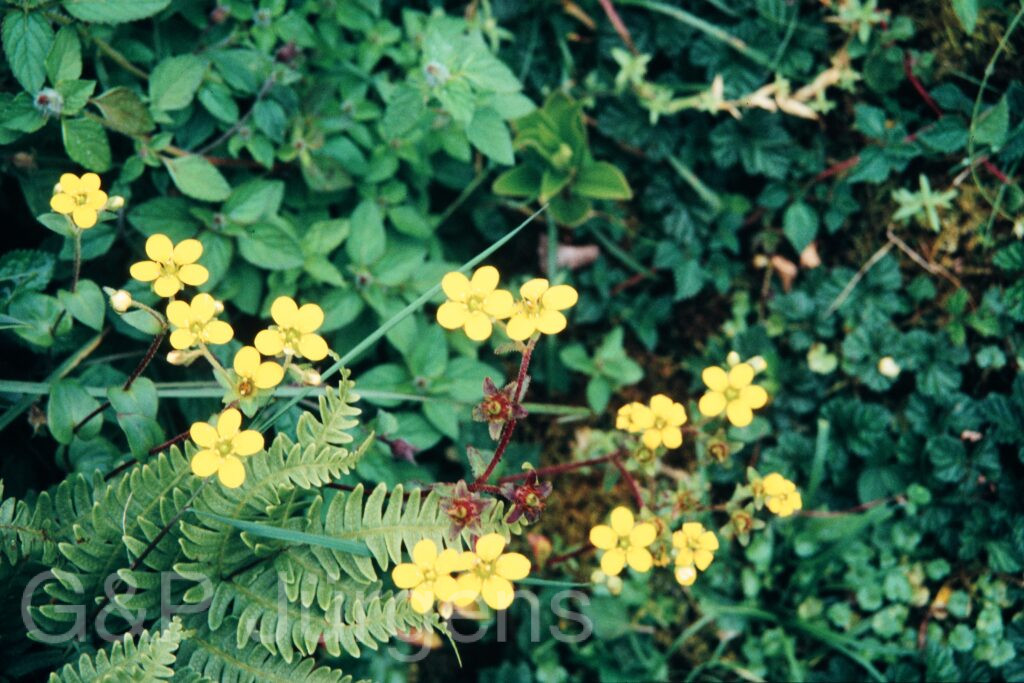
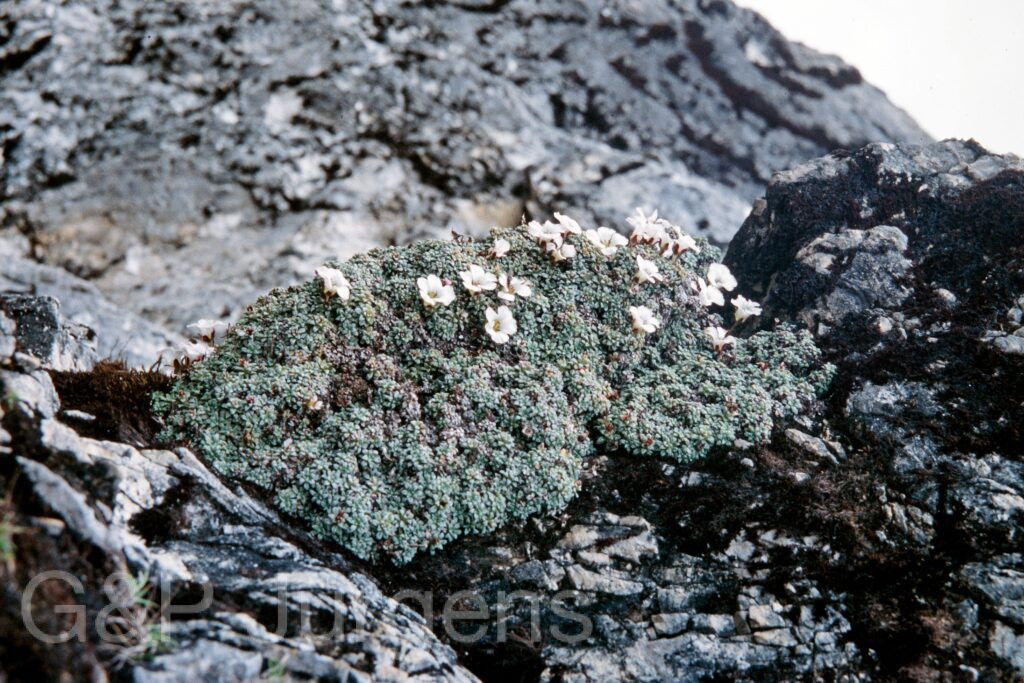
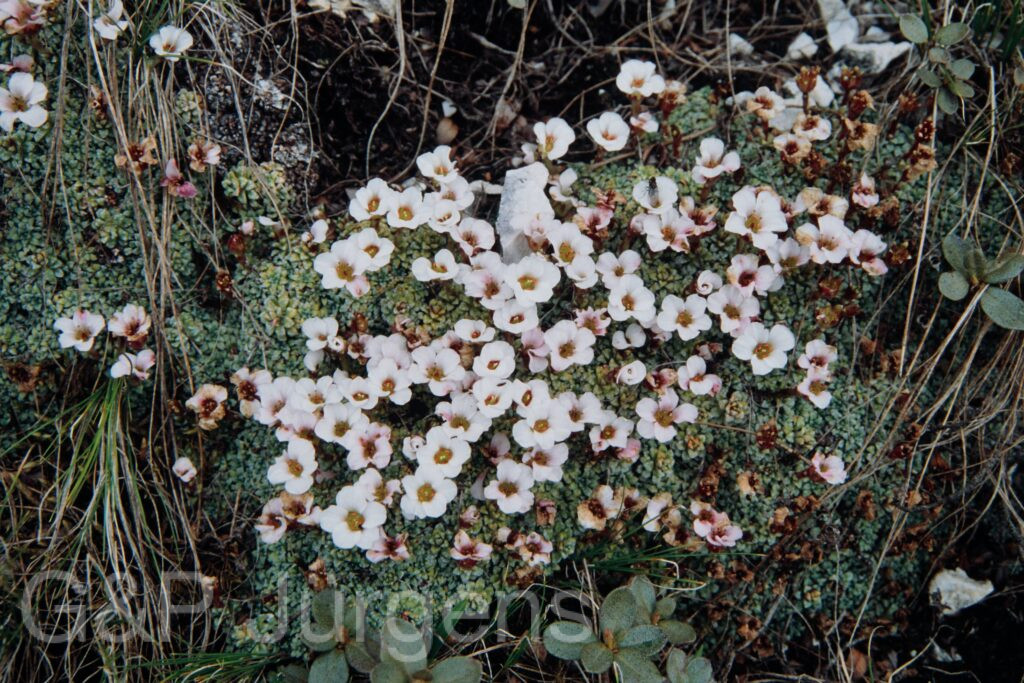
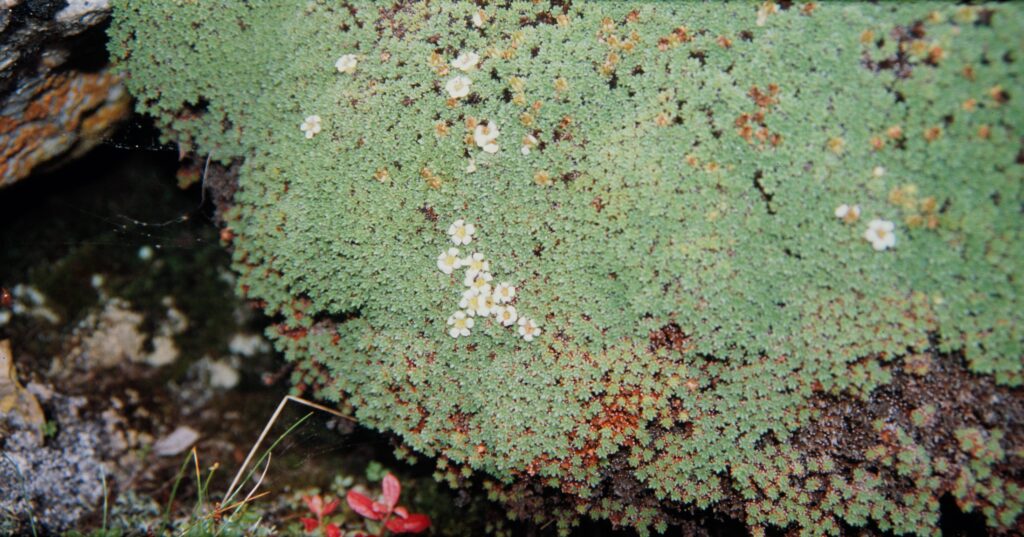
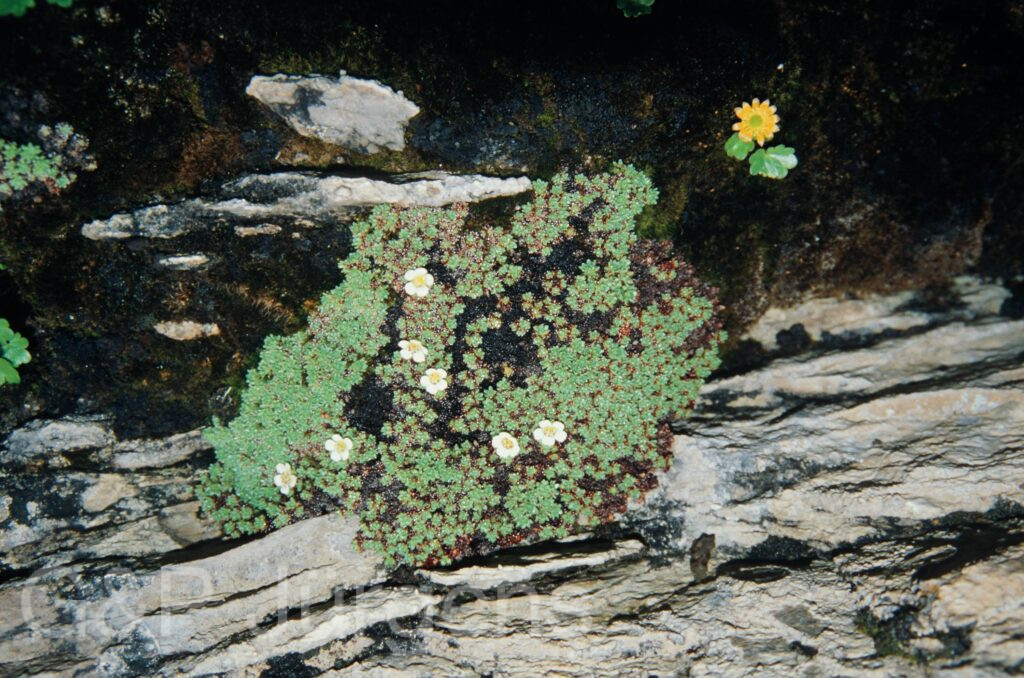
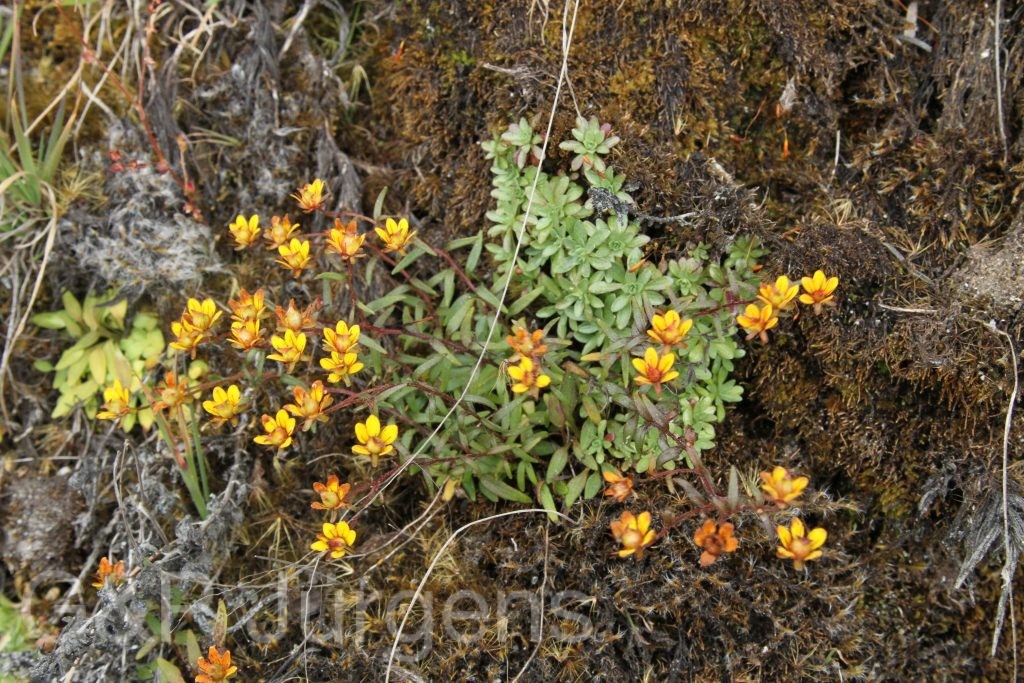
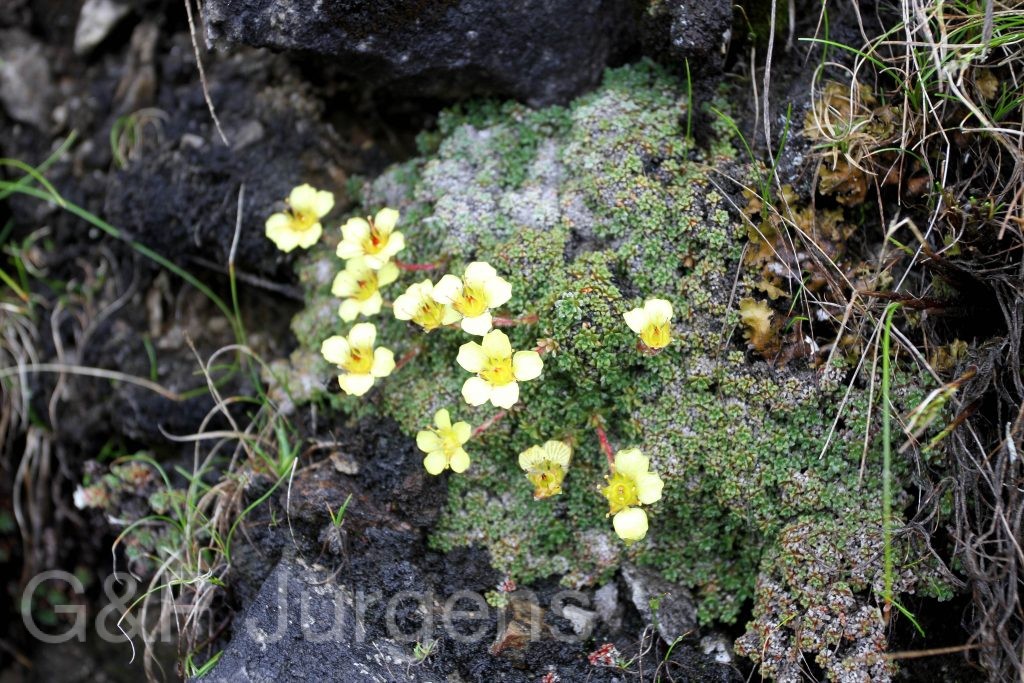
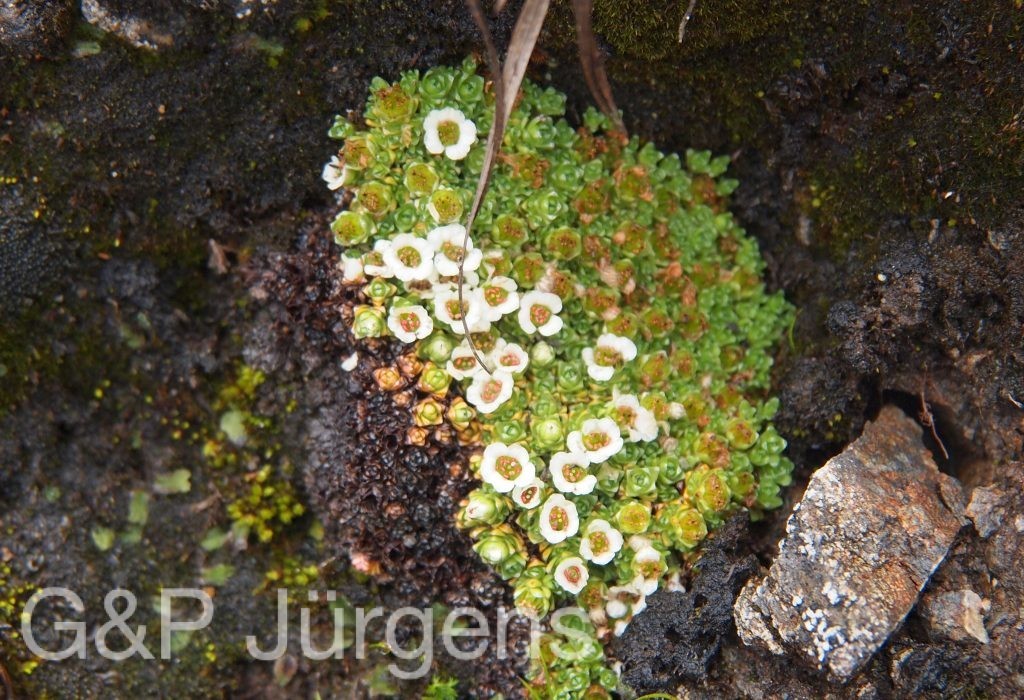
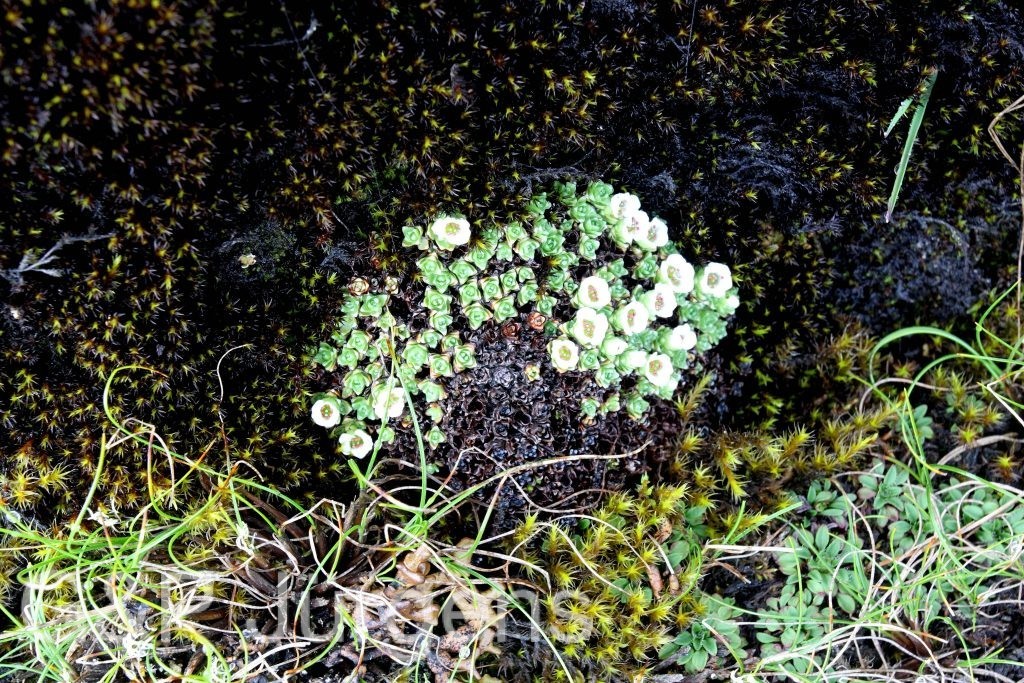
Saxifraga georgei J. Anthony is a high-alpine saxifrage of the eastern Himalaya, recorded from Nepal, Bhutan, India and southern China, with around 50 GBIF occurrences reflecting its localised, high-elevation range; an isolated German record represents cultivated material. It grows on rocky alpine slopes, screes, moraines, cliff ledges and crevices, typically above about 3800 m. The photographed plant from Jule-Tso in Bhutan at approximately 4000 m, flowering in June, is characteristic of its niche in cold, exposed, rocky subnival terrain where it forms low cushions or tufts among stones.
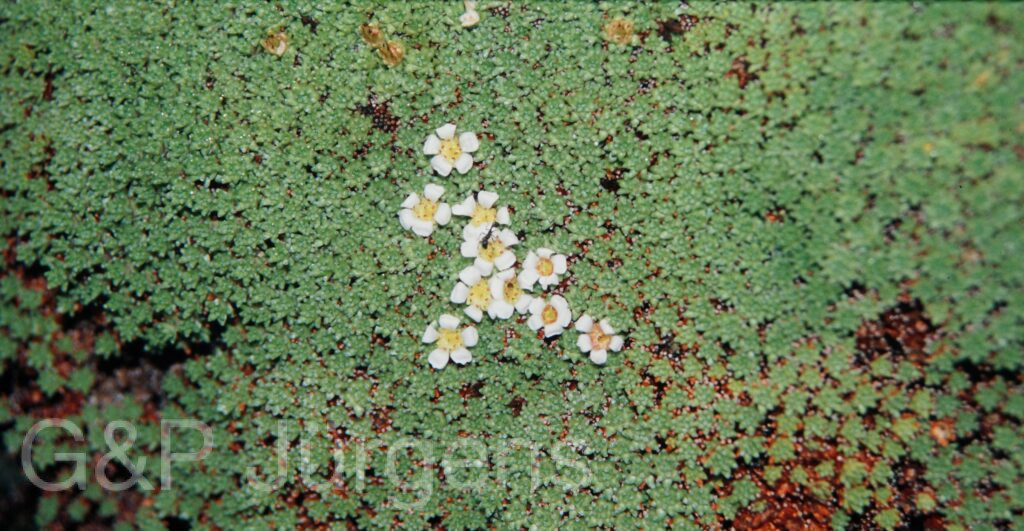
The species is a small, mat- or cushion-forming perennial herb with a branched, somewhat woody base bearing dense rosettes of small, obovate to spathulate, often glandular-margined leaves. The flowering stems are short and few-flowered, glandular-hairy, carrying flowers with a cupular hypanthium, five free sepals and five yellow petals frequently marked with orange or reddish spots. The two carpels are partly fused below, ripening into a small bicarpellate capsule that opens to shed numerous minute seeds.
Saxifraga georgei is placed in Saxifraga section Ciliatae (subsection allied to the Sino-Himalayan cushion saxifrages, Saxifragaceae), a major radiation centred on the high mountains of western China and the Himalaya. Its cushion habit and glandular indumentum are adaptations to cold, desiccating high-altitude conditions. A narrow-range alpine specialist, it is uncommon and, while not formally assessed, is potentially vulnerable to climate-driven habitat contraction.
Author: J. Anthony · Sources: POWO (Kew), GBIF, Flora of Bhutan, Flora of China, Flora of Nepal, Gornall and Pan monographic studies of Saxifraga