
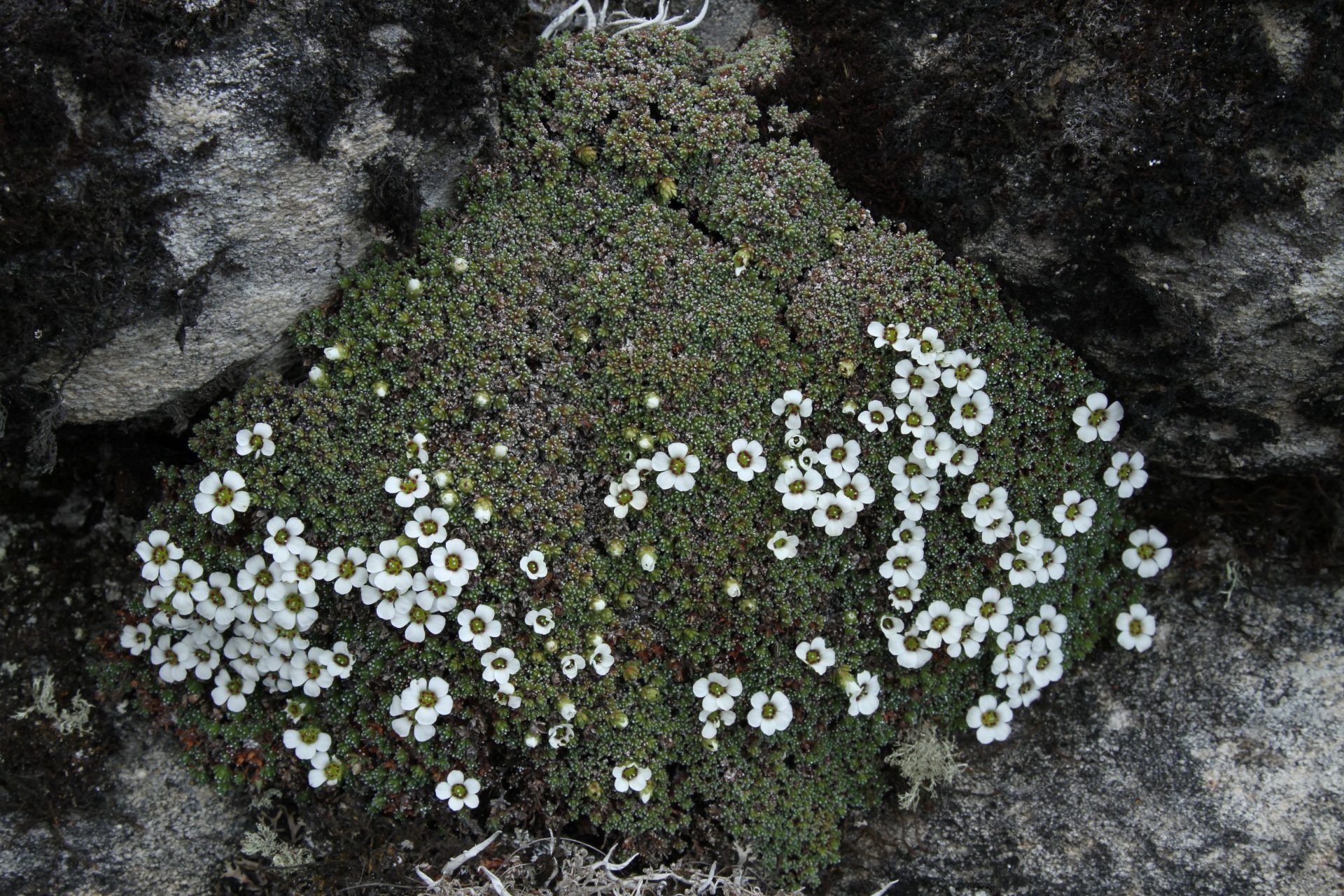
Harry Sm.
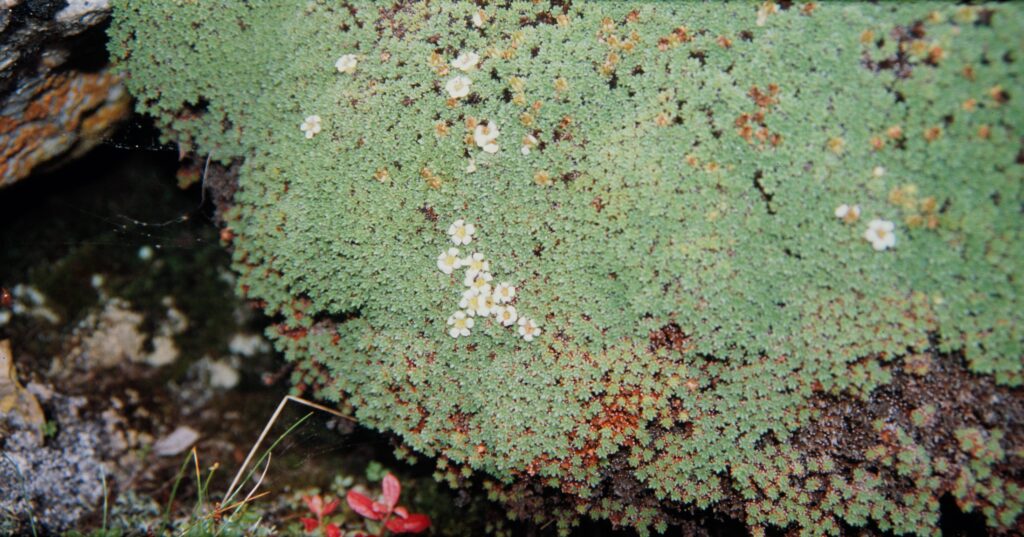
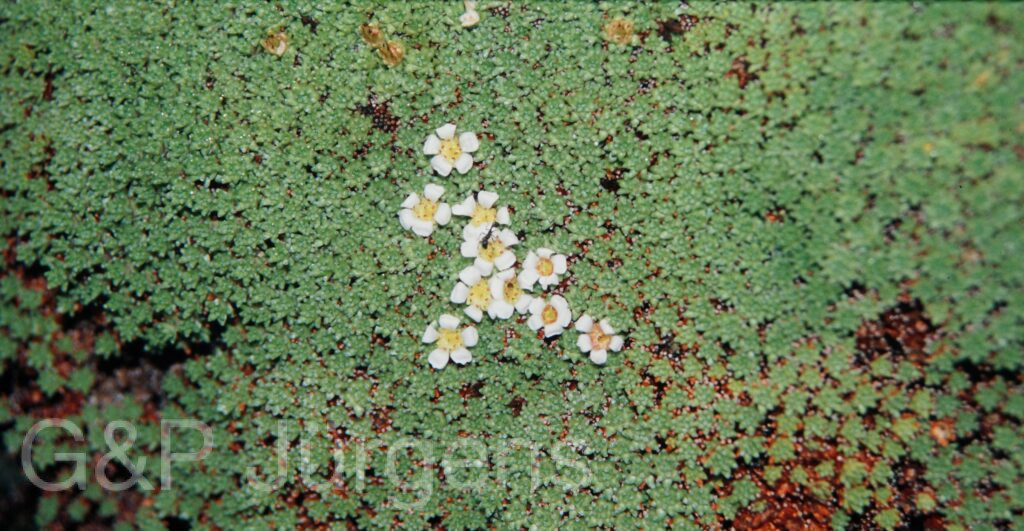
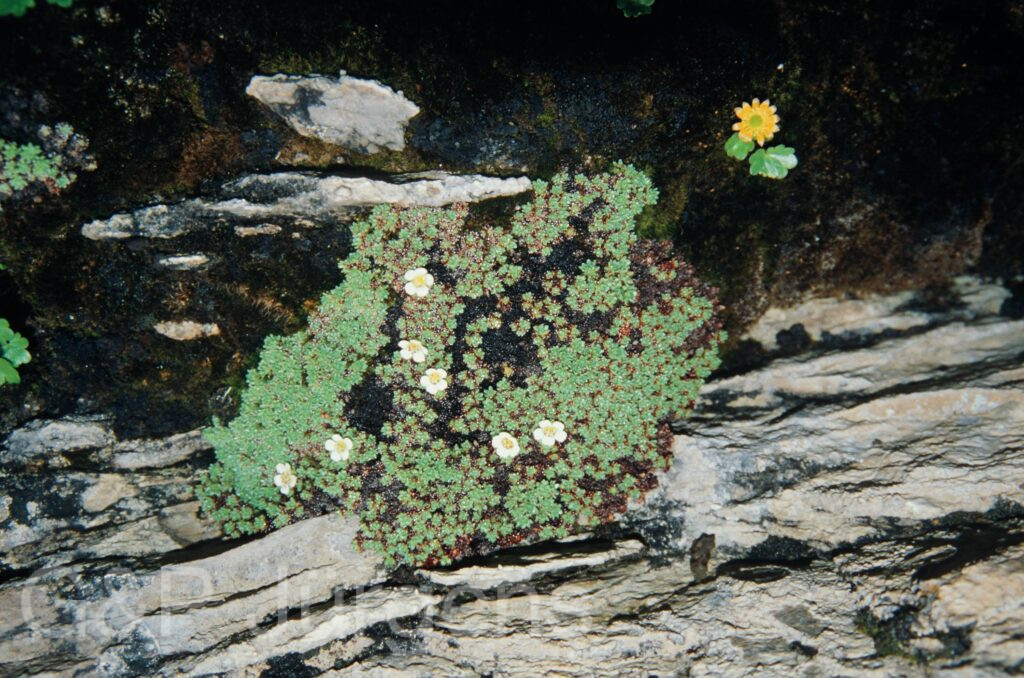
Description
Saxifraga pulvinaria is a high-alpine cushion saxifrage of the Himalaya and adjacent Central Asia, recorded from Pakistan, India, Nepal, Bhutan and southern Tibet (China), extending into Tajikistan, Myanmar and the Russian mountains; GBIF holds about 287 occurrences. It is a plant of the upper alpine and subnival zone, colonising stony slopes, moraine, rock crevices and exposed fellfield, as documented in West Nepal at the Grabung-Khola and at Baga-La-Phedi at 4200 m. At these elevations the cushion habit is an adaptation to wind, frost, desiccation and intense radiation, and flowering is restricted to the brief summer window (July) following snowmelt.
It is a perennial forming a dense, compact, hemispherical cushion (the epithet "pulvinaria" denoting this pulvinate growth form) composed of crowded, columnar leaf rosettes. The leaves are minute, sessile, narrowly oblong to spathulate, often somewhat fleshy, imbricate and persistent, frequently bearing chalk-secreting hydathode lime pits along the margin characteristic of the encrusted saxifrages. The flowers are solitary and nearly sessile, set just above the cushion surface; they are small and 5-merous, with white to pinkish or pale yellow petals, ten stamens and a half-inferior to nearly superior ovary of two carpels. The fruit is a small two-beaked capsule releasing numerous minute seeds.
Described by the saxifrage specialist Harry Smith, the species belongs to Saxifraga sect. Porphyrion, the large group of cushion- and crust-forming alpine saxifrages centred on the high mountains of Asia and Europe. The compact cushion architecture buffers internal temperature and humidity and traps wind-blown debris, an ecological strategy shared with many subnival plants. The flowers are pollinated by the few flies and bees active at such heights. Widespread though confined to extreme habitats, the species is not regarded as threatened, but its cold, high-elevation niche makes it a sensitive indicator of alpine climate change.
Author: Harry Sm. · Sources: POWO (Kew), GBIF, Flora of Pakistan, Flora of China, Webb & Gornall's monograph of the Saxifrages