
D. Don
Description
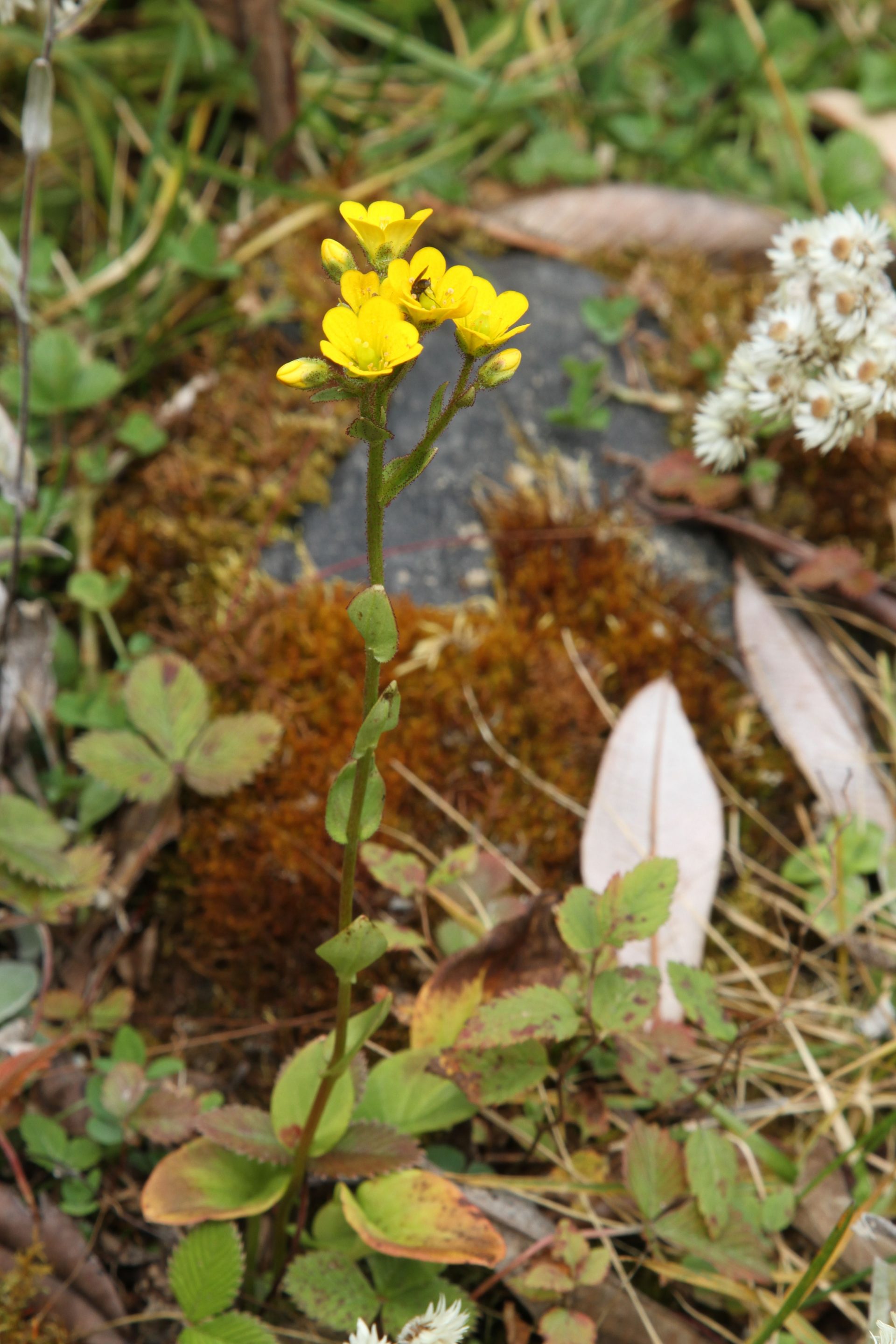
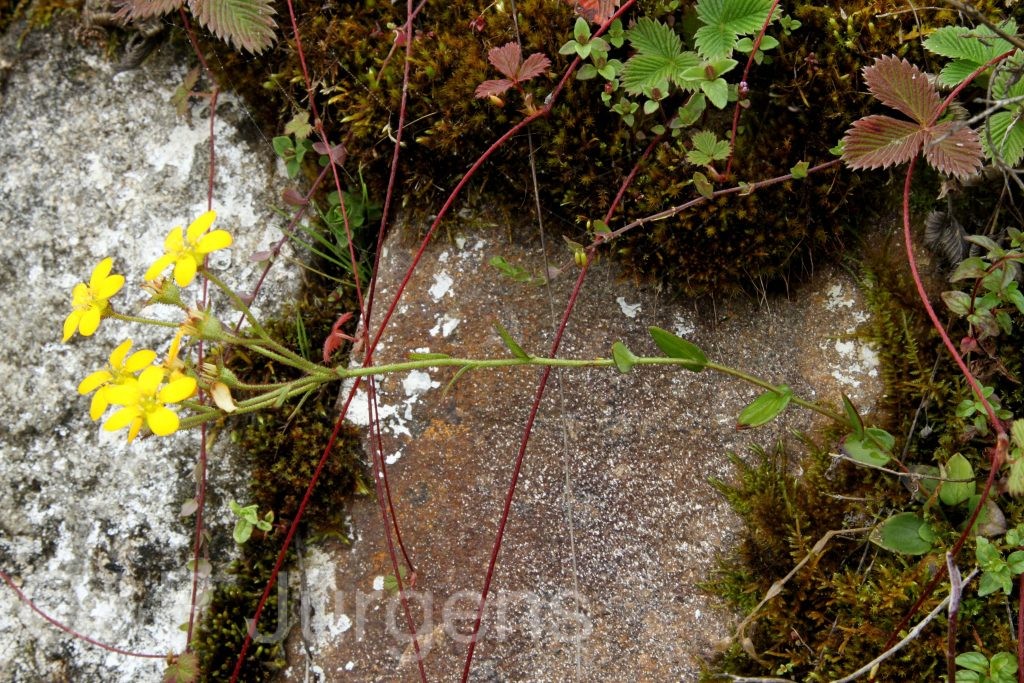
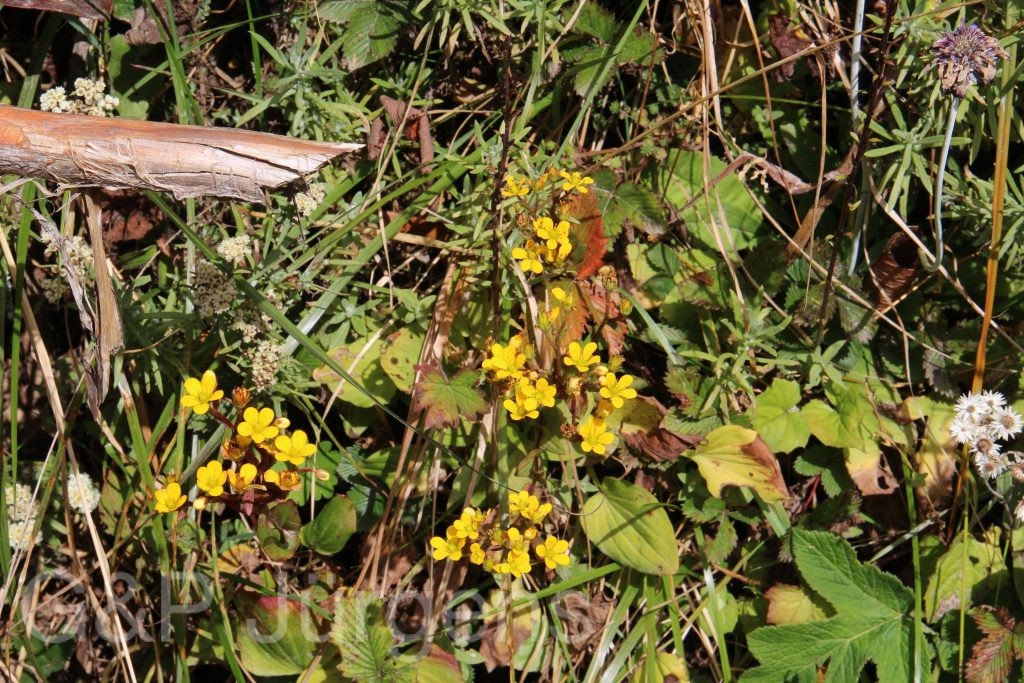
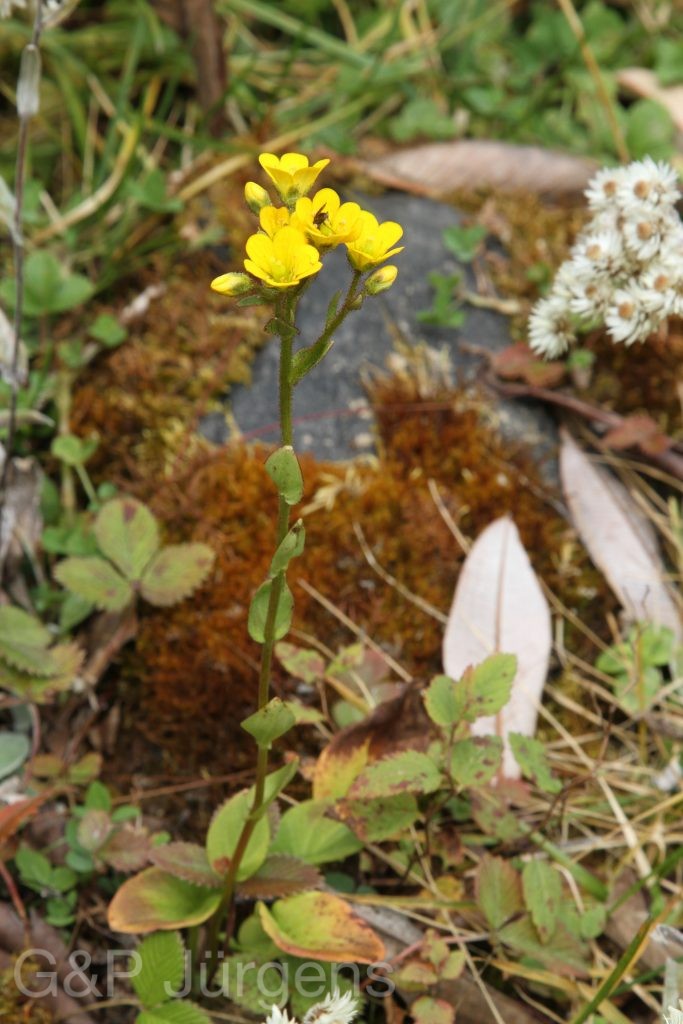
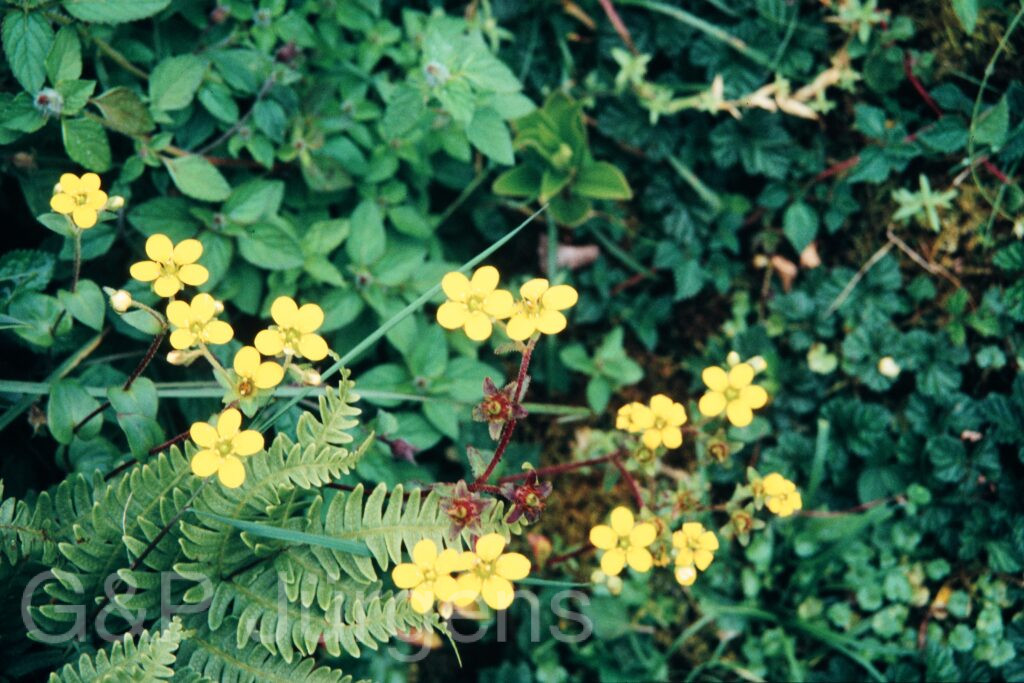
Saxifraga parnassifolia is a Himalayan saxifrage distributed from Nepal through Sikkim and the adjoining Indian hills into Bhutan and southern Tibet (China), with GBIF recording 208 occurrences across NP, CN, IN and BT. It grows on damp rock ledges, mossy banks, cliff faces and shaded humid slopes in the upper temperate to subalpine zone, broadly between about 3000 and 4000 m. The photographed populations were documented in Bhutan at Chele-La (3800 m, September) and Pele-La (3000 m, October) and in Nepal south of the Rupien La (3200 m, October), reflecting a notably late, autumn flowering period for the species.
The plant is a perennial herb forming small tufts from a short rootstock. As the epithet parnassifolia suggests, its basal leaves resemble those of Parnassia: they are ovate to cordate, long-petiolate, entire or slightly toothed, and somewhat fleshy, clustered in a rosette. The flowering stems are erect and bear a lax, few- to several-flowered cyme. Each flower has five free sepals, five spreading white to greenish or pinkish petals, ten stamens, and a half-inferior ovary of two carpels united below and produced into two divergent styles. The fruit is a two-beaked capsule splitting between the styles to release numerous minute seeds.
Within the large genus Saxifraga, the species is placed in section Mesogyne/Cymbalaria allies of the broad-leaved Himalayan rosette saxifrages, distinguished by its Parnassia-like foliage and autumnal anthesis. As a chasmophyte of moist montane rock it indicates humid, sheltered microhabitats. It is locally frequent across its Himalayan range and is not considered threatened, though its cliff and ledge habitats are naturally restricted.
Author: D. Don · Sources: POWO (Kew), GBIF, Flora of Bhutan, Annotated Checklist of the Flowering Plants of Nepal, Flora of China (Saxifragaceae)