
Wall. ex Ser.
Description
Saxifraga strigosa is a Sino-Himalayan herb distributed through China (including Xizang and Yunnan), Nepal, Bhutan, the Indian Himalaya and northern Myanmar, with several hundred georeferenced records. It occupies cool, damp temperate to subalpine habitats, growing on shaded mossy banks, rock ledges, streamsides and moist forest floors. In Bhutan it has been recorded at Pele-La around 3100 m in September and at Ura near 3200 m in October, its late-season flowering coinciding with the post-monsoon period in well-watered montane terrain.
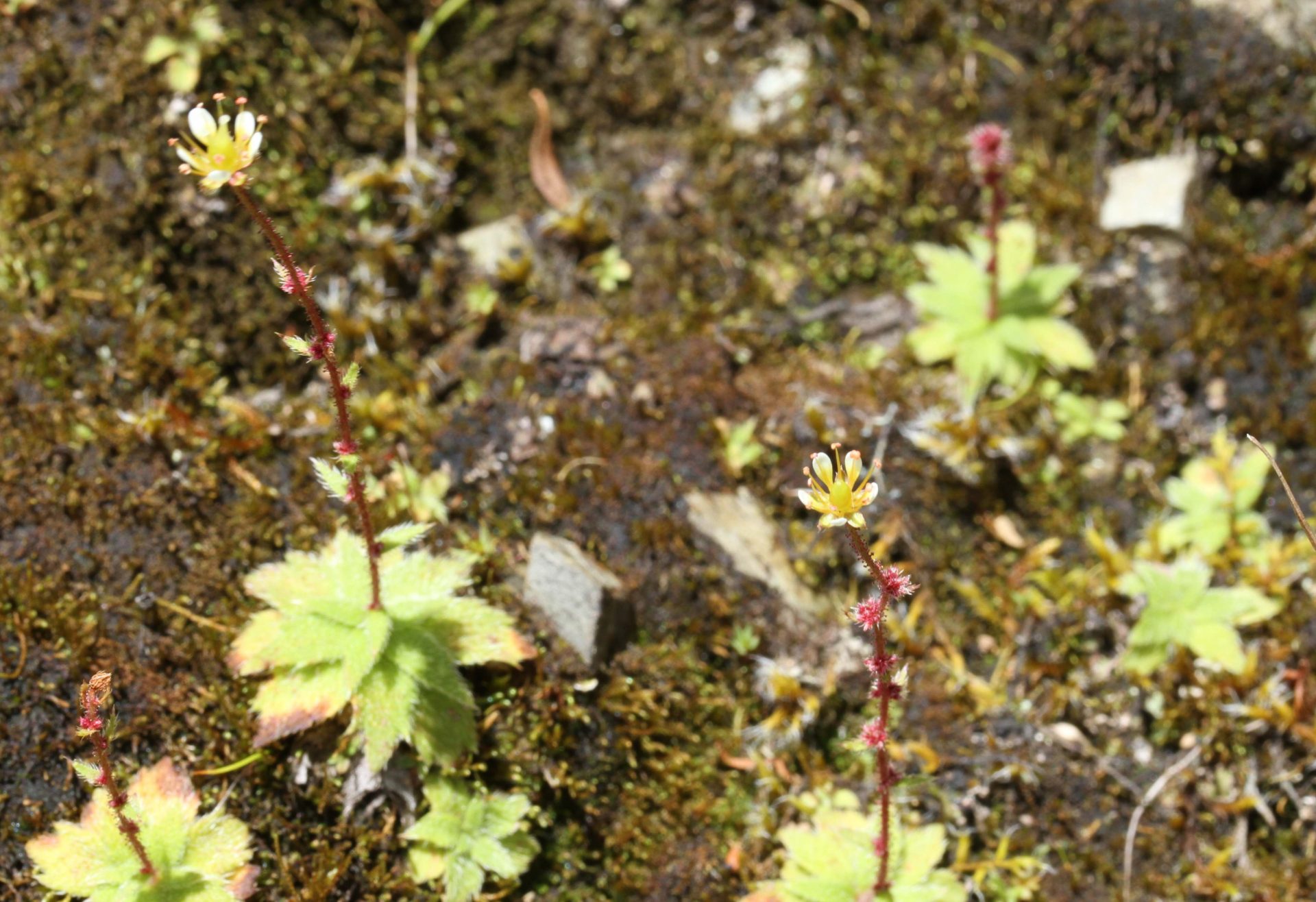
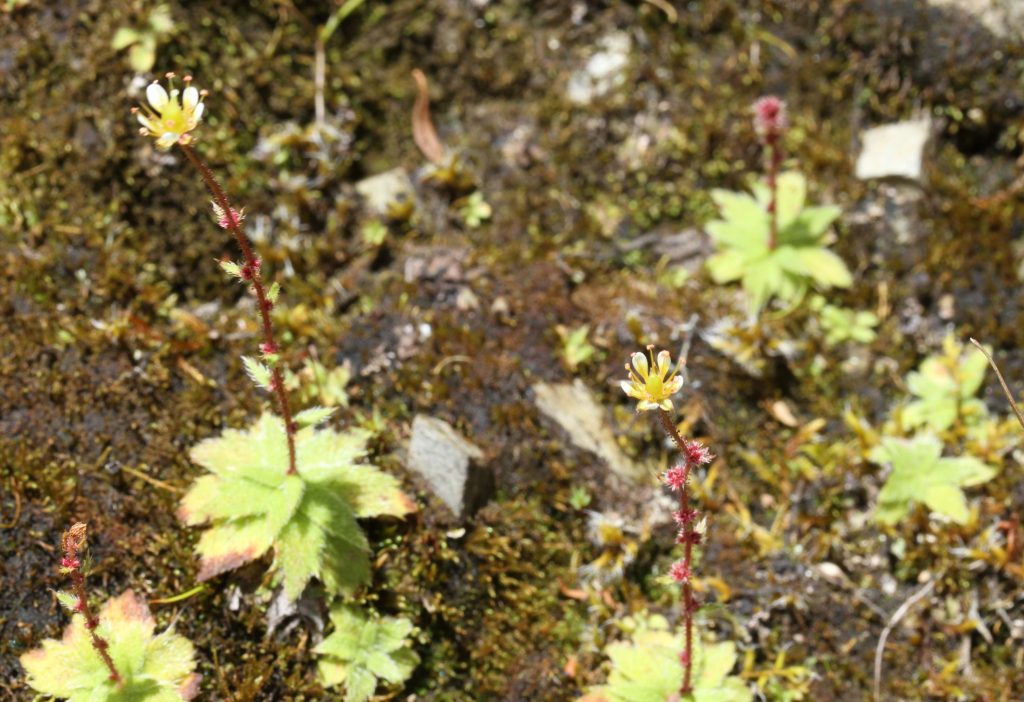
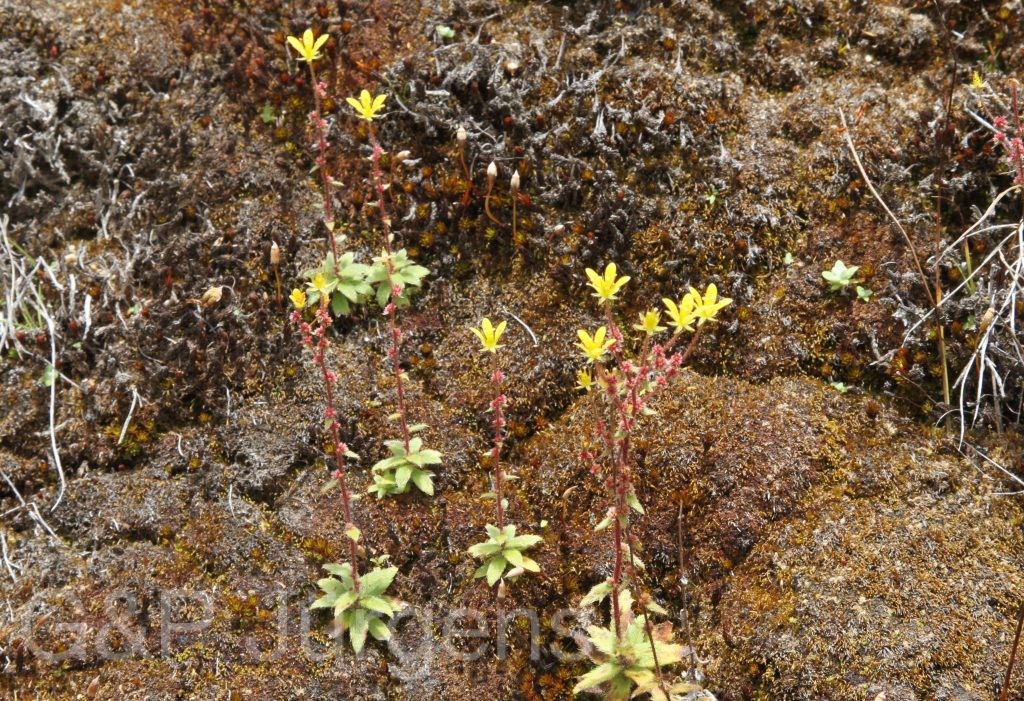
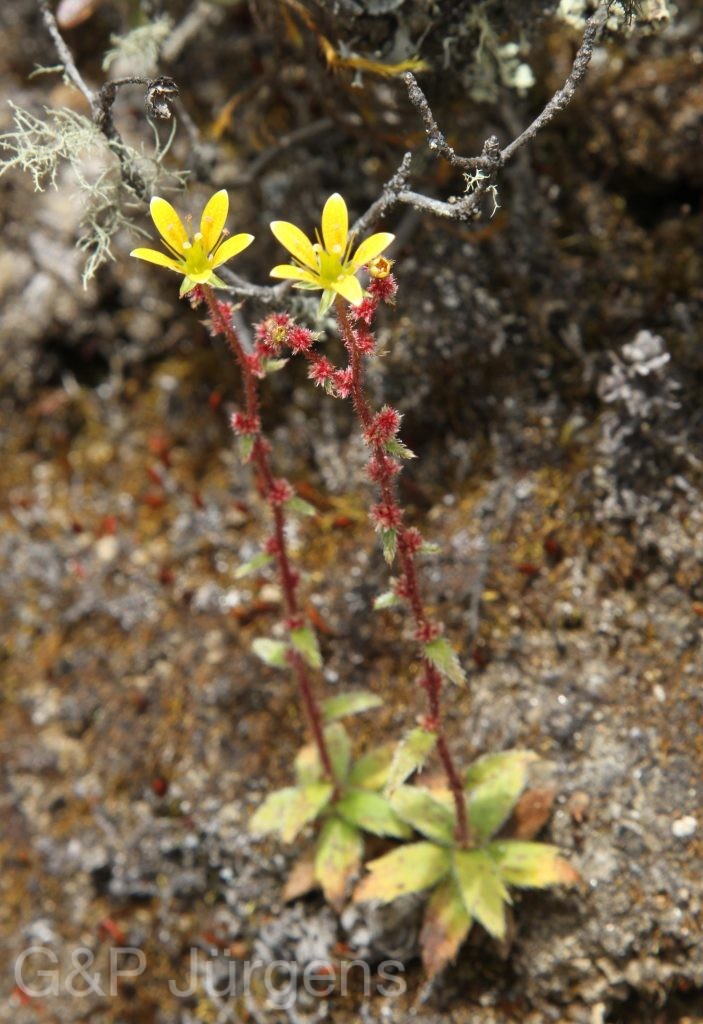
The plant is a slender annual or short-lived perennial herb with weak, often reddish, strigose-hairy stems that may root at the lower nodes. The basal and lower leaves are petiolate with ovate to orbicular, coarsely toothed or shallowly lobed blades, becoming smaller and sessile upward. The inflorescence is a lax, few- to several-flowered cyme of small flowers on filiform pedicels. Each flower has five spreading, reflexed sepals, five white petals frequently marked with yellow basal spots and reddish dots, ten stamens with clavate filaments, and a bicarpellate ovary that is half-inferior. The fruit is a two-beaked capsule splitting between the divergent styles to release numerous minute seeds.
Saxifraga is a large, predominantly arctic-alpine genus, and S. strigosa belongs to the small-flowered annual element formerly placed in section Diptera (genus Hydatica of some authors). It was described by Seringe from Wallich's collections. Adapted to ephemeral moist microhabitats, it relies on small insects for pollination and on abundant seed for persistence. Common and widespread across the eastern Himalaya, it is of no particular conservation concern.
Author: Wall. ex Ser. · Sources: POWO (Kew), GBIF, Flora of China, Flora of Bhutan, Gornall's classification of Saxifraga (Saxifragaceae)