Tag:

Alpine (>3500 m)

Wall.

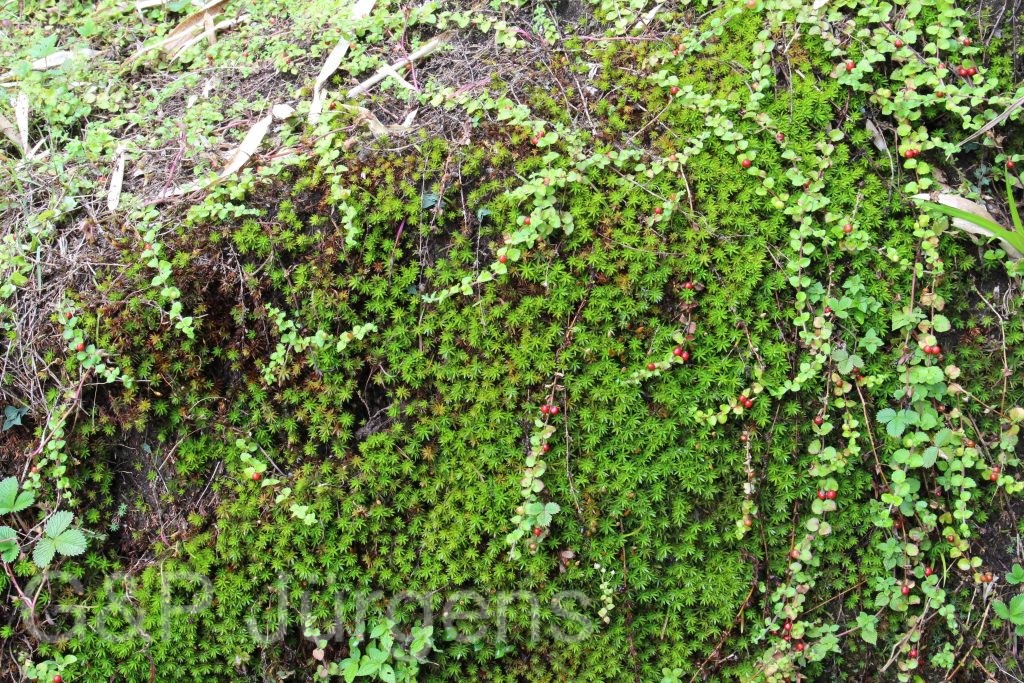
Bhutan2015 39
Bhutan Dochu-La 2700m, October
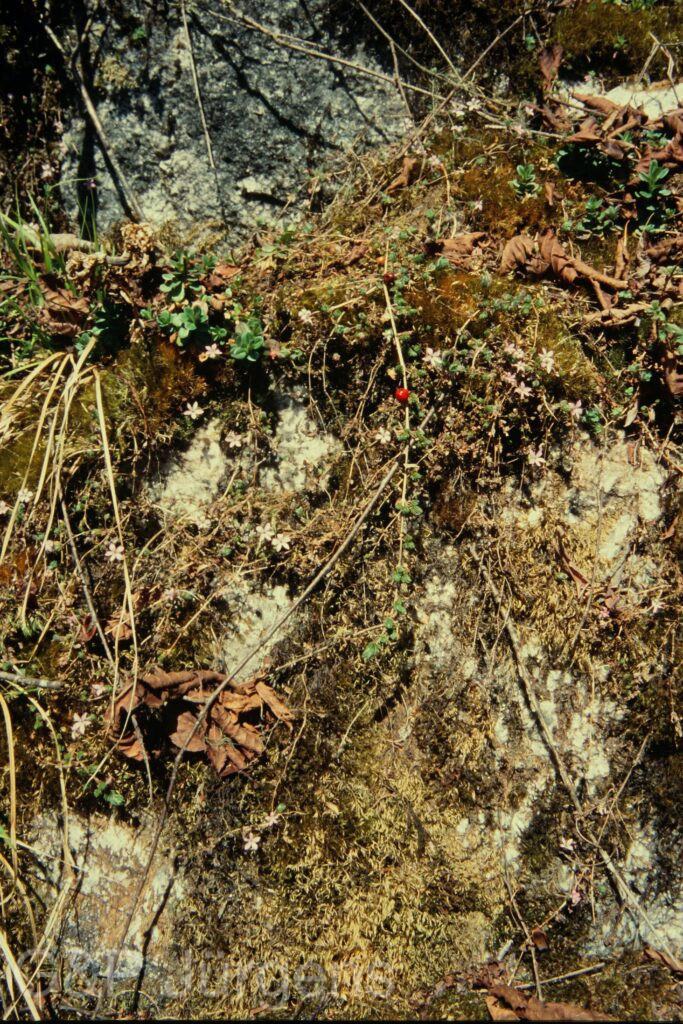
Sikkim2004 301 G524
Sikkim/India Choka 3800m May
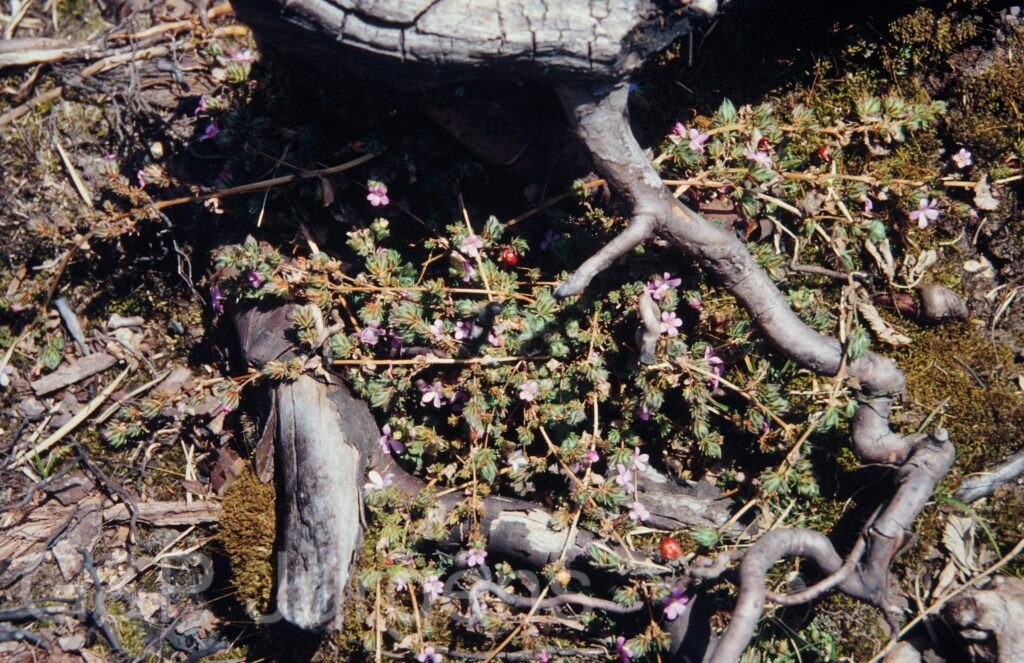
Nepal 1994 90 ergebnis
Ost-Nepal Jaljale Himal
3100m April

Description

Hemiphragma heterophyllum is a widespread Asian creeping herb extending along the Himalaya from Pakistan through Nepal, Sikkim, Bhutan and northeast India to China and Taiwan, and southward into the mountains of Myanmar, Thailand, Vietnam, the Philippines and Indonesia, with naturalised records elsewhere; GBIF logs 2751 occurrences across this broad range. It grows on open banks, grassy slopes, mossy rocks, forest paths and disturbed ground in the temperate to alpine zone, roughly 2500 to 4000 m. The cited records from Dochu-La in Bhutan (2700 m, October), Choka in Sikkim (3800 m, May) and the Jaljale Himal in eastern Nepal (3100 m, April) demonstrate its wide elevational and seasonal amplitude.

It is a small, mat-forming perennial herb with slender, much-branched, prostrate and rooting stems. The leaves are conspicuously dimorphic, as the epithet heterophyllum indicates: those on the main stems are broad, orbicular to reniform and crenate, while the clustered axillary fascicles bear numerous narrow, needle-like (acicular) leaves. The flowers are small, solitary and nearly sessile in the leaf axils, with a campanulate calyx and a pink to white rotate-campanulate corolla. The fruit is the most striking feature: a fleshy, berry-like, bright scarlet to orange globose capsule that is exserted among the foliage and conspicuous in fruit.

The sole species of the genus Hemiphragma, it is now placed in Plantaginaceae following the dismemberment of the traditional Scrophulariaceae, having formerly been assigned to that family. Its brightly coloured fleshy fruits suggest endozoochorous dispersal by birds, unusual within its largely dry-fruited relatives. The species is abundant, ecologically versatile and frequently colonises trodden or disturbed habitats, so it is of least conservation concern; its capacity to establish outside its native range is reflected in scattered exotic records.

Author: Wall. · Sources: POWO (Kew), GBIF, Flora of China Vol. 18, Flora of Bhutan Vol. 2, Flora of Nepal, Genera Plantarum and Hooker's Flora of British India
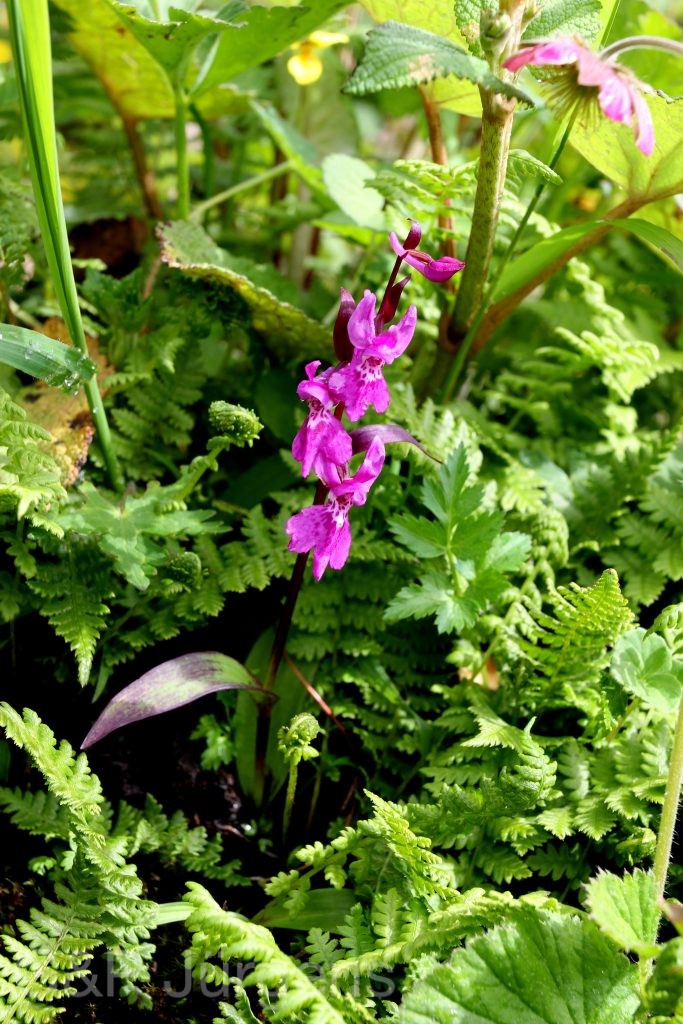
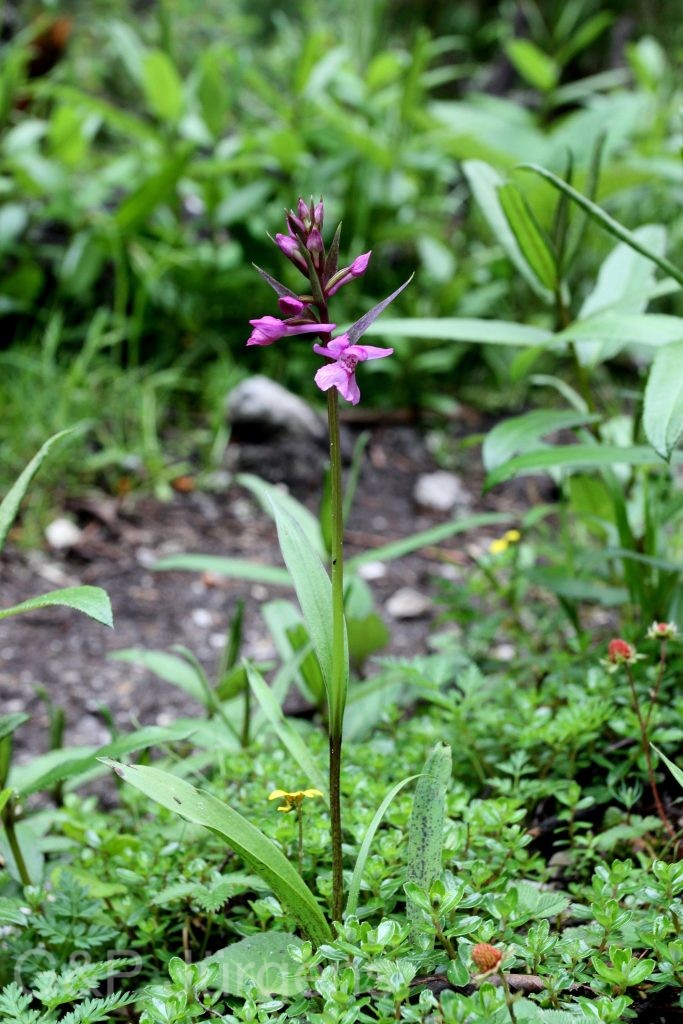
(W.W.Sm.) Y.Tang & H.Peng

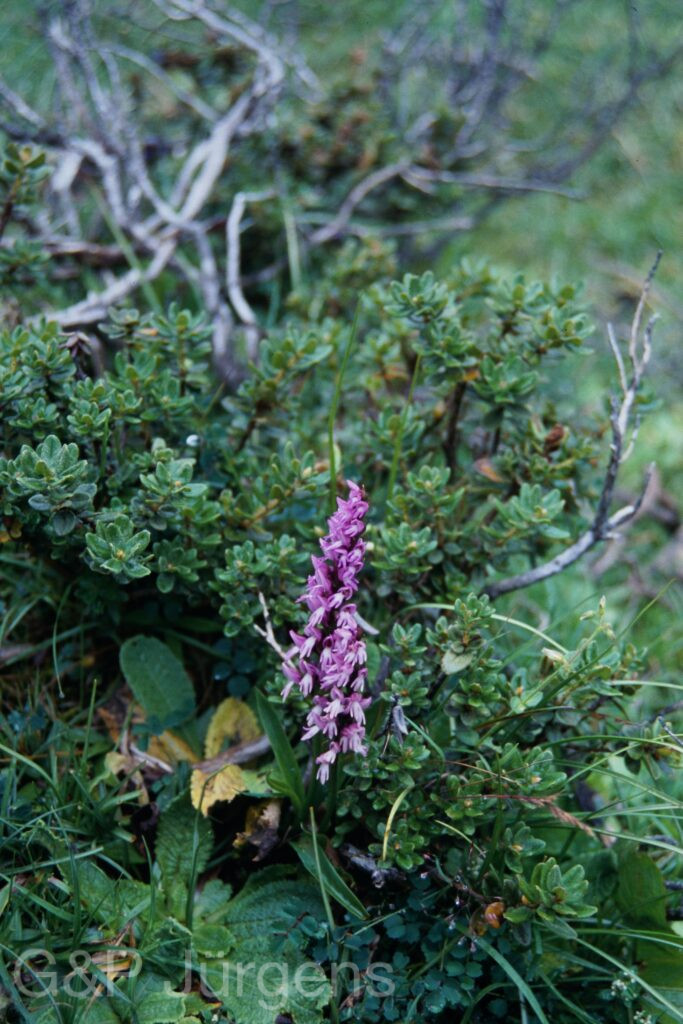
Sikkim2003 458 P634
Sikkim Chopta Valley 4000m August
Sikkim2003 459 G636
Sikkim Chopta Valley 4000m August

Description

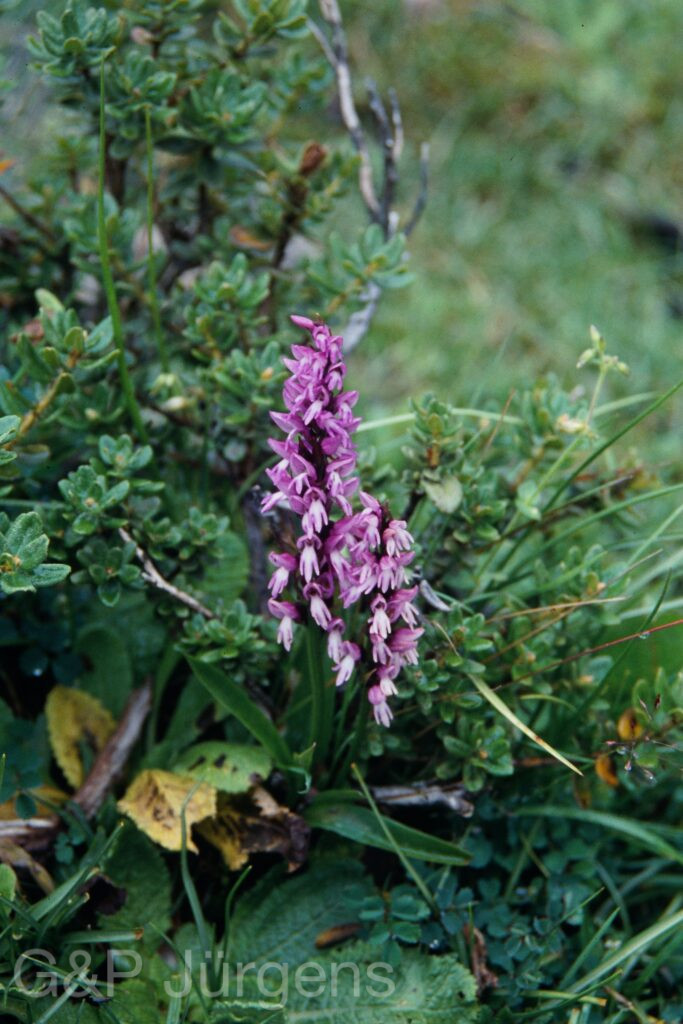
Hemipilia calcicola is a terrestrial orchid of the high Sino-Himalaya, recorded from southwestern China (notably Yunnan and Sichuan) and extending into Nepal, Sikkim and Bhutan, with GBIF logging 199 occurrences across CN, NP and BT. As both its epithet calcicola and its habitat preference indicate, it favours calcareous substrates, growing in alpine and subalpine meadows, on grassy limestone slopes and in open turf, typically between about 3000 and 4300 m. The photographed plant was found in the Chopta Valley of Sikkim at around 4000 m, flowering in August during the late-monsoon alpine flowering season.

The species is a slender terrestrial herb arising from an ovoid or globose underground tuberoid. It typically bears a single basal leaf, ovate to cordate and frequently marked above with purplish spots, clasping the base of the erect flowering stem. The inflorescence is a lax raceme of several resupinate flowers; each has spreading sepals and petals and a prominent, deflexed, often three-lobed labellum bearing a slender nectar-spur at its base. The column carries the pollinaria characteristic of the Orchidaceae, and the fruit is a dehiscent capsule releasing dust-like, abundant seeds requiring mycorrhizal association for germination.

The taxon was originally described as a variety under Habenaria/Neottianthe (reflected in the website slug neottianthe-cucullata-var-calcicola) and was transferred to Hemipilia by Tang and Peng on molecular grounds, consolidating Neottianthe within an expanded Hemipilia. It is one of numerous calciphilous Sino-Himalayan orchids whose specialised soil requirements and dependence on pollinators and mycorrhizae make populations vulnerable to grazing, collection and habitat disturbance.

Author: (W.W.Sm.) Y.Tang & H.Peng · Sources: POWO (Kew), GBIF, Flora of China (Orchidaceae), Genera Orchidacearum (Pridgeon et al.), Tang & Peng revision of Hemipilia

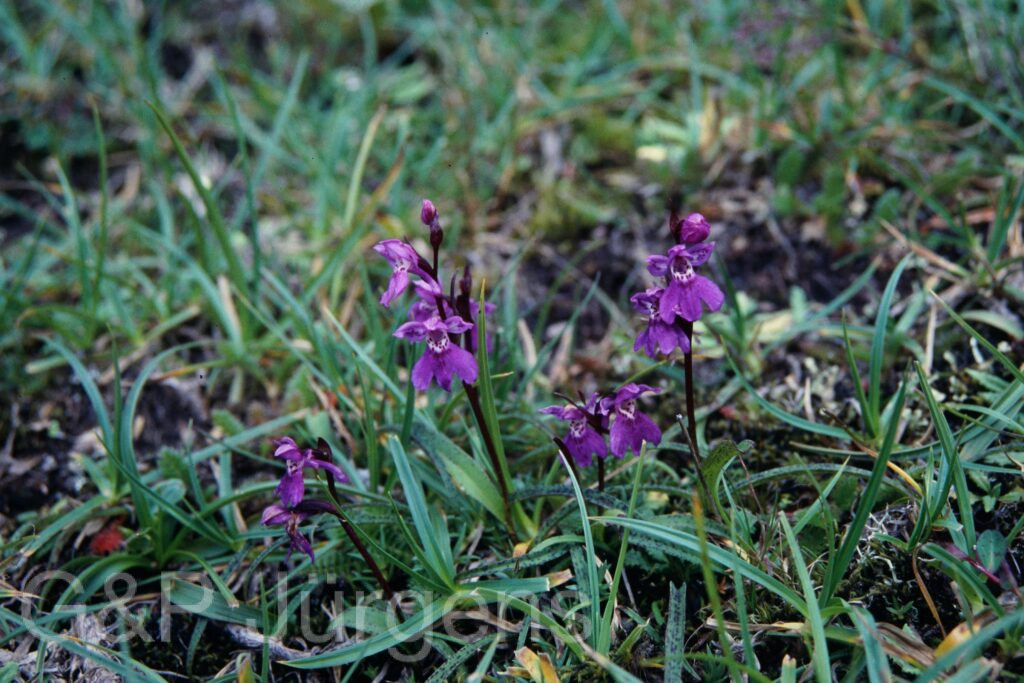
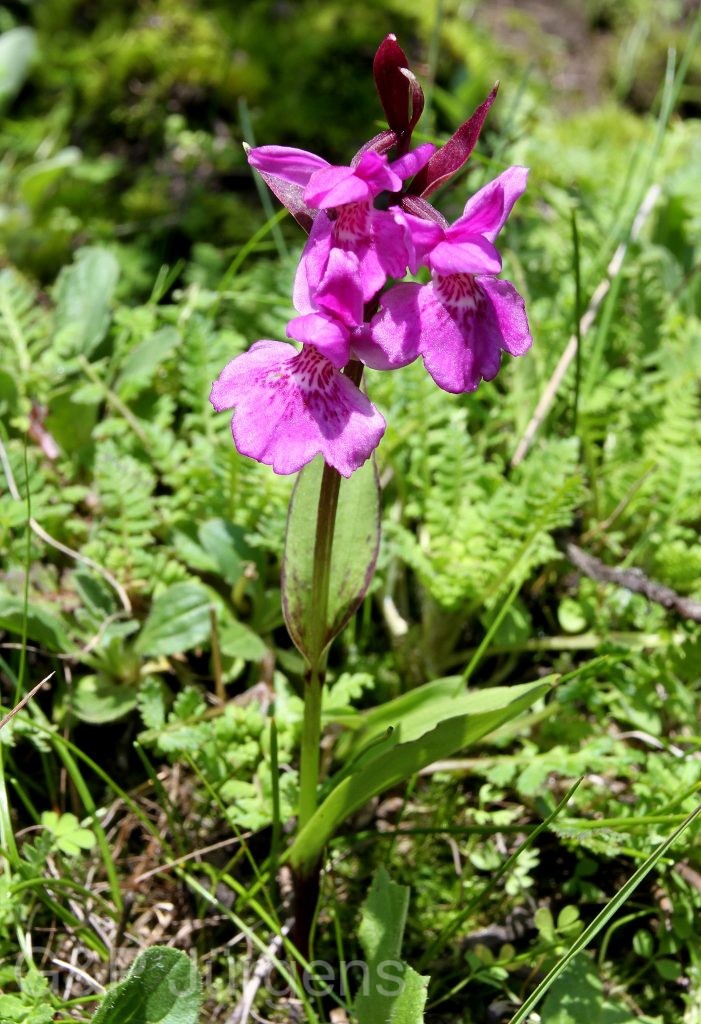
(D.Don) Y.Tang & H.Peng

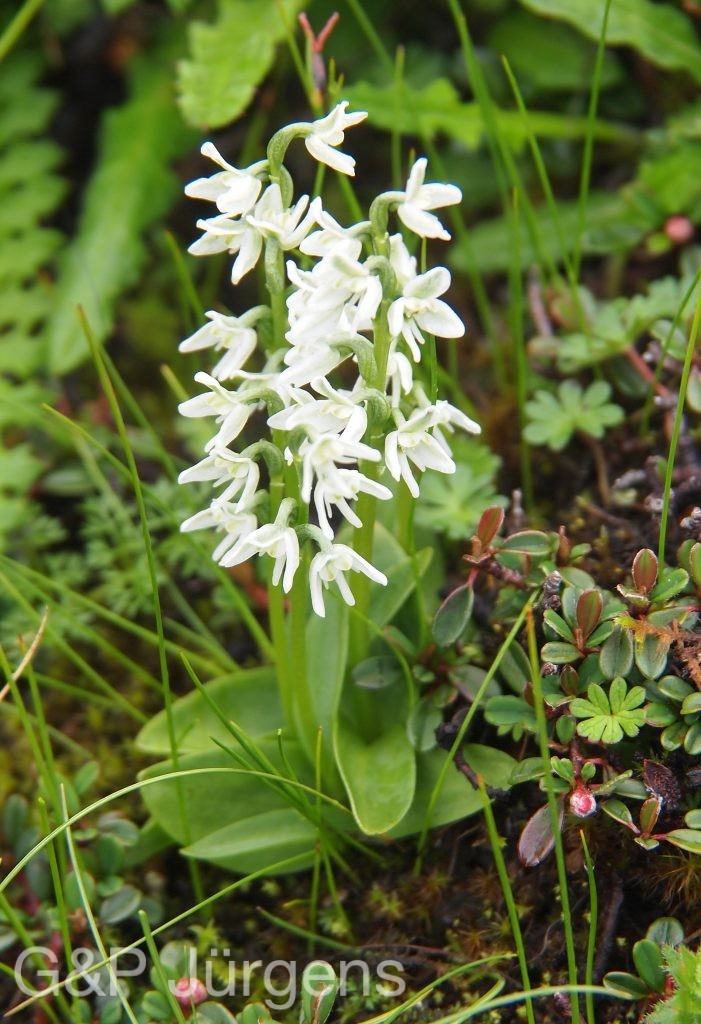
Sikkim2003 150 P201
Sikkim Dzongri, 4100m August
BhutanPG2011 792
Bhutan Ludlow-Sherriff-Trail Kem-La, 4300m July

Description

Hemipilia chusua is a terrestrial orchid widely distributed across temperate and alpine Asia, recorded from China, Nepal, India, Bhutan, Myanmar, Russia, Japan and Korea, with over 1700 GBIF occurrences making it one of the best-documented orchids of the region. It grows in alpine and subalpine meadow, open turf, grassy slopes and the margins of dwarf-shrub heath, typically between about 2500 and 4500 m. The illustrated plants from Dzongri in Sikkim at 4100 m, flowering in August, and from Kem-La on the Ludlow-Sherriff Trail in Bhutan at 4300 m in July, exemplify its high-altitude grassland habitat.

It is a slender terrestrial herb arising from small ovoid to ellipsoid tubers, with an erect, glabrous stem bearing one or few leaves. The leaves are lanceolate to oblong-lanceolate, sheathing at the base and somewhat clasping the stem. The inflorescence is a lax, few-flowered terminal raceme of showy rosy-purple to magenta flowers; the lip (labellum) is broad, three-lobed and bears a slender, downward-pointing spur longer than the ovary, while the lateral sepals spread and the dorsal sepal and petals form a loose hood. The fruit is an erect, ribbed dehiscent capsule releasing dust-like seeds.

Long familiar as Orchis or Ponerorchis chusua, the species was transferred to Hemipilia by Tang and Peng following molecular reappraisal of the orchidine alliance. Though wide-ranging and locally abundant, like all wild orchids it is listed under CITES Appendix II, and its alpine populations are vulnerable to collection, grazing pressure and the upslope shift of montane vegetation under climate change.

Author: (D.Don) Y.Tang & H.Peng · Sources: POWO (Kew), GBIF, Flora of Bhutan, Flora of China, Pearce & Cribb The Orchids of Bhutan

(Wall. ex DC.) F.T.Pu & M.F.Watson

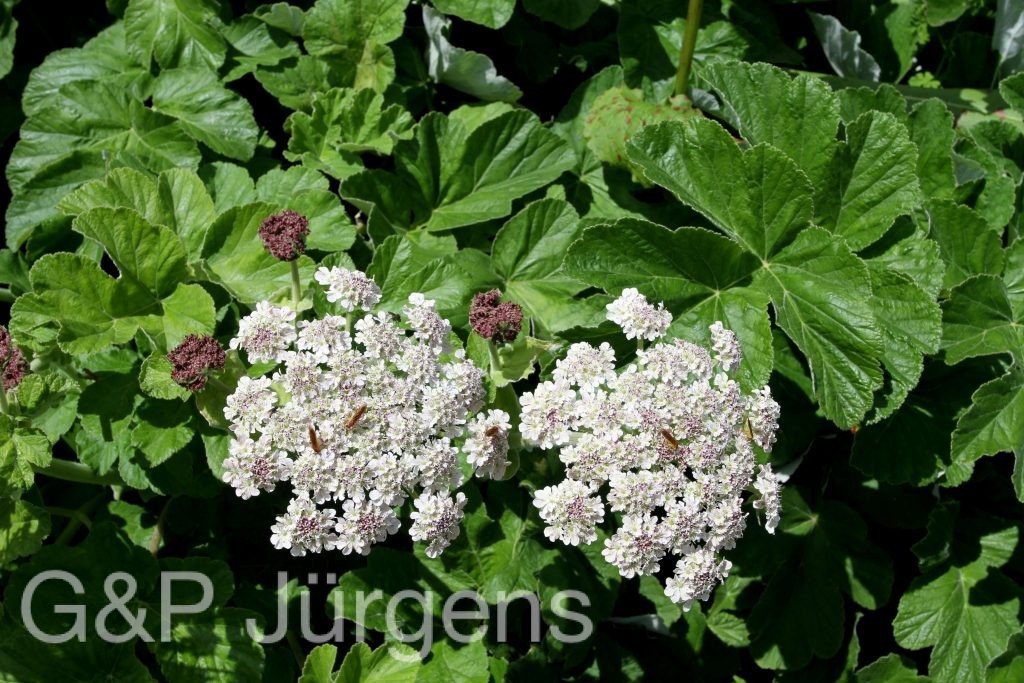
BhutanPG2011 769 01 01
Bhutan Chele-La, 3900m July

Description

Heracleum candidans var. obtusifolium (Wall. ex DC.) F.T.Pu & M.F.Watson is treated by GBIF as a synonym, with the accepted name being Heracleum candicans obtusifolium. It is a Himalayan umbellifer recorded from China and Nepal, GBIF documenting 44 occurrences, and is a plant of the upper subalpine and alpine zones. It occupies open slopes, meadow flushes, shrubberies and forest clearings, typically between about 3000 and 4200 m. The photographed plant at the Chele-La in western Bhutan, at roughly 3900 m in July, illustrates its association with the moist, high-elevation grasslands of the eastern Himalaya during the summer flowering season.

The plant is a robust, tomentose perennial with a stout rootstock and erect, ridged, hollow stems. The leaves are large and pinnately divided, with broad, lobed segments that are densely white-woolly beneath, the obtuse leaf segments giving the variety its epithet. The inflorescence is a large compound umbel with numerous rays subtended by deciduous bracts; the small flowers are white, with the marginal flowers often radiant and the outer petals enlarged and bilobed. The fruit is a dorsally compressed, broadly winged schizocarp bearing conspicuous oil ducts (vittae), the typical mericarp of the genus.

Heracleum is a taxonomically difficult genus in the Himalaya, with a continuum of closely allied entities; this taxon has been variously ranked as a species, subspecies or variety, and its placement under H. candicans reflects ongoing molecular and morphological reassessment of the group. As with other species of the genus, the foliage and sap contain furanocoumarins that may cause phototoxic dermatitis. The taxon is not regarded as threatened, though it occupies the narrow, climate-sensitive alpine belt of the central and eastern Himalaya.

Author: (Wall. ex DC.) F.T.Pu & M.F.Watson · Sources: POWO (Kew), GBIF, Flora of China, Flora of Bhutan, Flora of Nepal, Pimenov & Leonov genera of Umbelliferae

C.B.Clarke

Nepal 99 285 ergebnis
West-Nepal Kalmura 4000m, June

Description

Heracleum pinnatum, here treated under its accepted name in current databases (it is variously circumscribed and has at times been placed in the segregate genus Tetrataenium, as reflected in the source page), is a robust umbellifer of the western and central Himalaya. GBIF holds about 193 occurrences from India, Pakistan, China and Nepal, indicating a montane-to-alpine distribution along the northwestern arc of the range. It favours open grassy slopes, herb-rich alpine meadows, forest clearings and moist hollows, generally between 3000 and 4300 m. The plant figured from Kalmura in West Nepal at roughly 4000 m in June occupies the upper part of this band, flowering in early summer amid the lush tall-herb communities that develop on deep, moisture-retentive alpine soils.

It is a stout, erect perennial herb arising from a thick taproot, the hollow furrowed stem reaching one to two metres and clothed, as is typical of the genus, in rough or hispid hairs. The leaves are large and pinnately compound with broad, coarsely toothed and often deeply lobed segments. The inflorescence is a large flat-topped compound umbel with numerous rays; the outer flowers frequently have enlarged, radiating, deeply notched petals that give the umbel a showy margin, a trait promoting insect attraction. Flowers are white. The fruit is a dorsally compressed schizocarp (a mericarp pair) with broad lateral wings and conspicuous dark longitudinal oil canals (vittae) on the commissural and dorsal faces, the diagnostic feature underpinning the Tetrataenium concept.

The taxonomy of Himalayan Heracleum is notoriously complex, with the broad-fruited, club-shaped-vitta species often segregated as Tetrataenium by some authors while others retain them within an enlarged Heracleum; molecular work has tended to support a reintegration, hence the accepted placement adopted here. Like its congeners the plant contains furanocoumarins that can cause phytophotodermatitis, and it offers abundant nectar to a wide guild of generalist pollinators. As a wide-ranging montane herb of accessible meadow habitat it is not regarded as threatened.

Author: C.B.Clarke · Sources: POWO (Kew), GBIF, Flora of China Vol. 14, Flora of Pakistan, Flora of Nepal, Mukherjee & Constance Umbelliferae of India

(Duthie) Tang & F.T.Wang

Nepal 99 706 ergebnis
West-Nepal, Pungmo-Khola 3800m, July

Description

Herminium elisabethiae (Duthie) Tang & F.T.Wang is a small terrestrial orchid of the Himalaya, formerly treated under Peristylus, as its synonymy and the source URL indicate. Although GBIF currently holds no georeferenced occurrence records for the name, the species is known from the western and central Himalaya, where it grows in alpine and subalpine grassland, open turf and grassy slopes. It was photographed in West Nepal along the Pungmo-Khola at 3800 m in July, during the summer monsoon flowering period typical of high-elevation Himalayan terrestrial orchids.

The plant is a slender, glabrous geophyte arising from small ovoid or spherical underground tubers. The stem bears a few narrow, lanceolate to linear leaves clustered near the base, grading into bract-like cauline leaves above. The inflorescence is a slender, cylindrical, many-flowered raceme of small greenish to yellowish-green flowers, each subtended by a narrow bract. The flowers show the dorsal sepal and petals converging into a hood over the column, with a small spurred or saccate, often three-lobed labellum characteristic of the Herminium-Peristylus alliance. The fruit is a small ellipsoid capsule releasing abundant dust-like seeds.

The genus Herminium, in tribe Orchideae of subfamily Orchidoideae, comprises small alpine and subalpine orchids of temperate Eurasia, and molecular work has repeatedly transferred species between Herminium and Peristylus, explaining the nomenclatural history here. The original family field is given verbatim as "Orchideaceae", though the correct spelling is Orchidaceae. As with most terrestrial orchids it depends on mycorrhizal fungi for germination, and its grassland habitat is vulnerable to grazing intensification and land-use change. The species is poorly documented and merits further field survey.

Author: (Duthie) Tang & F.T.Wang · Sources: POWO (Kew), GBIF, Flora of China, Flora of Nepal, Orchidaceae of the Himalaya (Tang & Wang; X. H. Jin revision of Herminium)

(Renz) X.H.Jin, Schuit., Raskoti & Lu Q.Huang

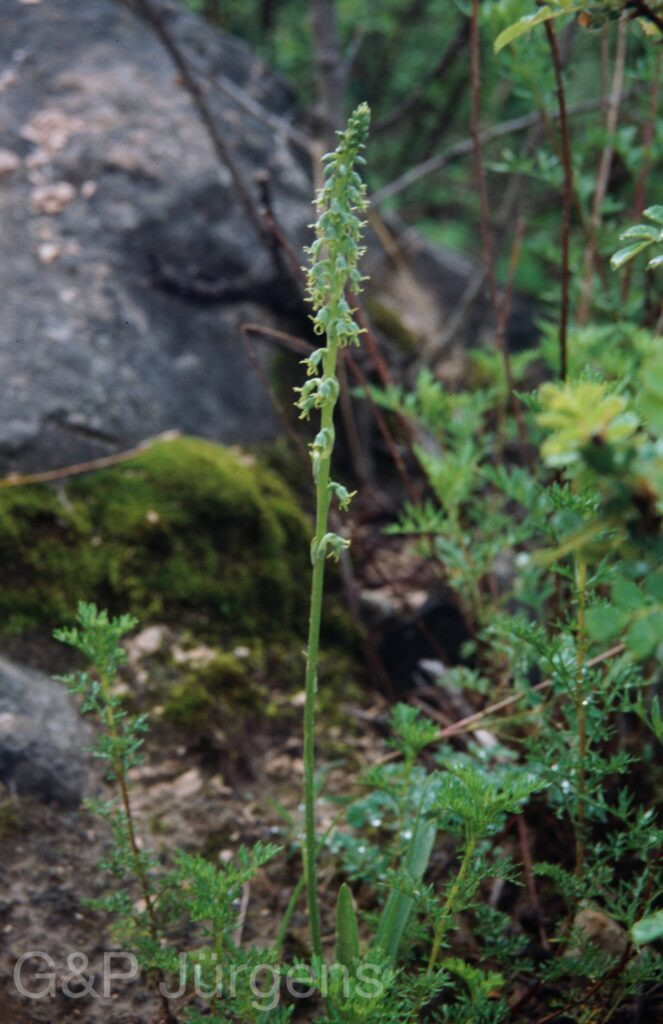
BhutanPG2011 621
Bhutan Ludlow-Sherriff-Trail Kem-La, 4300m July

Description

Herminium himalayanum is a small terrestrial orchid of the high Eastern Himalaya, documented in occurrence records principally from Bhutan, where it is a rare and infrequently collected alpine plant. It inhabits the alpine zone, growing among short turf, mossy banks, damp meadows and the margins of scrub above the treeline, where the flowering individual shown was photographed on the Ludlow–Sherriff trail near Kem-La in Bhutan at 4300 m in July, during the brief monsoon-season flowering of these high pastures.

The plant is a slender, glabrous perennial arising from small subterranean tubers that store reserves through the dormant season. The stem is erect and bears one or few narrow, lanceolate to oblong leaves, often somewhat basal, sheathing at the base. The inflorescence is a slender, few- to several-flowered raceme of small, greenish to yellowish-green flowers. As in Herminium the floral segments are narrow and the labellum is characteristically lobed, frequently three-lobed with elongate divisions and lacking a developed spur or with only a slight saccate base. The column is short, bearing two pollinia attached to viscidia, and the fruit is a small erect capsule liberating dust-like seeds.

The accepted placement of the species follows a molecular recircumscription of the Herminium alliance, the taxon having previously been treated under the segregate genus Bhutanthera, as reflected in its earlier name Bhutanthera himalayana; subsequent phylogenetic work transferred it to Herminium. As a narrow high-alpine Eastern Himalayan endemic with very few known localities, it is of biogeographic interest and should be regarded as data-deficient and potentially of conservation concern given its restricted range and fragile habitat.

Author: (Renz) X.H.Jin, Schuit., Raskoti & Lu Q.Huang · Sources: POWO (Kew), GBIF, The Orchids of Bhutan (Pearce & Cribb), Flora of Bhutan, Jin et al. phylogeny of Herminium and Bhutanthera, CITES Appendices

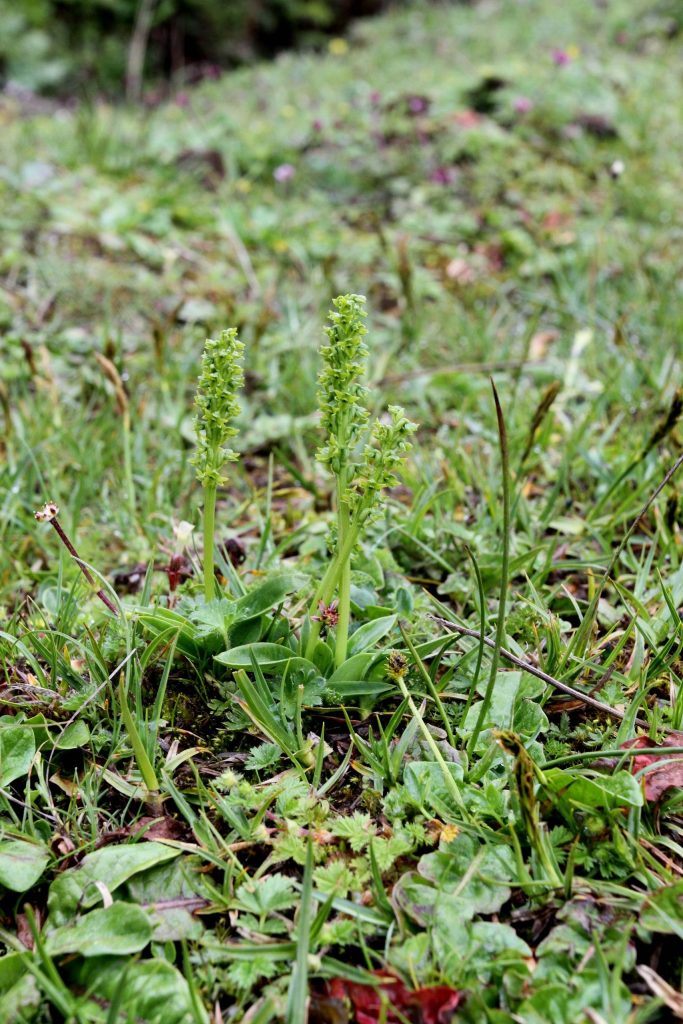
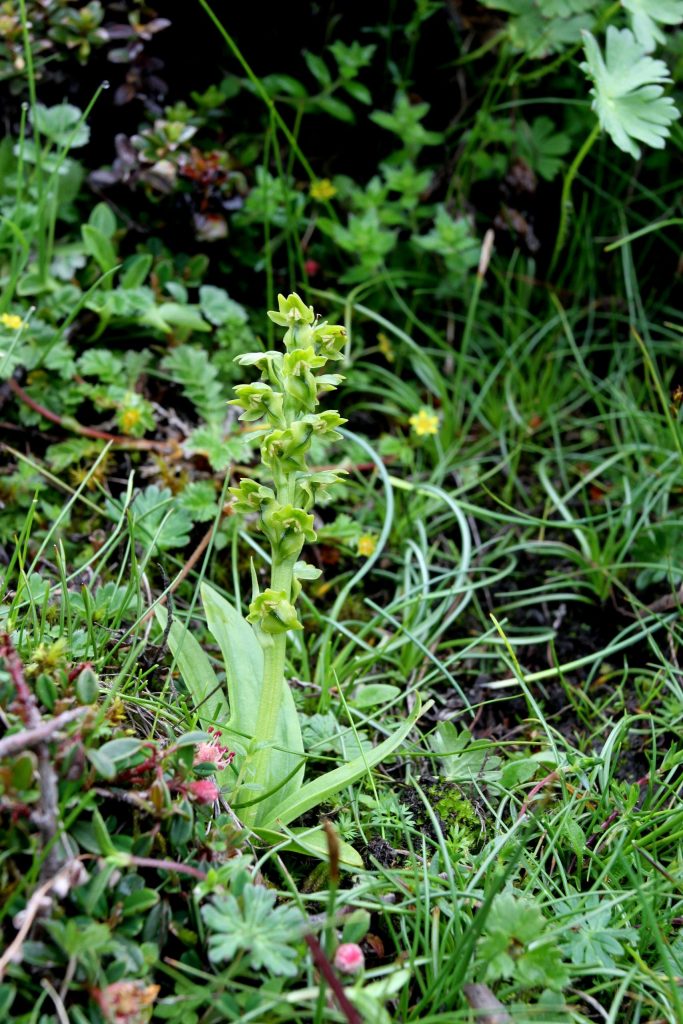
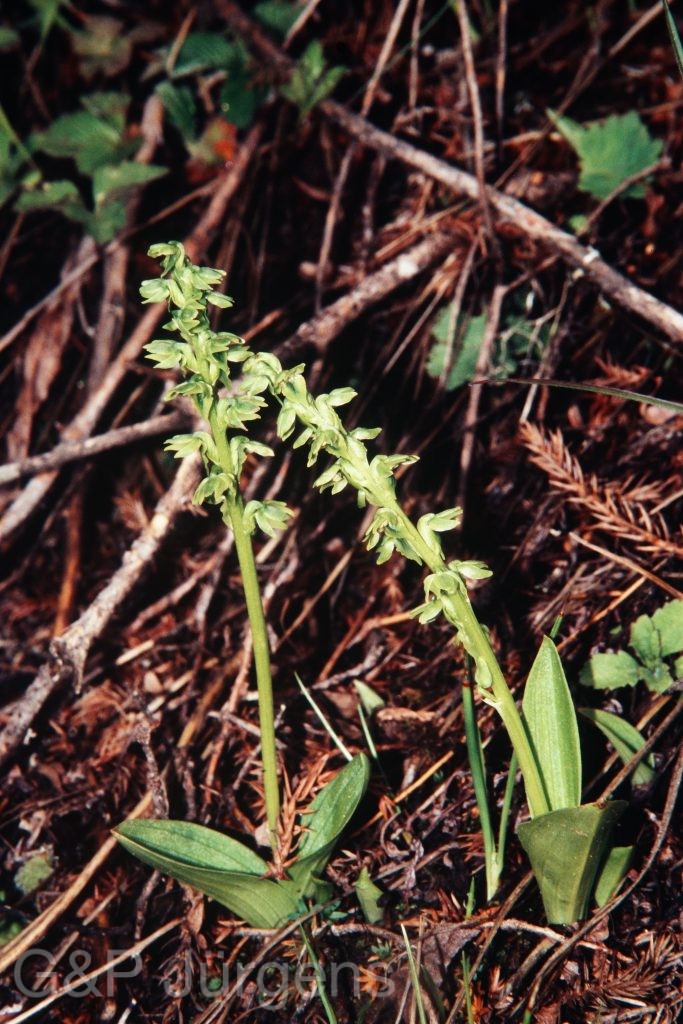
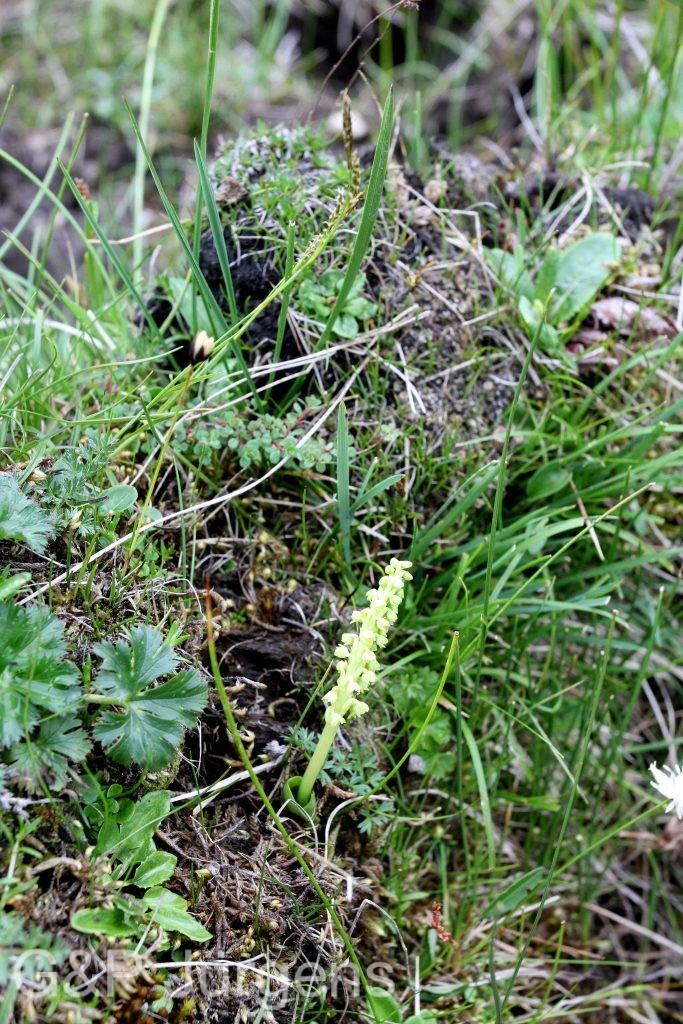
Rchb.f.

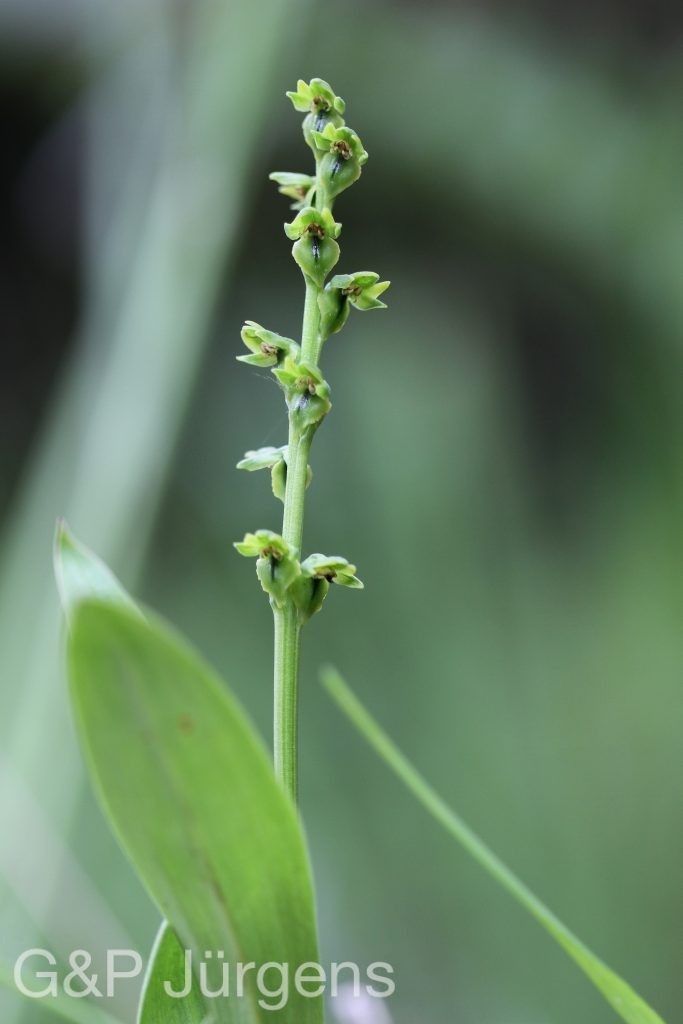
BhutanPG2011 125
Bhutan Tsochenchen, 3500m June
Bh09 196 G335
Bhutan above Thimphu, 3000m June

Description

Herminium josephi is a small terrestrial orchid of the alpine and upper subalpine Himalaya, recorded from China, Nepal, India and Bhutan, with 259 GBIF occurrences clustered along the high mountain chain. It is a plant of open alpine turf, grassy slopes and the moist margins of meadows above the treeline, generally between about 3000 and 4300 m. The illustrated material was gathered in Bhutan at Tsochenchen at around 3500 m and on the slopes above Thimphu at about 3000 m, both in June, when these short-grazed alpine swards flower in the brief window after snowmelt.

The plant arises from one or two small ovoid or globose tubers and produces a slender, erect stem with a few narrow, lanceolate to linear leaves toward the base. The inflorescence is a slender, cylindrical, many-flowered spike of tiny green to yellowish-green flowers. The individual flowers are inconspicuous and somewhat hooded, with the dorsal sepal and petals connivent over the small column; the lip is narrow and characteristically lobed, and the genus is distinguished by its minute flowers and, in many species, a very short or saccate rather than spurred lip. The fruit is a small erect capsule.

Herminium is a genus of tribe Orchideae centred on temperate Asia, with the Sino-Himalayan alpine zone forming a major centre of diversity; H. josephi, described by Reichenbach f., is one of its characteristic high-elevation members. The minute green flowers suggest fly or small-insect pollination typical of the genus. As a widespread alpine species it is not considered threatened, though heavy grazing and climate-driven shifts of the alpine belt may affect local abundance.

Author: Rchb.f. · Sources: POWO (Kew), GBIF, Flora of China, Flora of Bhutan, The Orchids of Bhutan (Pearce & Cribb)

(D.Don) Dandy

Bhutan2012 251
Bhutan Shele-La, 4000m September

Description

Herminium macrophyllum is a terrestrial orchid of the Himalaya and southwestern China, recorded from Nepal, China, India and Bhutan, with 160 occurrences in GBIF. It grows on alpine and subalpine meadows, grassy slopes and open turf, generally between 3000 and 4300 m. The plant photographed at Shele-La in Bhutan at about 4000 m in September is characteristic of the cool, moist high-altitude grassland where the species flowers in the late monsoon, its slender spikes rising among low alpine herbs and sedges on damp peaty soil.

The species is a small deciduous terrestrial herb arising from a pair of ovoid to globose underground tubers. The stem bears a few leaves, with one or two comparatively large, broadly elliptic to ovate basal leaves (the macrophyllum referring to this enlarged foliage) sheathing the base. The inflorescence is a slender, many-flowered cylindrical raceme of small greenish to yellowish-green flowers; each has a hooded dorsal sepal and petals forming a loose galea, spreading lateral sepals, and a labellum that is typically three-lobed with a short saccate or scarcely spurred base, the column short as is usual in the genus. The fruit is a small erect dehiscent capsule releasing copious minute seeds.

Herminium (subtribe Orchidinae, tribe Orchideae of the Orchidoideae) is a genus of small Eurasian terrestrial orchids centred on the Sino-Himalayan region, distinguished by their tuberous habit and inconspicuous green flowers; H. macrophyllum is set apart by its enlarged leaves. Like other terrestrial orchids it requires mycorrhizal fungi for seed germination and is pollinated by small insects attracted to the modest flowers. The species is locally frequent in intact alpine meadow but, as with all orchids, is listed under CITES Appendix II and is sensitive to grazing and habitat disturbance.

Author: (D.Don) Dandy · Sources: POWO (Kew), GBIF, Flora of China, Flora of Bhutan, Orchids of Bhutan, Genera Orchidacearum (Pridgeon et al.)

(D.Don) P.F.Hunt & Summerh.

BhutanPG2011 245
Bhutan Tsochenchen 3800m, June

Description

Herminium monophyllum (D.Don) P.F.Hunt & Summerh. is a small terrestrial orchid of the Himalaya and western China, recorded by GBIF from India, Nepal, Bhutan and China across some 59 occurrences. It is a plant of open alpine and subalpine turf, grassy slopes, moist meadows and the margins of scrub, generally between about 3000 and 4300 m. The individual photographed at Tsochenchen in Bhutan at around 3800 m in June, during the brief alpine flowering flush, reflects its preference for cool, humid grassland kept moist through the growing season.

The plant grows from small subterranean tubers and produces a slender erect stem. As the epithet monophyllum indicates, there is characteristically a single principal basal leaf (sometimes with a second much smaller one), which is oblong to lanceolate, sheathing at the base. The inflorescence is a slender, rather lax to dense terminal raceme of numerous tiny greenish or greenish-yellow flowers. Each flower has narrow, somewhat hooded sepals and petals and a small three-lobed labellum without a true spur, the whole giving the inflorescence a delicate, grass-like appearance typical of the genus, which is pollinated chiefly by small insects.

Herminium is a genus of small-flowered terrestrial orchids of tribe Orchideae, distinguished by its spurless or near-spurless labellum and tuberous habit. Herminium monophyllum is one of several closely similar Himalayan species and can be confused with its relatives without close examination. It is inconspicuous and easily overlooked, and although not formally assessed as threatened it is restricted to high-altitude grassland that is vulnerable to overgrazing and warming; like all orchids it is protected under CITES Appendix II.

Author: (D.Don) P.F.Hunt & Summerh. · Sources: POWO (Kew), GBIF, Flora of Bhutan, Flora of China, Pearce and Cribb Orchids of Bhutan, World Checklist of Orchidaceae