Tag:

Alpine (>3500 m)

Stephan ex Willd.

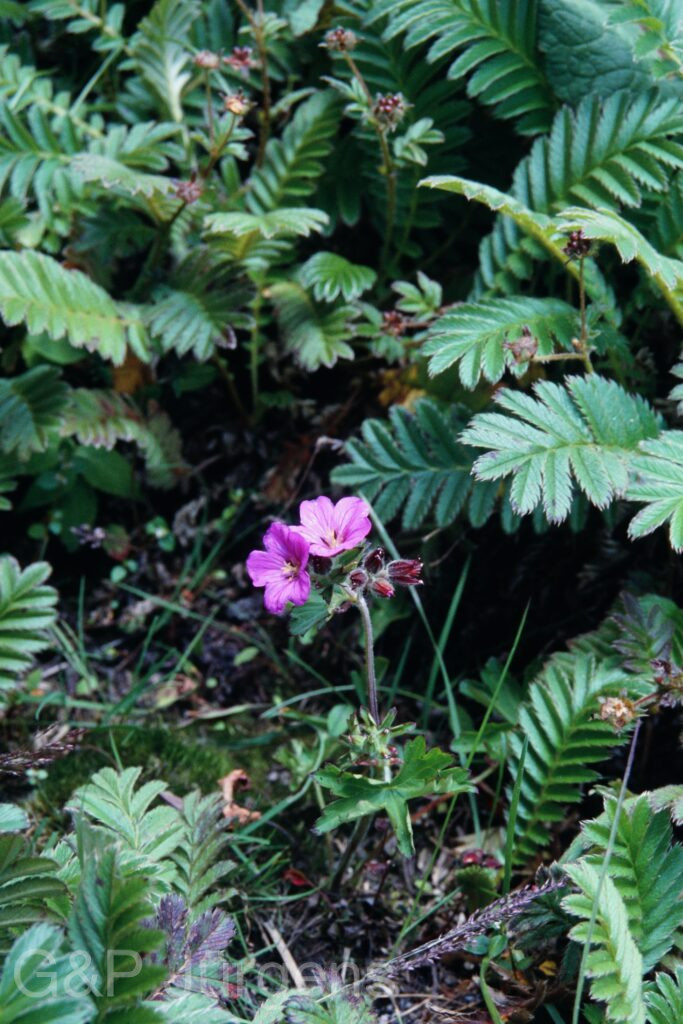
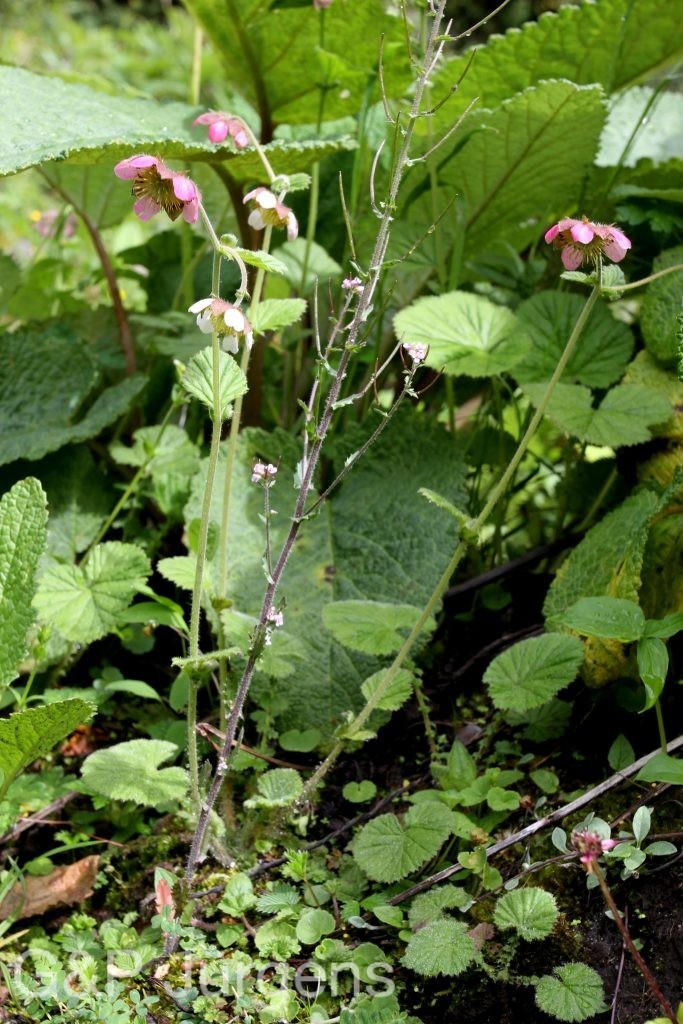
Nepal 99 259 ergebnis
West-Nepal Loccu 3400m, June
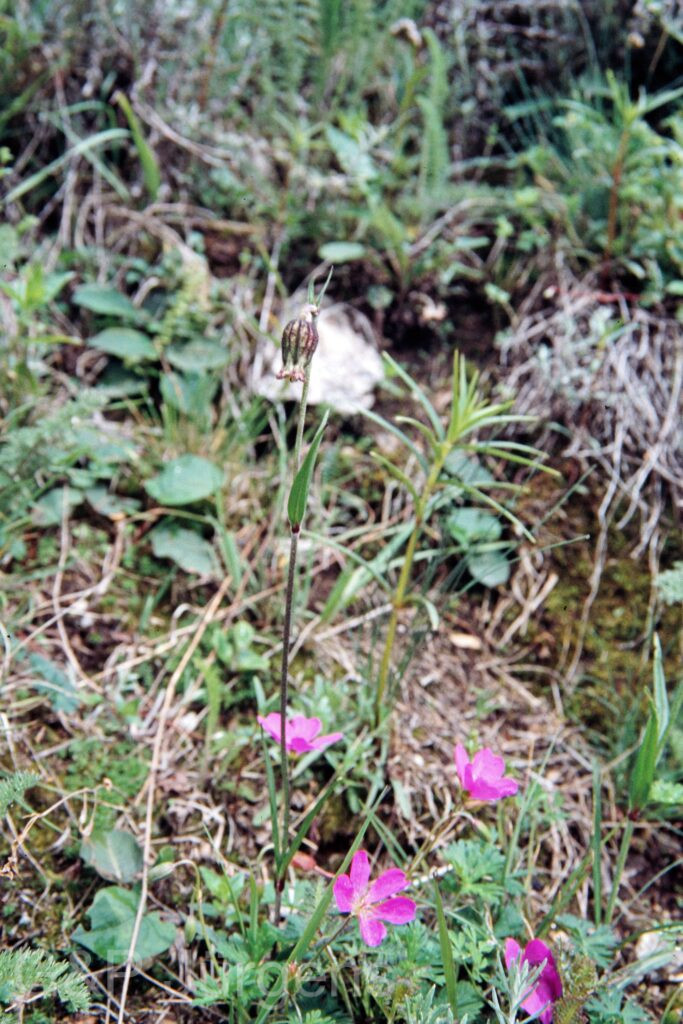
Nepal 99 342 ergebnis
West-Nepal Kalmura 3800m, June

Description

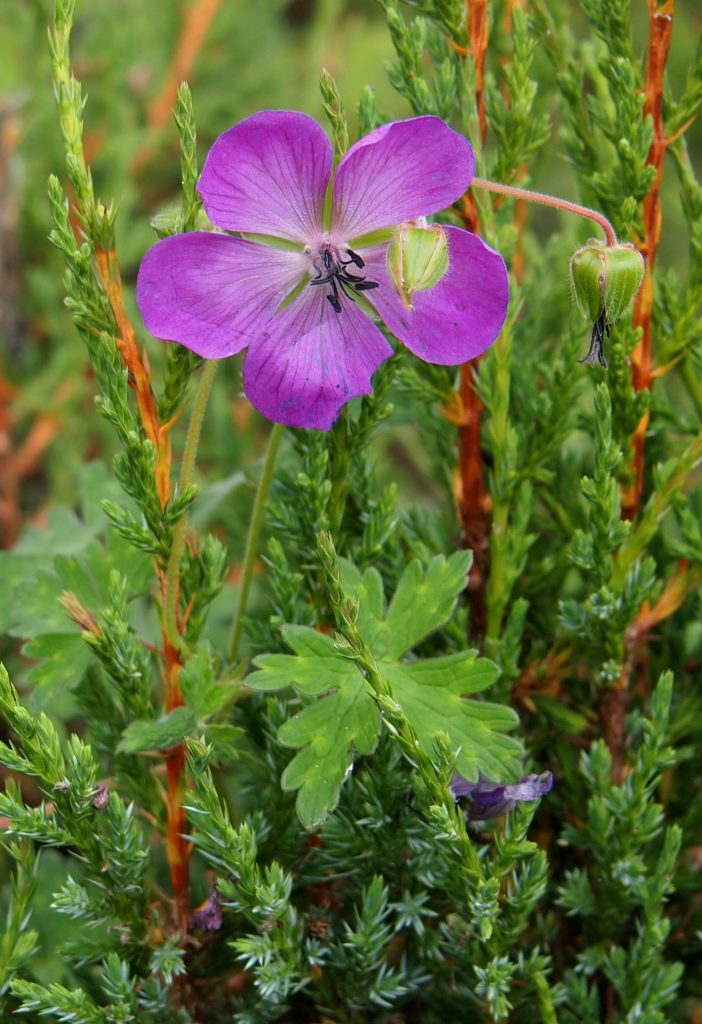
Geranium collinum (Stephan ex Willd.) is a perennial cranesbill of wide continental distribution, ranging from eastern Europe and the Caucasus through Russia, Turkey, Iran and Central Asia (Kazakhstan, Kyrgyzstan, Tajikistan, Uzbekistan) into Afghanistan, Pakistan, the western Himalaya and western China and Mongolia. The roughly 3,200 GBIF records trace a steppe-and-mountain belt across temperate Asia. It is characteristic of moist alpine meadows, damp grassland, streamsides and open subalpine slopes, typically between 2,500 and 4,000 m, as shown by the West Nepal collections from Loccu at 3,400 m and Kalmura at 3,800 m, both in June at the height of the monsoon-flush flowering season.

The plant grows from a stout, woody, branched rootstock and produces ascending to decumbent, much-branched stems clothed in spreading, often retrorse hairs. The leaves are long-petiolate and palmately divided into five to seven deeply incised, oblong-cuneate lobes, the upper cauline leaves becoming shortly stalked and smaller. The flowers are borne in lax, paired cymes; the five petals are pale pink to lilac-purple, obovate and slightly notched, conspicuously veined with darker lines. The fruit is the characteristic geraniaceous schizocarp with a long beak (rostrum), splitting at maturity into five awned mericarps that disperse the seeds by an explosive ballistic mechanism.

Geranium collinum belongs to a taxonomically complex group of pink-flowered perennial cranesbills and is somewhat variable in leaf dissection and indumentum across its vast range, having given rise to numerous infraspecific names. Its presence in alpine pastures makes it a component of high-altitude grazing communities, and the tannin-rich rootstock has been used in folk medicine. The species is widespread and not of conservation concern.

Author: Stephan ex Willd. · Sources: POWO (Kew), Flora of Pakistan, GBIF, Flora of China Vol. 11, Yeo: Hardy Geraniums (2002)
Sweet

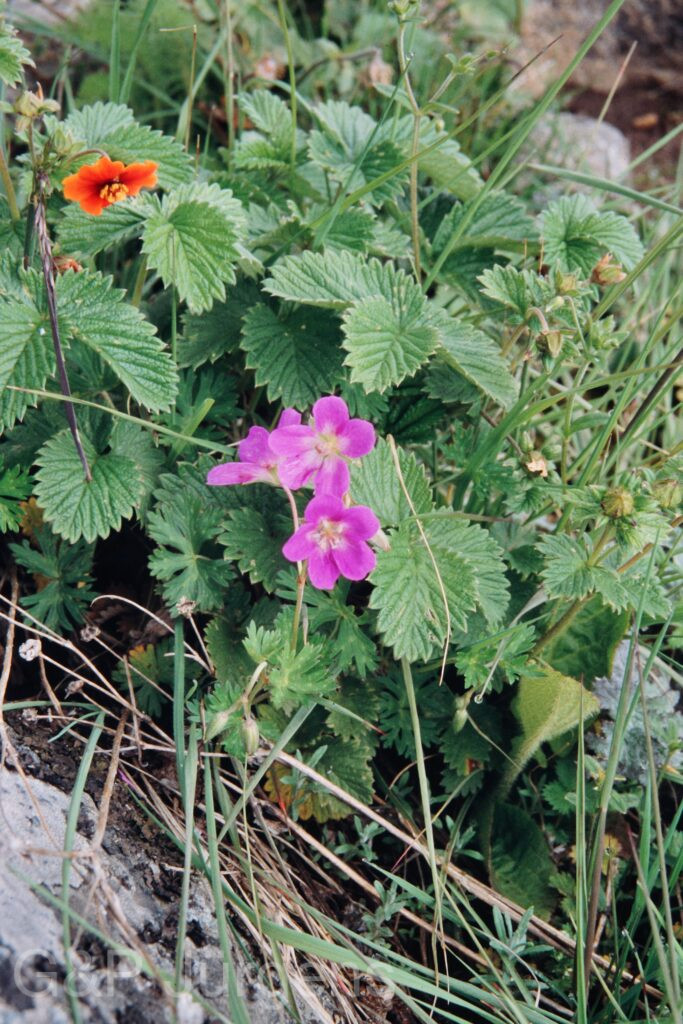
BhutanPG2011 106
Bhutan Tsochenchen, 3450m June
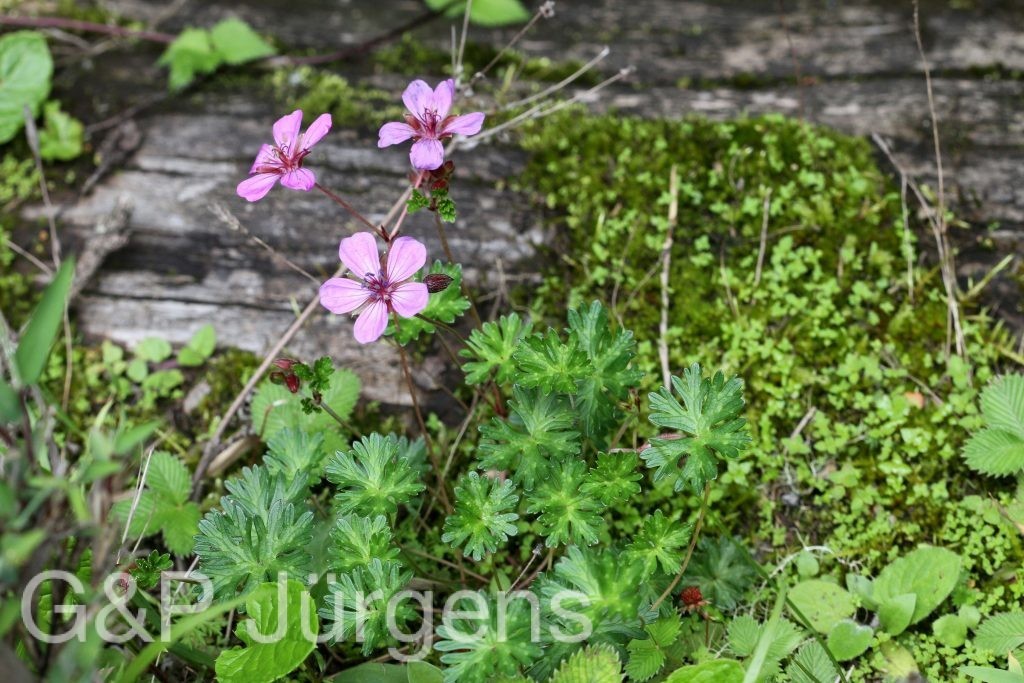
Sikkim2003 181 G247
Sikkim Dzongri 4100m 08.2003

Description

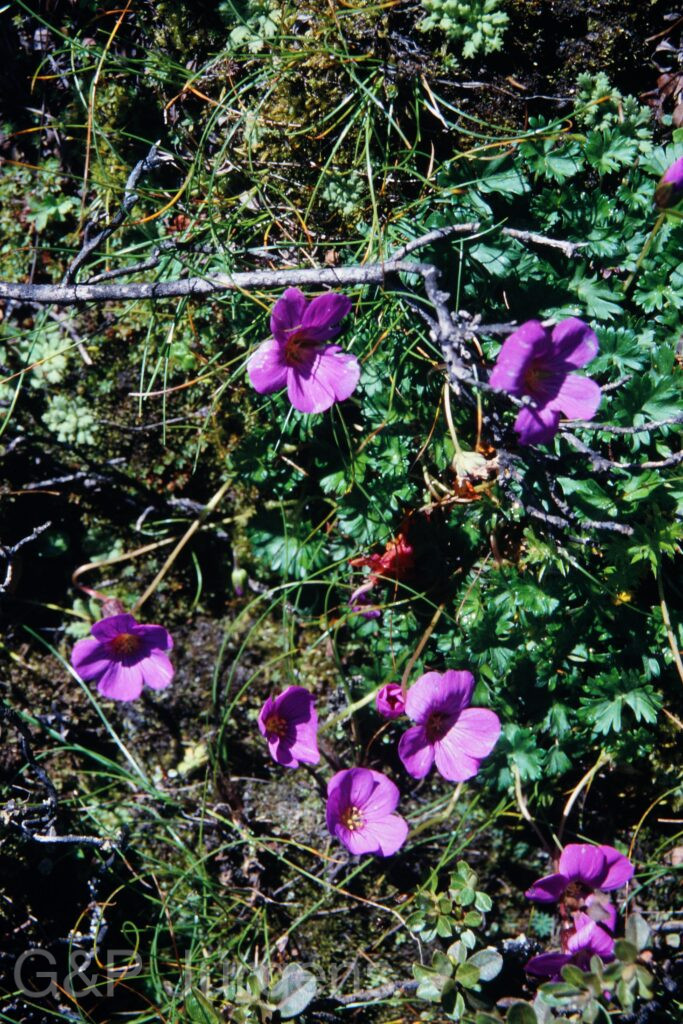
Geranium donianum is an alpine cranesbill of the Himalaya and southwestern China, recorded by GBIF from China, Nepal, India, Bhutan and Myanmar across roughly 795 occurrences. It grows in alpine and subalpine meadows, open grassy slopes, scrub margins and stony turf, generally at high elevations where it forms part of the herb-rich alpine sward. The photographed plants were found in Bhutan at Tsochenchen at 3450 m in June and in Sikkim at Dzongri at 4100 m in August, situations typical of its preference for sunny, well-drained montane grassland through the brief alpine summer.

It is a low, tufted perennial arising from a stout, often woody rootstock, with somewhat spreading, hairy stems. The leaves are orbicular to reniform in outline and palmately divided nearly to the base into several wedge-shaped, deeply lobed segments, the lobes again toothed; basal leaves are long-petiolate. The flowers are relatively large and showy, with five free, obovate petals that are typically deep pink to purplish-red and conspicuously darker-veined, sometimes notched at the apex. There are ten stamens and a five-lobed superior ovary; the fruit is the characteristic beaked schizocarp of the genus, whose mericarps separate elastically at maturity to fling out the seeds.

GBIF accepts the name. Within Geranium it belongs among the Himalayan alpine cranesbills allied to G. orientali-tibeticum and related taxa, a group well represented across the high ranges. The vivid dark-veined petals serve as nectar guides for bee and fly pollinators. Widespread and locally common in alpine pastures, G. donianum is assessed as of least conservation concern.

Author: Sweet · Sources: POWO (Kew), GBIF, Flora of Nepal, Flora of China, Yeo monograph of Geranium

Sweet

Bhutan2012 218
Bhutan Shele-La, 3800m September
BhutanPG2011 679 01 01
Bhutan Luksur, 3700m July
Nepal 95 389P688 ergebnis
Nepal Bahanjyang 3700m October

Description

Geranium lambertii is a perennial herb of the high Himalaya, distributed through China, India, Nepal, Bhutan and Pakistan, with about 304 georeferenced records (additional codes from Canada, Japan and Europe reflect its presence in cultivation). It inhabits subalpine and alpine meadows, forest clearings, shrubberies and moist rocky slopes, often among dwarf rhododendron and on the margins of birch forest. The collections cited from Bhutan at Shele-La (3800 m, September) and Luksur (3700 m, July) and from Bahanjyang in Nepal (3700 m, October) place it firmly in the 3500-4000 m belt, flowering through the late monsoon and into autumn.

It forms a clump of trailing to ascending stems from a stout rootstock. The leaves are long-petiolate and palmately divided into five to seven deeply lobed and toothed segments, sparsely hairy. The flowers are among the most distinctive in the genus, nodding and saucer- to bell-shaped, with five broad, satiny white petals usually flushed pink and contrasting with a dark crimson-purple centre; the ten stamens and the style cluster are conspicuous, and the pedicels recurve in fruit. The fruit is the typical geranium schizocarp, with a long beak that splits elastically to fling the seeds.

Geranium lambertii, named by Sweet, is a well-marked species of the Himalayan endemic assemblage and a long-cultivated ornamental prized for its pendent, dark-eyed blooms. Its mid- to late-season flowering supports bumblebees and other high-altitude pollinators, and the spring-loaded mericarps achieve effective ballistic seed dispersal. It is widespread and not considered threatened, though localised meadow populations are sensitive to heavy grazing.

Author: Sweet · Sources: POWO (Kew), GBIF, Flora of Bhutan, Annotated Checklist of the Flowering Plants of Nepal, Yeo Hardy Geraniums

H.Hara

BhutanPG2011 372
Bhutan Dur-Tso, 3800m June
Also included: Pedicularis siphonantha D.Don
Sikkim2003 176 P240
Sikkim Dzongri 4100m, August

Description

Geranium nakaoanum is a Himalayan cranesbill known from Nepal, the Indian Himalaya, Bhutan and adjacent China, with around 61 GBIF occurrences reflecting its montane to alpine distribution. It occupies open alpine meadows, grassy slopes, streamsides and the herbaceous margins of dwarf rhododendron and juniper scrub on moist, humus-rich soils. The locality figured, Dur Tsachu in Bhutan at about 3800 m in June, sits within its typical band of roughly 3300-4500 m; the accompanying note of Pedicularis siphonantha at Dzongri in Sikkim at 4100 m in August underscores the high-elevation meadow community in which it grows, flowering through the monsoon summer.

It is a low, tufted perennial herb with a thickened rootstock, producing slender, often decumbent or ascending stems clothed in spreading or retrorse hairs. The leaves are long-petioled and palmately divided into five to seven deeply incised, lobed segments forming a rounded outline, the laminae sparsely hairy on both surfaces. The flowers are borne in few-flowered cymes on glandular-hairy pedicels; the five free petals are pink to rose-purple, frequently darker-veined and shallowly notched. Ten stamens surround the five-carpellate ovary, which matures into the characteristic beaked schizocarp whose mericarps spring apart elastically to disperse the seeds.

The species commemorates the Japanese botanist Sasuke Nakao, a participant in mid-twentieth-century Himalayan expeditions. It belongs to the large temperate genus Geranium, well represented in the Himalaya by several allied alpine taxa distinguished by indumentum, petal colour and leaf dissection. As a meadow perennial it contributes to the diverse alpine herb flora and is pollinated chiefly by bees and flies; no specific threat is recorded, though alpine grazing pressure can affect such populations.

Author: H.Hara · Sources: POWO (Kew), GBIF, Flora of Bhutan, Flora of Nepal, Aedo monograph of Geranium, Yeo Hardy Geraniums

Edgew. & Hook.f.

Sikkim2003 204 P284
Sikkim Dzongri 3900m 08.2003

Description

Geranium polyanthes is a perennial cranesbill of the high Himalaya and the mountains of southwestern China, recorded by GBIF from China, India, Nepal, Bhutan and Myanmar (with scattered cultivated or vouchered records elsewhere) across about 331 georeferenced occurrences. It is a plant of subalpine and alpine meadows, open hillsides, grassy slopes and forest clearings near and above the treeline, characteristically flowering in the monsoon months of July and August. Its elevational range extends from roughly 3,000 m to over 4,000 m, well represented by the photographed plant from Dzongri in Sikkim at about 3,900 m in August, where it grows among dwarf rhododendron and herbaceous alpine turf.

The species forms a clump from a stout rootstock, the stems erect to ascending and clothed, like the rest of the plant, in spreading hairs. The leaves are orbicular-reniform in outline and palmately lobed into shallow, broad, crenate-toothed segments, the basal leaves long-petioled. As the epithet polyanthes ("many-flowered") indicates, the inflorescence is comparatively dense and many-flowered, an umbel-like cluster of pink to rose-pink flowers with five obovate, slightly notched petals veined with darker lines, ten stamens and a beaked pistil. The fruit is the characteristic geraniaceous schizocarp with an elongate rostrum that splits explosively into one-seeded mericarps, ejecting the seeds.

Geranium polyanthes belongs to the large genus Geranium (subgenus Geranium) and is one of a suite of pink-flowered Himalayan perennial cranesbills that includes G. donianum and G. nakaoanum, from which it is separated by its denser, many-flowered inflorescence and leaf division. As a nectar-rich alpine herb it is visited by bees and other insects and contributes to the floral diversity of Himalayan summer pastures. It is locally common and not considered threatened, though the alpine meadow habitats it occupies are sensitive to overgrazing and to the upslope shifts in vegetation associated with a warming climate.

Author: Edgew. & Hook.f. · Sources: POWO (Kew), GBIF, Flora of China Vol. 11, Flora of Bhutan Vol. 2, Flora of Nepal, Flora of Pakistan, Yeo: Hardy Geraniums and the systematic monograph of the genus Geranium

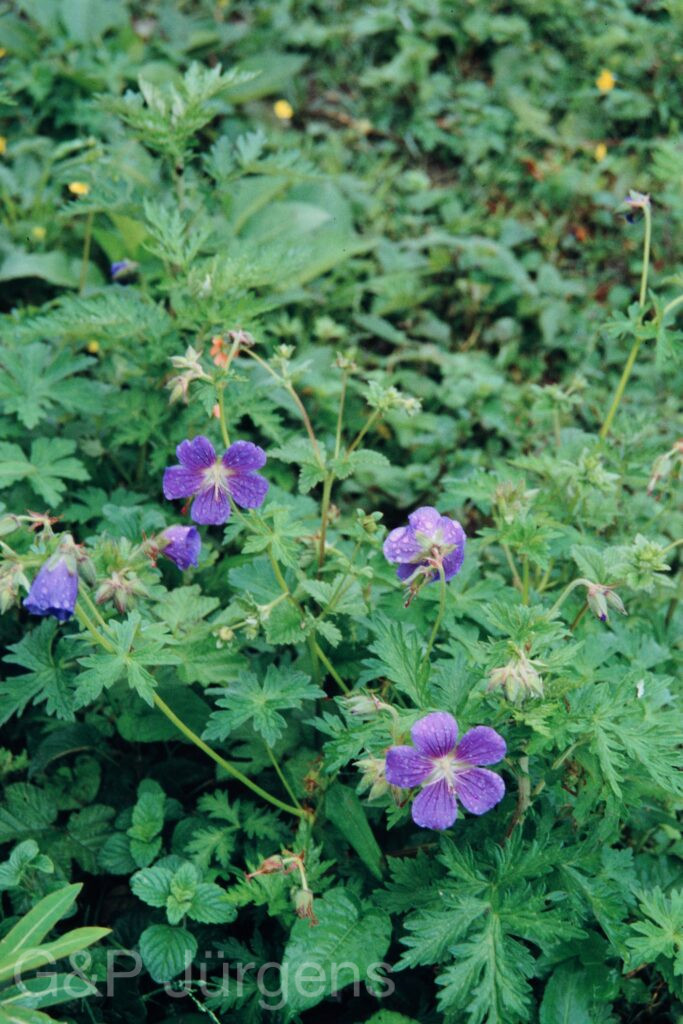
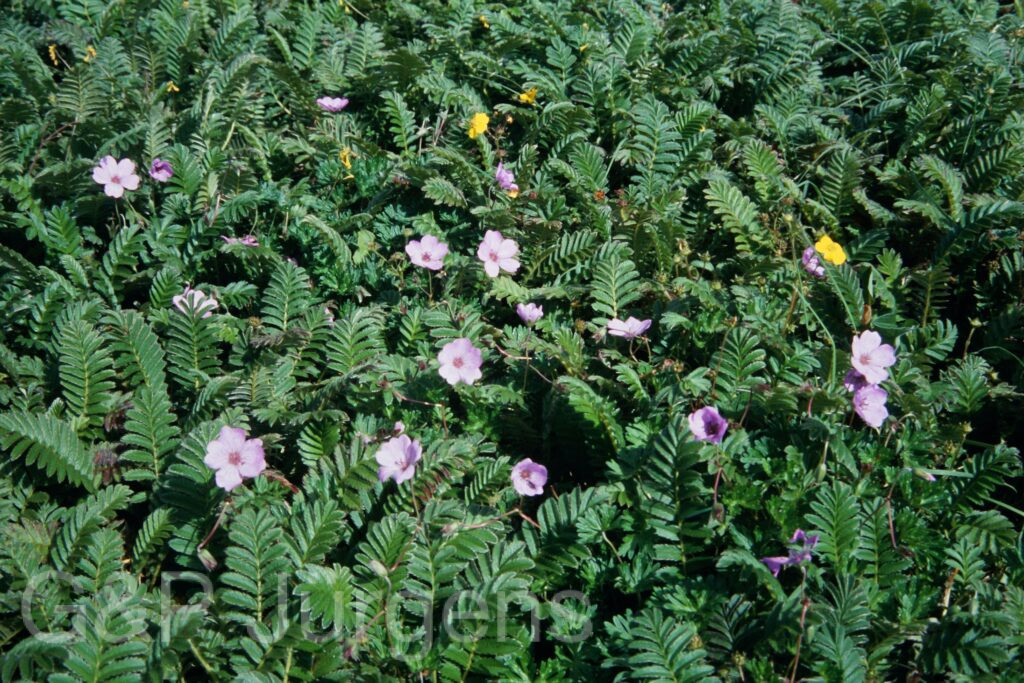
L.

Nepal 99 89 ergebnis
West-Nepal Bhulbhule 3500m, June

Description

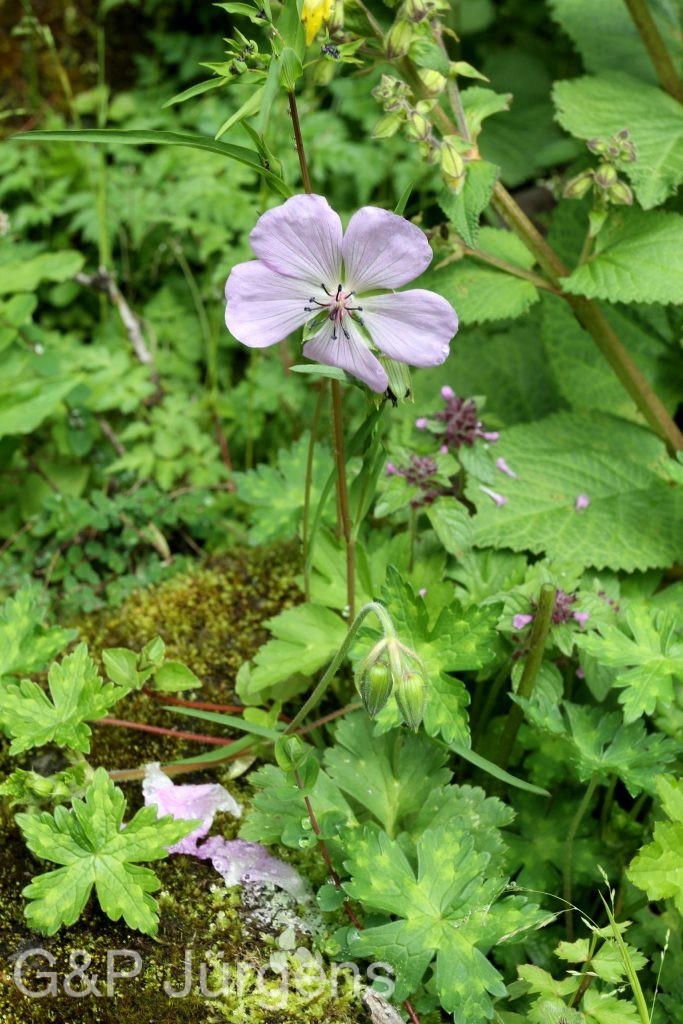
Geranium pratense, the meadow cranesbill, is a widespread perennial of temperate Eurasia. With over 190,000 GBIF occurrences it is abundantly documented across Britain, Germany, France, the Nordic and Baltic states, the Low Countries, central Europe and Russia, extending through Central Asia to the Himalaya. It grows in moist meadows, grassy slopes, streamsides and open woodland margins. In the high Himalaya it ascends to subalpine pastures; the illustrated plant was photographed at Bhulbhule in western Nepal at about 3,500 m, flowering in June, where it is a characteristic component of moist alpine-meadow turf during the early monsoon.

The plant forms a stout, branched rootstock bearing erect, glandular-pubescent stems 30–80 cm tall. The leaves are deeply palmately 5–7-lobed, the lobes themselves pinnatifid and sharply toothed, the basal leaves long-petiolate. The flowers are large and showy, 2.5–4 cm across, borne in pairs on long peduncles; the five petals are violet-blue with fine darker veins. The fruit is the characteristic geraniaceous schizocarp with an elongate beak that springs apart explosively at maturity, ejecting the five mericarps.

Geranium pratense is taxonomically variable across its vast range, with several recognised subspecies and forms; Himalayan populations have at times been segregated but are generally treated within the broad species. It is of least conservation concern, being common and adaptable, and is widely grown ornamentally with numerous cultivars. Its presence links the Himalayan flora biogeographically to the temperate grasslands of the western Palaearctic.

Author: L. · Sources: POWO (Kew), Flora of Nepal, Flora of Pakistan, GBIF, Yeo: Hardy Geraniums (2002)
Edgew. & Hook.

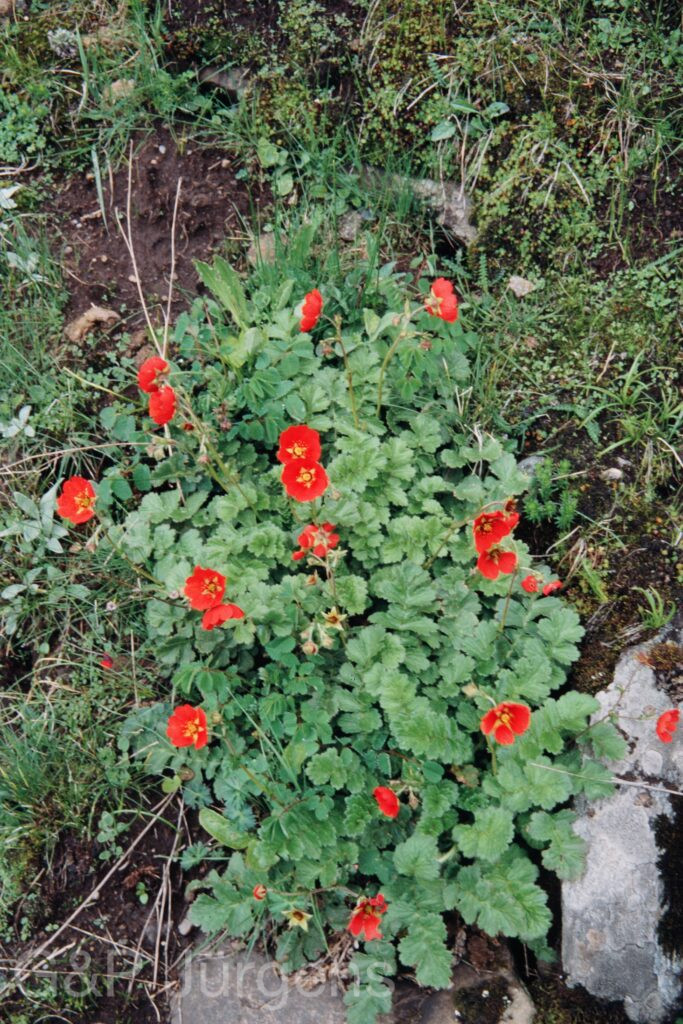
BhutanPG2011 491
Bhutan Ludlow-Sherriff-Trail Managed-Chu, 3550m June

Description

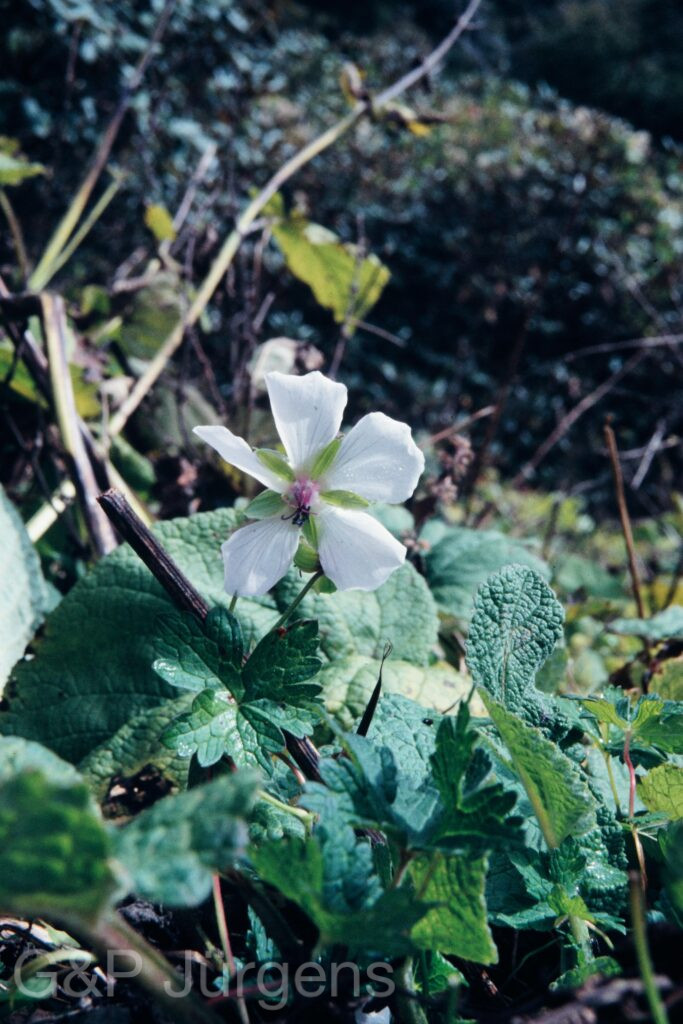
Geranium refractum is a perennial herb of the eastern and central Himalaya and adjacent China, distributed through China, Nepal, India, Bhutan and Myanmar, with about 645 georeferenced records concentrated in the subalpine and alpine zones. It grows in alpine meadows, forest clearings, shrubberies and moist, rocky slopes, often among dwarf rhododendron and on streamside banks. The plant photographed along the Ludlow-Sherriff trail near the Managed-Chu in Bhutan at 3550 m, flowering in June, is typical of its high-elevation habitat, where it appears with the early summer thaw.

It forms ascending to spreading stems from a perennial rootstock, the foliage palmately divided into five to seven deeply incised and toothed lobes. The flowers, as the epithet indicates, are nodding and become strongly reflexed, with five reflexed to spreading white or pale pinkish petals; the ten stamens and the long style column are exserted and conspicuous against the recurved corolla, recalling a small cyclamen or shooting-star in posture. The fruit is the characteristic geranium schizocarp with an elongate beak, the mericarps releasing seeds by elastic ejection.

Geranium refractum, described by Edgeworth and Hooker f., belongs to the same Himalayan group of nodding-flowered species as G. lambertii, from which it differs in its reflexed white flowers and exserted reproductive parts. Its early-summer blooms are visited by bumblebees and other montane insects, and the spring-loaded mericarps disperse seed ballistically. It is reasonably widespread across the eastern Himalaya and is not regarded as threatened, although alpine meadow populations are subject to grazing pressure.

Author: Edgew. & Hook. · Sources: POWO (Kew), GBIF, Flora of China, Flora of Bhutan, Annotated Checklist of the Flowering Plants of Nepal, Yeo Hardy Geraniums

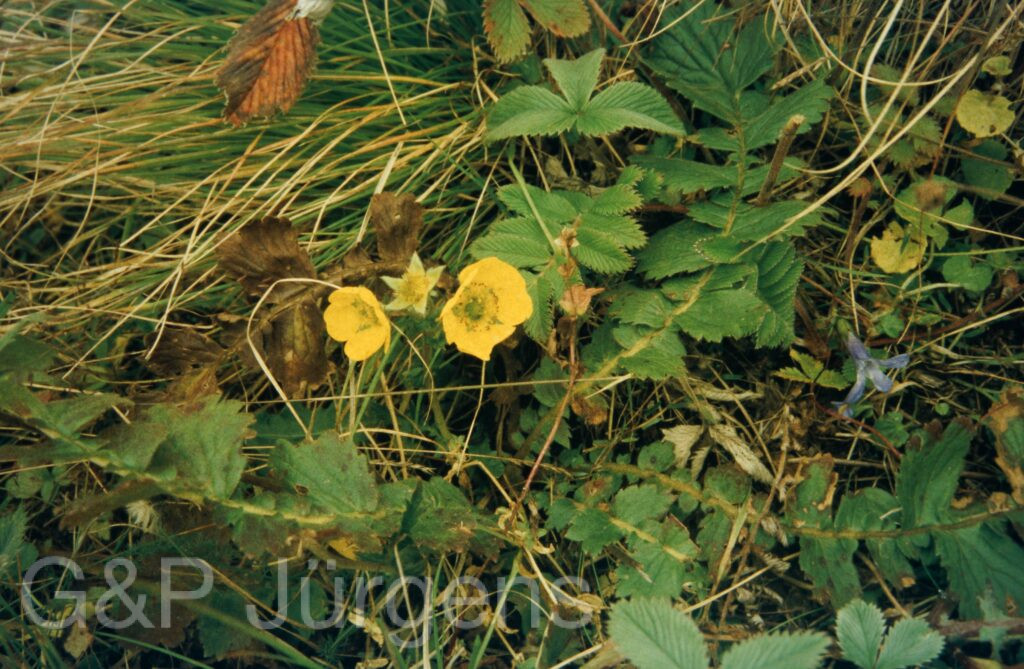
Geum elatum

by G & P Jürgens

Wall ex. G.Don.

Nepal 99 532 ergebnis
West-Nepal Churta-Khola 3600-3800m, June
Garw 2005 351 ergebnis
India Garhwal Patanathi 3800m, September

Description

Geum elatum is a perennial herb of the high Himalaya, distributed along the alpine and subalpine belt from Pakistan and Afghanistan eastward through India, Nepal, Bhutan and south-western China. GBIF aggregates some 366 occurrences, densest in Nepal and the Indian Himalaya. It grows in open alpine meadows, moist grassy slopes, rocky ledges and snow-melt flushes, typically between about 3000 and 4500 m. The populations imaged in West-Nepal at Churta-Khola (3600-3800 m, June) and in Indian Garhwal at Patanathi (3800 m, September) typify its preference for cool, humid turf near the upper limit of vegetation.

The plant arises from a stout, scaly rhizome bearing a basal rosette of pinnate to lyrate-pinnatifid leaves, the terminal leaflet conspicuously enlarged, reniform to orbicular and crenate-lobed. Flowering stems are erect to ascending, simple or sparingly branched, bearing one to several comparatively large, nodding to suberect golden-yellow flowers. These have five spreading obovate petals, five reflexed sepals alternating with small epicalyx segments, numerous stamens, and many free carpels on a hairy receptacle. In fruit the styles elongate into persistent, often plumose or hooked awns, forming a globose head of achenes adapted to epizoochorous dispersal.

Geum elatum belongs to a Himalayan complex sometimes segregated under Acomastylis or Sieversia, and varieties (notably var. leiocarpum) have been recognised on indumentum and style characters. Its nodding, large-flowered habit and montane ecology distinguish it from lowland Geum species. As a widespread, locally common alpine perennial it is of no immediate conservation concern, though potentially sensitive to grazing and climate-driven upward shifts of the alpine zone.

Author: Wall ex. G.Don. · Sources: POWO (Kew), GBIF, Flora of China, Flora of Pakistan, Flora of Bhutan, Annotated Checklist of the Flowering Plants of Nepal, monograph of the genus Geum (Gajewski)

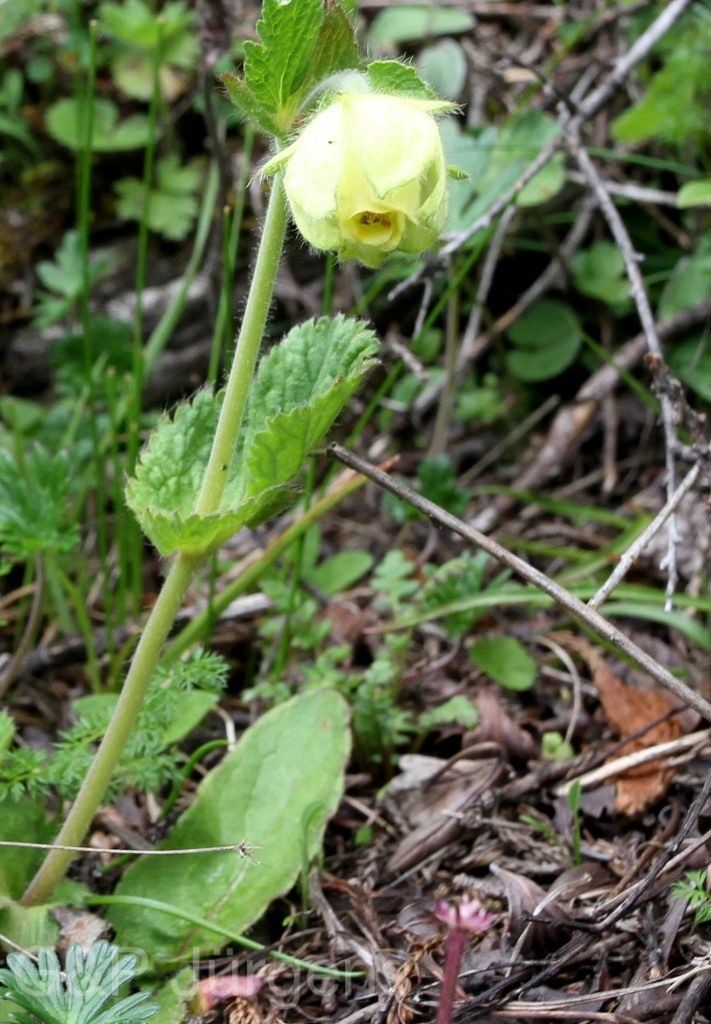
Geum macrosepalum

by GP Jürgens

Ludlow

BhutanPG2011 231
Bhutan Tsochenchen 3800m, July

Description

Geum macrosepalum Ludlow is a high-alpine rosaceous herb of the Eastern Himalaya and adjacent China, recorded from China, India and Bhutan (gbif_countries: CN, IN, BT) with only 20 occurrences in GBIF, marking it as a narrowly distributed mountain endemic. It grows in open alpine meadows, moist turf, rocky slopes and seepage ground, typically above about 3500 m. The illustrated plant from Tsochenchen in Bhutan at 3800 m, in July, captures it flowering at the height of the summer growing season in the cool, humid alpine belt of the eastern ranges.

It is a perennial herb arising from a stout rhizome, forming a basal rosette of pinnately compound, lyrate leaves with a large terminal leaflet and smaller lateral pairs, the margins toothed and the surfaces softly hairy. The flowering stems bear few reduced cauline leaves. The flowers, often solitary or few, are notable for their enlarged sepals, recorded in the epithet macrosepalum, which subtend yellow petals; an epicalyx is present outside the calyx. Numerous stamens and carpels occupy the receptacle, and the achenes mature with persistent styles that may be hooked or plumose, aiding dispersal, a feature linking the species to the segregate Acomastylis under which it has been treated.

The taxon has been placed in Acomastylis (Geum macrosepalum being the basis of Acomastylis macrosepala), reflecting the disputed generic limits within the Geum–Sieversia–Acomastylis complex; molecular work supports a broadly circumscribed Geum. Given its limited range across the eastern alpine zone, the species is of biogeographic interest as a regional endemic, and its small number of records suggests it warrants conservation attention.

Author: Ludlow · Sources: POWO (Kew), GBIF, Flora of China (Rosaceae), Flora of Bhutan, Smedmark & Eriksson phylogenetic study of Geum and allies

Geum sikkimense

by GP Jürgens

Prain

BhutanPG2011 676 01
Bhutan Luksur, 4700m July

Description

Geum sikkimense is a high-alpine avens of the eastern Himalaya, recorded in GBIF (a modest 47 occurrences) from Nepal, Bhutan and India. It is a plant of cold, open, high-elevation habitats, growing on alpine meadows, moist turf, screes and rocky slopes generally between about 4000 and 4800 m, flowering during the short summer monsoon window. The photographed plant from Luksur in Bhutan at 4700 m in July exemplifies its occurrence near the upper limit of vascular plant growth, where it persists in stony, snowmelt-watered ground.

It is a low, tufted perennial herb arising from a stout, woody rhizome clothed in old leaf bases. The leaves are mostly basal and lyrate-pinnate, with a large rounded, crenate-toothed terminal lobe and progressively smaller lateral leaflets, the surfaces hairy and the petiole long. The flowering stems are erect and bear one to few flowers; each flower has five green sepals (often with alternating epicalyx segments) and five spreading, obovate, yellow petals surrounding numerous stamens and carpels. The fruit is a head of dry achenes, each tipped with a persistent style that elongates into a hooked or feathery awn aiding epizoochorous dispersal.

Geum belongs to tribe Colurieae of the Rosaceae, allied to Sieversia and Acomastylis, genera with which several Himalayan high-alpine species have at times been associated. G. sikkimense is a narrow-range eastern Himalayan endemic adapted to the harsh, short growing season of the upper alpine zone. Given its limited known distribution and small number of records, it is poorly assessed, but its restriction to fragile high-altitude habitats makes it potentially vulnerable to climate-driven habitat contraction.

Author: Prain · Sources: POWO (Kew), GBIF, Flora of Bhutan, Annotated Checklist of the Flowering Plants of Nepal, Gajurel et al. studies on Himalayan Rosaceae, Smedmark revision of Colurieae