
Prain
Description
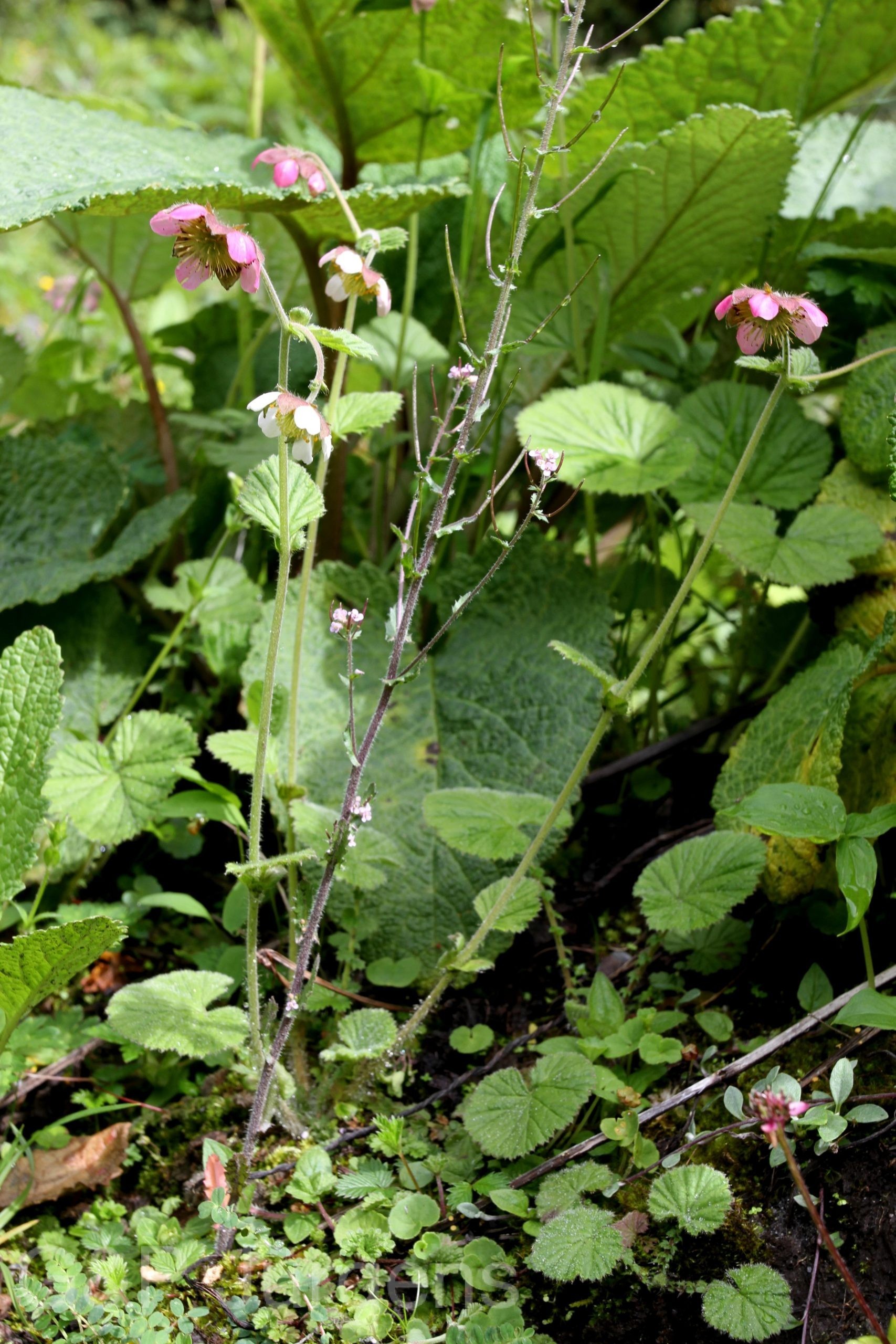
Geum sikkimense is a high-alpine avens of the eastern Himalaya, recorded in GBIF (a modest 47 occurrences) from Nepal, Bhutan and India. It is a plant of cold, open, high-elevation habitats, growing on alpine meadows, moist turf, screes and rocky slopes generally between about 4000 and 4800 m, flowering during the short summer monsoon window. The photographed plant from Luksur in Bhutan at 4700 m in July exemplifies its occurrence near the upper limit of vascular plant growth, where it persists in stony, snowmelt-watered ground.
It is a low, tufted perennial herb arising from a stout, woody rhizome clothed in old leaf bases. The leaves are mostly basal and lyrate-pinnate, with a large rounded, crenate-toothed terminal lobe and progressively smaller lateral leaflets, the surfaces hairy and the petiole long. The flowering stems are erect and bear one to few flowers; each flower has five green sepals (often with alternating epicalyx segments) and five spreading, obovate, yellow petals surrounding numerous stamens and carpels. The fruit is a head of dry achenes, each tipped with a persistent style that elongates into a hooked or feathery awn aiding epizoochorous dispersal.
Geum belongs to tribe Colurieae of the Rosaceae, allied to Sieversia and Acomastylis, genera with which several Himalayan high-alpine species have at times been associated. G. sikkimense is a narrow-range eastern Himalayan endemic adapted to the harsh, short growing season of the upper alpine zone. Given its limited known distribution and small number of records, it is poorly assessed, but its restriction to fragile high-altitude habitats makes it potentially vulnerable to climate-driven habitat contraction.
Author: Prain · Sources: POWO (Kew), GBIF, Flora of Bhutan, Annotated Checklist of the Flowering Plants of Nepal, Gajurel et al. studies on Himalayan Rosaceae, Smedmark revision of Colurieae