
Sweet
Description
Geranium lambertii is a perennial herb of the high Himalaya, distributed through China, India, Nepal, Bhutan and Pakistan, with about 304 georeferenced records (additional codes from Canada, Japan and Europe reflect its presence in cultivation). It inhabits subalpine and alpine meadows, forest clearings, shrubberies and moist rocky slopes, often among dwarf rhododendron and on the margins of birch forest. The collections cited from Bhutan at Shele-La (3800 m, September) and Luksur (3700 m, July) and from Bahanjyang in Nepal (3700 m, October) place it firmly in the 3500-4000 m belt, flowering through the late monsoon and into autumn.
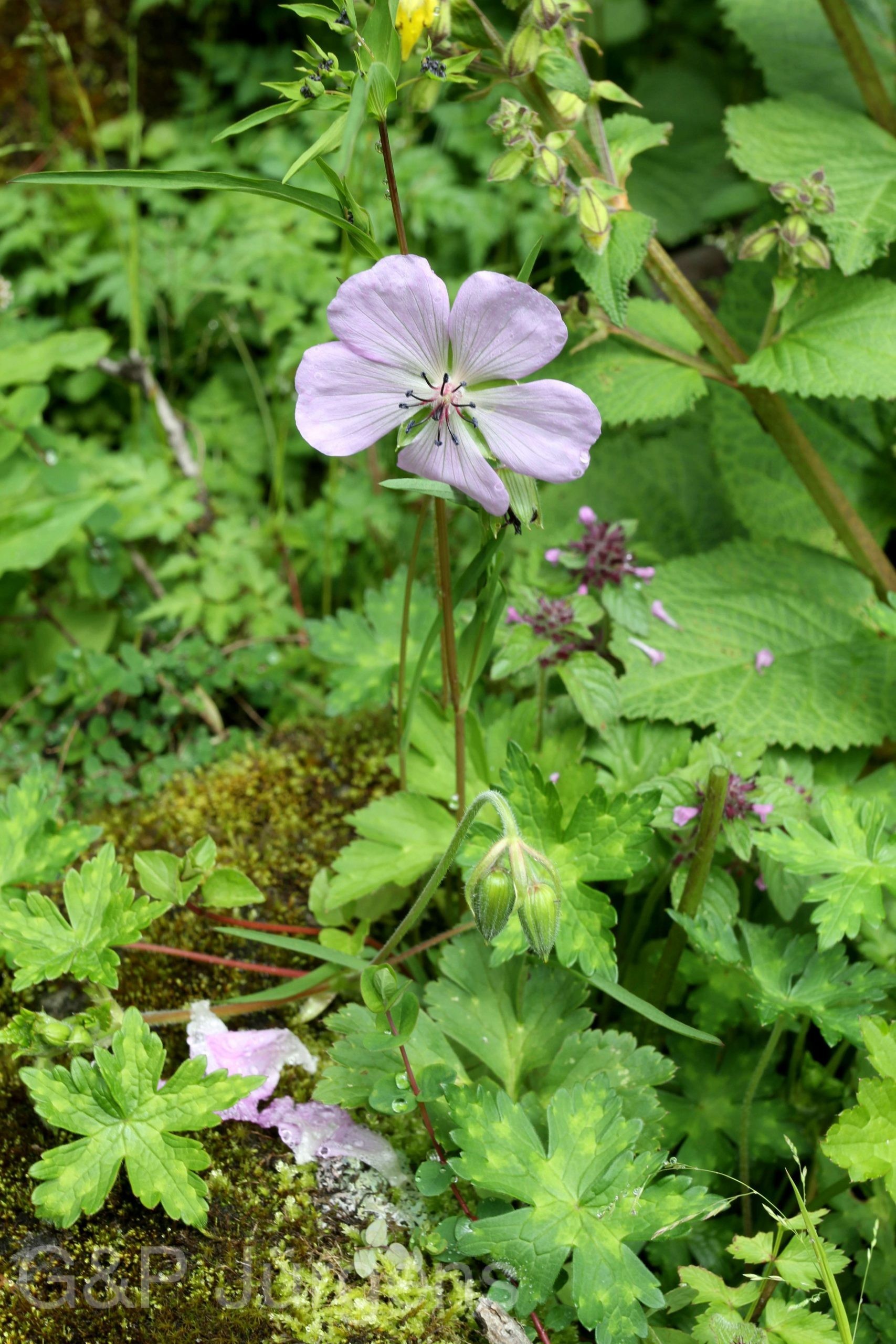
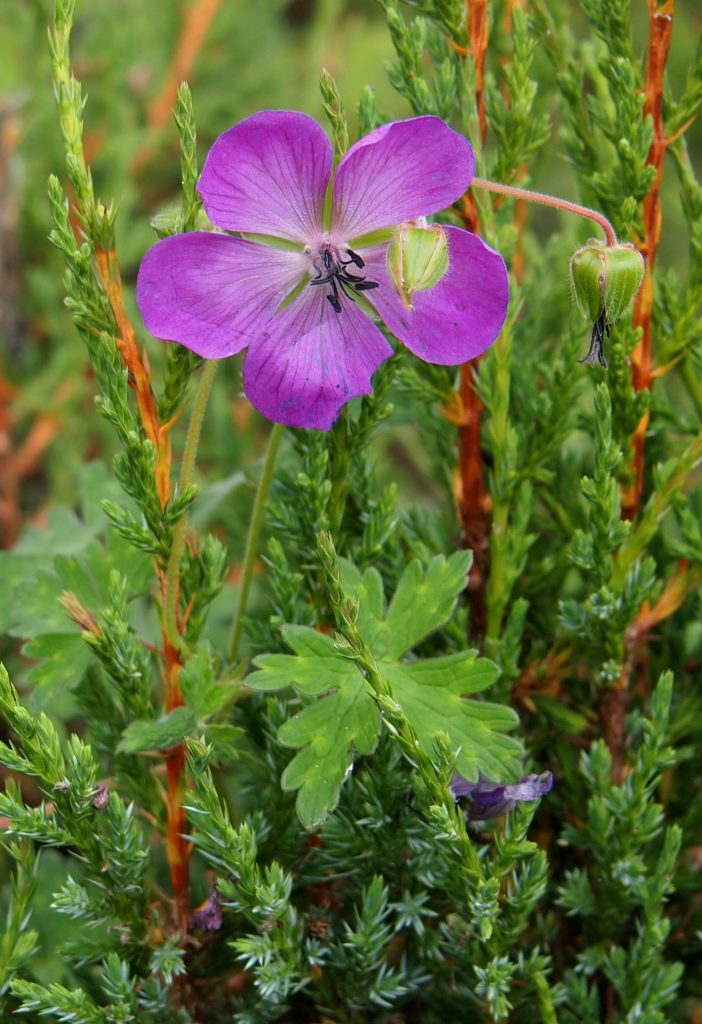
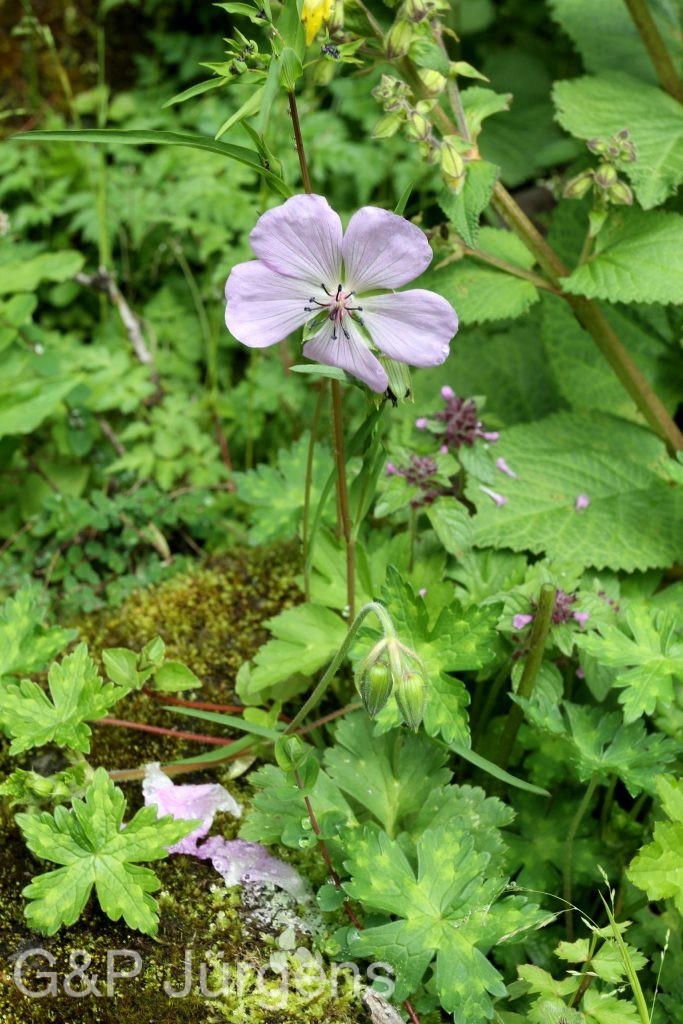
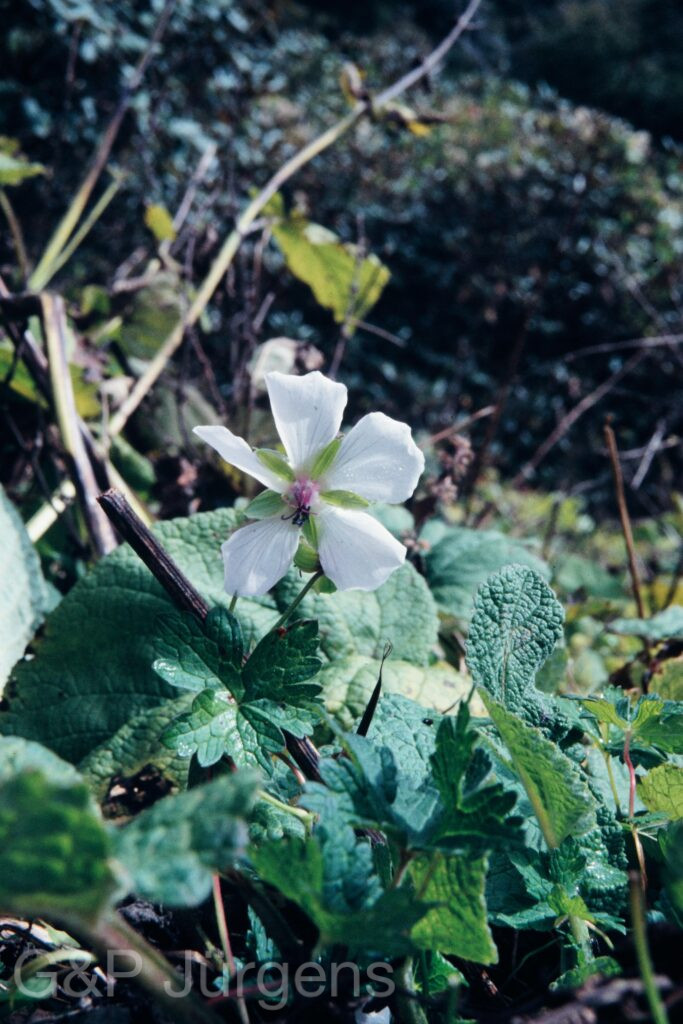
It forms a clump of trailing to ascending stems from a stout rootstock. The leaves are long-petiolate and palmately divided into five to seven deeply lobed and toothed segments, sparsely hairy. The flowers are among the most distinctive in the genus, nodding and saucer- to bell-shaped, with five broad, satiny white petals usually flushed pink and contrasting with a dark crimson-purple centre; the ten stamens and the style cluster are conspicuous, and the pedicels recurve in fruit. The fruit is the typical geranium schizocarp, with a long beak that splits elastically to fling the seeds.
Geranium lambertii, named by Sweet, is a well-marked species of the Himalayan endemic assemblage and a long-cultivated ornamental prized for its pendent, dark-eyed blooms. Its mid- to late-season flowering supports bumblebees and other high-altitude pollinators, and the spring-loaded mericarps achieve effective ballistic seed dispersal. It is widespread and not considered threatened, though localised meadow populations are sensitive to heavy grazing.
Author: Sweet · Sources: POWO (Kew), GBIF, Flora of Bhutan, Annotated Checklist of the Flowering Plants of Nepal, Yeo Hardy Geraniums