
Edgew. & Hook.f.
Description
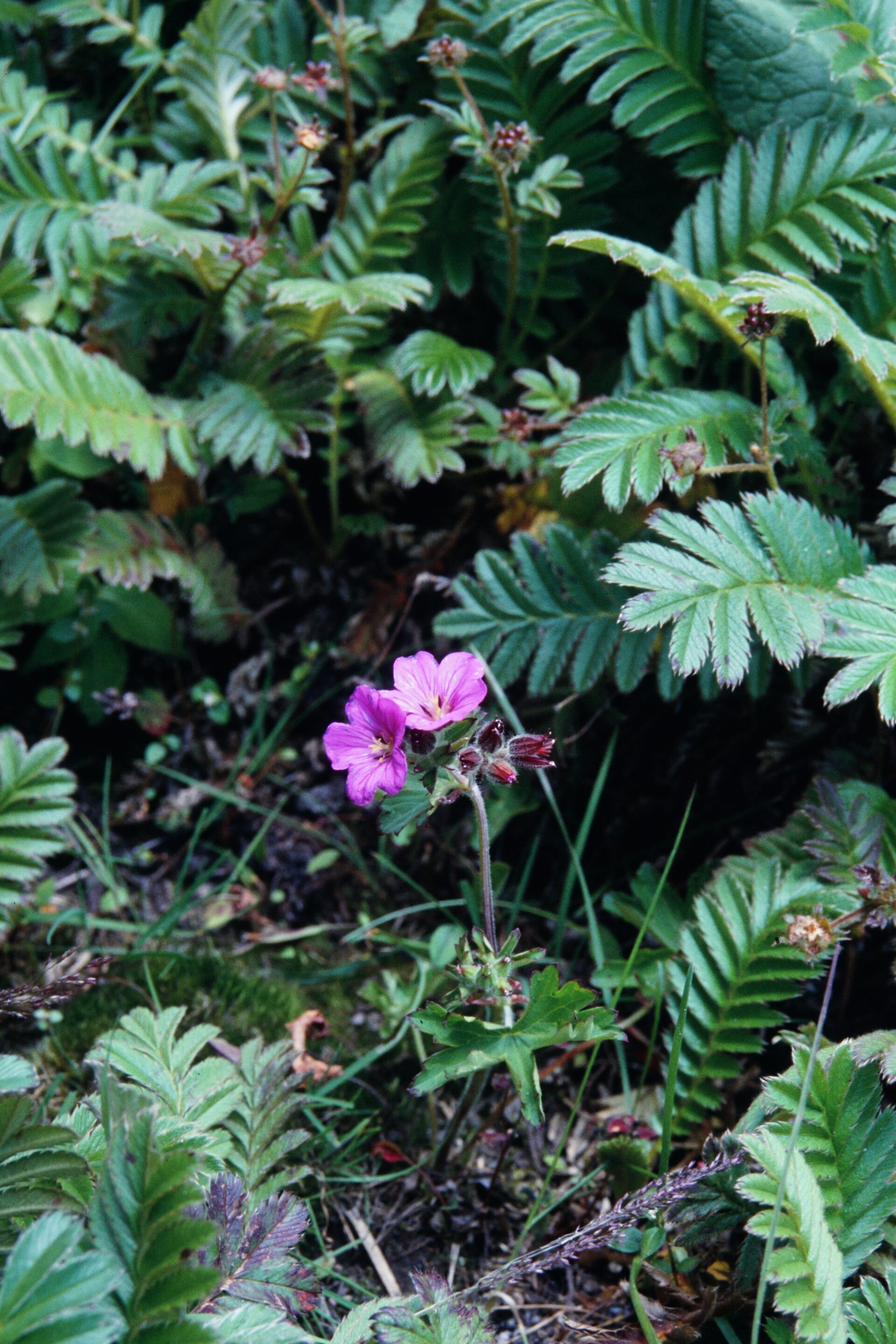
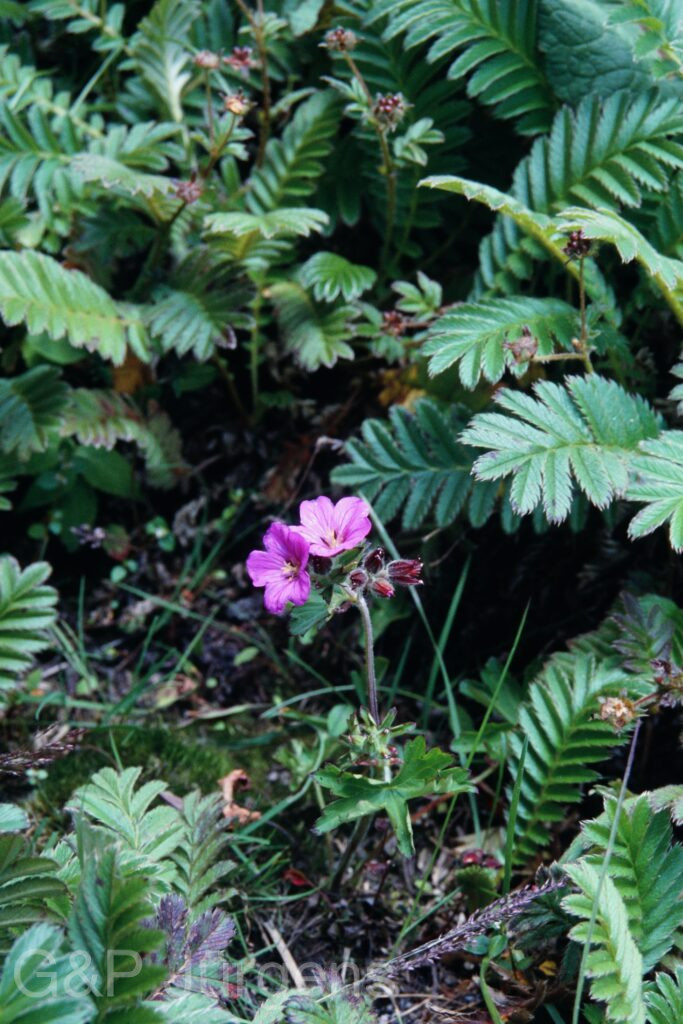
Geranium polyanthes is a perennial cranesbill of the high Himalaya and the mountains of southwestern China, recorded by GBIF from China, India, Nepal, Bhutan and Myanmar (with scattered cultivated or vouchered records elsewhere) across about 331 georeferenced occurrences. It is a plant of subalpine and alpine meadows, open hillsides, grassy slopes and forest clearings near and above the treeline, characteristically flowering in the monsoon months of July and August. Its elevational range extends from roughly 3,000 m to over 4,000 m, well represented by the photographed plant from Dzongri in Sikkim at about 3,900 m in August, where it grows among dwarf rhododendron and herbaceous alpine turf.
The species forms a clump from a stout rootstock, the stems erect to ascending and clothed, like the rest of the plant, in spreading hairs. The leaves are orbicular-reniform in outline and palmately lobed into shallow, broad, crenate-toothed segments, the basal leaves long-petioled. As the epithet polyanthes ("many-flowered") indicates, the inflorescence is comparatively dense and many-flowered, an umbel-like cluster of pink to rose-pink flowers with five obovate, slightly notched petals veined with darker lines, ten stamens and a beaked pistil. The fruit is the characteristic geraniaceous schizocarp with an elongate rostrum that splits explosively into one-seeded mericarps, ejecting the seeds.
Geranium polyanthes belongs to the large genus Geranium (subgenus Geranium) and is one of a suite of pink-flowered Himalayan perennial cranesbills that includes G. donianum and G. nakaoanum, from which it is separated by its denser, many-flowered inflorescence and leaf division. As a nectar-rich alpine herb it is visited by bees and other insects and contributes to the floral diversity of Himalayan summer pastures. It is locally common and not considered threatened, though the alpine meadow habitats it occupies are sensitive to overgrazing and to the upslope shifts in vegetation associated with a warming climate.
Author: Edgew. & Hook.f. · Sources: POWO (Kew), GBIF, Flora of China Vol. 11, Flora of Bhutan Vol. 2, Flora of Nepal, Flora of Pakistan, Yeo: Hardy Geraniums and the systematic monograph of the genus Geranium