
Yeo
Description
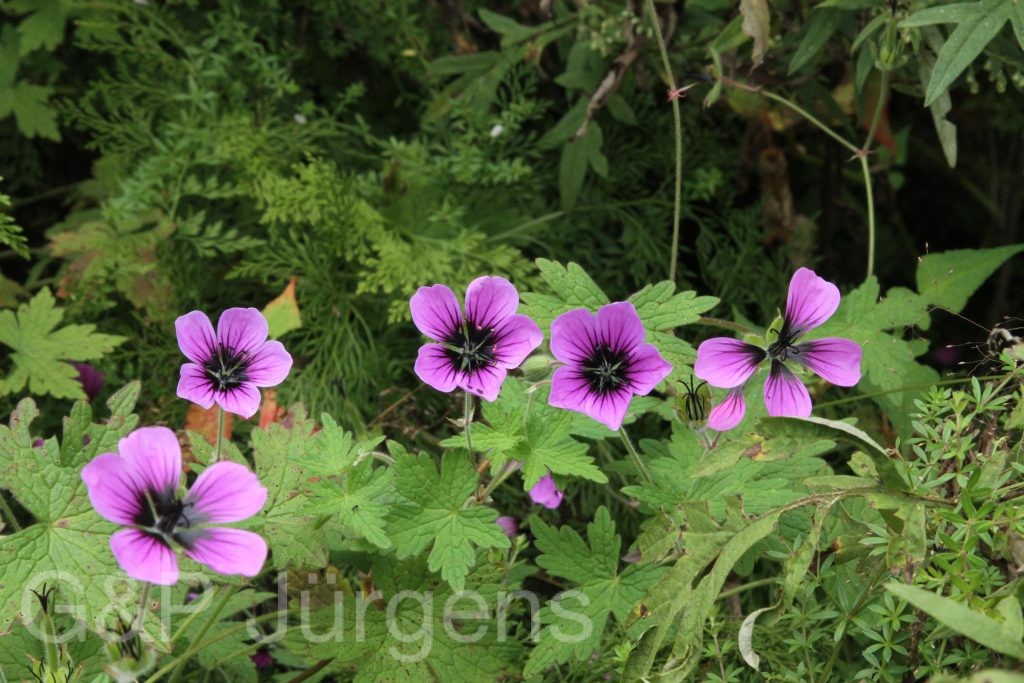
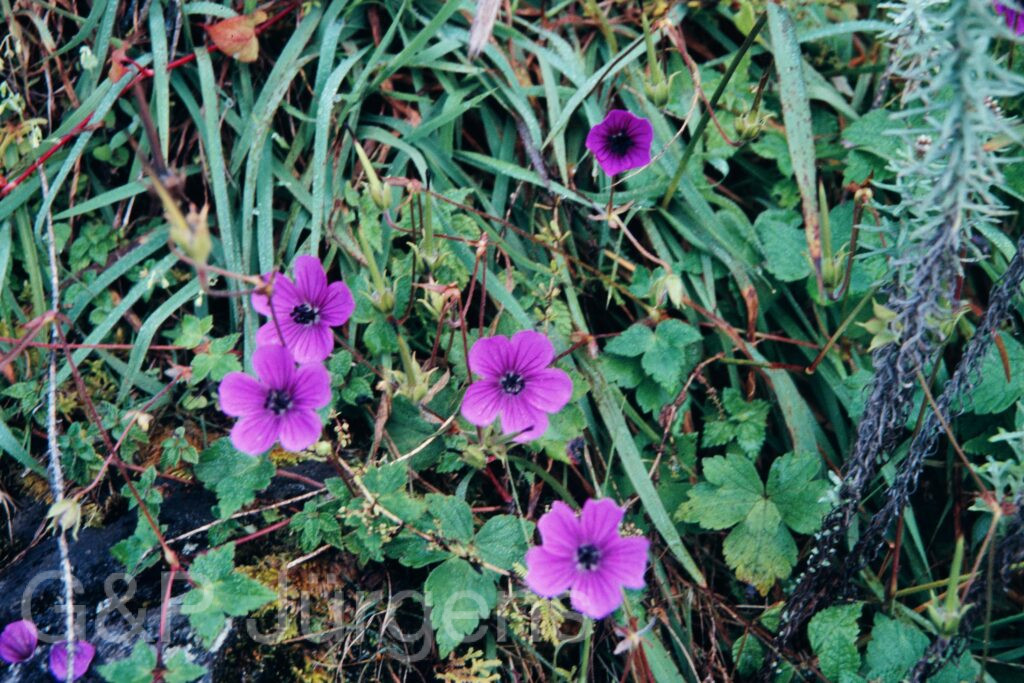
Geranium procurrens is a trailing perennial of the central and eastern Himalaya, native to Nepal, Bhutan, India and adjacent China, with around 192 recorded occurrences and a scatter of cultivated or naturalised records farther afield reflecting its garden popularity. It grows in subalpine and upper temperate habitats, among forest margins, shrubberies, banks and open slopes where it scrambles over surrounding vegetation, flowering late into the autumn. The species is well represented in the high Himalaya, as shown by collections from the Haa (Haar) Valley in Bhutan at about 3200 m in September and from south of the Rupien La in Nepal at around 3400 m in October.
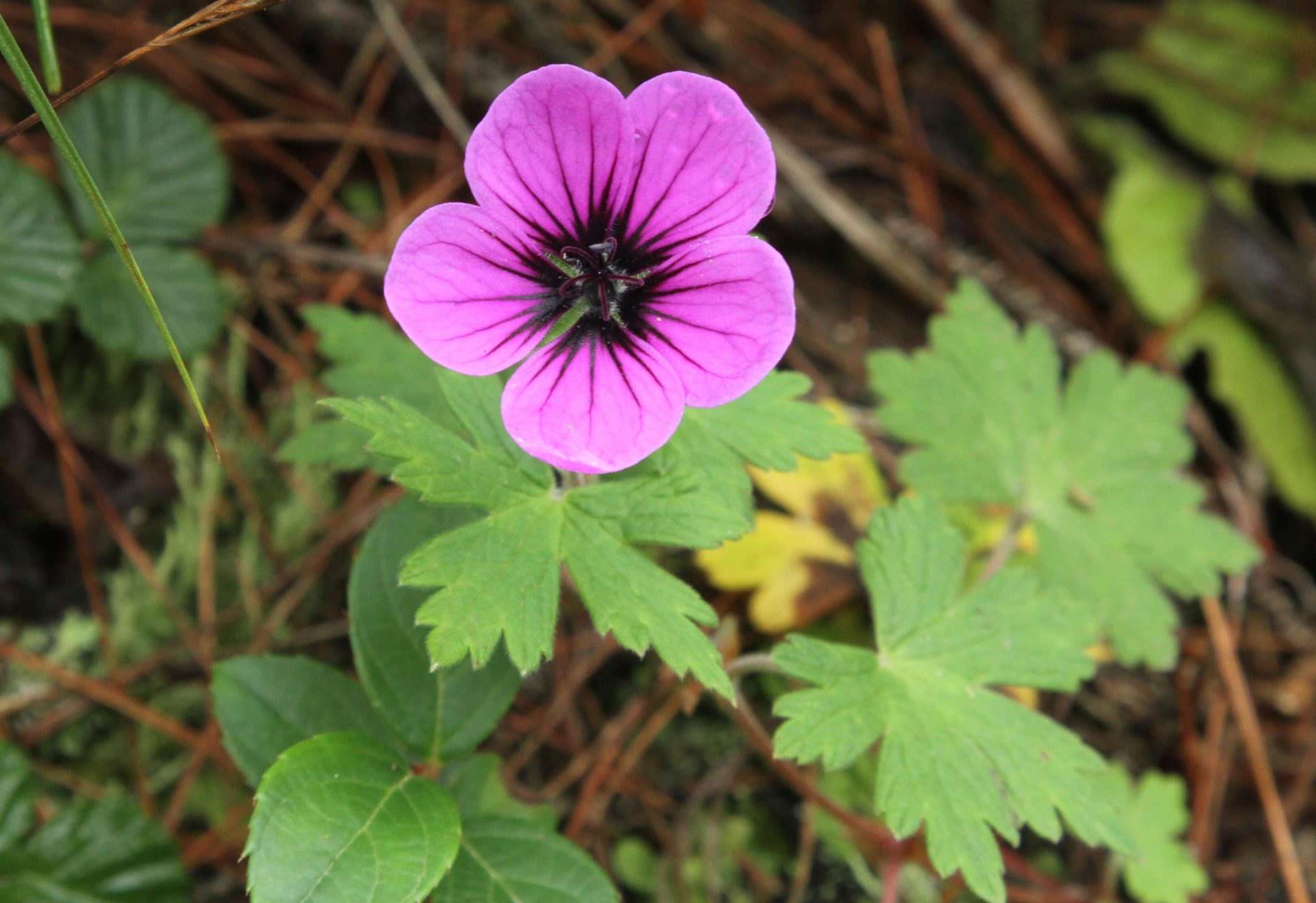
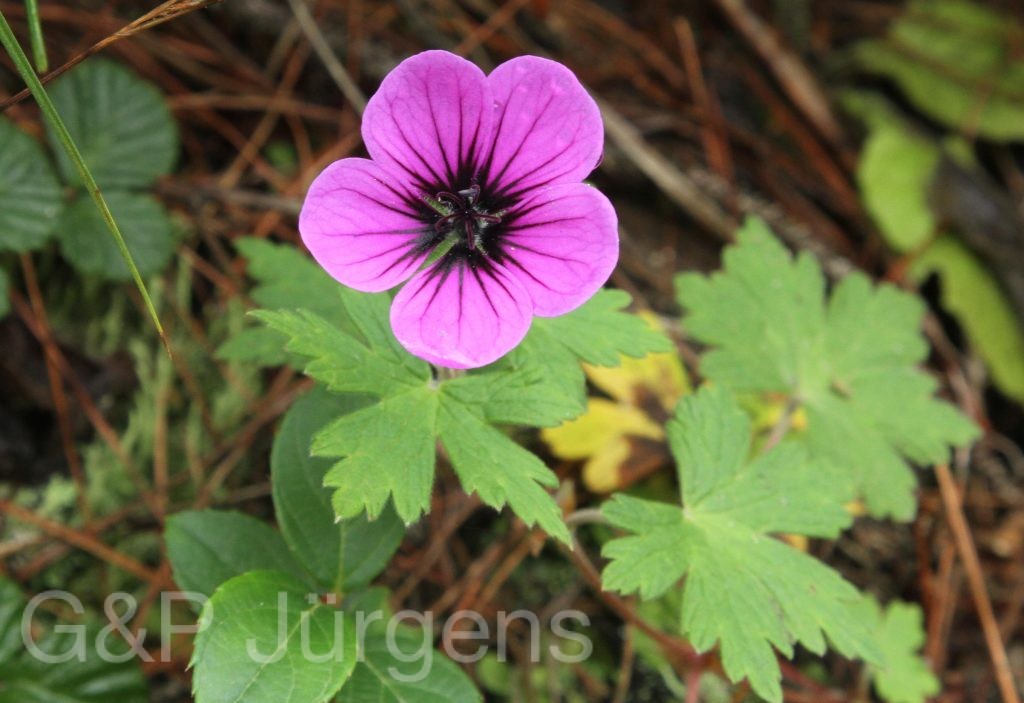
The plant is distinctive for its long, prostrate, procumbent stems that root at the nodes and form sprawling mats, giving the epithet procurrens. The leaves are long-petiolate with an orbicular blade deeply palmately five- to seven-lobed, the lobes themselves toothed or further divided, and marked above with a darker zone. The flowers are borne on slender pedicels and have five spreading obovate petals of deep magenta to purplish-crimson with darker veining and a near-black centre, surrounding ten stamens and a beaked ovary. The fruit is the characteristic geranium schizocarp, the long rostrate beak splitting elastically into five mericarps that catapult the seeds.
Geranium procurrens was described by Yeo, the monographer of the genus, and is closely allied to the magenta-flowered Himalayan species of section Polyantha. Its nodal rooting and stoloniferous habit, unusual among hardy geraniums, enable extensive vegetative spread and have made it a vigorous ground-cover plant in cultivation, where it has given rise to garden hybrids. In the wild it remains a locally common montane species of no particular conservation concern, valued ecologically as a late-flowering nectar source for high-altitude pollinators.
Author: Yeo · Sources: POWO (Kew), GBIF, Flora of Bhutan Vol. 2, Flora of Nepal, Flora of China Vol. 11, Yeo monograph Hardy Geraniums