Tag:

Alpine (>3500 m)

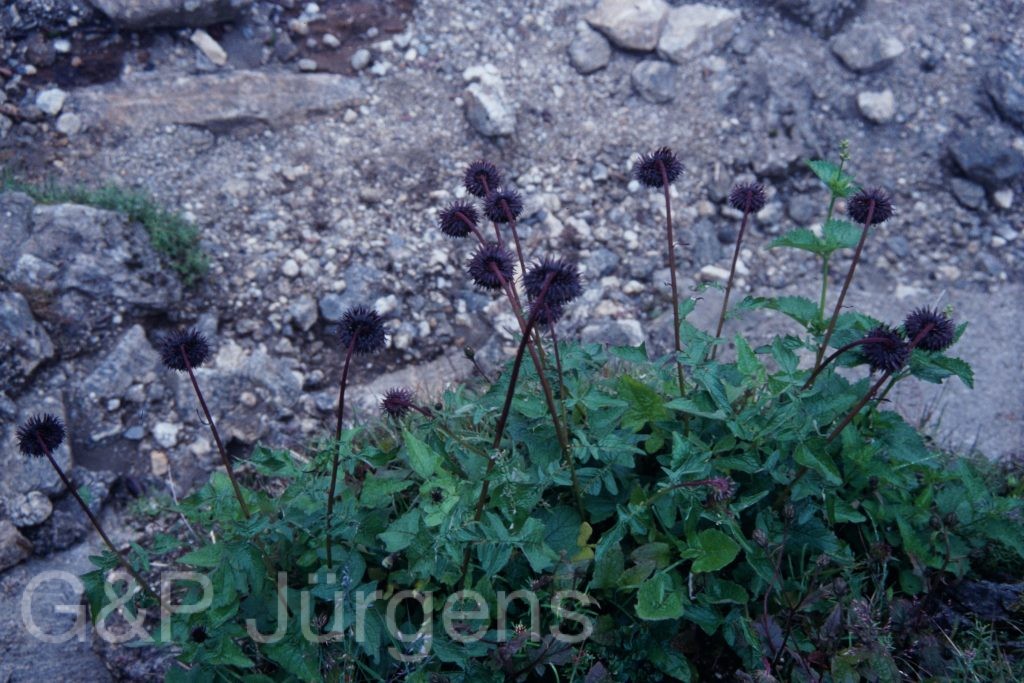
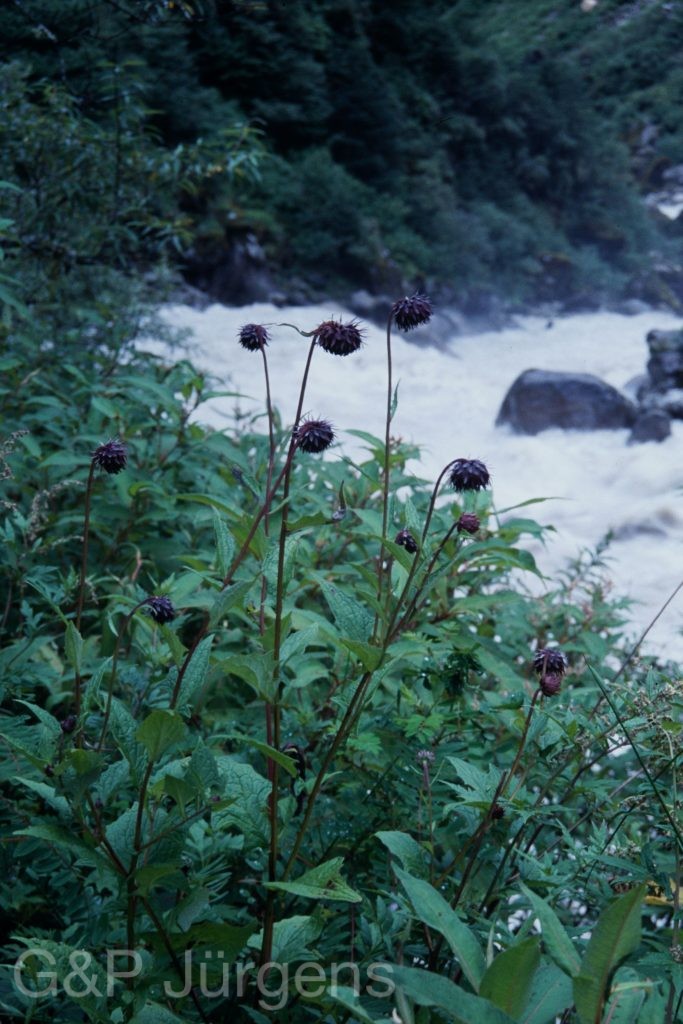
(DC.) Raab-Straube

Sikkim2003 103 P141
Sikkim below Dzongri 3900m 08.2003
Sikkim2003 408 P567
Sikkim below Dzongri 3900m 08.2003
Bhutan2012 493
Bhutan Pele-La 3000m, September

Description

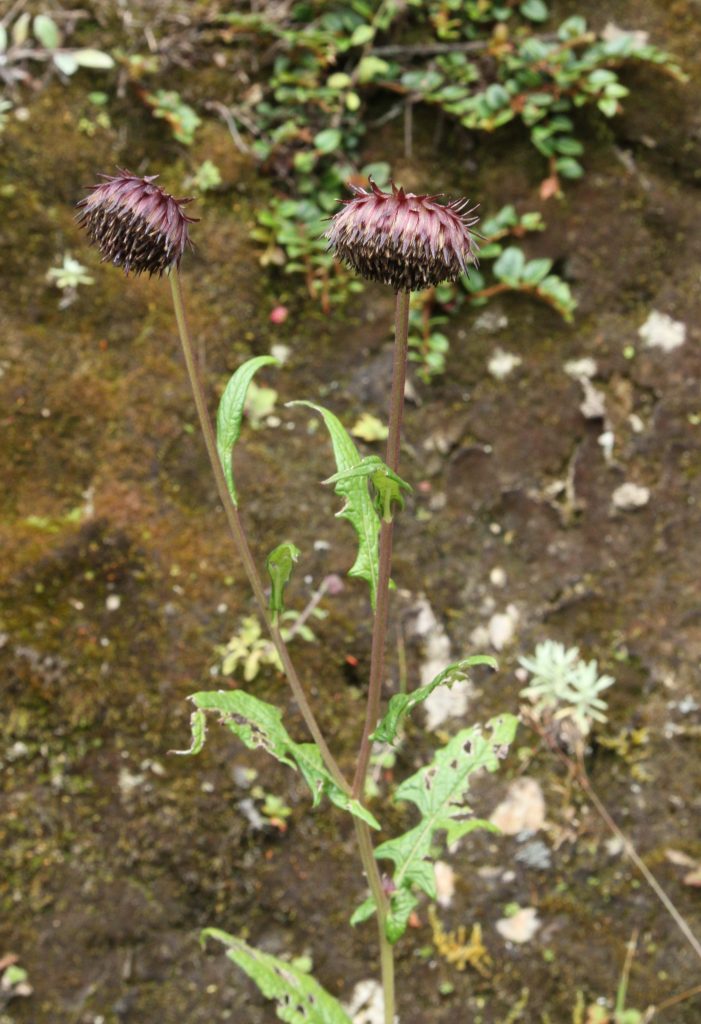
Himalaiella auriculata is a perennial thistle-like composite of the temperate to subalpine zone of the eastern Himalaya, native to India, Nepal and China, with around 27 documented occurrences. It grows on open slopes, forest clearings, meadow margins and disturbed ground, broadly between about 3000 and 4000 m. The photographed plants were recorded below Dzongri in Sikkim at 3900 m in August and at the Pele-La in Bhutan at 3000 m in September, flowering in the late-monsoon and early-autumn period typical of the genus in the region. The name supplied, Himalaiella auriculata, is recorded by GBIF as a synonym, with the same epithet treated as the accepted name; the species was long placed in Saussurea as S. auriculata.

The species is an erect herb with a leafy, often winged stem arising from a perennial rootstock, the herbage thinly cobwebby-arachnoid. The leaves are elliptic to lanceolate, the basal narrowed to a petiole and the cauline sessile and conspicuously auriculate-clasping at the base, the auricles giving the epithet. The capitula are discoid, solitary or few in a loose terminal cluster, with an ovoid to campanulate involucre of imbricate, often purple-tipped phyllaries; the florets are all tubular and purple to mauve. The fruit is a glabrous cypsela bearing a double pappus, the inner bristles plumose, as is diagnostic of the alliance.

Himalaiella is a small Sino-Himalayan genus segregated from Saussurea (tribe Cardueae) on molecular and morphological grounds, characterised by the auriculate, decurrent leaves and feathery inner pappus. Restricted in range and represented by relatively few collections, it is a regional endemic of the eastern Himalaya whose populations warrant monitoring, though it has not been formally assessed.

Author: (DC.) Raab-Straube · Sources: POWO (Kew), GBIF, Flora of Bhutan, Flora of China, Saussurea monograph (Lipschitz)
(C.B.Clarke) Fujikawa & H.Ohba

Bhutan2012 256
Bhutan Shele-La, 4000m September

Description

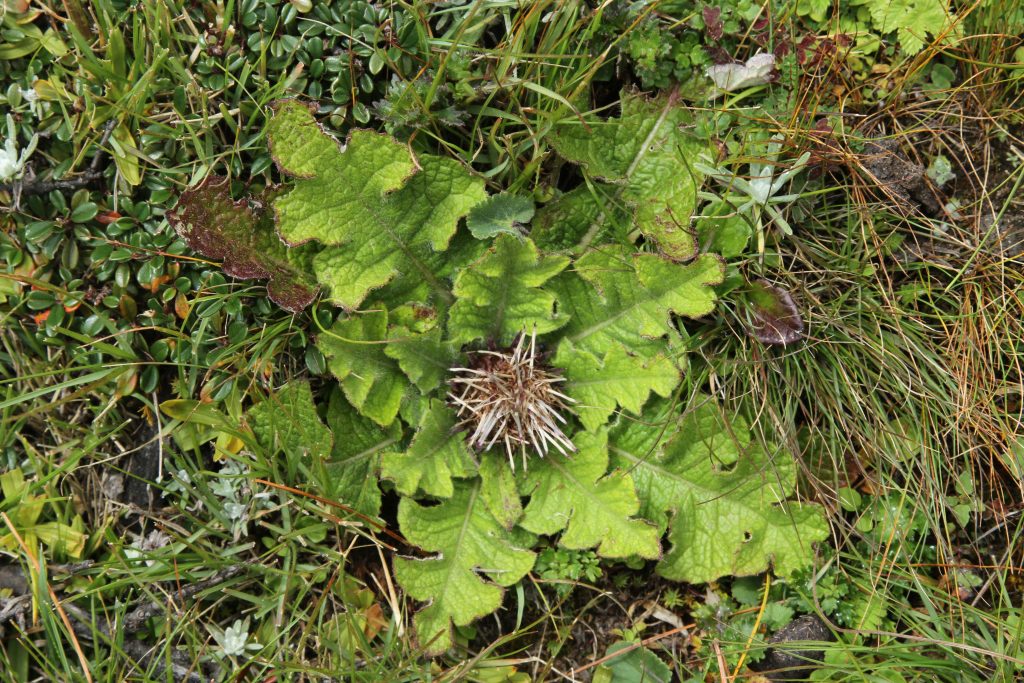
Himalaiella yakla is a high-alpine thistle-like composite of the Eastern Himalaya, recorded from China and Nepal and extending into Bhutan, where it is very seldom collected, the aggregated databases holding only a handful of occurrences. It is a plant of the upper alpine zone, growing on open stony slopes, scree, rocky pastures and exposed ridges generally near and above 4000 m. The specimen illustrated was photographed at Shele-La in Bhutan at about 4000 m in September, its late-season flowering reflecting the short growing window of these cold, wind-swept high passes.

The plant is a perennial herb with a stout caudex and an erect, often somewhat woolly stem, frequently clothed in white arachnoid or floccose tomentum that mitigates intense alpine radiation and desiccation. The leaves are oblong to lanceolate, sessile or shortly petiolate, with toothed to pinnatifid, sometimes spinulose margins, green above and greyer beneath. The capitula are discoid, solitary or few, with an ovoid involucre of imbricate, often spine-tipped phyllaries. The florets are tubular, bisexual and purple to violet, and the achenes are crowned by a pappus of plumose or barbellate bristles in series, adapted to wind dispersal across open terrain.

The name appears in GBIF as a synonym, with Himalaiella yakla treated as the accepted name; the taxon was segregated from the large genus Saussurea, under which it long stood as Saussurea yakla, following molecular studies that resolved Himalaiella as a distinct Sino-Himalayan lineage. Its rarity, restricted high-elevation range and sensitivity to climatic shifts and grazing render it of biogeographic significance and best regarded as data-deficient pending targeted survey.

Author: (C.B.Clarke) Fujikawa & H.Ohba · Sources: POWO (Kew), GBIF, Flora of China, Flora of Bhutan, Saussurea and Himalaiella systematic studies, Compositae of the Himalaya

(Wall. ex DC.) C.B. Clarke

BhutanPG2011 365
Bhutan Jule-Tso 4150m, June
Sikkim2003 159 P212
Sikkim Dzongri 3900m, August
Sikkim2003 160 P213
Sikkim Dzongri 3900m, August

Description

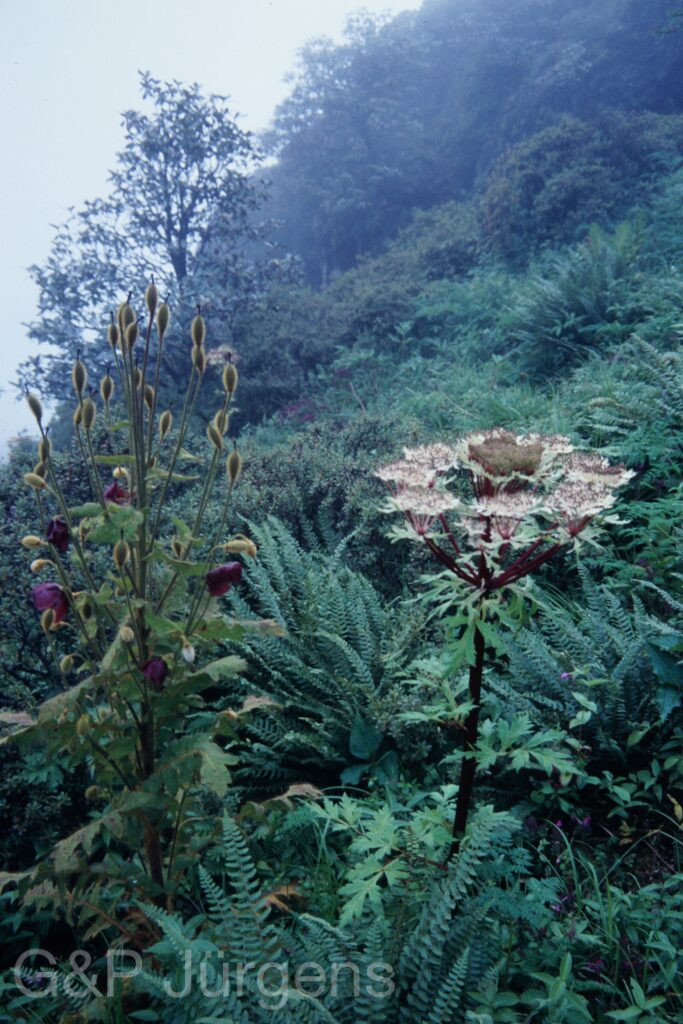
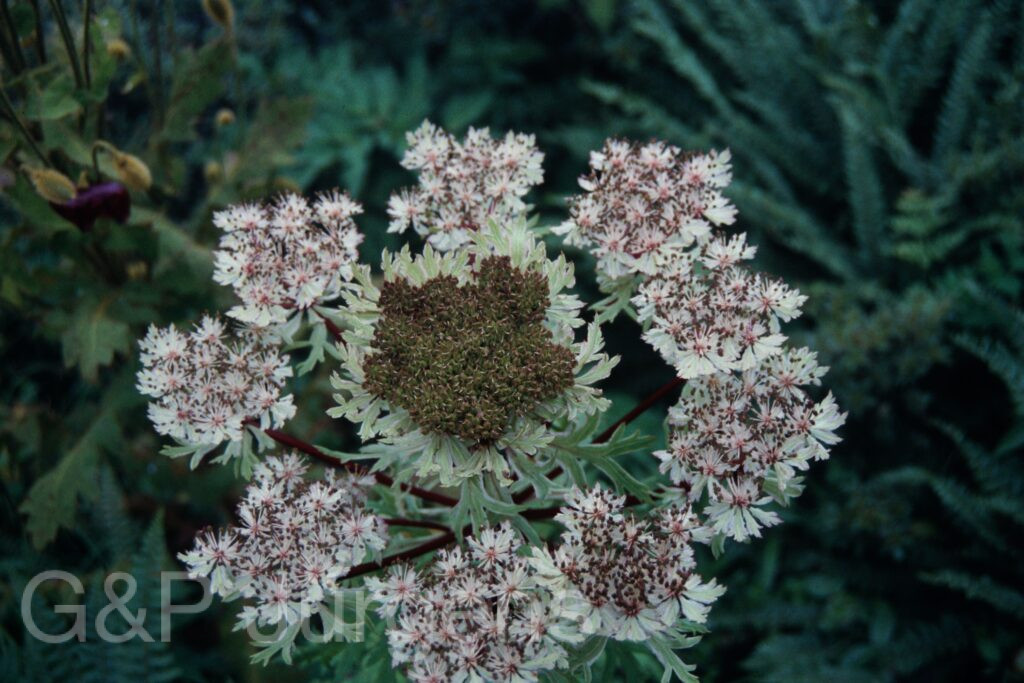
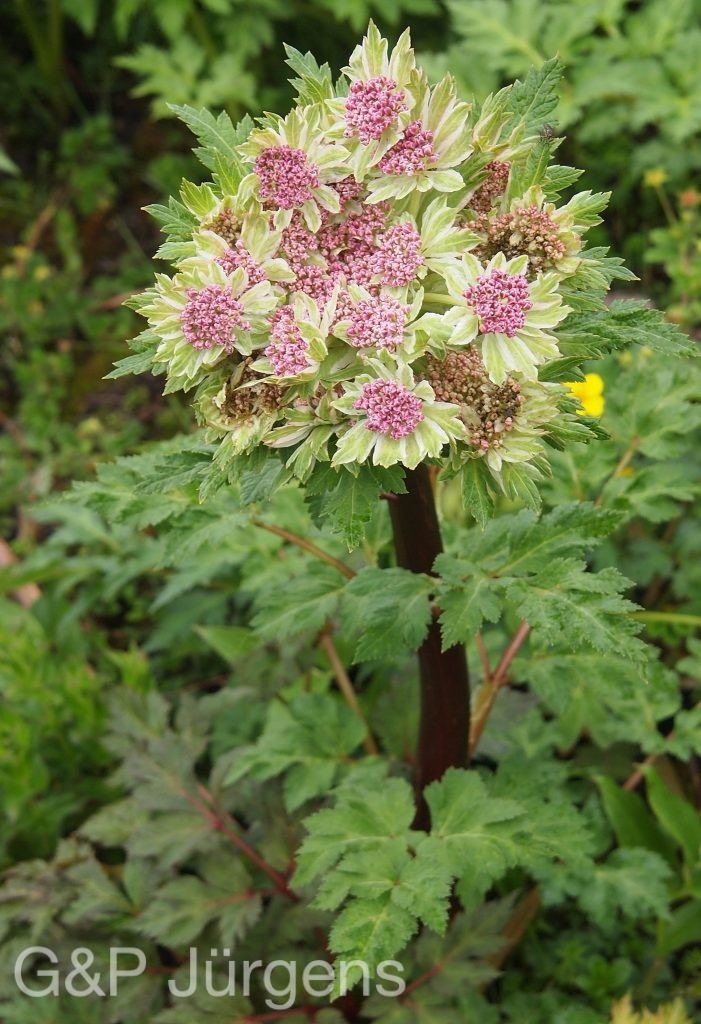
Hymenidium benthamii is a robust alpine umbellifer of the high Himalaya, distributed through Nepal, China, India, Myanmar and Bhutan (gbif_countries: NP, CN, IN, MM, BT), with about 181 GBIF occurrences. It grows in alpine meadows, damp grassy slopes, rocky pastures and streamside flushes above the treeline, where it is a characteristic herb of the moist eastern Himalayan uplands. The illustrated collections span Jule-Tso in Bhutan at about 4150 m, flowering in June, and Dzongri in Sikkim at about 3900 m in August, documenting its occupation of the cool subalpine to alpine zone through the monsoon season.

The plant is a stout perennial arising from a thickened taproot and crown, with erect, ribbed, often hollow stems. The leaves are largely basal, long-petiolate and two- to three-times pinnately divided into toothed or further-dissected segments, the petioles sheathing at the base. The inflorescence is a large, flat-topped compound umbel subtended by a conspicuous involucre of broad, often membranous-margined bracts, a feature recalling the genus name Hymenidium; the small flowers are white to pinkish with five petals. The fruit is a dry schizocarp splitting into two ribbed mericarps, the ridges and oil-canals (vittae) providing key taxonomic characters.

Long known under Pleurospermum benthamii, the species, as the wp_link itself preserves, has been transferred to Hymenidium following revisionary work that dismembered the broadly construed Pleurospermum on molecular grounds. It belongs to the conspicuous-bracted alpine Apiaceae of the Sino-Himalaya, a group much used in regional ethnomedicine. Widespread across its montane range, it is of no conservation concern.

Author: (Wall. ex DC.) C.B. Clarke · Sources: POWO (Kew), GBIF, Flora of Nepal, Flora of China, Annotated Checklist of the Flowering Plants of Nepal, Pimenov & Kljuykov revision of Pleurospermum and allied genera

Lindl.

Description

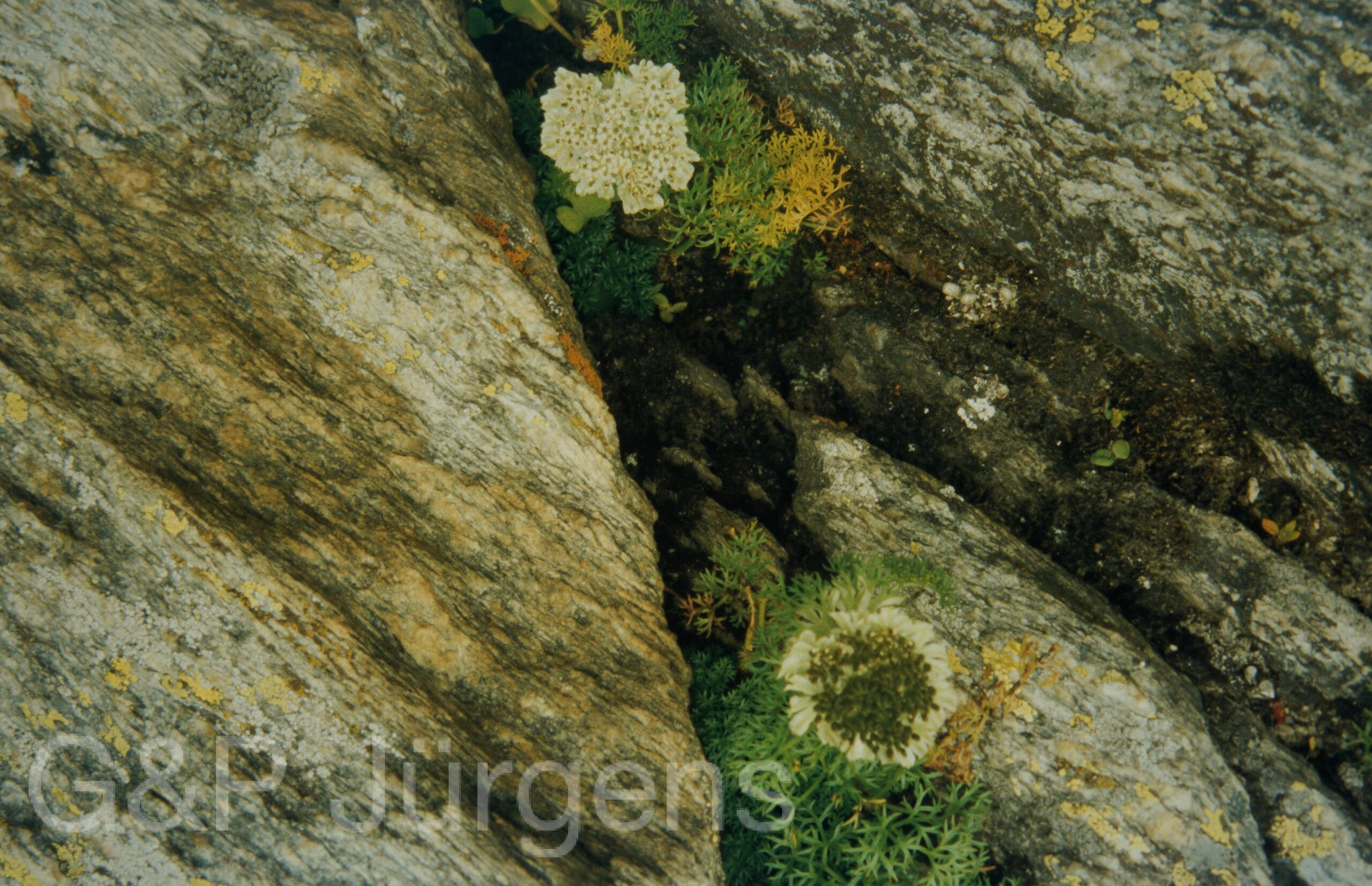
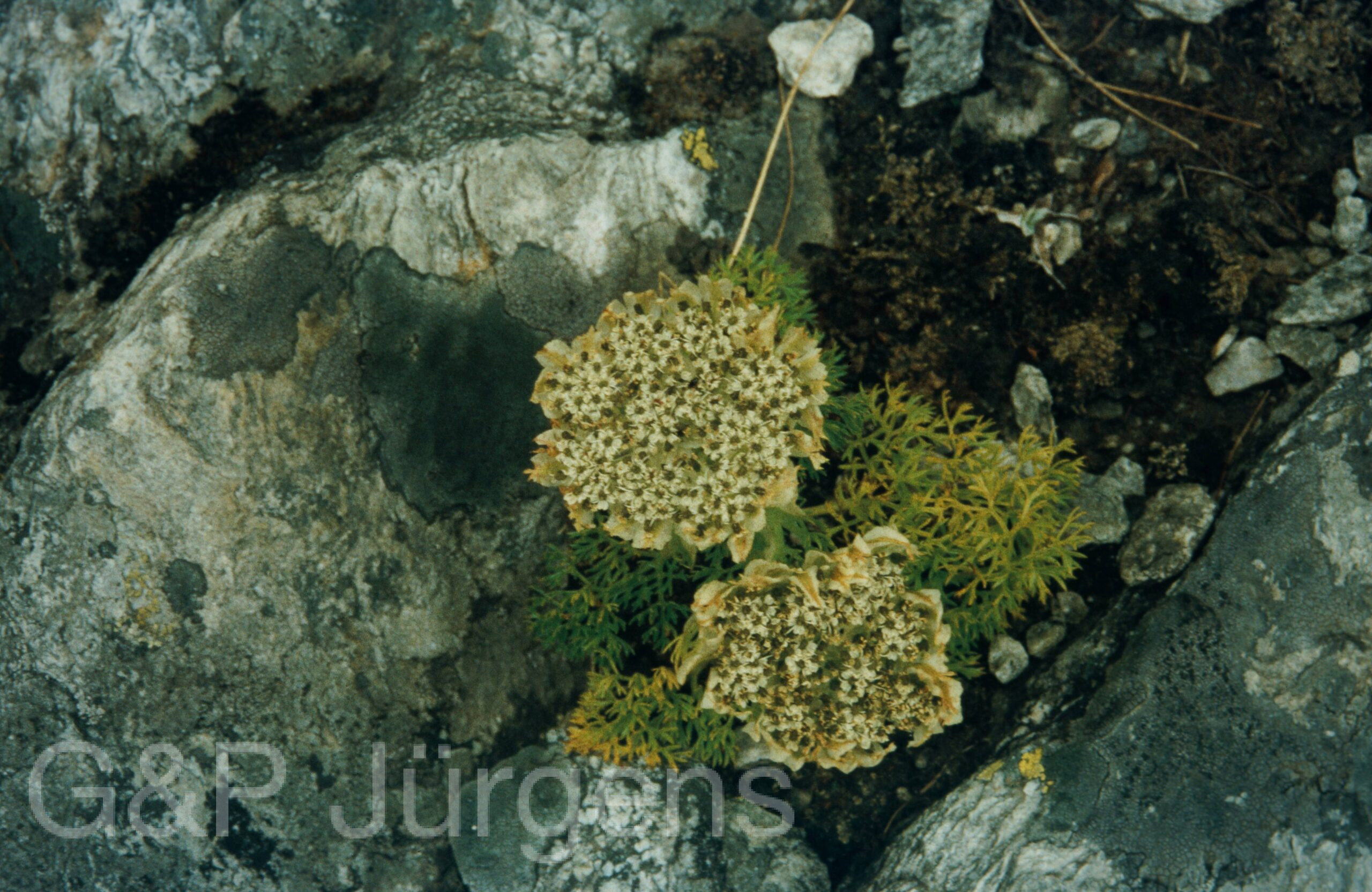
Hymenidium brunonis is a high-alpine umbellifer of the Himalaya, recorded from Pakistan eastward through north-west and central India to Nepal. Long familiar under the name Pleurospermum brunonis, it inhabits open alpine meadows, screes, rocky slopes and moist hollows above the treeline, generally between about 3,500 and 4,800 m. The individual photographed at the Kuari Pass in Garhwal, India, at 4,000 m in September shows the species in its characteristic late-season setting, fruiting as the short alpine summer closes. Its scattered but consistent occurrence across the chain (some 75 georeferenced records) reflects a true alpine specialist of the inner Himalayan ranges.

It is a low, glabrous, somewhat fleshy perennial arising from a stout taproot and a sheath of fibrous remains of old petioles. The leaves are mostly basal, pinnate to bipinnate, the segments oblong and often crowded, the petioles broadly sheathing at the base. The inflorescence is a compound umbel subtended by conspicuous, broad, membranous-margined, often leafy bracts and bracteoles — a diagnostic feature of the group. The small flowers are white to pinkish, with five petals and an epigynous disc. The fruit is an ovoid to oblong schizocarp with prominently winged or ridged mericarps.

The transfer of many Asian Pleurospermum species to Hymenidium follows molecular work resolving the polyphyly of Pleurospermum sensu lato; the conspicuous scarious bracts unite the segregate. As a plant of remote high-elevation habitats it faces little direct pressure, though alpine flora of this belt is sensitive to grazing intensity and to the upslope compression of habitat under a warming climate.

Author: Lindl. · Sources: POWO (Kew), Flora of China Vol. 14, Flora of Pakistan (Umbelliferae), GBIF, Pimenov & Leonov: The Genera of the Umbelliferae (1993)

(Hook.f. & Thomson) Al-Shehbaz & O’Kane

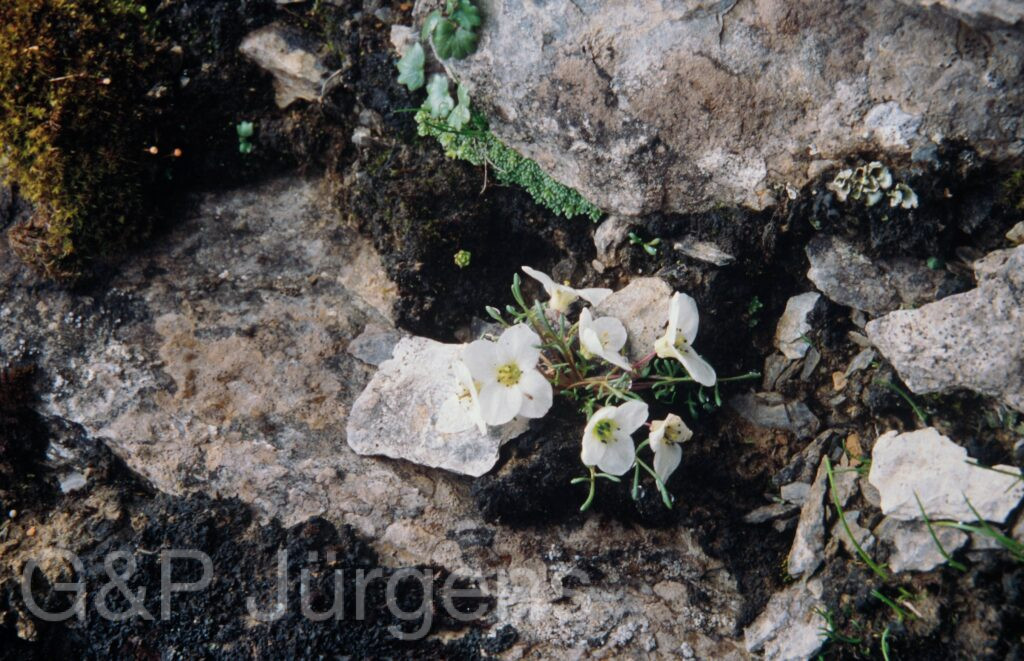
Nepal 99 819 ergebnis
West-Nepal Baga-La-Phedi 4300m, July

Description

Ianhedgea minutiflora is a diminutive, high-alpine crucifer with a broadly Irano-Turanian to western Himalayan distribution, recorded from Afghanistan, Pakistan, northern India, Tajikistan and Iran, and extending eastward into western Nepal. It is a plant of open, stony and gravelly ground, scree slopes, glacial moraines and dry alpine meadows at high elevations, typically between about 3,500 and 4,800 m. The collection from Baga-La-Phedi in West Nepal at 4,300 m in July reflects its occurrence in the cold, well-drained, sparsely vegetated terrain of the upper alpine zone, where the short summer growing season governs its rapid flowering.

The plant is a small annual or short-lived herb with slender, simple to branched stems arising from a thin taproot. The leaves are entire to slightly toothed, oblanceolate to spathulate and mostly basal. The inflorescence is a lax, ebracteate raceme bearing minute, inconspicuous flowers with four whitish petals scarcely exceeding the sepals, giving the species its epithet. The fruit is a small, linear, terete to slightly compressed silique that is sessile or shortly stipitate, dehiscing to release tiny seeds arranged in a single row per locule.

The genus Ianhedgea was segregated by Al-Shehbaz and O'Kane and named in honour of the cruciferologist Ian Charleson Hedge; the species was formerly placed in Sisymbrium and related genera, its basionym attributed to Hooker f. and Thomson. The transfer reflects molecular and morphological reassessment of the tribe Sisymbrieae. As an inconspicuous, widespread high-mountain annual, it faces no recognised conservation threat but is poorly documented owing to its small size and remote habitat.

Author: (Hook.f. & Thomson) Al-Shehbaz & O'Kane · Sources: POWO (Kew), Flora of Pakistan, Annotated Checklist of the Flowering Plants of Nepal, GBIF, Al-Shehbaz: Cruciferae systematics

Hook.f.

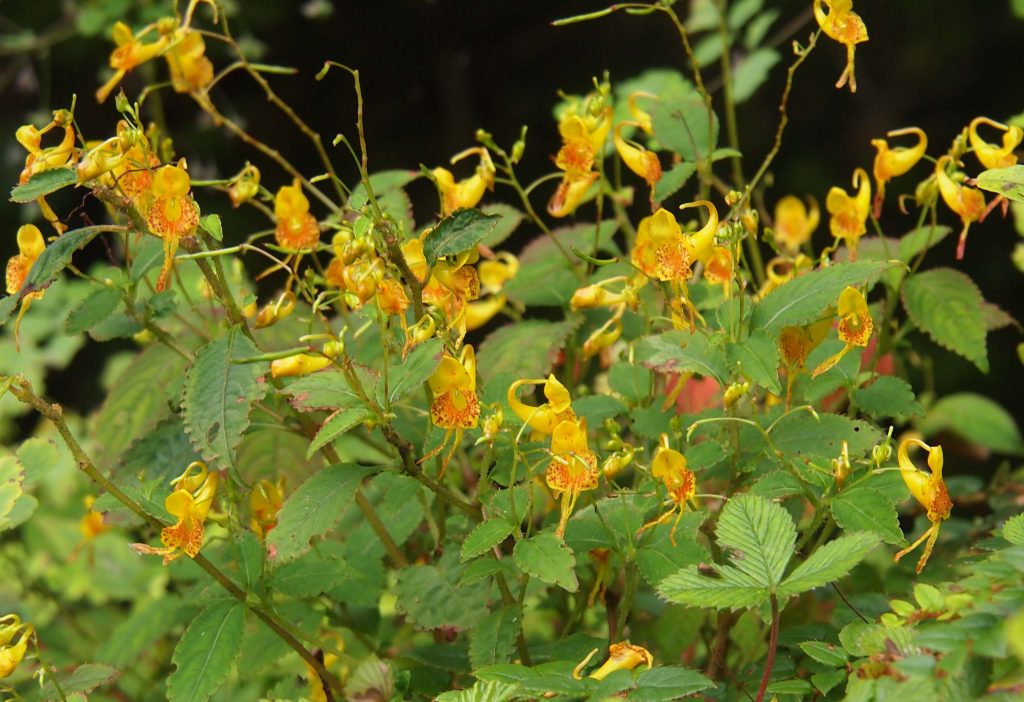
Bhutan2012 334
Bhutan Dochu-La 3200m, September
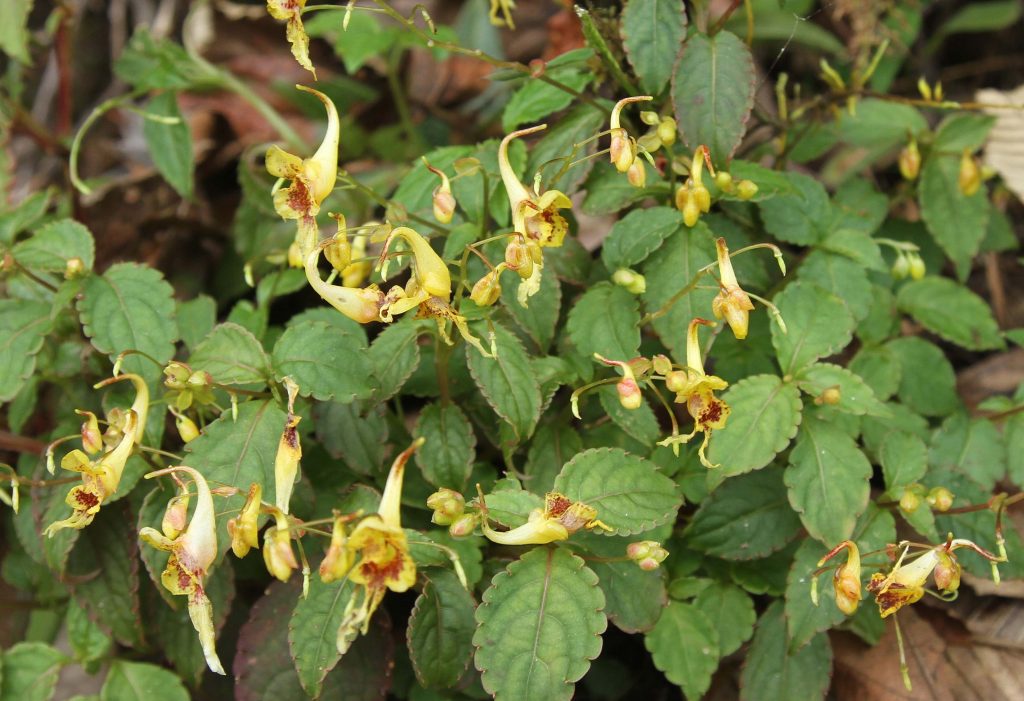
Bhutan2012 931
Bhutan Tumching-La 3600m, October

Description

Impatiens scitula is a high-montane balsam of the eastern Himalaya, known from a small set of GBIF records (27 occurrences) in Bhutan, China and India. It grows in cool, humid subalpine settings along forest streams, shaded banks and seepage slopes near the upper limit of fir and rhododendron forest, flowering late in the growing season after the summer monsoon. It was recorded on the Bhutanese passes of Dochu-La at about 3200 m in September and Tumching-La at about 3600 m in October, elevations notably higher than those of most lowland balsams and indicative of its cold-tolerant montane preference.

It is a succulent annual herb with translucent, glabrous stems swollen at the nodes. The leaves are alternate, ovate to lanceolate, serrate to crenate-serrate with gland-tipped teeth, and tapered to a petiole. The flowers are zygomotphic and showy for their size, borne on axillary peduncles; the lower sepal is produced into a slender curved or incurved spur and the standard and wing petals form the elaborate, bilaterally symmetric corolla typical of the genus. The fruit is a fleshy, club-shaped capsule that dehisces explosively, the coiling valves flinging out the seeds.

Impatiens (Balsaminaceae) is exceptionally diverse in the Sino-Himalayan mountains, where high-elevation species such as I. scitula are often narrowly distributed and distinguished by fine details of spur and petal form. Its restriction to a few eastern Himalayan localities at high elevation makes it a regional endemic of biogeographic interest. Although no formal conservation assessment is published, narrowly ranged high-altitude balsams of this kind are potentially vulnerable to climatic warming and habitat disturbance.

Author: Hook.f. · Sources: POWO (Kew), GBIF, Flora of Bhutan, Flora of China, Flora of British India, Grey-Wilson and allied revisions of Asian Impatiens (Balsaminaceae)

(H.Lév.) Grierson

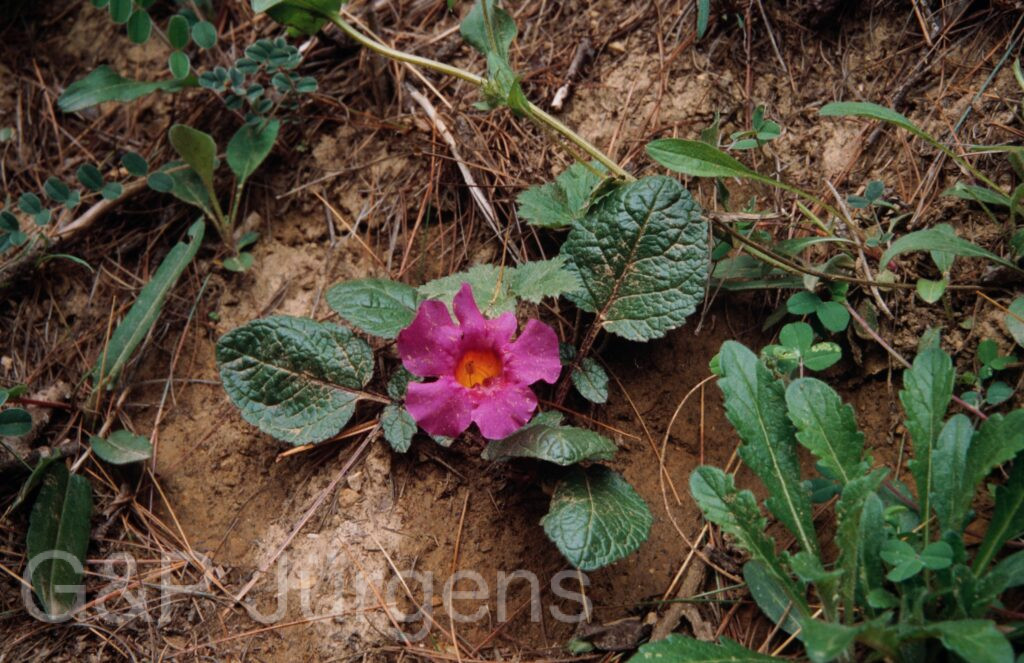
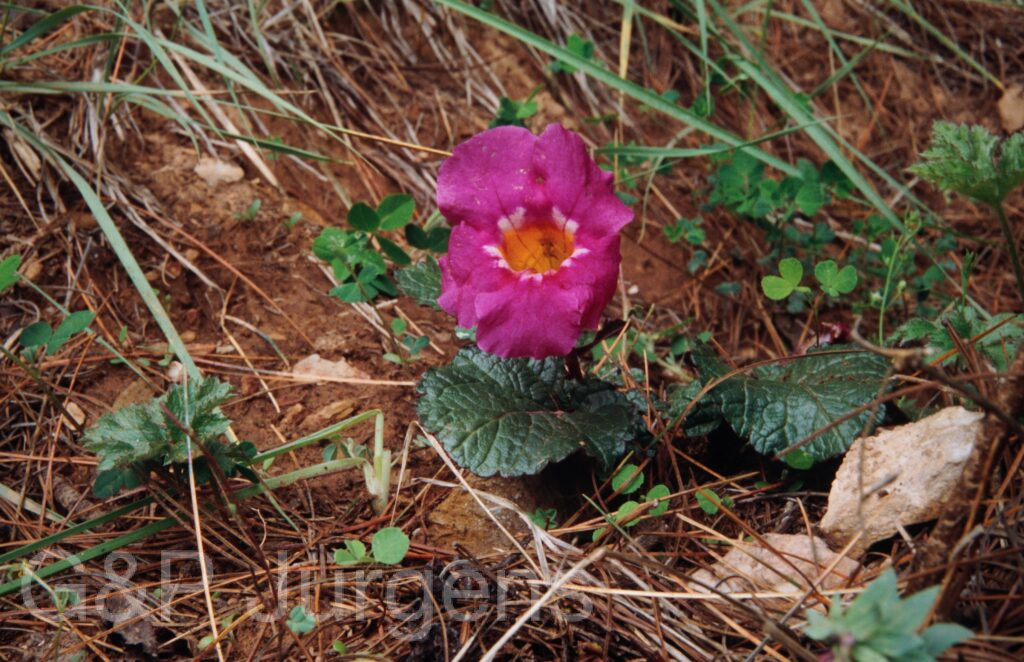
Nepal 99 727 ergebnis ergebnis
West-Nepal Poksundo-Lake 3650m, July

Description

Incarvillea mairei is a stemless, rosette-forming alpine perennial of the Bignoniaceae, distributed across the high mountains of the Sino-Himalayan region. GBIF data (over 450 occurrences) document its native range in China and Nepal, with additional herbarium material in European collections. It is a plant of open alpine and subalpine slopes, stony pastures, grassland and rocky ground, generally between about 2,500 and 4,500 m. The collection from near Phoksundo Lake in West Nepal at 3,650 m in July reflects its preference for sunny, well-drained high-altitude meadows where it flowers during the summer monsoon.

Unlike the woody, climbing members of its family, I. mairei is a low herb with a stout, fleshy taproot and a basal rosette of pinnately divided to lyrate-pinnatifid leaves with crenate leaflets. The flowers are borne on a short, leafless scape and are among the most striking of any alpine herb: large, trumpet-shaped and showy, with a broadly campanulate corolla 5–8 cm long, deep rose-pink to magenta with a paler or yellow-marked throat. The corolla is weakly two-lipped with five spreading lobes, enclosing four didynamous stamens. The fruit is an elongate, woody, more or less terete capsule that splits to release numerous flat, winged seeds.

Incarvillea is a primarily Sino-Himalayan and Central Asian genus that is anomalous within the largely tropical and woody Bignoniaceae for its herbaceous, frost-tolerant alpine species. The genus is of considerable horticultural interest, I. mairei being prized in rock gardens for its outsized blooms. As a showy alpine endemic to the region, it is locally vulnerable to collection and to the degradation of high-altitude pasture, though it remains widespread within its native range.

Author: (H.Lév.) Grierson · Sources: POWO (Kew), Flora of China Vol. 18, Flora of Nepal, GBIF, Grierson: Notes on the Genus Incarvillea (Bignoniaceae)

Sprague

Nepal 99 729 ergebnis ergebnis
West-Nepal Poksundo-Lake 3650m, July

Description

Incarvillea younghusbandii is a dwarf, ground-hugging alpine herb of the high Tibetan plateau and the adjoining Himalaya, recorded from China (Xizang), Nepal and Bhutan with about 180 GBIF occurrences. It is a specialist of cold, arid to semi-arid high-elevation habitats: gravelly flats, stony alpine steppe, sandy river terraces and screes, typically between roughly 3,600 and 5,000 m. The plant documented at Phoksundo Lake in West Nepal at 3,650 m, flowering in July, sits near the lower edge of its range and illustrates its association with the dry, rain-shadowed inner Himalayan valleys that grade into the Tibetan plateau flora.

The plant is a stemless or nearly stemless perennial arising from a thick, fleshy taproot. The leaves form a flat basal rosette and are pinnately or pinnatisect-compound with rounded, crenate leaflets, often somewhat fleshy and pressed close to the ground. The flowers are large and showy relative to the diminutive plant, borne almost sessile within the rosette; the corolla is broadly funnelform to trumpet-shaped, rose-pink to magenta with a paler or yellowish throat, weakly bilabiate with five spreading rounded lobes. The fruit is an elongate, beaked, dehiscent capsule releasing flattened, winged or hairy-margined seeds.

The rosette-and-taproot habit is a classic adaptation to the wind-blasted, frost-prone, short-season conditions of the plateau, minimising exposure while presenting flowers at ground level to insect pollinators. Incarvillea is the principal temperate Asian genus of the otherwise largely tropical Bignoniaceae, and this species belongs to its specialised high-alpine, acaulescent group. Though not formally assessed, its restricted habitat warrants attention.

Author: Sprague · Sources: POWO (Kew), Flora of China Vol. 18, Flora of Bhutan Vol. 2, GBIF, Grierson: Bignoniaceae revisions of the eastern Himalaya

Iris clarkei

by GP Jürgens

Baker ex Hook.f.

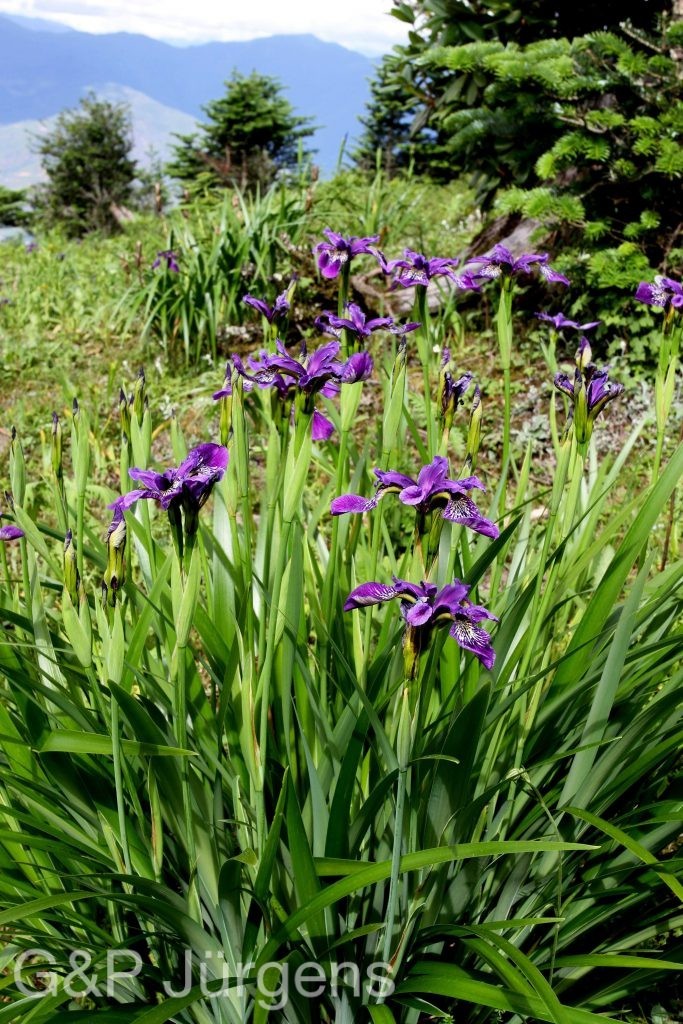
BhutanPG2011 773 01 01
Bhutan Chele-La, 3900m June
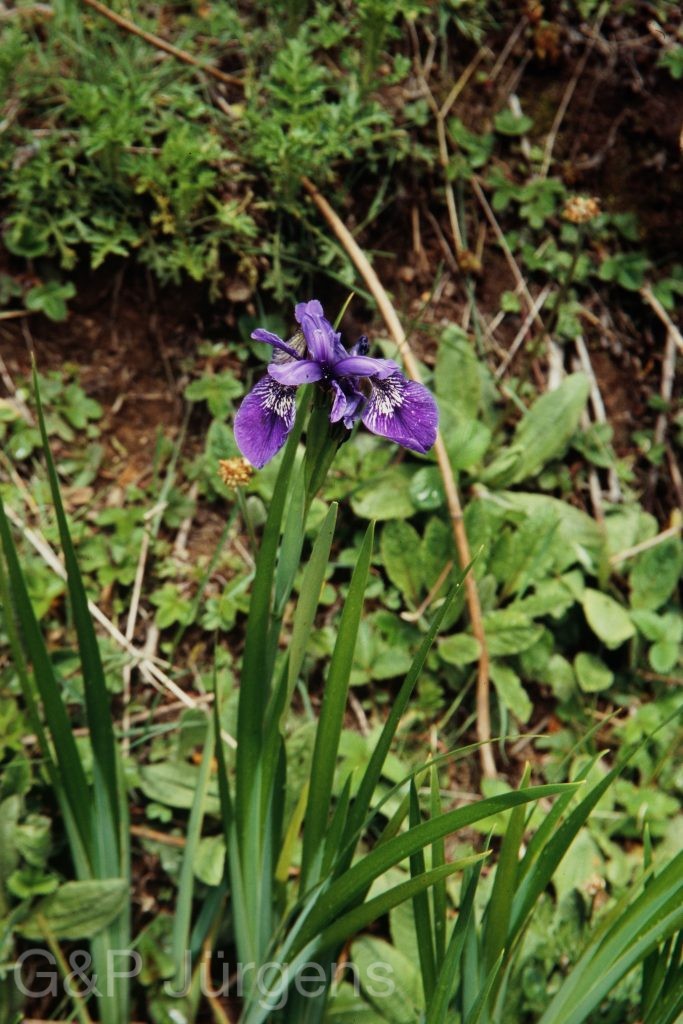
Bh09 35 P65
Bhutan Dochu-La, 3000m June
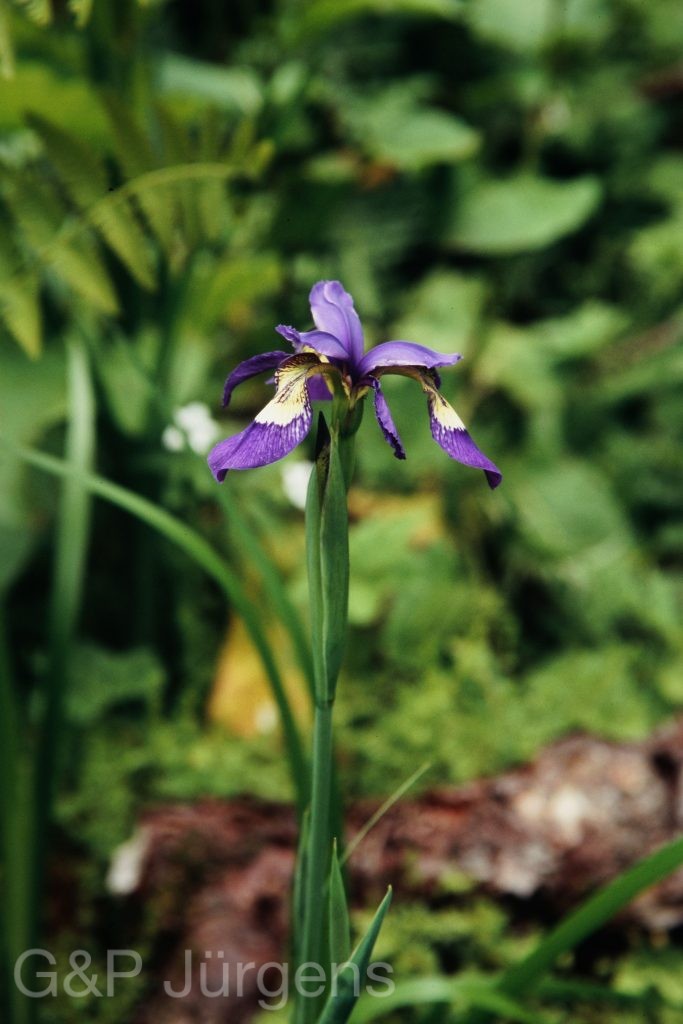
Bh09 206 P346
Bhutan Dochu-La, 3000m June

Description

Iris clarkei is an eastern Himalayan beardless iris distributed through Bhutan, Sikkim and northeastern India, Nepal, southern Tibet (China) and northern Myanmar, with GBIF holding about 174 occurrences. It is a subalpine to alpine moisture-lover, recorded here from two Bhutanese passes, Chele-La at 3900 m and Dochu-La at 3000 m, both flowering in June. The species favours wet alpine meadows, marshy hollows, stream sides and seasonally flushed turf on slopes, typically between roughly 3000 and 4300 m, where it forms colonies in the open, moist grassland of the upper temperate and subalpine zones.

It is a tufted rhizomatous perennial of the Sibiricae group, with slender creeping rhizomes producing erect, solid (not hollow) flowering stems that are characteristically branched and bear a distinctive solid pith. The leaves are linear-ensiform, grass-like, ribbed and grouped in basal fans. Each stem carries one to several flowers; the perianth is blue-violet to reddish-purple, the spreading or deflexed falls bearing a paler, conspicuously veined and blotched signal patch, and the standards are smaller and more erect, the flowers beardless and crestless. The fruit is a three-angled loculicidal capsule containing flattened seeds.

Described by Baker (ex Hook.f.) and named for C. B. Clarke, the species belongs to series Sibiricae, the Asian relatives of Iris sibirica, and is of horticultural interest for its solid stems and richly marked falls. Though restricted to specialised wetland habitats, it remains locally common within its range; pressures such as grazing, trampling and drainage of montane mires are the principal local threats to its boggy habitat.

Author: Baker ex Hook.f. · Sources: POWO (Kew), GBIF, Flora of Bhutan, Flora of China, Mathew The Iris, British Iris Society A Guide to Species Irises

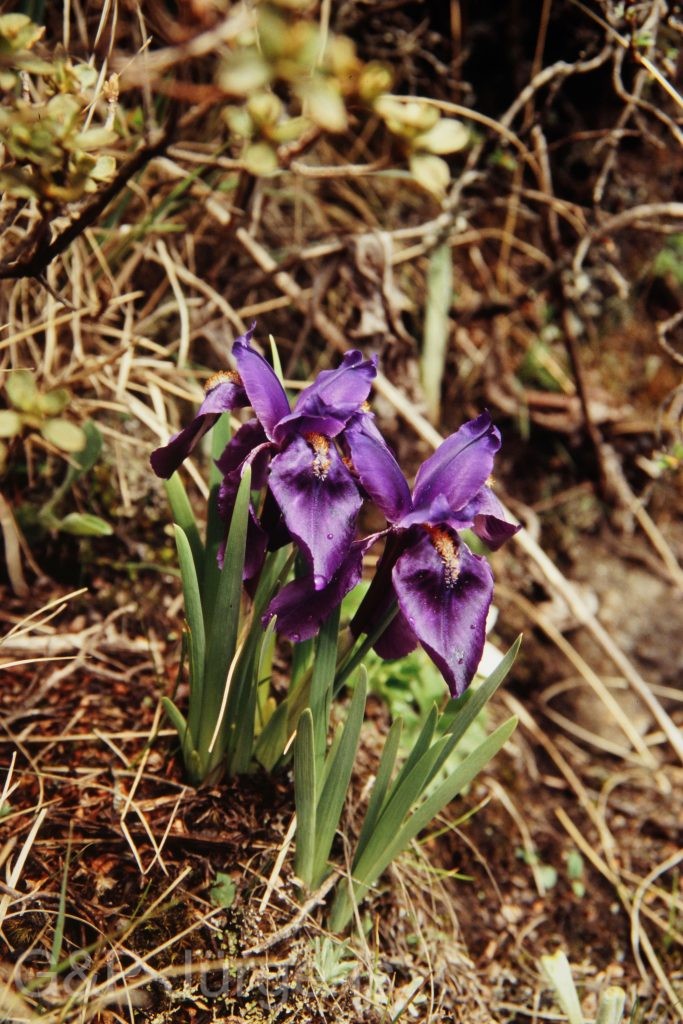
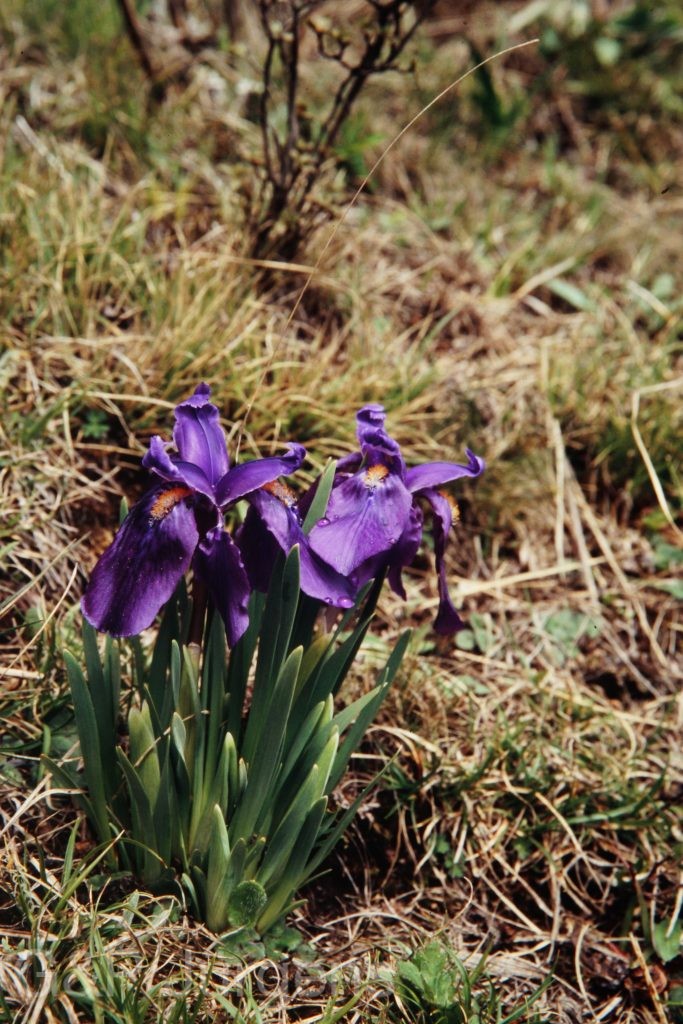
Noltie

Bh09 30 G56
Bhutan Shele-La 4000m, June
Bh09 31 P57
Bhutan Shele-La 4000m, June

Description

Iris dolichosiphon is a high-alpine dwarf iris restricted to the eastern Himalaya and adjacent China, a narrow-range endemic recorded by GBIF from only China, Bhutan and India, with a small total of around 77 occurrences reflecting both its limited distribution and the remoteness of its habitat. It grows in open alpine turf, meadows, grassy slopes and rocky pastures above the treeline, generally between about 3500 and 4500 m, where snow-melt and short cool summers govern its brief flowering season. The photographed plant from the Shele La in Bhutan, at roughly 4000 m and flowering in June, is exactly typical of its occurrence on exposed high passes, where it forms low cushions among short alpine vegetation soon after the snow recedes.

It is a small, tufted perennial of the dwarf-crested and beardless Himalayan iris assemblage, arising from a slender, fibrous-coated rhizome and producing narrow, linear, grass-like leaves. The flowers are nearly sessile at ground level but are raised, in effect, by an extremely long, slender perianth tube, the character that gives the species its epithet (dolichos, long; siphon, tube), so that the floral parts are presented well above the very short stem. The flowers are violet to lilac-blue, the three outer tepals (falls) spreading and signalled with a paler, veined and crested or ridged blaze, the three inner tepals (standards) smaller and erect; the three petaloid style branches arch over the stamens.

Described by H. J. Noltie, who clarified much of the Sino-Himalayan iris flora, I. dolichosiphon belongs to the alpine, beardless dwarf irises and is allied to species such as I. kemaonensis and the I. goniocarpa group, from which the conspicuously elongate perianth tube distinguishes it. Its pollination by long-tongued bumblebees is favoured by the deep tube, and seed is set in a capsule that ripens as the brief alpine season closes. As a narrowly distributed high-altitude endemic with few records, it warrants monitoring; while not formally assessed as threatened, its restricted range and sensitivity to climate-driven shifts in the alpine zone make it of biogeographic and conservation interest.

Author: Noltie · Sources: POWO (Kew), GBIF, Flora of China Vol. 24, Flora of Bhutan Vol. 3, Flora of Nepal, Flora of Pakistan, Noltie's account of the Sino-Himalayan irises