
Hook.f.
Description
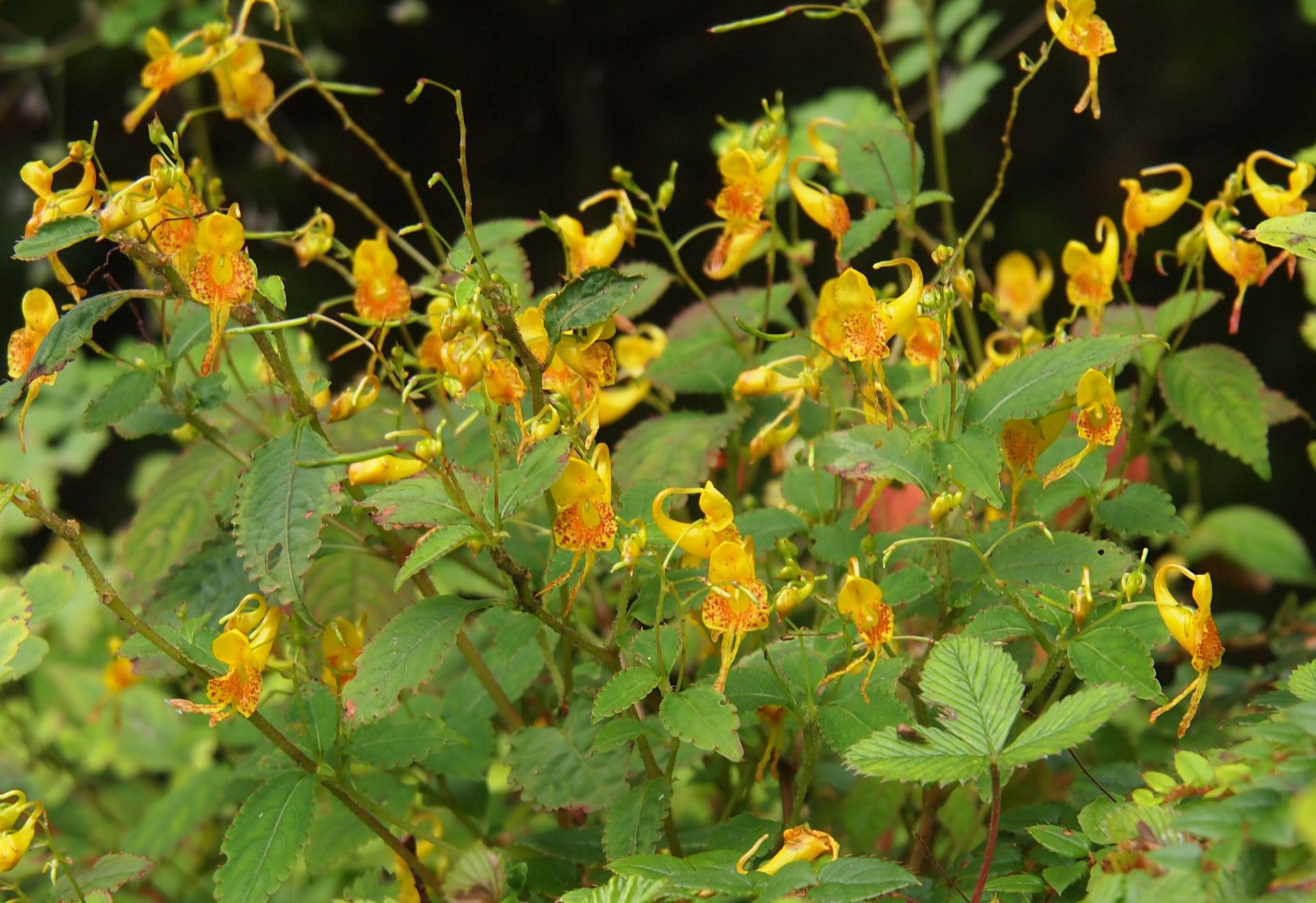
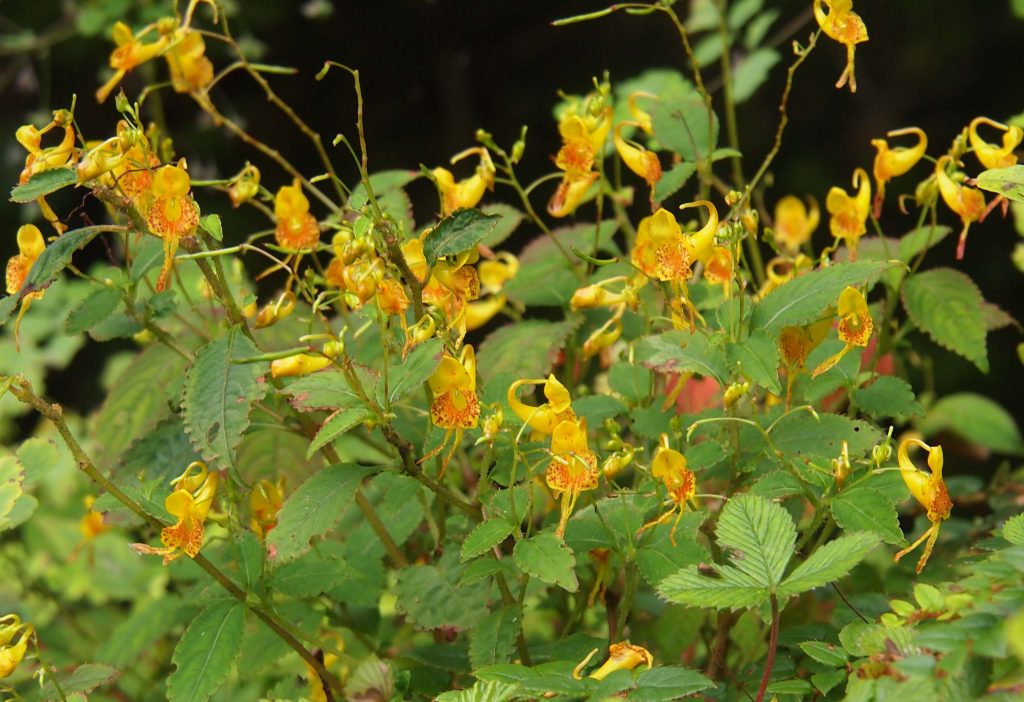
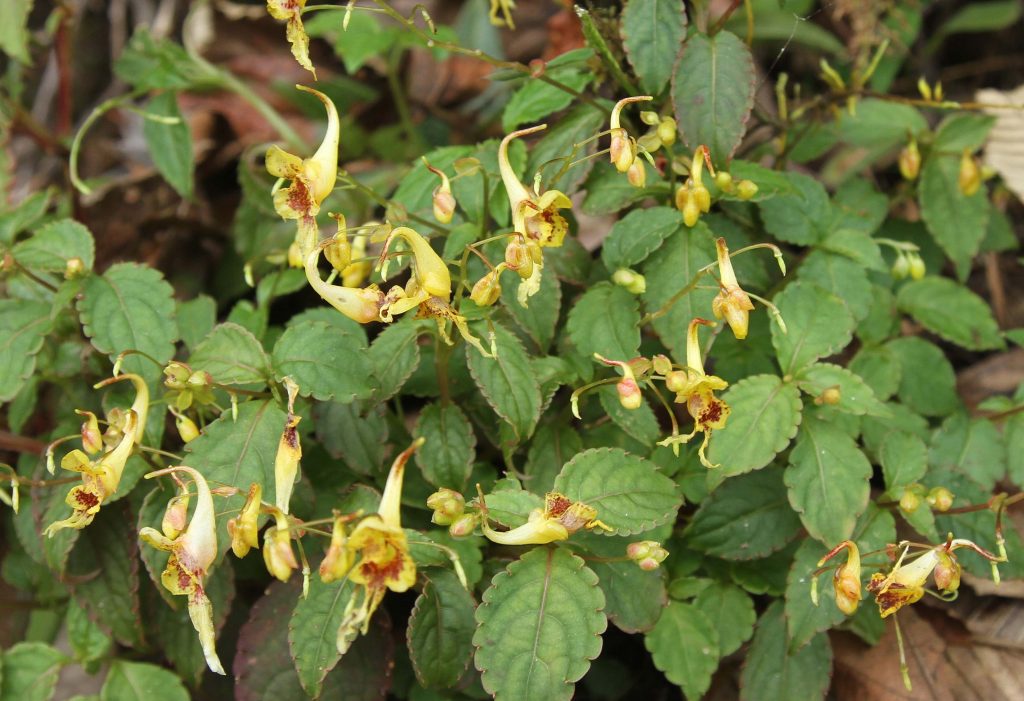
Impatiens scitula is a high-montane balsam of the eastern Himalaya, known from a small set of GBIF records (27 occurrences) in Bhutan, China and India. It grows in cool, humid subalpine settings along forest streams, shaded banks and seepage slopes near the upper limit of fir and rhododendron forest, flowering late in the growing season after the summer monsoon. It was recorded on the Bhutanese passes of Dochu-La at about 3200 m in September and Tumching-La at about 3600 m in October, elevations notably higher than those of most lowland balsams and indicative of its cold-tolerant montane preference.
It is a succulent annual herb with translucent, glabrous stems swollen at the nodes. The leaves are alternate, ovate to lanceolate, serrate to crenate-serrate with gland-tipped teeth, and tapered to a petiole. The flowers are zygomotphic and showy for their size, borne on axillary peduncles; the lower sepal is produced into a slender curved or incurved spur and the standard and wing petals form the elaborate, bilaterally symmetric corolla typical of the genus. The fruit is a fleshy, club-shaped capsule that dehisces explosively, the coiling valves flinging out the seeds.
Impatiens (Balsaminaceae) is exceptionally diverse in the Sino-Himalayan mountains, where high-elevation species such as I. scitula are often narrowly distributed and distinguished by fine details of spur and petal form. Its restriction to a few eastern Himalayan localities at high elevation makes it a regional endemic of biogeographic interest. Although no formal conservation assessment is published, narrowly ranged high-altitude balsams of this kind are potentially vulnerable to climatic warming and habitat disturbance.
Author: Hook.f. · Sources: POWO (Kew), GBIF, Flora of Bhutan, Flora of China, Flora of British India, Grey-Wilson and allied revisions of Asian Impatiens (Balsaminaceae)