
DC.
Description
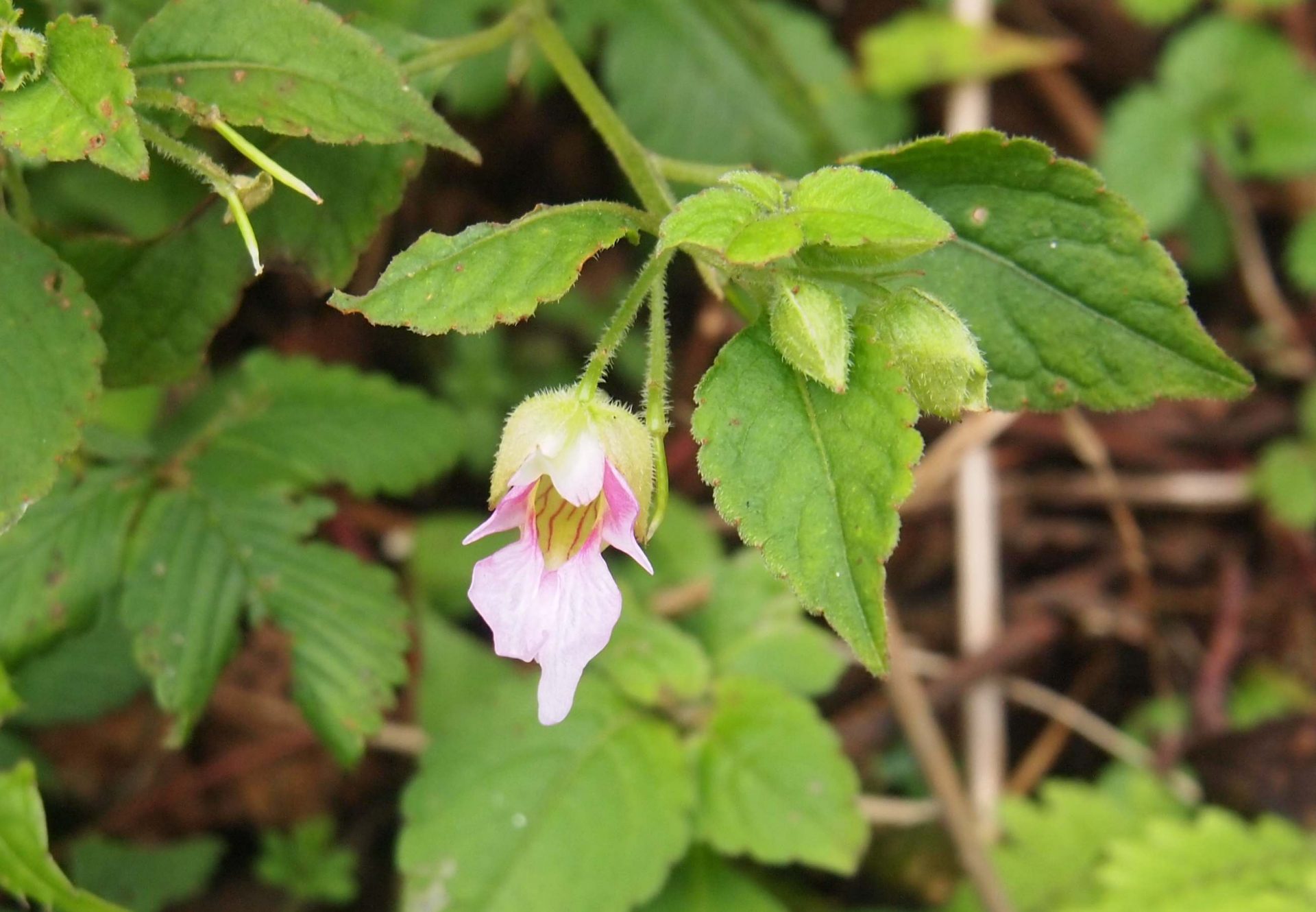
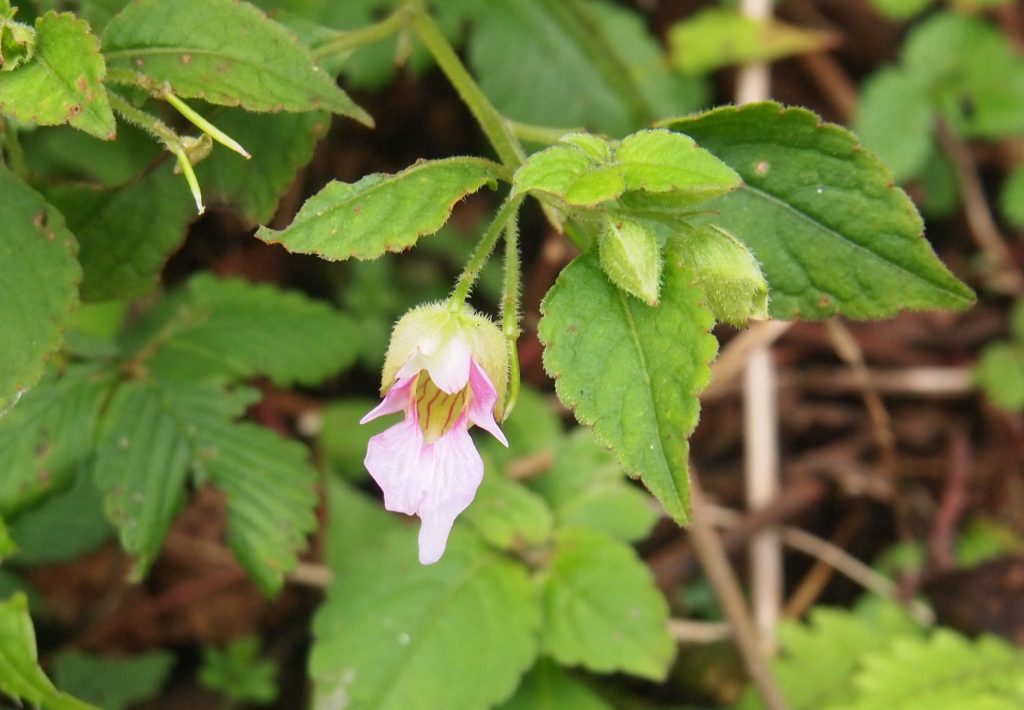
Impatiens puberula is a Himalayan balsam ranging through Nepal, India, China, Bhutan and Myanmar, with around 186 georeferenced records. It is a plant of cool, humid, shaded habitats, occurring on damp banks, stream-sides, seepage slopes and moist forest margins in the temperate zone. The individual photographed near Jakar in the Bumthang region of central Bhutan at about 1950 m in October illustrates its preference for shaded, moisture-retentive ground, where it flowers late into the monsoon season on rich, organic soils.
The species is a succulent annual with translucent, often reddish-tinged stems that are minutely puberulous, the indumentum giving rise to its epithet. The leaves are alternate, ovate to elliptic-lanceolate with a crenate-serrate margin, the teeth often gland-tipped, and taper to a petiole. The zygomorphic flowers are borne singly or in few-flowered axillary clusters; the showy lower sepal is prolonged into a slender, curved nectar spur, and the lateral united petals form broad wings, as is characteristic of the genus. The fruit is an explosively dehiscent fleshy capsule that, when ripe, coils its valves to fling out the seeds.
Impatiens is one of the largest angiosperm genera and is notably species-rich and taxonomically difficult across the Sino-Himalayan region, where rapid radiation has produced numerous narrowly defined and frequently endemic taxa separated by floral colour, spur curvature and seed sculpturing. Its explosive ballistic seed dispersal and dependence on perennially moist microhabitats make such balsams sensitive to drainage change and forest disturbance, though I. puberula remains widespread.
Author: DC. · Sources: POWO (Kew), GBIF, Flora of Bhutan, Flora of Nepal, Flora of China, Grey-Wilson's monograph of Impatiens