
Roxb. ex DC.
Description
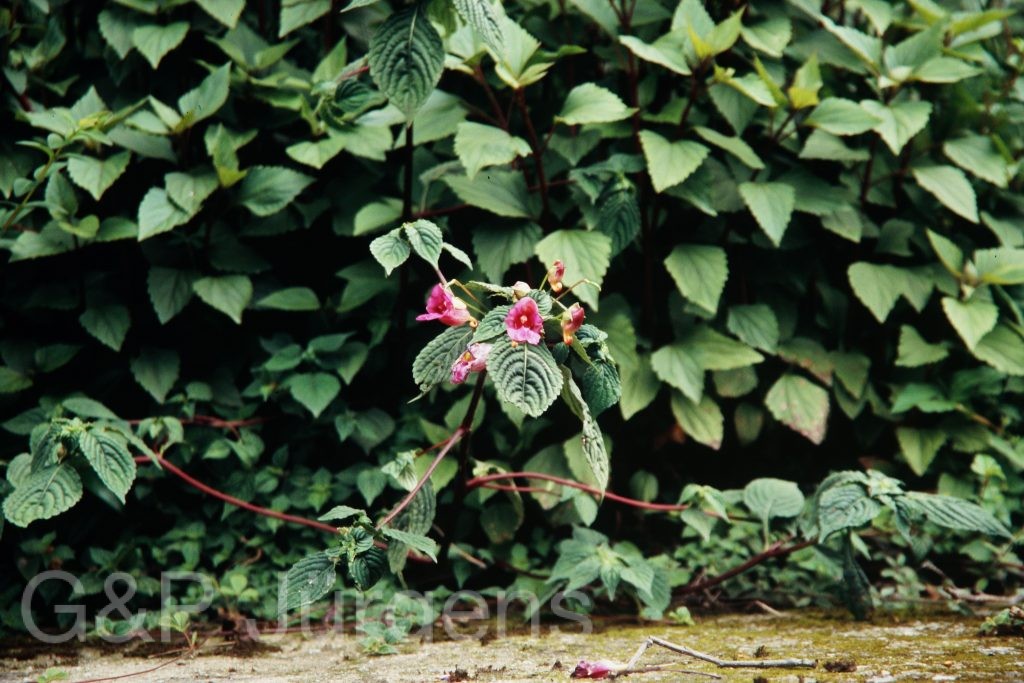
Impatiens tripetala is a succulent annual balsam of the warm, humid lowlands and foothills of the eastern Himalaya and Indo-Burma. GBIF lists 77 occurrences, centred on India, Myanmar, Bhutan and Nepal, with additional scattered or cultivated records reported under several country codes. It grows in moist shaded ground along forest streams, ditches and disturbed seepage sites in the subtropical belt, flowering late in and after the monsoon. The species was recorded at Galephug in southern Bhutan at about 600 m in October, a low foothill elevation reflecting its preference for warm, perhumid habitats.
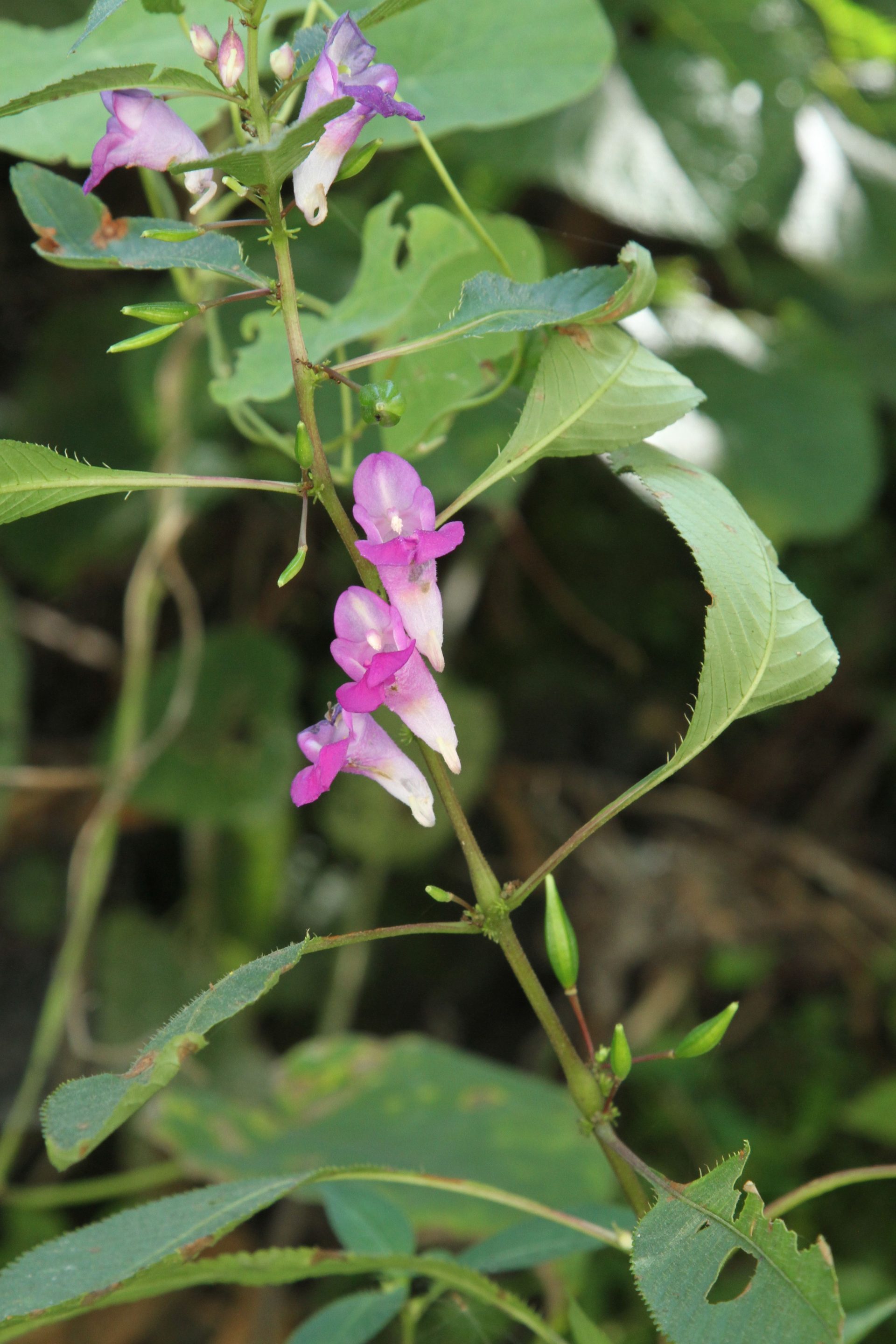
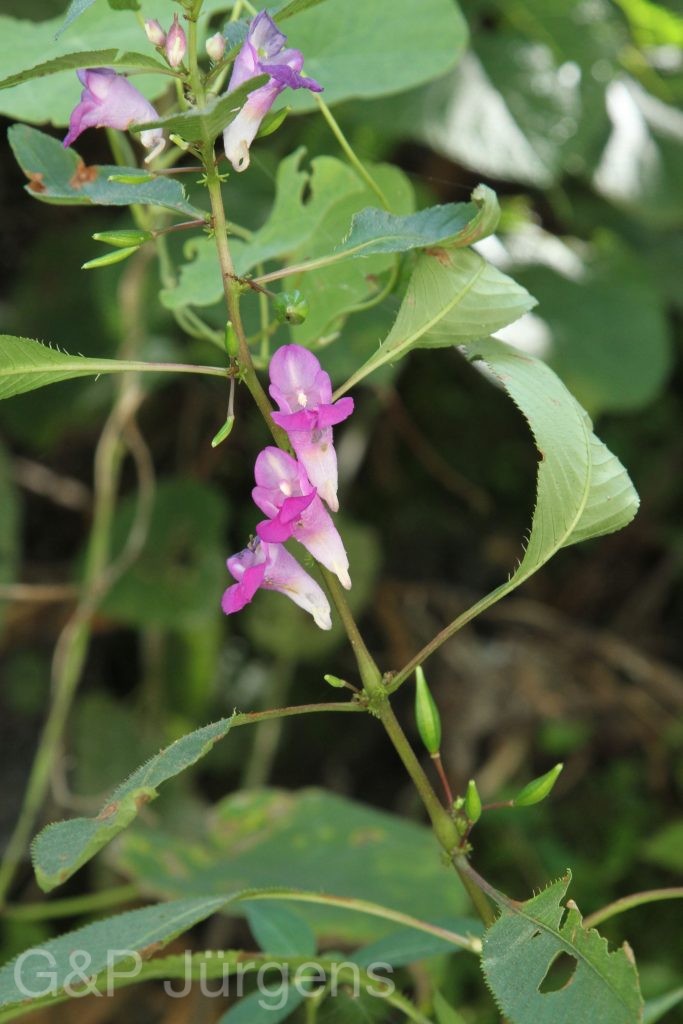
It is an erect, glabrous herb with translucent, watery stems that are swollen at the nodes, rooting at the lower joints. The leaves are alternate, ovate to elliptic-lanceolate, crenate-serrate with the teeth often gland-tipped, and narrowed to a petiole. The zygomorphic flowers are borne on axillary peduncles; the lower sepal forms a spurred saccate pouch, and the corolla shows the reduced, apparently three-petalled appearance to which the epithet tripetala refers. The fruit is the characteristic fleshy, explosively dehiscent capsule of the genus, scattering its seeds by elastic recoil of the valves.
Impatiens (Balsaminaceae) is an enormous genus with a major centre of diversity in the Sino-Himalayan region, where many species are narrow endemics distinguished by flower colour, spur form and capsule shape. I. tripetala forms part of the rich lowland-to-submontane balsam flora of the eastern Himalaya. As an annual of moist, often disturbed ground it can be locally common, but the wider group is notable for high endemism and sensitivity to forest loss and hydrological change, themes relevant to its conservation context.
Author: Roxb. ex DC. · Sources: POWO (Kew), GBIF, Flora of Bhutan, Flora of British India, Annotated Checklist of the Flowering Plants of Nepal, Grey-Wilson monograph Impatiens of Africa and Asian revisions of Balsaminaceae