
(C.B.Clarke) Fujikawa & H.Ohba
Description
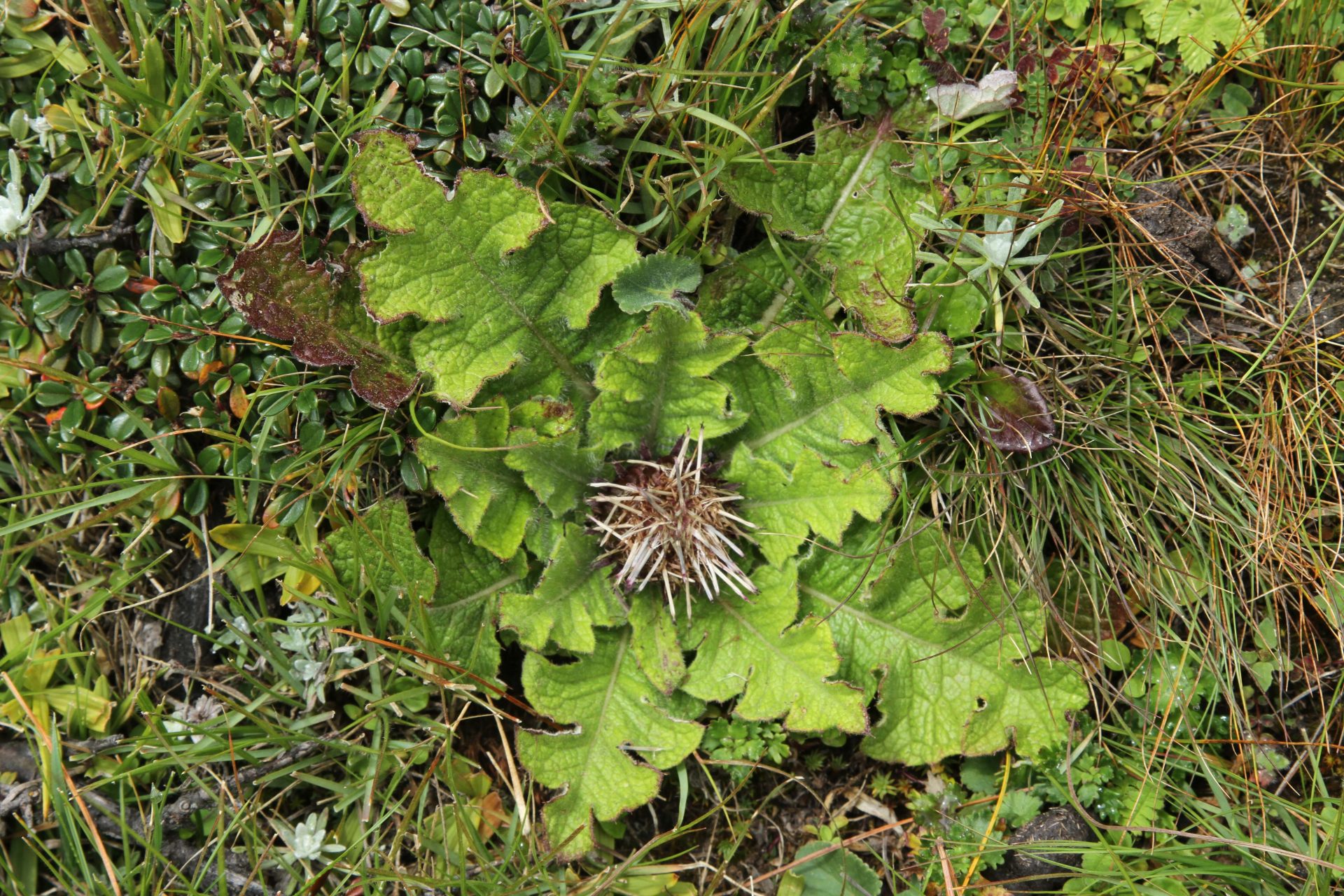
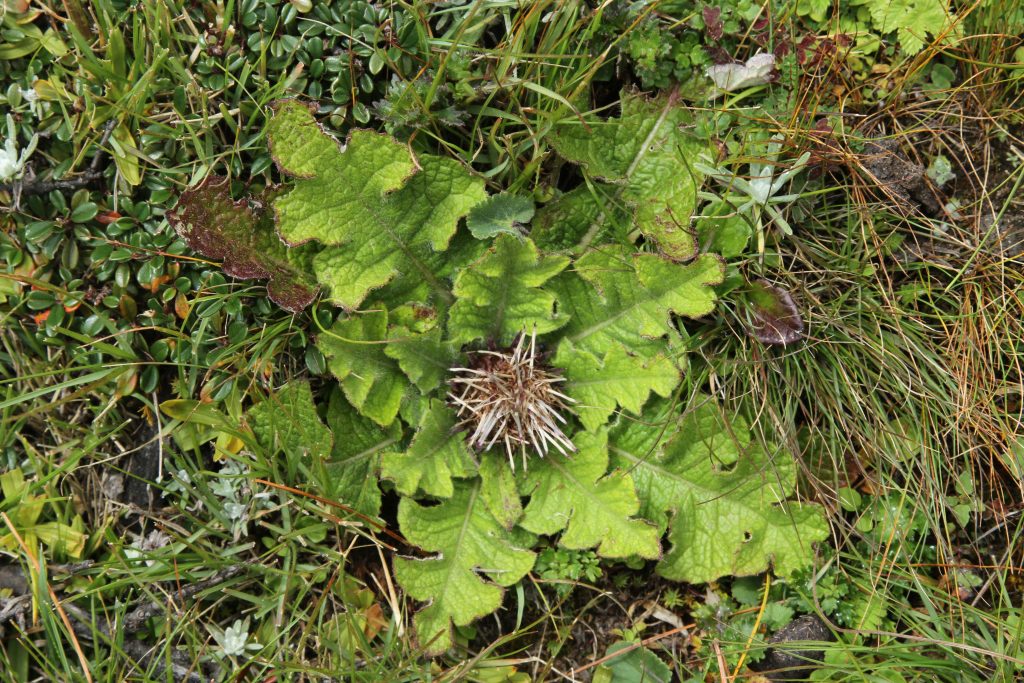
Himalaiella yakla is a high-alpine thistle-like composite of the Eastern Himalaya, recorded from China and Nepal and extending into Bhutan, where it is very seldom collected, the aggregated databases holding only a handful of occurrences. It is a plant of the upper alpine zone, growing on open stony slopes, scree, rocky pastures and exposed ridges generally near and above 4000 m. The specimen illustrated was photographed at Shele-La in Bhutan at about 4000 m in September, its late-season flowering reflecting the short growing window of these cold, wind-swept high passes.
The plant is a perennial herb with a stout caudex and an erect, often somewhat woolly stem, frequently clothed in white arachnoid or floccose tomentum that mitigates intense alpine radiation and desiccation. The leaves are oblong to lanceolate, sessile or shortly petiolate, with toothed to pinnatifid, sometimes spinulose margins, green above and greyer beneath. The capitula are discoid, solitary or few, with an ovoid involucre of imbricate, often spine-tipped phyllaries. The florets are tubular, bisexual and purple to violet, and the achenes are crowned by a pappus of plumose or barbellate bristles in series, adapted to wind dispersal across open terrain.
The name appears in GBIF as a synonym, with Himalaiella yakla treated as the accepted name; the taxon was segregated from the large genus Saussurea, under which it long stood as Saussurea yakla, following molecular studies that resolved Himalaiella as a distinct Sino-Himalayan lineage. Its rarity, restricted high-elevation range and sensitivity to climatic shifts and grazing render it of biogeographic significance and best regarded as data-deficient pending targeted survey.
Author: (C.B.Clarke) Fujikawa & H.Ohba · Sources: POWO (Kew), GBIF, Flora of China, Flora of Bhutan, Saussurea and Himalaiella systematic studies, Compositae of the Himalaya