Tag:

Alpine (>3500 m)

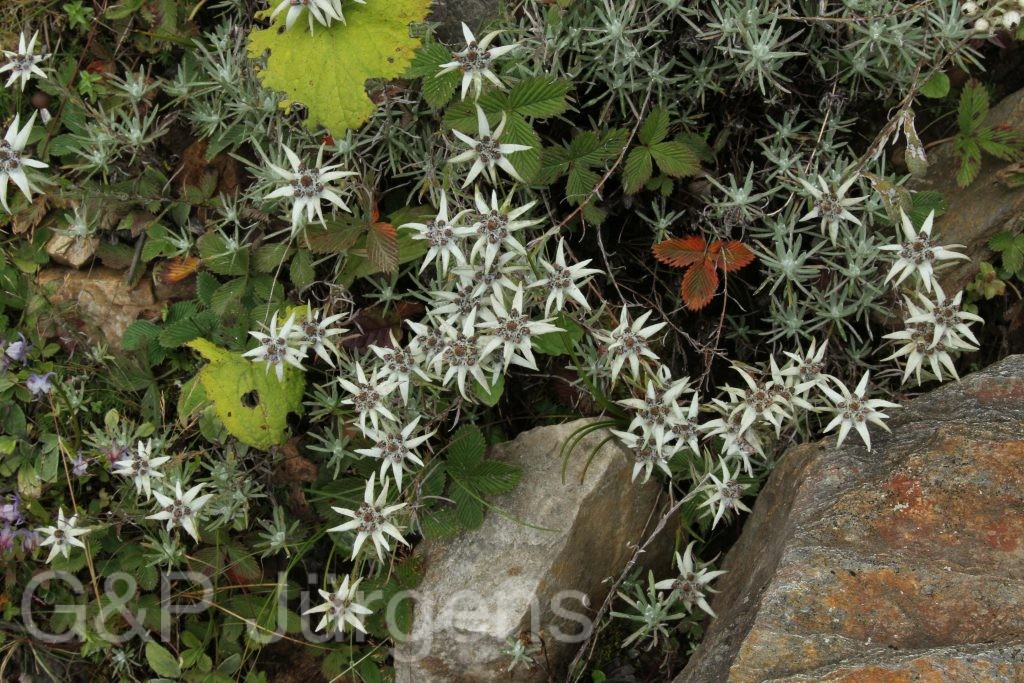
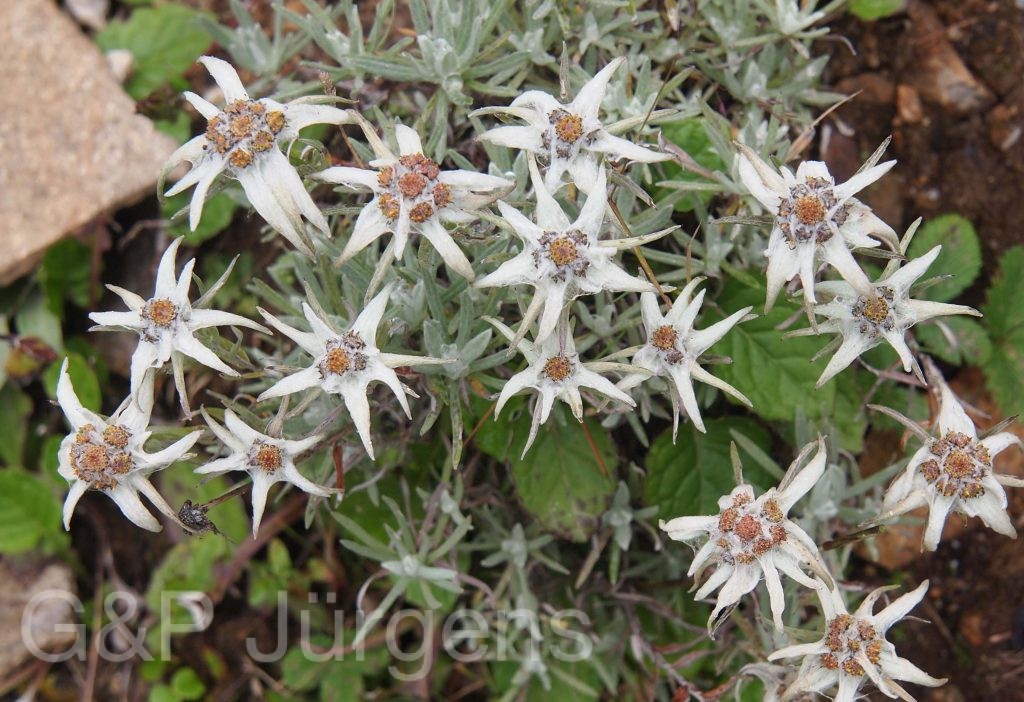
Beauverd

Bhutan2012 57
Bhutan Shele-La, 4100m September
Bhutan2012 61
Bhutan Shele-La, 4100m September

Description

Leontopodium jacotianum is a high-alpine edelweiss of the Sino-Himalayan region, recorded from Nepal, China, India, Bhutan, Pakistan and Myanmar (NP, CN, IN, BT, PK, MM), with a modest 546 GBIF occurrences reflecting its restriction to lofty, difficult terrain. It inhabits open alpine meadows, stony slopes, screes and rocky crevices above the treeline, where snow lies long and the growing season is brief. The photographed plant grew on the Shele-La in Bhutan at about 4100 m in September, flowering at the close of the monsoon season on exposed alpine turf typical of the genus across the eastern Himalaya.

It is a tufted perennial herb arising from a stout, branched caudex, forming compact cushions or small clumps of several flowering stems 5–25 cm tall, the whole densely grey-white lanate-tomentose. The basal and cauline leaves are spathulate to linear-oblong, sessile, woolly on both surfaces. The diagnostic feature is the terminal star of leaf-like floral bracts radiating beyond the capitula, densely felted with white woolly hairs and forming the familiar edelweiss "flower". Within this stellate ruff sit several crowded capitula; the heads contain yellowish tubular florets, the plants typically subdioecious with outer female and central functionally male florets. The fruit is a small cypsela crowned by a pappus of barbellate to subplumose bristles.

The genus Leontopodium (tribe Gnaphalieae) reaches its greatest diversity in the Himalaya and the mountains of western China, where numerous species are differentiated by indumentum, bract shape and habit; L. jacotianum, described by Beauverd, belongs to this dense Asiatic radiation. The thick woolly investment is an adaptation to intense ultraviolet radiation, desiccation and cold at high elevation. Though not currently assessed as threatened, such narrowly alpine specialists are sensitive to climatic warming and the upslope contraction of suitable habitat.

Author: Beauverd · Sources: POWO (Kew), GBIF, Flora of China Vol. 20-21, Flora of Bhutan, Flora of Nepal, Leontopodium monograph (Handel-Mazzetti, revision of the genus)
(Cass.) Greuter

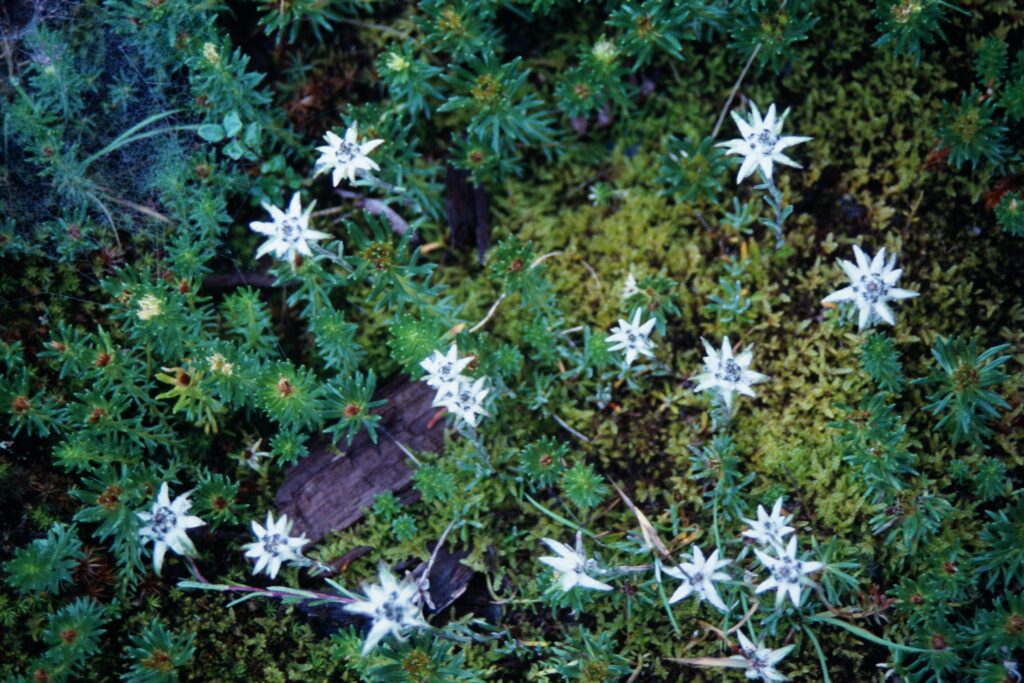
Sikkim2003 325 P462 ergebnis
Sikkim Samiti lake 4000m, July

Description

Leontopodium nivale subsp. alpinum, the classic alpine edelweiss, is a high-mountain perennial of the Asteraceae with a remarkably broad circum-montane distribution. GBIF records (over 20,000 occurrences) document its core European range across the Alps and Carpathians (France, Switzerland, Italy, Austria, Germany, Slovenia, Poland, Romania, Slovakia, Spain, Croatia) extending eastward into Ukraine and disjunctly to the Sino-Himalayan region (China, India). It is a calcicole of stony alpine meadows, rocky ledges and screes, typically between 1,700 and 4,000 m. The Himalayan population photographed at Samiti Lake in Sikkim at 4,000 m in July illustrates the upper elevational reach of the species complex in seasonally snow-fed alpine turf.

The plant forms compact tufts from a woody caudex, with erect unbranched stems 5–20 cm tall arising from basal leaf rosettes. Leaves are lanceolate to oblong, grey-green and densely white-tomentose on both surfaces, the indumentum of interwoven hairs reducing transpiration and reflecting intense UV radiation. The conspicuous "flower" is in fact a pseudanthium: several small yellowish-white capitula are surrounded by a stellate arrangement of densely woolly, snow-white bracts forming the characteristic star. Each capitulum contains tubular florets, with marginal female and central functionally male florets; the achenes are small and bear a pappus of barbellate bristles.

The Leontopodium nivale complex is taxonomically intricate, with subsp. alpinum often treated as the type European edelweiss and frequently confused with Himalayan congeners such as L. himalayanum. A celebrated symbol of alpine flora, it is legally protected in several European countries against collection, and its woolly indumentum is a textbook example of adaptation to cold, high-irradiance environments.

Author: (Cass.) Greuter · Sources: POWO (Kew), Flora of China Vol. 20-21, Flora Europaea Vol. 4, GBIF, Handel-Mazzetti: Monographie der Gattung Leontopodium (1928)

(H.Hara) Al-Shehbaz

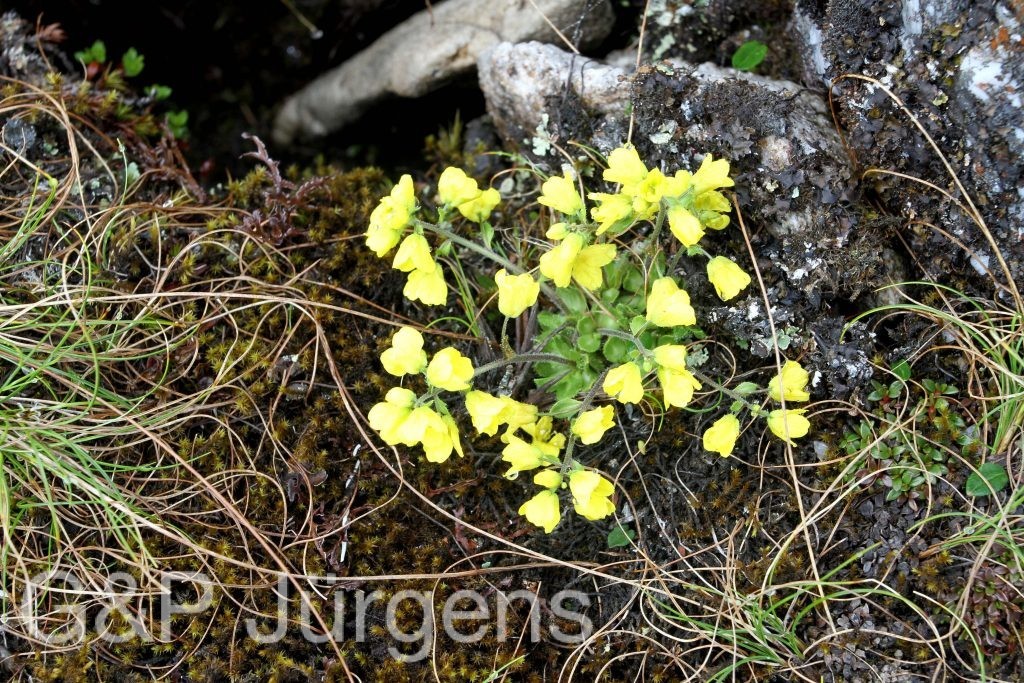
BhutanPG2011 417
Bhutan Ludlow-Sherriff-Trail Warrtlang-La, 4400m June

Description

Lepidostemon williamsii is a rare high-alpine crucifer known only from Nepal and Bhutan, and is among the most sparsely documented species in this account, with merely about 12 GBIF records. It is confined to the upper alpine zone, growing on open screes, moraines, gravelly slopes and rock crevices near the limit of vascular plant life. The single cited collection, from the Ludlow-Sherriff-Trail at Warrtlang-La in Bhutan at about 4400 m in June, exemplifies its restriction to cold, exposed, well-drained mineral substrates where snow lies late and the growing season is extremely short.

The plant is a small, often cushion-forming or low tufted perennial herb adapted to severe alpine conditions, with a basal cluster of leaves that are entire to shallowly toothed or lobed. The flowers are typical of the family, with four sepals and four clawed petals arranged in a cross and arrayed in a short, congested raceme. The genus Lepidostemon is diagnosed by its distinctive stamens, whose filaments bear conspicuous scale-like or winged appendages, a feature reflected in the generic name. The fruit is a short silicula or silique characteristic of high-alpine Brassicaceae, splitting to release the seeds.

The species was originally described by H. Hara and transferred to Lepidostemon by Al-Shehbaz, whose revisions have clarified the circumscription of the small Sino-Himalayan genera of Brassicaceae. As a narrow-range endemic occupying a very specialised and harsh high-alpine niche with very few known populations, L. williamsii is inherently vulnerable, and its restricted distribution makes it a priority for monitoring against habitat disturbance and climatic change.

Author: (H.Hara) Al-Shehbaz · Sources: POWO (Kew), GBIF, Flora of Bhutan, Annotated Checklist of the Flowering Plants of Nepal, Al-Shehbaz's revision of Himalayan Brassicaceae

Turcz.

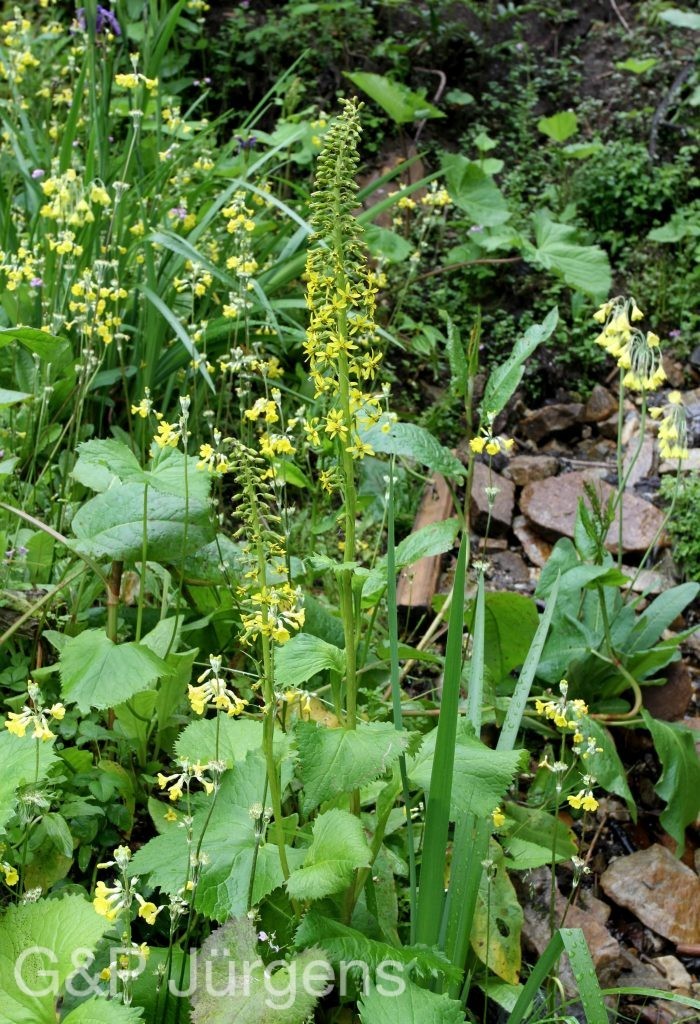
BhutanPG2011 810 01 01
Bhutan Chele-La 3900m, August

Also: Primula smithiana Craib / Primula sikkimensis Hook.f.

Description

Ligularia fischeri is a robust, broadly distributed temperate-montane composite ranging across East Asia and the Himalaya, recorded from Japan, Korea (KR, KP), China, Russia, Mongolia, Nepal, India, Bhutan, Pakistan and Myanmar (JP, KR, CN, RU, NP, KP, IN, MN, BT, PK, MM), with nearly 3000 GBIF occurrences; further records from Europe and North America reflect cultivation and naturalisation. It favours moist, fertile situations: streamsides, wet meadows, marshy ground, forest margins and damp open slopes from montane to alpine elevations. The photographed plant grew on the Chele-La in Bhutan at 3900 m in August, flowering through the monsoon among tall herbaceous vegetation, here associated with Primula smithiana and Primula sikkimensis.

It is a stout perennial herb with a thick, fibrous-rooted rhizome producing erect flowering stems up to 1–1.5 m or more. The basal leaves are large, long-petiolate and reniform-cordate, with toothed margins and a broad, deeply cordate base, the petioles sheathing at the stem; cauline leaves diminish upward and become more clasping. The inflorescence is an elongate terminal raceme or narrow panicle of several to many radiate capitula, each subtended by a cylindric involucre of few phyllaries. The heads bear a few showy, ligulate, golden-yellow ray florets surrounding numerous yellow tubular disc florets. The fruit is a glabrous, cylindric, ribbed cypsela crowned by a pappus of whitish to brownish capillary bristles.

Ligularia (tribe Senecioneae) is a large genus of the temperate Old World especially diverse in the mountains of China; L. fischeri, described by Turczaninow, is among its most familiar and economically used species, its young leaves and shoots being gathered as a traditional vegetable and the plant valued horticulturally for damp gardens. Ecologically it is a tall-herb component of moist subalpine communities and a generalist food source for late-summer pollinators. Common and widespread, it is of least conservation concern.

Author: Turcz. · Sources: POWO (Kew), GBIF, Flora of China Vol. 20-21, Flora of Bhutan, Flora of Nepal, Ligularia monograph (Liu, Senecioneae of China)

(C.B.Clarke) Hand.-Mazz.

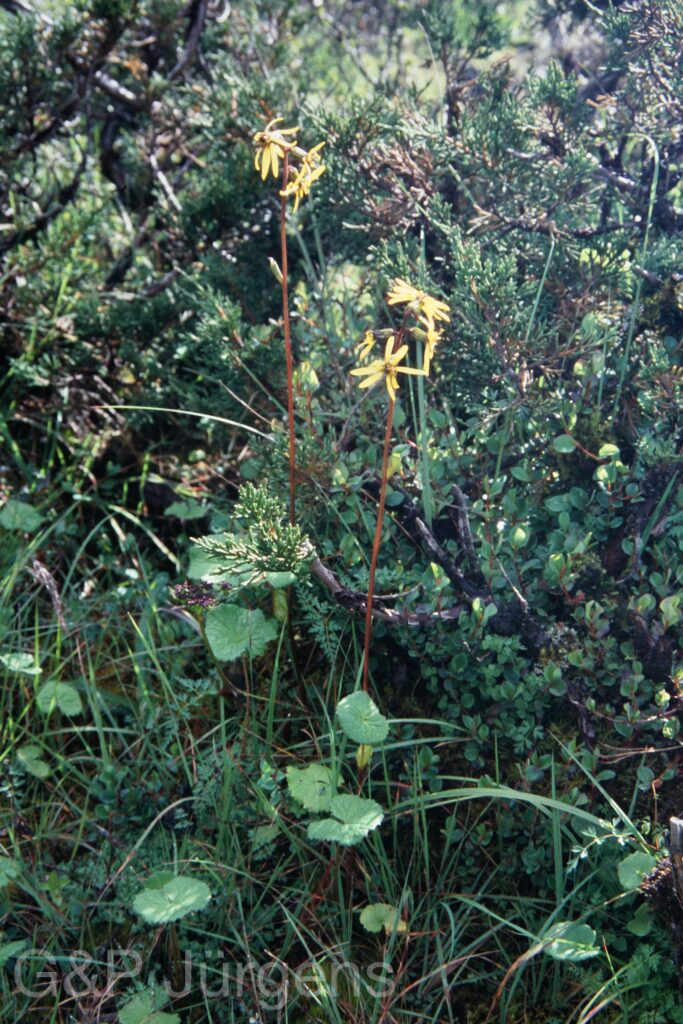
Sikkim2003 242 G332
Sikkim Dzongri 4100m, August

Description

Ligularia hookeri is a robust perennial herb of the eastern Himalaya and adjacent China, recorded from China, Nepal, India, Bhutan and Myanmar, with around 574 georeferenced records spanning the subalpine and alpine zones. It inhabits alpine meadows, open grassy slopes, forest margins and damp, rocky ground, often in seepage areas and along streams. The plant photographed at Dzongri in Sikkim at 4100 m, flowering in August, is characteristic of its high-elevation summer habitat, where it flowers at the height of the monsoon among other tall meadow herbs.

It arises from a stout rootstock and produces a cluster of large basal leaves on long, sometimes purplish petioles; the blades are broadly reniform to orbicular-cordate, palmately veined and toothed at the margin. The flowering stem is erect and stout, bearing few to several large capitula in a lax raceme or corymb. Each head has an involucre of broad bracts and is radiate, with conspicuous yellow to orange-yellow ligulate ray florets surrounding numerous tubular yellow disc florets. The fruit is a glabrous cylindrical cypsela crowned by a pappus of fine bristles.

Ligularia, of tribe Senecioneae, is distinguished from related Senecio and Cremanthodium by its radiate, erect, large-headed inflorescences and broad cordate leaves; C. B. Clarke first described this taxon, later combined in Ligularia by Handel-Mazzetti. The showy heads are pollinated by bumblebees, butterflies and flies of the high meadows, and the pappose cypselae are wind-dispersed. The species is widespread across the eastern Himalaya and of no current conservation concern, though it forms a conspicuous and ecologically important element of alpine pastures.

Author: (C.B.Clarke) Hand.-Mazz. · Sources: POWO (Kew), GBIF, Flora of China, Flora of Bhutan, Annotated Checklist of the Flowering Plants of Nepal, Liu monograph of Ligularia

DC.

Sikkim2003 446 P619
Sikkim Chopta-Valley 4250m, August

Description

Ligularia retusa is a robust perennial composite of the alpine zone of the eastern Himalaya and adjacent China, native to China, Nepal, Bhutan and India, with about 201 documented occurrences. It grows in moist alpine meadows, streamsides, marshy turf and damp open slopes, typically between about 3500 and 4500 m. The photographed plant was recorded in the Chopta Valley of northern Sikkim at 4250 m, flowering in August, at the height of the monsoon when meltwater and rainfall sustain the lush herbaceous communities of the high pastures.

The species is a stout herb arising from a short rhizome with fibrous roots, producing a few large basal leaves on long petioles; the blades are reniform to broadly cordate with a retuse or shallowly notched apex (the epithet retusa) and a crenate-dentate margin, glabrous or thinly hairy. The cauline leaves are smaller and clasping. The inflorescence is a raceme or narrow corymb of several to many radiate capitula; the involucral bracts are in one or two series, and the heads bear bright yellow to orange-yellow ligulate ray florets surrounding numerous tubular disc florets. The fruit is a glabrous cylindrical cypsela crowned by a pappus of slender bristles.

Ligularia, of the tribe Senecioneae, is a large genus centred on the Sino-Himalayan mountains, distinguished from Senecio by its few-seriate involucre and habit; species delimitation in the Himalayan radiation is often difficult. As a tall meadow herb it is a conspicuous element of late-summer alpine flora and is visited by a range of insects. Widely distributed across the eastern Himalaya, it is not regarded as being of conservation concern.

Author: DC. · Sources: POWO (Kew), GBIF, Flora of Bhutan, Flora of China, The Genera Ligularia, Cremanthodium and Parasenecio (Liu)

(DC.) Pimenov & Kljuykov

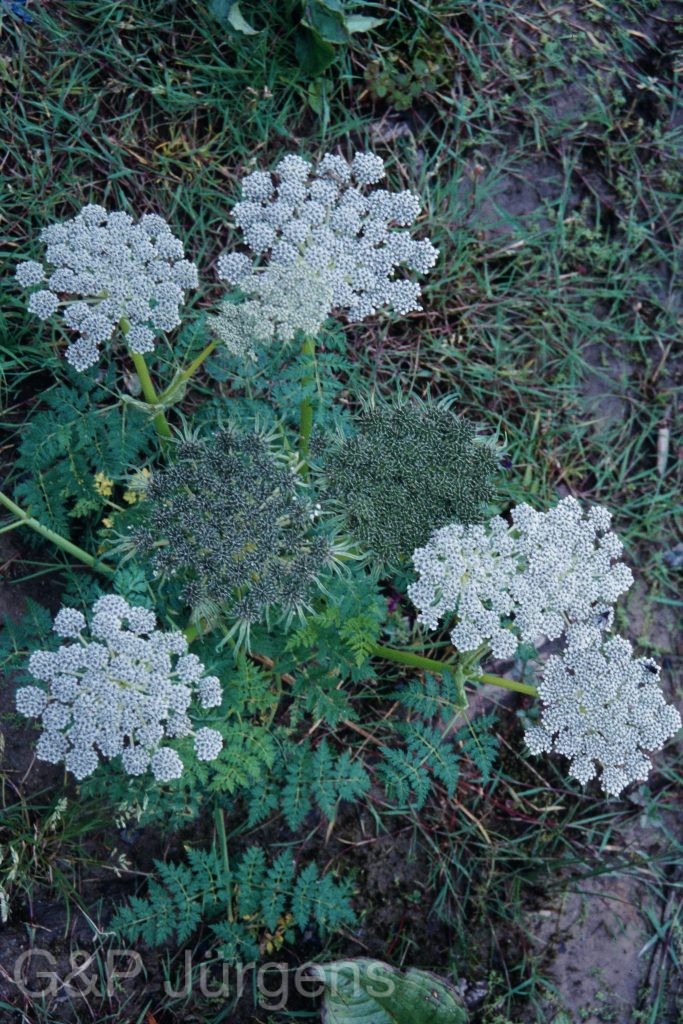
Sikkim2003 98 P135
Sikkim below Dzongri 3700m 08.2003
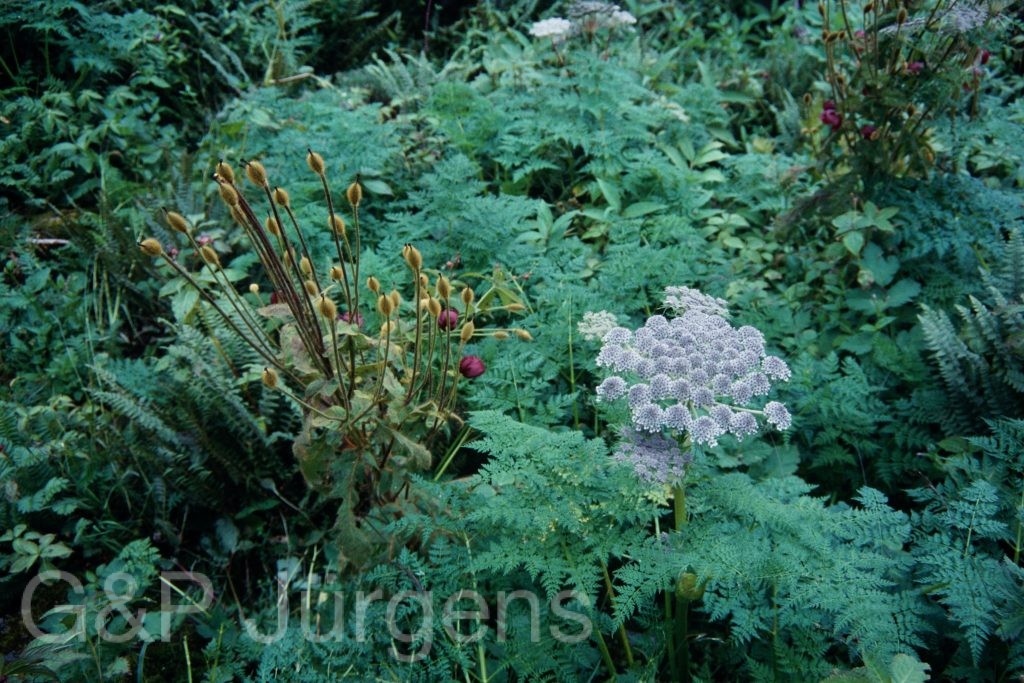
Sikkim2003 161 P214
Sikkim below Dzongri 3900m, August

Description

Ligusticopsis wallichiana is a Himalayan umbellifer ranging from Pakistan and northern India through Nepal, Sikkim and Bhutan into south-western China and Myanmar. The 406 GBIF records lie chiefly within this native arc, the European and North American points reflecting herbarium and garden material. It occupies subalpine and alpine meadows, forest clearings, open slopes and streamsides, generally between about 3000 and 4300 m, where it is a characteristic tall herb of moist Himalayan grassland. The plants photographed below Dzongri in Sikkim at 3700 to 3900 m in August illustrate the species at the height of the monsoon flowering season on these damp, herb-rich slopes.

It is a stout, glabrous perennial herb arising from a thick, aromatic rootstock, with erect, ribbed, often purplish stems. The leaves are large and several times pinnate (ternate-pinnate), the ultimate segments lanceolate to ovate and toothed, the lower leaves long-petiolate with sheathing bases. The inflorescence is a terminal compound umbel with numerous rays, subtended by narrow bracts and bracteoles; the small flowers are white. The fruit is an oblong-ellipsoid, dorsally compressed schizocarp with prominently winged lateral ribs, splitting into two mericarps.

Long familiar as Selinum wallichianum (its WordPress URL preserves that name), the species was transferred to Ligusticopsis by Pimenov and Kljuykov in their revision of the Selinum-Ligusticum complex, reflecting carpological and molecular evidence. The aromatic root has a history of use in Himalayan folk medicine. Common and widespread across its range, it is not considered threatened and forms a conspicuous element of high Himalayan meadow vegetation.

Author: (DC.) Pimenov & Kljuykov · Sources: POWO (Kew), GBIF, Flora of Bhutan, Flora of China, Pimenov & Kljuykov Umbelliferae revision

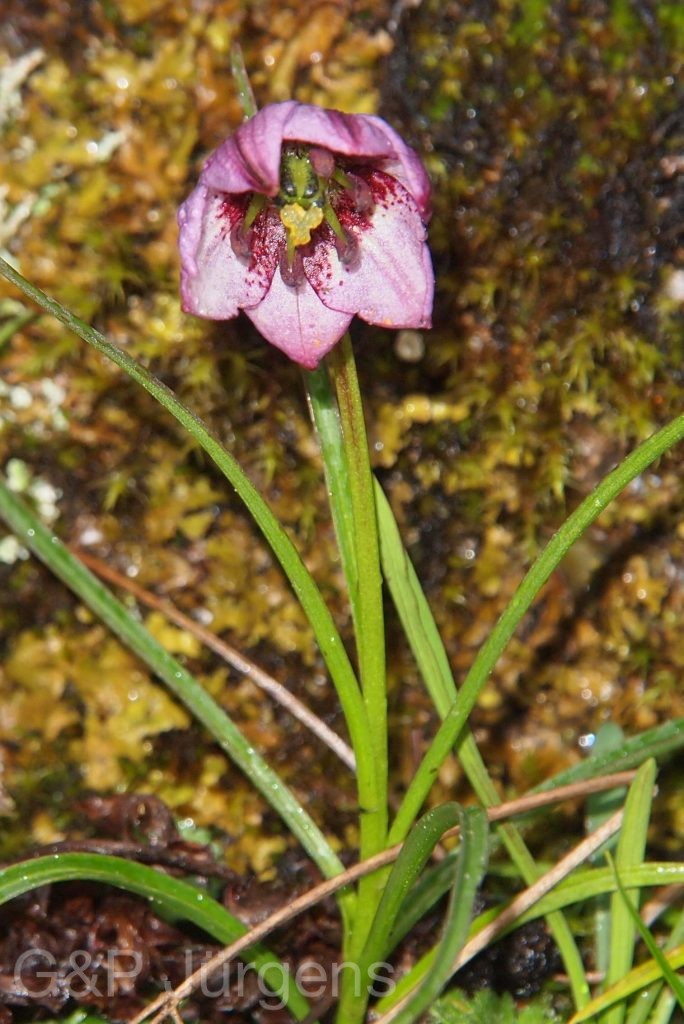
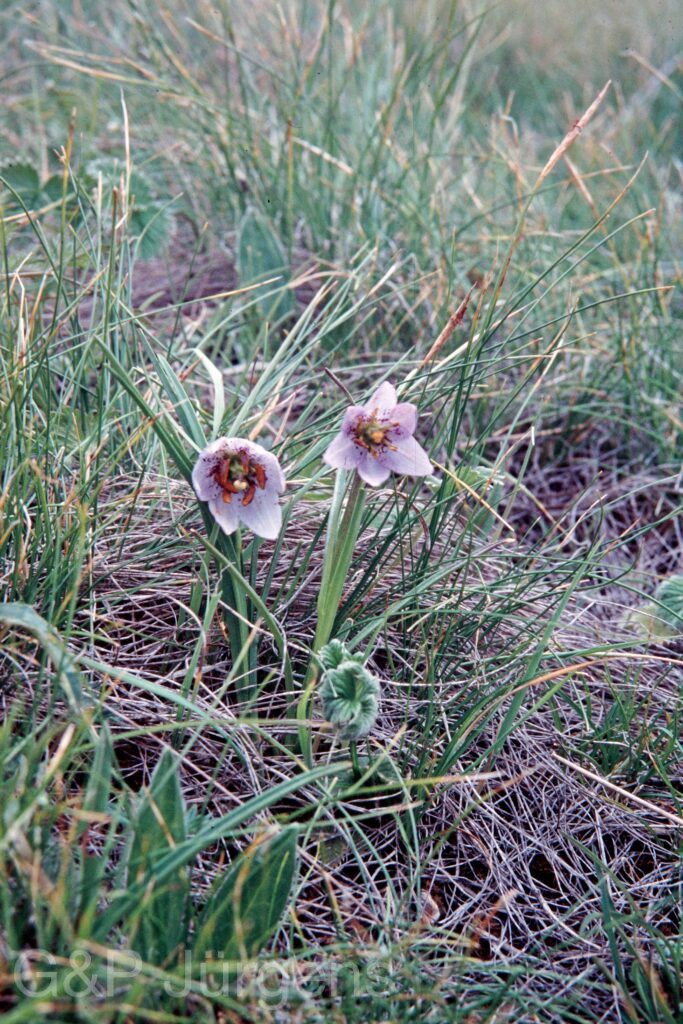
Lilium nanum

by GP Jürgens

Klotzsch

BhutanPG2011 250
Bhutan Tsochenchen, 3800m June
Nepal 99 123 ergebnis
West-Nepal South of Rara-Lake 3650m, June

Description

Lilium nanum is a diminutive alpine lily of the Himalaya and adjoining China, recorded from China, Nepal, India, Bhutan and Myanmar, with GBIF documenting some 410 occurrences (outlying records reflecting cultivation). It grows in subalpine and alpine meadows, open Rhododendron and juniper scrub, grassy slopes and stabilised screes, generally between 3000 and 4500 m. The photographed plants were found in Bhutan at Tsochenchen at 3800 m and in West Nepal south of Rara Lake at 3650 m, both in June, when this early-summer flowerer nods amid the freshly greening alpine sward soon after snowmelt.

It is a small bulbous perennial, the bulb ovoid with few lanceolate scales, giving rise to a slender, erect, unbranched stem rarely exceeding a hand-span in height. The leaves are scattered, linear to narrowly lanceolate, sessile and grass-like. The plant bears a solitary (rarely paired), nodding, broadly campanulate flower with six free, recurved-tipped tepals coloured pinkish-purple to deep purple, often tessellated or veined darker within and yellowish at the base. There are six stamens with versatile anthers and a superior, three-locular ovary topped by a slender style; the fruit is an erect, ribbed, loculicidal capsule producing flat, winged, wind-dispersed seeds.

The species belongs to genus Lilium (Liliaceae) and is among the smallest of all true lilies, sometimes treated with var. flavidum, a yellow-flowered variant of the eastern Himalaya. Prized by alpine gardeners, it is challenging in cultivation owing to its high-altitude requirements. While its broad range buffers it against extinction, local populations face pressure from grazing, bulb collection and warming-driven habitat shifts.

Author: Klotzsch · Sources: POWO (Kew), GBIF, Flora of China, Flora of Bhutan, Flora of Nepal, The Genus Lilium (Comber/McRae)

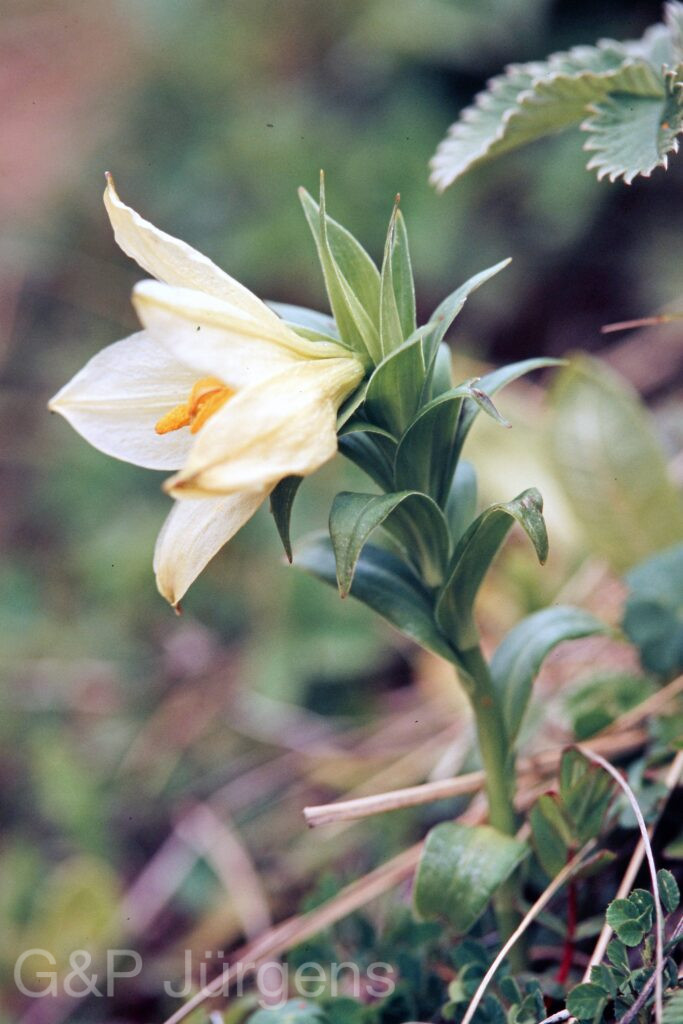
Baker

Garh 07 146 ergebnis
India Garhwal Kinkhola 3500m, June

Description

Lilium oxypetalum is a small subalpine lily restricted to the western and central Himalaya, with native occurrences in northern India and Nepal (the remaining GBIF country codes reflect cultivated or naturalised records outside the native range). It grows in open coniferous and birch-rhododendron forest, forest margins and grassy slopes, typically between 3,000 and 4,000 m. The photographed plant was found at Kinkhola in Garhwal at about 3,500 m in June, flowering as the snow retreats and the subalpine meadows green up early in the growing season.

The plant arises from a small, ovoid bulb of loose, white scales and produces a slender, erect, unbranched stem 15-40 cm tall. The leaves are scattered along the stem, lanceolate to elliptic, sessile and few in number. The flower is usually solitary and nodding, broadly campanulate rather than reflexed, with six tepals that are pale yellow to greenish-yellow, sometimes flushed purplish, and taper to acute, recurving tips. The six stamens are shorter than the tepals and bear versatile anthers; the superior ovary develops into an erect, oblong, three-valved loculicidal capsule with flat, winged seeds.

With its solitary, bell-shaped flower and short stature, L. oxypetalum is morphologically distinctive among Himalayan lilies and has at times been segregated in the genus Nomocharis-allied groups, reflecting the close relationship between Lilium and Nomocharis now confirmed by molecular work. The yellow-flowered var. insigne extends the variation. As a narrowly distributed, attractive bulb, the species faces localised pressure from collection and grazing, and its restricted alpine range warrants monitoring under a warming climate.

Author: Baker · Sources: POWO (Kew), GBIF, Flora of China Vol. 24 (Liliaceae), Flora of Nepal, Comber: A New Classification of the Genus Lilium

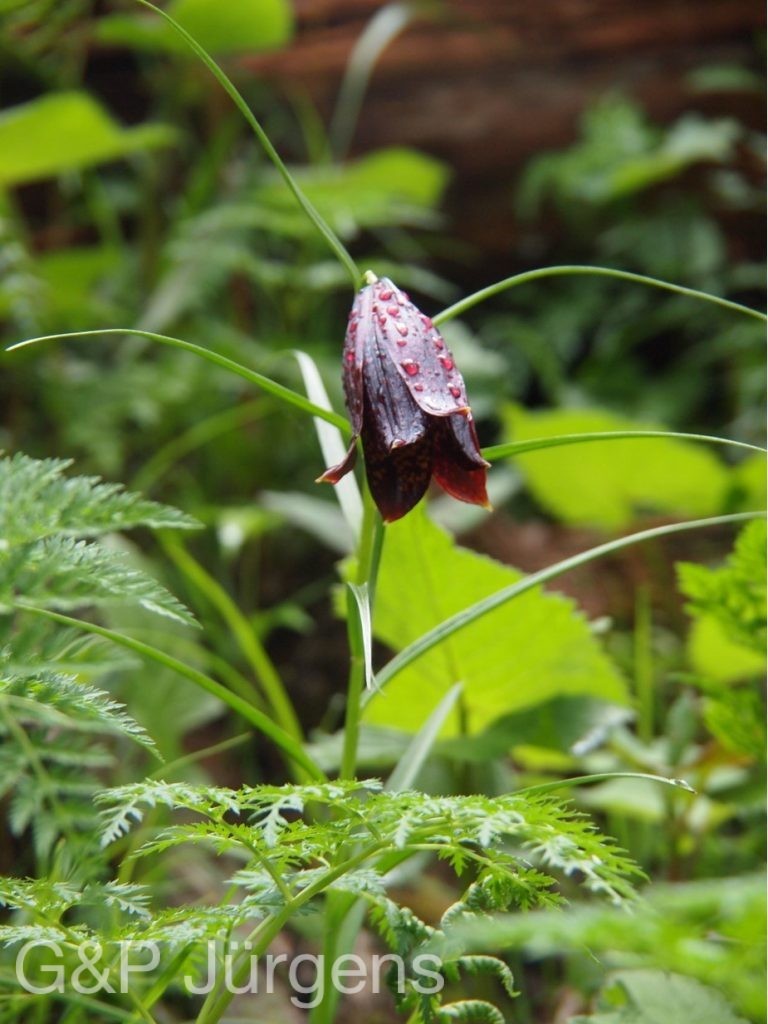
Stearn

A3EB14BDCA574E78ABE6D96A22255803
Bhutan Tsochenchen, 3550m June

Description

Lilium sherriffiae is a slender bulbous perennial endemic to the eastern Himalaya, restricted to Bhutan and adjacent Nepal and known from only about 13 documented occurrences, making it one of the rarer Himalayan lilies. It grows among subalpine scrub, in open coniferous forest, on grassy slopes and at meadow margins, typically between 3000 and 3900 m. The illustrated material was gathered at Tsochenchen in Bhutan at 3550 m in June, during the short alpine flowering season that follows snowmelt at these elevations.

The plant arises from a small ovoid bulb of imbricate scales and produces a single erect, wiry stem 30-70 cm tall bearing scattered, narrowly linear-lanceolate leaves. The flower is usually solitary and pendent, the perianth campanulate with six segments that are strongly recurved only at the tips. The colouring is highly distinctive: the segments are dull purplish-maroon outside and conspicuously chequered or tessellated with yellow-green within, recalling a Fritillaria. The six stamens bear versatile anthers and the superior ovary develops into an erect, ribbed loculicidal capsule containing flat, papery, wind-dispersed seeds.

Named for the collector George Sherriff, the species is prized horticulturally yet remains scarce in cultivation owing to its specialised requirements. Its fritillary-like nodding flower is adapted to pollination by bumblebees active in the cool subalpine climate. Given its narrow geographic range, small number of known populations and the pressures of grazing and collection, L. sherriffiae is of genuine conservation concern and merits formal assessment and in-situ protection.

Author: Stearn · Sources: POWO (Kew), GBIF, Flora of Bhutan, Annotated Checklist of the Flowering Plants of Nepal, The Genus Lilium (Jefferson-Brown), RHS Lily species monograph