
Stearn
Description
Lilium sherriffiae is a slender bulbous perennial endemic to the eastern Himalaya, restricted to Bhutan and adjacent Nepal and known from only about 13 documented occurrences, making it one of the rarer Himalayan lilies. It grows among subalpine scrub, in open coniferous forest, on grassy slopes and at meadow margins, typically between 3000 and 3900 m. The illustrated material was gathered at Tsochenchen in Bhutan at 3550 m in June, during the short alpine flowering season that follows snowmelt at these elevations.
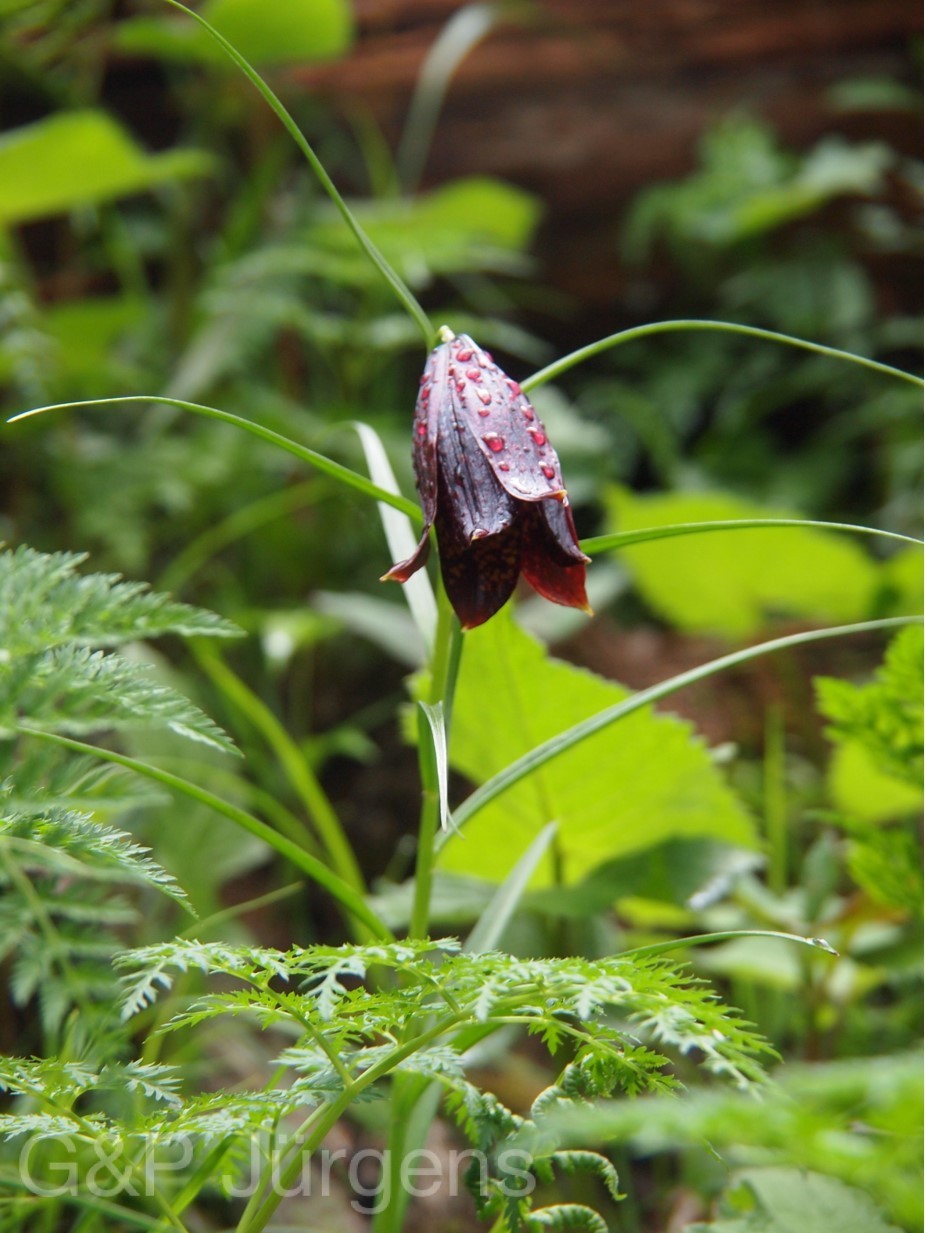
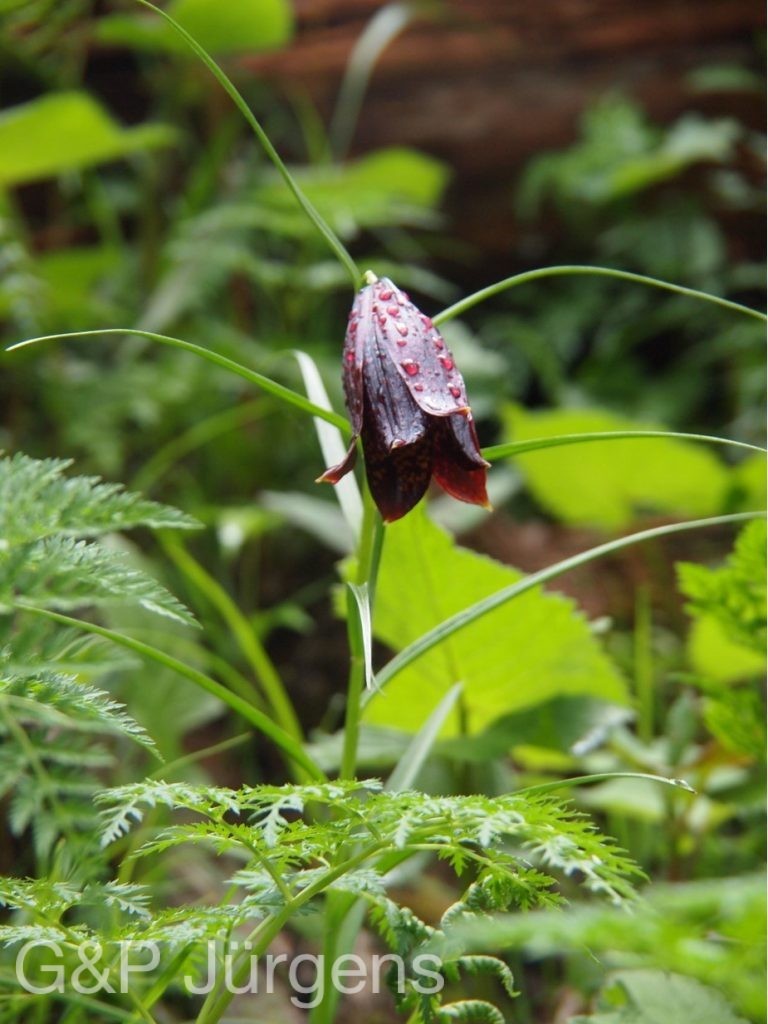
The plant arises from a small ovoid bulb of imbricate scales and produces a single erect, wiry stem 30-70 cm tall bearing scattered, narrowly linear-lanceolate leaves. The flower is usually solitary and pendent, the perianth campanulate with six segments that are strongly recurved only at the tips. The colouring is highly distinctive: the segments are dull purplish-maroon outside and conspicuously chequered or tessellated with yellow-green within, recalling a Fritillaria. The six stamens bear versatile anthers and the superior ovary develops into an erect, ribbed loculicidal capsule containing flat, papery, wind-dispersed seeds.
Named for the collector George Sherriff, the species is prized horticulturally yet remains scarce in cultivation owing to its specialised requirements. Its fritillary-like nodding flower is adapted to pollination by bumblebees active in the cool subalpine climate. Given its narrow geographic range, small number of known populations and the pressures of grazing and collection, L. sherriffiae is of genuine conservation concern and merits formal assessment and in-situ protection.
Author: Stearn · Sources: POWO (Kew), GBIF, Flora of Bhutan, Annotated Checklist of the Flowering Plants of Nepal, The Genus Lilium (Jefferson-Brown), RHS Lily species monograph