
Schult.f.
Description
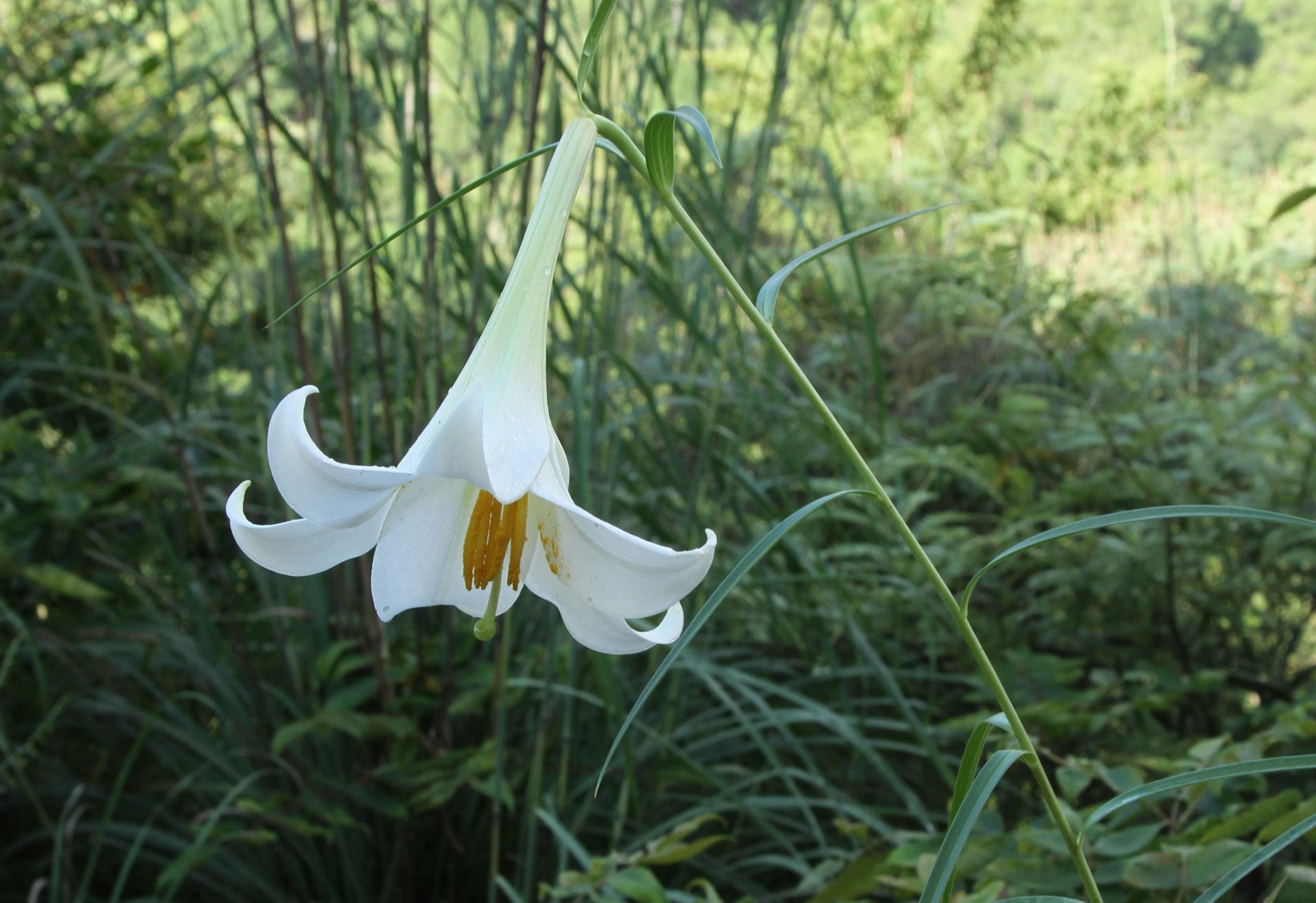
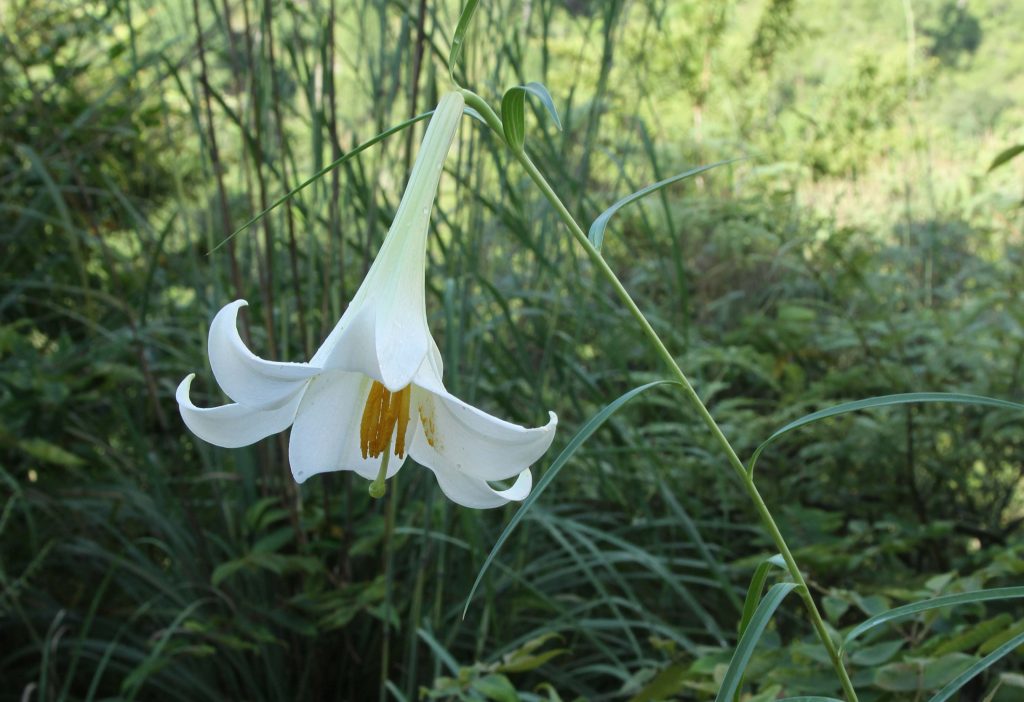
Lilium wallichianum is a tall, trumpet-flowered lily of the Himalaya, ranging from northern India and Nepal through Bhutan to Myanmar, with naturalised or cultivated occurrences elsewhere; GBIF records (c. 217) reflect both its native distribution and its presence in cultivation. In the wild it grows on grassy and shrubby slopes, in forest clearings, scrub and along the margins of temperate forest, generally between about 1500 and 2700 m. The photographed plant from Wangdi (Wangdue Phodrang) in Bhutan, at 2600 m and flowering in September, is characteristic of its late-summer to autumn flowering in mid-elevation montane vegetation.
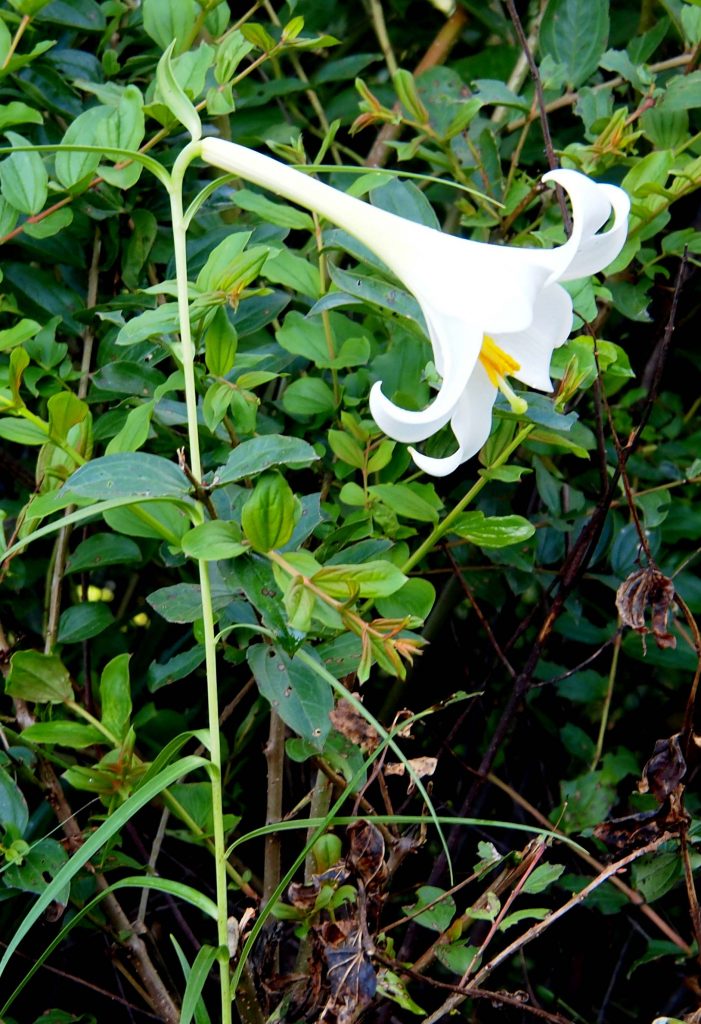
The plant arises from a stoloniferous, white, scaly bulb and produces a stout, erect stem up to 1–2 m tall bearing scattered, narrowly linear to linear-lanceolate leaves. The flowers are large, solitary or few, long-tubular to trumpet-shaped and powerfully fragrant; the six perianth segments are white, often flushed greenish or rose-purple externally, recurving at the tips. The flowers are typically held horizontally or somewhat declined, with six stamens bearing versatile anthers and a long, slender style ending in a three-lobed stigma. The fruit is an erect, oblong, loculicidal capsule containing numerous flat, papery, wind-dispersed seeds.
Lilium wallichianum belongs to the trumpet- or Aurelian-lily group (section Leucolirion / Lilium), the Asiatic trumpet lilies prized in horticulture for their fragrance and elegant form; it has contributed to the breeding of garden trumpet hybrids. The epithet commemorates Nathaniel Wallich, the Danish botanist who pioneered the study of Himalayan flora. Although locally not uncommon, wild populations of showy lilies are vulnerable to bulb collection and grazing, warranting habitat protection.
Author: Schult.f. · Sources: POWO (Kew), GBIF, Flora of Bhutan, Flora of Nepal, The Genus Lilium (Liberty Hyde Bailey / Comber classification)